The tweet was deleted by the author.
But we saved everything 🙂.
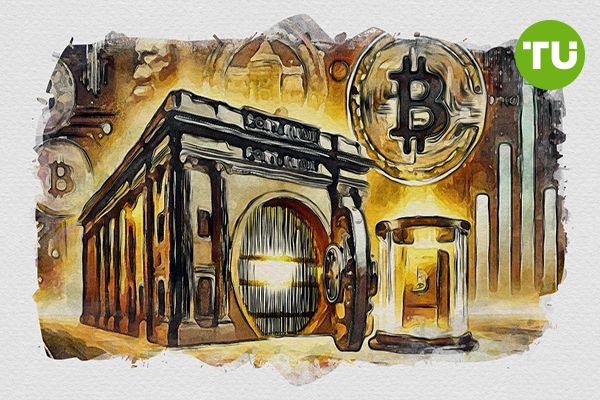
Elon Musk has once again stirred up a long-standing financial conspiracy, questioning whether Fort Knox still holds its legendary gold reserves.
His post on X reignited speculation about the missing gold theory and sparked discussions on why Bitcoin, as an asset, offers transparency that traditional reserves lack. The controversy escalated when former President Donald Trump stated that he would audit «the fabled Fort Knox» to ensure that the gold is still there.
This debate not only brings back old concerns about U.S. gold reserves but also underscores the shifting dynamics of trust in financial assets. As history has shown, when transparency is lacking, speculation thrives. And in a world where Bitcoin is challenging traditional monetary systems, the Fort Knox debate provides yet another argument for decentralization.
Fort Knox is one of the most secure facilities in the world, yet it remains one of the least transparent. The U.S. Bullion Depository, located in Kentucky, has reportedly stored around 147 million troy ounces of gold (approximately $425 billion in today’s prices).
As a head of the Department of Government Efficiency, Musk has been busy scrutinizing the government institutions lately. Fort Knox was another target for his daring eyes.
Musk’s curiosity about Fort Knox led him to suggest a live video walkthrough of the facility, which was met with skepticism and even resistance from politicians. Senator Mike Lee responded that despite being a senator, he was denied access to Fort Knox on multiple occasions.
The last publicly documented audit of Fort Knox took place in 1974 when a small group of journalists and lawmakers was allowed to inspect a portion of the gold. Before that, a similar event occurred in 1943.
Since then, the only known visit by a government official was in 2017 when then-Treasury Secretary Steven Mnuchin toured the facility under unclear circumstances. His visit sparked further controversy, as it coincided with a solar eclipse, leading some to believe it was more of a sightseeing trip than an actual audit.
Despite the U.S. government issuing monthly reports on the country’s gold reserves, many remain skeptical. Conspiracy theorists argue that the lack of independent verification leaves room for manipulation. The discussion continued, with many expressing support for the idea of a public audit of the biggest gold reserve in the U.S. After all, how can we be sure the gold is still there if nobody is allowed to see it?
Gold has long been seen as the ultimate store of value, but its physical nature makes it prone to secrecy, logistical challenges, and centralization. Bitcoin, on the other hand, operates on an open and verifiable blockchain. Anyone with an internet connection can audit its total supply at any given moment—something impossible with gold.
Bitcoin maximalists argue that if Fort Knox’s gold reserves were tokenized on a blockchain, there would be no speculation about their existence. Every transaction, movement, or audit could be publicly verified, eliminating the need for blind trust in government institutions.
Additionally, Bitcoin is portable and easy to transfer across borders. Unlike gold, which requires secure transportation and verification, Bitcoin can be sent instantly anywhere in the world. In times of economic uncertainty, Bitcoin provides an alternative that doesn't rely on a centralized authority to confirm its legitimacy.
A more radical idea emerging from this discussion is that the U.S. may eventually liquidate part of its gold reserves to accumulate Bitcoin. According to Bernstein analyst Gautam Chhugani, if the Federal Reserve were to establish a Strategic Bitcoin Reserve, it would need funds to purchase BTC. Selling gold could be one of the logical solutions.
The Fort Knox gold mystery highlights a fundamental issue in traditional finance—lack of transparency. Whether or not the U.S. government decides to provide a full audit, the controversy has already made one thing clear: in an era where blockchain offers real-time verifiability, legacy financial institutions will need to adapt or risk losing credibility.
Bitcoin is not just an alternative to gold; it’s a technological leap forward in financial transparency. The days of relying on government statements about reserves may be numbered, and in their place, decentralized systems of accountability are emerging. Whether Musk gets his live tour of Fort Knox or not, the debate he reignited reminds us of one simple truth: in the modern world, trust is no longer enough—verification is everything.



 Afghanistan
 Albania
 Algeria
 Angola
 Argentina
 Armenia
 Australia
 Austria
 Azerbaijan
 Bahamas
 Bahrain
 Bangladesh
 Belarus
 Belgium
 Bolivia
 Botswana
 Brazil
 Brunei
 Bulgaria
 Cambodia
 Cameroon
 Canada
 Chile
Chile
 China
China
 Colombia
 Congo
Congo
 Costa Rica
 Cote d'Ivoire
 Croatia
 Cuba
Cuba
 Cyprus
 Czechia
 DR Congo
 Denmark
 Dominican Republic
 Ecuador
 Egypt
Egypt
 El Salvador
 Estonia
 Eswatini
 Ethiopia
 Finland
 France
 Georgia
 Germany
 Ghana
Ghana
 Greece
 Haiti
Haiti
 Hong Kong
 Hungary
 India
India
 Indonesia
 Iran, Islamic republic
 Iraq
Iraq
 Ireland
 Israel
 Italy
Italy
 Jamaica
 Japan
Japan
 Jordan
 Kazakhstan
 Kenya
Kenya
 Korea
Korea
 Kuwait
 Kyrgyzstan
 Laos
Laos
 Latvia
 Lebanon
 Lesotho
 Libya
Libya
 Lithuania
 Luxembourg
 Madagascar
 Malaysia
 Malta
Malta
 Mauritius
 Mexico
 Moldova
 Mongolia
 Montenegro
 Morocco
 Mozambique
 Myanmar
 Namibia
 Nepal
Nepal
 Netherlands
 New Zealand
 Nigeria
 North Macedonia
 Norway
 Oman
Oman
 Pakistan
 Palestine
 Panama
 Papua New Guinea
 Paraguay
 Peru
Peru
 Philippines
 Poland
 Portugal
 Puerto Rico
 Qatar
Qatar
 Reunion
 Romania
 Rwanda
 Saudi Arabia
 Serbia
 Singapore
 Slovakia
 Slovenia
 Somalia
 South Africa
 Spain
Spain
 Sri Lanka
 Sweden
 Switzerland
 Syria
Syria
 Taiwan
 Tajikistan
 Tanzania
 Thailand
 Trinidad and Tobago
 Tunisia
 Turkey
 UAE
UAE
 Uganda
 Ukraine
 United Kingdom
United States
United Kingdom
United States
 Uruguay
 Uzbekistan
 Venezuela
 Vietnam
 Yemen
Yemen
 Zambia
 Zimbabwe