
Best Binary Options Signals


Editorial Note: While we adhere to strict Editorial Integrity, this post may contain references to products from our partners. Here's an explanation for How We Make Money. None of the data and information on this webpage constitutes investment advice according to our Disclaimer.

CloseOption - Best binary options broker for 2026 (United States)

Best free binary signal providers:
- Pocket Option - Best for beginners ($5 min deposit, copy trading, many bonus offerings)
- Deriv - Best for advanced trading strategies (multipliers combine leverage trading with the limited risk of options)
- Binolla - Best for crypto trading (wide selection of cryptocurrencies, advanced trading tools)
- Binomo - Best for active trading (no restrictions on the number of simultaneous trades)
- Binarium - Best for testing new trading approaches (cashback on loosing trades up to 15%)
- IQcent - Best platform for market analysis (real-time technical analysis, news, and trading calendar)
There are many of Binary options signal platforms out there, and new ones are being added all the time, so we decided to focus on just seven of the most popular ones, so you can narrow your focus. Feel free to explore other options, but definitely add these to your short list!
Risk warning: Relying solely on trading signals is risky—market conditions change rapidly, and past performance does not guarantee future success. Without proper risk management, significant losses may occur. Studies show that 70% of traders depending only on signals lose money. Use them as a supplementary tool and seek expert advice.
Top 6 reliable free binary signal providers
Before choosing a binary signal provider, it’s important to understand how they differ in approach, frequency, transparency, and risk management. Even free signal services vary significantly in quality – some focus on education and structure, while others prioritize high-frequency alerts. The table below compares six reliable free binary signal providers, helping you quickly assess their key features and decide which option best fits your trading style and experience level.
| Min. deposit | Copy trading | Free price alerts | All signals are free | Open an account | |
|---|---|---|---|---|---|
| 5 | Yes | No | Yes | Go to broker Your capital is at risk. |
|
| 5 | Yes | Yes | Yes | Go to broker Your capital is at risk. |
|
| 10 | Yes | Yes | Yes | Go to broker Your capital is at risk.
|
|
| 10 | Yes | Yes | Yes | Go to broker Your capital is at risk. |
|
| 5 | Yes | No | Yes | Go to broker Your capital is at risk. |
|
| 100 | Yes | Yes | Yes | Go to broker Your capital is at risk. |






This section outlines features and signals provided by a platform for binary trading. Here's a brief breakdown:
Copy trading signals. Users can follow and replicate trades made by experienced traders in real-time, allowing beginners to learn strategies and potentially improve their trading success.
Free price alerts. Instant notifications about significant price movements or specific asset thresholds, helping traders make timely decisions and stay updated on market changes.
What are binary options signals
The best way to describe binary options signals is that they are trading tips. These tips are provided by professional traders, trading companies, and sometimes by algorithms and digital calculations.
Binary options signals offer a snapshot of what is happening on the markets now, and some insight into what might happen next. So, particularly for new traders, they’re a great way to lower your risk when trading.
Some of the most useful signals are entry and exit signals. Essentially, these signals tell you when you should be buying, and when you should consider selling. This helps to increase profit and limit risk.
Other signals include no touch, one touch and above below, in, out, range or above/below binaries and more.
While it is possible to analyze market data and make predictions yourself, it’s easier (particularly if you are new to trading) to do so with the help of some expert opinion. Of course, it’s not an exact science, but with some platforms reporting over 70% accuracy, it gives you a higher chance of making the right decisions.
Main binary options signals platforms
The good news is that technology has made it very easy to access binary options signals. In fact, there’s a platform, portal or app that will work nearly anywhere. Some of the more common options are:
Telegram signals
Many binary options signals providers use Telegram groups to share information. Getting these signals is as simple as joining the group, and with push notifications, you can stay up to date in mostly real time. Telegram itself is a free and easy to use instant messaging system that works on Android and Apple devices.
Twitter signals
Twitter is another social media platform that is often used for binary options signals. Simply follow the accounts that share the information and get up to date information as it happens. If you have Twitter on your mobile phone, and push notifications enabled, you can also get up to date information delivered right to your pocket.
Apps
Many companies that offer binary options forex signals (and other market and trading data streams) also have their own apps. Most are available for Android or Apple, so no matter what kind of phone or tablet you’re using, you can access them easily.
Websites
There are a variety of websites that offer binary options signals information. Some are prebuilt, and others, like DBot, let you build and customize your own platform with the specific information you want to be able to access.
Many of the companies that offer binary options signals and other investing products and services do have options for more than one platform and device too. So, if you have a preference for one, or want to be able to access your account from more than one device, you can simply opt to sign up for one of those.
Binary signals pros and cons
Binary signals are a great way to hit the ground running. It takes a long time to learn enough of the market to accurately predict what will happen next, which makes this great for people who are new to trading – or trying out different types of trading.
Some of the platforms out there also offer demo accounts – so you can use fictional “money” in a trial platform to see how you do before you put your own cash on the line. You won’t make anything from your demo trades, but you also won’t lose any!
However, as with anything, something that seems so simple can create a false sense of security. It’s important to remember that binary signals are not 100% accurate, and you still need to use your own judgement to make the best calls for your own trades.
Not all platforms are created equal either, so you should definitely to a lot of research before you sign up for anything. Choose options that have a free trial or use a “freemium” model, so you can see how they work and if they work for you before you invest any real money.
It should be noted that binary options (and every other kind of investment and trading) is not an exact science, and there is an element of volatility. So, if you are new to this kind of trading, it’s a good idea to start small, learn as much as you can, and take it slow. Making the wrong choices with large sums of money could lead to big losses.
How to choose a binary options Forex signals platform
Choosing the right Binary Options Forex signals platform can make the difference between informed trading and unnecessary losses. Since the market is full of both reliable services and questionable providers, you need to evaluate each platform using objective criteria related to accuracy, transparency, and usability.
Check signal accuracy and performance history
The most important factor is how consistently the platform’s signals perform. Look for:
Verified performance results or third-party audits.
Transparent trade histories with timestamps and entry/exit points.
Clear win-rate statistics (avoid vague claims like “90% accuracy” without proof).
If possible, test the platform with a demo or trial account to verify the quality of its signals in real time.
Evaluate the type of signals provided
Different platforms specialize in different instruments and timeframes. Choose one that fits your strategy:
Short-term traders: prefer high-frequency or 60-second binary options signals.
Swing or day traders: need longer-term Forex signal options with detailed risk/reward ratios.
Automated users: look for APIs or MetaTrader integration for seamless execution.
Make sure the signals match your trading style – whether you use manual confirmation or automated bots.
Assess transparency and provider reputation
Only use platforms that are open about their methods and management team. Reliable providers publish details about:
Their analysts or algorithm developers.
Signal generation methods (technical, fundamental, or AI-based).
Risk management approach.
Check independent reviews, trading forums, and user testimonials before committing.
Analyze subscription models and costs
Some services charge flat monthly fees, others take commissions or offer tiered plans. Compare:
Free vs paid plans – free signals often lack reliability or frequency.
Refund policies – reputable providers offer trial periods or money-back guarantees.
Hidden fees – avoid platforms that charge withdrawal or inactivity fees.
The best value isn’t the cheapest–it’s the one that delivers reliable data without overpromising.
Prioritize regulation and security
Since Binary Options trading is highly regulated (and restricted in some regions), ensure the signal platform:
Operates under a licensed broker or regulatory framework (like CySEC, FCA, or ASIC).
Uses SSL encryption and secure payment methods.
Does not demand unnecessary personal or banking details.
Security and compliance are crucial indicators of a platform’s legitimacy.
Consider user interface and support
An effective platform should offer:
A clear, intuitive dashboard with real-time alerts.
Multiple delivery channels – web, mobile app, email, or Telegram.
Fast and helpful customer support in your language and time zone.
A well-designed platform helps you act on signals instantly without confusion or delay.
Look for added features
Some top-tier binary options Forex signals platforms also include:
Education tools – strategy guides, webinars, and risk management lessons.
Market analytics dashboards – for monitoring trends and volatility.
Copy trading or automation – for one-click signal execution.
Before choosing a provider, track their real-time performance for at least a week using a demo account. The best binary options Forex signals platforms are not those that promise the most wins, but those that deliver consistency, transparency, and verifiable results under different market conditions.
How to use free binary signals
Many of the binary options signals providers we mentioned here have more than one application and platform. So, we signed up for Deriv, which is a free binary options signals platform from Binary.com. Here’s what you have to do to use this platform.
Go to Deriv.com
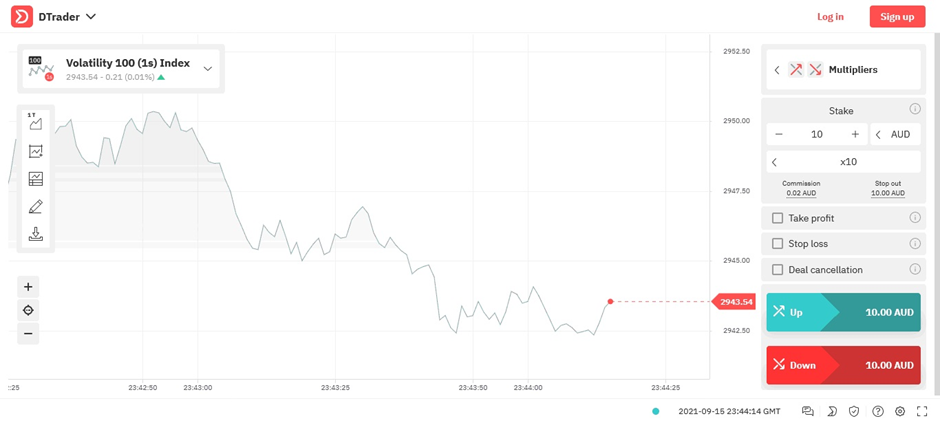
Create a free account – but take note that Deriv is not available in every country! You can also choose between a live account and a practice account, which is great if you’re just trying this kind of trading out.
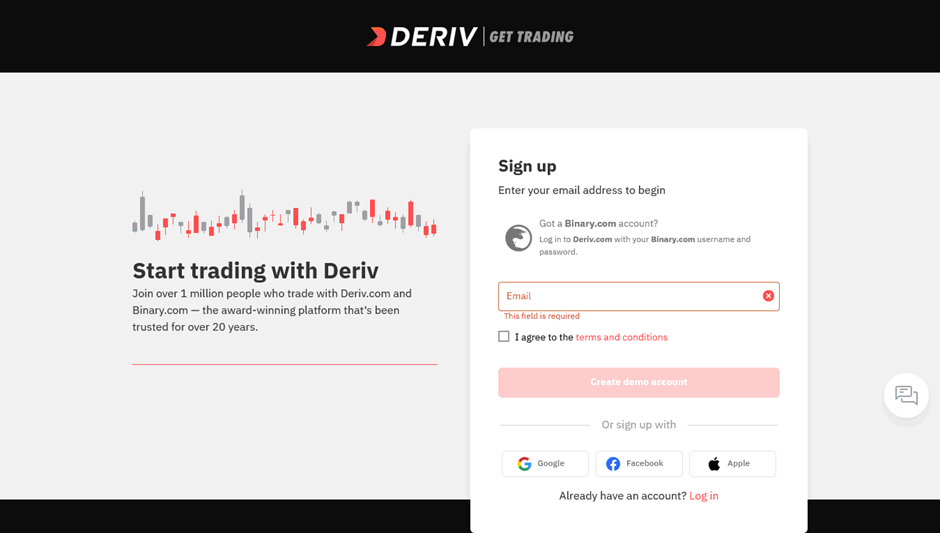
Login to view your dashboard
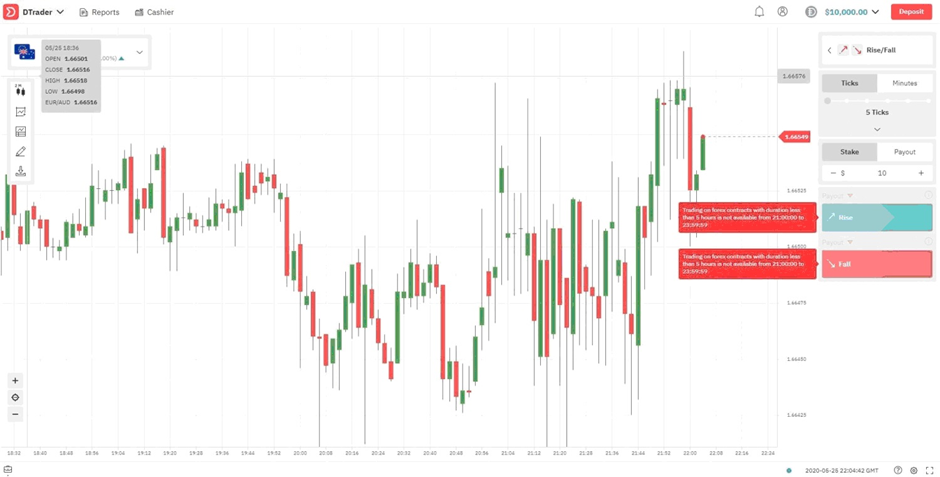
Choose your tradable assets. There are over 50 available on the platform, with a minimum stake of $0.35, so you don’t have to start with a lot of money!
Use the platform to buy and sell options. With the possibility to make up to 200% per trade, and a holding period of 1 second to a full year.
Are binary options signals worth it?
For most traders, signals are not worth paying for on their own. The market is unpredictable and no provider can forecast moves with flawless accuracy. By the time a signal is sent, the ideal entry price may have passed.
However, signals can provide value when used properly as part of a broader trading plan. The key is not relying on them completely but using good signals to supplement your own analysis. Look for providers with a proven track record of at least 65% accuracy.
Used correctly, credible signals can draw your attention to opportunities and trades you may have otherwise missed. But your money is still at risk. Signals don’t remove the need for traders to understand why a call is made.
In most cases, it's not worthwhile paying solely for signals without developing your own skills. But quality signals from a reputable source can boost your results when combined with independent research and trade selection. The value is in enhancing your profits - not replacing the need to learn.
Are binary options signals useful for beginners?
Many experienced binary options traders believe that signals can provide newcomers a useful starting point, but should not be solely relied upon. In the initial phases, following some signal provider's picks allows novices to witness how trades unfold in real-time across assets like currencies. This hands-on exposure helps observers understand technical indicators and the short-term fluctuations of markets.
However, it's important for beginners to recognize signal services are ultimately aimed at profiting own businesses, not ensuring client success. Not every recommendation will prove profitable since various unpredictable factors can impact outcomes. Novices would be wise to develop independent analytical skills in tandem with considering signals, rather than using signals as a replacement for education.
Studying why certain technical or market levels prompt signals can start guiding novices' own evaluations. With experience, patterns will progressively become identifiable without third-party interpretation. Relying long-term on someone else's calls rarely proves an optimal strategy. Mastering independent evaluation often separates enduringly successful traders from those who struggle.
Free binary signals can be a useful starting point

From my own trading experience, free binary signals can be a useful starting point, but only if you treat them as guidance, not instructions. Early on, I made the mistake of following signals blindly, which quickly showed me that even good signals fail without context. The real value comes when you compare a signal with your own market view, timing, and risk limits. I recommend using free providers to learn how setups are structured, how timing works, and how different assets behave – preferably on a demo or with very small stakes. Over time, this approach helped me filter noise, avoid overtrading, and build discipline. Signals should support your decision-making process, not replace it.
Conclusion
Binary options signals offer a valuable entry point for new and seasoned traders alike, but their true power lies in serving as guidance rather than strict instructions. The article highlights that signals from reliable providers, such as those using copy trading or instant price alerts, can alert you to new opportunities and facilitate learning, especially for beginners experimenting with demo accounts. However, overreliance without developing independent trading skills can lead to suboptimal results, as even accurate signals cannot guarantee market success. Ultimately, signals work best as tools to enhance your own market analysis and decision-making, allowing you to make informed trades rather than simply following someone else's cues.
FAQs
What types of binary options signals are typically provided beyond entry and exit alerts?
How can beginners verify the accuracy of free binary options signal providers?
What challenges do traders face when relying solely on binary options signals?
How important is platform usability when selecting the best binary options signals service?
Editors' Top Picks and Insights






Related Articles
Team that worked on the article
Mikhail Vnuchkov joined Traders Union as an author in 2020. He began his professional career as a journalist-observer at a small online financial publication, where he covered global economic events and discussed their impact on the segment of financial investment, including investor income.
Dan Blystone began his trading career in 1998 as an arbitrage clerk on the floor of the Chicago Mercantile Exchange (CME). He later traded bond and Eurex futures at proprietary firms such as Altea Trading, gaining valuable experience in high-frequency trading and risk management.
Chinmay Soni is a financial analyst with more than 5 years of experience in working with stocks, Forex, derivatives, and other assets. As a founder of a boutique research firm and an active researcher, he covers various industries and fields, providing insights backed by statistical data.
Index in trading is the measure of the performance of a group of stocks, which can include the assets and securities in it.
A day trader is an individual who engages in buying and selling financial assets within the same trading day, seeking to profit from short-term price movements.
Bitcoin is a decentralized digital cryptocurrency that was created in 2009 by an anonymous individual or group using the pseudonym Satoshi Nakamoto. It operates on a technology called blockchain, which is a distributed ledger that records all transactions across a network of computers.
Ethereum is a decentralized blockchain platform and cryptocurrency that was proposed by Vitalik Buterin in late 2013 and development began in early 2014. It was designed as a versatile platform for creating decentralized applications (DApps) and smart contracts.
Volatility refers to the degree of variation or fluctuation in the price or value of a financial asset, such as stocks, bonds, or cryptocurrencies, over a period of time. Higher volatility indicates that an asset's price is experiencing more significant and rapid price swings, while lower volatility suggests relatively stable and gradual price movements.
-
 Afghanistan
-
 Albania
-
 Algeria
-
 Angola
-
 Argentina
-
 Armenia
-
 Australia
-
 Austria
-
 Azerbaijan
-
 Bahamas
-
 Bahrain
-
 Bangladesh
-
 Belarus
-
 Belgium
-
 Bolivia
-
 Botswana
-
 Brazil
-
 Brunei
-
 Bulgaria
-
 Cambodia
-
 Cameroon
-
 Canada
-
 Chile
Chile
-
 China
China
-
 Colombia
-
 Congo
Congo
-
 Costa Rica
-
 Cote d'Ivoire
-
 Croatia
-
 Cuba
Cuba
-
 Cyprus
-
 Czechia
-
 DR Congo
-
 Denmark
-
 Dominican Republic
-
 Ecuador
-
 Egypt
Egypt
-
 El Salvador
-
 Estonia
-
 Eswatini
-
 Ethiopia
-
 Finland
-
 France
-
 Georgia
-
 Germany
-
 Ghana
Ghana
-
 Greece
-
 Haiti
Haiti
-
 Hong Kong
-
 Hungary
-
 India
India
-
 Indonesia
-
 Iran, Islamic republic
-
 Iraq
Iraq
-
 Ireland
-
 Israel
-
 Italy
Italy
-
 Jamaica
-
 Japan
Japan
-
 Jordan
-
 Kazakhstan
-
 Kenya
Kenya
-
 Korea
Korea
-
 Kuwait
-
 Kyrgyzstan
-
 Laos
Laos
-
 Latvia
-
 Lebanon
-
 Lesotho
-
 Libya
Libya
-
 Lithuania
-
 Luxembourg
-
 Madagascar
-
 Malaysia
-
 Malta
Malta
-
 Mauritius
-
 Mexico
-
 Moldova
-
 Mongolia
-
 Montenegro
-
 Morocco
-
 Mozambique
-
 Myanmar
-
 Namibia
-
 Nepal
Nepal
-
 Netherlands
-
 New Zealand
-
 Nigeria
-
 North Macedonia
-
 Norway
-
 Oman
Oman
-
 Pakistan
-
 Palestine
-
 Panama
-
 Papua New Guinea
-
 Paraguay
-
 Peru
Peru
-
 Philippines
-
 Poland
-
 Portugal
-
 Puerto Rico
-
 Qatar
Qatar
-
 Reunion
-
 Romania
-
 Rwanda
-
 Saudi Arabia
-
 Serbia
-
 Singapore
-
 Slovakia
-
 Slovenia
-
 Somalia
-
 South Africa
-
 Spain
Spain
-
 Sri Lanka
-
 Sweden
-
 Switzerland
-
 Syria
Syria
-
 Taiwan
-
 Tajikistan
-
 Tanzania
-
 Thailand
-
 Trinidad and Tobago
-
 Tunisia
-
 Turkey
-
 UAE
UAE
-
 Uganda
-
 Ukraine
-
 United Kingdom
-
United States
-
 Uruguay
-
 Uzbekistan
-
 Venezuela
-
 Vietnam
-
 Yemen
Yemen
-
 Zambia
-
 Zimbabwe
- Forex
- Crypto












