
Bybit Futures Trading Fees: Maker-Taker Model And Smart Tips


Editorial Note: While we adhere to strict Editorial Integrity, this post may contain references to products from our partners. Here's an explanation for How We Make Money. None of the data and information on this webpage constitutes investment advice according to our Disclaimer.
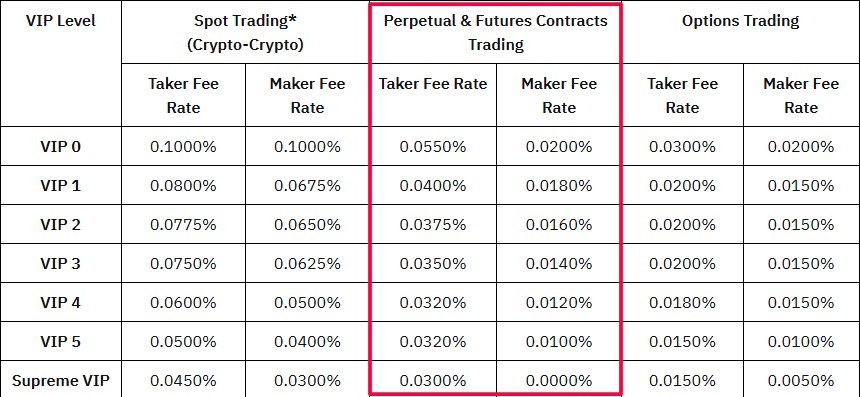
In 2026, Bybit’s futures trading fees are 0.055% for takers and 0.020% for makers. Traders can lower these costs through VIP levels, where rates drop to 0.030% for takers and 0.000% for makers. Funding fees apply every 8 hours on perpetual contracts. All fees are based on the full leveraged position size, not just margin.
When trading leveraged contracts, especially in volatile crypto markets, even a small fee difference affects performance. Whether you're scalping short-term trends or holding positions overnight, these fees directly impact profitability and risk.
This guide breaks down the futures trading fees charged by Bybit in 2026 and compares them to other major platforms. You will learn how to use Bybit’s fee structure to protect capital and increase efficiency.
Bybit’s futures product line


Bybit’s futures trading platform offers USDT-settled perpetual contracts and inverse futures, each designed for different trading strategies and risk appetites. These products define how Bybit futures fees apply through the maker-taker model. Traders using limit orders contribute liquidity, while market orders consume it, and each side pays a different price for participation.
Bybit offers leverage of up to 100x, which gives traders access to higher exposure but also raises overall risk, especially if fees are not accounted for in full.
The Bybit futures fee structure is built around a maker-taker model. Currently, the Bybit futures taker fee stands at 0.055 percent and the taker pays 0.020 percent. These costs apply to each side of the trade. This means that choosing between a limit (maker) or market (taker) order can directly impact your final return.
The maker-taker fees for Bybit futures is highly relevant for algorithmic and high-frequency strategies that operate on narrow margins. Passive traders who place limit orders and wait for execution can benefit from maker rebates, effectively turning it into a small income source rather than a cost.
The updates rolled out recently introduced dynamic rates for VIP tiers, making the system more flexible and potentially cheaper for high-volume participants.
| Level | Taker fee, % | Maker fee, % |
|---|---|---|
| VIP 0 | 0.055 | 0.02 |
| VIP 1 | 0.04 | 0.018 |
| VIP 2 | 0.0375 | 0.016 |
| VIP 3 | 0.035 | 0.014 |
| VIP 4 | 0.032 | 0.012 |
| VIP 5 | 0.032 | 0.01 |
| Supreme VIP | 0.03 | 0.0 |
Note! Some contract types add a settlement fee or delisting fee. For example, inverse futures have a 0.05% fee for automatic settlement.
Understanding the real cost of leverage
A common oversight among beginners is the miscalculation of how fees scale with leverage. For example, a $10,000 trade at 50x leverage creates a notional exposure of $500,000. Fees are charged on that full amount, not just on your margin.
In this case, even a small fee quickly adds up. A 0.055% taker fee on $500,000 equals $275. If funding fees are also applied, total trading costs can double within hours, which can be a major factor for traders using high leverage.
Funding fees: the hidden variable
In addition to maker and taker fees, Bybit charges funding fees to keep perpetual futures prices in line with the spot market. These payments switch between long and short traders every eight hours, depending on market conditions.
This hidden fee becomes more important the longer a trade is held. While the taker fee applies only when you enter or exit a position using Bybit futures, funding fees keep accumulating every few hours. Neglecting them can ruin longer-term positions even when the price direction is correct.
Bybit futures fees calculator and tools
Bybit offers a native futures fees calculator to estimate total costs under different scenarios. It shows how maker, taker, and funding fees change with leverage and order type. This tool is especially useful for testing position sizes and optimizing entry timing.
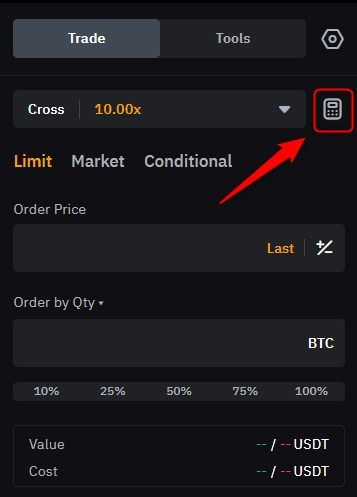
Anyone trading using Bybit should use this calculator before placing an order to manage their futures trading fees effectively. It helps avoid unexpected costs and improves trade planning.
Bybit vs Binance futures fees
Traders often compare Bybit and Binance futures fees to find the lowest trading costs. As of November 2025, Binance charges 0.040% for takers and 0.020% for makers, while Bybit applies 0.055% for takers and 0.020% for makers.
This structure makes Bybit more appealing for traders who rely on limit orders, since they can earn maker rebates based on reaching specific VIP tiers. Binance, on the other hand, may suit those who trade mainly through market orders. The difference highlights how your trading style determines whether Bybit’s futures fee structure becomes an edge or an extra cost.
Below is a table comparing futures trading fees on Bybit and other leading crypto exchanges. It allows you to clearly see the differences in terms and choose the optimal platform for your strategy.
| Bybit | Coinbase | OKX | BTCC | Crypto.com | Kraken | |
|---|---|---|---|---|---|---|
|
Futures |
Yes | Yes | Yes | Yes | Yes | Yes |
|
Futures Maker Fee, % |
0.02 | 0.04 | 0.02 | 0.025 | 0.017 | 0.02 |
|
Futures Taker Fee, % |
0.055 | 0.02 | 0.05 | 0.045 | 0.034 | 0.05 |
|
Futures maker fee ($15M turnover) |
0.018 | 0.018 | 0.02 | 0.025 | 0.008 | 0.01 |
|
Futures taker fee ($15M turnover) |
0.04 | 0.03 | 0.05 | 0.045 | 0.028 | 0.035 |
|
Futures leverage |
100 | 10 | 125 | 50 | 50 | 50 |
|
Cold wallet storage |
Yes | Yes | Yes | Yes | Yes | Yes |
|
Demo account |
Yes | No | Yes | Yes | No | No |
|
Open an account |
Go to broker Your capital is at risk.
|
Go to broker Your capital is at risk. |
Go to broker Your capital is at risk. |
Go to broker Your capital is at risk.
|
Go to broker Your capital is at risk. |
Go to broker Your capital is at risk. |
Who benefits most from VIP discounts?
Frequent and high-volume traders gain the most from Bybit’s VIP program. The platform offers several VIP tiers, each with reduced maker and taker fees. The more you trade in a month, the greater your discount.
For example, a VIP 3 trader pays only 0.035% taker fees, which makes futures trading fee rates very competitive for Bybit. Over time, these savings can add up significantly, especially for active traders placing hundreds of orders each month. The Bybit maker-taker fee model is designed to reward consistency and trading volume.
| Level | 30-day derivatives trading volume (million USD) |
|---|---|
| VIP 0 | ≤ 10 |
| VIP 1 | ≥ 10 |
| VIP 2 | ≥ 25 |
| VIP 3 | ≥ 50 |
| VIP 4 | ≥ 100 |
| VIP 5 | ≥ 250 |
| Supreme VIP | ≥ 500 |
Strategy-based cost optimization
Experienced traders can lower their futures trading fees through a few simple strategies. Experienced traders know that trading fees have a direct impact on overall profitability. Even with the same trading volume, two traders can achieve very different results depending on how effectively they manage their costs. Bybit offers a range of tools and features that help reduce fees and make futures trading as cost-efficient as possible.
Key ways to save on trading fees:
Use limit orders (maker role). Limit orders add liquidity to the market, so maker fees are typically lower. By placing orders in advance, you can reduce your average fee rate and avoid the extra costs associated with market orders.
Increase your VIP level. Bybit’s VIP program offers significant discounts on trading fees. The higher your 30-day futures trading volume, the lower your maker and taker rates. You can track your current progress in the “Futures Fee Rates & VIP Program” section.
Take advantage of promotions and rebate campaigns. Bybit regularly runs fee-reduction campaigns on selected pairs or offers temporary rebates for active traders. At times, you can trade with zero fees or even earn partial cashback.
Use the BIT token for fee discounts. Traders who hold or stake the BIT token receive additional benefits, including reduced trading fees and special bonuses. Paying commissions with BIT can further lower your costs.
Avoid overtrading. Every transaction incurs a fee, so excessive activity without a clear strategy can erode profits. Plan your entries and exits carefully to minimize unnecessary expenses.
Optimize for funding rates. Funding is charged every eight hours, meaning short positions opened at the wrong time can lead to extra costs. Keep track of upcoming funding rates to reduce potential losses.
Trade highly liquid contracts. Major pairs like BTC/USDT and ETH/USDT typically offer tighter spreads and more stable fee structures, helping lower your overall trading expenses and improving strategy efficiency.
Use API trading or trading bots. Automated trading helps you execute orders with precision and avoid emotional decisions, keeping more of your trades in the maker category – and your fees lower.
In short, reducing your trading costs on Bybit isn’t just about volume – it’s about being strategic. Smart order placement, careful contract selection, and active participation in Bybit’s loyalty programs can make your futures trading both more predictable and more profitable.
Simulation: maker vs taker in practice
To see how Bybit’s maker-taker system affects costs, let’s compare two traders entering the same position.
Trader A opens a $250,000 long position using a market order and pays $137.50 in taker fees.
Trader B (a seasoned trader in the top VIP tier), however, places a limit order for the same amount. When it’s filled, they earn a $50 rebate from the maker fee structure.
Across 100 similar trades per month, this difference in execution adds up to more than $18,000 in total savings. The example shows how much impact the maker-taker model for futures trading fees can have on profitability, especially for active traders.
Practical trading habits turn Bybit fees into savings

Many traders underestimate how much Bybit fees for futures can impact real returns. The 0.055% taker and 0.020% maker rates apply to the entire leveraged position, not just margin. With 50x leverage, fees grow fiftyfold, which surprises many new users. Using limit orders instead of market orders helps earn maker rebates and gradually lowers total costs if you trade with enough volume.
For longer trades, keep an eye on funding fees, which update every eight hours. Seasoned traders also plan volume bursts to qualify for VIP tier discounts before resets. With steady execution and planning, the maker-taker model can shift from an expense into a strategic advantage.
Conclusion
A solid understanding of Bybit futures fees is essential for building consistent trading results. Knowing how the maker-taker model, VIP tiers, and funding fees interact helps traders plan smarter and avoid unnecessary costs. Whether you trade actively or hold long-term positions, success often depends on managing fees as carefully as leverage. Traders who master Bybit’s futures fee structure will find themselves ahead, not by luck, but by control and discipline.
FAQs
Do futures trading platforms charge fees for liquidations?
Yes, most platforms apply a separate fee or penalty when a position is forcibly liquidated. This fee is typically higher than standard trading fees and is used to cover the risks taken on by the platform's insurance fund.
Are Bybitfunding fees the same across all futures pairs?
No, trading fees are generally consistent across devices. However, the execution experience and available features may vary slightly between mobile apps and desktop versions.
Can I claim trading fees as tax-deductible expenses?
In some jurisdictions, trading-related costs, including fees, may be deductible if trading is classified as a business activity. It's best to consult with a local tax advisor.
Do VIP discounts apply automatically on Bybit?
Yes. Bybit VIP tiers adjust automatically when your monthly trading volume reaches a new threshold. The system then applies the lower maker and taker rates to future trades.
Related Articles
Team that worked on the article
Aleksandra Chaikina has been a contributor to Traders Union since 2021. With over 15 years of experience in copywriting and more than 5 years focused on financial content, she specializes in producing detailed guides, analytics, and comparative reviews across various sectors, including cryptocurrencies, Forex, investment strategies, and financial technologies.
Dan Blystone began his trading career in 1998 as an arbitrage clerk on the floor of the Chicago Mercantile Exchange (CME). He later traded bond and Eurex futures at proprietary firms such as Altea Trading, gaining valuable experience in high-frequency trading and risk management.
Chinmay Soni is a financial analyst with more than 5 years of experience in working with stocks, Forex, derivatives, and other assets. As a founder of a boutique research firm and an active researcher, he covers various industries and fields, providing insights backed by statistical data.
-
 Afghanistan
-
 Albania
-
 Algeria
-
 Angola
-
 Argentina
-
 Armenia
-
 Australia
-
 Austria
-
 Azerbaijan
-
 Bahamas
-
 Bahrain
-
 Bangladesh
-
 Belarus
-
 Belgium
-
 Bolivia
-
 Botswana
-
 Brazil
-
 Brunei
-
 Bulgaria
-
 Cambodia
-
 Cameroon
-
 Canada
-
 Chile
Chile
-
 China
China
-
 Colombia
-
 Congo
Congo
-
 Costa Rica
-
 Cote d'Ivoire
-
 Croatia
-
 Cuba
Cuba
-
 Cyprus
-
 Czechia
-
 DR Congo
-
 Denmark
-
 Dominican Republic
-
 Ecuador
-
 Egypt
Egypt
-
 El Salvador
-
 Estonia
-
 Eswatini
-
 Ethiopia
-
 Finland
-
 France
-
 Georgia
-
 Germany
-
 Ghana
Ghana
-
 Greece
-
 Haiti
Haiti
-
 Hong Kong
-
 Hungary
-
 India
India
-
 Indonesia
-
 Iran, Islamic republic
-
 Iraq
Iraq
-
 Ireland
-
 Israel
-
 Italy
Italy
-
 Jamaica
-
 Japan
Japan
-
 Jordan
-
 Kazakhstan
-
 Kenya
Kenya
-
 Korea
Korea
-
 Kuwait
-
 Kyrgyzstan
-
 Laos
Laos
-
 Latvia
-
 Lebanon
-
 Lesotho
-
 Libya
Libya
-
 Lithuania
-
 Luxembourg
-
 Madagascar
-
 Malaysia
-
 Malta
Malta
-
 Mauritius
-
 Mexico
-
 Moldova
-
 Mongolia
-
 Montenegro
-
 Morocco
-
 Mozambique
-
 Myanmar
-
 Namibia
-
 Nepal
Nepal
-
 Netherlands
-
 New Zealand
-
 Nigeria
-
 North Macedonia
-
 Norway
-
 Oman
Oman
-
 Pakistan
-
 Palestine
-
 Panama
-
 Papua New Guinea
-
 Paraguay
-
 Peru
Peru
-
 Philippines
-
 Poland
-
 Portugal
-
 Puerto Rico
-
 Qatar
Qatar
-
 Reunion
-
 Romania
-
 Rwanda
-
 Saudi Arabia
-
 Serbia
-
 Singapore
-
 Slovakia
-
 Slovenia
-
 Somalia
-
 South Africa
-
 Spain
Spain
-
 Sri Lanka
-
 Sweden
-
 Switzerland
-
 Syria
Syria
-
 Taiwan
-
 Tajikistan
-
 Tanzania
-
 Thailand
-
 Trinidad and Tobago
-
 Tunisia
-
 Turkey
-
 UAE
UAE
-
 Uganda
-
 Ukraine
-
 United Kingdom
-
United States
-
 Uruguay
-
 Uzbekistan
-
 Venezuela
-
 Vietnam
-
 Yemen
Yemen
-
 Zambia
-
 Zimbabwe
- Forex
- Crypto












