
Anonymity In Crypto: Challenges And Advantages


Editorial Note: While we adhere to strict Editorial Integrity, this post may contain references to products from our partners. Here's an explanation for How We Make Money. None of the data and information on this webpage constitutes investment advice according to our Disclaimer.
Benefits and challenges of crypto anonymity:
Benefits: financial privacy, anti censorship protection, enhanced security, true fungibility.
Challenges: regulatory scrutiny, association with Illicit use, technical complexity, limited support.
Anonymity has been one of the most fundamental cornerstones of cryptocurrency since Bitcoin's inception. The original idea was for a decentralized system in which individuals could conduct transactions freely without third-party intervention or oversight. With blockchain networks evolved over the years, so has the debate on privacy. While anonymity has undeniable security and liberty advantages to individuals, it is also a technical and regulatory challenge.
Risk warning: Cryptocurrency markets are highly volatile, with sharp price swings and regulatory uncertainties. Research indicates that 75-90% of traders face losses. Only invest discretionary funds and consult an experienced financial advisor.
The idea of anonymity in crypto
In crypto, anonymity generally refers to making and receiving transactions without revealing people's identities. While banks and other financial institutions in traditional finance hold complete records of all their customers' activity, most cryptocurrencies either offer pseudonymity or full anonymity. Pseudonymity, which is observed in Bitcoin or Ethereum, means transactions are publicly recorded but linked to wallet addresses rather than people. Real anonymity, then, is about hiding transaction information itself - sender, receiver, amount - as with privacy coins such as Monero for XMR swap.
Benefits of anonymous cryptocurrencies
1. Financial privacy
One of the best advantages of anonymous cryptocurrencies is enjoying financial privacy. In a world that has more surveillance, users prefer ways of concealing their financial information from corporations, states, and opponents. Private coins enable users to monitor their financial history without allowing leaks to take place or being traced negatively.
2. Anti censorship protection
In other legal systems, state domination of financial systems can be oppressive. Anonymous crypto allows the use of the financial system to bypass capital controls or censorship, making financial tools available to citizens of oppressive states without fear of being blacklisted. By concealing transaction data, privacy coins grant financial liberty even under surveillance.
3. Enhanced security
Public ledgers are vulnerable to hacking or exploitation by competitors. In cases where business competitors can trace wallet activity, strategies may be violated. With privacy capability, holdings and transaction patterns are hidden, and the risk of targeted attacks and fiscal manipulation is minimized.
4. True fungibility
Fungibility is the units' interchangeability. Bitcoin, while often called fungible, might be blacklisted if some coins were tied to criminal activity. It is not the case with privacy coins like Monero, which are fungible by definition - the history of a coin can't be traced, and all units are interchangeable. This is required for good money.
The challenges and criticisms of crypto anonymity
Despite its benefits, crypto anonymity is also faced with significant challenges that work against broader adoption.
1. Regulatory scrutiny
The rise of privacy coins has attracted the interest of regulators and enforcement agencies. Governments are insisting that untraceable cryptocurrencies will enable easy laundering of money, tax evasion, and terrorism financing. As a result, exchanges have delisted privacy coins in order to avoid compliance issues, reducing their availability in mainstream markets.
2. Association with illicit use
Privacy coins are normally unjustly identified with dark web pages and crime. Although the same technology is used by millions of positive users, being linked to criminal use has generated negative public perception. This makes mass adoption and institutional integration difficult.
3. Technical complexity
Integrating robust privacy features is not easy. Advanced cryptography like zero-knowledge proofs, stealth addresses, or ring signatures require tremendous computing resources and continuous audits. Any vulnerability can result in catastrophic leaks or traceability, undermining the anonymity goal.
4. Limited support
Due to regulatory and technical problems, anonymous coins are not available on all exchanges. Wallets, custodians, and swap providers can avoid listing or supporting anonymous tokens. This limits utility and discourages users interested in using assets with ease.
Striking a balance: Privacy vs transparency
The future of anonymization in crypto might be more about a balance between privacy and transparency. Certain projects are exploring optional privacy layers or hybrid approaches - allowing users to choose if they want to opt out of having transactions publicly or privately visible. Others are adding compliance-friendly functionality like view keys, which enable selective disclosure for auditing without compromising full openness.
This two-pronged approach can make privacy coins current and compliant with evolving regulations. It also fosters trust among individual users as well as institutional investors.
Monero: A case study in privacy
Monero (XMR) is the leading privacy cryptocurrency. In contrast to Bitcoin, Monero suppresses all necessary transaction data by default through ring signatures, stealth addresses, and RingCT. This gives it greater anonymity and fungibility. Monero also shares the same regulatory issues as all other privacy coins, but its technology and support base are continually evolving.
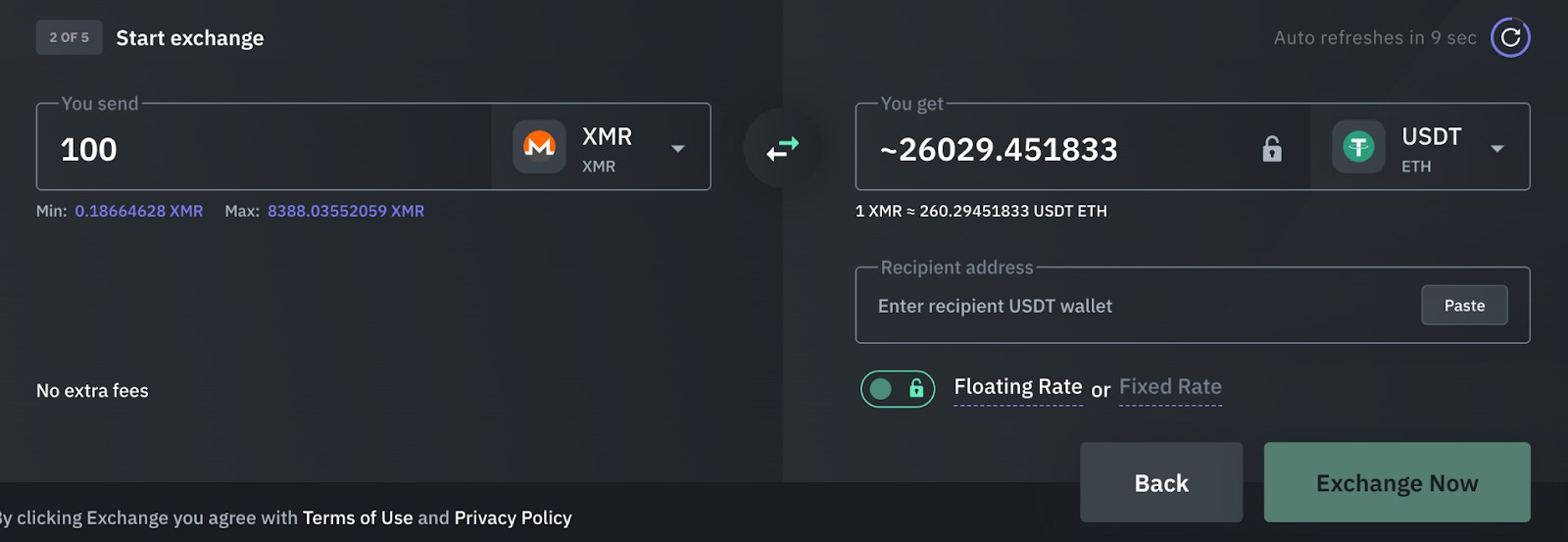
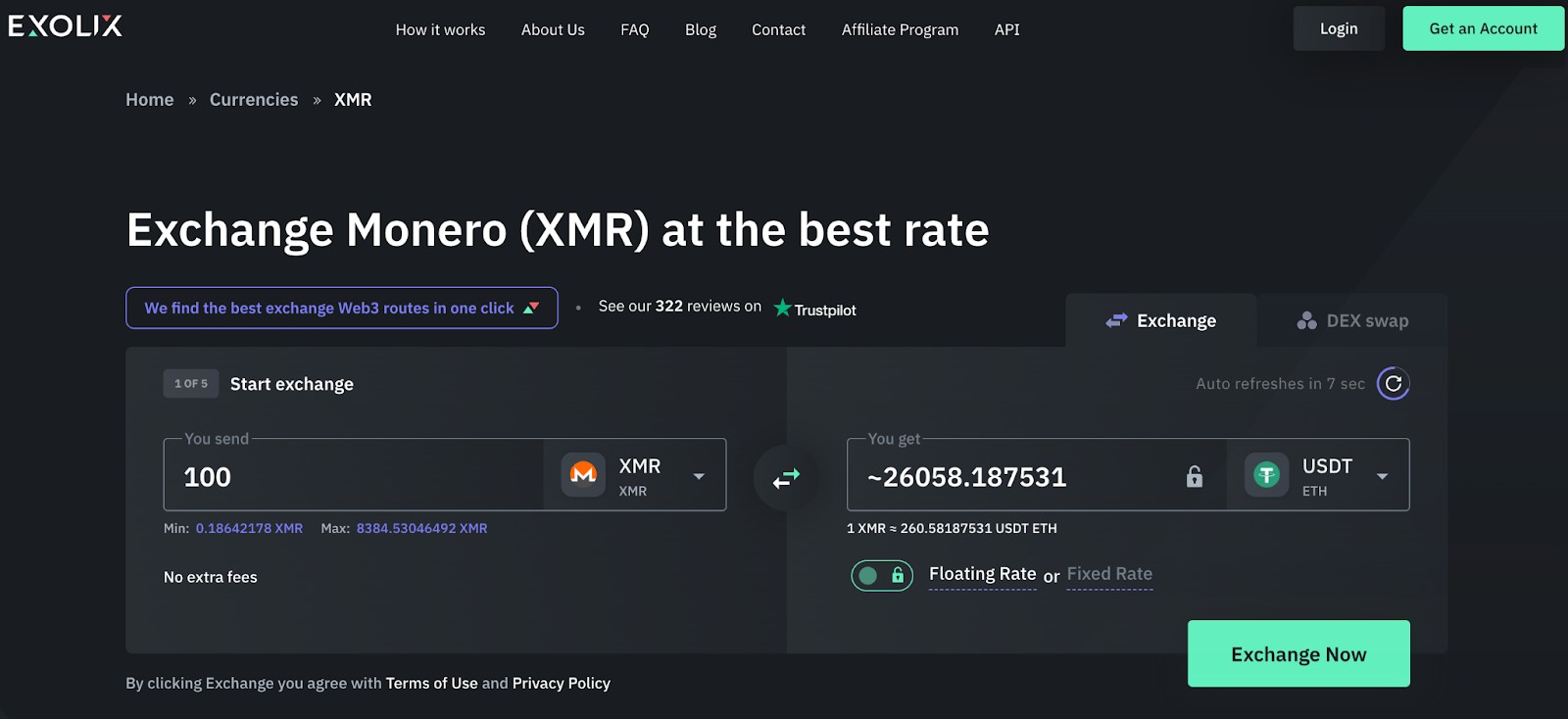
Such users looking to swap Monero anonymously tend to find themselves resorting to services like Exolix, that provide private swaps. These sites allow users to exchange Monero for other currencies without registration, remaining anonymous while gaining access to the broader markets.
Conclusion
Cryptocurrency anonymity is a double-edged sword - empowering and protected, yet misinterpreted and harassed. While privacy coins are immense in their offering of financial freedom, censorship resistance, and user freedom, they are bound by practical reality in the shape of technical as well as regulatory challenges.
However, the requirement for anonymity in transactions is not disappearing. In a digital world increasingly defined by surveillance and data, the financial right to privacy will continue to be a core issue for most people. Cryptocurrency anonymity will continue to seek ways to adapt through default privacy coins or fully customizable privacy layers-informing how we make transactions, store value, and even understand freedom in a digital economy.
FAQs
How is anonymity different from pseudonymity in crypto?
Pseudonymity links transactions to wallet addresses, not real names. True anonymity, as seen in Monero, hides sender, receiver, and amount details completely.
Are anonymous cryptocurrencies legal?
Legality depends on your country. Some jurisdictions permit privacy coins, while others regulate or restrict them due to concerns over illicit use.
Why are privacy coins like Monero controversial?
Despite legitimate uses, privacy coins face criticism for their potential use in money laundering, tax evasion, and untraceable illegal transactions.
What technical methods are used to ensure anonymity in crypto?
Techniques include ring signatures, stealth addresses, and zero-knowledge proofs – used to obscure transaction data on privacy-focused blockchains.
Editors' Top Picks and Insights



Related Articles
Team that worked on the article
Michael has decades of experience as a professional trader, hedge fund manager and incubator of emerging traders. He has built a number of trading analytic platforms with 3 successful exits and has served as the CEO of a regulated CFD broker and as a director of a public company in his late 20’s.
Andreas Kristo Saragih is a seasoned equity research analyst with over a decade of experience across both buy-side and sell-side roles, focused on the Indonesian capital market. He has extensive sector coverage, including banking, consumer goods, retail, real estate, healthcare, transportation, poultry, cement, pharmaceuticals, construction, and infrastructure.
Chinmay Soni is a financial analyst with more than 5 years of experience in working with stocks, Forex, derivatives, and other assets. As a founder of a boutique research firm and an active researcher, he covers various industries and fields, providing insights backed by statistical data.
Index in trading is the measure of the performance of a group of stocks, which can include the assets and securities in it.
Cryptocurrency is a type of digital or virtual currency that relies on cryptography for security. Unlike traditional currencies issued by governments (fiat currencies), cryptocurrencies operate on decentralized networks, typically based on blockchain technology.
An investor is an individual, who invests money in an asset with the expectation that its value would appreciate in the future. The asset can be anything, including a bond, debenture, mutual fund, equity, gold, silver, exchange-traded funds (ETFs), and real-estate property.
Ethereum is a decentralized blockchain platform and cryptocurrency that was proposed by Vitalik Buterin in late 2013 and development began in early 2014. It was designed as a versatile platform for creating decentralized applications (DApps) and smart contracts.
CFD is a contract between an investor/trader and seller that demonstrates that the trader will need to pay the price difference between the current value of the asset and its value at the time of contract to the seller.

-
 Afghanistan
-
 Albania
-
 Algeria
-
 Angola
-
 Argentina
-
 Armenia
-
 Australia
-
 Austria
-
 Azerbaijan
-
 Bahamas
-
 Bahrain
-
 Bangladesh
-
 Belarus
-
 Belgium
-
 Bolivia
-
 Botswana
-
 Brazil
-
 Brunei
-
 Bulgaria
-
 Cambodia
-
 Cameroon
-
 Canada
-
 Chile
Chile
-
 China
China
-
 Colombia
-
 Congo
Congo
-
 Costa Rica
-
 Cote d'Ivoire
-
 Croatia
-
 Cuba
Cuba
-
 Cyprus
-
 Czechia
-
 DR Congo
-
 Denmark
-
 Dominican Republic
-
 Ecuador
-
 Egypt
Egypt
-
 El Salvador
-
 Estonia
-
 Eswatini
-
 Ethiopia
-
 Finland
-
 France
-
 Georgia
-
 Germany
-
 Ghana
Ghana
-
 Greece
-
 Haiti
Haiti
-
 Hong Kong
-
 Hungary
-
 India
India
-
 Indonesia
-
 Iran, Islamic republic
-
 Iraq
Iraq
-
 Ireland
-
 Israel
-
 Italy
Italy
-
 Jamaica
-
 Japan
Japan
-
 Jordan
-
 Kazakhstan
-
 Kenya
Kenya
-
 Korea
Korea
-
 Kuwait
-
 Kyrgyzstan
-
 Laos
Laos
-
 Latvia
-
 Lebanon
-
 Lesotho
-
 Libya
Libya
-
 Lithuania
-
 Luxembourg
-
 Madagascar
-
 Malaysia
-
 Malta
Malta
-
 Mauritius
-
 Mexico
-
 Moldova
-
 Mongolia
-
 Montenegro
-
 Morocco
-
 Mozambique
-
 Myanmar
-
 Namibia
-
 Nepal
Nepal
-
 Netherlands
-
 New Zealand
-
 Nigeria
-
 North Macedonia
-
 Norway
-
 Oman
Oman
-
 Pakistan
-
 Palestine
-
 Panama
-
 Papua New Guinea
-
 Paraguay
-
 Peru
Peru
-
 Philippines
-
 Poland
-
 Portugal
-
 Puerto Rico
-
 Qatar
Qatar
-
 Reunion
-
 Romania
-
 Rwanda
-
 Saudi Arabia
-
 Serbia
-
 Singapore
-
 Slovakia
-
 Slovenia
-
 Somalia
-
 South Africa
-
 Spain
Spain
-
 Sri Lanka
-
 Sweden
-
 Switzerland
-
 Syria
Syria
-
 Taiwan
-
 Tajikistan
-
 Tanzania
-
 Thailand
-
 Trinidad and Tobago
-
 Tunisia
-
 Turkey
-
 UAE
UAE
-
 Uganda
-
 Ukraine
-
 United Kingdom
-
United States
-
 Uruguay
-
 Uzbekistan
-
 Venezuela
-
 Vietnam
-
 Yemen
Yemen
-
 Zambia
-
 Zimbabwe
- Forex
- Crypto












