
Bitcoin Miners From Kenya Are Powering Up the Grid


Editorial Note: While we adhere to strict Editorial Integrity, this post may contain references to products from our partners. Here's an explanation for How We Make Money. None of the data and information on this webpage constitutes investment advice according to our Disclaimer.
In Africa, companies like Gridless Compute are transforming bitcoin mining into a tool for electrification. Instead of draining power, they build mini-grids and sell energy to local communities, using bitcoin miners as flexible, always-on backup consumers to stabilize supply and improve profitability in off-grid regions.
There’s been plenty of heat thrown at bitcoin miners for burning up precious energy, but Kenya-based Gridless Compute is turning that model on its head by announcing its entry to the power production business.
It turns out that selling power to local communities is more profitable than bitcoin mining. The problem, though, is that demand from communities is limited to certain areas of the day. That’s where the bitcoin miners come in as buyers of last resort from power producers.
A remote African mini-grid might struggle to make a business case relying solely on local consumers with periods of high demand followed by plenty of slack. Add a few dozen bitcoin miners to the mix and suddenly the business case looks much more enticing.
“There's stranded power everywhere, whether it's in South Africa or the UK, there's always stranded power because people turn off their lights and their appliances at night. Bitcoin mining is able to consume that stranded power, making it possible for IPPs to establish mini power grids in even the most remote locations,” says Erik Hersman, CEO of Gridless Compute.

A flexible, profitable model for electrifying Africa’s hardest-to-reach regions
Bitcoin mining rigs can be powered up or down in a milli-second, which means they are the ideal, uncomplaining consumer of power. The rigs can be turned off when demand from consumers kicks in, and turned back on at night when demand from consumers is low.
The beauty of this business model is that it incentivises investment in mini-grids in even the most remote locations in Africa – places where national power companies loathe to tread.
Using a real estate analogy, bitcoin miners make the ideal anchor tenants for IPPs. Always-on hydro – of which there is plenty in central Africa – makes the most business sense, though biomass and geothermal are also on the Gridless portfolio.
The company has scouted the central and southern African market for defunct or poorly maintained power generators with plans to revive the best of them.
“Our goal is to purchase and fix these systems. We'll fix the turbine, the civil works and get it rolling again. The community is already there and we can sell that power immediately to them,” adds Hersman.
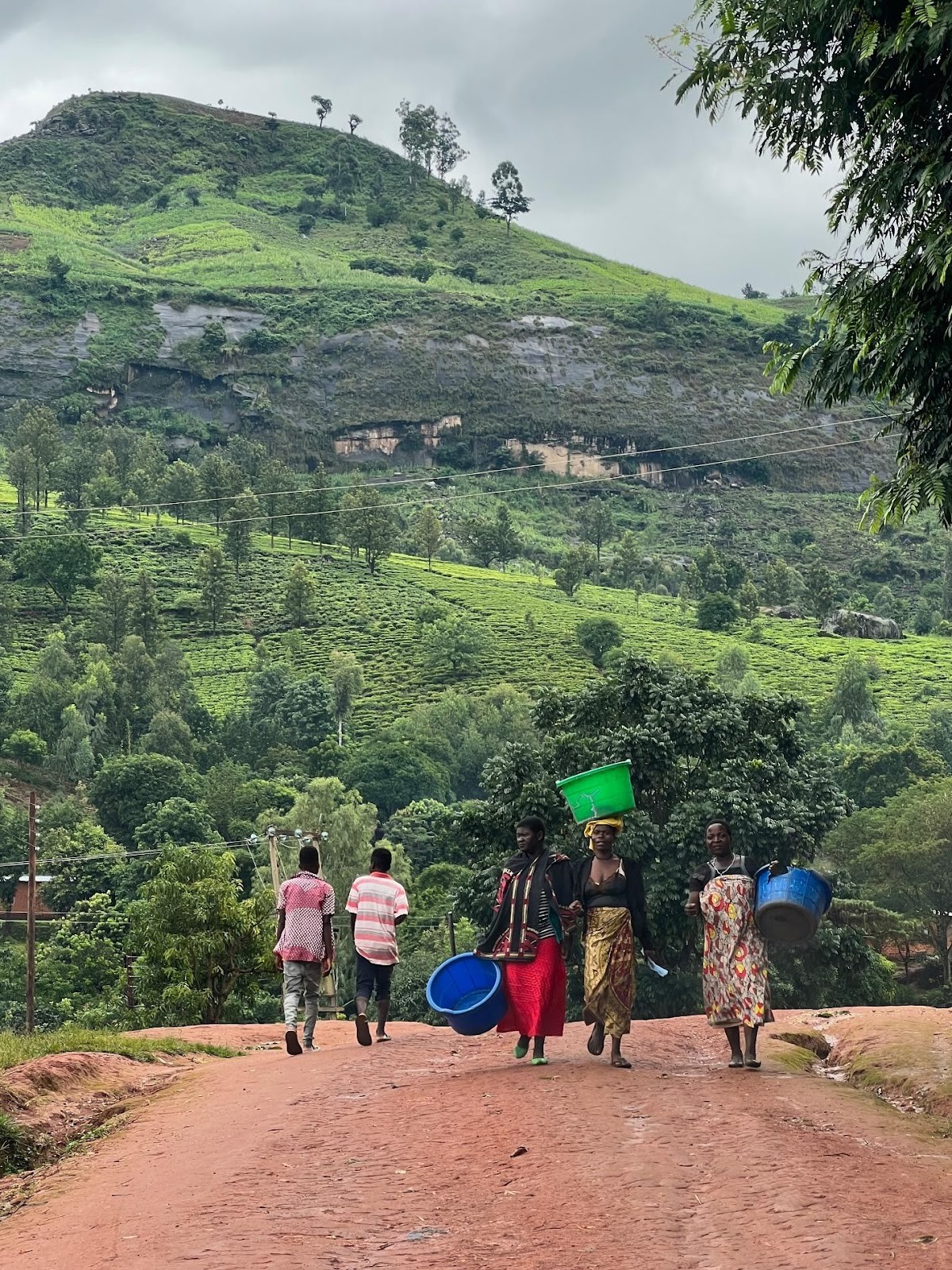
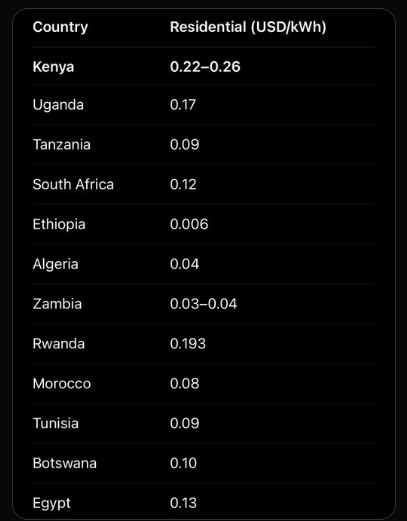
This is where the economics of bitcoin mining comes into play. Bitcoin miners pay 7-10 cents (USD) per kilowatt hour while electricity consumers in rural Africa are paying 30-100 cents per kilowatt hour.
First prize is to sell to consumers willing to pay the higher price, with bitcoin miners being the fall-back. “The incentives are perfectly aligned,” says Hersman. “As a power producer, we would far rather sell electricity to consumers, with our bitcoin mining operations kicking in when normal power demand tapers off. We want to see a more decentralized bitcoin network and to put a dent in the electrification of Africa's 600 million people who do not have any electricity.”
Energy costs in Africa
Power utilities are starting to explore bitcoin mining
Mention bitcoin mining to a power utility engineer five years ago and his eyes would roll, but not anymore. Carel de Jager, CEO of Silver Sixpence and a former engineer at South Africa’s national power utility, Eskom, ran the numbers and found that would have wiped out its debt of about $25 billion had it started bitcoin mining in 2020. That message has started to sink in, with Eskom reportedly now taking a more serious look at this.
The Eskom grid is notoriously creaky but has huge amounts of stranded power during off-peak hours that could be turned to bitcoin mining.
Recently, Ethiopian Electric Power reported that it had generated over $200 million from bitcoin mining, using stranded power that would otherwise be wasted.
Greenidge Generation in Texas provides about 120 megawatts of power to bitcoin miners operating in the area, while Russian bitcoin miner Bitriver is powering its rigs from otherwise wasted flare gas from power utility Gazprom Neft. Canada’s state-owned utility Hydro-Québec has entered the fray by offering cheap renewable power to several bitcoin mining operations.
Bitcoin mining makes rural electrification in Africa profitable

There’s a huge opportunity here in Africa to tie bitcoin mining – as a buyer of last resort – to power generation projects in remote parts. Unlike traditional power infrastructure, which depends on national grid connectivity, this model thrives independently. That massively lowers the capital expenditure required for mini-grid deployment, making previously unviable electrification projects suddenly profitable.
Bitcoin miners provide a guaranteed, programmable demand for electricity, which can stabilize energy output and cash flow for independent power producers (IPPs). This financial certainty gives developers confidence to invest in rural electrification, knowing that surplus energy won’t go to waste. Instead, it will be monetized globally via bitcoin block rewards.
Importantly, this model offers more than just an economic solution – it supports social development. Electrification brings dramatic improvements in education, healthcare, and local business activity. Children can study at night, clinics can refrigerate medicine, and entrepreneurs can digitize their services. While bitcoin mining isn't a universal fix to Africa’s energy gap, it’s an innovative bridge between blockchain finance and grassroots development. When thoughtfully deployed, it can accelerate access to clean energy and support inclusive growth from the bottom up.
Conclusion
An interesting aspect to mining bitcoin in isolated areas is that this effectively allows the power producer to sell energy in the global marketplace using bitcoin miners as the anchor tenant and BTC as the medium of exchange. You may not be connected to a wider power grid, but bitcoin is. That opens fascinating opportunities for the future of development in remote parts of the continent.
FAQs
Is it still profitable to mine bitcoin at home?
It is if you have abundant spare solar or other renewable power. But not necessarily if you’re drawing power from the grid. Recent estimates using the CoinWarz Bitcoin mining calculator suggest that for a modern ASIC miner running at 390Th/s (terahashes per second, a measure of the computational power of a mining device) and consuming 7,215 watts, profitability begins to meaningfully appear only at electricity rates around $0.05/kWh or lower.
How much electricity is needed to mine 1 bitcoin?
As of July 2025, it would take 5,150.3 days to mine one bitcoin at the current bitcoin difficulty level along with the mining hashrate (the processing power of a computer) and block reward (a reward to miners for “validating” transactions on the bitcoin blockchain). For example, a bitcoin mining hashrate of 390Th/s consuming 7,215.00 watts of power at $0.05 per kWh would achieve a block reward of 3.125 BTC.
What do beginners need to mine for bitcoin?
They need a hardware graphics processing unit (GPU), a solid-state drive (SSD) for crypto mining, or an application-specific integrated circuit (ASIC). Other requirements include mining software, a wallet, and a preferred mining pool (if one chooses pool mining option instead of solo mining).
How much is a bitcoin mining setup?
Among the more affordable models, there's the Bitdeer SealMiner A2 Pro Hyd with a hash rate of 500Th/s and a power consumption of 7,450W. It costs $3,958. Among the high-end models, there's the Bitmain Antminer S21e XP Hyd 3U with a hash rate of 860Th/s and a power consumption of 11,180W, priced at $17,210.
Editors' Top Picks and Insights





Related Articles
Team that worked on the article
Ciaran Ryan is a veteran financial journalist based in South Africa, where he covers cryptocurrency, mining, stock markets, and governance for Moneyweb. He also hosts the weekly Moneyweb Crypto Podcast.
Chinmay Soni is a financial analyst with more than 5 years of experience in working with stocks, Forex, derivatives, and other assets. As a founder of a boutique research firm and an active researcher, he covers various industries and fields, providing insights backed by statistical data.
Mirjan Hipolito is a journalist and news editor at Traders Union. She is an expert crypto writer with five years of experience in the financial markets.

-
 Afghanistan
-
 Albania
-
 Algeria
-
 Angola
-
 Argentina
-
 Armenia
-
 Australia
-
 Austria
-
 Azerbaijan
-
 Bahamas
-
 Bahrain
-
 Bangladesh
-
 Belarus
-
 Belgium
-
 Bolivia
-
 Botswana
-
 Brazil
-
 Brunei
-
 Bulgaria
-
 Cambodia
-
 Cameroon
-
 Canada
-
 Chile
Chile
-
 China
China
-
 Colombia
-
 Congo
Congo
-
 Costa Rica
-
 Cote d'Ivoire
-
 Croatia
-
 Cuba
Cuba
-
 Cyprus
-
 Czechia
-
 DR Congo
-
 Denmark
-
 Dominican Republic
-
 Ecuador
-
 Egypt
Egypt
-
 El Salvador
-
 Estonia
-
 Eswatini
-
 Ethiopia
-
 Finland
-
 France
-
 Georgia
-
 Germany
-
 Ghana
Ghana
-
 Greece
-
 Haiti
Haiti
-
 Hong Kong
-
 Hungary
-
 India
India
-
 Indonesia
-
 Iran, Islamic republic
-
 Iraq
Iraq
-
 Ireland
-
 Israel
-
 Italy
Italy
-
 Jamaica
-
 Japan
Japan
-
 Jordan
-
 Kazakhstan
-
 Kenya
Kenya
-
 Korea
Korea
-
 Kuwait
-
 Kyrgyzstan
-
 Laos
Laos
-
 Latvia
-
 Lebanon
-
 Lesotho
-
 Libya
Libya
-
 Lithuania
-
 Luxembourg
-
 Madagascar
-
 Malaysia
-
 Malta
Malta
-
 Mauritius
-
 Mexico
-
 Moldova
-
 Mongolia
-
 Montenegro
-
 Morocco
-
 Mozambique
-
 Myanmar
-
 Namibia
-
 Nepal
Nepal
-
 Netherlands
-
 New Zealand
-
 Nigeria
-
 North Macedonia
-
 Norway
-
 Oman
Oman
-
 Pakistan
-
 Palestine
-
 Panama
-
 Papua New Guinea
-
 Paraguay
-
 Peru
Peru
-
 Philippines
-
 Poland
-
 Portugal
-
 Puerto Rico
-
 Qatar
Qatar
-
 Reunion
-
 Romania
-
 Rwanda
-
 Saudi Arabia
-
 Serbia
-
 Singapore
-
 Slovakia
-
 Slovenia
-
 Somalia
-
 South Africa
-
 Spain
Spain
-
 Sri Lanka
-
 Sweden
-
 Switzerland
-
 Syria
Syria
-
 Taiwan
-
 Tajikistan
-
 Tanzania
-
 Thailand
-
 Trinidad and Tobago
-
 Tunisia
-
 Turkey
-
 UAE
UAE
-
 Uganda
-
 Ukraine
-
 United Kingdom
-
United States
-
 Uruguay
-
 Uzbekistan
-
 Venezuela
-
 Vietnam
-
 Yemen
Yemen
-
 Zambia
-
 Zimbabwe
- Forex
- Crypto












