
Bitget For Muslim Traders: Is Bitget Halal Or Haram, And Does It Offer An Islamic Account?


Editorial Note: While we adhere to strict Editorial Integrity, this post may contain references to products from our partners. Here's an explanation for How We Make Money. None of the data and information on this webpage constitutes investment advice according to our Disclaimer.
Bitget does not currently provide a dedicated Islamic trading account and has not received any official Shariah certification. While some tokens available on the platform may be in line with Islamic values, there are no built-in filters to help users screen them based on religious principles. Therefore, traders must take individual responsibility to research each asset, avoid leveraged trades or derivatives, and make their own assessments.
Major cryptocurrency exchanges, including globally recognized names, often overlook the specific requirements of Islamic finance. This trend leaves Muslim investors in a difficult position, analysing complex products without clear religious guidance. They must carefully evaluate not just the cryptocurrencies themselves but also how the exchange structures its services.
Bitget stands as a notable example of a platform offering a wide variety of trading tools but without adaptations for Shariah compliance. Some features may align partially with Islamic norms, but without authoritative oversight, certainty remains limited. Naturally, this leads many to ask if Bitget is halal, and the answer depends heavily on individual usage and interpretation. This article explores the platform through an Islamic lens and outlines what observant Muslim traders should consider before engaging.
Is there an Islamic account on Bitget?


An Islamic account typically removes interest (riba), speculation (maysir) and excessive uncertainty (gharar) by excluding margin loans, derivatives and ambiguous contracts. It also requires oversight by a recognised Shariah board. Bitget offers none of these features. There is no dedicated Bitget islamic account; all users trade from the same interface, with access to leveraged futures, perpetual swaps and staking products that may involve interest or uncertainty. If you are committed to Shariah compliance, you must manually opt out of margin products and verify each token before trading.
Importantly, some decentralised exchanges and emerging crypto platforms now provide Islamic subaccounts. They work with scholars to pre‑approve assets, limit leverage and provide transparent fee structures. Without such infrastructure at Bitget, any claim that it is halal is the responsibility of the user, not the platform.
Thus, Muslim traders on Bitget should independently verify each token for Shariah compliance through external sources. Specialized services like IsThisCoinHalal and Shariah Review Bureau provide audits of cryptocurrency projects or check our detailed guide on halal cryptocurrencies. This approach helps minimize religious risks in the absence of an Islamic account on Bitget.
Alternatives for Muslim traders
Bitget offers a range of features for Muslim traders who wish to follow Shariah principles while participating in crypto markets. These tools are integrated within the platform’s standard account settings, so users don’t need a separate Bitget Islamic account to access them.
Islamic Coin (ISLM) token and its features
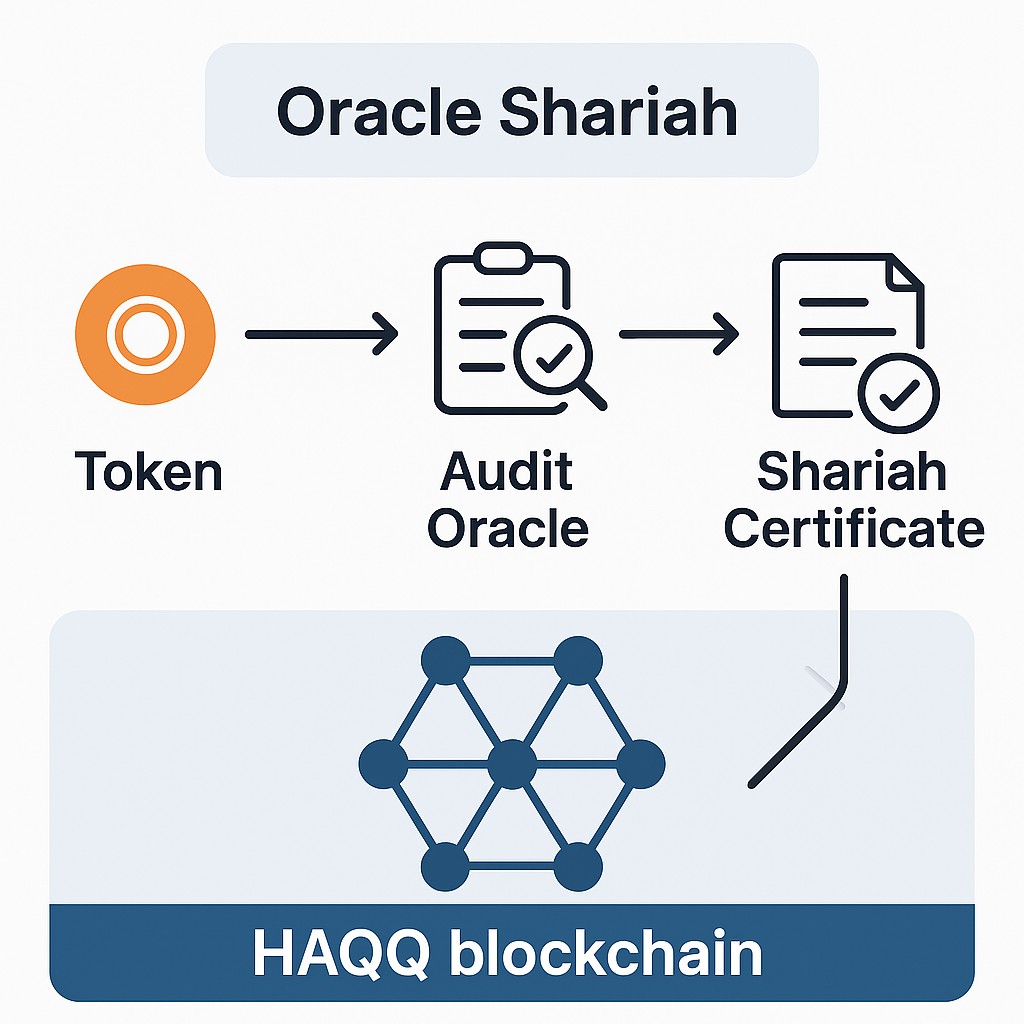
Islamic Coin (ISLM) runs on the HAQQ blockchain and was created specifically for Islamic finance. It follows a proof-of-stake model, avoids any form of interest, and maintains a controlled, transparent issuance to protect against inflation. These features help eliminate riba and meet key ethical standards. The HAQQ network also includes Oracle Shariah, a system that continuously audits transactions for compliance. This built-in certification is especially important for users when it comes to trading options aligned with Islamic values.
Bitget’s materials and recommendations on halal cryptocurrencies
Bitget regularly produces educational content that helps users understand what makes crypto halal. These articles and reviews focus on core Islamic finance principles such as transparency, real-world utility, and avoiding prohibited industries. The platform also screens and curates lists of tokens that meet these criteria. Notably, you don’t need to subscribe to any dedicated Islamic account features on Bitget to access this guidance; it’s freely available to all users, reflecting Bitget’s inclusive approach to ethical trading.
Available Shariah-friendly tokens on Bitget
Among the assets listed on Bitget are ISLM and other digital currencies that meet Shariah guidelines. ISLM was the first such token added to the Innovation Zone and is available for spot trading and staking through programs like On-chain Earn and PoolX. Other tokens, including Tezos, have been reviewed by independent Islamic scholars and meet the necessary standards for compliance.
And for Muslim traders who prefer brokers with dedicated Islamic account structures rather than relying on standard profiles, several alternatives exist. The table below highlights platforms that offer verified swap-free Islamic accounts designed to meet Shariah compliance standards.
| Swap Free | Crypto | Stocks | Currency pairs | Min. deposit, $ | Regulation | TU overall score | Open an account | |
|---|---|---|---|---|---|---|---|---|
| Yes | Yes | Yes | 90 | No | ASIC, FCA, DFSA, BaFin, CMA, SCB, CySec | 9.3 | Go to broker Your capital is at risk.
|
|
| Yes | Yes | Yes | 80 | 100 | CIMA, FCA, FSA (Japan), NFA, IIROC, ASIC, CFTC | 6.47 | Study review | |
| Yes | No | Yes | 57 | 5 | CySEC, FSC (Belize), DFSA, FSCA, FSA (Seychelles), FSC (Mauritius), SCA (United Arab Emirates), CMA (Kenya) | 9.35 | Go to broker Your capital is at risk. |
|
| Yes | Yes | Yes | 90 | 1 | ASIC, VFSC, FSA | 9.25 | Go to broker Your capital is at risk. |
|
| Yes | Yes | Yes | 68 | No | FSC (BVI), ASIC, IIROC, FCA, CFTC, NFA | 6.63 | Go to broker Your capital is at risk. |
Does Bitget comply with Shariah principles
On a structural level, Bitget operates like most global exchanges: users can trade spot, futures, margin and staking. Shariah compliance depends on avoiding interest and excessive uncertainty. Because Bitget does not restrict leverage or derivatives, it fails to meet these requirements by default. Some aspects, such as spot trading of permissible coins, can be halal if you avoid margin and futures. But the lack of built‑in safeguards makes Bitget unsuitable for beginners seeking a ready‑made halal trading environment.
Halal assessment frameworks for digital platforms
Shariah scholars evaluate crypto platforms using frameworks that examine three elements:
Transaction structure. Does the platform allow borrowing with interest or speculative derivatives? If so, it may involve riba or maysir.
Token function. Is the underlying project tied to real economic activity? Tokens that serve as utility tokens for networks (e.g., BTC, ETH) are more likely to be acceptable. Tokens linked to gambling or haram industries are rejected.
Governance and auditing. Does the exchange work with recognised scholars to certify products? A platform lacking this oversight leaves compliance to individual users.
Applying this framework to Bitget shows that it falls short on governance and transaction structure. It offers interest‑bearing products and high‑risk derivatives, and there is no evidence of independent Shariah oversight.
How Bitget Token (BGB) fits Shariah expectations
BGB is Bitget’s utility token, used to pay fees, access launchpad projects and receive trading rebates. Independent analysts note that BGB does not accrue interest and functions as a utility token. This reduces the risk of riba. However, owning BGB still ties you to a platform that offers margin and derivative products. Scholars may consider this indirect association problematic. If you choose to hold BGB, treat it as a utility token rather than a store of value and avoid staking schemes that promise fixed yields, as these may resemble interest.
Lack of formal Shariah certification
At the time of writing, Bitget has not obtained fatwas or endorsements from recognised Shariah boards. In contrast, products like Musaffa’s Shariah Earn or Bybit’s Islamic subaccount are overseen by scholars. The absence of certification means that any claim of compliance is based on Bitget’s marketing rather than objective verification. Muslim traders should therefore treat Bitget as a general-purpose exchange and assume responsibility for evaluating each asset and product.
How Bitget differs from exchanges with Islamic accounts
Exchanges offering Islamic accounts implement structural changes: they disable interest‑bearing products, restrict token listings to approved assets, and often operate under a wakalah or mudarabah contract. Bitget does none of this. It offers the same interface to all users and expects individuals to avoid haram products themselves. If you want a hands‑off halal experience, choose a platform with a dedicated Islamic account and certification. Bitget may still be useful for buying and transferring halal coins, but use it like a generic marketplace rather than an end‑to‑end solution.
Comparison with Bybit and other platforms
Bybit’s Islamic subaccount stands out because it uses an externally audited list of permissible tokens and disables all leveraged products. Users can automate strategies like dollar‑cost averaging (DCA) without worrying about interest or futures. Musaffa’s Shariah Earn goes further by offering profit‑sharing contracts that stake coins like Bitcoin and Ethereum within a wakalah structure. These platforms demonstrate that it is possible to design crypto services around Islamic principles. Until Bitget integrates similar measures, it remains a tool for those willing to do the extra homework.
Limitations of Bitget for Islamic trading
Bitget’s biggest limitation is the lack of built-in filtering and certification. Users must vigilantly avoid the following:
Leverage and derivatives. Futures, perpetual swaps and options all involve speculation and can introduce riba through funding rates.
Interest‑bearing staking. Some staking programmes guarantee returns akin to interest. Seek out programmes that distribute fees collected from network activity instead.
Tokens tied to haram industries. Always investigate the project’s revenue sources and use cases before investing.
Without these precautions, trading on Bitget may expose you to non‑compliant assets.
Alternatives for Muslim traders
To protect your faith and your capital, consider these options:
Bybit Islamic account. Pre‑approved tokens, no derivatives and independent certification. Ideal for beginners wanting simplicity.
Halal robo‑advisors. Platforms like Wahed Invest and Musaffa invest in halal stocks, sukuk and screened crypto assets. They take care of Shariah screening and rebalancing.
Manual filtering with tools. If you insist on using Bitget, combine it with third‑party services like Islamicly or Shariah Review Bureau to check tokens. IFG’s halal crypto list identifies coins like Bitcoin, Ethereum and USDT as permissible.
These alternatives require varying levels of effort but provide greater confidence than trading blindly on a mainstream exchange.
How to minimize religious risks on Bitget
Since Bitget does not offer an official Bitget islamic account, Muslim traders face religious and financial risks linked to the platform’s structure and available products.
Combining spiritual discipline with financial prudence is essential:
Diversify across asset classes. Don’t put all your capital into volatile crypto. Include halal equities or sukuk funds that generate income from tangible assets.
Set stop‑loss and take‑profit levels. Emotional trading can lead to gambling behaviours. Having predefined exit points introduces structure and reduces uncertainty.
Regularly audit your holdings. Markets change, and projects can become non‑compliant if they adopt interest‑bearing mechanisms. Use tools like IFG’s halal crypto list and independent fatwas to reassess your portfolio.
Focus on learning. Islamic finance is evolving. Follow scholars, read reports and participate in community discussions to stay updated. Holborn Assets notes that different scholars sometimes interpret Shariah rules differently, so understanding the reasoning behind rulings helps you make informed decisions.
Watch out for funding fee risks and Shariah compliance traps

A lot of new traders look at Bitget and search for an Islamic account tag, but the bigger concern is the funding fee in perpetual futures. Unlike traditional swaps in Forex, Bitget charges or pays this fee between traders, and if you’re receiving it, that can resemble interest. The practical way to check is to see whether your trading approach forces you to earn or pay funding regularly. If it does, then even without a swap label, your trades may still tie back to riba.
There’s also the issue of exchange-run passive income products. Bitget, like most big platforms, offers staking and “earn” features that look attractive but often rely on margin lending or interest-backed structures. To keep your trading clean, avoid connecting to these programs and stick with straightforward spot trades. A quick check of Bitget’s terms for words like “lending pool” or “collateralized interest” can show whether the platform mixes in non-compliant products. This habit keeps you safe from falling into hidden traps while others only focus on whether swaps are removed.
Conclusion
Bitget does not position itself as an Islamic platform and does not adapt its services to religious restrictions. However, some of the listed tokens comply with Shariah principles, allowing investors to build limited portfolios. The exchange provides analytical materials, but the responsibility for verifying assets remains entirely with the user. This requires constant reliance on external certification and audit sources. Bitget remains a general-purpose platform without built-in filters or specialized tools. This format suits those who are prepared to manage risks manually and restrict their selection of instruments.
FAQs
What types of cryptocurrency trading are prohibited by Sharia?
Leveraged trading, derivatives, futures, and margin trading violate Sharia principles due to speculation, uncertainty, and hidden interest.
How to determine if a token is halal without an audit?
You need to analyze the project documentation, revenue structure, and application areas. The token must be linked to a real asset or service and not contain interest income.
Is it permissible to participate in DAO voting from a Sharia perspective?
Yes, if the DAO manages projects that comply with Islamic principles. Decisions must not affect haram industries or encourage speculation.
Can staking be used within Sharia?
Yes, if staking is based on transparent emission, without guaranteed interest, and with a clear connection to validator services. It is important to avoid schemes with fixed payments.
Related Articles
Team that worked on the article
Alamin Morshed is a contributor at Traders Union. He specializes in writing articles for businesses that want to improve their Google search rankings to compete with their competition.
Dan Blystone began his trading career in 1998 as an arbitrage clerk on the floor of the Chicago Mercantile Exchange (CME). He later traded bond and Eurex futures at proprietary firms such as Altea Trading, gaining valuable experience in high-frequency trading and risk management.
Chinmay Soni is a financial analyst with more than 5 years of experience in working with stocks, Forex, derivatives, and other assets. As a founder of a boutique research firm and an active researcher, he covers various industries and fields, providing insights backed by statistical data.
-
 Afghanistan
-
 Albania
-
 Algeria
-
 Angola
-
 Argentina
-
 Armenia
-
 Australia
-
 Austria
-
 Azerbaijan
-
 Bahamas
-
 Bahrain
-
 Bangladesh
-
 Belarus
-
 Belgium
-
 Bolivia
-
 Botswana
-
 Brazil
-
 Brunei
-
 Bulgaria
-
 Cambodia
-
 Cameroon
-
 Canada
-
 Chile
Chile
-
 China
China
-
 Colombia
-
 Congo
Congo
-
 Costa Rica
-
 Cote d'Ivoire
-
 Croatia
-
 Cuba
Cuba
-
 Cyprus
-
 Czechia
-
 DR Congo
-
 Denmark
-
 Dominican Republic
-
 Ecuador
-
 Egypt
Egypt
-
 El Salvador
-
 Estonia
-
 Eswatini
-
 Ethiopia
-
 Finland
-
 France
-
 Georgia
-
 Germany
-
 Ghana
Ghana
-
 Greece
-
 Haiti
Haiti
-
 Hong Kong
-
 Hungary
-
 India
India
-
 Indonesia
-
 Iran, Islamic republic
-
 Iraq
Iraq
-
 Ireland
-
 Israel
-
 Italy
Italy
-
 Jamaica
-
 Japan
Japan
-
 Jordan
-
 Kazakhstan
-
 Kenya
Kenya
-
 Korea
Korea
-
 Kuwait
-
 Kyrgyzstan
-
 Laos
Laos
-
 Latvia
-
 Lebanon
-
 Lesotho
-
 Libya
Libya
-
 Lithuania
-
 Luxembourg
-
 Madagascar
-
 Malaysia
-
 Malta
Malta
-
 Mauritius
-
 Mexico
-
 Moldova
-
 Mongolia
-
 Montenegro
-
 Morocco
-
 Mozambique
-
 Myanmar
-
 Namibia
-
 Nepal
Nepal
-
 Netherlands
-
 New Zealand
-
 Nigeria
-
 North Macedonia
-
 Norway
-
 Oman
Oman
-
 Pakistan
-
 Palestine
-
 Panama
-
 Papua New Guinea
-
 Paraguay
-
 Peru
Peru
-
 Philippines
-
 Poland
-
 Portugal
-
 Puerto Rico
-
 Qatar
Qatar
-
 Reunion
-
 Romania
-
 Rwanda
-
 Saudi Arabia
-
 Serbia
-
 Singapore
-
 Slovakia
-
 Slovenia
-
 Somalia
-
 South Africa
-
 Spain
Spain
-
 Sri Lanka
-
 Sweden
-
 Switzerland
-
 Syria
Syria
-
 Taiwan
-
 Tajikistan
-
 Tanzania
-
 Thailand
-
 Trinidad and Tobago
-
 Tunisia
-
 Turkey
-
 UAE
UAE
-
 Uganda
-
 Ukraine
-
 United Kingdom
-
United States
-
 Uruguay
-
 Uzbekistan
-
 Venezuela
-
 Vietnam
-
 Yemen
Yemen
-
 Zambia
-
 Zimbabwe
- Forex
- Crypto












