
BitMart Launchpad Explained: Full Guide for 2026


Editorial Note: While we adhere to strict Editorial Integrity, this post may contain references to products from our partners. Here's an explanation for How We Make Money. None of the data and information on this webpage constitutes investment advice according to our Disclaimer.
The BitMart launchpad gives users early access to selected token sales before they list on the exchange. To join in 2026, you must hold enough BMX to qualify for snapshots or ticket allocation, meet any regional KYC requirements, and commit the required assets during the sale window. Tokens are distributed inside your BitMart account, often shortly before or at listing time.
With growing demand for higher returns, many users are exploring launchpads as a way to join new token offerings early. BitMart Launchpad is commonly reviewed by traders who want a simple entry process and broad project access. This article explains what BitMart launchpad is, how it works, the steps to participate, and the benefits and risks that matter most for users in 2026.
BitMart launchpad explained

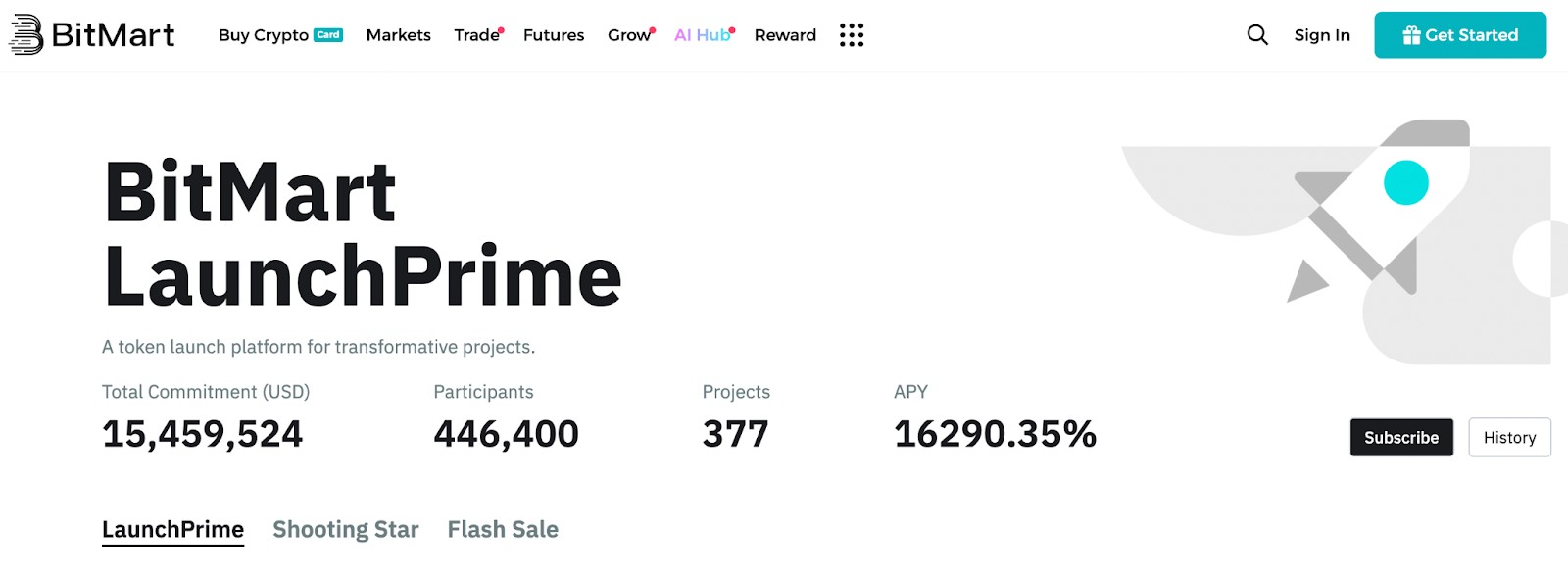
The BitMart launchpad is an exchange-based token sale platform where new projects offer their tokens to users before public listing. Each project is reviewed by BitMart, which helps filter out low quality launches and gives users clearer information about tokenomics, supply, and vesting. Because everything happens inside a BitMart account, users do not need external wallets or on-chain steps. The flow is designed to make early-stage Web3 investing simple, structured, and accessible for beginners and active traders alike.
How BitMart launchpad works
The launch process on the BitMart launchpad follows a structured flow that is meant to reduce confusion and make early-stage token sales easier to join. It generally includes three core components.
Project selection
BitMart reviews each project before it appears on the launchpad. This screening helps reduce low quality or fraudulent offerings and ensures users receive clear information about tokenomics, supply plans, and vesting before committing funds.
Access through BMX holding or ticket qualification
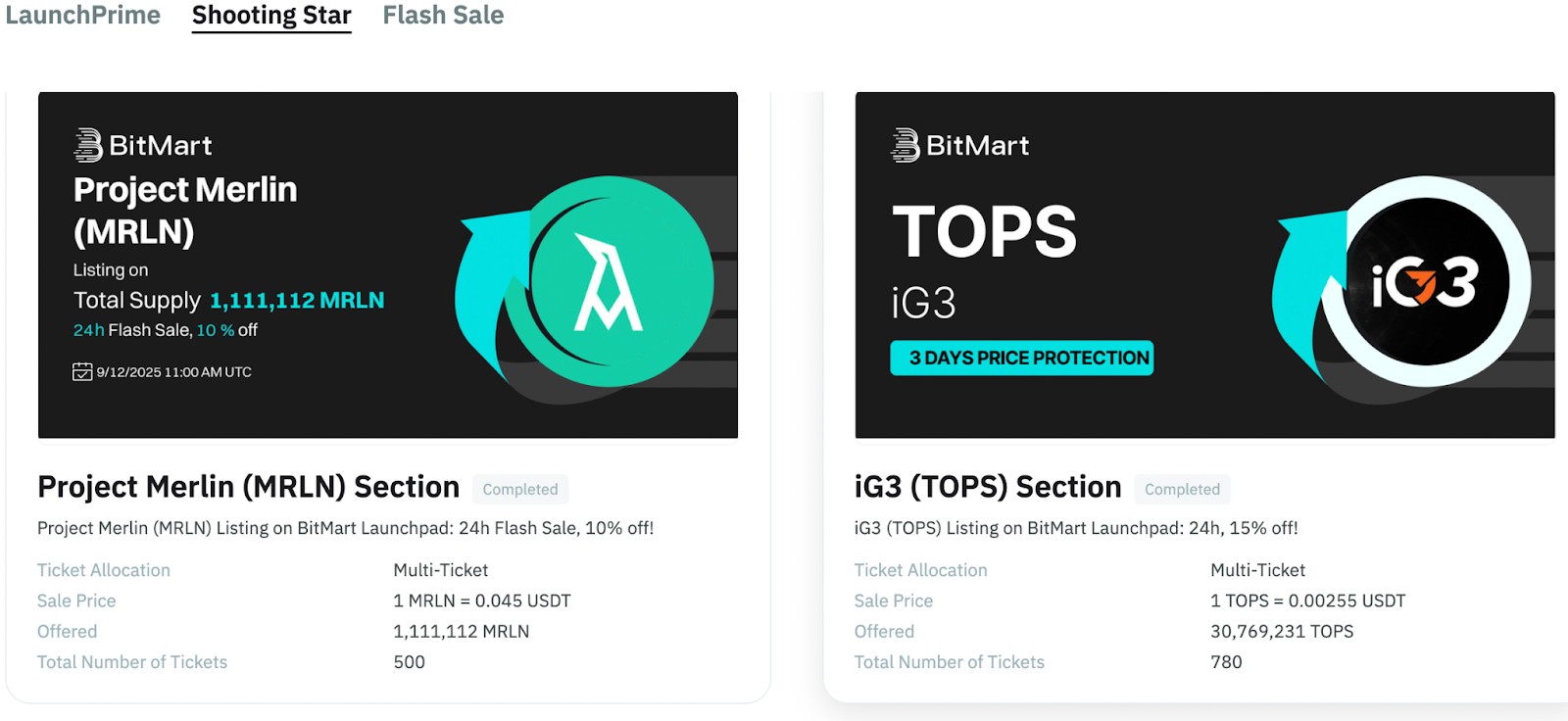
Eligibility usually depends on holding BMX, BitMart’s native token, or another required asset such as USDT. Depending on the sale, BitMart may use BMX snapshots, proportional allocation, ticket based systems, subscription caps, or mixed models. Higher BMX balances often mean better allocation potential or stronger ticket odds.
Participation through the BitMart platform
All steps take place inside the user’s BitMart account. There is no need for external wallets, smart contract approvals, or bridges. Users qualify with BMX or other assets, enter the sale window, commit funds, and receive tokens after distribution according to the event rules.
Pros and cons of BitMart launchpad
- Pros
- Cons
Curated projects. BitMart screens launch candidates, lowering the chance of running into obvious scams compared with fully open launchpads.
High launch frequency. BitMart runs regular events, giving users more chances to participate in early stage deals.
Simple participation flow. Everything happens inside your BitMart account, with a guided interface and no need for external wallets.
Clear utility for BMX. BMX holding is directly connected to launchpad access, giving BMX a practical role beyond trading discounts.
Fast path to liquidity. Projects usually list on BitMart soon after distribution, so users often get an early trading venue without waiting for third party listings.
KYC or regional limits. Full participation may require verification, and some regions may be restricted from certain sales.
Tier dependency on BMX holding. Allocation size often depends on BMX snapshots, so users may feel pressure to buy and hold a token they might not otherwise want.
Allocation dilution. Because BitMart has a large global user base, popular launches can result in small per user allocations.
Early stage risk remains high. Even curated projects can fail, deliver weak performance, or drop sharply after listing.
Possible vesting limits. Many sales include lockups and gradual unlocks, reducing short term liquidity.
How to join BitMart launchpad? Step-by-step guide
Getting started with BitMart launchpad is straightforward, even if you are new to early-stage token sales. The process is built around your BitMart account, BMX or asset eligibility, and participation through launchpad. Here is how to join a launch from start to finish.
Create a BitMart account and complete verification
Many launchpad sales require a verified account, and eligibility can depend on your region.
Obtain BMX or the required sale asset
Most sales use BMX for qualification and USDT or another specified token for the actual subscription amount.
Hold BMX during the snapshot window if required
Your average BMX balance affects your tier, ticket odds, allocation size, or access timing.
Open the launchpad inside your BitMart account
Review the project details, tokenomics, supply schedule, vesting rules, and allocation structure.
Commit funds during the sale window
When the event begins, follow the on-screen instructions to subscribe using your eligible assets.
Receive tokens after distribution
Tokens are released to your BitMart wallet once the sale ends, with immediate or partial unlocks depending on vesting.
Track unlocks and trading
BitMart provides vesting timelines and listing information so you can plan exits or manage allocations.

Risks and warnings
BitMart launchpad offers early access to new tokens, but the risk level is high. Prices can move sharply after listing, and even vetted projects may fail or underperform. There is no guarantee a token will hold value once public trading begins.
Participation also carries structural risks. Allocations often include vesting or lockups, so you may not be able to sell your full amount immediately. Access depends on holding BMX or earning ticket chances, which means your results can change if the BMX price moves during the snapshot or holding period.
Use only the official BitMart platform to avoid scams, and commit only amounts you can afford to lose.
Fees on BitMart launchpad
There is no single fixed BitMart launchpad fee that applies to every event. Your actual cost depends on the structure of the specific sale. In most cases, expenses come from three areas.
Opportunity cost of holding BMX. You may need BMX for eligibility or ticket qualification, which means committing capital that could have been used elsewhere.
Standard BitMart platform costs. These can include spot trading fees when buying BMX or USDT, and withdrawal fees if you move funds in or out of the exchange.
Event level conditions. Each sale has its own price, subscription rules, and vesting model, which affects when you can trade or withdraw your tokens.
Always read the sale page carefully so you understand the full cost before committing funds.
Security and regulation
BitMart is a long-running global cryptocurrency exchange with a large international user base. BitMart launchpad sales take place entirely within BitMart’s custodial environment, which streamlines distribution and settlement. This structure makes participation easy but also introduces platform risk, since users rely on BitMart to hold funds and deliver tokens correctly.
Regulatory access varies widely by region. Some users can join most launchpad sales after standard verification, while others may face restrictions due to local compliance rules. It’s important to understand that regulation improves transparency but does not guarantee token performance. All token sales remain speculative, and outcomes depend heavily on project fundamentals and market conditions rather than on BitMart’s infrastructure.
BitMart launchpad compared with other launchpads
BitMart launchpad follows a more exchange native, lottery-driven curation model than many popular launchpads. The main differences are in access rules, deal flow, and custody.
| Feature | BitMart launchpad | Typical crypto launchpads |
|---|---|---|
| Project selection | Curated with frequent launches | Often fewer launches or lighter filtering |
| Regulation focus | Region dependent, global | Often offshore or lightly regulated |
| Access model | BMX holding or snapshots plus ticket lottery and subscription caps | Native token staking, first come sales, or open access |
| Wallet experience | Built into BitMart account with guided flow | Often requires external wallets and manual steps |
| Custody | Custodial during sale and distribution | Varies, many are non custodial |
| Best for | Users wanting frequent, simple early access | Users chasing fewer big launches or on chain control |
| Main tradeoff | Lottery uncertainty plus BMX exposure | More freedom but higher scam and UX risk |
This makes BitMart launchpad a solid option for investors who want a steady pipeline of early stage opportunities in a simple exchange environment, while other launchpads may suit traders who prioritize non-custodial control or a smaller number of premium launches.
Who BitMart launchpad is best for
BitMart launchpad is best suited for users who want frequent, simple access to early-stage token sales without dealing with external wallets or on-chain transaction steps. It works particularly well for:
active investors who want a steady pipeline of curated launches rather than waiting for occasional drops;
users comfortable holding BMX to qualify for allocations or improve their lottery odds;
people who prefer an exchange-based experience with guided participation and automatic token distribution.
However, BitMart launchpad may be less suitable if you:
want KYC-free participation;
prefer guaranteed allocations rather than lottery-based sales;
do not want exposure to BMX price fluctuations, which can impact your qualification or allocation potential;
focus exclusively on ultra-high-risk microcap launches typically found on smaller, non-custodial platforms.
This creates a clear user profile: BitMart launchpad works best for disciplined participants seeking convenient early access, but not for those wanting anonymity or maximum allocation certainty.
While the BitMart launchpad focuses on early access to new tokens, many users also look at other well known platforms before deciding where to trade after a launch. Comparing a few of the best crypto exchanges in your region can help you understand where liquidity is strongest, how different markets react to new listings, and which platforms align best with your longer term holding or trading plans once the launchpad phase is over.
| OKX | Coinbase | Crypto.com | Cryptohopper | BTCC | |
|---|---|---|---|---|---|
|
Min. Deposit, $ |
10 | 10 | 1 | No | 10 |
|
Coins Supported |
600+ | 400+ | 400+ | 1000 | 399 |
|
Spot Taker fee, % |
0.1 | 0.5 | 0.5 | 0 | 0.3 |
|
Spot Maker Fee, % |
0.08 | 0.5 | 0.25 | 0 | 0.2 |
|
Alerts |
Yes | Yes | Yes | Yes | No |
|
Copy trading |
Yes | No | No | Yes | Yes |
|
TU overall score |
8.48 | 7.84 | 7.8 | 7.76 | 7.6 |
|
Open an account |
Go to broker Your capital is at risk. |
Go to broker Your capital is at risk. |
Go to broker Your capital is at risk. |
Go to broker Your capital is at risk. |
Go to broker Your capital is at risk.
|
Select carefully and control BMX-linked risk

What stands out about the BitMart launchpad is how effectively it streamlines early token participation while still requiring users to remain disciplined. The platform removes much of the typical Web3 friction, which makes it attractive to beginners and practical for experienced investors who want frequent curated opportunities. However, convenience does not reduce the underlying risk of early stage tokens. BMX based eligibility, ticket odds, and allocation caps mean that outcomes depend not only on the project you choose but also on how you manage your exposure during snapshot periods.
The strongest results tend to come from users who treat each sale as a separate, fully budgeted decision. Joining too many launches or increasing BMX holdings without a plan dilutes allocations and amplifies portfolio risk. A thoughtful approach that prioritizes token fundamentals, unlock schedules, utility, and demand drivers consistently outperforms hype driven participation. BitMart provides the structure and accessibility, but disciplined filtering is what turns the platform into a genuinely useful tool.
Conclusion
BitMart launchpad offers a fast and structured way to access early-stage token sales inside an easy to use exchange environment. The platform focuses on frequent launches, simple subscription mechanics, and a clear role for BMX in determining eligibility and allocation potential. This makes it appealing for users who want regular exposure to new projects without the technical steps required on on-chain launchpads.
However, early access is never a guarantee of profit. Outcomes depend on the quality of each project, market conditions, vesting limits, and your approach to managing risk. Allocation size can also be small due to demand, and BMX price movements can affect your qualification strategy. If you size positions carefully, avoid emotional participation, and treat each event as a separate investment decision, BitMart launchpad can be a helpful addition to a broader crypto portfolio.
FAQs
Does BitMart guarantee allocations for launchpad participants?
No. Allocation depends on the event model. Some sales use fixed caps, while others use BMX based ticket lotteries. High demand can still lead to small allocations even if you meet all requirements.
What is a smart way to approach allocation sizes on launchpad?
Set a fixed risk budget for early tokens and stick to it, regardless of how attractive or frequent launches look.
Are launchpad tokens automatically added to spot trading pairs?
Most launchpad tokens list on BitMart shortly after distribution, but not every project is guaranteed an immediate spot pair. Listing timing depends on internal reviews and liquidity readiness.
What happens if a launchpad project delays its token distribution?
If a project postpones distribution, BitMart usually posts an updated schedule in the launchpad announcement. Allocations remain reserved, but token delivery may shift based on the project’s technical or compliance needs.
Related Articles
Team that worked on the article
Dan Blystone began his trading career in 1998 as an arbitrage clerk on the floor of the Chicago Mercantile Exchange (CME). He later traded bond and Eurex futures at proprietary firms such as Altea Trading, gaining valuable experience in high-frequency trading and risk management.
Chinmay Soni is a financial analyst with more than 5 years of experience in working with stocks, Forex, derivatives, and other assets. As a founder of a boutique research firm and an active researcher, he covers various industries and fields, providing insights backed by statistical data.
-
 Afghanistan
-
 Albania
-
 Algeria
-
 Angola
-
 Argentina
-
 Armenia
-
 Australia
-
 Austria
-
 Azerbaijan
-
 Bahamas
-
 Bahrain
-
 Bangladesh
-
 Belarus
-
 Belgium
-
 Bolivia
-
 Botswana
-
 Brazil
-
 Brunei
-
 Bulgaria
-
 Cambodia
-
 Cameroon
-
 Canada
-
 Chile
Chile
-
 China
China
-
 Colombia
-
 Congo
Congo
-
 Costa Rica
-
 Cote d'Ivoire
-
 Croatia
-
 Cuba
Cuba
-
 Cyprus
-
 Czechia
-
 DR Congo
-
 Denmark
-
 Dominican Republic
-
 Ecuador
-
 Egypt
Egypt
-
 El Salvador
-
 Estonia
-
 Eswatini
-
 Ethiopia
-
 Finland
-
 France
-
 Georgia
-
 Germany
-
 Ghana
Ghana
-
 Greece
-
 Haiti
Haiti
-
 Hong Kong
-
 Hungary
-
 India
India
-
 Indonesia
-
 Iran, Islamic republic
-
 Iraq
Iraq
-
 Ireland
-
 Israel
-
 Italy
Italy
-
 Jamaica
-
 Japan
Japan
-
 Jordan
-
 Kazakhstan
-
 Kenya
Kenya
-
 Korea
Korea
-
 Kuwait
-
 Kyrgyzstan
-
 Laos
Laos
-
 Latvia
-
 Lebanon
-
 Lesotho
-
 Libya
Libya
-
 Lithuania
-
 Luxembourg
-
 Madagascar
-
 Malaysia
-
 Malta
Malta
-
 Mauritius
-
 Mexico
-
 Moldova
-
 Mongolia
-
 Montenegro
-
 Morocco
-
 Mozambique
-
 Myanmar
-
 Namibia
-
 Nepal
Nepal
-
 Netherlands
-
 New Zealand
-
 Nigeria
-
 North Macedonia
-
 Norway
-
 Oman
Oman
-
 Pakistan
-
 Palestine
-
 Panama
-
 Papua New Guinea
-
 Paraguay
-
 Peru
Peru
-
 Philippines
-
 Poland
-
 Portugal
-
 Puerto Rico
-
 Qatar
Qatar
-
 Reunion
-
 Romania
-
 Rwanda
-
 Saudi Arabia
-
 Serbia
-
 Singapore
-
 Slovakia
-
 Slovenia
-
 Somalia
-
 South Africa
-
 Spain
Spain
-
 Sri Lanka
-
 Sweden
-
 Switzerland
-
 Syria
Syria
-
 Taiwan
-
 Tajikistan
-
 Tanzania
-
 Thailand
-
 Trinidad and Tobago
-
 Tunisia
-
 Turkey
-
 UAE
UAE
-
 Uganda
-
 Ukraine
-
 United Kingdom
-
United States
-
 Uruguay
-
 Uzbekistan
-
 Venezuela
-
 Vietnam
-
 Yemen
Yemen
-
 Zambia
-
 Zimbabwe
- Forex
- Crypto












