Is Coinbase Different From Coinbase Wallet?



Editorial Note: While we adhere to strict Editorial Integrity, this post may contain references to products from our partners. Here's an explanation for How We Make Money. None of the data and information on this webpage constitutes investment advice according to our Disclaimer.
Coinbase is different from Coinbase Wallet. Coinbase is a custodial crypto exchange where the platform holds your assets and private keys for trading convenience. Coinbase Wallet is a separate self-custody wallet that gives you full control over your private keys and direct access to blockchains and Web3 apps.
Although the names are similar, Coinbase and Coinbase Wallet are designed for very different roles. One acts as a centralized platform that simplifies buying and trading crypto, while the other is a self-custody tool built for direct blockchain use. Understanding this distinction early helps avoid confusion and makes it easier to choose the right product for your goals and risk tolerance.
Coinbase and Coinbase Wallet

Coinbase and Coinbase Wallet are separate products created by Coinbase, but they serve different purposes. The main difference is how your crypto is held and who controls it. Coinbase is built to make buying, selling, and trading crypto simple through a centralized platform. Coinbase Wallet is designed for users who want direct access to blockchains and Web3 applications.
In practical terms, Coinbase manages crypto on your behalf, while Coinbase Wallet gives you full control over your assets. This difference affects security, responsibility, and how you interact with the wider crypto ecosystem.
What is Coinbase?
Coinbase is a centralized cryptocurrency exchange that allows users to buy, sell, and trade digital assets through a regulated platform. It is available via the web and mobile apps and is designed to make crypto access simple, especially for beginners.
When using Coinbase, you create an account, complete identity verification, and then manage your crypto through the platform. Technically, Coinbase is an exchange with a built-in custodial wallet.
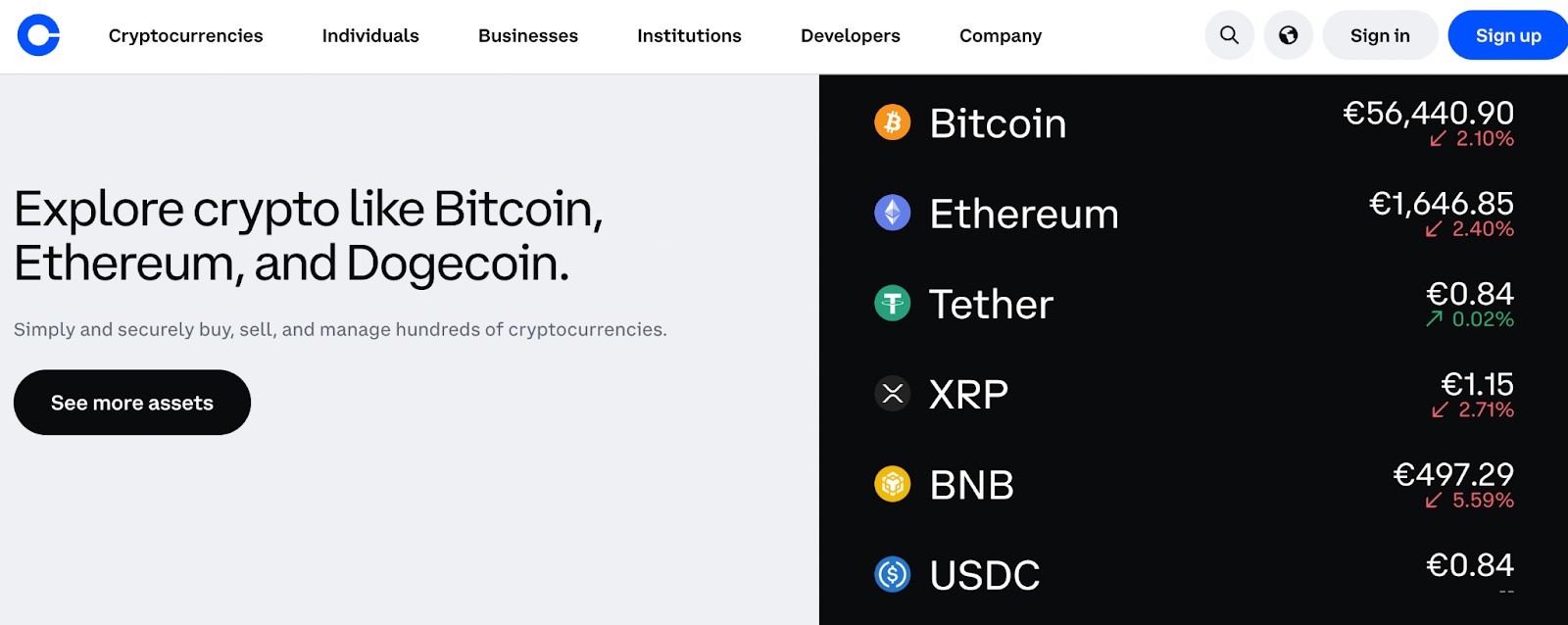
With Coinbase, users can:
Buy and sell crypto. Use bank transfers or cards to trade popular assets.
Trade on the exchange. Convert between supported cryptocurrencies.
Earn rewards. Stake certain coins where available.
Store crypto custodially. Assets are held in your Coinbase account.
Because Coinbase is custodial, the platform controls the private keys for assets held on the exchange. This is the main difference between Coinbase and Coinbase Wallet. Coinbase manages security and access, which improves convenience but reduces direct ownership.
This setup is ideal for users who prioritize ease of use, customer support, and fast access to fiat, which is why many beginners choose Coinbase over a self-custody wallet at the start.
What is Coinbase Wallet?
Coinbase Wallet is a self-custody crypto wallet that allows users to store and manage digital assets without relying on an exchange. Unlike the Coinbase exchange, it does not hold your funds or private keys. You remain fully responsible for your crypto.
Coinbase Wallet works as a standalone mobile app and browser extension. You can create a wallet instantly without identity verification. This is why many users ask “what is the difference between Coinbase Wallet vs Coinbase” or “is Coinbase Wallet separate from Coinbase”. The wallet exists directly on the blockchain, not on Coinbase servers.
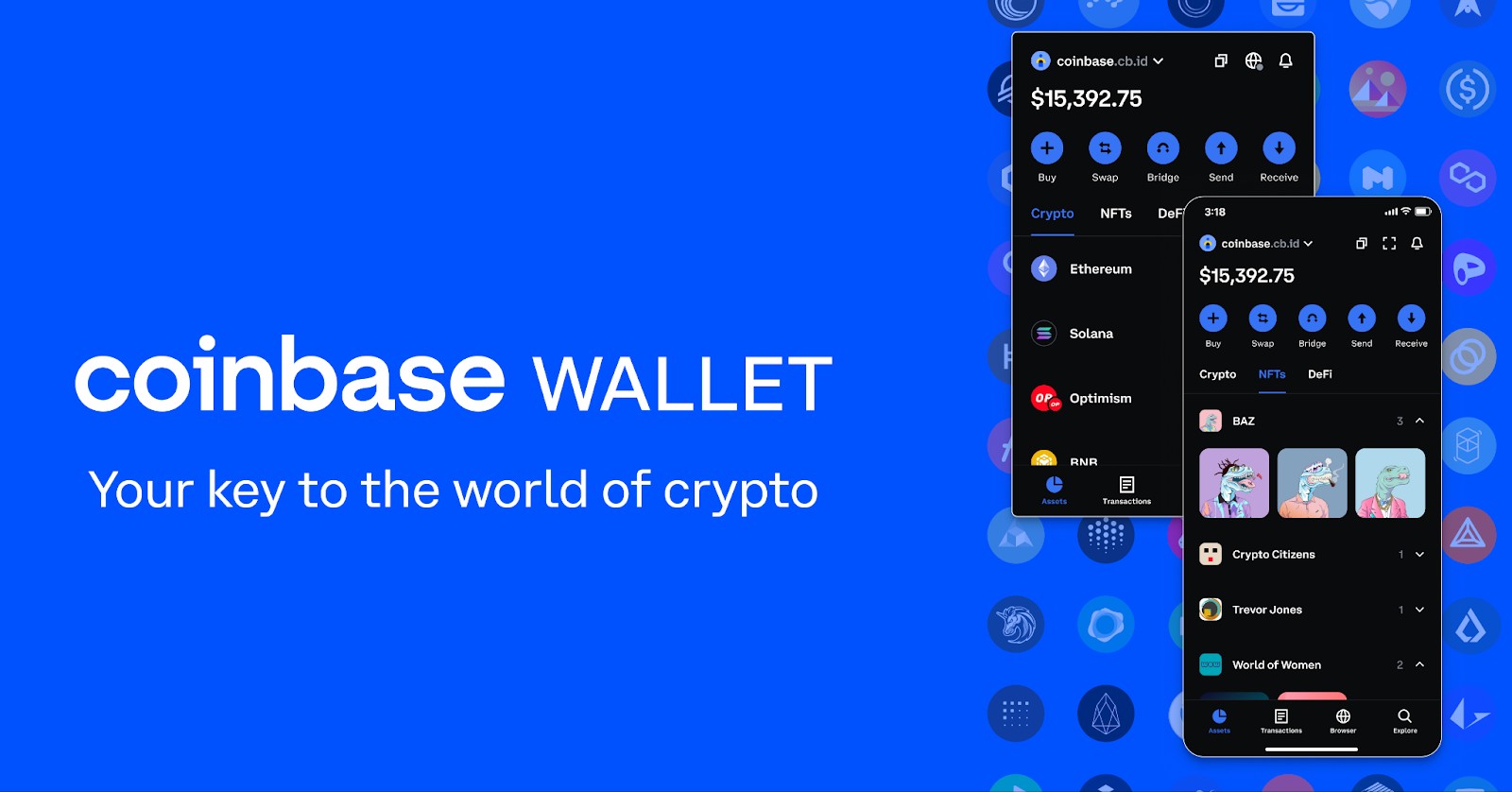
With Coinbase Wallet, users can:
Control private keys. You manage your recovery phrase and asset ownership.
Store crypto assets. Hold tokens across multiple blockchain networks.
Use Web3 applications. Connect to DeFi platforms and decentralized apps.
Manage NFTs. Store and interact with NFT collections.
Swap and bridge tokens. Exchange assets across supported networks.
Because Coinbase Wallet is non-custodial, Coinbase cannot freeze funds, reverse transactions, or recover lost access.
Coinbase vs Coinbase Wallet differences
Understanding the difference between Coinbase and Coinbase Wallet comes down to how custody, access, and responsibility work in practice. Although both products are linked by branding, they function very differently.
Custody and ownership
Coinbase. Custodial. The platform holds your private keys and manages access to your crypto.
Coinbase Wallet. Non-custodial. You control the private keys and recovery phrase yourself.
Purpose and use case
Coinbase app. Built for buying, selling, and trading crypto using fiat money.
Coinbase Wallet. Built for storing crypto, using DeFi, interacting with dApps, and managing NFTs.
Account type and onboarding
Coinbase exchange account. Requires identity verification and account approval.
Coinbase Wallet account. No KYC. A wallet can be created instantly.
Supported assets and networks
Coinbase supports only assets approved for trading on the exchange. Coinbase Wallet supports a wider range of blockchains and tokens, including many that are not listed on Coinbase.
Control vs convenience
Coinbase. Easier recovery, customer support, and simplified user experience.
Coinbase Wallet. Full control over funds, but full responsibility for security.
Fees on Coinbase vs Coinbase Wallet
Fees are one of the clearest ways to understand the difference between Coinbase and Coinbase Wallet. The costs you face depend on whether you are using a centralized exchange or a self-custody wallet.
Fees on Coinbase
When using Coinbase, fees are linked to trading and account activity on the exchange.
On Coinbase, users may pay:
Trading fees. Charged based on order type and recent trading volume.
Conversion spreads. Applied to instant buy and sell transactions.
Withdrawal fees. Depends on the asset and blockchain network used.
These fees cover exchange services such as custody, order execution, and customer support.
Fees on Coinbase Wallet
Coinbase Wallet does not charge fees for holding crypto, but blockchain-related costs still apply.
On Coinbase Wallet, users may pay:
Network gas fees. Required to process transactions on supported blockchains.
Swap and routing fees. Applied when exchanging tokens inside the wallet.
These fees are paid to blockchain validators or liquidity providers, not to Coinbase itself.
Is Coinbase Wallet safer than Coinbase?
Security is often at the center of discussions on Coinbase vs Coinbase Wallet. Whether one option is safer depends on how you define risk and how much responsibility you are willing to take on.
Security on Coinbase
Coinbase uses centralized security systems to protect user accounts and assets.
On Coinbase, security includes:
Custodial protection. Most assets are held in offline cold storage.
Account safeguards. Two-factor authentication and monitoring systems.
Recovery options. Support can help restore access if credentials are lost.
This model reduces the chance of user error but introduces reliance on a centralized platform.
Security on Coinbase Wallet
Coinbase Wallet shifts security responsibility entirely to the user.
With Coinbase Wallet, security depends on:
Private key control. Only you hold the recovery phrase.
Self-custody protection. No third party can freeze or access funds.
Optional hardware wallets. Extra protection through cold storage devices.
The difference between Coinbase and Coinbase Wallet in terms of safety is about responsibility. Coinbase protects accounts through centralized controls, while Coinbase Wallet protects ownership by removing intermediaries. The safer option depends on whether you trust a platform more than your own ability to secure private keys.
Coinbase vs Coinbase Wallet features
Looking at features side by side helps clarify how each product is meant to be used. The difference between Coinbase and Coinbase Wallet becomes obvious once you compare what each one is built to do.
Features on Coinbase
Coinbase focuses on exchange-based tools and ease of use.
Key features on Coinbase include:
Fiat on-ramps. Buy and sell crypto using bank transfers or cards.
Spot trading. Convert and trade supported cryptocurrencies.
Earning options. Staking and rewards where available.
Account tools. Transaction history, reports, and tax summaries.
These features are designed for simplicity, speed, and regulated access to crypto markets.
Features on Coinbase Wallet
Coinbase Wallet focuses on on-chain activity and self-custody.
Key features on Coinbase Wallet include:
Self-custody storage. Full control over private keys.
Multi-chain support. Access to multiple blockchain networks.
Web3 access. Connect to DeFi apps and dApps directly.
NFT management. Store and interact with NFT collections.
These features support users who want deeper interaction with the crypto ecosystem.
Should I keep my crypto in Coinbase or Coinbase Wallet?
Deciding where to store your crypto depends on how you plan to use it. The difference between Coinbase and Coinbase Wallet becomes most practical when you look at everyday habits and risk tolerance.
Keep crypto on Coinbase if you
Trade frequently. Active buying and selling is easier on the exchange.
Need fiat access. Fast withdrawals to banks or cards matter.
Prefer simplicity. Password recovery and customer support reduce friction.
These users typically value convenience and platform assistance over direct control.
Keep crypto in Coinbase Wallet if you
Want self-custody. Long-term holding without exchange control.
Use Web3 tools. DeFi platforms, dApps, and NFTs.
Avoid custodial risk. Full ownership of private keys.
These users are comfortable managing security themselves in exchange for autonomy.

Is Coinbase a wallet or exchange?
This question comes up often, especially among new users. Coinbase is primarily a cryptocurrency exchange, not a standalone wallet.
When you use Coinbase, you trade and hold crypto through a custodial account. The platform manages the private keys and provides access through your login. This setup makes buying, selling, and converting crypto easier, but it also means you do not directly control your keys.
Coinbase Wallet is different. It is a separate self-custody wallet where you control the private keys and interact directly with blockchains. It does not function as an exchange account.
For users who start with Coinbase and later explore self-custody through Coinbase Wallet, it often helps to look at other crypto exchanges available in your region as well. Many traders use one exchange for buying or selling crypto and then move funds into a wallet for storage or on-chain activity. The exchange suggestions shown alongside this article give a quick overview of common alternatives that people consider when comparing where to trade before transferring assets into a self-custody wallet.
| OKX | Coinbase | Crypto.com | Cryptohopper | BTCC | |
|---|---|---|---|---|---|
|
Min. Deposit, $ |
10 | 10 | 1 | No | 10 |
|
Coins Supported |
600+ | 400+ | 400+ | 1000 | 399 |
|
Spot Taker fee, % |
0.1 | 0.5 | 0.5 | 0 | 0.3 |
|
Spot Maker Fee, % |
0.08 | 0.5 | 0.25 | 0 | 0.2 |
|
Alerts |
Yes | Yes | Yes | Yes | No |
|
Copy trading |
Yes | No | No | Yes | Yes |
|
TU overall score |
8.48 | 7.84 | 7.8 | 7.76 | 7.6 |
|
Open an account |
Go to broker Your capital is at risk. |
Go to broker Your capital is at risk. |
Go to broker Your capital is at risk. |
Go to broker Your capital is at risk. |
Go to broker Your capital is at risk.
|
Tools change as user confidence grows

I often see users struggle not because Coinbase or Coinbase Wallet is confusing, but because they expect one tool to fit every situation. Coinbase is excellent at removing barriers and helping people trade without friction. Coinbase Wallet shifts that experience by placing full responsibility on the user, which changes how carefully decisions are made.
In practice, this is not an either-or choice. Many users begin with Coinbase for simplicity and gradually adopt Coinbase Wallet as their confidence grows. That transition usually marks the point where convenience gives way to conscious ownership.
Conclusion
Coinbase and Coinbase Wallet are built for different purposes, and understanding that distinction removes most of the confusion. Coinbase focuses on simplicity, trading, and access to fiat, while Coinbase Wallet focuses on self-custody and direct interaction with blockchains. The right choice depends on how you use crypto and how much responsibility you are comfortable taking on. For many users, combining both tools offers the most balanced approach, keeping trading convenient while allowing greater control over long-term holdings.
FAQs
Can I move crypto directly between Coinbase and Coinbase Wallet?
Yes. You can transfer assets between the exchange and the wallet, as long as the asset and network are supported on both sides.
Does Coinbase Wallet work without a Coinbase account?
Yes. Coinbase Wallet is fully independent and can be used without ever opening a Coinbase exchange account.
What happens if I lose access to Coinbase Wallet?
If you lose your recovery phrase, access cannot be restored. There is no account recovery for self-custody wallets.
Can Coinbase Wallet be used for everyday payments?
It can be, but fees and transaction speed depend on the blockchain used, which may make it less practical for frequent small payments.
Related Articles
Team that worked on the article
Dan Blystone began his trading career in 1998 as an arbitrage clerk on the floor of the Chicago Mercantile Exchange (CME). He later traded bond and Eurex futures at proprietary firms such as Altea Trading, gaining valuable experience in high-frequency trading and risk management.
Chinmay Soni is a financial analyst with more than 5 years of experience in working with stocks, Forex, derivatives, and other assets. As a founder of a boutique research firm and an active researcher, he covers various industries and fields, providing insights backed by statistical data.
-
 Afghanistan
-
 Albania
-
 Algeria
-
 Angola
-
 Argentina
-
 Armenia
-
 Australia
-
 Austria
-
 Azerbaijan
-
 Bahamas
-
 Bahrain
-
 Bangladesh
-
 Belarus
-
 Belgium
-
 Bolivia
-
 Botswana
-
 Brazil
-
 Brunei
-
 Bulgaria
-
 Cambodia
-
 Cameroon
-
 Canada
-
 Chile
Chile
-
 China
China
-
 Colombia
-
 Congo
Congo
-
 Costa Rica
-
 Cote d'Ivoire
-
 Croatia
-
 Cuba
Cuba
-
 Cyprus
-
 Czechia
-
 DR Congo
-
 Denmark
-
 Dominican Republic
-
 Ecuador
-
 Egypt
Egypt
-
 El Salvador
-
 Estonia
-
 Eswatini
-
 Ethiopia
-
 Finland
-
 France
-
 Georgia
-
 Germany
-
 Ghana
Ghana
-
 Greece
-
 Haiti
Haiti
-
 Hong Kong
-
 Hungary
-
 India
India
-
 Indonesia
-
 Iran, Islamic republic
-
 Iraq
Iraq
-
 Ireland
-
 Israel
-
 Italy
Italy
-
 Jamaica
-
 Japan
Japan
-
 Jordan
-
 Kazakhstan
-
 Kenya
Kenya
-
 Korea
Korea
-
 Kuwait
-
 Kyrgyzstan
-
 Laos
Laos
-
 Latvia
-
 Lebanon
-
 Lesotho
-
 Libya
Libya
-
 Lithuania
-
 Luxembourg
-
 Madagascar
-
 Malaysia
-
 Malta
Malta
-
 Mauritius
-
 Mexico
-
 Moldova
-
 Mongolia
-
 Montenegro
-
 Morocco
-
 Mozambique
-
 Myanmar
-
 Namibia
-
 Nepal
Nepal
-
 Netherlands
-
 New Zealand
-
 Nigeria
-
 North Macedonia
-
 Norway
-
 Oman
Oman
-
 Pakistan
-
 Palestine
-
 Panama
-
 Papua New Guinea
-
 Paraguay
-
 Peru
Peru
-
 Philippines
-
 Poland
-
 Portugal
-
 Puerto Rico
-
 Qatar
Qatar
-
 Reunion
-
 Romania
-
 Rwanda
-
 Saudi Arabia
-
 Serbia
-
 Singapore
-
 Slovakia
-
 Slovenia
-
 Somalia
-
 South Africa
-
 Spain
Spain
-
 Sri Lanka
-
 Sweden
-
 Switzerland
-
 Syria
Syria
-
 Taiwan
-
 Tajikistan
-
 Tanzania
-
 Thailand
-
 Trinidad and Tobago
-
 Tunisia
-
 Turkey
-
 UAE
UAE
-
 Uganda
-
 Ukraine
-
 United Kingdom
-
United States
-
 Uruguay
-
 Uzbekistan
-
 Venezuela
-
 Vietnam
-
 Yemen
Yemen
-
 Zambia
-
 Zimbabwe
- Forex
- Crypto