
What Currency Does The Czech Republic Use?



Editorial Note: While we adhere to strict Editorial Integrity, this post may contain references to products from our partners. Here's an explanation for How We Make Money. None of the data and information on this webpage constitutes investment advice according to our Disclaimer.
The official currency in the Czech Republic is the Czech Koruna (CZK), which remains in use despite the country being a part of the European Union. As of 2026, the CZK is issued in coins starting from 1 Kč and goes up to banknotes of 5,000 Kč. The Czech National Bank regulates the monetary policy, currently maintaining a benchmark interest rate of 3.75%. The Koruna trades freely on the global Forex markets, with one Euro converting to approximately 24.75 CZK at present.
If you’re planning a trip to Prague or analyzing currency trends in Central Europe, it’s important to know what currency does the Czech Republic use, especially given its unique position within the EU. This article covers everything you need to understand the Czech currency, from its structure and monetary policy to its significance in Forex trading, recent exchange rate movements, and insights for both new and experienced traders.
What currency does the Czech Republic use?
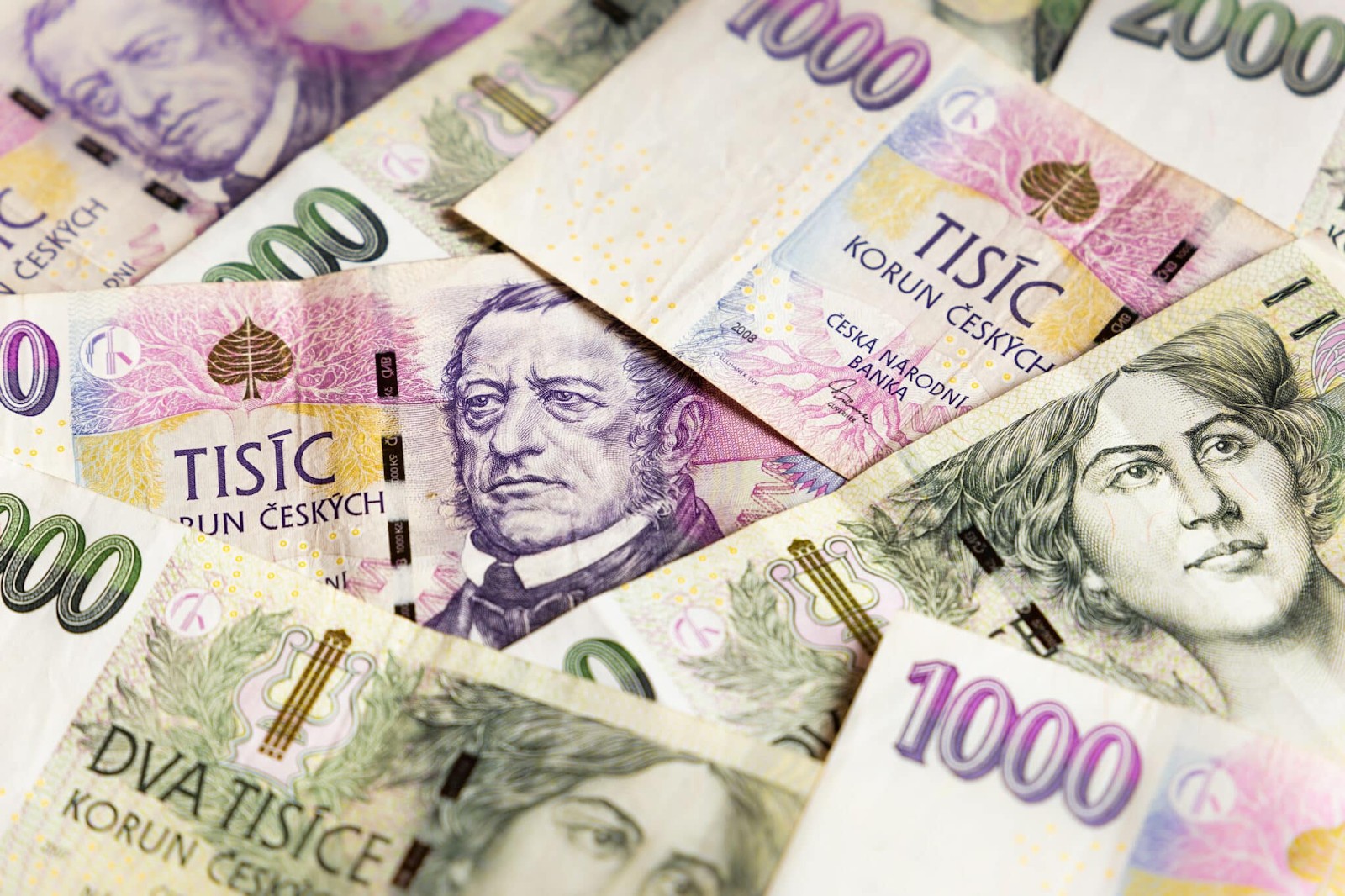
The official currency of the Czech Republic is Czech Koruna (CZK). It is circulated as coins of 1, 2, 5, 10, 20 and 50 korun and notes of 100, 200, 500, 1 000, 2000 and 5000 korun.
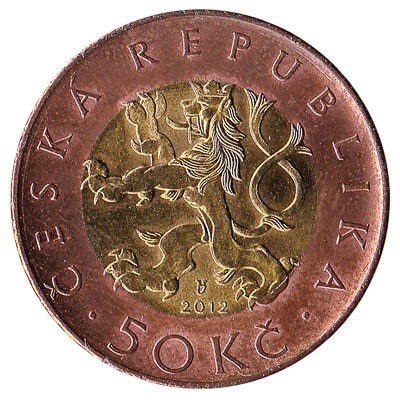
Oversight of issuance and monetary policy lies with the Czech National Bank (CNB) and CZK operates under a floating exchange‑rate system.
Why hasn't Czechia adopted the Euro?
When people ask which currency does the Czech Republic use, a follow-up question is almost guaranteed: why hasn’t Czechia adopted the Euro? As a member of the EU, the country is legally obligated to adopt the common currency eventually, but no deadline exists. Plans to switch were shelved after a 2007 referendum and subsequent concerns about the Eurozone debt crisis.
Some Czech politicians have floated the idea of a “Czexit,” but it remains unlikely; public support favors economic integration without surrendering monetary autonomy. Keeping the koruna allows Czech authorities to tailor policy to domestic conditions and maintain competitiveness through exchange‑rate flexibility.
How the Czech Koruna (CZK) functions in global markets
The Czech Republic currency trades freely on global Forex markets. Because the country has a strong industrial base, low unemployment and an export‑driven economy (exports account for roughly 74% of GDP), the koruna occupies a middle ground between major and emerging currencies. Analysts see it as a regional proxy: its movements reflect both domestic factors and broader European sentiment. The CNB’s forward‑guidance has cultivated investor confidence, and the bank’s 2026 forecast projects the koruna will remain broadly stable over the outlook horizon.
CNB uses the two‑week repo rate as its main policy instrument, flanked by the discount and Lombard rates. After a series of rate cuts in 2024, the CNB kept the two‑week repo rate at 3.5% in July 2025, with the discount and Lombard rates at 2.5% and 4.5%, respectively. Headline inflation slowed to 2.7 % year‑on‑year, and the economy expanded by 2.4 % in Q2 2025 on rising household consumption.
Policymakers signalled there is little scope for further cuts, so rates are expected to stay near these levels for the foreseeable future. The CNB occasionally intervenes in currency markets to maintain its inflation target, but there are no capital controls. The central bank has built credibility for forward‑looking monetary policy, and long‑term rates averaged 4.63% from 1995 to 2026, with a high of 39% in 1997 and a low of 0.05 % in 2012. Traders often see the koruna as a bellwether for Central European economic health because of this active yet transparent policy framework.
Despite its stability, the koruna reacts to interest‑rate differentials and cross‑border flows. In August 2024, for example, the currency weakened to CZK 25.5 per euro after dovish comments from CNB Vice‑Governor Jan Frait. A Reuters poll of analysts subsequently predicted it would strengthen to CZK 24.6 per euro over the next twelve months due to improving domestic activity and easing inflation. The CNB itself projected an average rate of about CZK 25 per euro for 2026. Such forecasts illustrate how macro data and central‑bank communication drive sentiment.
CZK exchange rate trends
Interest‑rate differentials. Higher Czech rates versus the Eurozone attract carry‑trade flows, causing the koruna to appreciate; a narrowing spread can trigger outflows.
Inflation and GDP growth. Lower inflation and solid growth like the 2.4 % expansion in Q2 2025 improve the currency’s outlook.
Trade balance and EU integration. With nearly two‑thirds of exports destined for EU partners, euro‑area demand can strengthen or weaken the currency; divergence between European Central Bank and CNB policy often creates trading opportunities.
Risk sentiment. As a relatively small, open economy, Czechia’s currency is sensitive to global risk‑on and risk‑off swings. When investors seek safe havens, they may reduce exposure to regional currencies like CZK.
The koruna has traded in a 24–26 CZK/EUR band in recent years. Analysts expect modest appreciation as inflation normalises and investor confidence returns. In early 2026, the currency regained lost ground after a 2024 dip and was trading around CZK 24.8 per euro, supported by expectations that the CNB will keep rates above those of the European Central Bank. However, unexpected rate cuts or external shocks (e.g., energy crises or geopolitical events) could cause volatility.
The following table summarises recent monetary statistics and forecasts relevant for traders:
| Indicator | Latest value (mid-2025) | Historical context | Outlook |
|---|---|---|---|
| CNB two-week repo rate | 3.5 % | Averaged 4.63 % (1995–2025); peaked at 39 % in 1997, fell to 0.05 % in 2012 | Limited scope for further cuts; expected to remain stable |
| Inflation | 2.7 % year-on-year | Fell sharply from double-digit highs in 2022–23 | Projected around the CNB’s 2 % target in 2026 |
| GDP growth | 2.4 % year-on-year (Q2 2025) | Recovery after pandemic-related recession; exports ≈ 74 % of GDP | Analysts expect 2–3 % growth in 2026, barring external shocks |
| CZK/EUR exchange rate | ~24.8 CZK/EUR | Weakened to 25.5 in mid-2024 but seen strengthening to ~24.6 over the next year | CNB and Czech Banking Association see 24.6–25.0 as the 2025 average |
How to trade the Czech Koruna (CZK)
Trading the koruna can diversify a portfolio and offer attractive carry opportunities. Here’s how traders can approach it:
Choosing the right currency pairs
EUR/CZK. The benchmark pair for most investors. Liquidity is good, spreads are tight and it serves as a proxy for Czech‑Eurozone convergence. Traders watch divergences between CNB and ECB policy for directional cues.
USD/CZK and GBP/CZK. These pairs allow you to express views on the U.S. Federal Reserve or Bank of England relative to the CNB. They are less liquid than EUR/CZK but still accessible through major brokers.
CZK/PLN and CZK/HUF. Cross‑currency plays within Central Europe. These pairs can be used to hedge regional risk or speculate on relative economic performance between Czechia, Poland and Hungary.
Strategies for beginners
Start with a demo account. Simulate trades on EUR/CZK to understand how spreads and liquidity differ from major pairs. Exotic crosses can have wider spreads and higher slippage, so practice first.
Follow CNB communications. The bank’s rate decisions and inflation forecasts frequently move the market. Keep track of the meeting schedule and read statements carefully.
Avoid excessive leverage. While interest‑rate differentials can be attractive, volatility spikes occur during policy surprises. Trade smaller position sizes and set stop‑loss orders.
Monitor Euro‑area data. Since the Czech economy is deeply integrated with the EU, European Purchasing Managers’ Index releases, German industrial orders and ECB speeches often influence the koruna.
Techniques for advanced traders
Carry trades. During periods of high Czech rates relative to the Eurozone, holding long CZK positions can earn positive carry. Use caution when rate spreads narrow; exit positions if CNB signals dovish moves.
Interest‑rate arbitrage. Exploit divergence between CNB and neighbouring central banks by trading CZK against PLN or HUF. For example, a hawkish CNB versus a dovish National Bank of Hungary may favour long CZK/HUF positions.
Macro‑hedging. Hedge Eurozone exposure by shorting EUR/CZK when you expect Czech economic outperformance or inflation surprises. Conversely, if Eurozone growth accelerates, consider long EUR/CZK positions.
Seasonal patterns. Watch for seasonal trends linked to EU subsidy disbursements or corporate dividend payments, which often cause koruna inflows and temporary appreciation.
If you’re considering trading CZK pairs like EUR/CZK or USD/CZK, platform choice matters, as spreads, liquidity, and tools around CNB announcements can make or break your edge. Here’s a quick comparison of platforms that offer CZK access so you can match costs and features to your strategy.
| zForex | Plus500 | OANDA | Trading.com USA | FOREX.com | |
|---|---|---|---|---|---|
|
CZK |
Yes | Yes | Yes | Yes | Yes |
|
Currency pairs |
50 | 60 | 68 | 69 | 80 |
|
Min. deposit, $ |
10 | 100 | No | 50 | 100 |
|
Max. leverage |
1:1000 | 1:300 | 1:200 | 1:50 | 1:50 |
|
Deposit fee, % |
No | No | No | No | No |
|
Withdrawal fee, % |
No | No | No | No | No |
|
TU overall score |
8.05 | 7.57 | 6.89 | 6.15 | 6.87 |
|
Open an account |
Go to broker Your capital is at risk.
|
Go to broker 80% of retail CFD accounts lose money. |
Go to broker Your capital is at risk. |
Go to broker Your capital is at risk. |
Study review |
Risks and warnings
While the koruna is relatively stable, there are specific risks traders must monitor:
Liquidity constraints. Compared with major currencies, CZK pairs have thinner order books. During volatile events, spreads can widen significantly and orders may slip.
Policy surprises. The CNB has a reputation for proactive policy but can still surprise markets. An unexpected rate cut or hike can quickly reprice the currency.
External shocks. Energy supply disruptions, EU political crises or global risk aversion can trigger outflows from Central European currencies. In 2024, for instance, concerns about the Euro‑area recession briefly pushed the koruna to its weakest in 18 months.
Euro‑adoption speculation. Occasional political statements about adopting the euro or holding a referendum (sometimes called “Czexit”) create uncertainty. Although unlikely, any concrete move toward the euro would have major implications for CZK traders.
Pros and cons of trading CZK
- Pros
- Cons
independent monetary policy from CNB;
high interest rate differentials in some periods;
potential for regional diversification;
moderate volatility compared to emerging market currencies.
lower liquidity than major currencies;
sensitive to EU and geopolitical developments;
can be affected by speculative flows and capital controls.
How much can I earn trading CZK?
Returns depend on your strategy, risk tolerance and market conditions. Short‑term traders might capture daily moves of 0.3 to 0.8 %, while carry trades can yield 2 to 4 % annually when rate differentials are wide. However, swings can quickly wipe out gains if positions aren’t hedged. Conservative traders using EUR/CZK swings and moderate leverage might aim for a 3 to 7 % annual return, while aggressive strategies could deliver higher returns at the cost of higher drawdowns. Always factor in transaction costs and tax considerations.
Forex outlook influenced by inflation control and geopolitical risks

For currency traders, the Czech koruna (CZK) is more than just the currency of the Czech Republic, it’s a barometer of Central European stability. Unlike many EU states, the Czech Republic has resisted adopting the euro, and this decision keeps CZK tied closely to domestic monetary policy rather than ECB’s one-size-fits-all approach. For a beginner in Forex, that means CZK pairs (like EUR/CZK or USD/CZK) often move on Czech-specific drivers: inflation releases, Czech National Bank interventions, and even domestic political debates. Traders who track CNB’s hawkish stance against inflation, compared with the ECB’s slower reaction, often find short-term opportunities where CZK diverges from the euro in ways casual investors miss.
Geopolitically, CZK is shaped by its position between Western Europe and Eastern markets. Energy dependence on imports, particularly during crises like the Russia–Ukraine war, has directly impacted the koruna’s volatility. While tourists might just see cash for trams and cafes, Forex traders view CZK as a “regional safety valve”: in times of European uncertainty, the koruna often strengthens because of the Czech Republic’s lower debt-to-GDP ratio compared to its neighbors. A beginner who learns to read these macro signals, energy supply shocks, CNB monetary tightening, or EU budget debates, can start seeing CZK not just as travel money, but as a strategic play on Central Europe’s economic heartbeat.
Conclusion
In summary, the Czech koruna (CZK) remains the steadfast official currency of the Czech Republic, shaping every financial interaction from everyday purchases to major travel expenses. Travelers should be mindful of exchange rates and avoid currency exchanges at tourist hotspots to secure the best value, as outlined in our guide. By understanding the nuances of using CZK—such as favoring local ATMs or reputable exchange offices—you can stretch your budget further and enhance your experience. Ultimately, being currency-savvy in the Czech Republic doesn't just save you money; it empowers you to explore the country with confidence and authenticity.
FAQs
Why hasn’t the Czech Republic adopted the euro despite being in the EU?
How does the Czech Republic benefit from keeping its own currency?
What role does the Czech Koruna play in global Forex trading?
What strategies are recommended for beginners interested in trading the Czech Koruna?
Editors' Top Picks and Insights

Dangerous but indispensable: Why the crypto market needs bridges

Markus Levin: DePIN could power the AI agent economy

Pokémon cards for $2,500: How collectibles became a new form of gambling

The privacy paradox: How the crypto mixer market has changed

Is Bitcoin right for you? Five traits shared by many cryptocurrency holders

Chasing hits: Why investors are losing interest in Netflix
Related Articles
Team that worked on the article
Rinat Gismatullin is an entrepreneur and a business expert with 9 years of experience in trading. He focuses on long-term investing, but also uses intraday trading.
Dan Blystone began his trading career in 1998 as an arbitrage clerk on the floor of the Chicago Mercantile Exchange (CME). He later traded bond and Eurex futures at proprietary firms such as Altea Trading, gaining valuable experience in high-frequency trading and risk management.
Chinmay Soni is a financial analyst with more than 5 years of experience in working with stocks, Forex, derivatives, and other assets. As a founder of a boutique research firm and an active researcher, he covers various industries and fields, providing insights backed by statistical data.

-
 Afghanistan
-
 Albania
-
 Algeria
-
 Angola
-
 Argentina
-
 Armenia
-
 Australia
-
 Austria
-
 Azerbaijan
-
 Bahamas
-
 Bahrain
-
 Bangladesh
-
 Belarus
-
 Belgium
-
 Bolivia
-
 Botswana
-
 Brazil
-
 Brunei
-
 Bulgaria
-
 Cambodia
-
 Cameroon
-
 Canada
-
 Chile
Chile
-
 China
China
-
 Colombia
-
 Congo
Congo
-
 Costa Rica
-
 Cote d'Ivoire
-
 Croatia
-
 Cuba
Cuba
-
 Cyprus
-
 Czechia
-
 DR Congo
-
 Denmark
-
 Dominican Republic
-
 Ecuador
-
 Egypt
Egypt
-
 El Salvador
-
 Estonia
-
 Eswatini
-
 Ethiopia
-
 Finland
-
 France
-
 Georgia
-
 Germany
-
 Ghana
Ghana
-
 Greece
-
 Haiti
Haiti
-
 Hong Kong
-
 Hungary
-
 India
India
-
 Indonesia
-
 Iran, Islamic republic
-
 Iraq
Iraq
-
 Ireland
-
 Israel
-
 Italy
Italy
-
 Jamaica
-
 Japan
Japan
-
 Jordan
-
 Kazakhstan
-
 Kenya
Kenya
-
 Korea
Korea
-
 Kuwait
-
 Kyrgyzstan
-
 Laos
Laos
-
 Latvia
-
 Lebanon
-
 Lesotho
-
 Libya
Libya
-
 Lithuania
-
 Luxembourg
-
 Madagascar
-
 Malaysia
-
 Malta
Malta
-
 Mauritius
-
 Mexico
-
 Moldova
-
 Mongolia
-
 Montenegro
-
 Morocco
-
 Mozambique
-
 Myanmar
-
 Namibia
-
 Nepal
Nepal
-
 Netherlands
-
 New Zealand
-
 Nigeria
-
 North Macedonia
-
 Norway
-
 Oman
Oman
-
 Pakistan
-
 Palestine
-
 Panama
-
 Papua New Guinea
-
 Paraguay
-
 Peru
Peru
-
 Philippines
-
 Poland
-
 Portugal
-
 Puerto Rico
-
 Qatar
Qatar
-
 Reunion
-
 Romania
-
 Rwanda
-
 Saudi Arabia
-
 Serbia
-
 Singapore
-
 Slovakia
-
 Slovenia
-
 Somalia
-
 South Africa
-
 Spain
Spain
-
 Sri Lanka
-
 Sweden
-
 Switzerland
-
 Syria
Syria
-
 Taiwan
-
 Tajikistan
-
 Tanzania
-
 Thailand
-
 Trinidad and Tobago
-
 Tunisia
-
 Turkey
-
 UAE
UAE
-
 Uganda
-
 Ukraine
-
 United Kingdom
-
United States
-
 Uruguay
-
 Uzbekistan
-
 Venezuela
-
 Vietnam
-
 Yemen
Yemen
-
 Zambia
-
 Zimbabwe
- Forex
- Crypto











