
The Role Of Central Banks In The Forex


Editorial Note: While we adhere to strict Editorial Integrity, this post may contain references to products from our partners. Here's an explanation for How We Make Money. None of the data and information on this webpage constitutes investment advice according to our Disclaimer.
Central banks play an important role in the Forex market by setting monetary policy, managing foreign exchange reserves, and ensuring financial stability. Their actions and decisions can significantly impact currency values, making them crucial for traders to monitor.
Central banks, operating independently from governments, manage monetary policy and financial stability. From our article you will learn more about the role of Central Banks in the Forex Market.
Overview of central bank functions
Central banks are national institutions responsible for managing a country's monetary policy and financial stability. They operate independently from the government to ensure unbiased economic decisions. Their primary objectives include controlling inflation, managing employment levels, and maintaining economic growth.
Key roles of central banks in the economy
Monetary policy implementation
Central banks implement monetary policy to achieve specific economic objectives. By adjusting interest rates, controlling the money supply, and utilizing other monetary tools, they aim to maintain price stability and promote sustainable economic growth. Monetary policies, whether hawkish or dovish, are powerful tools that shape the economic landscape.
Managing foreign exchange reserves
Central banks manage a country's foreign exchange reserves, which are used to influence the value of the national currency. These reserves can be employed to stabilize the currency during periods of volatility or to support the economy during financial crises.
Ensuring financial stability
Central banks oversee the stability of the financial system by regulating and supervising financial institutions. They ensure that banks operate soundly and have adequate capital to withstand economic shocks.
Lender of last resort
In times of financial distress, central banks act as lenders of last resort, providing liquidity to financial institutions to prevent systemic collapse. This function is important for maintaining confidence in the financial system and avoiding economic crises.
Historical context and evolution of central banks
Central banks have evolved significantly since their inception. Originally established to manage national currencies and government debt, their roles have expanded to include broader economic stability and regulatory functions. Key milestones in their evolution include the establishment of the Federal Reserve in 1913 and the European Central Bank in 1998.
How central banks influence Forex market
Mechanisms of central bank interventions
Interest rate adjustments
One of the primary tools used by central banks is adjusting interest rates. Changes in interest rates can influence the demand for a currency. Higher interest rates typically attract foreign investment, leading to currency appreciation, while lower rates can result in currency depreciation.
Open market operations
Central banks conduct open market operations by buying or selling government securities. This practice influences the money supply and interest rates, which in turn affect currency values. For example, purchasing securities increases the money supply and can lead to lower interest rates.
Quantitative easing and tightening
Quantitative easing (QE) involves central banks purchasing financial assets to inject liquidity into the economy, stimulating growth. Conversely, quantitative tightening (QT) involves selling assets to reduce liquidity. Both policies can have profound effects on currency values.
Effects on currency values
Central bank actions, such as interest rate changes and QE, can lead to currency appreciation or depreciation. For example, the Federal Reserve's decision to raise interest rates in 2015 led to a significant appreciation of the US dollar. Conversely, the European Central Bank's QE program in 2015 resulted in the depreciation of the euro.
Many traders base their trading decisions on their analysis of central bank actions. In order to execute these trades, they are required to open an account with a Forex broker. In the following table, we have compared the top options based on relevant criteria for you to make a better decision.
| Trading.com USA | Plus500 | OANDA | FOREX.com | IG Markets | |
|---|---|---|---|---|---|
|
Demo |
Yes | Yes | Yes | Yes | Yes |
|
Min. deposit, $ |
50 | 100 | No | 100 | 1 |
|
Max. leverage |
1:50 | 1:300 | 1:200 | 1:50 | 1:200 |
|
Min Spread EUR/USD, pips |
0.9 | 0.5 | 0.1 | 0.7 | 0.6 |
|
Max Spread EUR/USD, pips |
No | 0.9 | 0.5 | 1.2 | 1.2 |
|
Regulation |
CFTC, NFA | CySEC, FCA, ASIC, FMA, FSCA, FSA Seychelles, EFSA, MAS, DFSA, SCB | FSC (BVI), ASIC, IIROC, FCA, CFTC, NFA | CIMA, FCA, FSA (Japan), NFA, IIROC, ASIC, CFTC | FCA, BaFin, ASIC, MAS, CySec, FINMA, BMA, CFTC, NFA |
|
Open account |
Go to broker Your capital is at risk. |
Go to broker 81% of retail CFD accounts lose money. |
Go to broker Your capital is at risk. |
Study review | Study review |
Key central banks
Federal Reserve (Fed): The Federal Reserve, or Fed, is the central bank of the United States. It is considered the most influential central bank globally, given the US dollar's status as the world's primary reserve currency. The Fed's policies, including interest rate decisions and QE, have far-reaching impacts on global Forex markets.
European Central Bank (ECB): The ECB manages monetary policy for the Eurozone. Its primary objective is to maintain price stability, but its decisions also influence the euro's value. The ECB's policies are crucial for traders dealing with euro pairs.
Bank of England (BoE): The BoE oversees monetary policy in the United Kingdom. Its actions, including interest rate adjustments and asset purchases, significantly impact the British pound. Traders closely monitor the BoE's decisions, especially in the context of Brexit.
Bank of Japan (BoJ): The BoJ is known for its unconventional monetary policies, such as negative interest rates and aggressive QE. These policies aim to combat deflation and stimulate the economy, influencing the yen's value.
Swiss National Bank (SNB): The SNB's policies significantly impact the Swiss franc, a safe-haven currency. The bank's decisions, including its interventions in the Forex market, are crucial for maintaining the franc's stability.
Unique Characteristics and Approaches of Each Bank: Each central bank has its unique approach to monetary policy. The Fed focuses on dual mandates of employment and inflation, the ECB prioritizes price stability, and the BoJ employs unconventional methods to combat deflation. Understanding these differences helps traders anticipate central bank actions and their market impacts.
Understanding interest rate decisions
How interest rates influence currency values
Interest rates are a key determinant of currency values. Higher rates offer better returns on investments denominated in that currency, attracting foreign capital and leading to currency appreciation. Conversely, lower rates can deter investment, causing currency depreciation.
The decision-making process
Central banks base their interest rate decisions on various economic indicators, including inflation, employment, and GDP growth. They also consider global economic conditions and potential risks. Decisions are made by committees, such as the Federal Open Market Committee (FOMC) in the US.
Economic indicators monitored by central banks
Central banks monitor several key indicators to guide their policy decisions:
Inflation: Central banks aim to keep inflation within a target range.
Employment: Low unemployment rates are typically a sign of a healthy economy.
GDP growth: Strong economic growth can lead to higher interest rates to avoid an overheating economy.
Global economic conditions: Central banks also consider international factors, such as trade tensions and geopolitical risks.
Impact of monetary policy on currency values
Short-term vs long-term impacts
Monetary policy changes can have both immediate and prolonged effects on currency values. Short-term impacts are often seen in the immediate market reactions to central bank announcements, while long-term effects play out as the economy adjusts to new policies.
Examples of monetary policy effects
Historical examples provide insights into the impact of monetary policy on currencies:
2015 Fed Rate Hike: The Fed's decision to raise interest rates led to a surge in the US dollar's value.
2015 ECB QE Program: The ECB's quantitative easing program caused the euro to depreciate.
Market reactions to central bank announcements
Traders and investors closely watch central bank announcements, as these provide clues about future policy directions. Market reactions can be swift and significant, with currencies often experiencing volatility immediately following these announcements.
Case studies of central bank actions
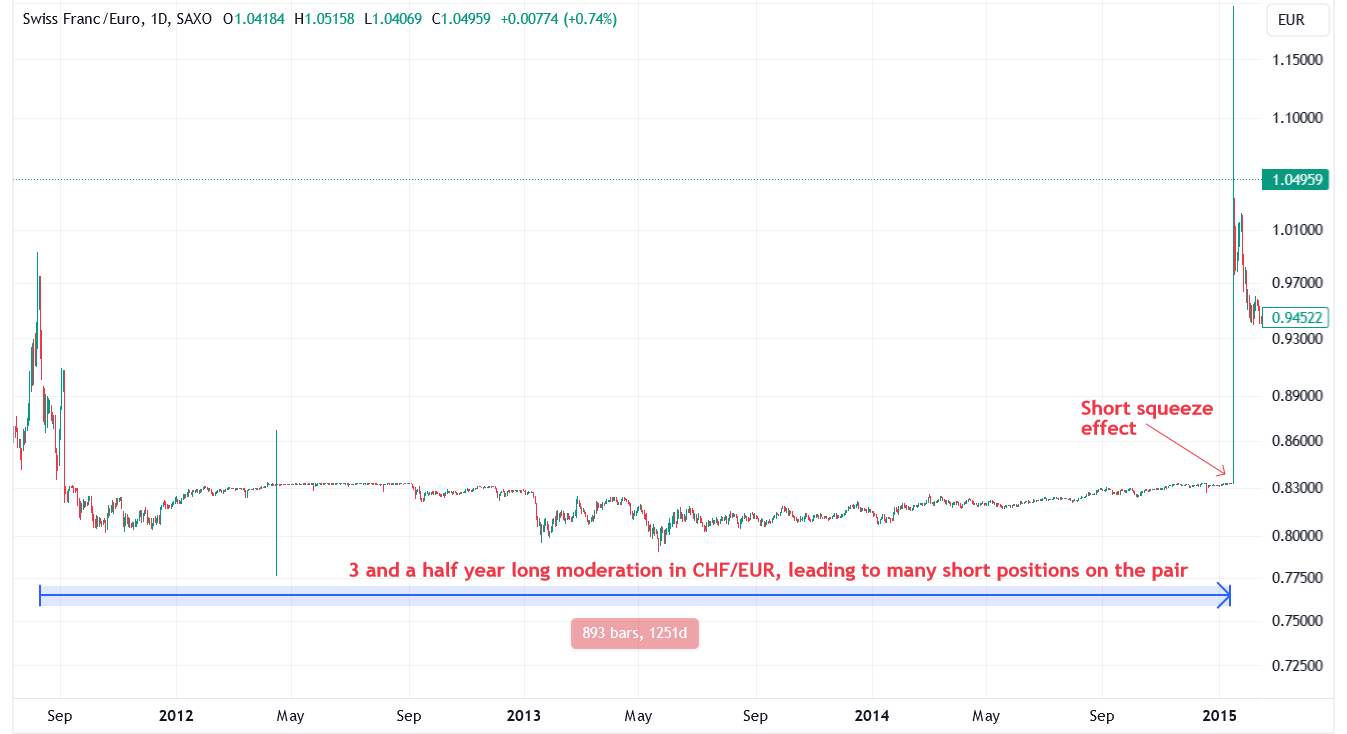
Analyzing specific instances of central bank interventions helps illustrate their impact on Forex markets. For example, the SNB's decision to remove the franc's peg to the euro in 2015 caused dramatic market movements and a short squeeze, highlighting the power of central bank actions.
Future trends and challenges
Emerging trends in central banking
Digital currencies: Central banks are exploring the development of central bank digital currencies (CBDCs) to modernize payment systems and enhance monetary policy effectiveness. The potential introduction of CBDCs could reshape the Forex market.
Unconventional monetary policies: As traditional tools become less effective, central banks are increasingly relying on unconventional monetary policies, such as negative interest rates and QE. These policies pose new challenges and opportunities for Forex traders.
Challenges faced by central banks
Central banks face several challenges, including managing inflation in a low-interest-rate environment, addressing financial stability risks, and adapting to technological advancements. These challenges require innovative approaches and careful balancing of objectives.
Understanding our intentions and actions is crucial

In my years of experience working closely with central banks, I've seen firsthand how they are the cornerstone of the Forex market due to their immense influence over national economies and currency valuations. Their actions, whether direct or indirect, profoundly shape the trading landscape. One of their primary tools is the manipulation of interest rates. By adjusting these rates, they can either stimulate economic growth or rein in inflation, thereby affecting the currency's strength. For example, I recall a specific instance where a hike in interest rates attracted significant foreign investment, boosting the demand for that currency and consequently its value.
Another significant aspect of their influence is their direct intervention in the Forex market. I've also observed operations where my domestic central bank bought or sold their own currency to stabilize or devalue it, depending on their economic goals. Such interventions are often aimed at preventing excessive volatility and maintaining economic stability.
Moreover, the economic outlooks and policy statements provided by central banks are scrutinized by traders worldwide. I've seen how such announcements can lead to immediate and sometimes drastic movements in currency prices, as market participants adjust their positions in anticipation of future monetary policy actions. Therefore, understanding the intentions and actions of central banks is crucial for anyone involved in Forex trading.
Summary
Central banks significantly influence the Forex market through their control over monetary policy and direct currency interventions. By adjusting interest rates and managing money supply, they can affect currency values, thus impacting global trade and investment flows. Their statements and economic forecasts are closely monitored by traders, often causing substantial shifts in currency prices. This makes central banks a key focus for anyone involved in Forex trading.
FAQs
How do central banks influence currency values?
Central banks influence currency values primarily through interest rate adjustments and direct interventions in the Forex market. Changes in interest rates affect the attractiveness of a currency to investors, while direct buying or selling can stabilize or devalue the currency.
Why do central banks intervene in the Forex market?
Central banks intervene to prevent excessive volatility, stabilize the economy, and achieve specific economic objectives such as controlling inflation or supporting export competitiveness.
What is the impact of central bank policy statements on the Forex market?
Policy statements from central banks are highly influential as they provide insights into future monetary policy actions. These announcements can lead to significant and immediate changes in currency prices as traders adjust their expectations.
How do interest rate changes by central banks affect Forex trading?
Interest rate changes can alter the return on investments in a particular currency, making it more or less attractive to investors. Higher interest rates typically strengthen a currency, while lower rates can weaken it.
What role do central banks play in maintaining economic stability?
Central banks maintain economic stability by managing inflation, fostering employment, and ensuring moderate long-term interest rates. Their actions in the Forex market help to prevent excessive currency fluctuations that could destabilize the economy.
Editors' Top Picks and Insights






Related Articles
Team that worked on the article
Parshwa is a content expert and finance professional possessing deep knowledge of stock and options trading, technical and fundamental analysis, and equity research. As a Chartered Accountant Finalist, Parshwa also has expertise in Forex, crypto trading, and personal taxation.
Dr. BJ Johnson is a PhD in English Language and an editor with over 15 years of experience. He earned his degree in English Language in the U.S and the UK.
Mirjan Hipolito is a journalist and news editor at Traders Union. She is an expert crypto writer with five years of experience in the financial markets.
Ethereum is a decentralized blockchain platform and cryptocurrency that was proposed by Vitalik Buterin in late 2013 and development began in early 2014. It was designed as a versatile platform for creating decentralized applications (DApps) and smart contracts.
Bitcoin is a decentralized digital cryptocurrency that was created in 2009 by an anonymous individual or group using the pseudonym Satoshi Nakamoto. It operates on a technology called blockchain, which is a distributed ledger that records all transactions across a network of computers.
Fundamental analysis is a method or tool that investors use that seeks to determine the intrinsic value of a security by examining economic and financial factors. It considers macroeconomic factors such as the state of the economy and industry conditions.
Forex trading, short for foreign exchange trading, is the practice of buying and selling currencies in the global foreign exchange market with the aim of profiting from fluctuations in exchange rates. Traders speculate on whether one currency will rise or fall in value relative to another currency and make trading decisions accordingly. However, beware that trading carries risks, and you can lose your whole capital.
CFD is a contract between an investor/trader and seller that demonstrates that the trader will need to pay the price difference between the current value of the asset and its value at the time of contract to the seller.

-
 Afghanistan
-
 Albania
-
 Algeria
-
 Angola
-
 Argentina
-
 Armenia
-
 Australia
-
 Austria
-
 Azerbaijan
-
 Bahamas
-
 Bahrain
-
 Bangladesh
-
 Belarus
-
 Belgium
-
 Bolivia
-
 Botswana
-
 Brazil
-
 Brunei
-
 Bulgaria
-
 Cambodia
-
 Cameroon
-
 Canada
-
 Chile
Chile
-
 China
China
-
 Colombia
-
 Congo
Congo
-
 Costa Rica
-
 Cote d'Ivoire
-
 Croatia
-
 Cuba
Cuba
-
 Cyprus
-
 Czechia
-
 DR Congo
-
 Denmark
-
 Dominican Republic
-
 Ecuador
-
 Egypt
Egypt
-
 El Salvador
-
 Estonia
-
 Eswatini
-
 Ethiopia
-
 Finland
-
 France
-
 Georgia
-
 Germany
-
 Ghana
Ghana
-
 Greece
-
 Haiti
Haiti
-
 Hong Kong
-
 Hungary
-
 India
India
-
 Indonesia
-
 Iran, Islamic republic
-
 Iraq
Iraq
-
 Ireland
-
 Israel
-
 Italy
Italy
-
 Jamaica
-
 Japan
Japan
-
 Jordan
-
 Kazakhstan
-
 Kenya
Kenya
-
 Korea
Korea
-
 Kuwait
-
 Kyrgyzstan
-
 Laos
Laos
-
 Latvia
-
 Lebanon
-
 Lesotho
-
 Libya
Libya
-
 Lithuania
-
 Luxembourg
-
 Madagascar
-
 Malaysia
-
 Malta
Malta
-
 Mauritius
-
 Mexico
-
 Moldova
-
 Mongolia
-
 Montenegro
-
 Morocco
-
 Mozambique
-
 Myanmar
-
 Namibia
-
 Nepal
Nepal
-
 Netherlands
-
 New Zealand
-
 Nigeria
-
 North Macedonia
-
 Norway
-
 Oman
Oman
-
 Pakistan
-
 Palestine
-
 Panama
-
 Papua New Guinea
-
 Paraguay
-
 Peru
Peru
-
 Philippines
-
 Poland
-
 Portugal
-
 Puerto Rico
-
 Qatar
Qatar
-
 Reunion
-
 Romania
-
 Rwanda
-
 Saudi Arabia
-
 Serbia
-
 Singapore
-
 Slovakia
-
 Slovenia
-
 Somalia
-
 South Africa
-
 Spain
Spain
-
 Sri Lanka
-
 Sweden
-
 Switzerland
-
 Syria
Syria
-
 Taiwan
-
 Tajikistan
-
 Tanzania
-
 Thailand
-
 Trinidad and Tobago
-
 Tunisia
-
 Turkey
-
 UAE
UAE
-
 Uganda
-
 Ukraine
-
 United Kingdom
-
United States
-
 Uruguay
-
 Uzbekistan
-
 Venezuela
-
 Vietnam
-
 Yemen
Yemen
-
 Zambia
-
 Zimbabwe
- Forex
- Crypto












