
Richest Financial Traders In Argentina: Real Success Stories



Editorial Note: While we adhere to strict Editorial Integrity, this post may contain references to products from our partners. Here's an explanation for How We Make Money. None of the data and information on this webpage constitutes investment advice according to our Disclaimer.
Best Forex traders in Argentina:
Ivan Scherman – Argentinian trader known for live-streamed forex sessions and a disciplined intraday strategy.
Carlos Maslatón – high-profile market commentator and trader, recognized for bold macro calls and strong political views.
Claudio – practical educator and retail trader who focuses on pattern repetition and journal-based risk control.
Mateo Castorina – young trader gaining attention for consistent performance in funded trading programs.
Ariel Bazan – Forex mentor with a focus on mindset training, price action setups, and structured trade reviews.
Argentina’s trading environment presents specific constraints: capital controls, unstable transaction channels, and no access to locally regulated brokers. Under these conditions, consistent results depend on technical precision, structured execution, and controlled deviation within trade sequences. We presented traders with different starting capital, training formats, and trade management models. Each case is based on concrete data — capital size, strategy parameters, and risk protocols. The content is intended for those seeking practical solutions within infrastructure-limited market conditions.
Forex financial trading success stories
Ivan Scherman: quantitative systems and global recognition
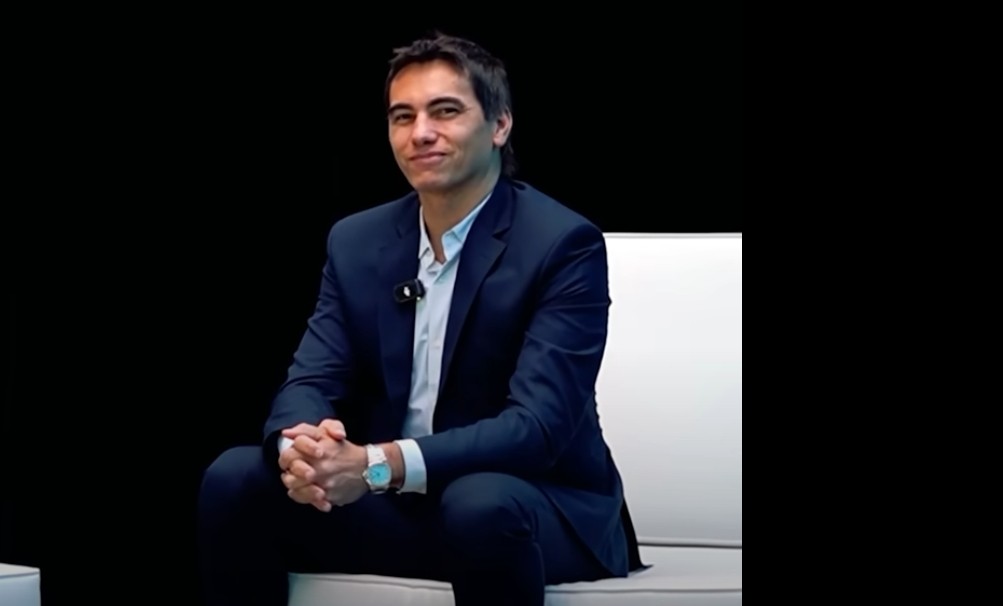
Ivan Scherman is a professional trader based in Buenos Aires who gained global recognition after winning the 2023 World Cup Championship of Futures Trading. Organized by Robbins Trading Company, this competition measured annual returns from real-money trading accounts. Scherman recorded a 491.4% return over the year, outperforming all other participants and positioning himself among the top Forex traders in Argentina.
His trading style is built on quantitative modeling and automated execution. He relies on statistical edge discovery, algorithmic decision-making, and strict risk control. The structure of his approach excludes discretionary inputs, focusing instead on repeatable system logic tested across historical data.
The case of Ivan Scherman qualifies as one of the clear Forex financial Trading Success Stories, as it documents a statistically-driven transformation from independent trader to verified champion. No public data is available regarding his initial trading capital or personal net worth. Similarly, there is no evidence of him managing a hedge fund or external client assets.
Carlos Maslatón: cryptocurrency markets and public exposure
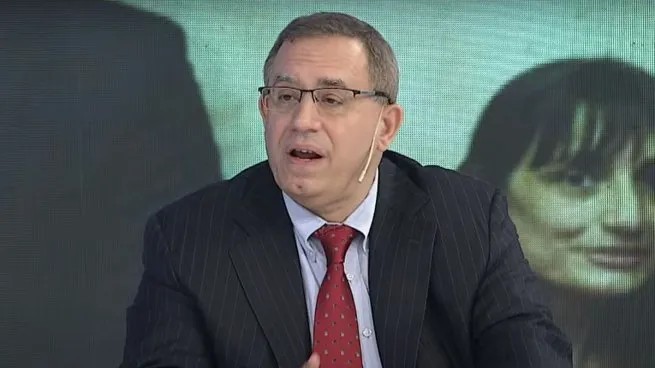
Carlos Maslatón is an Argentine lawyer, financial analyst, and independent trader known for his active role in cryptocurrency market discussions. He began his professional path in law and politics, later shifting his focus to crypto trading and market commentary. Maslatón emerged as a recognizable figure in the Argentine crypto space during the 2010s, when he started publishing regular forecasts, macroeconomic analysis, and technical breakdowns for a general audience.
He gained public attention for accurately predicting Bitcoin price movements and issuing open access chart analysis with entry and exit level suggestions. His methodology is rooted in symmetrical technical analysis and wave theory, which he demonstrates consistently across conferences and social platforms. Although he has no record of participating in formal global trading competitions, he is widely regarded as part of the informal circle of Successful Forex traders in Argentina due to his impact on market perception and visibility.
As of 2021, Maslatón publicly disclosed that his cryptocurrency holdings were valued at approximately USD 2 million. No verified data exists on his starting capital. There are no public records confirming whether he holds a broker license or manages institutional assets. He operates privately and provides independent market commentary. Maslatón regularly engages in public discourse about financial sovereignty, digital asset taxation, and the structural future of crypto economies.
Claudio: structured approach and educational commitment
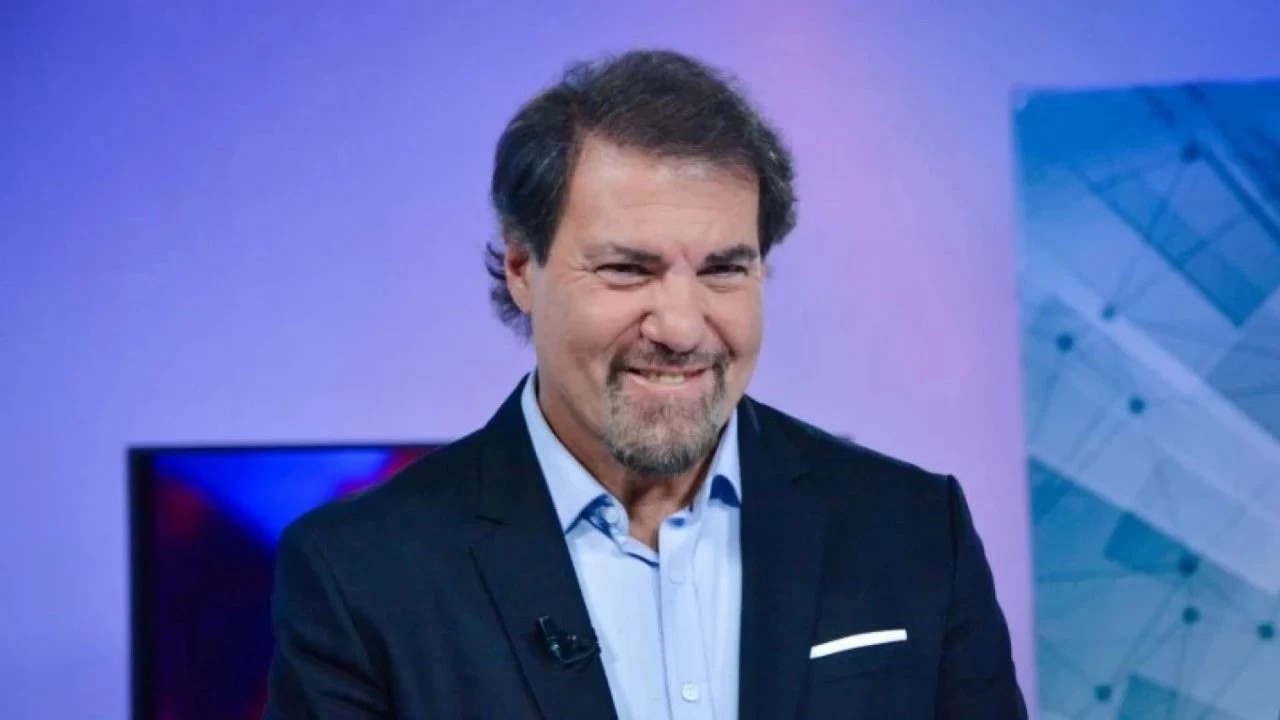
Claudio is an Argentine trader with over five years of verified experience who began his career by trading personal funds through local brokers. In public interviews, he emphasizes that he started with a modest capital of approximately 300 USD. Throughout his early development, he relied exclusively on his own resources, gradually scaling up his account by reinvesting profits. His system is built on a hybrid methodology: core technical analysis, price level structuring, signal filtering through mid-range volatility indicators, and detailed journaling focused on behavioral mistakes. This model has provided resilience and consistent performance, aligning with the profile of the best Forex traders in Argentina.
Claudio is actively involved in educational initiatives across the Spanish-speaking trading community. He conducts webinars, engages with beginners, and shares his journey through public interviews. In one such interview, he explains his transition from random decision-making to structured execution based on a repeatable process. At the time of the recording, he disclosed that his personal capital allocated to trading exceeded 12,000 USD, entirely self-funded and without external capital.
His methodology includes strict daily loss limits, entry condition filtering, and progressive position scaling. Claudio educates novice traders not only in the technical domain but also in the core principles of discipline and self-review.
Mateo Castorina: a disciplined path to trading profitability

Mateo Castorina is an Argentine trader who began his journey in financial markets from scratch and achieved consistent profitability through discipline, learning, and structured risk control. His experience has been shared in public interviews, where he emphasizes the value of persistence and continuous development. His trajectory serves as a clear example of Successful Forex traders in Argentina.
Starting with self-education and no prior financial background, Mateo gradually built up his knowledge base and practical skills. He stresses the importance of having a well-defined trading plan, maintaining emotional control, and adhering strictly to position sizing and risk limits. His process-oriented mindset aligns with what is expected from the best Forex traders in Argentina — a blend of technical strategy, adaptive risk frameworks, and methodical execution.
Although there is no publicly available data on his starting or current capital, Mateo's record illustrates that with sustained effort and structure, profitability in trading is attainable. His focus on structured improvement and evidence-based strategy development positions him among those contributing to Forex financial trading success stories, and his insights offer valuable guidance to anyone researching how to become a successful trader in Argentina.
Ariel Bazan: discipline, zero-capital start and first profitability
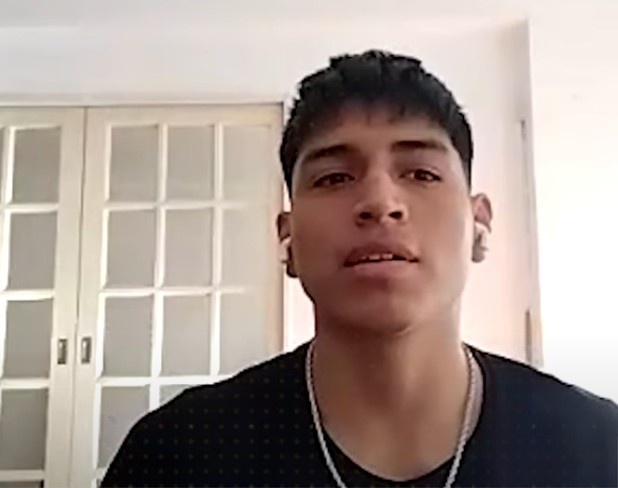
Ariel Bazan is an Argentine trader who began his trading journey at the age of 15 during the pandemic lockdown. His initial trading capital was $50, a gift from his father. With no access to formal education in finance, he focused on self-study, relying on demo accounts and online resources. Over two years, Bazan built a personal trading methodology centered around visual pattern recognition and a strict risk-to-reward framework.
By the age of 19, he had achieved a confirmed profit milestone, withdrawing $250 through the proprietary trading platform The5%ers. In a public interview, he emphasized the importance of failure, iterative learning, and trade journaling in shaping his process. His strategy is based on selecting a single price action model, executing with minimal exposure, and conducting thorough post-trade analysis. This approach positions him within the entry-level segment of successful Forex traders in Argentina, with a clearly documented development track.
Potential for Forex trading success in Argentina
To navigate Argentina’s unregulated Forex environment successfully, traders must prioritize platform reliability, international licensing, and access to secure payment channels. Since domestic brokers are not authorized by the CNV and local investor protections are limited, selecting a reputable global intermediary becomes a critical first step toward sustainable trading.
Fortunately, several leading international brokers offer robust infrastructure, regulatory oversight (such as from the FCA, CySEC, or ASIC), and support for clients based in Argentina. These platforms provide access to major Forex pairs, transparent fee structures, and user-friendly funding options tailored for emerging market participants. As a result, many traders focus on identifying the best Forex and CFD brokers in Argentina that combine strong international regulation, reliable execution, and flexible access to global markets despite the absence of local licensing.
Below is a curated comparison of the best international brokers available to traders in Argentina, focusing on factors such as regulation, spreads, leverage, and ease of account setup:
| TU overall score | Min. deposit, $ | Max. leverage | Regulation | ECN Spread EUR/USD | ECN Commission | Currency pairs | Open an account | |
|---|---|---|---|---|---|---|---|---|
| 9.4 | 50 | 1:3000 | FSC, FSCA, ASIC, FSA SVG | 0.10 | 3.00 | 34 | Go to broker Your capital is at risk. |
|
| 9.2 | 1 | 1:500 | ASIC, VFSC, FSA | 0.1 | 2.25 | 90 | Go to broker Your capital is at risk. |
|
| 9.25 | No | 1:500 | ASIC, FCA, DFSA, BaFin, CMA, SCB, CySec | 0.1 | 3 | 90 | Go to broker Your capital is at risk.
|
|
| 9.15 | 10 | 1:2000 | Financial Services Commission (FSC), Belize | 0.2 | 2 | 28 | Go to broker Your capital is at risk. |
|
| 9.1 | 10 | 1:2000 | BVI FSC, FSCA SA, FSC (Mauritius), FSA (Seychelles), CMA (Kenya), JSC (Jordan) | 0.1 | 3 | 100 | Go to broker Your capital is at risk.
|
|
| 9.1 | 1 | 1:2000 | FSC (Mauritius), SVG FSA | 0.1 | 2.0 | 60 | Go to broker Your capital is at risk.
|
What successful traders in Argentina actually teach

In Argentina, the best trading mentors don’t focus on theories — they teach discipline, structure, and real-world execution. Here’s how their approach works:
1. One setup, zero guesswork
Traders are trained to use just one proven setup, filtered by market volatility and time of day.
If the setup isn’t there — no trade. Patience is part of the system.
Some mentors have shown over 20 trades in a row with no drawdown, just by following the same setup and schedule every day.
2. Start small, protect capital
Most beginners trade with $50 to $300 — the goal is to protect that capital, not double it.
Scaling up is allowed only after 40+ trades with low risk and consistent results.
Traders often grow accounts from $100 to $1,000 in 4–6 months, but only through gradual, verified progress.
3. Every trade is tracked
No emotional journaling — traders log hard data: entry & exit time, position size, screenshot, why the trade was closed They review performance in spreadsheets, measuring time in trade, average loss per bad entry, repeated mistake rate
4. Mistakes are okay — repeating them isn’t
You must track every trade from day one. No exceptions.
If you repeat the same mistake three times, put on pause.
Also review platform issues — like slippage or spread spikes — and show how to plan around them.
Argentine traders are taught to survive first, grow later. They master one setup, use strict risk limits, and only expand once their system is proven with real data.
How system traders in Argentina operate: applied structure
Argentine system traders work with a limited set of models, each with clearly defined entry, management, and exit criteria. Every trade is documented with its trigger, execution details, and outcome. Any deviation from the model removes the trade from performance tracking. The trader’s actions are evaluated against the structure, not the result.
Initial testing is done on small live accounts. Key metrics include drawdowns, behavioral consistency, and compliance with risk limits. Trades are grouped into sequences and analyzed for performance under varying market conditions. Participation in funding programs is used to test operational discipline, not as a source of capital.
The core tool is a trade log with three fields: entry signal, management plan, and execution result. This structure exposes deviations and helps maintain consistency. It is standard in local private groups and evaluation tracks for proprietary trading access. This methodology is applied by those recognized as Successful Forex traders in Argentina.
Conclusion
Las historias de traders exitosos en Argentina demuestran que el verdadero diferencial está en la disciplina y la capacidad de adaptación ante restricciones del mercado. Pese a los obstáculos, como el acceso limitado a plataformas internacionales, figuras como Martín R. lograron consolidarse implementando una gestión de riesgo rigurosa y estrategias de análisis técnico. De igual manera, Sofía L. destaca por su constancia y la actualización permanente de sus conocimientos, lo que le permitió capitalizar oportunidades aún en contextos adversos. En definitiva, el éxito en el Forex argentino reside menos en la ausencia de barreras y más en la habilidad para convertir desafíos en ventajas competitivas.
FAQs
How do Argentine Forex traders develop effective trading strategies in an unregulated market?
What common starting points and backgrounds do successful Forex traders in Argentina have?
Which tools and practices are essential for consistent trading performance among Argentina’s top Forex traders?
How do traders in Argentina adjust to the challenges of accessing reliable trading platforms and payment systems?
Editors' Top Picks and Insights

Dangerous but indispensable: Why the crypto market needs bridges

Markus Levin: DePIN could power the AI agent economy

Pokémon cards for $2,500: How collectibles became a new form of gambling

The privacy paradox: How the crypto mixer market has changed

Is Bitcoin right for you? Five traits shared by many cryptocurrency holders

Chasing hits: Why investors are losing interest in Netflix
Related Articles
Team that worked on the article
Mikhail Vnuchkov joined Traders Union as an author in 2020. He began his professional career as a journalist-observer at a small online financial publication, where he covered global economic events and discussed their impact on the segment of financial investment, including investor income.
Dan Blystone began his trading career in 1998 as an arbitrage clerk on the floor of the Chicago Mercantile Exchange (CME). He later traded bond and Eurex futures at proprietary firms such as Altea Trading, gaining valuable experience in high-frequency trading and risk management.
Chinmay Soni is a financial analyst with more than 5 years of experience in working with stocks, Forex, derivatives, and other assets. As a founder of a boutique research firm and an active researcher, he covers various industries and fields, providing insights backed by statistical data.

-
 Afghanistan
-
 Albania
-
 Algeria
-
 Angola
-
 Argentina
-
 Armenia
-
 Australia
-
 Austria
-
 Azerbaijan
-
 Bahamas
-
 Bahrain
-
 Bangladesh
-
 Belarus
-
 Belgium
-
 Bolivia
-
 Botswana
-
 Brazil
-
 Brunei
-
 Bulgaria
-
 Cambodia
-
 Cameroon
-
 Canada
-
 Chile
Chile
-
 China
China
-
 Colombia
-
 Congo
Congo
-
 Costa Rica
-
 Cote d'Ivoire
-
 Croatia
-
 Cuba
Cuba
-
 Cyprus
-
 Czechia
-
 DR Congo
-
 Denmark
-
 Dominican Republic
-
 Ecuador
-
 Egypt
Egypt
-
 El Salvador
-
 Estonia
-
 Eswatini
-
 Ethiopia
-
 Finland
-
 France
-
 Georgia
-
 Germany
-
 Ghana
Ghana
-
 Greece
-
 Haiti
Haiti
-
 Hong Kong
-
 Hungary
-
 India
India
-
 Indonesia
-
 Iran, Islamic republic
-
 Iraq
Iraq
-
 Ireland
-
 Israel
-
 Italy
Italy
-
 Jamaica
-
 Japan
Japan
-
 Jordan
-
 Kazakhstan
-
 Kenya
Kenya
-
 Korea
Korea
-
 Kuwait
-
 Kyrgyzstan
-
 Laos
Laos
-
 Latvia
-
 Lebanon
-
 Lesotho
-
 Libya
Libya
-
 Lithuania
-
 Luxembourg
-
 Madagascar
-
 Malaysia
-
 Malta
Malta
-
 Mauritius
-
 Mexico
-
 Moldova
-
 Mongolia
-
 Montenegro
-
 Morocco
-
 Mozambique
-
 Myanmar
-
 Namibia
-
 Nepal
Nepal
-
 Netherlands
-
 New Zealand
-
 Nigeria
-
 North Macedonia
-
 Norway
-
 Oman
Oman
-
 Pakistan
-
 Palestine
-
 Panama
-
 Papua New Guinea
-
 Paraguay
-
 Peru
Peru
-
 Philippines
-
 Poland
-
 Portugal
-
 Puerto Rico
-
 Qatar
Qatar
-
 Reunion
-
 Romania
-
 Rwanda
-
 Saudi Arabia
-
 Serbia
-
 Singapore
-
 Slovakia
-
 Slovenia
-
 Somalia
-
 South Africa
-
 Spain
Spain
-
 Sri Lanka
-
 Sweden
-
 Switzerland
-
 Syria
Syria
-
 Taiwan
-
 Tajikistan
-
 Tanzania
-
 Thailand
-
 Trinidad and Tobago
-
 Tunisia
-
 Turkey
-
 UAE
UAE
-
 Uganda
-
 Ukraine
-
 United Kingdom
-
United States
-
 Uruguay
-
 Uzbekistan
-
 Venezuela
-
 Vietnam
-
 Yemen
Yemen
-
 Zambia
-
 Zimbabwe
- Forex
- Crypto











