
What Currency Does Sweden Use?


Editorial Note: While we adhere to strict Editorial Integrity, this post may contain references to products from our partners. Here's an explanation for How We Make Money. None of the data and information on this webpage constitutes investment advice according to our Disclaimer.
Sweden’s official currency is the Swedish krona (SEK), often referred to simply as the Sweden currency. Each krona is divided into 100 öre, though öre coins are no longer in circulation. The country’s banknotes typically come in denominations of 20, 50, 100, 200, 500, and 1,000 kr. The Sveriges Riksbank, Sweden’s central bank, manages the krona and maintains a policy rate of 2.25% with an inflation target of 2%, reflecting the nation’s commitment to economic stability.
As the world’s 23rd-largest economy by nominal GDP, Sweden holds a strong position in Northern European trade and finance. Whether you’re visiting Stockholm, studying Nordic markets, or trading Forex pairs involving the Swedish krona, understanding its value and behavior helps you make smarter decisions. This guide dives into everything you need to know about the Sweden currency, its structure, exchange patterns, and practical uses in global and domestic trading.
What currency does Sweden use?
Sweden’s official currency is the Swedish krona (SEK). Introduced in 1873 (replacing the riksdaler), “krona” means “crown” in Swedish. The ISO code is SEK (symbol kr). One krona equals 100 öre, though coins smaller than 1 kr were phased out in 2010. Sveriges Riksbank (the central bank) issues banknotes and coins, and targets 2% inflation. Sweden has AAA credit ratings and a stable fiscal framework, which underpins confidence in the krona. Notably, Sweden does not use the euro and has no near-term plans to adopt it, the krona remains fully independent.
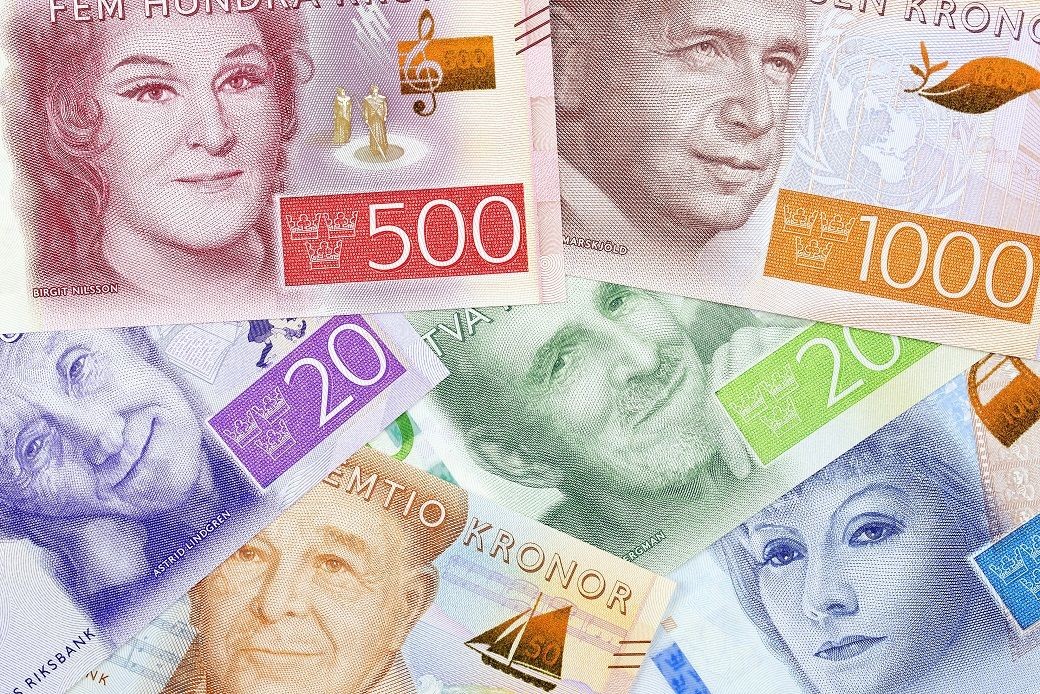
Key facts about Sweden’s currency
Currency name. The Swedish Krona (SEK) is the official currency. Its ISO code is SEK (numeric 752), and it uses the symbol “kr” after amounts.
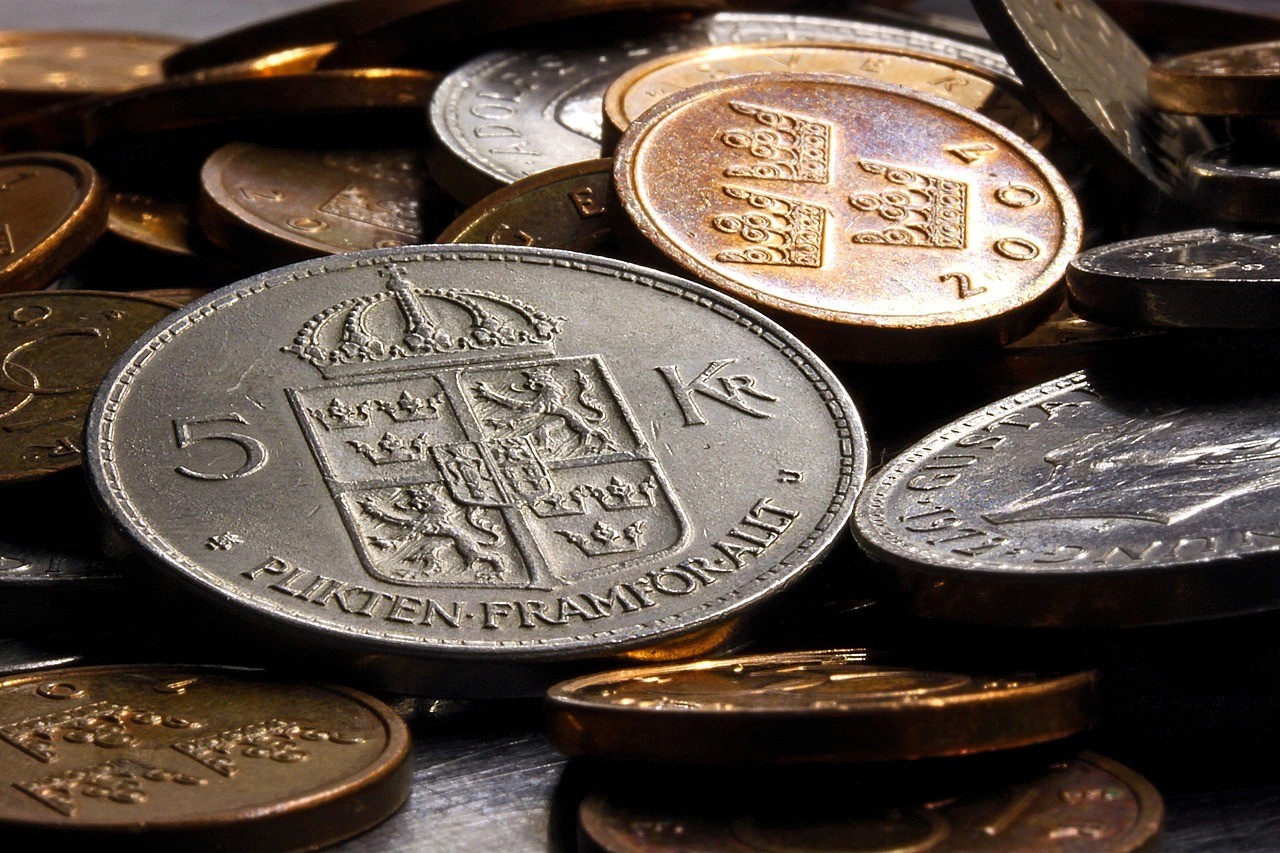
Denominations. Coins in circulation: 1 kr, 2 kr, 5 kr, and 10 kr. Banknotes: 20 kr, 50 kr, 100 kr, 200 kr, 500 kr and 1,000 kr. (These have modern security features and feature Swedish historical figures.)
Subunit. 1 krona = 100 öre. No öre coins remain; cash payments are rounded to the nearest krona. Prices may still be quoted in öre for bookkeeping, but only whole kronor exchange hands.
Central bank. Sveriges Riksbank (the world’s oldest central bank) manages the krona. It sets monetary policy (policy rate ~2.00% as of Aug 2025) and aims for stable prices (2% CPIF inflation target).
Economic context. Sweden has a wealthy, diversified economy (strong in machinery, electronics, vehicles, pharmaceuticals) and large exports (~40–45% of GDPs). This makes the krona sensitive to global trade cycles. The country’s AAA rating and current account surpluses lend credibility to SEK’s stability.
How the Swedish Krona (SEK) performs in global markets
As a free-floating currency, the krona’s value is driven by market forces. Its strength or weakness reflects the interplay of Swedish fundamentals and global trends. Key factors include Sweden’s monetary policy, inflation, economic growth, and export demand.
Floating exchange rate. SEK freely trades against other currencies, set by FX markets. Riksbank’s policy rate (2.00% in Aug 2025) and inflation outlook (recently ~3% vs 2% target) are major drivers. A higher-than-expected inflation may weaken SEK if it suggests future rate cuts, while tight policy tends to strengthen it.
Economic performance. Sweden’s modest growth (about 1% in 2024 and ~1–1.2% expected in 2026) means SEK is less buoyed by expansion than high-growth currencies. Still, robust exports (~machinery, vehicles, electronics, pharma) ensure steady foreign demand for the currency of Sweden. A healthy current account surplus and net creditor status support the currency.
Interest differentials. Traders watch Sweden’s rates relative to peers. For example, if the Fed or ECB holds rates higher while Riksbank cuts, SEK tends to weaken against USD/EUR, and vice versa. This dynamic makes cross-currency pairs like SEK/JPY (carry trades when JPY is near zero) interesting.
Creditworthiness. Sweden’s AAA rating and prudent fiscal management lend confidence to the krona. In risk-off times, SEK can act as a defensive European currency, though it is not a super safe haven like USD or JPY.
Regional links. SEK often moves with other European currencies. Its strongest trading partner is the euro (EUR/SEK), Sweden’s export economy is tied closely to the Eurozone. Significant divergence in growth or policy between the EU and Sweden often shows up in EUR/SEK moves.
Exchange rate trends and current policy
Recent movements in SEK have been shaped by monetary decisions and global trends. Late 2024 saw the krona at multi-year lows as Sweden’s economy struggled with weak domestic demand and global trade frictions. By mid-2025, as inflation eased, the currency stabilized.
Growth headwinds. Geopolitical tensions and trade uncertainty slowed Swedish growth in 2024. Consumption and investment dipped, holding back SEK.
Inflation path. CPI inflation ran above target (~3.0–3.3% in early 2025). This prompted cautious rate cuts rather than hikes. In January 2025 Riksbank lowered its key rate from 2.25% to 2.00%. In August 2025 it held at 2.00%, noting inflation should return to 2% soon.
Currency moves. After peaking near SEK 11.66 per euro in Nov 2024 (ECB data), EUR/SEK drifted lower as markets priced easier policy. By Q3 2025 it was around 10.9–11.2. USD/SEK similarly eased (1 SEK ~ $0.1065, or ~9.4 USD) reflecting global dollar strength waning. SEK’s 6–7% implied volatility signals only moderate expected swings.
Policy outlook. The Riksbank signaled potential further easing. As of Aug 2025 the policy rate stands at 2.00%, down from over 4% in 2023. Future cuts are likely if growth stays sluggish. Traders monitor meeting minutes and forecasts closely, since SEK is sensitive to interest differentials.
How to trade the Swedish Krona (SEK)
The Swedish krona offers several trading opportunities. While not as liquid as majors like EUR/USD, it trades heavily in key pairs and shows clear trends around fundamentals. Here are strategic pointers:
Forex pairs. The most traded SEK pairs are EUR/SEK (euro- vs krona) and USD/SEK. Cross pairs like SEK/JPY, GBP/SEK, NOK/SEK and SEK/CHF also provide exposure. EUR/SEK is popular for Eurozone-Sweden economic plays; SEK/JPY can be used for carry strategies (Sweden’s rates vs Japan’s near zero).
Riksbank cues. Track the Riksbank calendar (about 6–8 releases/year). Monetary Policy Reports, press conferences and inflation forecasts often trigger volatility in SEK. For example, when Riksbank cut rates in Jan 2025, EUR/SEK briefly jumped. Always check central bank signals when holding SEK positions.
European data. Sweden trades primarily with the EU (especially Germany and the Netherlands). Monitor Eurozone manufacturing/services PMIs, German GDP, ECB announcements, strong EU data tends to bolster SEK (via stronger euro), and vice versa. A divergence between Swedish data and EU trends can create SEK moves.
Technical analysis. SEK pairs trend well on both news and technical setups. Use indicators like moving-average crossovers (50-day vs 200-day) to capture breakout trends. Combine with momentum tools (RSI or MACD) to time entries. For example, a rebound above a key MA after an inflation report can signal a new trend in EUR/SEK.
Commodities & trade flows. Sweden exports industrial goods and raw materials. Rising commodity indexes (like for metals or oil) often improve Sweden’s trade balance, supporting SEK. Keep an eye on the Swedish trade surplus reports and global commodity prices; favorable terms often strengthen the krona.
Seasonality & global risks. SEK often strengthens in export-heavy quarters (Q2 and Q4) due to robust foreign demand. Also watch geopolitical/energy shocks in Europe: events like an EU energy crisis or security tensions can sway SEK on risk sentiment. Always use stop-loss orders, as sudden moves can occur when global risk appetite changes.

By combining fundamental analysis (interest rates, EU data) with sound technical strategy, traders can find systematic edges in SEK pairs. Patience and risk management are key, given SEK’s moderate volatility.
Beginner considerations
If you’re new to FX and SEK, start simple and build experience:
Focus on EUR/SEK first. This pair has the most liquidity and analyst coverage. It reacts predictably to major news (eurozone and Swedish data) and usually has tighter spreads.
Learn the fundamentals. Follow basic indicators: Swedish CPI and GDP reports, as well as Riksbank decisions. Notice how SEK jumps on inflation surprises or rate changes. With time, you’ll see patterns in how SEK moves.
Demo trade and tools. Practice with a demo account on a credible platform. Use built-in tools (moving averages, RSI) to test strategies on historical EUR/SEK charts. This builds your skill without risking real money.
| Demo | Stocks | Currency pairs | Min. deposit, $ | Regulation | TU overall score | Open an account | |
|---|---|---|---|---|---|---|---|
| Yes | Yes | 60 | 100 | CySEC, FCA, ASIC, FMA, FSCA, FSA Seychelles, EFSA, MAS, DFSA, SCB | 7.7 | Go to broker 81% of retail CFD accounts lose money. |
|
| Yes | No | 69 | 50 | CFTC, NFA | 6.88 | Go to broker Your capital is at risk. |
|
| Yes | Yes | 68 | No | FSC (BVI), ASIC, IIROC, FCA, CFTC, NFA | 6.63 | Go to broker Your capital is at risk. |
|
| Yes | Yes | 80 | 100 | CIMA, FCA, FSA (Japan), NFA, IIROC, ASIC, CFTC | 6.47 | Study review | |
| Yes | Yes | 80 | 1 | FCA, BaFin, ASIC, MAS, CySec, FINMA, BMA, CFTC, NFA | 6.38 | Study review |
Watch liquidity and timing. SEK pairs trade most during European market hours (London/Frankfurt). Avoid illiquid times when spreads widen. Beginners should trade when the market is active, not overnight.
Manage risk. Start with small position sizes. SEK is moderate-volatility, so don’t over-leverage. Always set stop-loss orders. For example, a typical daily range of SEK against EUR is ~0.3–0.5%; plan accordingly.
Broker costs. SEK pairs are offered by most major brokers. EUR/SEK spreads on good platforms are often around 1–3 pips. Always check demo or live quotes for the pair before trading to ensure low costs.
By building familiarity (starting with EUR/SEK trends and simple tools), even novice traders can become comfortable trading the Swedish krona over time.
Risks and warnings
Liquidity risk. SEK pairs outside EUR/SEK and USD/SEK show lower liquidity.
Macro-sensitivity. Despite being strong, Sweden’s economy can be affected by global slowdowns.
Currency intervention. While rare, Riksbank has intervened in the past (e.g., 2009 and 2015).
Spreads and costs. For exotic SEK pairs, spreads may exceed 3.5 pips, especially during low-volume hours.
Traders managing the Sweden currency name in positions must set clear SL/TP levels and monitor EU-wide data flows.
Pros and cons of trading SEK
- Pros
- Cons
transparent monetary framework and regular policy updates;
well-regulated trading environment and stable banking sector;
reliable medium for diversification in regional portfolios.
modest trading volumes in non-EUR/SEK pairs;
political debates on euro adoption resurface occasionally;
less predictable during global financial shocks.
Earnings potential
Experienced traders often estimate SEK trades as part of a diversified strategy, rather than expecting outsized gains from any single move:
Swing trading. Volatile news events (inflation releases, Riksbank announcements) have driven SEK pairs to move a few percent in a day. Skillful swing traders can capture ~1–3% moves per month, though this varies with market conditions.
Carry trades. With Sweden’s interest rate above JPY/EUR, some traders lock in ~2–4% annual return by borrowing low-rate currency and investing in SEK (after roll costs). These are modest returns but can compound steadily.
Trend strategies. On large macro shifts (e.g. strong Riksbank tightening vs ECB), EUR/SEK has broken out by double digits. Long-horizon traders might see ~10% moves in a year. However, such trends are rare and require patience.
Risk-adjusted. Realistic expectations account for SEK’s moderate volatility. Many professional SEK traders target annual returns in the low double digits by combining strategies (fundamental, technical, seasonal) and strict risk control.
Past performance does not guarantee future results. Market conditions can change. But SEK’s consistent link to fundamentals means disciplined approaches can capture meaningful returns over time.
Outlook driven by central bank policy and Nordic geopolitical shifts

Sweden’s decision to retain the Swedish krona (SEK) in 2026 is more than a political statement, it’s a strategic move that protects its monetary agility in an increasingly volatile European market. For Forex traders, SEK is a unique hybrid: it behaves like a European currency but moves independently of the euro, often mirroring Sweden’s export cycles and central bank tone rather than ECB policy.
A beginner who only looks at SEK through the lens of EUR/SEK misses how deeply Sweden’s tech exports, renewable energy dominance, and fiscal prudence shape its currency momentum. Keeping an eye on Riksbank policy meetings and Sweden’s inflation-adjusted bond yields can give early clues to short-term krona strength long before the larger EU shifts are priced in.
Geopolitically, Sweden’s new NATO membership and growing defense expenditure have also changed how SEK behaves in risk-off environments. The krona has historically weakened during global tension, but in 2026, it’s becoming a proxy for stability in Scandinavia, a region increasingly seen as energy-secure and politically steady compared to southern Europe. Beginners in Forex should learn to pair macro data (like industrial output and CPI) with geopolitical cues (such as NATO commitments and energy independence moves) to anticipate SEK pivots.
Conclusion
The Swedish krona (SEK) will continue to serve as Sweden’s official currency in 2026, reflecting the nation’s commitment to monetary independence and economic stability. Unlike many EU countries, Sweden maintains its freedom from the euro, offering unique trading opportunities tied closely to Riksbank policy decisions and the country’s robust export sector. For example, strategic traders monitor interest rate changes and geopolitical shifts such as Sweden’s NATO membership to anticipate meaningful SEK moves. Ultimately, understanding Sweden’s currency is not just about exchange rates but about recognizing how informed policy and resilient economics empower the krona as both a local and global asset.
FAQs
Why does Sweden continue to use the Swedish krona instead of adopting the euro?
How does Sweden’s central bank influence the value of the krona?
What risks should traders consider when trading Swedish krona currency pairs?
How does seasonal activity affect the performance of the Swedish krona?
Editors' Top Picks and Insights





Related Articles
Team that worked on the article
Andrey Mastykin is an experienced author, editor, and content strategist who has been with Traders Union since 2020. As an editor, he is meticulous about fact-checking and ensuring the accuracy of all information published on the Traders Union platform.
Dan Blystone began his trading career in 1998 as an arbitrage clerk on the floor of the Chicago Mercantile Exchange (CME). He later traded bond and Eurex futures at proprietary firms such as Altea Trading, gaining valuable experience in high-frequency trading and risk management.
Chinmay Soni is a financial analyst with more than 5 years of experience in working with stocks, Forex, derivatives, and other assets. As a founder of a boutique research firm and an active researcher, he covers various industries and fields, providing insights backed by statistical data.

-
 Afghanistan
-
 Albania
-
 Algeria
-
 Angola
-
 Argentina
-
 Armenia
-
 Australia
-
 Austria
-
 Azerbaijan
-
 Bahamas
-
 Bahrain
-
 Bangladesh
-
 Belarus
-
 Belgium
-
 Bolivia
-
 Botswana
-
 Brazil
-
 Brunei
-
 Bulgaria
-
 Cambodia
-
 Cameroon
-
 Canada
-
 Chile
Chile
-
 China
China
-
 Colombia
-
 Congo
Congo
-
 Costa Rica
-
 Cote d'Ivoire
-
 Croatia
-
 Cuba
Cuba
-
 Cyprus
-
 Czechia
-
 DR Congo
-
 Denmark
-
 Dominican Republic
-
 Ecuador
-
 Egypt
Egypt
-
 El Salvador
-
 Estonia
-
 Eswatini
-
 Ethiopia
-
 Finland
-
 France
-
 Georgia
-
 Germany
-
 Ghana
Ghana
-
 Greece
-
 Haiti
Haiti
-
 Hong Kong
-
 Hungary
-
 India
India
-
 Indonesia
-
 Iran, Islamic republic
-
 Iraq
Iraq
-
 Ireland
-
 Israel
-
 Italy
Italy
-
 Jamaica
-
 Japan
Japan
-
 Jordan
-
 Kazakhstan
-
 Kenya
Kenya
-
 Korea
Korea
-
 Kuwait
-
 Kyrgyzstan
-
 Laos
Laos
-
 Latvia
-
 Lebanon
-
 Lesotho
-
 Libya
Libya
-
 Lithuania
-
 Luxembourg
-
 Madagascar
-
 Malaysia
-
 Malta
Malta
-
 Mauritius
-
 Mexico
-
 Moldova
-
 Mongolia
-
 Montenegro
-
 Morocco
-
 Mozambique
-
 Myanmar
-
 Namibia
-
 Nepal
Nepal
-
 Netherlands
-
 New Zealand
-
 Nigeria
-
 North Macedonia
-
 Norway
-
 Oman
Oman
-
 Pakistan
-
 Palestine
-
 Panama
-
 Papua New Guinea
-
 Paraguay
-
 Peru
Peru
-
 Philippines
-
 Poland
-
 Portugal
-
 Puerto Rico
-
 Qatar
Qatar
-
 Reunion
-
 Romania
-
 Rwanda
-
 Saudi Arabia
-
 Serbia
-
 Singapore
-
 Slovakia
-
 Slovenia
-
 Somalia
-
 South Africa
-
 Spain
Spain
-
 Sri Lanka
-
 Sweden
-
 Switzerland
-
 Syria
Syria
-
 Taiwan
-
 Tajikistan
-
 Tanzania
-
 Thailand
-
 Trinidad and Tobago
-
 Tunisia
-
 Turkey
-
 UAE
UAE
-
 Uganda
-
 Ukraine
-
 United Kingdom
-
United States
-
 Uruguay
-
 Uzbekistan
-
 Venezuela
-
 Vietnam
-
 Yemen
Yemen
-
 Zambia
-
 Zimbabwe
- Forex
- Crypto












