The tweet was deleted by the author.
But we saved everything 🙂.


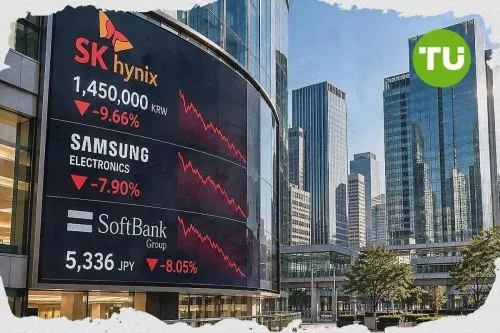
SK Hynix has listed on Nasdaq and raised $26.5 billion. The deal set a new record for foreign companies in the U.S. market. But will the listing help the South Korean memory-chip maker compete successfully with its rivals?
SK Hynix sold 177.9 million American depositary receipts on Nasdaq at $149 each, raising $26.5 billion. Each receipt represents one-tenth of a common share traded in Seoul.
The deal became the largest first-time U.S. share sale by a foreign company. According to Bloomberg, SK Hynix surpassed Alibaba’s U.S. debut and completed the third-largest stock offering in global history.
View post on X Loading...
Demand significantly exceeded supply. Investors submitted orders worth nearly $200 billion, more than seven times the size of the offering. The company did not offer the securities at a discount. The offer price was about 3% above the value of the equivalent number of SK Hynix shares at Thursday’s close in Seoul.
Trading in the receipts began on the Nasdaq Global Select Market under the temporary ticker SKHYV. The securities are expected to begin regular-way trading under the ticker SKHY on July 13. Bank of America, Citigroup, Goldman Sachs, and JPMorgan led the offering. Banks and brokerages involved in the deal earned nearly $260 million in fees.
The main reason for the strong demand is SK Hynix’s position in the artificial intelligence memory market. The company is the largest supplier of high-bandwidth memory, or HBM, which is used in many systems for training and running AI models.
SK Hynix held a 57% share of the global HBM market by revenue in the fourth quarter of 2025, according to Counterpoint Research. Analysts expect the company to retain more than half of the market in 2026, although Samsung and Micron continue to expand production.
SK Hynix moved into this segment earlier than its main competitors and became a key supplier to Nvidia, the largest buyer of HBM. In June, Nvidia and SK Hynix announced a multiyear partnership following a visit to South Korea by Nvidia CEO Jensen Huang.
“That advantage has positioned SK Hynix as one of the biggest beneficiaries of the rapid growth in AI infrastructure,” TrendForce analyst Ellie Wang said.
The boom extends beyond HBM. Rising demand from data centers has also pushed up prices for conventional memory used in smartphones, computers, cars, and medical equipment. More than 75% of SK Hynix’s revenue comes from RAM, including HBM. The company also produces NAND flash memory and held about 19% of that market in the first quarter.
Despite its leadership in HBM, SK Hynix has long traded at a lower valuation than its U.S. competitors. According to LSEG, the company’s 12-month forward price-to-earnings ratio is about 4.8. Micron trades at around 6.6 times forward earnings, while the industry median stands at 29.8.
This gap is often linked to the so-called Korea discount. South Korean companies generally trade at lower valuations than global peers because of complex conglomerate structures, corporate governance concerns, and limited access for foreign investors to the domestic market.
The Nasdaq listing makes SK Hynix shares easier for U.S. funds to buy and allows investors to trade them during familiar market hours.
“The ADR listing gives U.S. and global investors who do not have access to local Korean stocks the opportunity to directly buy shares in the global leader in HBM for the first time,” said Janus Henderson portfolio manager Richard Clode.
Analysts believe the listing could bring SK Hynix’s valuation closer to Micron’s, although fully eliminating the discount will be difficult.
How does the company plan to use the capital it raised? Proceeds from the offering will help SK Hynix finance new factories and equipment. For example, the company is building a $4 billion facility in Indiana that will focus on advanced packaging for HBM chips. The project is scheduled for completion in 2028. SK Hynix also expects to receive up to $458 million in grants and up to $570 million in loans under the CHIPS and Science Act.
View post on X Loading...
Most of the spending will remain in South Korea. The company plans to invest hundreds of billions of dollars in new production clusters, including a facility in Yongin worth about $390 billion. By the end of 2027, SK Hynix also intends to spend around $7.8 billion on EUV lithography machines, each of which can cost up to $400 million.
The main risk is the cyclical nature of the memory market. In the past, sharp increases in demand often led to oversupply, falling prices, and losses for manufacturers. Competition is also intensifying: Samsung and Micron are expanding HBM output, which could push SK Hynix’s market share down to as low as 40%.
A Nasdaq listing gives SK Hynix direct access to U.S. investors and could help narrow the valuation gap with Micron. The company has already shown that the market is willing to pay for its leadership in HBM: demand for the offering approached $200 billion, and the receipts were sold at a premium to the Seoul-listed shares.
However, further growth will depend not on the listing itself but on SK Hynix’s ability to expand production and preserve its technological lead. If Samsung and Micron ramp up HBM output faster, or if the memory market returns to oversupply, the company’s shares could come under pressure.


 Afghanistan
 Albania
 Algeria
 Angola
 Argentina
 Armenia
 Australia
 Austria
 Azerbaijan
 Bahamas
 Bahrain
 Bangladesh
 Belarus
 Belgium
 Bolivia
 Botswana
 Brazil
 Brunei
 Bulgaria
 Cambodia
 Cameroon
 Canada
 Chile
Chile
 China
China
 Colombia
 Congo
Congo
 Costa Rica
 Cote d'Ivoire
 Croatia
 Cuba
Cuba
 Cyprus
 Czechia
 DR Congo
 Denmark
 Dominican Republic
 Ecuador
 Egypt
Egypt
 El Salvador
 Estonia
 Eswatini
 Ethiopia
 Finland
 France
 Georgia
 Germany
 Ghana
Ghana
 Greece
 Haiti
Haiti
 Hong Kong
 Hungary
 India
India
 Indonesia
 Iran, Islamic republic
 Iraq
Iraq
 Ireland
 Israel
 Italy
Italy
 Jamaica
 Japan
Japan
 Jordan
 Kazakhstan
 Kenya
Kenya
 Korea
Korea
 Kuwait
 Kyrgyzstan
 Laos
Laos
 Latvia
 Lebanon
 Lesotho
 Libya
Libya
 Lithuania
 Luxembourg
 Madagascar
 Malaysia
 Malta
Malta
 Mauritius
 Mexico
 Moldova
 Mongolia
 Montenegro
 Morocco
 Mozambique
 Myanmar
 Namibia
 Nepal
Nepal
 Netherlands
 New Zealand
 Nigeria
 North Macedonia
 Norway
 Oman
Oman
 Pakistan
 Palestine
 Panama
 Papua New Guinea
 Paraguay
 Peru
Peru
 Philippines
 Poland
 Portugal
 Puerto Rico
 Qatar
Qatar
 Reunion
 Romania
 Rwanda
 Saudi Arabia
 Serbia
 Singapore
 Slovakia
 Slovenia
 Somalia
 South Africa
 Spain
Spain
 Sri Lanka
 Sweden
 Switzerland
 Syria
Syria
 Taiwan
 Tajikistan
 Tanzania
 Thailand
 Trinidad and Tobago
 Tunisia
 Turkey
 UAE
UAE
 Uganda
 Ukraine
 United Kingdom
United States
United Kingdom
United States
 Uruguay
 Uzbekistan
 Venezuela
 Vietnam
 Yemen
Yemen
 Zambia
 Zimbabwe