
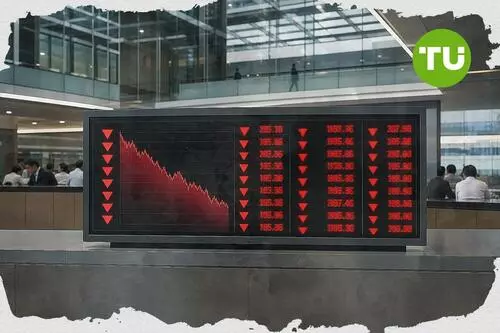
Everyone needs AI memory: Why SK Hynix stock keeps rising

SK Hynix has achieved something rare even among large-cap semiconductor stocks: a 786% gain over the past 12 months while analysts continue to raise expectations. More than 95% of sell-side analysts maintain BUY ratings on the stock, suggesting that Wall Street still sees meaningful upside potential ahead.
The key question for investors is no longer whether SK Hynix is benefiting from the AI boom. That part is clear. The more important question is whether this is a short-lived earnings spike or the beginning of a structurally stronger profit cycle. I believe the second interpretation deserves serious attention. The combination of constrained memory supply, booming AI infrastructure spending, rising HBM4 adoption, and the possibility of improved shareholder returns suggests that SK Hynix may remain one of the most important semiconductor stories of 2026 and 2027.
Why this AI memory cycle looks different
Traditional memory cycles are usually driven by a familiar pattern. Prices rise when demand improves, manufacturers expand capacity, supply catches up, and profits eventually fall. That framework still matters, but it may not fully explain what is happening today.
The current cycle is being shaped by a different force: AI computing is consuming large amounts of High-Bandwidth Memory (HBM), and HBM production competes for capacity that could otherwise support conventional DRAM. At the same time, conventional server demand is recovering, while memory makers are prioritizing premium products rather than flooding the market with lower-value capacity. This creates a tighter backdrop than in past upcycles, especially if data center customers continue to reserve supply through longer-term agreements.
The practical implication is important. If more memory output is committed to high-value AI products and supply expansion remains disciplined, the industry may experience a longer period of pricing strength than investors typically expect from a commodity semiconductor cycle. The market is still cyclical, but the earnings floor could be higher than in the past.
HBM4 could strengthen SK Hynix’s lead
SK Hynix’s strategic advantage is not simply that it sells memory chips. It sits at the center of the HBM transition, which is becoming one of the most critical bottlenecks in AI computing.The company announced that it had completed development of HBM4 and was readying mass production. The product offers double the bandwidth of the prior generation and more than 40% improvement in power efficiency, two features that matter enormously for next-generation AI accelerators. Faster memory improves data throughput, while better power efficiency helps address the rising electricity burden of large AI data centers.
That matters because AI infrastructure is increasingly limited not only by chip availability, but also by memory bandwidth and energy efficiency. In this environment, a supplier with early HBM4 readiness can enjoy stronger pricing power, closer customer relationships, and better earnings visibility.
Figure 1. HBM revenue scenario rising from 2025 through 2027

AI infrastructure spending is becoming long term demand
The bullish case for SK Hynix becomes stronger when looking beyond the company itself. AI demand is increasingly visible in the order books and spending plans of cloud and infrastructure providers.
CoreWeave reported a revenue backlog of USD99.4 billion as of March 31, 2026. Alphabet said Google Cloud backlog nearly doubled quarter on quarter to more than USD460 billion. Amazon, meanwhile, said it expects to invest about USD200 billion in capital expenditures across the company in 2026, with AI among the key drivers of that spending.
These figures do not translate directly into SK Hynix revenue, but they are powerful indicators of the scale and persistence of AI infrastructure buildout. The inference is straightforward: when cloud providers are locking in massive future workloads and committing extraordinary capex budgets, demand for advanced GPUs, custom accelerators, high-speed networking, and HBM-class memory is unlikely to disappear suddenly. SK Hynix is one of the clearest beneficiaries of that ecosystem.
Figure 2. AI cloud and hyperscaler 1Q26 order backlogs

Shareholder returns could become the next catalyst
The first catalyst has been earnings. The next may be capital allocation. SK Hynix’s formal shareholder return policy for FY2025 to FY2027 remains measured. The company raised its fixed dividend, but it also prioritized balance sheet strength under the current framework. Importantly, it has left room to consider earlier additional returns if free cash flow becomes significant.
That clause looks more relevant today than it did when the policy was designed. If profitability remains elevated and cash balances rise rapidly, investors will likely focus more closely on dividends, buybacks, and the broader question of how much excess cash should be returned rather than retained. These factors could be a potentially important rerating catalyst, particularly if the company provides a more explicit return framework during the current profit boom.
In other words, the stock’s upside case may not depend solely on memory prices. A stronger shareholder return story could broaden the investor base, especially among funds that care about total return rather than pure growth exposure.
Figure 3. SK Hynix forecast free cash flow vs. total shareholder returns

Expert Opinion
My view is that SK Hynix offers one of the most asymmetric setups in global semiconductors right now, but it is also a stock where position sizing matters more than direction. My preferred strategy is phased accumulation on pullbacks, because the core thesis still looks intact: AI infrastructure spending remains enormous, HBM4 improves strategic relevance, and the earnings base may be structurally higher than in past memory cycles.
For stocks, I would prioritize SK Hynix as the direct beneficiary and consider Micron as a more volatile secondary exposure to the same AI memory theme. For futures, broader semiconductors or Nasdaq-linked futures can work for traders who want to express the AI infrastructure thesis at the index level, but I would prefer entry points after corrections rather than after euphoric spikes. For options, defined-risk call spreads on liquid semiconductor proxies appear more attractive than outright speculative calls after a large run. In currencies, I would also monitor the Korean won. Continued foreign inflows into Korea’s AI and semiconductor leaders could provide support, although this trade remains sensitive to global risk sentiment and US dollar strength.




Latest SK Hynix News





-
 Afghanistan
-
 Albania
-
 Algeria
-
 Angola
-
 Argentina
-
 Armenia
-
 Australia
-
 Austria
-
 Azerbaijan
-
 Bahamas
-
 Bahrain
-
 Bangladesh
-
 Belarus
-
 Belgium
-
 Bolivia
-
 Botswana
-
 Brazil
-
 Brunei
-
 Bulgaria
-
 Cambodia
-
 Cameroon
-
 Canada
-
 Chile
Chile
-
 China
China
-
 Colombia
-
 Congo
Congo
-
 Costa Rica
-
 Cote d'Ivoire
-
 Croatia
-
 Cuba
Cuba
-
 Cyprus
-
 Czechia
-
 DR Congo
-
 Denmark
-
 Dominican Republic
-
 Ecuador
-
 Egypt
Egypt
-
 El Salvador
-
 Estonia
-
 Eswatini
-
 Ethiopia
-
 Finland
-
 France
-
 Georgia
-
 Germany
-
 Ghana
Ghana
-
 Greece
-
 Haiti
Haiti
-
 Hong Kong
-
 Hungary
-
 India
India
-
 Indonesia
-
 Iran, Islamic republic
-
 Iraq
Iraq
-
 Ireland
-
 Israel
-
 Italy
Italy
-
 Jamaica
-
 Japan
Japan
-
 Jordan
-
 Kazakhstan
-
 Kenya
Kenya
-
 Korea
Korea
-
 Kuwait
-
 Kyrgyzstan
-
 Laos
Laos
-
 Latvia
-
 Lebanon
-
 Lesotho
-
 Libya
Libya
-
 Lithuania
-
 Luxembourg
-
 Madagascar
-
 Malaysia
-
 Malta
Malta
-
 Mauritius
-
 Mexico
-
 Moldova
-
 Mongolia
-
 Montenegro
-
 Morocco
-
 Mozambique
-
 Myanmar
-
 Namibia
-
 Nepal
Nepal
-
 Netherlands
-
 New Zealand
-
 Nigeria
-
 North Macedonia
-
 Norway
-
 Oman
Oman
-
 Pakistan
-
 Palestine
-
 Panama
-
 Papua New Guinea
-
 Paraguay
-
 Peru
Peru
-
 Philippines
-
 Poland
-
 Portugal
-
 Puerto Rico
-
 Qatar
Qatar
-
 Reunion
-
 Romania
-
 Rwanda
-
 Saudi Arabia
-
 Serbia
-
 Singapore
-
 Slovakia
-
 Slovenia
-
 Somalia
-
 South Africa
-
 Spain
Spain
-
 Sri Lanka
-
 Sweden
-
 Switzerland
-
 Syria
Syria
-
 Taiwan
-
 Tajikistan
-
 Tanzania
-
 Thailand
-
 Trinidad and Tobago
-
 Tunisia
-
 Turkey
-
 UAE
UAE
-
 Uganda
-
 Ukraine
-
 United Kingdom
-
United States
-
 Uruguay
-
 Uzbekistan
-
 Venezuela
-
 Vietnam
-
 Yemen
Yemen
-
 Zambia
-
 Zimbabwe
- Forex
- Crypto












