The tweet was deleted by the author.
But we saved everything 🙂.

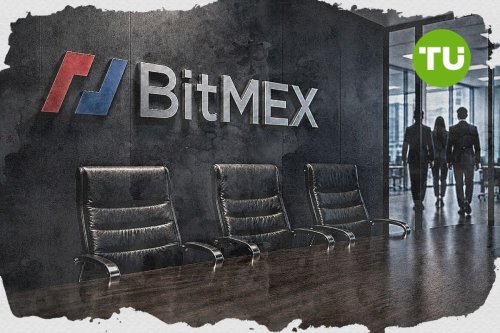
Until recently, BitMEX was still actively launching new products. Now, however, it is preparing to halt trading for good. The platform’s failure shows that even the U.S. president cannot restore a business to its former position.
BitMEX will permanently cease operations on September 23, 2026. New registrations are already unavailable, and from August 26 users will no longer be able to open positions. Any trades still active when the exchange closes will be forcibly settled.
The platform operated for about 12 years. Launched in 2014, BitMEX became one of the pioneers of the crypto derivatives market and helped popularize perpetual contracts with leverage of up to 100x.
However, BitMEX will not be able to leave the market quietly. A class action lawsuit was filed against the exchange on the same day it announced its closure. BKX Services and David Namdar are seeking the return of more than 622 BTC lost through forced liquidations. They allege that the exchange closed positions while the value of the collateral was still roughly twice the size of the losses and transferred the remaining Bitcoin to its own insurance fund.
The plaintiffs also claim that BitMEX’s internal trading desk had access to confidential customer data and could continue operating during outages. Ordinary users were allegedly unable to log in or close their positions during those periods.
These were far from BitMEX’s first problems. Legal troubles began to follow the exchange while it was still at the height of its influence. The biggest scandal broke in October 2020, when U.S. authorities charged BitMEX co-founders Arthur Hayes, Ben Delo, and Samuel Reed, as well as the exchange’s head of business development, Gregory Dwyer. They were accused of violating the Bank Secrecy Act and failing to maintain an adequate anti-money laundering program.
After the charges were filed, Hayes remained outside the United States and lived in Singapore. In March 2021, he agreed with U.S. authorities on the terms of his voluntary surrender, and in April he flew to Hawaii and appeared in court. He was released on $10 million bail.
Hayes and the other executives later pleaded guilty. The court handed them probationary sentences and fines totaling $30 million. BitMEX itself continued its legal disputes with regulators and agreed in January 2025 to pay another $100 million.
By then, the legal problems had already damaged the platform’s reputation and market position. BitMEX’s owners therefore began looking not only for a way to settle the authorities’ claims, but also for a new owner for the exchange itself.
After years of legal disputes, BitMEX’s owners began looking for a way out of the business. At the end of 2024, they decided to sell the platform and hired investment bank Broadhaven Capital Partners to advise on the transaction.
But the situation changed unexpectedly in March 2025. U.S. President Donald Trump pardoned the platform’s former executives. The pardons removed the criminal consequences but did not cancel BitMEX’s fines or other obligations to regulators.
The exchange continued launching new products and outwardly maintained normal operations. However, no buyer was found, and the company did not disclose why the deal failed to materialize.
The pardons eased some of the reputational pressure, but they did not bring BitMEX’s former audience back. Trading volume in Bitcoin futures on the platform began declining in May 2021 and never returned to its 2020 peak, when daily volume sometimes reached between $1 billion and $5 billion.
In August 2023, BitMEX ranked ninth among derivatives exchanges with a market share of about 0.9%. By 2025, it was no longer among the top 10 platforms for perpetual contract trading, even though the market’s total annual volume rose by 47% to a record $86.2 trillion.
Traders moved to Binance, Bybit, and OKX, while decentralized platforms, including Hyperliquid, captured part of the activity. At the same time, regulated competitors such as Coinbase and Kraken began offering perpetual contracts, eliminating BitMEX’s former advantage.
The crisis became especially visible in the summer of 2026. In July, the exchange announced the delisting of 65 trading instruments, several senior executives left the company, and the BMEX token plunged by more than 90% after the closure announcement.
The history of BitMEX shows that legal relief cannot fix a struggling business. Trump’s pardons removed the criminal consequences for the founders, but they did not restore the exchange’s liquidity, customers, or former role in the crypto derivatives market.
By the time of its closure, BitMEX had been losing trading volume for years, had failed to find a buyer, and had fallen behind its competitors. The platform is now leaving the market amid mass delistings, a collapse in BMEX, and a new customer lawsuit seeking more than 622 BTC. The exchange that once set the rules for the entire market ultimately failed to survive in the system it helped create.

 Afghanistan
 Albania
 Algeria
 Angola
 Argentina
 Armenia
 Australia
 Austria
 Azerbaijan
 Bahamas
 Bahrain
 Bangladesh
 Belarus
 Belgium
 Bolivia
 Botswana
 Brazil
 Brunei
 Bulgaria
 Cambodia
 Cameroon
 Canada
 Chile
Chile
 China
China
 Colombia
 Congo
Congo
 Costa Rica
 Cote d'Ivoire
 Croatia
 Cuba
Cuba
 Cyprus
 Czechia
 DR Congo
 Denmark
 Dominican Republic
 Ecuador
 Egypt
Egypt
 El Salvador
 Estonia
 Eswatini
 Ethiopia
 Finland
 France
 Georgia
 Germany
 Ghana
Ghana
 Greece
 Haiti
Haiti
 Hong Kong
 Hungary
 India
India
 Indonesia
 Iran, Islamic republic
 Iraq
Iraq
 Ireland
 Israel
 Italy
Italy
 Jamaica
 Japan
Japan
 Jordan
 Kazakhstan
 Kenya
Kenya
 Korea
Korea
 Kuwait
 Kyrgyzstan
 Laos
Laos
 Latvia
 Lebanon
 Lesotho
 Libya
Libya
 Lithuania
 Luxembourg
 Madagascar
 Malaysia
 Malta
Malta
 Mauritius
 Mexico
 Moldova
 Mongolia
 Montenegro
 Morocco
 Mozambique
 Myanmar
 Namibia
 Nepal
Nepal
 Netherlands
 New Zealand
 Nigeria
 North Macedonia
 Norway
 Oman
Oman
 Pakistan
 Palestine
 Panama
 Papua New Guinea
 Paraguay
 Peru
Peru
 Philippines
 Poland
 Portugal
 Puerto Rico
 Qatar
Qatar
 Reunion
 Romania
 Rwanda
 Saudi Arabia
 Serbia
 Singapore
 Slovakia
 Slovenia
 Somalia
 South Africa
 Spain
Spain
 Sri Lanka
 Sweden
 Switzerland
 Syria
Syria
 Taiwan
 Tajikistan
 Tanzania
 Thailand
 Trinidad and Tobago
 Tunisia
 Turkey
 UAE
UAE
 Uganda
 Ukraine
 United Kingdom
United States
United Kingdom
United States
 Uruguay
 Uzbekistan
 Venezuela
 Vietnam
 Yemen
Yemen
 Zambia
 Zimbabwe