
Best Forex Proprietary Trading Companies In France


Editorial Note: While we adhere to strict Editorial Integrity, this post may contain references to products from our partners. Here's an explanation for How We Make Money. None of the data and information on this webpage constitutes investment advice according to our Disclaimer.
Best Forex prop firms in France are:
- FundedNext - Beginners-friendly offers (free trial, trade copier software is allowed)
- FTUK - Trading terms suitable for high-risk trading (leverage up to 1:100, fixed drawdown level)
- Goat Funded Trader - A prop trading firm offering simulated capital of up to $400,000 for Forex and CFD trading
- SabioTrade - Best for those who want to work as non-staff traders with up to 90% of profit
- FTMO - One of the largest prop companies with favorable conditions (profit split up to 90%)
- Funded Trading Plus - Instant funding accounts without profit target (max drawdown 6%)
Forex proprietary (prop) trading firms are a great way for experienced traders to access large amounts of capital and trade with other experienced traders. However, with so many different firms to choose from, it can be difficult to know which one is right for you.
In this blog post, we will discuss the best Forex proprietary trading firms in France. We will look at factors such as the firm's reputation, trading rules, and fees and provide some tips on how to choose the right prop firm for you.
Risk warning: Proprietary trading involves substantial financial risk. Using firm capital can lead to gains or losses, and failure to meet targets may result in account closure. Over 85% of prop traders do not achieve long-term profitability. Understand the risks and seek professional guidance.
Top prop trading companies in France
Proprietary trading (prop trading) firms in France offer traders the opportunity to trade with the firm's capital, allowing them to access larger positions and advanced trading technology. These firms provide various funding options, risk management tools, and profit-sharing structures, making them an attractive choice for skilled traders looking to maximize their potential.
Below is a comparative table highlighting the top prop trading companies in France, their key features, and the benefits they offer to traders.
| FundedNext | FTUK | Goat Funded Trader | SabioTrade | FTMO | Funded Trading Plus | |
|---|---|---|---|---|---|---|
|
Available in France |
Yes | Yes | Yes | Yes | Yes | Yes |
|
Funding Up To, $ |
4 000 000 | 6 400 000 | 2 000 000 | 1 000 000 | 2 000 000 | 200 000 |
|
Profit split up to, % |
95 | 90 | 95 | 90 | 90 | 90 |
|
Max. Leverage |
1:100 | 1:100 | 1:100 | 1:30 | 1:100 | 1:30 |
|
Demo |
Yes | No | No | Yes | Yes | Yes |
|
Open an account |
Go to broker Your capital is at risk. |
Go to broker Your capital is at risk. |
Go to broker Your capital is at risk.
|
Go to broker Your capital is at risk.
|
Go to broker Your capital is at risk. |
Go to broker Your capital is at risk. |




Why trust us
15+ years of independent market analysis
140+ evaluation criteria, reviewed by 50+ experts
Data-driven reviews of 200+ platforms, updated regularly
20+ industry awards & a wide network of global media partners
Learn more about our methodology and editorial policies.


How to choose a prop trading account in France?
Here’s how to choose a prop trading account in France:
Regulatory compliance and firm reputation. Ensure the prop firm or its partner broker is regulated by the Autorité des Marchés Financiers (AMF) or other recognized authorities. Check trader reviews and industry reputation for transparency and reliability.
Evaluation process and trading conditions. Review profit targets, drawdown limits, and time constraints. Choose a firm whose assessment criteria match your trading style. Verify the availability of assets like Forex, stocks, and commodities.
Profit sharing and account scaling. Analyze the profit split model, with some firms offering up to 100%. Look for firms that allow account scaling based on consistent performance.
Trading platforms and support resources. Ensure the firm provides access to platforms like MetaTrader 4, MetaTrader 5, or cTrader. Check for educational resources such as webinars, tutorials, and mentorship programs.
Fee structures and withdrawal policies. Review costs for evaluations, data subscriptions, and platform usage. Confirm that withdrawal procedures are transparent, efficient, and aligned with your expectations.
Is Forex prop trading a good idea in France?
Forex proprietary (prop) trading in France offers skilled traders the opportunity to access significant capital provided by prop firms, enabling them to trade larger positions without risking personal funds. This model allows traders to leverage the firm's resources while focusing on strategy development and execution.
However, success in prop trading requires a high level of expertise, discipline, and the ability to adhere to the specific rules and evaluation criteria set by these firms. It's crucial for traders to thoroughly research and select reputable prop trading firms that offer fair profit-sharing arrangements and robust support systems. Engaging with well-established firms can provide a supportive environment conducive to trading success.
In France, the regulatory framework for financial markets is stringent, with the Autorité des Marchés Financiers (AMF) overseeing trading activities to ensure market integrity and investor protection. This regulatory environment offers a level of security for traders participating in prop trading. However, traders must remain vigilant and ensure that the prop firms they engage with comply with local regulations.
Additionally, while prop trading can mitigate personal financial risk, it often involves profit-sharing agreements and adherence to the firm's risk management policies, which may limit trading flexibility. Therefore, it's essential for traders to carefully consider these factors and assess whether the structure and requirements of prop trading align with their personal trading goals and strategies.
Rules and regulation
Below are some rules and regulations of Forex prop firms:
Regulation
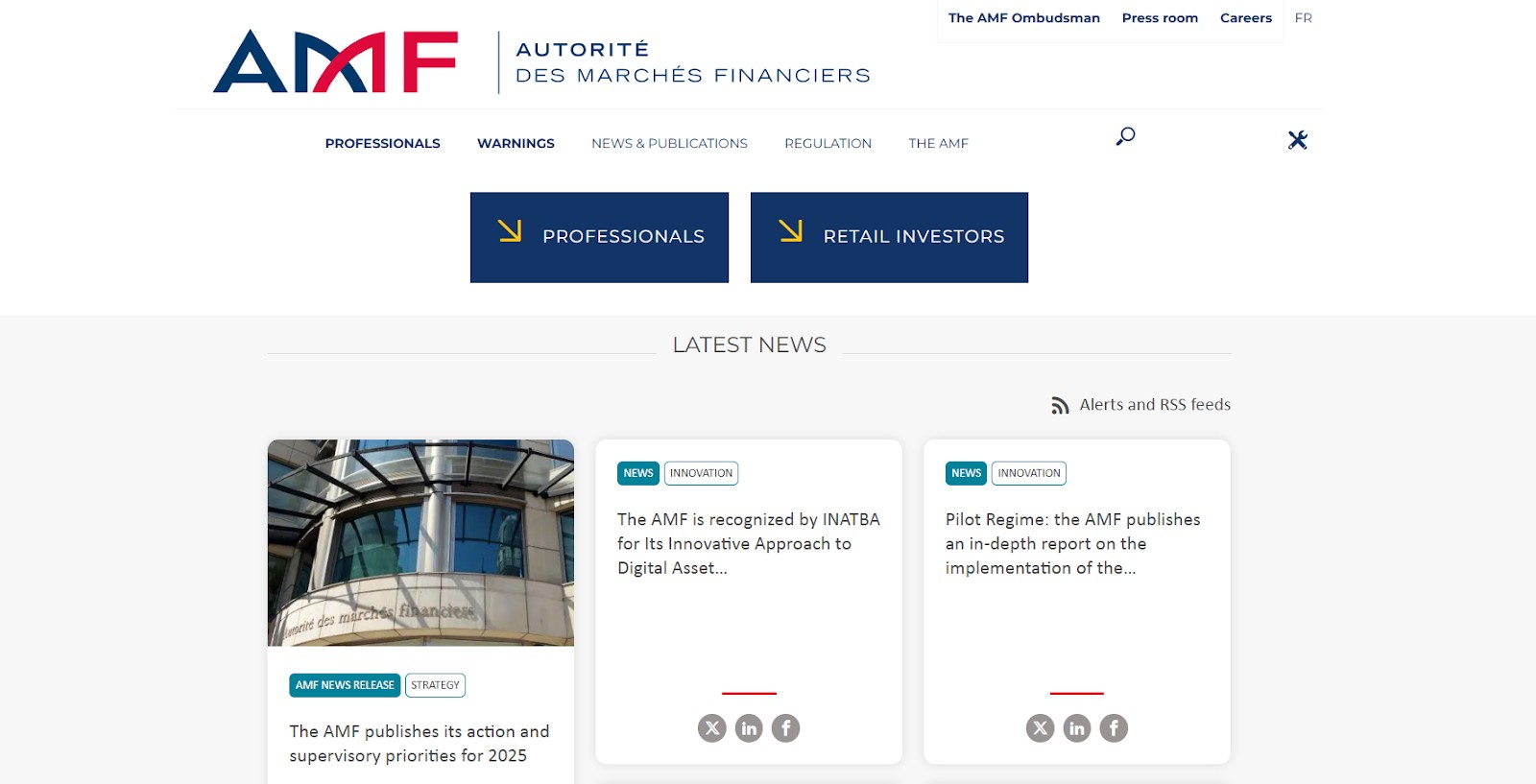
In France, prop trading firms operate within a specific regulatory framework. While these firms themselves may not require direct licensing, the brokers they partner with to execute trades in the real market must be authorized by the Autorité des Marchés Financiers (AMF), France's financial regulatory authority. This ensures that all trading activities adhere to established financial standards and provide a level of oversight to protect traders.
Investor protection
Traders can file complaints against prop firms or related financial entities with the following authorities:
AMF (the French Financial Markets Authority) and ACPR (the French Prudential Supervision and Resolution Authority), responsible for banking, securities, and currency sectors. They consider complaints of traders who have access to the real market;
ESMA (the European Securities and Markets Authority) can influence licensees;
SROs (Self-Regulatory Organizations) consider traders’ complaints, if prop firms or brokers are their members.
Complaints can also be filed with regulators and financial supervisory authorities in the firm's country of registration or with a financial ombudsman. The more complaints filed, the greater the likelihood of a successful resolution.
Taxation
Earnings from prop trading are subject to taxation in France. The tax rate can vary based on the trader's total income and the nature of the trading activities. For instance, professional traders may be subject to progressive income tax rates ranging from 0% to 45%, depending on their total taxable income.
Additionally, social security contributions may apply. It's essential for traders to maintain accurate records of their trading activities and consult with tax professionals to ensure compliance with French tax laws.
Is prop trading in France free?
Prop trading in France is not free. Most firms charge traders for access to funded accounts and evaluation programs. Many prop firms require an initial fee, which typically ranges from $100 to over $500, depending on the account size and funding level. Some firms offer refundable evaluation fees, meaning traders get their money back if they pass the challenge and qualify for a funded account.
In addition to evaluation fees, some firms charge monthly subscription fees, which can range from $150 to $25,000, depending on the firm’s structure and funding level. Other costs may include trading commissions, withdrawal fees, platform charges, and data access fees. Some firms also deduct a share of profits, typically between 10% and 30%, as part of their profit-sharing model. Understanding these costs is essential before joining a prop firm, as high fees and restrictive withdrawal policies can affect profitability. Traders should carefully review the terms, compare different firms, and choose one that aligns with their strategy and financial goals.
Another key factor is the firm's culture and its fit with your trading style

When diving into the world of proprietary trading in France, it's crucial to recognize that not all prop firms are created equal. Beyond the surface-level offerings, some firms provide access to advanced trading platforms and exclusive market data that can give you a significant edge. For instance, certain firms may offer proprietary algorithms or high-frequency trading capabilities that aren't available to the general public. Aligning yourself with a firm that offers these tools can elevate your trading strategy beyond conventional methods.
Another often overlooked aspect is the firm's culture and its alignment with your trading philosophy. Some firms foster a collaborative environment, encouraging traders to share insights and strategies, which can be invaluable for a beginner. Participating in such a community can accelerate your learning curve, exposing you to diverse trading styles and risk management techniques. Conversely, if you prefer a more independent approach, seek out firms that support autonomous trading while still providing necessary resources. Understanding this cultural fit can be as important as the financial aspects of the partnership.
Methodology for compiling our ratings of prop firms
Traders Union applies a rigorous methodology to evaluate prop companies using over 100 quantitative and qualitative criteria. Multiple parameters are given individual scores that feed into an overall rating.
Key aspects of the assessment include:
-
Trader testimonials and reviews. Collecting and analyzing feedback from existing and past traders to understand their experiences with the firm.
-
Trading instruments. Companies are evaluated on the range of assets offered, as well as the breadth and depth of available markets.
-
Challenges and evaluation process. Analyzing the firm's challenge system, account types, evaluation criteria, and the process for granting funding.
-
Profit split. Reviewing the profit split structure and terms, scaling plans, and how the firm handles profit distributions.
-
Trading conditions. Examining leverage, execution speeds, commissions, and other trading costs associated with the firm.
-
Platform and technology. Assessing the firm's proprietary trading platform or third-party platforms it supports, including ease of use, functionality, and stability.
-
Education and support. Quality and availability of training materials, webinars, and one-on-one coaching.
Conclusion
Choosing the right Forex proprietary trading firm in France can significantly accelerate a trader’s growth, offering substantial capital access and advanced trading resources to those with skill and discipline. The most successful traders ensure their chosen firm is reputable, regulated under the AMF, and aligns with their trading style and financial goals. For example, firms that provide robust educational resources or advanced platforms such as MetaTrader 5 can give traders a clear competitive advantage. Ultimately, the key to excelling in prop trading is matching your own ambition and methodology with a firm that supports and magnifies your strengths.
FAQs
What types of traders are best suited for Forex prop firms in France?
How do profit-sharing models typically work in French Forex prop firms?
What are the common evaluation processes for joining a Forex prop firm in France?
Are there ongoing educational resources provided by Forex prop firms in France?
Editors' Top Picks and Insights






Related Articles
Team that worked on the article
Parshwa is a content expert and finance professional possessing deep knowledge of stock and options trading, technical and fundamental analysis, and equity research. As a Chartered Accountant Finalist, Parshwa also has expertise in Forex, crypto trading, and personal taxation.
Chinmay Soni is a financial analyst with more than 5 years of experience in working with stocks, Forex, derivatives, and other assets. As a founder of a boutique research firm and an active researcher, he covers various industries and fields, providing insights backed by statistical data.
Mirjan Hipolito is a journalist and news editor at Traders Union. She is an expert crypto writer with five years of experience in the financial markets.


