
Is Binance Legal in Switzerland? Is Binance Safe?
Choosing a trustworthy cryptocurrency exchange is crucial as it directly impacts the safety and security of your digital assets. The high risk of scams in this area necessitates extreme caution from users.
Our analysts have noticed a growing interest in Binance services among users in the Switzerland. However, questions remain regarding its safety and legal status within the Switzerland. Traders Union experts have addressed this concern by crafting a detailed review that explores both the pros and cons of using Binance.
So, let us tell you if Binance is allowed in the Switzerland and if it's safe to use for trading.
Is Binance legal in Switzerland? Does it have a license?
Binance is a regulated exchange that provides services in most countries worldwide, except for those under international sanctions, such as North Korea, Iran, Syria, Cuba, and regions like Crimea, Donetsk, and Luhansk. Restrictions may also apply based on requests from local regulators. We compared Binance's level of regulation with the top two global competitors and the top two competitors available in your country. Exchanges with Tier-1 regulation are generally considered the safest. However, Binance's safety level is also influenced by other factors outlined below.
| Binance | Bybit.eu | Bybit | |
|---|---|---|---|
Government-regulated |
Yes |
Yes |
Yes |
Tier-1 regulation |
Yes |
Yes |
Yes |
U.S regulation |
No |
No |
No |
FCA U.K |
No |
No |
No |
AUSTRAC in Australia |
Yes |
No |
No |
DFSA in UAE |
No |
No |
No |
AMF in France |
Yes |
No |
No |
Spain |
Yes |
No |
No |
Germany |
No |
No |
No |
Singapore |
No |
No |
No |
MFSA in Malta |
No |
No |
No |
Seychelles |
No |
No |
Yes |
Other countries |
OAM (Italy), FIU (Lithuania), Swedish Financial Supervisory Authority, Bank of Spain, AFSA (Kazakhstan), CASP (Bahrain), VARA (Dubai), FIU-IND (India), Bappebti (Indonesia), JFSA (Japan), FSP (New Zealand), Securities and Exchange Commission of Thailand, DASP (El Salvador), CNV (Argentina) |
MiCAR (Austria) |
Austria’s Financial Market Authority (FMA), Georgia, Kazakhstan |
Open an account |
|
|
|
Other Binance Security Factors to Consider
| Binance | Bybit.eu | Bybit | |
|---|---|---|---|
2FA |
Yes |
Yes |
Yes |
Verification (KYC) |
Yes |
Yes |
Yes |
Successful hacks |
Yes |
No |
Yes |
Cold wallet storage |
Yes |
Yes |
Yes |
Investor protection fund |
Yes |
Yes |
Yes |
Open an account |
|
|
|
Short summary about the Binance exchange
The Binance exchange is one of the largest cryptocurrency exchanges in the world with its headquarters in Hong Kong. According to the CoinMarketCap cryptocurrency portal, Binance holds the top spot in terms of aggregate indicators of the platform's daily turnover, the number of novices and active users, liquidity, and web traffic (ranking, queries, statistics in search engines, etc.). The exchange is also a cryptocurrency startup that has its own “native asset” used in the Binance ecosystem as the “basis gas” (payment internal unit). More about Binance Card
| 💰 Account currency: | EUR, USD, other currencies, and cryptocurrencies |
| 🚀 Minimum deposit: | From $1 |
| ⚖️ Leverage: | Up to 1:125 |
| 💱 Spread: | 0.1% |
| 🔧 Instruments: | Cryptocurrencies |
| 💹 Margin Call / Stop Out: | No |
Binance Pros and Cons
👍 Binance Pros:
•low commissions due to liquidity and trading volumes.
•high platform performance;
•proprietary BNB Coin which allows Binance to reduce the commission size;
•a proprietary cold wallet guarantees the security of your crypto assets by storing them.
👎 Binance Cons:
•complex verification procedure;
•the exchange is not licensed by a regulator;
•The platform can go offline without warning;
•there are complaints about the technical functionality of the platform;
•there is an intricate mechanism for calculating commissions and rewards (grid system Maker/Taker).
Do I recommend using Binance in the Switzerland?
The Binance cryptocurrency exchange can certainly be recommended for traders from Switzerland. The platform is well suited for trading cryptocurrencies. Despite that the company does not have a financial license, as this kind of activity is not subject to licensing in Switzerland in general, the exchange has a good reputation. The company’s team has developed reliable account protection and closely monitors the security of the platform.
FAQ
Can I work with crypto exchanges considering that they don’t have a license in Switzerland?
The fact that a crypto exchange does not have a license doesn’t mean that traders from Switzerland will have problems while working with it. Cryptocurrency exchanges are not subject to licensing in many countries, while there are many exchanges with good reputation. Assess the available information about the exchange and check its reputation.
What security methods for account protection do crypto exchanges employ?
Cryptocurrency exchanges may offer various security methods. These include the two-factor authentication, first and foremost, and also such methods as a security question, additional passwords, etc.
Can an exchange that has had a security-related incident in the past be trusted?
You need to check whether such incidents were regular. If it was one episode several years ago, while the reputation of the exchange is good, you can work with such an exchange.
Should I work with an exchange if I have doubts about its reputation?
No. Always choose the cryptocurrency exchanges that have a good reputation.
Team that worked on the article
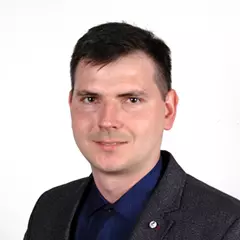
Mikhail Vnuchkov joined Traders Union as an author in 2020. He began his professional career as a journalist-observer at a small online financial publication, where he covered global economic events and discussed their impact on the segment of financial investment, including investor income. With five years of experience in finance, Mikhail joined Traders Union team, where he is in charge of forming the pool of latest news for traders, who trade stocks, cryptocurrencies, Forex instruments and fixed income.
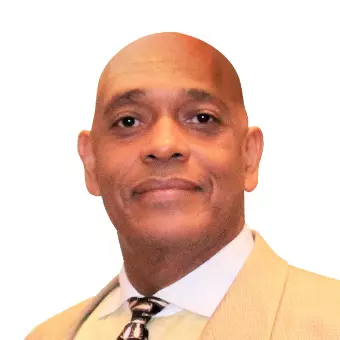
Dr. BJ Johnson is a PhD in English Language and an editor with over 15 years of experience. He earned his degree in English Language in the U.S and the UK. In 2020, Dr. Johnson joined the Traders Union team. Since then, he has created over 100 exclusive articles and edited over 300 articles of other authors.


