
Guarda Wallet Review 2026


Editorial Note: While we adhere to strict Editorial Integrity, this post may contain references to products from our partners. Here's an explanation for How We Make Money. None of the data and information on this webpage constitutes investment advice according to our Disclaimer.
Guarda Wallet is a non-custodial crypto wallet that allows users to store, manage, and stake digital assets across 70+ blockchains and 400,000+ tokens. The Guarda crypto wallet is available on desktop, mobile, web, and browser extensions, giving users full control over their private keys. Based on many Guarda wallet reviews, it also includes built-in staking, token swaps, and hardware wallet integration, making it a flexible option for managing cryptocurrency.
In this Guarda wallet review, we examine the overall user experience by looking at its core functionality, usability, and ecosystem integration. The analysis covers the wallet interface, asset management tools, staking features, and the process behind Guarda wallet login, along with supported assets, security architecture, fees, and other key factors that help determine whether the wallet suits both beginners and more advanced users.
Risk warning: Cryptocurrency markets are highly volatile, with sharp price swings and regulatory uncertainties. Research indicates that 75-90% of traders face losses. Only invest discretionary funds and consult an experienced financial advisor.
What is a Guarda Wallet?
Launched in 2017 by Guardarian, Guarda Wallet is a non-custodial solution designed to give users full control over their digital assets. Unlike custodial platforms that hold private keys on behalf of users, Guarda ensures that keys and seed phrases remain in the user’s possession. This model makes the Guarda crypto wallet a preferred option for those who value independence and security, a point often highlighted in Guarda wallet reviews.
The wallet is available across multiple platforms, making it accessible on different devices:
Web version.
Mobile apps (iOS & Android).
Desktop apps (Windows, macOS, Linux).
Chrome extension.
In addition, the wallet includes features such as built-in staking, token swaps, support for Web3 applications and NFTs, and integration with hardware wallets like Ledger. These capabilities make it a versatile solution for a wide range of users and are frequently mentioned when evaluating Guarda wallet features and overall ecosystem functionality.
How to register and start using Guarda Wallet
Getting started with Guarda Wallet is simple and does not require traditional account registration. Since it is a non-custodial solution, users create a wallet directly in the interface instead of signing up with personal data. This approach is one of the reasons many users choose the Guarda crypto wallet for managing digital assets securely.
Step 1: Open the official Guarda interface
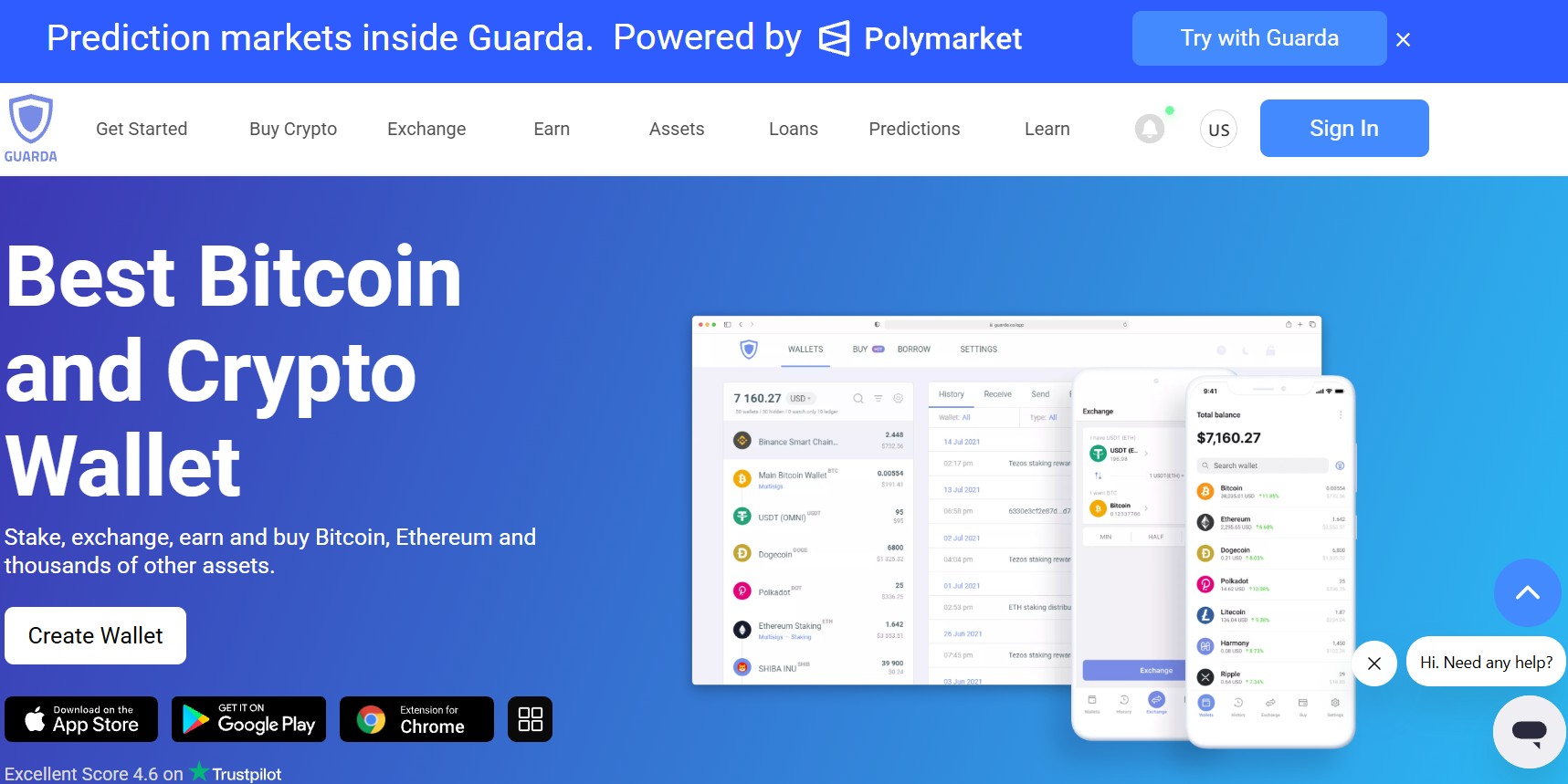
Begin by visiting the Guarda wallet official website and launching the web application. You can access it through the Guarda web wallet or choose to download the app for desktop or mobile devices, depending on your preferred setup.
Step 2: Create a new wallet
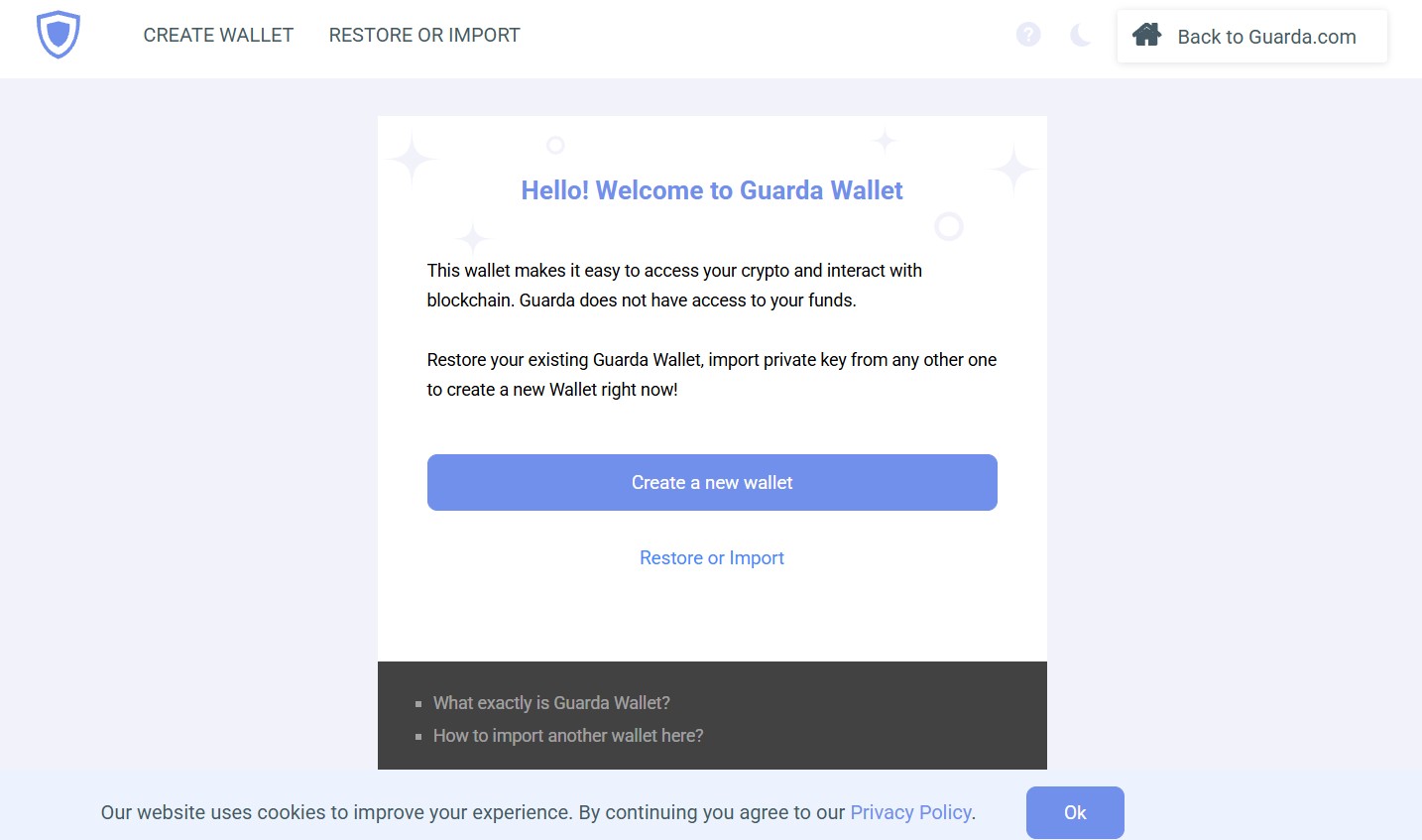
Once the interface loads, select the option to create a new wallet. The system will generate your private keys along with a recovery seed phrase. This process is a key part of Guarda wallet security features, ensuring that only the user has access to their wallet credentials.
Step 3: Back up your recovery phrase
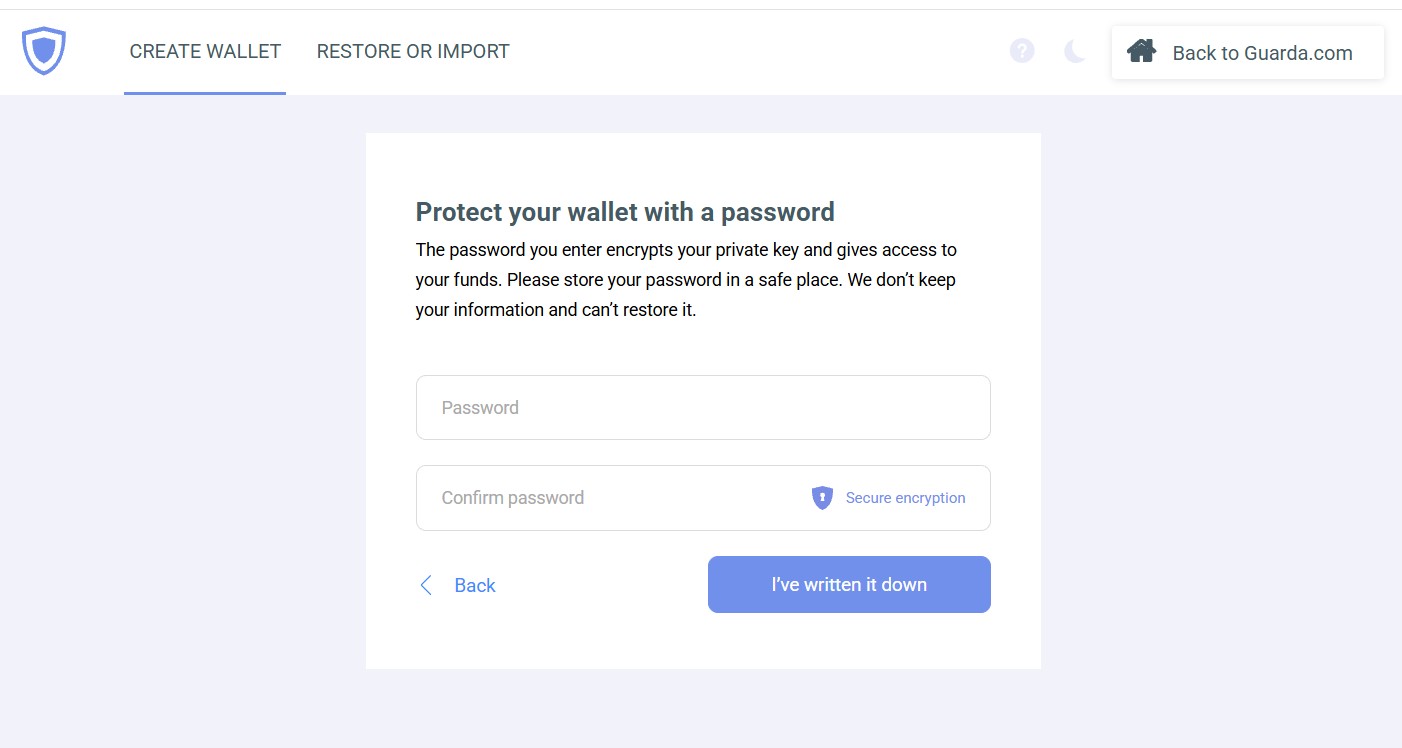
During setup, you will receive a recovery phrase that allows you to restore access if your device is lost or replaced. Proper Guarda wallet recovery depends entirely on securely storing this phrase, as the wallet provider does not keep copies of user keys.
Step 4: Access the wallet dashboard
After completing the setup, you will enter the main interface, where you can view balances, send or receive crypto, and manage your assets. From here, users can access wallet management tools, staking options, and other Guarda wallet features available within the platform.
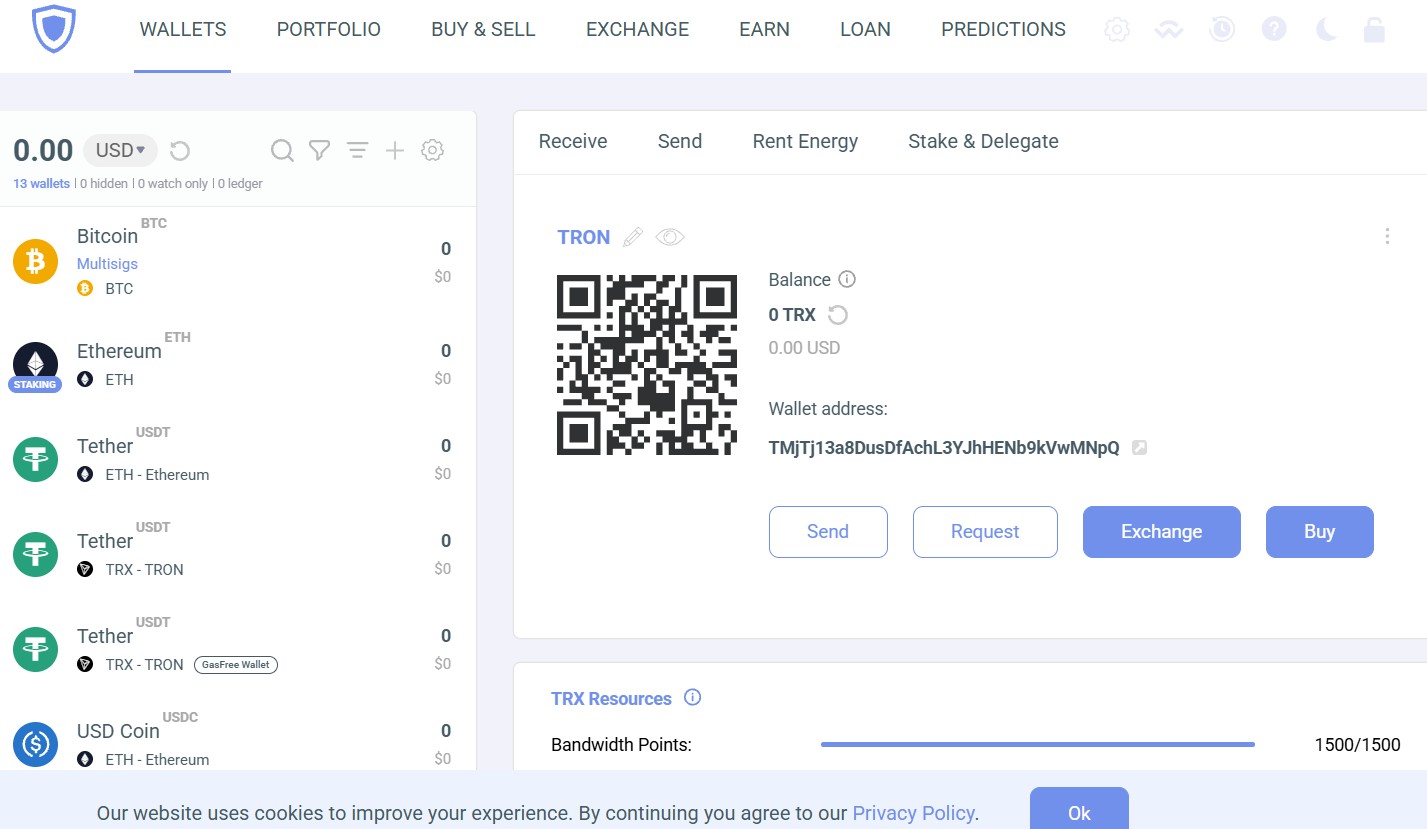
Step 5: Add and manage cryptocurrencies
Once the wallet is created, you can add supported assets and begin managing your portfolio. The platform supports a wide range of cryptocurrencies across multiple networks, including Guarda wallet Bitcoin storage and other widely used digital assets.
Guarda Wallet security: Is it safe?
Yes, Guarda Wallet is generally considered secure, with one important condition: users are fully responsible for managing their private keys. This is a key point often raised when evaluating whether Guarda Wallet is legit or reviewing its overall security. As a non-custodial solution, the Guarda crypto wallet does not store user data or private keys on its servers. Instead, all keys are stored locally on the user’s device, and access can only be restored using the backup seed phrase created during setup.
Key security features

Many Guarda wallet reviews overlook advanced security details that are important for new users. Here are several factors that can influence how safe the wallet is, especially when conducting a quick Guarda wallet test or evaluating its overall security:
Private keys remain on your device. Guarda does not store keys or passwords on its servers, so control depends entirely on the security of the user’s device.
No multisignature support. The wallet does not include multisig functionality, which may be a limitation for users managing shared or business accounts.
Limited open-source transparency. While some components are open-source, the entire wallet is not fully transparent, which can make independent audits more difficult. This is often mentioned when users research Guarda wallet open source details.
No proprietary hardware wallet. Although it integrates with devices like Ledger, Guarda does not offer its own hardware solution, which may limit offline storage options for some users.
Web wallet considerations. The Guarda web wallet is convenient but may increase exposure if used on unsecured networks or compromised devices.
Backup practices matter. While backup reminders help prevent data loss, storing recovery phrases in insecure locations such as email or cloud storage can introduce risks.
Built-in exchange functionality. Using in-app swaps involves external integrations, which may slightly expand the potential attack surface compared to offline storage methods.
No native wallet-level 2FA. Security relies primarily on device protection, as built-in two-factor authentication for wallet access is limited compared to some alternatives.
Guarda Wallet supported coins and tokens
Guarda wallet coins include hundreds of cryptocurrencies, with the platform continuing to expand support across multiple blockchain networks. In addition to major assets, the wallet also includes lesser-known tokens that offer specific ecosystem benefits, staking options, or multi-chain functionality. Many users exploring Guarda wallet Bitcoin storage or looking for a reliable Guarda wallet Bitcoin solution choose it for this broad compatibility.
Total number of coins: over 400 supported assets across multiple blockchains, a figure often highlighted in a Guarda crypto wallet review when assessing the range of supported digital assets.

Here are some standout picks from Guarda Wallet's supported coins that offer more than just storage:
Zilliqa (ZIL). Guarda allows users to stake ZIL directly while accessing cross-chain swaps with relatively low fees, a capability often mentioned among key Guarda wallet features.
Harmony (ONE). Staking ONE is supported with efficient validator selection and stable reward distribution, which can be useful for users managing assets through the Guarda wallet app.
Tezos (XTZ). In addition to storage, the wallet enables easy delegation to multiple bakers without leaving the interface, a function frequently referenced in Guarda wallet staking discussions.
VeChain (VET). Guarda supports both VET and VTHO, allowing users to track VTHO generation in real time within the Guarda crypto wallet environment.
Cosmos (ATOM). The wallet includes multi-validator delegation, giving users the ability to diversify staking risk without relying on external services.
Ethereum Classic (ETC). Unlike many lightweight wallets, Guarda supports interaction with ETC-based applications and contracts directly from the interface, including through the Guarda wallet extension.
Polkadot (DOT). Users can manage bonding, unbonding, and validator selection for DOT without additional tools, making staking management more accessible.
Dash (DASH). Guarda includes features such as InstantSend and PrivateSend directly within the wallet, offering functionality typically found in dedicated Dash wallets.
User interface & experience
The latest version of Guarda Wallet includes a streamlined dashboard designed to make asset management more efficient. After completing the Guarda wallet login or initial setup, users can access several core sections that organize the main tools of the Guarda crypto wallet.
The Wallets section allows users to store, send, and receive cryptocurrencies, including major assets such as Guarda wallet Bitcoin. The Portfolio tab provides a clear overview of balances and asset allocation across different blockchains.
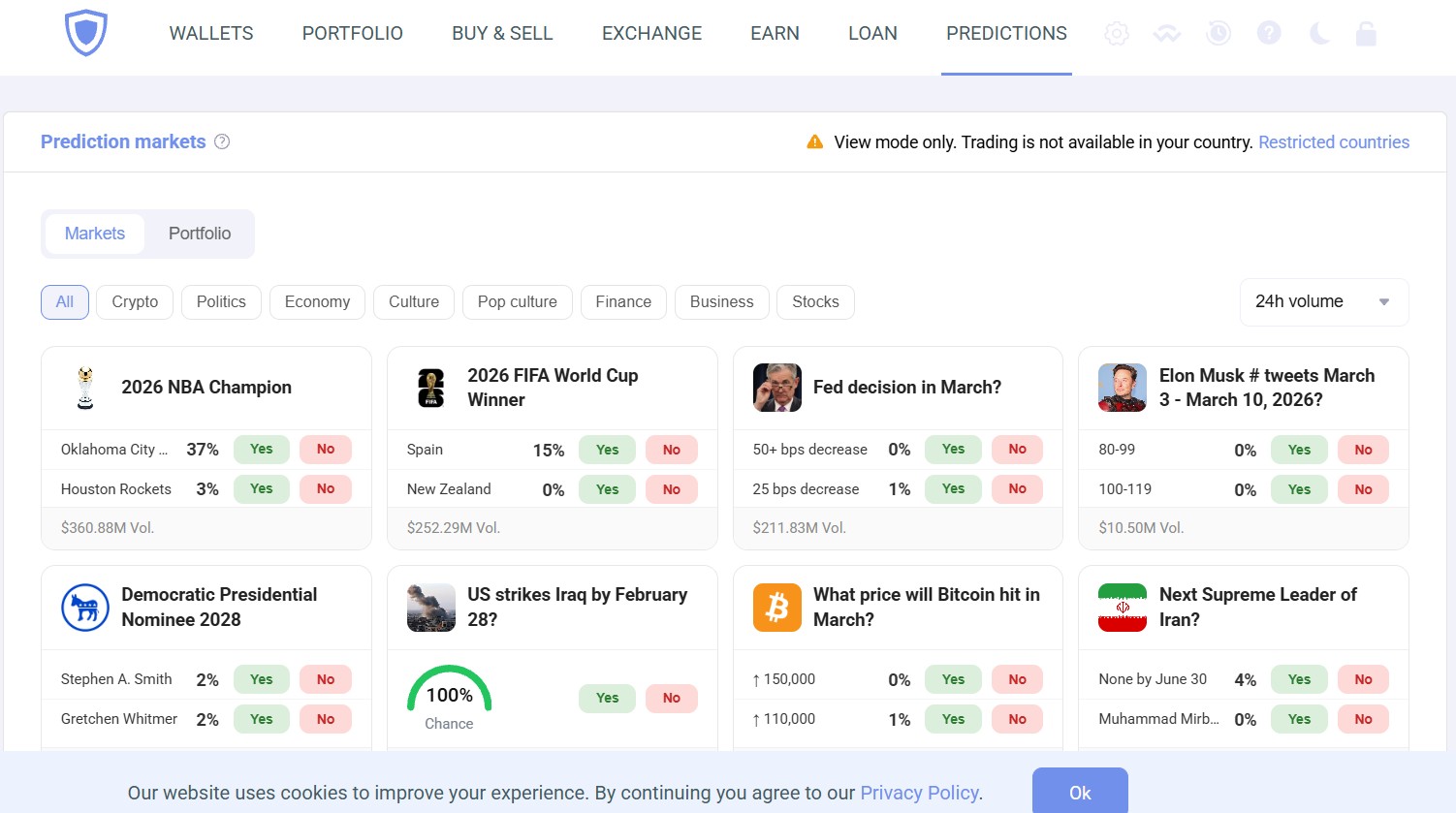
Users can also access the Buy & Sell section, where cryptocurrencies can be purchased or sold through integrated payment providers. The Exchange feature enables quick swaps between supported coins directly within the wallet, eliminating the need to transfer funds to external platforms.
Together, these features make the Guarda wallet app a multifunctional environment for managing digital assets in one place.
For users who prefer to purchase or trade cryptocurrency before transferring funds, comparing external platforms can be helpful. The table below highlights several popular exchanges that integrate well with the Guarda crypto wallet, focusing on supported assets, fees, and overall usability.
| OKX | Coinbase | Crypto.com | Cryptohopper | BTCC | |
|---|---|---|---|---|---|
|
Demo account |
Yes | No | No | No | Yes |
|
Min. Deposit, $ |
10 | 10 | 1 | No | 10 |
|
Coins Supported |
600+ | 400+ | 400+ | 1000 | 399 |
|
Spot Taker fee, % |
0.1 | 0.5 | 0.5 | 0 | 0.3 |
|
Spot Maker Fee, % |
0.08 | 0.5 | 0.25 | 0 | 0.2 |
|
Alerts |
Yes | Yes | Yes | Yes | No |
|
Copy trading |
Yes | No | No | Yes | Yes |
|
TU overall score |
8.48 | 7.84 | 7.8 | 7.76 | 7.6 |
|
Open an account |
Go to broker Your capital is at risk. |
Go to broker Your capital is at risk. |
Go to broker Your capital is at risk. |
Go to broker Your capital is at risk. |
Go to broker Your capital is at risk.
|
Unlock hidden staking rewards and seamless multi-device security with Guarda wallet

If you’re only using Guarda Wallet to store crypto, you may be overlooking some of its more practical features. One of the more useful tools allows users to stake assets across multiple blockchains directly within the wallet, without relying on external platforms. In some cases, rewards can be managed alongside other holdings, helping users make better use of their assets over time. This functionality is often explored by those using Guarda wallet staking within the broader Guarda crypto wallet environment.
Another important aspect is backup and device synchronization. In addition to the standard seed phrase, Guarda allows users to create encrypted backups and access their wallet across multiple devices. This can include biometric authentication options such as Face ID or fingerprint unlock, depending on the device. The feature works across platforms, including the Guarda desktop wallet and Guarda wallet Android app, offering a more convenient way to maintain access while reducing the risk of losing funds.
Conclusion
Guarda Wallet stands out as a versatile and user-friendly non-custodial crypto wallet that gives users complete control over their digital assets. With support for over 400,000 tokens across 70+ blockchains and integrated features like staking and token swapping, it caters to both beginners and experienced crypto enthusiasts. The main takeaway is that while Guarda offers robust security and multi-device convenience, the responsibility for safeguarding private keys lies entirely with the user. Ultimately, in the evolving world of crypto, Guarda Wallet empowers individuals with flexibility and autonomy, proving that secure self-management can be practical and accessible.
FAQs
What fees can users expect when swapping or managing assets within Guarda Wallet?
How does Guarda Wallet ensure user privacy when handling personal or transaction data?
Is it possible to use Guarda Wallet for NFT management and Web3 applications?
What types of assets and blockchains are supported by Guarda Wallet for portfolio management?
Editors' Top Picks and Insights






Related Articles
Team that worked on the article
Aleksandra Chaikina has been a contributor to Traders Union since 2021. With over 15 years of experience in copywriting and more than 5 years focused on financial content, she specializes in producing detailed guides, analytics, and comparative reviews across various sectors, including cryptocurrencies, Forex, investment strategies, and financial technologies.
Dan Blystone began his trading career in 1998 as an arbitrage clerk on the floor of the Chicago Mercantile Exchange (CME). He later traded bond and Eurex futures at proprietary firms such as Altea Trading, gaining valuable experience in high-frequency trading and risk management.
Chinmay Soni is a financial analyst with more than 5 years of experience in working with stocks, Forex, derivatives, and other assets. As a founder of a boutique research firm and an active researcher, he covers various industries and fields, providing insights backed by statistical data.
Risk management is a risk management model that involves controlling potential losses while maximizing profits. The main risk management tools are stop loss, take profit, calculation of position volume taking into account leverage and pip value.
Index in trading is the measure of the performance of a group of stocks, which can include the assets and securities in it.
Cryptocurrency is a type of digital or virtual currency that relies on cryptography for security. Unlike traditional currencies issued by governments (fiat currencies), cryptocurrencies operate on decentralized networks, typically based on blockchain technology.
Ethereum is a decentralized blockchain platform and cryptocurrency that was proposed by Vitalik Buterin in late 2013 and development began in early 2014. It was designed as a versatile platform for creating decentralized applications (DApps) and smart contracts.
CFD is a contract between an investor/trader and seller that demonstrates that the trader will need to pay the price difference between the current value of the asset and its value at the time of contract to the seller.

-
 Afghanistan
-
 Albania
-
 Algeria
-
 Angola
-
 Argentina
-
 Armenia
-
 Australia
-
 Austria
-
 Azerbaijan
-
 Bahamas
-
 Bahrain
-
 Bangladesh
-
 Belarus
-
 Belgium
-
 Bolivia
-
 Botswana
-
 Brazil
-
 Brunei
-
 Bulgaria
-
 Cambodia
-
 Cameroon
-
 Canada
-
 Chile
Chile
-
 China
China
-
 Colombia
-
 Congo
Congo
-
 Costa Rica
-
 Cote d'Ivoire
-
 Croatia
-
 Cuba
Cuba
-
 Cyprus
-
 Czechia
-
 DR Congo
-
 Denmark
-
 Dominican Republic
-
 Ecuador
-
 Egypt
Egypt
-
 El Salvador
-
 Estonia
-
 Eswatini
-
 Ethiopia
-
 Finland
-
 France
-
 Georgia
-
 Germany
-
 Ghana
Ghana
-
 Greece
-
 Haiti
Haiti
-
 Hong Kong
-
 Hungary
-
 India
India
-
 Indonesia
-
 Iran, Islamic republic
-
 Iraq
Iraq
-
 Ireland
-
 Israel
-
 Italy
Italy
-
 Jamaica
-
 Japan
Japan
-
 Jordan
-
 Kazakhstan
-
 Kenya
Kenya
-
 Korea
Korea
-
 Kuwait
-
 Kyrgyzstan
-
 Laos
Laos
-
 Latvia
-
 Lebanon
-
 Lesotho
-
 Libya
Libya
-
 Lithuania
-
 Luxembourg
-
 Madagascar
-
 Malaysia
-
 Malta
Malta
-
 Mauritius
-
 Mexico
-
 Moldova
-
 Mongolia
-
 Montenegro
-
 Morocco
-
 Mozambique
-
 Myanmar
-
 Namibia
-
 Nepal
Nepal
-
 Netherlands
-
 New Zealand
-
 Nigeria
-
 North Macedonia
-
 Norway
-
 Oman
Oman
-
 Pakistan
-
 Palestine
-
 Panama
-
 Papua New Guinea
-
 Paraguay
-
 Peru
Peru
-
 Philippines
-
 Poland
-
 Portugal
-
 Puerto Rico
-
 Qatar
Qatar
-
 Reunion
-
 Romania
-
 Rwanda
-
 Saudi Arabia
-
 Serbia
-
 Singapore
-
 Slovakia
-
 Slovenia
-
 Somalia
-
 South Africa
-
 Spain
Spain
-
 Sri Lanka
-
 Sweden
-
 Switzerland
-
 Syria
Syria
-
 Taiwan
-
 Tajikistan
-
 Tanzania
-
 Thailand
-
 Trinidad and Tobago
-
 Tunisia
-
 Turkey
-
 UAE
UAE
-
 Uganda
-
 Ukraine
-
 United Kingdom
-
United States
-
 Uruguay
-
 Uzbekistan
-
 Venezuela
-
 Vietnam
-
 Yemen
Yemen
-
 Zambia
-
 Zimbabwe
- Forex
- Crypto












