
Vijay Kedia Portfolio 2026 – Stocks, Strategy, Net Worth & Sectors



Editorial Note: While we adhere to strict Editorial Integrity, this post may contain references to products from our partners. Here's an explanation for How We Make Money. None of the data and information on this webpage constitutes investment advice according to our Disclaimer.
Vijay Kedia holds equity in 14 publicly listed companies with a combined market value exceeding ₹1,200 crore. His portfolio spans sectors like auto components, chemicals, industrials, and finance. Kedia’s strategy focuses on long-term growth stories, typically holding high-conviction stocks for 5+ years.
Vijay Kedia is one of India’s most admired retail investors, known for transforming small-cap stocks into multibaggers. A staunch believer in fundamental investing, he follows the SMILE strategy: Small in size, Medium in experience, Large in aspiration, and Extra-large in market potential. In 2026, his portfolio reflects sharp thematic bets, a contrarian eye, and confidence in India’s structural growth.
Who is Vijay Kedia?
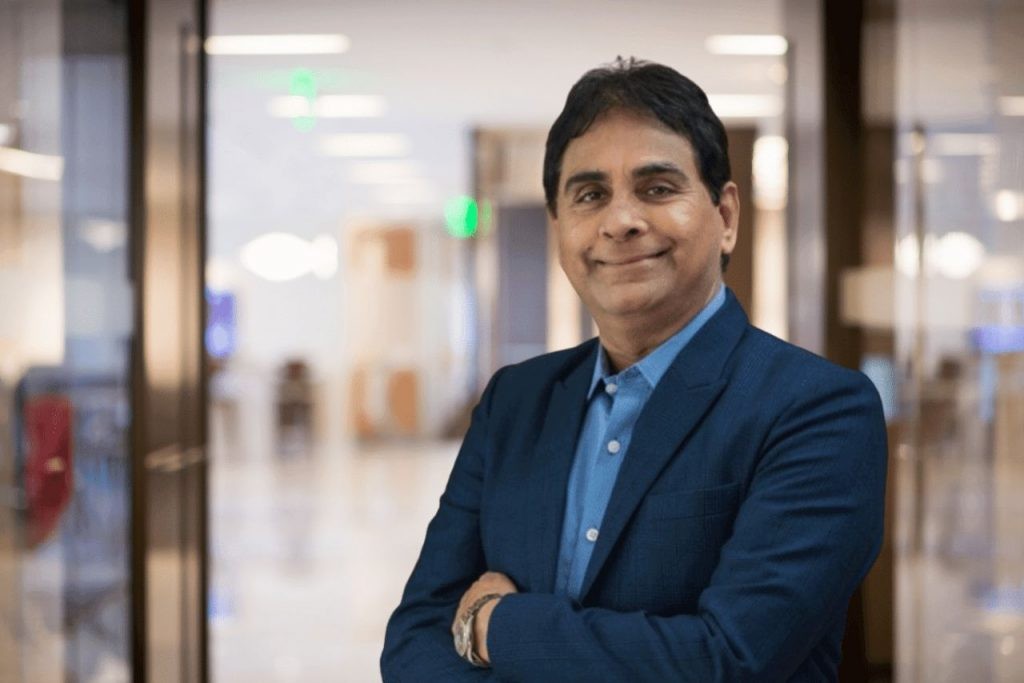
Vijay Kedia is a self-made investor who began trading in the 1980s. He made his mark in the 2000s with early investments in Atul Auto, Cera Sanitaryware, and Aegis Logistics, which delivered 100x returns over time.
Key facts:
Began trading: Age 19, in 1978
Became full-time investor: 1989
First multibagger: Punjab Tractors
Prominent philosophy: SMILE + long holding periods
He is often cited among the best Indian investors in midcap stocks, thanks to his ability to identify undervalued companies before institutional coverage begins.
Kedia is known for identifying management-led growth stories and is frequently cited as one of the most trusted names in Indian equity markets.
Vijay Kedia’s top holdings in 2026
Vijay Kedia's portfolio in 2026 reflects a deliberate focus on fundamentally strong, mid-cap companies that have high scalability and leadership potential in their respective industries. Known for picking multibaggers before they hit the mainstream, his stock selection emphasizes earnings visibility, promoter quality, and market leadership in niche sectors. Total Public Portfolio (2026): Approx. ₹1,200 crore.
Based on March 2025 data from Trendlyne and BSE:
| Company | Sector | Holding Value (₹ Cr) | Stake (%) | Notes |
|---|---|---|---|---|
| Vaibhav Global | Retail/E-commerce | ₹240 | 4.2% | Jewellery and home products exporter |
| Elecon Engineering | Capital Goods | ₹215 | 1.5% | Power transmission and material handling firm |
| Repro India | Printing & Publishing | ₹168 | 7.5% | Education print-to-order and digital solutions |
| Tejas Networks | Telecom Equipment | ₹130 | <1% | Optical networking and 5G infra player |
| Sudarshan Chemical | Specialty Chemicals | ₹112 | 1.1% | Pigment manufacturer with global clientele |
| Cera Sanitaryware | Consumer Durables | ₹102 | <1% | Leading sanitaryware & faucets brand |
| Ramco Systems | Enterprise Software | ₹87 | 1.2% | Cloud ERP provider |
Sectoral allocation
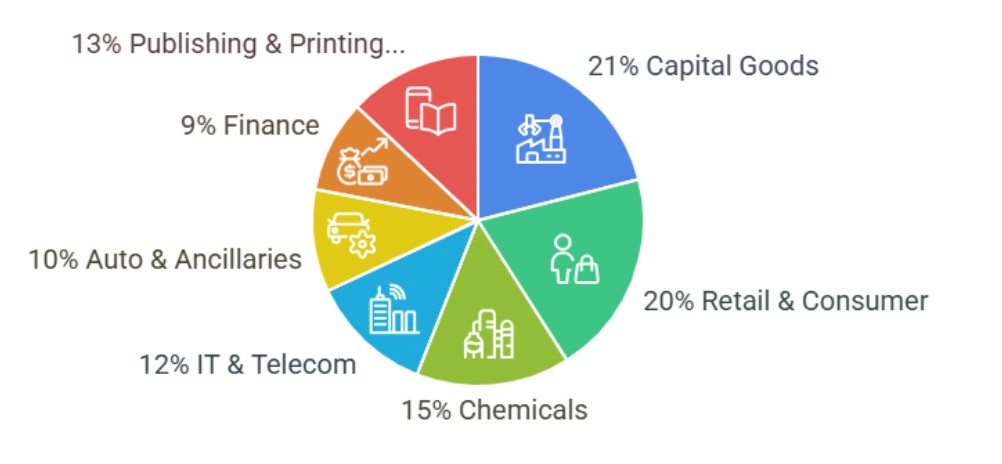
Vijay Kedia’s investments are spread across industries that reflect India’s domestic consumption story and global manufacturing ambitions. His bets show confidence in India’s infrastructure cycle, technology exports, and domestic spending.
Capital goods. Driven by investments in Elecon Engineering and other industrial automation plays tied to India’s manufacturing output.
Retail & Consumer. Dominated by Vaibhav Global and Cera Sanitaryware; Kedia bets on rising disposable income and e-commerce penetration.
Chemicals. Includes Sudarshan Chemical, capturing India’s role as a global pigment and specialty chemical exporter.
IT & Telecom. Tejas Networks and Ramco Systems indicate exposure to enterprise software and 5G infrastructure development.
Auto & Ancillaries. Indirect exposure through component suppliers linked to EV growth and aftermarket parts.
Finance. Selective picks focused on niche NBFCs and housing finance companies (not all disclosed in detail).
Publishing. Repro India is a high-conviction play on education and print-to-order book exports.
Investment style: What sets Vijay Kedia apart
One of the most cited Vijay Kedia investment rules is to invest in businesses with scalability, simplicity, and trustworthy promoters. He famously said: "If the business is right, the price is right."
Kedia focuses on:
Visionary management. Backs passionate, growth-oriented promoters.
Undiscovered potential. Prefers small-to-mid caps with scalable models.
Holding power. Average holding period > 5 years.
High concentration. Don't diversify for the sake of it.
In addition, he emphasizes three filters before investing:
Industry tailwinds. The sector must be growing steadily for at least 5–10 years.
Promoter skin in the game. Management should have significant shareholding.
Balance sheet clarity. Low debt, strong cash flow, and reinvestment capacity.
Kedia also avoids over-trading. He believes most wealth is made by sitting, not rotating. For instance, he held Cera Sanitaryware for over a decade and exited only after full valuation realization. His method combines fundamental bottom-up screening with strategic patience.
Unlike some investors who rely heavily on market timing or macro signals, Kedia’s strength lies in identifying 10x potential at an early stage and giving it time to play out. His focus on scalable domestic consumption and niche industrial opportunities makes his investment style especially relevant in a growing economy like India.
Find companies early, enter on consolidation

While Kedia’s names may seem like long-term picks, traders can still benefit by following the liquidity cycles in these stocks. Stocks like Vaibhav Global and Elecon often witness sharp re-ratings on earnings momentum or capex announcements. Use technical breakouts aligned with fundamentals to ride the swings, but avoid chasing momentum blindly. For long-term conviction trades, align with Kedia’s approach: find companies early, enter on consolidation, and scale only with improving earnings visibility. Don’t trade his stocks without understanding the story – Kedia doesn’t invest for noise, but for structural change.
In recent years, several Vijay Kedia stock recommendations have gone on to deliver strong multi-year gains. These include Tejas Networks, Sudarshan Chemical, and Cera Sanitaryware – all of which align with India's long-term growth themes.
Conclusion
Vijay Kedia’s 2026 portfolio is concentrated, research-backed, and sector-specific. Kedia prefers scalable businesses with strong management and avoids over-diversification. His focus on small and midcap companies reflects confidence in India's long-term growth. Investors tracking his moves should study the fundamentals, not the stock price. Kedia's approach shows consistent application of value investing with conviction.
FAQs
How does Vijay Kedia spot potential multibaggers before the crowd?
He looks for industries at an inflection point, then identifies smaller companies with scalable models and credible management teams poised to benefit.
Does Kedia rely on technical analysis or macroeconomic trends?
Unlike many traders, he focuses almost entirely on bottom-up fundamentals and only uses technical cues for entry points, not decision-making.
What is unique about his SMILE philosophy?
It’s not just a slogan – SMILE reflects his belief in backing ambitious companies early, even when they look small and risky, as long as the growth potential is massive.
How does Kedia handle market downturns?
He uses corrections to accumulate quality companies at lower prices, rather than trying to time exits during volatility.
Editors' Top Picks and Insights

Hunting crypto owners: Why criminals have gone offline

BitMEX is shutting down: Why Trump could not save the exchange

Do governments need crypto workers?

Brent nears $100: Why oil prices are rising

Gram Wallet launch: Can Telegram bring crypto to the masses?

AI without limits: How dangerous are neural networks?
Related Articles
Team that worked on the article
Parshwa is a content expert and finance professional possessing deep knowledge of stock and options trading, technical and fundamental analysis, and equity research. As a Chartered Accountant Finalist, Parshwa also has expertise in Forex, crypto trading, and personal taxation.
Andreas Kristo Saragih is a seasoned equity research analyst with over a decade of experience across both buy-side and sell-side roles, focused on the Indonesian capital market. He has extensive sector coverage, including banking, consumer goods, retail, real estate, healthcare, transportation, poultry, cement, pharmaceuticals, construction, and infrastructure.
Chinmay Soni is a financial analyst with more than 5 years of experience in working with stocks, Forex, derivatives, and other assets. As a founder of a boutique research firm and an active researcher, he covers various industries and fields, providing insights backed by statistical data.
Xetra is a German Stock Exchange trading system that the Frankfurt Stock Exchange operates. Deutsche Börse is the parent company of the Frankfurt Stock Exchange.
Diversification is an investment strategy that involves spreading investments across different asset classes, industries, and geographic regions to reduce overall risk.
Options trading is a financial derivative strategy that involves the buying and selling of options contracts, which give traders the right (but not the obligation) to buy or sell an underlying asset at a specified price, known as the strike price, before or on a predetermined expiration date. There are two main types of options: call options, which allow the holder to buy the underlying asset, and put options, which allow the holder to sell the underlying asset.
CFD is a contract between an investor/trader and seller that demonstrates that the trader will need to pay the price difference between the current value of the asset and its value at the time of contract to the seller.
Fundamental analysis is a method or tool that investors use that seeks to determine the intrinsic value of a security by examining economic and financial factors. It considers macroeconomic factors such as the state of the economy and industry conditions.

-
 Afghanistan
-
 Albania
-
 Algeria
-
 Angola
-
 Argentina
-
 Armenia
-
 Australia
-
 Austria
-
 Azerbaijan
-
 Bahamas
-
 Bahrain
-
 Bangladesh
-
 Belarus
-
 Belgium
-
 Bolivia
-
 Botswana
-
 Brazil
-
 Brunei
-
 Bulgaria
-
 Cambodia
-
 Cameroon
-
 Canada
-
 Chile
Chile
-
 China
China
-
 Colombia
-
 Congo
Congo
-
 Costa Rica
-
 Cote d'Ivoire
-
 Croatia
-
 Cuba
Cuba
-
 Cyprus
-
 Czechia
-
 DR Congo
-
 Denmark
-
 Dominican Republic
-
 Ecuador
-
 Egypt
Egypt
-
 El Salvador
-
 Estonia
-
 Eswatini
-
 Ethiopia
-
 Finland
-
 France
-
 Georgia
-
 Germany
-
 Ghana
Ghana
-
 Greece
-
 Haiti
Haiti
-
 Hong Kong
-
 Hungary
-
 India
India
-
 Indonesia
-
 Iran, Islamic republic
-
 Iraq
Iraq
-
 Ireland
-
 Israel
-
 Italy
Italy
-
 Jamaica
-
 Japan
Japan
-
 Jordan
-
 Kazakhstan
-
 Kenya
Kenya
-
 Korea
Korea
-
 Kuwait
-
 Kyrgyzstan
-
 Laos
Laos
-
 Latvia
-
 Lebanon
-
 Lesotho
-
 Libya
Libya
-
 Lithuania
-
 Luxembourg
-
 Madagascar
-
 Malaysia
-
 Malta
Malta
-
 Mauritius
-
 Mexico
-
 Moldova
-
 Mongolia
-
 Montenegro
-
 Morocco
-
 Mozambique
-
 Myanmar
-
 Namibia
-
 Nepal
Nepal
-
 Netherlands
-
 New Zealand
-
 Nigeria
-
 North Macedonia
-
 Norway
-
 Oman
Oman
-
 Pakistan
-
 Palestine
-
 Panama
-
 Papua New Guinea
-
 Paraguay
-
 Peru
Peru
-
 Philippines
-
 Poland
-
 Portugal
-
 Puerto Rico
-
 Qatar
Qatar
-
 Reunion
-
 Romania
-
 Rwanda
-
 Saudi Arabia
-
 Serbia
-
 Singapore
-
 Slovakia
-
 Slovenia
-
 Somalia
-
 South Africa
-
 Spain
Spain
-
 Sri Lanka
-
 Sweden
-
 Switzerland
-
 Syria
Syria
-
 Taiwan
-
 Tajikistan
-
 Tanzania
-
 Thailand
-
 Trinidad and Tobago
-
 Tunisia
-
 Turkey
-
 UAE
UAE
-
 Uganda
-
 Ukraine
-
 United Kingdom
-
United States
-
 Uruguay
-
 Uzbekistan
-
 Venezuela
-
 Vietnam
-
 Yemen
Yemen
-
 Zambia
-
 Zimbabwe
- Forex
- Crypto












