
What Currency Does South Africa Use? A 2026 Guide For Traders And Travelers



Editorial Note: While we adhere to strict Editorial Integrity, this post may contain references to products from our partners. Here's an explanation for How We Make Money. None of the data and information on this webpage constitutes investment advice according to our Disclaimer.
South Africa’s currency is the South African rand (ZAR), symbolized by “R.” It was introduced in 1961, replacing the South African pound at a rate of two rand for one pound. Fully regulated by the South African Reserve Bank, the rand is a freely convertible currency used across the nation for all transactions. The currency is divided into 100 cents, with denominations ranging from 10 cents to R200.
Recognized as one of the most advanced and diverse economies in Africa, South Africa thrives on its natural resources, strong financial systems, and global trade connections. Whether you’re investing on Johannesburg’s JSE, analyzing Forex trends, or simply traveling through Cape Town, knowing what currency South Africa uses is essential. This guide covers everything about the South African rand (ZAR), its background, current exchange rates, and its importance for both global investors and everyday users alike.
Which currency does South Africa use?
The South African rand, symbol R, ISO code ZAR, is issued by the South African Reserve Bank (SARB) and is the sole legal tender for all domestic transactions.

It replaced the pound in 1961. South Africa decimalised on 14 February 1961; the rand replaced the South African pound at R2 = £1 following a multi-year transition planned by the Decimal Coinage Commission.
The rand anchors a regional monetary union. Via the Common Monetary Area (CMA), the rand is used alongside pegged local currencies, the Lesotho loti (LSL), Namibian dollar (NAD) and Eswatini lilangeni (SZL), at a fixed 1:1 parity; the rand is legal tender across the CMA.
Notes and coins follow a modern, security-rich design. Circulating banknotes are R10, R20, R50, R100, R200 (cotton substrate) and coins are 10c, 20c, 50c, R1, R2, R5; SARB launched upgraded Mandela notes and a fourth decimal coin series on 3 May 2023 with advanced features like RollingStar threads and SparkLive elements.
Price stability is the policy north star. SARB pursues inflation targeting, 3–6% range, with communications emphasizing anchoring near the midpoint; National Treasury and SARB reaffirmed the framework in 2026.
Name and symbolism reflect the country’s gold ridge. “Rand” derives from Witwatersrand, the gold-bearing ridge around Johannesburg, underscoring the currency’s historical link to bullion.
| Country | Local currency | Peg to ZAR | Rand legal tender? |
|---|---|---|---|
| South Africa | ZAR | – | Yes |
| Lesotho | LSL | 1:1 | Yes |
| Namibia | NAD | 1:1 | Yes |
| Eswatini | SZL | 1:1 | Yes |
South Africa currency name and background
The South Africa currency name, "Rand," is derived from the Witwatersrand, a highland region where Johannesburg sits and where large gold deposits were historically mined. This name reflects the currency's origin tied to South Africa’s resource-rich economy.
Since its inception, the Rand has evolved into one of the most traded emerging market currencies, especially popular in Forex markets due to its volatility and interest rate differentials. It’s also a key benchmark for regional economic sentiment in sub-Saharan Africa. Explore the best currencies to invest in South Africa with expert guidance, proven strategies, and the latest market trends to help you achieve higher returns.
Denominations of the South African Rand (2026)
Six circulation coins are legal tender: 10c, 20c, 50c, R1, R2 and R5; the 1c, 2c and 5c were discontinued (but remain legal tender) so prices are commonly rounded to the nearest 10c. To be up to the pace, make sure you know the key happenings in the currency’s recent history:
Coin redesign. The current “fourth decimal” series carries native flora and fauna: 10c (Cape honey bee), 20c (bitter aloe), 50c (Knysna turaco), R1 (springbok), R2 (king protea), R5 (southern right whale).
Coin security on R5. The 2023 R5 retained specs but added micro-wording and a latent image reading “FIVE/RAND,” complementing its bi-metal build for anti-counterfeiting.
Note set. Five banknote denominations circulate: R10, R20, R50, R100 and R200.
Banknote upgrade. Notes kept sizes and Mandela portrait but added refreshed Big Five imagery, enhanced color-shifting inks, micro-lettering, and updated watermarks to raise security.
Tactile marks. Raised lines along the short edge (R10, R20) or long edge (R50, R100, R200) help the visually impaired; the spacing “gaps” encode the denomination.
Expect continuity in 2026.SARB states the denomination mix and substrate were retained in the upgrade to preserve familiarity, so these coins and notes remain standard in 2026.
Current exchange rates and economic indicators (2026)
Around early October 2025, USD/ZAR traded in the R17.15–17.50 range, EUR/ZAR hovered near R19.95–20.33, and GBP/ZAR moved between roughly R22.90–23.38. These levels show the rand’s continued risk sensitivity amid persistent volatility shaped by global and domestic factors. Here are some of the key aspects impacting the currency:
Inflation is anchored below the SARB target. Headline CPI was 2.8% year-on-year in April and May 2025, keeping inflation below the 3–6% SARB target band and reinforcing ongoing disinflation narratives through mid-year.
The policy stance eased after a pause. The repo rate was held steady at 7.50% on 20 March 2025, then cut by 25 basis points to 7.00% in August as inflation stayed low and policymakers aimed to support a slow recovery.
Labor market pressures persist. The unemployment rate rose to 33.2% in Q2 2025 from 32.9% in Q1, highlighting ongoing slack that helps cap wage-push inflation and holds back robust domestic demand growth.
Growth pulse from manufacturing remained weak through April. The Absa PMI dropped to 44.7 in April 2025, marking contraction in factory activity amid global trade friction and domestic obstacles, before rebounding later in the year.
Rates market priced in easing as inflation cooled. By October 2025, the 10-year SAGB yield hovered around 9.1–9.14%, reflecting falling term premia as inflation slowed and central bank credibility remained strong.
Is the South African rand convertible?
South Africa permits current-account payments freely and allows capital transfers under a prudential framework administered by the SARB Financial Surveillance Department through authorised dealer banks.
The rand floats; SARB smooths, not targets. The rand operates on a free-floating exchange rate; authorities don’t target a specific level but may step in to reduce extreme volatility and support reserves.
Residents get two annual channels to send money offshore. Adults can use a Single Discretionary Allowance (SDA) up to R1 million per calendar year without tax-clearance and a Foreign/Capital Investment Allowance up to R10 million with a tax compliance approval.
Large outward transfers need extra SARS steps. Transfers above R10 million require additional approval (a manual compliance letter) before banks will remit funds internationally.
Rules were modernised into a capital-flow management framework. Exchange control has been reframed into risk-based capital-flow management that facilitates legitimate flows while maintaining AML and prudential safeguards.
In practice, the rand is usable for trade, investment and repatriation. Individuals and companies transact via authorised dealers, complete standard balance-of-payments reporting, and can repatriate dividends, interest, and capital subject to documentation.
Digital finance and innovation
As of 2026, South Africa has not yet rolled out a consumer-facing digital currency. However, the SARB is actively piloting a central bank digital currency (CBDC) known as the Digital Rand, through Project Khokha, aimed at improving interbank settlement systems.
Nonetheless, over 80% of South African adults have access to formal banking, and the Rand is widely transacted via:
Mobile apps (e.g., Capitec Pay, TymeBank, FNB).
QR code systems like SnapScan and Zapper.
EFTs and real-time online transfers via banking apps.
Trading the rand (ZAR) in Forex markets
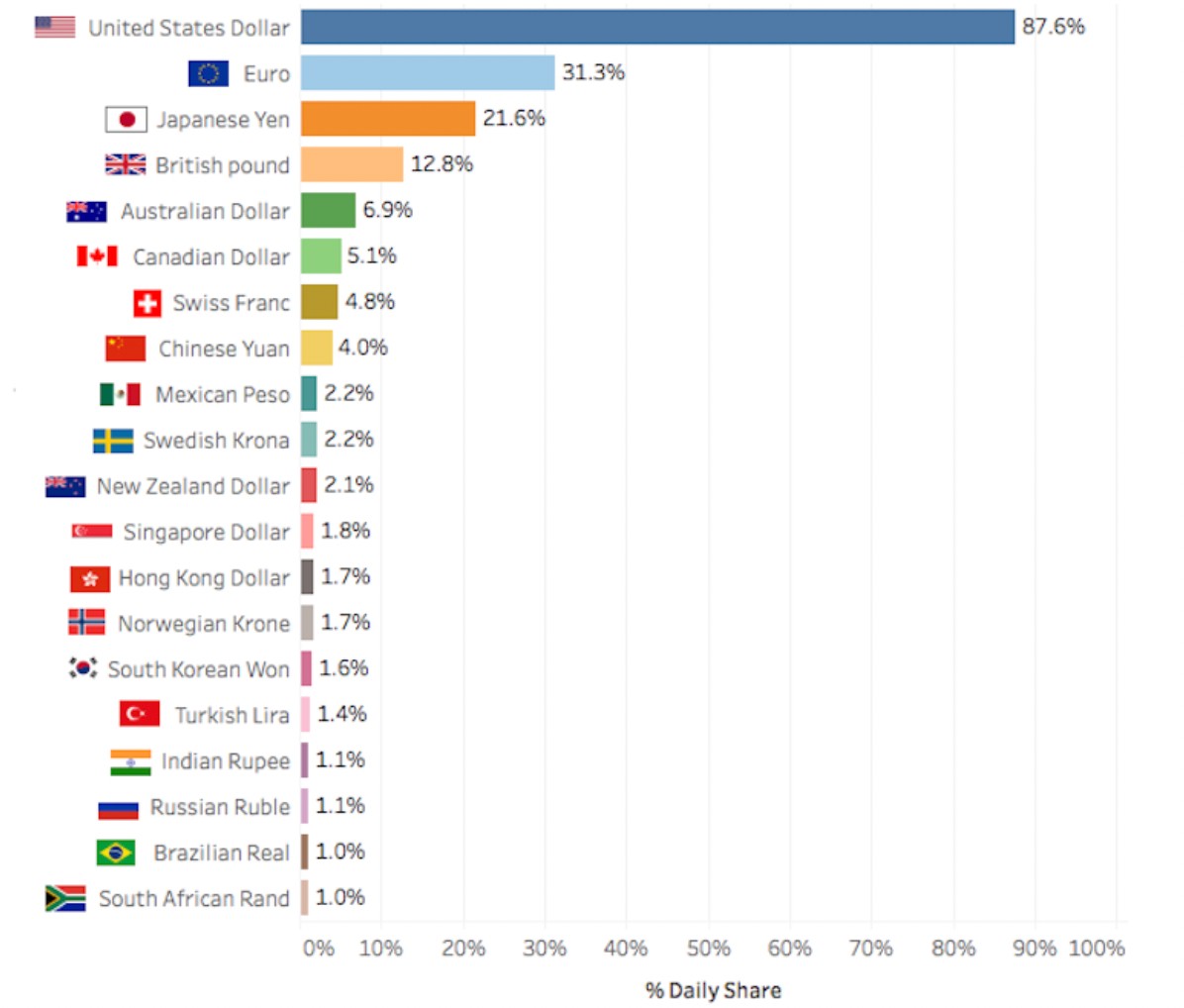
The Rand is among the top 20 most traded currencies globally and a popular instrument for short-term speculation and interest-based carry trades.
Tips for beginners
Start with the big picture. Treat ZAR as a liquid emerging-market currency that can move faster than G10 pairs, so expect wider daily ranges and plan smaller position sizes.
Pick the simplest pairs first. Focus on USD/ZAR and EUR/ZAR before touching crosses; spreads are tighter and news impact is easier to track.
Let commodities guide your bias. Rising gold and platinum prices often coincide with rand tailwinds; sharp dips can remove support and lift USD/ZAR.
Watch South African rate headlines. Policy rate changes reshape carry and sentiment; surprise cuts can weaken ZAR while hawkish holds can stabilize it.
Track US dollar tides. A strong broad USD can overpower local positives; align ZAR views with the dollar cycle to avoid fighting the tape.
Use a volatility compass. Check average true range (ATR) or average daily range (ADR) to choose breakout vs. mean-reversion tactics and to set realistic stops.
Practice before you size up. Use a demo or micro lots to experience ZAR’s speed, slippage, and gaps around data releases without denting capital.
Risks of holding or trading the rand
Engaging with ZAR offers both rewards and challenges:
Logistics fragility amplifies trade shocks. Rail and port underperformance at Transnet has repeatedly throttled coal/iron-ore exports and added uncertainty premia to ZAR; despite some legal wins and narrowing losses, freight volumes remain far below 2017/18 levels, keeping the currency sensitive to any fresh bottlenecks.
Power reliability is better, but still a tail risk. Load-shedding fell sharply in 2026 thanks to Eskom’s recovery plan and improved energy availability, which is ZAR-supportive, yet the long crisis and coal-heavy system mean setbacks can quickly dent growth expectations and the rand.
Commodity concentration cuts both ways. South Africa’s export basket is concentrated in precious metals, coal, iron ore and autos; rallies in gold/PGMs can buoy ZAR, but broad commodity weakness or logistics-curtailed shipments can flip the impulse negative.
China linkage is outsized. Minerals are ~93% of South Africa’s exports to China, making ZAR highly exposed to swings in Chinese commodity demand and inventory cycles; softer Chinese imports tend to weigh on ZAR via terms-of-trade and sentiment channels.
Policy-rate differentials drive carry, and reversals. With SARB keeping policy tight while the Fed’s path evolves, the rand can benefit from carry inflows; however, U.S. data surprises or repricing of Fed cuts can flip flows and spark sharp ZAR moves.
If you plan to trade or hold rand directly, consider opening a ZAR-denominated account with a reputable South African–focused Forex broker. Below is a simple, locally relevant shortlist of the best ZAR account brokers. Pick one that’s regulated and available in your region. It keeps your funding in rand and makes deposits/withdrawals straightforward.
| Min. deposit, $ | Max. leverage | Tier-1 regulation | Investor protection | Negative balance protection | Withdrawal fee, $ | CySec | ZAR | Open an account | |
|---|---|---|---|---|---|---|---|---|---|
| 100 | 1:300 | Yes | €20,000 £85,000 SGD 75,000 | No | No | Yes | Yes | Go to broker 80% of retail CFD accounts lose money. |
|
| 5 | 1:1000 | Yes | £85,000 €20,000 | Yes | No | Yes | Yes | Go to broker Your capital is at risk. |
|
| 100 | 1:500 | Yes | €20,000 | Yes | No | Yes | Yes | Go to broker Your capital is at risk. |
|
| 10 | 1:2000 | Yes | €20,000 £85,000 | Yes | No | No | Yes | Go to broker Your capital is at risk.
|
|
| 10 | 1:3000 | Yes | €20,000 | Yes | No | Yes | Yes | Go to broker Your capital is at risk. |
Read load-shedding, bond flows and commodity divergence

As a trader, treat the South African rand (ZAR) as a fast-reacting regional risk barometer rather than a simple commodity proxy. It moves on local events most beginners ignore: Eskom’s load-shedding stage changes, sudden shifts in non-resident holdings of government bonds, and SARB wording that diverges from global central banks. Two live signals I watch are load-shedding announcements (they trigger immediate intraday weakness) and daily custody/bond flow prints (outflows often precede multi-day rand weakness even when global risk looks calm). One underused edge: if gold or platinum rally while the rand weakens, that divergence usually signals political or fiscal stress overriding commodity support.
If you hold rand exposure or plan to transact in ZAR, think of event-driven hedges. For large payments or purchases, use short-dated forwards around known risk dates, SARB meetings, the finance minister’s budget, or major parliamentary votes, because short spikes can erase months of gains. For everyday use, avoid dynamic currency conversion and prefer withdrawing or paying in ZAR when possible; for investors, watch the 10-year SA yield versus U.S. Treasuries and sovereign CDS moves, widening spreads almost always hit both the rand and local equities. A simple daily habit that helps: set alerts for Eskom stage notices and SARB press releases so you know when to reduce risk immediately.
Conclusion
The South African Rand (ZAR) stands as a dynamic currency that not only reflects the economic realities of South Africa but also plays a significant role in international trade and Forex markets. Its historical evolution, from its introduction in 1961 to its current global presence, underscores the adaptability and resilience of South Africa’s financial system. For example, the ZAR's volatility in response to political and economic events highlights the interconnectedness between domestic policies and global investor sentiment. Ultimately, understanding the Rand offers vital insights into how emerging market currencies can both influence and be influenced by the broader tides of global commerce.
FAQs
What factors influence the value and volatility of the South African Rand in the Forex market?
How does the South African Rand function within regional monetary unions?
What security features are included in the latest South African Rand banknotes and coins?
How is South Africa preparing for the future of digital currency with the Rand?
Editors' Top Picks and Insights

Brent nears $100: Why oil prices are rising

Gram Wallet launch: Can Telegram bring crypto to the masses?

AI without limits: How dangerous are neural networks?

Worldcoin on Wall Street: From iris scans to ETF

Mark Cuban's wealth philosophy: Why stocks matter more than salary or crypto

Dangerous but indispensable: Why the crypto market needs bridges
Related Articles
Team that worked on the article
Ciaran Ryan is a veteran financial journalist based in South Africa, where he covers cryptocurrency, mining, stock markets, and governance for Moneyweb. He also hosts the weekly Moneyweb Crypto Podcast.
Dan Blystone began his trading career in 1998 as an arbitrage clerk on the floor of the Chicago Mercantile Exchange (CME). He later traded bond and Eurex futures at proprietary firms such as Altea Trading, gaining valuable experience in high-frequency trading and risk management.
Chinmay Soni is a financial analyst with more than 5 years of experience in working with stocks, Forex, derivatives, and other assets. As a founder of a boutique research firm and an active researcher, he covers various industries and fields, providing insights backed by statistical data.

-
 Afghanistan
-
 Albania
-
 Algeria
-
 Angola
-
 Argentina
-
 Armenia
-
 Australia
-
 Austria
-
 Azerbaijan
-
 Bahamas
-
 Bahrain
-
 Bangladesh
-
 Belarus
-
 Belgium
-
 Bolivia
-
 Botswana
-
 Brazil
-
 Brunei
-
 Bulgaria
-
 Cambodia
-
 Cameroon
-
 Canada
-
 Chile
Chile
-
 China
China
-
 Colombia
-
 Congo
Congo
-
 Costa Rica
-
 Cote d'Ivoire
-
 Croatia
-
 Cuba
Cuba
-
 Cyprus
-
 Czechia
-
 DR Congo
-
 Denmark
-
 Dominican Republic
-
 Ecuador
-
 Egypt
Egypt
-
 El Salvador
-
 Estonia
-
 Eswatini
-
 Ethiopia
-
 Finland
-
 France
-
 Georgia
-
 Germany
-
 Ghana
Ghana
-
 Greece
-
 Haiti
Haiti
-
 Hong Kong
-
 Hungary
-
 India
India
-
 Indonesia
-
 Iran, Islamic republic
-
 Iraq
Iraq
-
 Ireland
-
 Israel
-
 Italy
Italy
-
 Jamaica
-
 Japan
Japan
-
 Jordan
-
 Kazakhstan
-
 Kenya
Kenya
-
 Korea
Korea
-
 Kuwait
-
 Kyrgyzstan
-
 Laos
Laos
-
 Latvia
-
 Lebanon
-
 Lesotho
-
 Libya
Libya
-
 Lithuania
-
 Luxembourg
-
 Madagascar
-
 Malaysia
-
 Malta
Malta
-
 Mauritius
-
 Mexico
-
 Moldova
-
 Mongolia
-
 Montenegro
-
 Morocco
-
 Mozambique
-
 Myanmar
-
 Namibia
-
 Nepal
Nepal
-
 Netherlands
-
 New Zealand
-
 Nigeria
-
 North Macedonia
-
 Norway
-
 Oman
Oman
-
 Pakistan
-
 Palestine
-
 Panama
-
 Papua New Guinea
-
 Paraguay
-
 Peru
Peru
-
 Philippines
-
 Poland
-
 Portugal
-
 Puerto Rico
-
 Qatar
Qatar
-
 Reunion
-
 Romania
-
 Rwanda
-
 Saudi Arabia
-
 Serbia
-
 Singapore
-
 Slovakia
-
 Slovenia
-
 Somalia
-
 South Africa
-
 Spain
Spain
-
 Sri Lanka
-
 Sweden
-
 Switzerland
-
 Syria
Syria
-
 Taiwan
-
 Tajikistan
-
 Tanzania
-
 Thailand
-
 Trinidad and Tobago
-
 Tunisia
-
 Turkey
-
 UAE
UAE
-
 Uganda
-
 Ukraine
-
 United Kingdom
-
United States
-
 Uruguay
-
 Uzbekistan
-
 Venezuela
-
 Vietnam
-
 Yemen
Yemen
-
 Zambia
-
 Zimbabwe
- Forex
- Crypto










- Which currency does South Africa use?
- South Africa currency name and background
- Denominations of the South African Rand
- Current exchange rates and economic indicators
- Is the South African rand convertible?
- Digital finance and innovation
- Trading the rand (ZAR) in Forex markets
- Risks of holding or trading the rand
- Expert opinion
- Conclusion
- FAQs


