
Red Kite Launchpad Requirements: How To Participate In Top IDOs


Editorial Note: While we adhere to strict Editorial Integrity, this post may contain references to products from our partners. Here's an explanation for How We Make Money. None of the data and information on this webpage constitutes investment advice according to our Disclaimer.
Red Kite is a curated IDO launchpad where users participate in early token sales by staking PKF tokens and entering a tiered system. To join IDOs, investors complete KYC, stake PKF, and receive allocations based on their tier, with higher tiers offering guaranteed or larger access. Projects listed on Red Kite must pass strict vetting, including team checks, MVP readiness, and security reviews.
The DeFi market continues to expand, and launchpads now play a key role in linking new crypto projects with early investors. The Red Kite launchpad has become a trusted option because it follows strict listing standards and offers a clear tier model for joining IDOs. This article offers a comprehensive look into the requirements of the Red Kite launchpad, tier system, and participation process, helping users navigate the ecosystem with confidence.
Risk warning: Cryptocurrency markets are highly volatile, with sharp price swings and regulatory uncertainties. Research indicates that 75-90% of traders face losses. Only invest discretionary funds and consult an experienced financial advisor.
What is Red Kite and why does it matter?
Red Kite is a selective IDO platform designed for vetted Web3 projects. It helps teams launch tokens in a controlled environment and gives early investors access to curated sales. Built on PolkaFoundry and developed by Icetea Labs, it focuses on structure, transparency, and strong project screening.
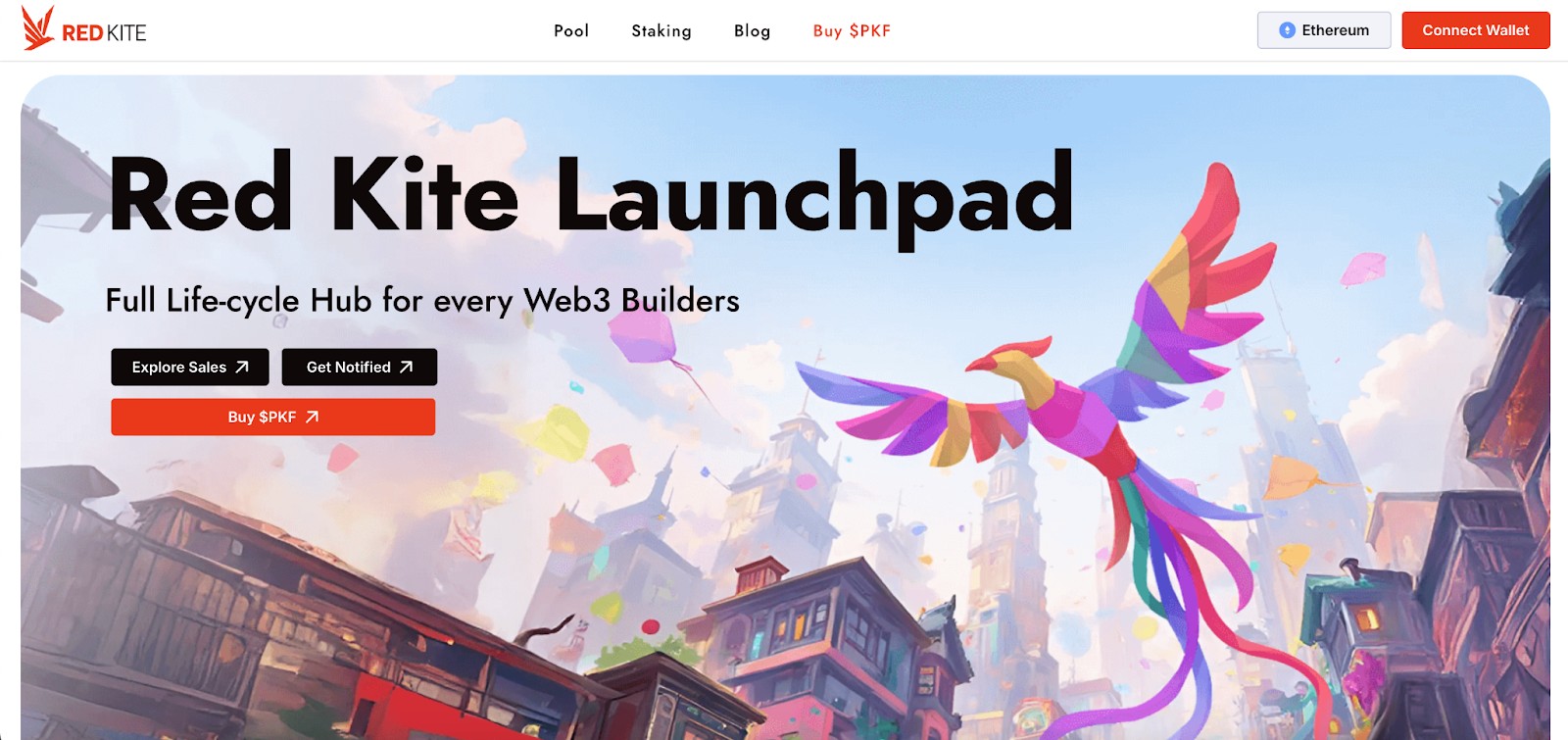
Red Kite matters because it balances investor protection with clear growth tools for builders. The platform has hosted many successful IDOs, and its community-driven model continues to attract projects seeking a reliable, long-term fundraising partner.
Key features of the Red Kite platform
The Red Kite launchpad includes several features that shape how projects are listed and how users join IDOs:
Multi-chain access. The platform supports Ethereum, BNB Chain, Polygon, Avalanche, Arbitrum, and other networks.
PolkaFoundry integration. Red Kite works closely with PolkaFoundry tools for fast, secure execution.
Staking-driven entry. PKF staking determines access, priority, and allocation levels.
Governance plans. A future DAO will let PKF holders vote on listings and platform updates.
Advanced vetting. AI screening tools are in development to support stronger project selection.
These features help Red Kite maintain a structured, transparent model even during volatile market periods.
Requirements for launching on the Red Kite launchpad
Projects must meet several core requirements of the Red Kite launchpad before they can list. The platform looks for a strong and transparent founding team, a clear product purpose, and a token model that matches real user needs. Most approved projects already have an MVP, an active community presence, and a basic growth plan.
Red Kite also reviews partnerships, market potential, and long-term sustainability. Security checks, including outside audits, improve approval chances. These layers of review help ensure that only promising and well-prepared projects are offered to investors on the Red Kite launchpad.
Red Kite launchpad tiers: how staking defines your access
Access to IDOs on the Red Kite launchpad is based on how much PKF a user stakes. The more PKF locked, the higher the tier. Higher tiers receive larger allocations and earlier entry, while lower tiers rely on lotteries and can only access smaller amounts.
Starter tiers. Lottery-based participation for users with smaller stakes.
Mid tiers. Better odds, higher allocations, and steadier access to new sales.
Top tiers. Guaranteed allocations and priority entry.
This tier structure rewards consistent staking and gives committed users reliable access to token sales.
How to participate in a Red Kite IDO
Joining an IDO on the Red Kite launchpad follows a clear and simple process. Users start by creating a compatible wallet, such as MetaMask, and staking PKF through the official dashboard. After staking, they apply for a whitelist spot and complete KYC requirements.
Once approved, users enter the sale during their assigned time. After the IDO ends, tokens can be claimed according to the vesting schedule shown on the platform. This structure keeps the process fair and easy to follow.

How Red Kite compares to other platforms
The Red Kite launchpad offers a different approach compared to platforms like TrustPad or DAO Maker. Red Kite focuses on accessible staking levels and a straightforward tier system, making it easier for new users to enter curated token sales. Its multi-chain support also widens the range of available projects.
Integration with PolkaFoundry gives Red Kite added utility, offering tools that help projects build, test, and launch more efficiently. This combination makes Red Kite appealing for users who want predictable access and a well-supported development environment.
Future outlook for Red Kite
The Red Kite launchpad is preparing for its next development phase, including a governance system that will let PKF stakers vote on listings and platform updates. This shift supports more transparent decision-making and a stronger role for long-term users.
Future plans also include AI-based screening tools and wider cross-chain support. These updates aim to improve project evaluation, increase liquidity options, and make the platform easier for both developers and investors to use.
After taking part in an IDO, most investors eventually need a place to track prices and manage their tokens once trading begins. This is where choosing reliable crypto exchanges in your region becomes relevant, as they provide the environment to monitor listings and handle post-sale activity. Viewing launchpad participation and exchange access together helps create a more complete and practical investment flow without changing habits or tools later.
| Coinbase | OKX | BTCC | Cryptohopper | Crypto.com | |
|---|---|---|---|---|---|
|
Crypto |
Yes | Yes | Yes | Yes | Yes |
|
Foundation year |
2012 | 2017 | 2011 | 2018 | 2016 |
|
Min. Deposit, $ |
10 | 10 | 10 | No | 1 |
|
Coins Supported |
400+ | 600+ | 399 | 1000 | 400+ |
|
Spot Taker fee, % |
0.5 | 0.1 | 0.3 | 0 | 0.5 |
|
Spot Maker Fee, % |
0.5 | 0.08 | 0.2 | 0 | 0.25 |
|
Alerts |
Yes | Yes | No | Yes | Yes |
|
Copy trading |
No | Yes | Yes | Yes | No |
|
Tier-1 regulation |
Yes | No | Yes | No | Yes |
|
TU overall score |
8.5 | 8.46 | 8.08 | 7.8 | 7.76 |
|
Open an account |
Go to broker Your capital is at risk. |
Go to broker Your capital is at risk. |
Go to broker Your capital is at risk.
|
Go to broker Your capital is at risk. |
Go to broker Your capital is at risk. |
Commit to a steady tier strategy and focus on fundamentals, not hype

From my work guiding traders through launchpads, I find that success on the Red Kite launchpad comes from consistency rather than trying to time a single sale. The most effective approach is choosing a realistic tier based on your PKF balance and sticking to it across multiple IDOs. Tracking snapshot dates, studying token release plans, and joining whitelists early can make a bigger difference than chasing the highest tier or reacting to hype. I also remind traders to check community strength and audit status before locking in funds, since these signals often predict post-launch stability.
For project teams, meeting the Red Kite launchpad requirements means showing more than a working MVP. Investors respond well to clear documentation, active communication, and a thoughtful token model. Running community tests, preparing transparent updates, and conducting independent audits not only raise approval chances but also help build trust after the sale. The teams that perform best treat Red Kite as a long-term launch partner, not just a fundraising venue.
Conclusion
Red Kite stands out as a launchpad that rewards consistent commitment and prioritizes investor protection through its transparent tiered system. By tying IDO access to PKF staking, it encourages long-term participation rather than speculative short-term moves, making it possible for dedicated users to steadily build meaningful allocations across multiple sales. The platform’s rigorous vetting of projects, including security audits and active community involvement, further ensures the quality and stability of new token launches. Ultimately, Red Kite demonstrates that discipline and due diligence are the keys to sustainable success in the evolving landscape of crypto fundraising.
FAQs
What steps must users complete before participating in a Red Kite IDO?
How does Red Kite’s tier system encourage long-term participation?
What criteria must a project meet to be listed on the Red Kite Launchpad?
What future updates are planned for the Red Kite Launchpad?
Editors' Top Picks and Insights






Related Articles
Team that worked on the article
Viktoras Karapetjanc is a seasoned financial trader, market analyst, and content creator with over 20 years of expertise in Forex, cryptocurrency, and stock markets. As a contributor to the Traders Union website, he provides in-depth analysis, data-driven strategies, and educational content to empower traders of all levels.
Dan Blystone began his trading career in 1998 as an arbitrage clerk on the floor of the Chicago Mercantile Exchange (CME). He later traded bond and Eurex futures at proprietary firms such as Altea Trading, gaining valuable experience in high-frequency trading and risk management.
Chinmay Soni is a financial analyst with more than 5 years of experience in working with stocks, Forex, derivatives, and other assets. As a founder of a boutique research firm and an active researcher, he covers various industries and fields, providing insights backed by statistical data.
An investor is an individual, who invests money in an asset with the expectation that its value would appreciate in the future. The asset can be anything, including a bond, debenture, mutual fund, equity, gold, silver, exchange-traded funds (ETFs), and real-estate property.
CFD is a contract between an investor/trader and seller that demonstrates that the trader will need to pay the price difference between the current value of the asset and its value at the time of contract to the seller.
Cryptocurrency is a type of digital or virtual currency that relies on cryptography for security. Unlike traditional currencies issued by governments (fiat currencies), cryptocurrencies operate on decentralized networks, typically based on blockchain technology.
Index in trading is the measure of the performance of a group of stocks, which can include the assets and securities in it.
Ethereum is a decentralized blockchain platform and cryptocurrency that was proposed by Vitalik Buterin in late 2013 and development began in early 2014. It was designed as a versatile platform for creating decentralized applications (DApps) and smart contracts.

-
 Afghanistan
-
 Albania
-
 Algeria
-
 Angola
-
 Argentina
-
 Armenia
-
 Australia
-
 Austria
-
 Azerbaijan
-
 Bahamas
-
 Bahrain
-
 Bangladesh
-
 Belarus
-
 Belgium
-
 Bolivia
-
 Botswana
-
 Brazil
-
 Brunei
-
 Bulgaria
-
 Cambodia
-
 Cameroon
-
 Canada
-
 Chile
Chile
-
 China
China
-
 Colombia
-
 Congo
Congo
-
 Costa Rica
-
 Cote d'Ivoire
-
 Croatia
-
 Cuba
Cuba
-
 Cyprus
-
 Czechia
-
 DR Congo
-
 Denmark
-
 Dominican Republic
-
 Ecuador
-
 Egypt
Egypt
-
 El Salvador
-
 Estonia
-
 Eswatini
-
 Ethiopia
-
 Finland
-
 France
-
 Georgia
-
 Germany
-
 Ghana
Ghana
-
 Greece
-
 Haiti
Haiti
-
 Hong Kong
-
 Hungary
-
 India
India
-
 Indonesia
-
 Iran, Islamic republic
-
 Iraq
Iraq
-
 Ireland
-
 Israel
-
 Italy
Italy
-
 Jamaica
-
 Japan
Japan
-
 Jordan
-
 Kazakhstan
-
 Kenya
Kenya
-
 Korea
Korea
-
 Kuwait
-
 Kyrgyzstan
-
 Laos
Laos
-
 Latvia
-
 Lebanon
-
 Lesotho
-
 Libya
Libya
-
 Lithuania
-
 Luxembourg
-
 Madagascar
-
 Malaysia
-
 Malta
Malta
-
 Mauritius
-
 Mexico
-
 Moldova
-
 Mongolia
-
 Montenegro
-
 Morocco
-
 Mozambique
-
 Myanmar
-
 Namibia
-
 Nepal
Nepal
-
 Netherlands
-
 New Zealand
-
 Nigeria
-
 North Macedonia
-
 Norway
-
 Oman
Oman
-
 Pakistan
-
 Palestine
-
 Panama
-
 Papua New Guinea
-
 Paraguay
-
 Peru
Peru
-
 Philippines
-
 Poland
-
 Portugal
-
 Puerto Rico
-
 Qatar
Qatar
-
 Reunion
-
 Romania
-
 Rwanda
-
 Saudi Arabia
-
 Serbia
-
 Singapore
-
 Slovakia
-
 Slovenia
-
 Somalia
-
 South Africa
-
 Spain
Spain
-
 Sri Lanka
-
 Sweden
-
 Switzerland
-
 Syria
Syria
-
 Taiwan
-
 Tajikistan
-
 Tanzania
-
 Thailand
-
 Trinidad and Tobago
-
 Tunisia
-
 Turkey
-
 UAE
UAE
-
 Uganda
-
 Ukraine
-
 United Kingdom
-
United States
-
 Uruguay
-
 Uzbekistan
-
 Venezuela
-
 Vietnam
-
 Yemen
Yemen
-
 Zambia
-
 Zimbabwe
- Forex
- Crypto












