
Forex Profit Calculator: Calculate Your Trading Income


Editorial Note: While we adhere to strict Editorial Integrity, this post may contain references to products from our partners. Here's an explanation for How We Make Money. None of the data and information on this webpage constitutes investment advice according to our Disclaimer.
A Forex Profit Calculator helps traders estimate potential income before opening a position. To use it:
Select your broker from the list of supported partners.
Choose the currency pair you trade.
Enter your average daily trading volume in lots.
Specify the number of trading days.
Review your projected rebate income and trading compensation.
Unlike standard Forex calculators, the Traders Union tool also estimates spread rebates, allowing traders to calculate potential additional income alongside their regular trading results.
Whether you are planning your first trade or scaling up your volume, knowing your numbers in advance makes a real difference. A Forex calculator gives you that clarity. It takes the guesswork out of estimating profits, losses, pip values, and rebates before you commit real money. This guide explains how Forex profit calculation works, how to use the Traders Union income calculator, and what to expect from your results.
Risk warning: Forex trading carries high risks, with potential losses including your entire deposit. Market fluctuations, economic instability, and geopolitical factors impact outcomes. Studies show that 70-80% of traders lose money. Consult a financial advisor before trading.
How to use the Traders Union income calculator
Getting a result from the online Traders Union Forex calculator takes under two minutes. Here is how to do it step by step.
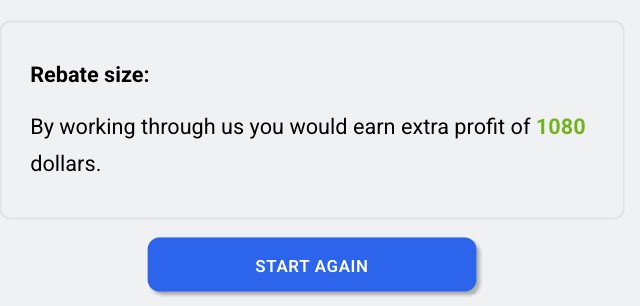
Rebate size:
By working through us you would earn extra profit of 0 dollars.
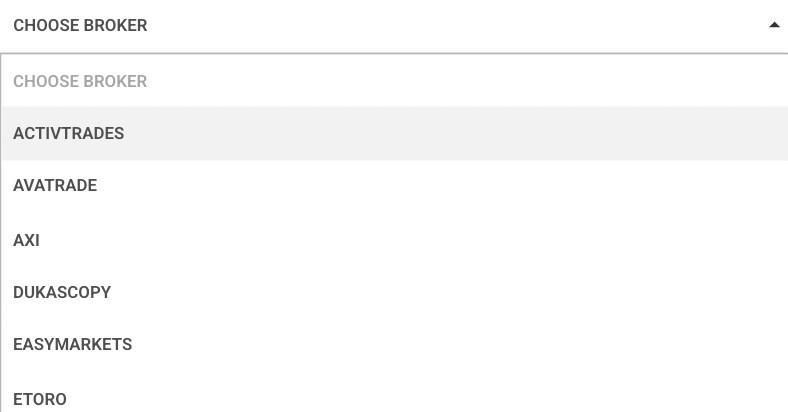
Step 1: Select your broker
Choose the broker you are already trading with or plan to use. The FX calculator tool pulls broker-specific spread and rebate data automatically, so your estimate reflects real conditions rather than generic averages.
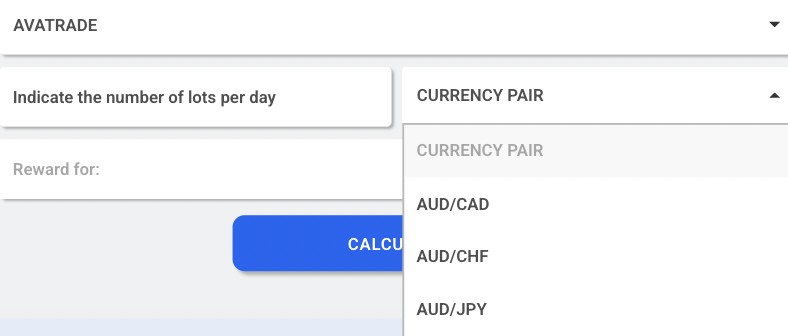
Step 2: Choose your currency pair
Select the pair you trade most. Spreads vary significantly across pairs, and the Forex trade calculator accounts for this when computing your rebate estimate.
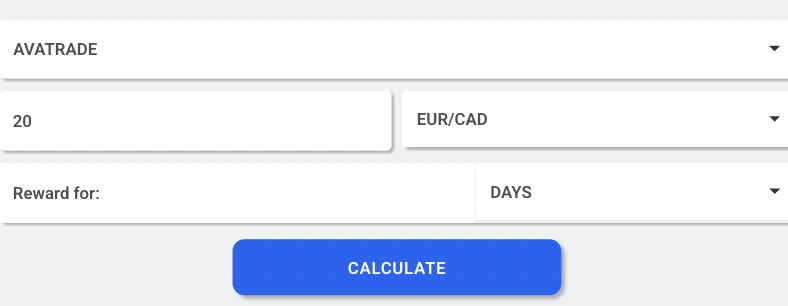
Step 3: Enter your average daily trading volume
Input how many lots you trade per day on average. If you are new, use your demo account history as a reference. This figure is the main driver of your rebate projection in the FX profit calculator.
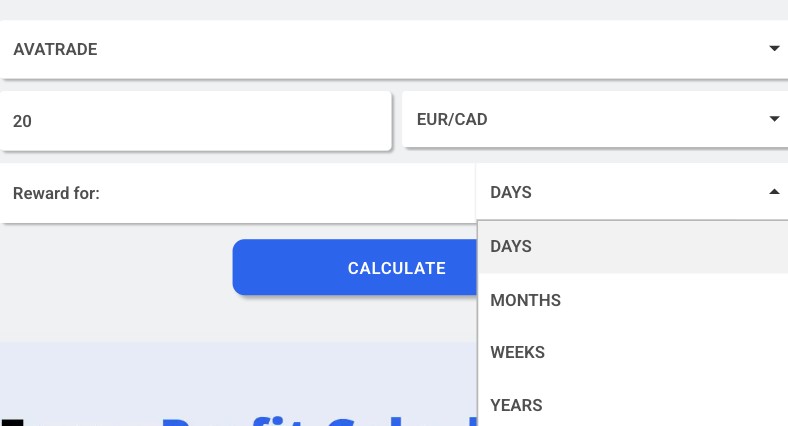
Step 4: Enter your intended trading period
Specify how many days you plan to trade. The best Forex calculator result is a projected daily and monthly rebate figure based on your volume and broker conditions.
Step 5: Review your result
The tool displays your estimated additional income. This is the rebate amount you can expect to receive on top of your regular trading results. Payments are made the next business day for daily accruals and the following month for monthly accruals.
Before you can use the calculator, you need a Traders Union account:
register for free at tradersunion.com;
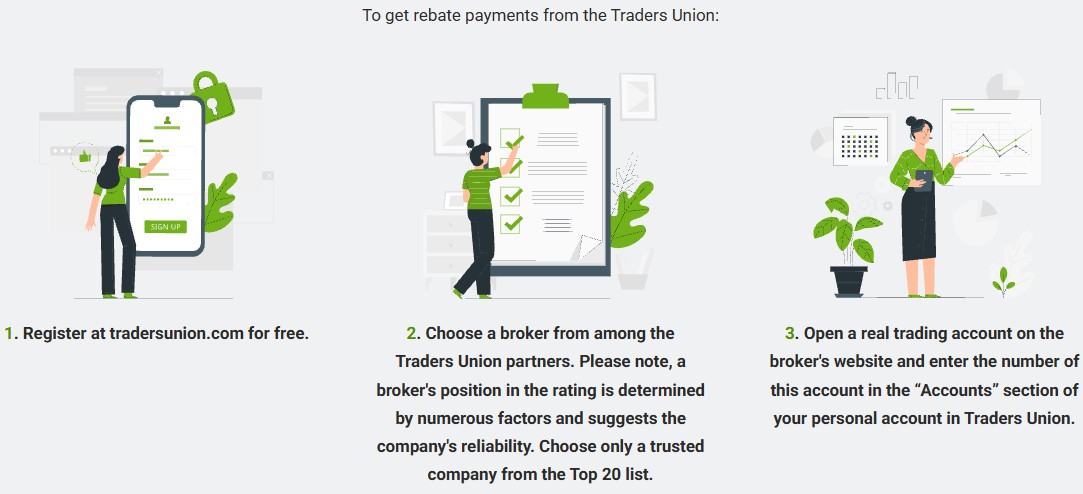
select a broker from the Traders Union partner list. The top 20 brokers are ranked by reliability and trading conditions;
open a live account with your chosen broker and link it in your Traders Union personal dashboard.
The entire setup takes under 15 minutes and rebates begin from your very first closed trade.
What the Traders Union Forex calculator does differently
When you trade through a broker, you pay a spread on every transaction. That spread is the broker's primary source of income. When you trade through Traders Union as an intermediary, the broker shares part of that spread back with Traders Union, which passes a portion directly to you. This happens automatically, for every closed trade, including losing ones.
This makes the Traders Union Forex trading calculator fundamentally different from a standard profit loss calculator Forex traders typically use. It does not just show your trade result. It adds a second income stream on top.
What the calculator factors in:
Broker selection. Each broker has different spread conditions, so rebate amounts vary. The calculator Forex tool adjusts automatically based on your chosen broker.
Currency pair. Spreads differ across pairs. More liquid pairs like EUR/USD tend to have tighter spreads and different rebate rates than exotic pairs.
Daily trading volume. The more lots you trade, the higher your total rebate. The tool uses your average daily volume to project earnings.
Trading period. You specify how many days you plan to trade and the Forex calculator profit projection scales accordingly.
The result is a combined income estimate: your standard trading returns plus your rebate compensation, shown together so you can plan realistically.
Why use a Forex calculator before trading
Most traders focus on strategy and market analysis. The numbers side, meaning position sizing, pip values, and expected returns, often gets handled mentally or skipped entirely. That is where mistakes happen.
Using a Forex calculator before placing a trade gives you a concrete plan instead of an estimate in your head. Here is what it improves:
Risk control. Knowing your potential loss before entry helps you size positions correctly and avoid risking more than you intend. A Forex trade calculator makes this instant.
Realistic expectations. Traders who calculate Forex profit before trading are less likely to overtrade or hold losing positions too long hoping for a reversal.
Faster decision-making. A Forex calculator tool removes the mental load of doing pip and lot math mid-session, so you can focus on the trade itself.
Better broker comparison. Running the same trade through an FX calculator online for different brokers shows you how spreads and commissions affect your bottom line.
Rebate planning. The Forex calculator app on Traders Union lets you project rebate income over days or months, so you can factor that into your overall trading income target.
Experienced traders use FX calculators as a routine part of their pre-trade checklist. For beginners, it is one of the fastest ways to build a feel for how lot size, leverage, and pip movement interact. Either way, knowing how to calculate profit in Forex before you trade puts you in a stronger position than guessing after the fact.
To get the most accurate results from any Forex profit calculator, traders also need to consider the broker they trade with. Different brokers offer varying spreads, trading conditions, and supported currency pairs, which can influence both trading costs and rebate potential. For readers exploring this topic further, reviewing a list of best Forex brokers to invest and trade with can help identify platforms that provide access to multiple currency pairs and a wide range of assets, making it easier to apply the calculator’s projections in real trading conditions.
| Trading.com USA | Plus500 | OANDA | FOREX.com | IG Markets | |
|---|---|---|---|---|---|
|
Demo |
Yes | Yes | Yes | Yes | Yes |
|
Min. deposit, $ |
50 | 100 | No | 100 | 1 |
|
Max. leverage |
1:50 | 1:300 | 1:200 | 1:50 | 1:200 |
|
Deposit fee, % |
No | No | No | No | No |
|
Withdrawal fee, % |
No | No | No | No | No |
|
Tier-1 regulation |
Yes | Yes | Yes | Yes | Yes |
|
TU overall score |
6.88 | 6.67 | 6.63 | 6.47 | 6.38 |
|
Open an account |
Go to broker Your capital is at risk. |
Go to broker 81% of retail CFD accounts lose money. |
Go to broker Your capital is at risk. |
Study review | Study review |
Conclusion
The single most powerful takeaway from this article is that using a Forex profit calculator—especially one that includes broker-specific spread rebates like the Traders Union tool—gives traders a critical edge by turning guesswork into concrete numbers. For example, estimating the effect of different brokers' spreads or projecting monthly rebate income can be the difference between marginal returns and real profitability. This approach empowers both new and experienced traders to take control of risk management and set realistic expectations before ever placing a trade. Ultimately, the clarity a robust Forex calculator provides translates directly to smarter decision-making and a far stronger foundation for trading success.
FAQs
How does broker selection impact estimated trading income in a Forex Profit Calculator?
Can a Forex Profit Calculator help with planning long-term trading strategies?
What role does rebate income play in overall Forex trading profitability?
How can beginners benefit from using a Forex Profit Calculator before trading?
Editors' Top Picks and Insights





Related Articles
Team that worked on the article
Rinat Gismatullin is an entrepreneur and a business expert with 9 years of experience in trading. He focuses on long-term investing, but also uses intraday trading.
Dan Blystone began his trading career in 1998 as an arbitrage clerk on the floor of the Chicago Mercantile Exchange (CME). He later traded bond and Eurex futures at proprietary firms such as Altea Trading, gaining valuable experience in high-frequency trading and risk management.
Chinmay Soni is a financial analyst with more than 5 years of experience in working with stocks, Forex, derivatives, and other assets. As a founder of a boutique research firm and an active researcher, he covers various industries and fields, providing insights backed by statistical data.
Index in trading is the measure of the performance of a group of stocks, which can include the assets and securities in it.
Forex leverage is a tool enabling traders to control larger positions with a relatively small amount of capital, amplifying potential profits and losses based on the chosen leverage ratio.
Ethereum is a decentralized blockchain platform and cryptocurrency that was proposed by Vitalik Buterin in late 2013 and development began in early 2014. It was designed as a versatile platform for creating decentralized applications (DApps) and smart contracts.
Bitcoin is a decentralized digital cryptocurrency that was created in 2009 by an anonymous individual or group using the pseudonym Satoshi Nakamoto. It operates on a technology called blockchain, which is a distributed ledger that records all transactions across a network of computers.
CFD is a contract between an investor/trader and seller that demonstrates that the trader will need to pay the price difference between the current value of the asset and its value at the time of contract to the seller.

-
 Afghanistan
-
 Albania
-
 Algeria
-
 Angola
-
 Argentina
-
 Armenia
-
 Australia
-
 Austria
-
 Azerbaijan
-
 Bahamas
-
 Bahrain
-
 Bangladesh
-
 Belarus
-
 Belgium
-
 Bolivia
-
 Botswana
-
 Brazil
-
 Brunei
-
 Bulgaria
-
 Cambodia
-
 Cameroon
-
 Canada
-
 Chile
Chile
-
 China
China
-
 Colombia
-
 Congo
Congo
-
 Costa Rica
-
 Cote d'Ivoire
-
 Croatia
-
 Cuba
Cuba
-
 Cyprus
-
 Czechia
-
 DR Congo
-
 Denmark
-
 Dominican Republic
-
 Ecuador
-
 Egypt
Egypt
-
 El Salvador
-
 Estonia
-
 Eswatini
-
 Ethiopia
-
 Finland
-
 France
-
 Georgia
-
 Germany
-
 Ghana
Ghana
-
 Greece
-
 Haiti
Haiti
-
 Hong Kong
-
 Hungary
-
 India
India
-
 Indonesia
-
 Iran, Islamic republic
-
 Iraq
Iraq
-
 Ireland
-
 Israel
-
 Italy
Italy
-
 Jamaica
-
 Japan
Japan
-
 Jordan
-
 Kazakhstan
-
 Kenya
Kenya
-
 Korea
Korea
-
 Kuwait
-
 Kyrgyzstan
-
 Laos
Laos
-
 Latvia
-
 Lebanon
-
 Lesotho
-
 Libya
Libya
-
 Lithuania
-
 Luxembourg
-
 Madagascar
-
 Malaysia
-
 Malta
Malta
-
 Mauritius
-
 Mexico
-
 Moldova
-
 Mongolia
-
 Montenegro
-
 Morocco
-
 Mozambique
-
 Myanmar
-
 Namibia
-
 Nepal
Nepal
-
 Netherlands
-
 New Zealand
-
 Nigeria
-
 North Macedonia
-
 Norway
-
 Oman
Oman
-
 Pakistan
-
 Palestine
-
 Panama
-
 Papua New Guinea
-
 Paraguay
-
 Peru
Peru
-
 Philippines
-
 Poland
-
 Portugal
-
 Puerto Rico
-
 Qatar
Qatar
-
 Reunion
-
 Romania
-
 Rwanda
-
 Saudi Arabia
-
 Serbia
-
 Singapore
-
 Slovakia
-
 Slovenia
-
 Somalia
-
 South Africa
-
 Spain
Spain
-
 Sri Lanka
-
 Sweden
-
 Switzerland
-
 Syria
Syria
-
 Taiwan
-
 Tajikistan
-
 Tanzania
-
 Thailand
-
 Trinidad and Tobago
-
 Tunisia
-
 Turkey
-
 UAE
UAE
-
 Uganda
-
 Ukraine
-
 United Kingdom
-
United States
-
 Uruguay
-
 Uzbekistan
-
 Venezuela
-
 Vietnam
-
 Yemen
Yemen
-
 Zambia
-
 Zimbabwe
- Forex
- Crypto












