
What Is The Annual Return Of Gold?



Editorial Note: While we adhere to strict Editorial Integrity, this post may contain references to products from our partners. Here's an explanation for How We Make Money. None of the data and information on this webpage constitutes investment advice according to our Disclaimer.
Gold investments have seen an average annual return of 12.44% over the past decade, 9.84% in 20 years, and 8.3% in 30 years. However, some years have seen negative returns, such as 2015 and 2018.
Using gold as a means of value exchange is perhaps the oldest form of trading, ever since the Ancient Egyptians started using it for international trade three and half thousand years ago. Today, gold is traded not only as a form of wealth storage and as a long-term investment, but as a hedge against inflation and for portfolio diversification. Investors trade in physical gold, gold futures contracts, gold ETFs, and even stocks of gold mining companies. But how much can traders make from trading gold? Traders Union is here to answer that question for you.
What is the annual return for gold?
As a commodity, gold tends to be a volatile asset. Multiple factors can affect its price, such as inflation reports, geopolitical tensions, or even a miners’ strike. Gold’s value can fluctuate significantly, rising during times of high inflation, or falling when the US dollar is strong. Yet, over time, the value of gold on average has consistently and considerably grown, despite periods of temporary downturn. Its continuous growth can be attributed to several factors; its finite supply, increasing demand across various industries, and investors’ tendency to keep huge amounts of gold for storage of value.
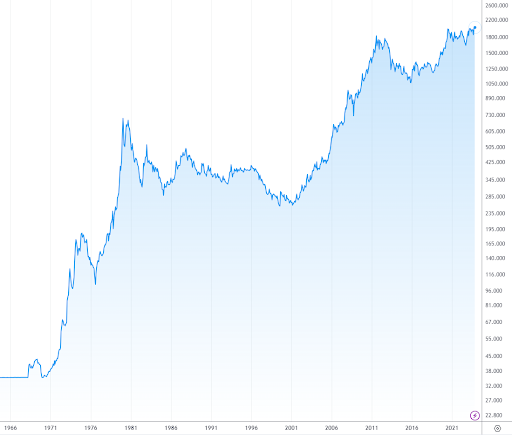
If we look at the return on gold investments over the past 50 years, returns average out at around 7%. When looking at the numbers in a shorter period, such as 20 years, average returns are closer to 8.65%.
You’d be forgiven for thinking that gold investments guarantee returns for years to come. However, gold is incredibly volatile, and if we look at the returns for each year, we get a different picture. For example, in 2020, gold gave investors a return of over 20%, due to a sudden surge of gold investment at the onset of the pandemic. In 2022, returns stood at just 0.44%. In fact, returns were negative in 2018, 2015, and 2013. Because of the way averages work, they paint a picture of consistent growth. In reality, the most important factor for positive returns is when you decide to invest.
Has gold outperformed the S&P 500?
Out of the most common trading assets and their average annual returns over the past 50 years, from 1971 to 2026, gold has performed moderately well. Stocks in the US market, and commodities, have returned higher average yields compared to the gold market. Emerging market stocks (EM), US bonds, and US cash, have all generated lower average annual returns than gold. The numbers for each can be seen in the table below.

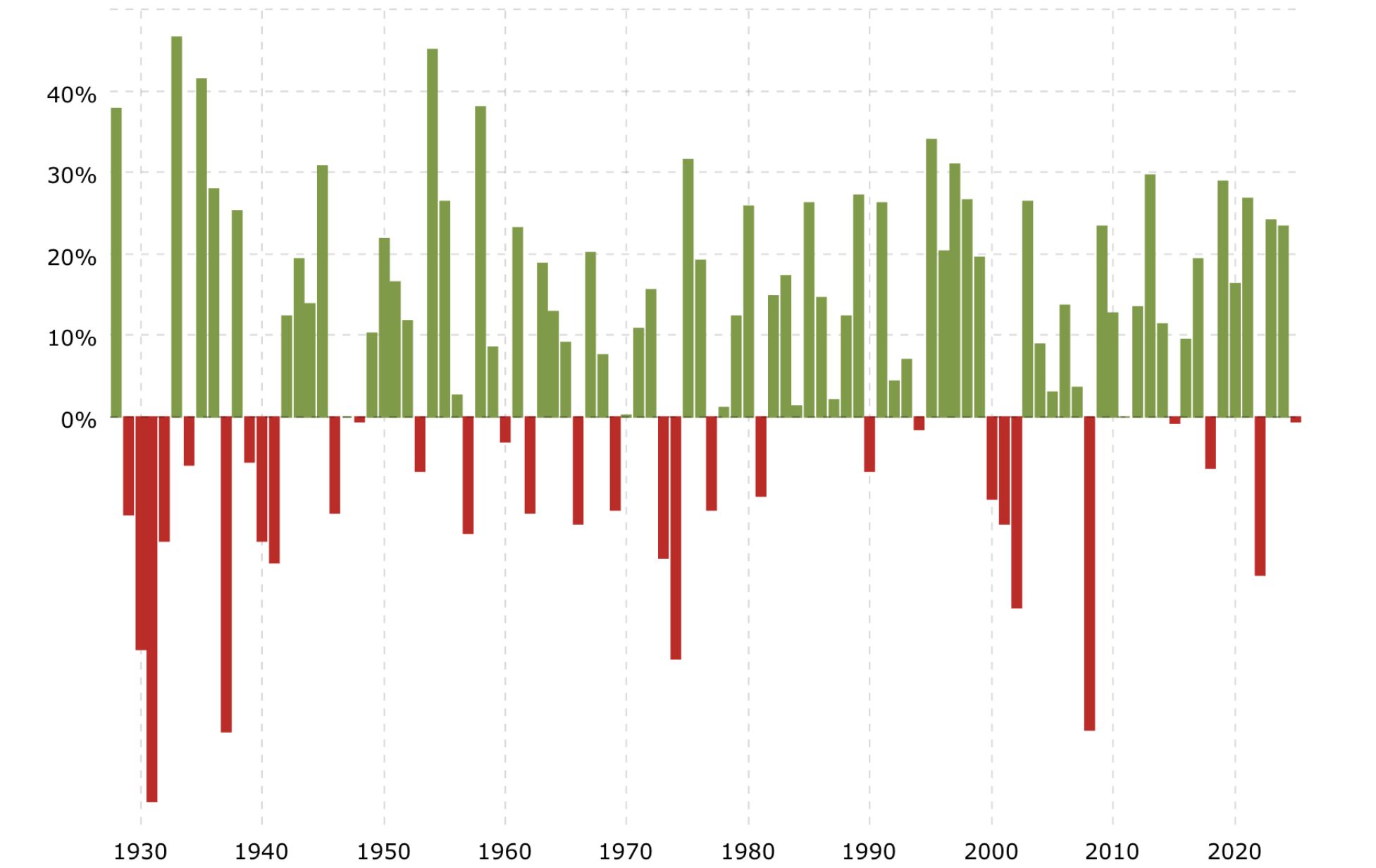
The S&P 500 stock index has performed considerably better than all these financial markets. As a market-capitalization-weighted index of 500 of the leading publicly traded companies in the U.S., it is naturally going to perform well over several decades. Since 1957, the average annual return has amounted to 11.88%. Like gold though, it has seen several years where returns have been negative, most recently in 2018 and 2022. So, although it has seen a consistent trend of general growth over time and on average nets positive returns, the crucial factor in generating a positive yield is knowing when to invest.
How to Start Trading Gold?
If you’d like to take advantage of the generally positive returns offered by trading gold, you can do so- by following these steps.
Open Account: Research and choose a reputable and reliable brokerage platform that offers gold trading services. Open an account with them, providing the necessary personal and financial information for registration.
| zForex | Plus500 | OANDA | |
|---|---|---|---|
|
Gold |
Yes | Yes | Yes |
|
Min. deposit, $ |
10 | 100 | No |
|
XAU/USD spread, pips |
No | 45 | 30 |
|
XAU/USD commission, $ |
No | 3 | 3 |
|
Regulation |
No | CySEC, FCA, ASIC, FMA, FSCA, FSA Seychelles, EFSA, MAS, DFSA, SCB | FSC (BVI), ASIC, IIROC, FCA, CFTC, NFA |
|
Open an account |
Go to broker Your capital is at risk.
|
Go to broker 80% of retail CFD accounts lose money. |
Go to broker Your capital is at risk. |
Choose Asset: Decide whether you want to trade futures contracts, exchange-traded funds (ETFs), or Contracts for Differences (CFDs). Futures and CFDs tend to involve higher risk, while ETFs are a more straightforward way for beginners to start trading gold.
Make Trading Decisions: Next, you need to start trading. Stay informed about factors influencing gold prices, then develop a trading strategy that aligns with your risk tolerance and financial goals. Implement stringent risk management practices to protect your capital. Keep an eye on any market developments, then review and adjust your trading strategy accordingly.
A moderate position is often more effective

In my view, gold works best when it is approached with realistic expectations rather than as a shortcut to quick profits. I would not recommend treating it as an asset that should constantly outperform equities or generate steady returns every year. Instead, I see it as a tactical and strategic component of a broader portfolio – one that can play different roles depending on the market environment.
If I were advising a beginner, I would suggest starting with a clear purpose: are you using gold for short-term trading, inflation protection, or portfolio balance? That choice matters, because the same asset behaves very differently depending on your time horizon. I also believe it is a mistake to allocate too much capital to gold too early. A moderate position is often more effective, since it gives you exposure to its defensive qualities without making your results overly dependent on one macro theme.
Another point I consider important is patience. Gold can spend long periods moving sideways or reacting sharply to shifts in rates and sentiment. Because of that, I prefer to enter gradually rather than all at once, especially in uncertain conditions. This approach reduces timing risk and makes the position easier to manage emotionally.
Conclusion
Gold's track record demonstrates that, while its annual returns have averaged between 7% and 12% depending on the timeframe, it remains a highly volatile asset with periods of both stellar gains and notable declines. Although gold doesn’t always outperform the S&P 500, it offers strategic value as a hedge against inflation and a tool for diversification within a portfolio. For instance, gold surged over 20% in 2020 amid global uncertainty, but returned just 0.44% in 2022—a clear reminder of its unpredictability. The key takeaway is that timing and purpose are crucial: gold is most powerful when treated not as a quick-profit vehicle, but as a measured, long-term component in a balanced investment strategy. Ultimately, patient and moderate exposure to gold can help investors weather market turbulence and safeguard wealth over time.
FAQs
What factors most influence the average return on gold investments?
How does gold perform as a hedge against inflation compared to other assets?
What are the risks associated with short-term gold trading?
Why is portfolio diversification important when including gold?
Editors' Top Picks and Insights

Markus Levin: DePIN could power the AI agent economy

Pokémon cards for $2,500: How collectibles became a new form of gambling

The privacy paradox: How the crypto mixer market has changed

Is Bitcoin right for you? Five traits shared by many cryptocurrency holders

Chasing hits: Why investors are losing interest in Netflix

Tokenized stocks in the spotlight: How do they work and are they worth trading?
Related Articles
Team that worked on the article
Jason Law is a freelance writer and journalist and a Traders Union website contributor. While his main areas of expertise are currently finance and investing, he’s also a generalist writer covering news, current events, and travel.
Dr. BJ Johnson is a PhD in English Language and an editor with over 15 years of experience. He earned his degree in English Language in the U.S and the UK.
Mirjan Hipolito is a journalist and news editor at Traders Union. She is an expert crypto writer with five years of experience in the financial markets.
CFD is a contract between an investor/trader and seller that demonstrates that the trader will need to pay the price difference between the current value of the asset and its value at the time of contract to the seller.
Diversification is an investment strategy that involves spreading investments across different asset classes, industries, and geographic regions to reduce overall risk.
Volatility refers to the degree of variation or fluctuation in the price or value of a financial asset, such as stocks, bonds, or cryptocurrencies, over a period of time. Higher volatility indicates that an asset's price is experiencing more significant and rapid price swings, while lower volatility suggests relatively stable and gradual price movements.
Index in trading is the measure of the performance of a group of stocks, which can include the assets and securities in it.
Yield refers to the earnings or income derived from an investment. It mirrors the returns generated by owning assets such as stocks, bonds, or other financial instruments.

-
 Afghanistan
-
 Albania
-
 Algeria
-
 Angola
-
 Argentina
-
 Armenia
-
 Australia
-
 Austria
-
 Azerbaijan
-
 Bahamas
-
 Bahrain
-
 Bangladesh
-
 Belarus
-
 Belgium
-
 Bolivia
-
 Botswana
-
 Brazil
-
 Brunei
-
 Bulgaria
-
 Cambodia
-
 Cameroon
-
 Canada
-
 Chile
Chile
-
 China
China
-
 Colombia
-
 Congo
Congo
-
 Costa Rica
-
 Cote d'Ivoire
-
 Croatia
-
 Cuba
Cuba
-
 Cyprus
-
 Czechia
-
 DR Congo
-
 Denmark
-
 Dominican Republic
-
 Ecuador
-
 Egypt
Egypt
-
 El Salvador
-
 Estonia
-
 Eswatini
-
 Ethiopia
-
 Finland
-
 France
-
 Georgia
-
 Germany
-
 Ghana
Ghana
-
 Greece
-
 Haiti
Haiti
-
 Hong Kong
-
 Hungary
-
 India
India
-
 Indonesia
-
 Iran, Islamic republic
-
 Iraq
Iraq
-
 Ireland
-
 Israel
-
 Italy
Italy
-
 Jamaica
-
 Japan
Japan
-
 Jordan
-
 Kazakhstan
-
 Kenya
Kenya
-
 Korea
Korea
-
 Kuwait
-
 Kyrgyzstan
-
 Laos
Laos
-
 Latvia
-
 Lebanon
-
 Lesotho
-
 Libya
Libya
-
 Lithuania
-
 Luxembourg
-
 Madagascar
-
 Malaysia
-
 Malta
Malta
-
 Mauritius
-
 Mexico
-
 Moldova
-
 Mongolia
-
 Montenegro
-
 Morocco
-
 Mozambique
-
 Myanmar
-
 Namibia
-
 Nepal
Nepal
-
 Netherlands
-
 New Zealand
-
 Nigeria
-
 North Macedonia
-
 Norway
-
 Oman
Oman
-
 Pakistan
-
 Palestine
-
 Panama
-
 Papua New Guinea
-
 Paraguay
-
 Peru
Peru
-
 Philippines
-
 Poland
-
 Portugal
-
 Puerto Rico
-
 Qatar
Qatar
-
 Reunion
-
 Romania
-
 Rwanda
-
 Saudi Arabia
-
 Serbia
-
 Singapore
-
 Slovakia
-
 Slovenia
-
 Somalia
-
 South Africa
-
 Spain
Spain
-
 Sri Lanka
-
 Sweden
-
 Switzerland
-
 Syria
Syria
-
 Taiwan
-
 Tajikistan
-
 Tanzania
-
 Thailand
-
 Trinidad and Tobago
-
 Tunisia
-
 Turkey
-
 UAE
UAE
-
 Uganda
-
 Ukraine
-
 United Kingdom
-
United States
-
 Uruguay
-
 Uzbekistan
-
 Venezuela
-
 Vietnam
-
 Yemen
Yemen
-
 Zambia
-
 Zimbabwe
- Forex
- Crypto











