
How Diversified Are Retail Investors Really? | TU Research


Editorial Note: While we adhere to strict Editorial Integrity, this post may contain references to products from our partners. Here's an explanation for How We Make Money. None of the data and information on this webpage constitutes investment advice according to our Disclaimer.
TU proprietary research suggests that retail investors widely recognize the importance of diversification, yet many remain heavily concentrated in a small number of assets. In a survey of 1,500 investors, 41% reported that more than half of their portfolio was allocated to a single asset, while only 18% maintained exposure across five or more asset classes. The findings indicate a significant gap between institutional diversification recommendations and actual investor behavior.
Diversification is one of the most widely accepted principles in investing. Financial institutions, academic researchers, and wealth management firms consistently argue that spreading investments across multiple assets can reduce portfolio volatility and improve long-term risk-adjusted returns.
Yet the rise of thematic investing, social media influence, AI-driven stock recommendations, and the popularity of concentrated bets on cryptocurrencies and technology stocks raise an important question: are retail investors actually diversified?
While diversification is frequently discussed in financial education, real-world investor behavior often appears to tell a different story. Many investors continue to build portfolios around a small number of favorite stocks, sectors, or cryptocurrencies.
This study focuses on five key questions:
How diversified are investors across different asset classes?
Why do investors choose to concentrate capital in a small number of assets?
Do investors accurately assess their own level of diversification?
Findings
Based on TU research, several important patterns emerge regarding diversification behavior:
Portfolio concentration remains widespread. 41% of retail investors allocate more than half of their portfolio to a single investment, while only 14% keep their largest position below 20%.
Most investors are diversified across too few asset classes. 56% of respondents hold exposure to only one or two asset classes, while just 18% invest across five or more asset classes.
Investment experience improves diversification. Only 11% of investors with less than two years of experience hold five or more asset classes, versus 32% among investors with more than five years of experience.
Portfolio concentration is usually intentional. 44% of respondents cite strong conviction in a specific asset as the main reason for concentrating capital, while 29% do so because they expect higher returns.
A significant perception gap exists. Although 71% of investors consider themselves diversified, 38% of those respondents still allocate more than half of their portfolio to a single investment.
Diversification awareness does not always translate into behavior. Despite diversification being one of the most widely recognized investing principles, concentrated portfolios remain the dominant structure among retail investors.

Risk warning: All investments carry risk, including potential capital loss. Economic fluctuations and market changes affect returns, and 40-50% of investors underperform benchmarks. Diversification helps but does not eliminate risks. Invest wisely and consult professional financial advisors.
Institutional validation
Diversification remains one of the most extensively researched concepts in modern portfolio theory.
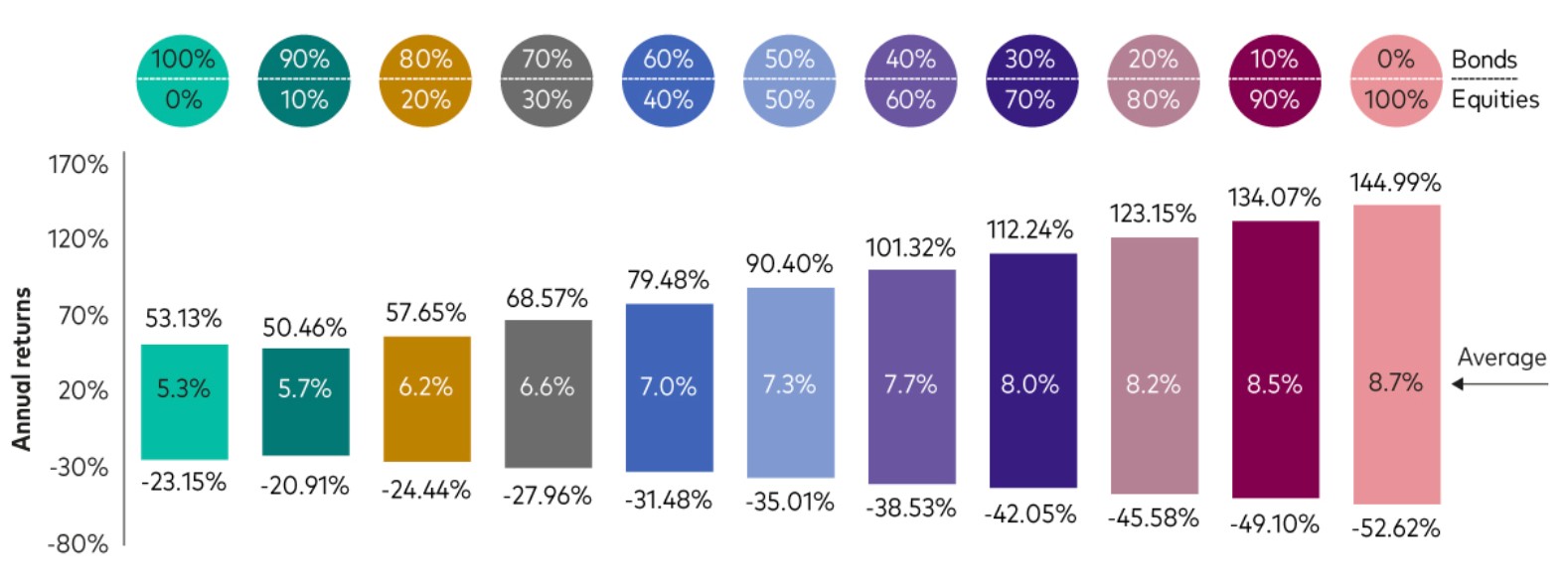
Vanguard research highlights that effective investing starts with a well-structured asset allocation strategy and broad diversification. According to Vanguard, diversified portfolios can help investors manage risk more effectively, improve resilience during market downturns, and support long-term financial goals without relying on a small number of individual investments.
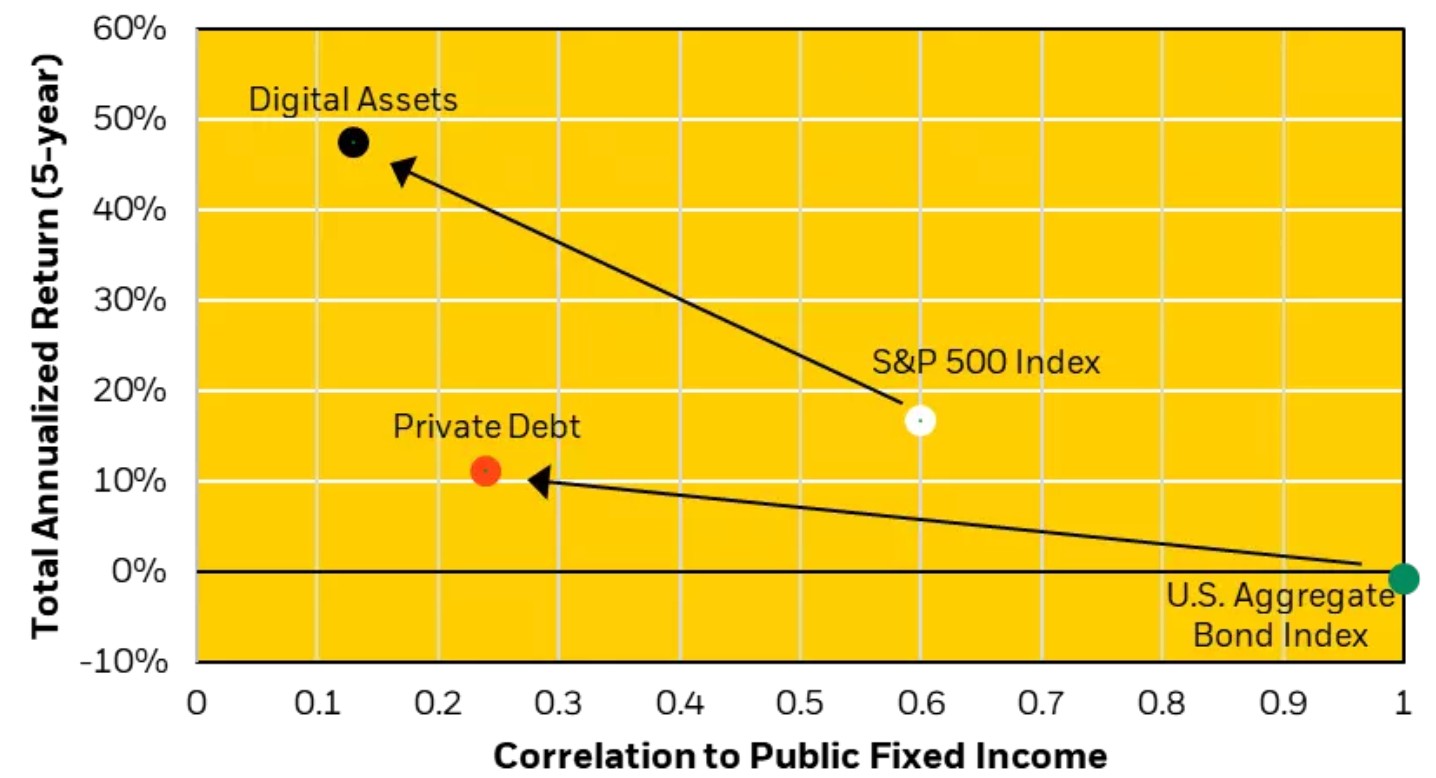
BlackRock research highlights diversification as a critical tool for navigating evolving market conditions. According to the firm's 2025 Investment Directions outlook, investors are increasingly seeking broader sources of return and risk diversification as traditional asset relationships become less predictable, making portfolio resilience more important than ever.
The CFA Institute describes diversification as one of the key benefits of a portfolio approach to investing. According to CFA Institute materials, portfolios can help reduce risk without necessarily compromising returns, while asset allocation, portfolio construction, monitoring, and rebalancing form core steps of the portfolio management process.
OECD research suggests that financial knowledge does not always translate into effective financial behavior. OECD/INFE studies show that many individuals demonstrate awareness of key financial concepts, yet often struggle to apply them consistently when making investment decisions, managing risk, or building diversified portfolios. This gap between knowledge and behavior becomes particularly visible during periods of market uncertainty, strong investment narratives, and speculative market trends.
Investors looking to diversify their portfolios across different asset classes can follow analytical insights from TU experts:
Anton Kharitonov – Forex market analysis and trading ideas;
Viktoras Karapetjanc – technical analysis and macro trading insights.
Theoretical research
From a theoretical perspective, diversification aims to reduce portfolio-specific risk by spreading investments across assets that do not move perfectly together.
Modern Portfolio Theory (MPT), introduced by Harry Markowitz, argues that investors can improve risk-adjusted returns by combining assets with different correlations.
Diversification can occur across several dimensions:
asset classes (stocks, bonds, commodities, crypto, cash);
geographic regions;
economic sectors;
company sizes;
investment styles.
Supporters of concentrated investing argue that focusing on a small number of high-conviction investments may increase potential returns.
Advantages commonly cited include:
stronger exposure to winning investments;
simpler portfolio management;
greater ability to outperform benchmarks.
However, concentrated portfolios also create significant vulnerabilities:
larger drawdowns;
higher volatility;
increased emotional pressure;
greater dependence on individual asset performance.
Behavioral finance research further suggests that investors frequently confuse familiarity with diversification. Holding multiple technology stocks, for example, may create an illusion of diversification while still exposing the portfolio to the same underlying risks.
The research highlights an important contradiction: although most investors understand diversification conceptually, many continue to concentrate capital in a small number of preferred assets.
Survey data
To evaluate how retail investors actually diversify their portfolios, TU conducted a proprietary quantitative study focused on portfolio construction, asset allocation, risk perception, and behavioral influences.
Unlike many institutional studies focused on theoretical portfolio optimization, this research examined real-world investor behavior.
Methodology
The research was based on a structured online survey conducted using the CAWI (Computer-Assisted Web Interviewing) methodology.
Sample composition: 1,500 retail investors.
Coverage: North America, Europe, Asia, Latin America, and emerging markets.
Age: 18–65 years old.
Participation criteria: respondents with active investments during the previous 24 months.
Statistical confidence: 95%.
Estimated sampling deviation: ±2.5%.
Research team
The study was conducted by the analytical team at Traders Union:
Anastasiia Chabaniuk (Author, TU Research) – research design and interpretation.
Chinmay Soni (Fact-checker) – data validation and statistical verification.
Dan Blystone (Editor-in-Chief) – editorial and methodological supervision.
TU Research Team (Andrey Mastykin, Oleg Tkachenko) – data collection and analysis.
Portfolio concentration
Respondents were asked what percentage of their portfolio is allocated to their single largest investment.
Largest position share in portfolio:
More than 50% – 41%;
30–50% – 27%;
20–30% – 18%;
Less than 20% – 14%.

Insight: Nearly half of investors maintain highly concentrated portfolios.
Number of asset classes owned
| Asset classes held | Share of respondents |
|---|---|
| 1 | 22% |
| 2 | 34% |
| 3–4 | 26% |
| 5+ | 18% |
Insight: Most investors hold exposure to only one or two asset classes.
Diversification by experience
| Experience | Hold 5+ asset classes |
|---|---|
| Under 2 years | 11% |
| 2–5 years | 17% |
| 5+ years | 32% |
Insight: Diversification increases substantially with experience.
Why investors concentrate portfolios
Respondents identified their primary reason for concentrating capital.
High conviction in a specific asset – 44%.
Higher return expectations – 29%.
Simplicity – 13%.
Lack of knowledge about diversification – 9%.
Social media influence – 5%.

Insight: Concentration is usually intentional rather than accidental.
Self-perceived diversification
Respondents were asked whether they consider themselves diversified investors.
Yes – 71%.
No – 29%.

However, among those answering "yes", 38% still held more than 50% of their portfolio in a single asset.
Insight: Many investors overestimate their actual diversification level.
PDF version of the TU research
Download the full PDF version of the TU research to access additional analysis, detailed survey data, and extended findings from our analytical team. The report includes complete methodology, charts, and behavioral insights referenced throughout the study.
Practical implications for investors
The research suggests that diversification remains one of the largest gaps between financial theory and investor behavior.
Key practical takeaways include:
Diversification awareness does not guarantee diversification implementation.
Concentrated portfolios remain common, especially among crypto investors.
Experience appears to improve diversification behavior.
ETF adoption is strongly associated with broader diversification.
Social media narratives can increase portfolio concentration.
Risk management should focus on portfolio-level exposure rather than individual positions.
Diversification should be evaluated across asset classes, sectors, and geographies.
Long-term investing outcomes often depend more on risk management than asset selection.
As retail investing continues to evolve through digital platforms, AI-powered recommendations, and social investing communities, portfolio concentration may remain a growing challenge despite increasing awareness of diversification principles.
Below is a comparison of leading brokers commonly used by diversified investors:
| Trading.com USA | Plus500 | OANDA | FOREX.com | IG Markets | |
|---|---|---|---|---|---|
|
Trading instruments |
69 | 2800 | 129 | 5500 | 20000 |
|
ETFs |
No | Yes | No | Yes | Yes |
|
Stocks |
No | Yes | Yes | Yes | Yes |
|
Min. deposit, $ |
50 | 100 | No | 100 | 1 |
|
Copy trading |
No | No | Yes | Yes | Yes |
|
PAMM |
No | No | No | No | No |
|
Investor protection |
No | €20,000 £85,000 SGD 75,000 | £85,000 SGD 75,000 $500,000 | £85,000 | £85,000 €100,000 SGD 75,000 |
|
Open an account |
Go to broker Your capital is at risk. |
Go to broker 81% of retail CFD accounts lose money. |
Go to broker Your capital is at risk. |
Study review | Study review |
Data sources and methodology references
Vanguard. The power of diversification.
BlackRock. Fall Investment Directions: Rethinking diversification.
CFA Institute. Portfolio Management.
Traders Union. What Is Diversification In Trading And Investing?.
FINRA Investor Education Foundation. National Financial Capability Study.
Journal of Portfolio Management. Portfolio Diversification and Concentration Risk Research.
Federal Reserve. Survey of Consumer Finances (SCF).
MDPI. Past, Present, and Future Research Trajectories on Retail Investor Behaviour.
Harvard University DASH Repository. Essays on Retail Investor Behavior in Financial Markets.
Journal of Behavioral and Experimental Finance. A Bibliometric Review of Portfolio Diversification Literature.
IdSurvey. CAWI Methodology Overview.
Previous volumes in this series
Conclusion
Despite widespread awareness of the importance of diversification, most retail investors continue to concentrate their portfolios in just a small number of assets, often driven by conviction or the lure of higher returns. The TU research reveals that while 71% of investors believe they are diversified, a significant portion still holds more than half their capital in a single position, highlighting a stubborn gap between financial knowledge and investing behavior. For example, newer investors and crypto enthusiasts are especially prone to these concentrated bets, amplifying both opportunity and risk. Ultimately, true diversification requires not just understanding but disciplined action across asset classes and markets, making robust risk management the cornerstone of lasting financial success.
FAQs
How do retail investors typically diversify across different asset classes?
What role does financial knowledge play in actual portfolio diversification among retail investors?
What impact do external influences, such as social media or thematic investing trends, have on retail investor diversification?
In what ways does portfolio diversification contribute to risk management for retail investors?
Editors' Top Picks and Insights




Related Articles
Team that worked on the article
Anastasiia has 17 years of experience in finance and content marketing. She believes that the support of information and expert opinion is very important for the success of investors and new traders.
Dan Blystone began his trading career in 1998 as an arbitrage clerk on the floor of the Chicago Mercantile Exchange (CME). He later traded bond and Eurex futures at proprietary firms such as Altea Trading, gaining valuable experience in high-frequency trading and risk management.
Chinmay Soni is a financial analyst with more than 5 years of experience in working with stocks, Forex, derivatives, and other assets. As a founder of a boutique research firm and an active researcher, he covers various industries and fields, providing insights backed by statistical data.

-
 Afghanistan
-
 Albania
-
 Algeria
-
 Angola
-
 Argentina
-
 Armenia
-
 Australia
-
 Austria
-
 Azerbaijan
-
 Bahamas
-
 Bahrain
-
 Bangladesh
-
 Belarus
-
 Belgium
-
 Bolivia
-
 Botswana
-
 Brazil
-
 Brunei
-
 Bulgaria
-
 Cambodia
-
 Cameroon
-
 Canada
-
 Chile
Chile
-
 China
China
-
 Colombia
-
 Congo
Congo
-
 Costa Rica
-
 Cote d'Ivoire
-
 Croatia
-
 Cuba
Cuba
-
 Cyprus
-
 Czechia
-
 DR Congo
-
 Denmark
-
 Dominican Republic
-
 Ecuador
-
 Egypt
Egypt
-
 El Salvador
-
 Estonia
-
 Eswatini
-
 Ethiopia
-
 Finland
-
 France
-
 Georgia
-
 Germany
-
 Ghana
Ghana
-
 Greece
-
 Haiti
Haiti
-
 Hong Kong
-
 Hungary
-
 India
India
-
 Indonesia
-
 Iran, Islamic republic
-
 Iraq
Iraq
-
 Ireland
-
 Israel
-
 Italy
Italy
-
 Jamaica
-
 Japan
Japan
-
 Jordan
-
 Kazakhstan
-
 Kenya
Kenya
-
 Korea
Korea
-
 Kuwait
-
 Kyrgyzstan
-
 Laos
Laos
-
 Latvia
-
 Lebanon
-
 Lesotho
-
 Libya
Libya
-
 Lithuania
-
 Luxembourg
-
 Madagascar
-
 Malaysia
-
 Malta
Malta
-
 Mauritius
-
 Mexico
-
 Moldova
-
 Mongolia
-
 Montenegro
-
 Morocco
-
 Mozambique
-
 Myanmar
-
 Namibia
-
 Nepal
Nepal
-
 Netherlands
-
 New Zealand
-
 Nigeria
-
 North Macedonia
-
 Norway
-
 Oman
Oman
-
 Pakistan
-
 Palestine
-
 Panama
-
 Papua New Guinea
-
 Paraguay
-
 Peru
Peru
-
 Philippines
-
 Poland
-
 Portugal
-
 Puerto Rico
-
 Qatar
Qatar
-
 Reunion
-
 Romania
-
 Rwanda
-
 Saudi Arabia
-
 Serbia
-
 Singapore
-
 Slovakia
-
 Slovenia
-
 Somalia
-
 South Africa
-
 Spain
Spain
-
 Sri Lanka
-
 Sweden
-
 Switzerland
-
 Syria
Syria
-
 Taiwan
-
 Tajikistan
-
 Tanzania
-
 Thailand
-
 Trinidad and Tobago
-
 Tunisia
-
 Turkey
-
 UAE
UAE
-
 Uganda
-
 Ukraine
-
 United Kingdom
-
United States
-
 Uruguay
-
 Uzbekistan
-
 Venezuela
-
 Vietnam
-
 Yemen
Yemen
-
 Zambia
-
 Zimbabwe
- Forex
- Crypto












