
How To Transfer Crypto From An Exchange: A Quick Guide


Editorial Note: While we adhere to strict Editorial Integrity, this post may contain references to products from our partners. Here's an explanation for How We Make Money. None of the data and information on this webpage constitutes investment advice according to our Disclaimer.
To safely transfer cryptocurrency from an exchange to a personal wallet:
Leaving crypto on centralized exchanges isn’t the safest bet. They’re popular targets for hackers, and even top exchanges have faced breaches. Worse, if an exchange goes under or freezes withdrawals, your funds might be stuck. That's why it’s a good idea to move your assets to a personal wallet, where you hold the keys and have more control. Cold storage wallets, like hardware devices, are a solid choice for large amounts since they aren't connected to the internet, reducing the risk of hacks.
How to move crypto off an exchange: step-by-step guide
To withdraw digital assets from a centralized exchange (CEX) to a wallet, we chose the popular MetaMask Wallet and exchange Binance. It is easy to use and easy to manage assets here.
Step 1. Generate a wallet address and check its correctness
Open MetaMask in your browser and copy the address of your wallet that will be used to receive cryptocurrency. This is a unique address on the blockchain, for example, for the Ethereum network.
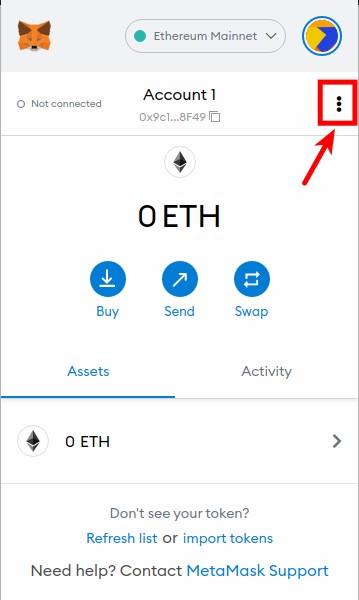
Click on the icon with three vertical dots
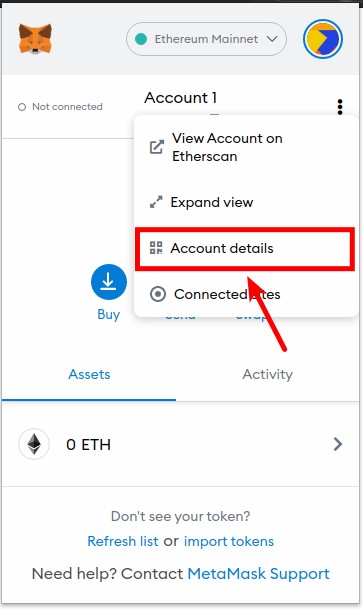
On the pop-up menu, click on "Account Details" to load up information about your wallet.
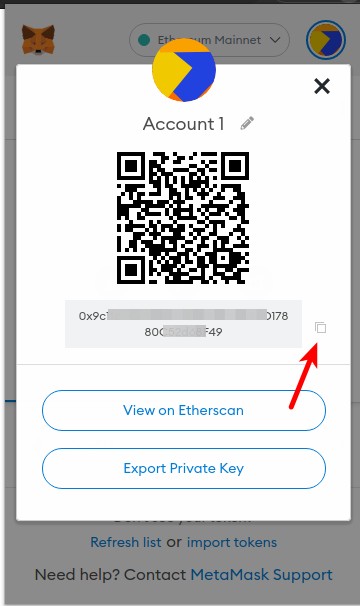
Click the Copy icon to the right of the address to copy your Metamask wallet address.
Step 2. Log in to your exchange account and select a transfer option
Log in to an exchange, (like Binance or Coinbase), and find the "Withdraw" or "Transfer" section. Make sure the cryptocurrency you are withdrawing matches the network of your MetaMask wallet. For example, use the Ethereum network for ETH.
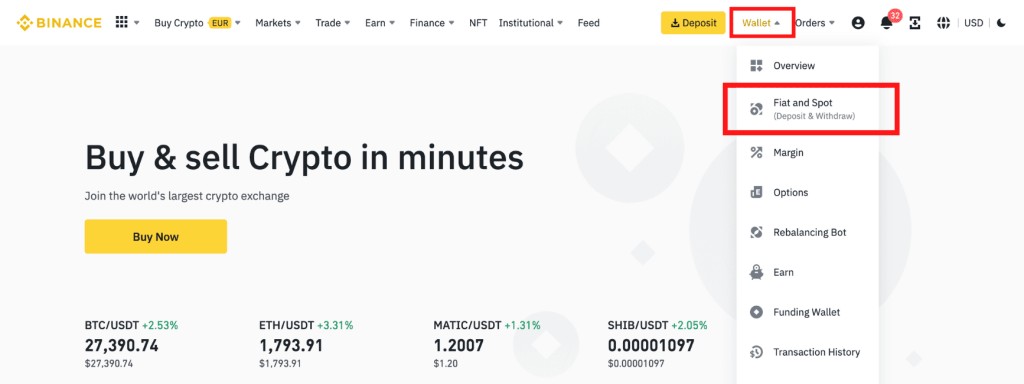
Go to the Wallet section at the top of the screen and select Fiat & Spot from the drop-down menu.
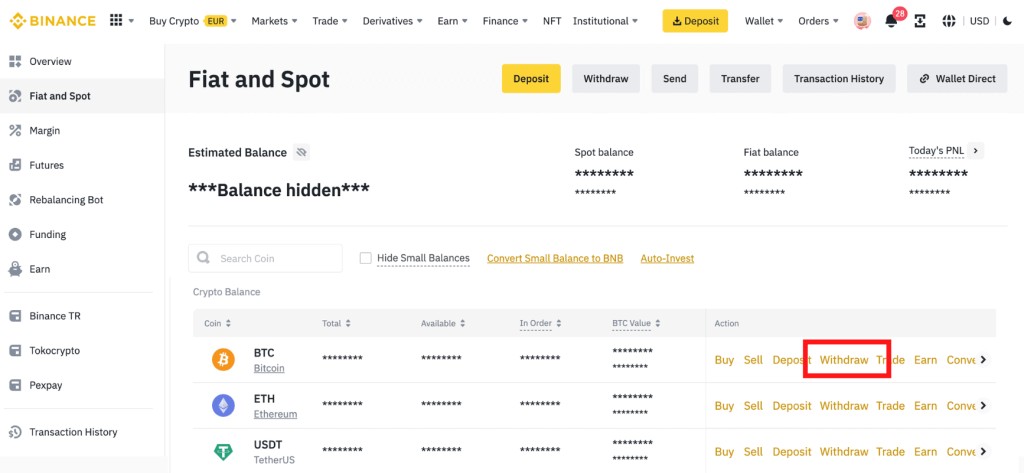
Select cryptocurrency and click "Withdraw"
Step 3. Enter transfer details
Enter your MetaMask address in the "Wallet Address" field. Specify the amount you wish to transfer. To ensure everything works correctly, make a small test transfer before sending the full amount
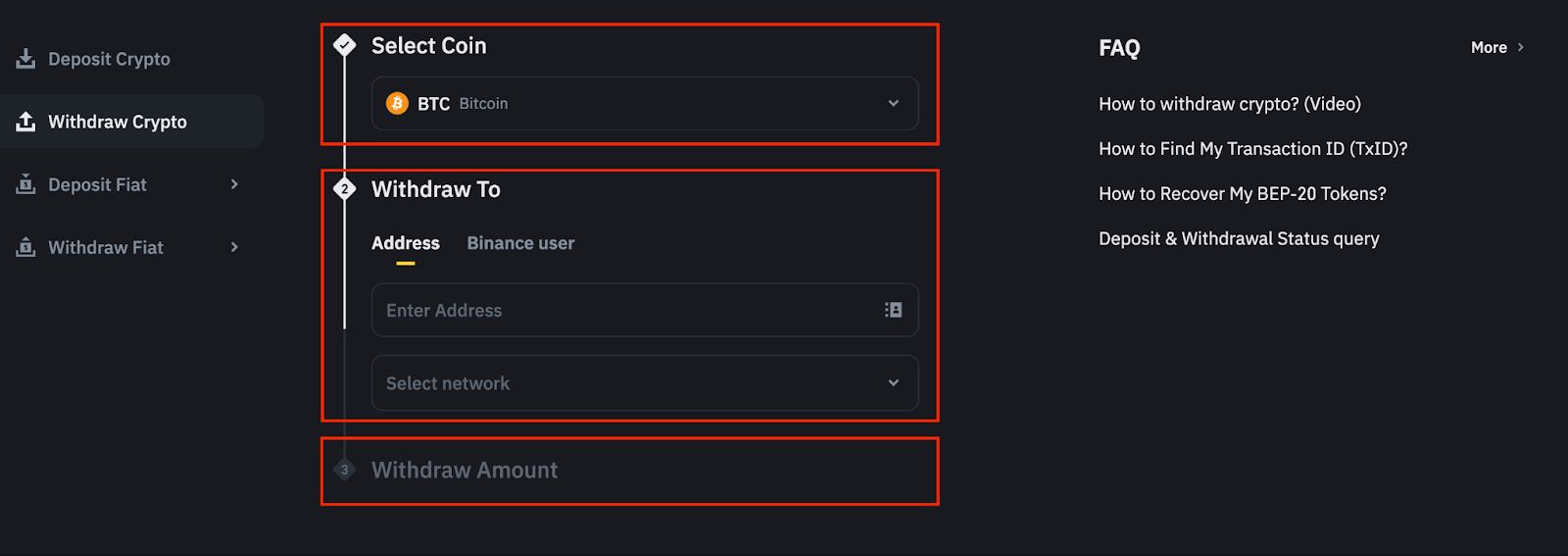
Step 4. Confirm and track your transaction
Confirm the withdrawal on your exchange. Use a blockchain explorer like Etherscan to track the transaction status. Once confirmed, the funds will appear in your MetaMask wallet.
How to choose the right cryptocurrency wallet
There are several types of cryptocurrency wallets, each with its own features, advantages, and disadvantages. Let's look at the main types: hardware, software, and mobile wallets.
Hardware wallets
Hardware wallets, such as the Ledger Nano X and Trezor, are physical devices that store private keys offline, which provides maximum protection from online threats. They are suitable for long-term storage of large amounts of cryptocurrency, as they are not susceptible to the risks of hacking and viruses. Hardware wallets have additional security features, such as PIN protection and encrypted recovery phrases. These wallets are pricey but essential for serious crypto holders.
Software wallets
Software wallets, such as MetaMask and Exodus, are user-friendly and great for managing crypto daily. They support many cryptocurrencies and decentralized applications (dApps), making them versatile. However, because they’re always connected to the internet, they can be hacked if not properly secured. Using two-factor authentication and strong passwords is a must.
Mobile wallets
Mobile wallets allow users to manage cryptocurrency using their smartphone, ensuring accessibility and ease of use at all times. They’re super convenient, supporting contactless payments and QR code features for everyday use. But with accessibility comes the risk: losing your phone could mean losing your assets unless you use robust security measures like encryption and biometric locks.
Common mistakes and how to avoid them
Incorrectly entering the wallet address
One of the most common mistakes is entering the wrong recipient's address. Cryptocurrency wallet addresses consist of long and complex alphanumeric strings, and even one typo can lead to a loss of funds, since transactions on the blockchain are irreversible. To avoid this mistake, it is recommended to always copy and paste the address instead of typing it manually, and carefully check the first and last few characters of the address before confirming the transaction.
Using unsupported networks for transfer
Transferring tokens through the wrong network is another common mistake. For example, sending ERC-20 tokens to an address that only supports BEP-20 will result in a loss of funds. Before transferring, you need to make sure that the sending network matches the receiving network. Exchanges and wallets often offer multiple network options for transferring the same cryptocurrency, so it is important to choose wisely to avoid losses.
Recommendations for conducting test transfers of small amounts
When transferring large amounts of crypto, consider sending a small amount first. This simple step ensures everything is set up correctly and can save you from a major mishap. Think of it as a trial run to catch any errors early. This is especially true when transferring to new addresses or between different platforms.
Consider security and the optimal wallet type

When moving your crypto from Binance to MetaMask, don’t just hit “send” without considering network traffic. Rushing a transaction can lead to paying more in fees or waiting for an annoyingly long confirmation. Use tools like Etherscan’s gas tracker to check when network congestion is low. Sending during off-peak times can save you significant gas fees and speed up the transfer. Plus, it reduces the risk of your transaction getting stuck in the mempool, which is particularly important for newcomers who are learning how blockchain networks operate.
Once you’ve successfully transferred your assets from Binance, there are unique ways to boost your MetaMask security. For example, use an address book feature in MetaMask to store trusted addresses. This reduces the risk of sending funds to the wrong wallet in the future, especially if you frequently interact with the same addresses. If you’re dealing with large amounts, consider setting up a multisig wallet using a service like Gnosis Safe. This means that every transaction will need approval from multiple devices or people, making it incredibly hard for anyone to steal your funds if one key gets compromised.
Conclusion
Taking your crypto off an exchange needs some smart thinking and a good dose of caution. Picking the right wallet is a big part of staying safe—hot wallets like MetaMask are super convenient for quick transactions, but if you're serious about keeping your assets secure, a hardware wallet is the way to go. Always double-check addresses and make sure you’re using the correct network to avoid any major slip-ups. Instead of leaving all your funds on an exchange, where they could be at risk of hacks or freezes, spread your assets wisely: keep a small amount accessible for daily use and stash the bulk of it in a hardware wallet. This way, you have peace of mind knowing your investments are safe but still accessible when market opportunities pop up.
FAQs
How to set up a wallet for secure long-term cryptocurrency storage?
To prepare your wallet for long-term storage, use a cold wallet like a hardware device or a paper wallet, as these remain disconnected from the internet, reducing the risk of hacks. It's wise to secure your backup recovery phrase using something durable, like a stainless-steel plate, to protect it from physical damage.
What is a transfer delay and how to manage it?
Transfer delays can happen because of network congestion or low transaction fees. To manage this, keep an eye on the network activity using reliable trackers. If there’s heavy congestion, opt for a higher fee, but remember that even then, delays might not be entirely preventable.
How to check the correctness of the fee when withdrawing cryptocurrency?
Check the average fee for the selected network through blockchain explorers or special services that monitor network congestion. Make sure the fee matches the current conditions to avoid delays or denial of transaction processing.
What is the best way to organize the storage of cryptocurrency for maximum security?
For optimal security, use a hybrid strategy: keep smaller amounts in a hot wallet for daily transactions and larger sums in a cold wallet for safe, long-term storage. This setup minimizes risks while ensuring you have accessible funds when needed.
Editors' Top Picks and Insights




Related Articles
Team that worked on the article
Maxim Nechiporenko has been a contributor to Traders Union since 2023. He started his professional career in the media in 2006.
Chinmay Soni is a financial analyst with more than 5 years of experience in working with stocks, Forex, derivatives, and other assets. As a founder of a boutique research firm and an active researcher, he covers various industries and fields, providing insights backed by statistical data.
Mirjan Hipolito is a journalist and news editor at Traders Union. She is an expert crypto writer with five years of experience in the financial markets.
Ethereum is a decentralized blockchain platform and cryptocurrency that was proposed by Vitalik Buterin in late 2013 and development began in early 2014. It was designed as a versatile platform for creating decentralized applications (DApps) and smart contracts.
Cryptocurrency is a type of digital or virtual currency that relies on cryptography for security. Unlike traditional currencies issued by governments (fiat currencies), cryptocurrencies operate on decentralized networks, typically based on blockchain technology.
Bitcoin is a decentralized digital cryptocurrency that was created in 2009 by an anonymous individual or group using the pseudonym Satoshi Nakamoto. It operates on a technology called blockchain, which is a distributed ledger that records all transactions across a network of computers.
Index in trading is the measure of the performance of a group of stocks, which can include the assets and securities in it.
CFD is a contract between an investor/trader and seller that demonstrates that the trader will need to pay the price difference between the current value of the asset and its value at the time of contract to the seller.

-
 Afghanistan
-
 Albania
-
 Algeria
-
 Angola
-
 Argentina
-
 Armenia
-
 Australia
-
 Austria
-
 Azerbaijan
-
 Bahamas
-
 Bahrain
-
 Bangladesh
-
 Belarus
-
 Belgium
-
 Bolivia
-
 Botswana
-
 Brazil
-
 Brunei
-
 Bulgaria
-
 Cambodia
-
 Cameroon
-
 Canada
-
 Chile
Chile
-
 China
China
-
 Colombia
-
 Congo
Congo
-
 Costa Rica
-
 Cote d'Ivoire
-
 Croatia
-
 Cuba
Cuba
-
 Cyprus
-
 Czechia
-
 DR Congo
-
 Denmark
-
 Dominican Republic
-
 Ecuador
-
 Egypt
Egypt
-
 El Salvador
-
 Estonia
-
 Eswatini
-
 Ethiopia
-
 Finland
-
 France
-
 Georgia
-
 Germany
-
 Ghana
Ghana
-
 Greece
-
 Haiti
Haiti
-
 Hong Kong
-
 Hungary
-
 India
India
-
 Indonesia
-
 Iran, Islamic republic
-
 Iraq
Iraq
-
 Ireland
-
 Israel
-
 Italy
Italy
-
 Jamaica
-
 Japan
Japan
-
 Jordan
-
 Kazakhstan
-
 Kenya
Kenya
-
 Korea
Korea
-
 Kuwait
-
 Kyrgyzstan
-
 Laos
Laos
-
 Latvia
-
 Lebanon
-
 Lesotho
-
 Libya
Libya
-
 Lithuania
-
 Luxembourg
-
 Madagascar
-
 Malaysia
-
 Malta
Malta
-
 Mauritius
-
 Mexico
-
 Moldova
-
 Mongolia
-
 Montenegro
-
 Morocco
-
 Mozambique
-
 Myanmar
-
 Namibia
-
 Nepal
Nepal
-
 Netherlands
-
 New Zealand
-
 Nigeria
-
 North Macedonia
-
 Norway
-
 Oman
Oman
-
 Pakistan
-
 Palestine
-
 Panama
-
 Papua New Guinea
-
 Paraguay
-
 Peru
Peru
-
 Philippines
-
 Poland
-
 Portugal
-
 Puerto Rico
-
 Qatar
Qatar
-
 Reunion
-
 Romania
-
 Rwanda
-
 Saudi Arabia
-
 Serbia
-
 Singapore
-
 Slovakia
-
 Slovenia
-
 Somalia
-
 South Africa
-
 Spain
Spain
-
 Sri Lanka
-
 Sweden
-
 Switzerland
-
 Syria
Syria
-
 Taiwan
-
 Tajikistan
-
 Tanzania
-
 Thailand
-
 Trinidad and Tobago
-
 Tunisia
-
 Turkey
-
 UAE
UAE
-
 Uganda
-
 Ukraine
-
 United Kingdom
-
United States
-
 Uruguay
-
 Uzbekistan
-
 Venezuela
-
 Vietnam
-
 Yemen
Yemen
-
 Zambia
-
 Zimbabwe
- Forex
- Crypto












