
CIRO | Canadian Investment Regulatory Organization Review


Editorial Note: While we adhere to strict Editorial Integrity, this post may contain references to products from our partners. Here's an explanation for How We Make Money. None of the data and information on this webpage constitutes investment advice according to our Disclaimer.
The Canadian Investment Regulatory Organization (CIRO) oversees investment dealers and trading activities in Canada. Its primary role is to ensure ethical practices and investor protection in the Canadian market. Operating under the Canadian Securities Administrators (CSA) framework, CIRO enforces rules on capital adequacy, business conduct, and market integrity.
From this article you will learn what CIRO is, what the main functions and powers of this regulator are, and how to check the legitimacy of a broker using the CIRO registry.
What is CIRO?
CIRO is a national self-regulatory organization that oversees investment dealers and trading activities on debt and equity marketplaces in Canada and was originally known as the "Investment Dealers Association of Canada" (IDA), which was established in 1916. The name was changed to the "Investment Industry Regulatory Organization of Canada" on June 1, 2008, following the merger of the IDA and Market Regulation Services Inc. (RS), which was a regulatory services provider for Canadian equity marketplaces.
On January 1, 2023, after merger of the Investment Industry Regulatory Organization of Canada and the Mutual Fund Dealers Association was established CIRO , or the Canadian Investment Regulatory Organization, also known as OCRI (Organisme canadien de réglementation des investissements in French). CIRO's primary mission is to protect investors and support healthy Canadian capital markets.
Brief overview of CIRO*OCRI website
The CIRO (Canadian Investment Regulatory Organization) website serves as a vital resource for information on investment regulation in Canada. The homepage features key sections including:
1. About CIRO
This section introduces CIRO, detailing its mission and organizational structure. CIRO oversees investment dealers, mutual fund dealers, and trading activities on Canada's debt and equity marketplaces.
 CIRO website. Source: ciro.ca
2. Office of the investor
This section is dedicated to investor protection and education. It offers resources to help investors make informed decisions and avoid fraud. The Office of the Investor also provides tools for verifying the credentials of investment advisors.
 CIRO website. Source: ciro.ca
3. Rules and enforcement
Here, users can find CIRO’s regulatory rules, policies, and enforcement actions. It includes guidelines that financial institutions must follow and information on CIRO’s authority to enforce these regulations.
 CIRO website. Source: ciro.ca
4. Mutual Fund Dealers - Québec
This page focuses on the regulation of mutual fund dealers in Québec. It provides specific rules and guidelines applicable to these dealers, ensuring they comply with regional regulatory requirements.
 CIRO website. Source: ciro.ca
5. Becoming a dealer member
Information on how to become a dealer member of CIRO is provided here. It includes the registration process, membership requirements, and compliance obligations for prospective members.
 CIRO website. Source: ciro.ca
Each section of the CIRO website is designed to provide clear, detailed information to help stakeholders navigate the complex landscape of financial regulation in Canada. The website features a user-friendly interface and supports multiple languages, enhancing accessibility for a diverse audience.
Main functions of CIRO
Regulatory and enforcement actions
CIRO has a comprehensive enforcement mechanism to address violations of its rules. This includes fines, suspensions, and other disciplinary actions. Notable enforcement actions are regularly published to maintain transparency and deter non-compliance.
 Details of enforcement proceedings
Investor protection and education
Investor protection is a main CIRO’s mission. The organization provides extensive educational resources to help investors make informed decisions. These include guides, tutorials, and alerts on various investment topics.
 Investor protection and education tab
Trading practices and market regulation
CIRO sets and enforces rules for trading practices to ensure market integrity. This includes real-time market surveillance to detect and prevent manipulative activities.
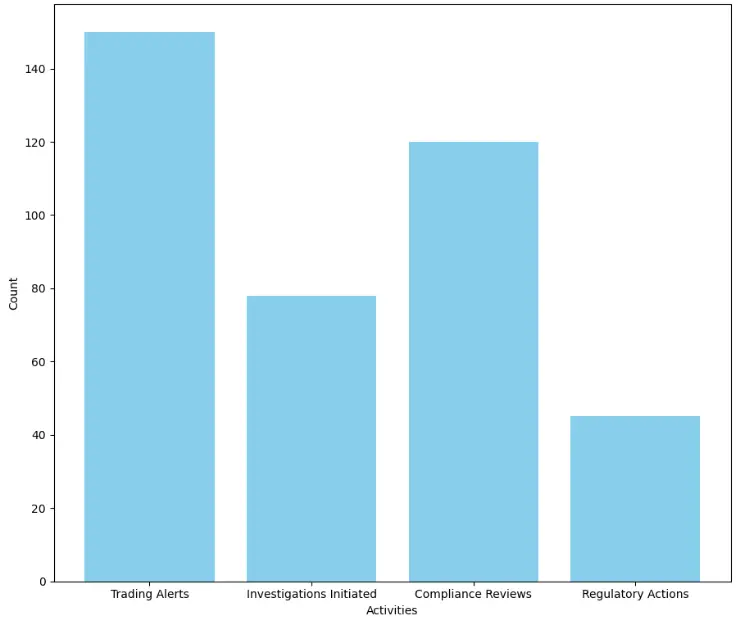 Market surveillance activities
 Outcomes of Market Surveillance
Traders and firms that adhere to CIRO’s regulations not only avoid penalties but also contribute to a more stable and trustworthy market environment.
Technological initiatives and innovations
CIRO continually adopts new technologies to enhance its regulatory capabilities. This includes advanced surveillance systems and data analytics tools that improve market oversight. Future innovations are focused on further integrating technology to keep pace with evolving market dynamics.
How to check legitimacy status on the CIRO website?
To verify the legitimacy of an investment dealer or advisor, CIRO provides tools such as the AdvisorReport. To check your broker you need to follow these steps:
Visit the CIRO Website: Go to CIRO's official website.
 CIRO website. Source: ciro.ca
Navigate to “Office of Investor”, then click on “Know Your Advisor: Advisor report”
 CIRO website. Source: ciro.ca
Scroll down and find a button “Search for an advisor now”
 CIRO website. Source: ciro.ca
Fill the form and click “Search”
 CIRO website. Source: ciro.ca
CIRO allows investors to check the registration status, disciplinary history, and professional background of advisors and firms.
Below is a comparative table of best Forex brokers, licensed and regulated by CIRO
| Forex regulation | Min. deposit, $ | Max. leverage | Min Spread EUR/USD, pips | Trading Platform | Open account | |
|---|---|---|---|---|---|---|
| FSC (BVI), ASIC, IIROC, FCA, CFTC, NFA | No | 1:200 | 0.1 | MetaTrader4 | Go to broker Your capital is at risk. |
|
| CIMA, FCA, FSA (Japan), NFA, IIROC, ASIC, CFTC | 100 | 1:50 | 0.7 | FOREX.com, MT4, MT5 | Study review | |
| SEC, FINRA, SIPC, FCA, NSE, BSE, SEBI, SEHK, HKFE, IIROC, ASIC, CFTC, NFA | No | 1:30 | 0.2 | IBKR API, IBKR Mobile, Portal of clients, Trader Workstation | Study review | |
| BVI FSC , CySec, ASIC, JFSA, FSCA , FFAJ, ISA (Israel) | 100 | 1:400 | 0.6 | MT4, AvaTrader, Mobile Apps, WebTrader, MT5, AvaSocial, AvaOptions | Go to broker Your capital is at risk. |
|
| FCA UK, CySec, ASIC, CIRO, FSA (Seychelles), JSC (Jordan) | 1 | 1:1000 | 0.1 | MT4, MT5, WebTrader, MetaTrader Supreme Edition | Go to broker Your capital is at risk. |
This table highlights the regulation and key safety features of each broker, making it easier to compare and choose the right one.
Navigating CIRO regulations for successful trading

Based on my experience, understanding the regulatory framework set by the CIRO is important. This is because adhering to these regulations not only ensures compliance but also upgrades your risk management options. As a whole, I have certain key takeaways to provide on this aspect.
Be aware of CIRO rules and regulations. Suppose you want to engage in short selling. CIRO has specific rules governing short sales, including the requirement to mark orders as short and adhere to pre-borrow requirements. Ignorance of these rules can lead to penalties and disrupted trading strategies;
Use CIRO resources for market insights. CIRO’s monthly reports on short sale trading statistics can inform your understanding of market sentiment. If you notice an increase in short selling activity in a particular stock, it might indicate bearish sentiment;
Stay updated on compliance and best practice. In 2020, CIRO introduced amendments to its rules regarding the use of client identifiers in trading. Staying updated on such changes ensures you implement necessary adjustments promptly;
Leverage CIRO’s dispute resolution mechanisms. If you encounter a dispute with your broker regarding the execution of a trade, you can file a complaint through CIRO’s formal complaint process. CIRO’s arbitration services can help resolve the issue without resorting to costly and time-consuming litigation.
Remember, understanding and using CIRO’s regulatory framework is not just about avoiding penalties; it’s about creating a foundation for long-term success and sustainability in the financial markets.
Conclusion
CIRO plays an important role in ensuring the stability and integrity of Canada’s financial markets. Its comprehensive regulatory framework, strong enforcement mechanisms, and commitment to investor protection make it an indispensable part of the Canadian financial system. By understanding CIRO’s functions and utilizing its resources, investors and firms can contribute to a fair and transparent market environment.
FAQs
How does CIRO enforce its rules and regulations?
CIRO enforces rules through case assessments, investigations, and enforcement proceedings, imposing sanctions like fines, suspensions, and bans to uphold market integrity and protect investors.
What types of complaints does CIRO handle?
CIRO handles complaints about unsuitable investments, unauthorized trading, misrepresentation, supervision issues, and complaint handling.It investigates these to ensure compliance with regulatory rules.
What is the process for becoming a CIRO member?
To become a CIRO member, applicants must submit an application, pay a fee, undergo reviews and background checks, comply with CIRO rules, and may have an on-site visit before approval and certification.
Editors' Top Picks and Insights






Related Articles
Team that worked on the article
Chinmay Soni is a financial analyst with more than 5 years of experience in working with stocks, Forex, derivatives, and other assets. As a founder of a boutique research firm and an active researcher, he covers various industries and fields, providing insights backed by statistical data.
Dr. BJ Johnson is a PhD in English Language and an editor with over 15 years of experience. He earned his degree in English Language in the U.S and the UK.
Mirjan Hipolito is a journalist and news editor at Traders Union. She is an expert crypto writer with five years of experience in the financial markets.
Stock fraud, also known as securities fraud, refers to a range of illegal activities or deceptive practices related to stocks and securities markets. These fraudulent activities can harm investors, undermine market integrity, and are often subject to legal penalties.
Bitcoin is a decentralized digital cryptocurrency that was created in 2009 by an anonymous individual or group using the pseudonym Satoshi Nakamoto. It operates on a technology called blockchain, which is a distributed ledger that records all transactions across a network of computers.
Forex leverage is a tool enabling traders to control larger positions with a relatively small amount of capital, amplifying potential profits and losses based on the chosen leverage ratio.
Xetra is a German Stock Exchange trading system that the Frankfurt Stock Exchange operates. Deutsche Börse is the parent company of the Frankfurt Stock Exchange.
Index in trading is the measure of the performance of a group of stocks, which can include the assets and securities in it.

-
 Afghanistan
-
 Albania
-
 Algeria
-
 Angola
-
 Argentina
-
 Armenia
-
 Australia
-
 Austria
-
 Azerbaijan
-
 Bahamas
-
 Bahrain
-
 Bangladesh
-
 Belarus
-
 Belgium
-
 Bolivia
-
 Botswana
-
 Brazil
-
 Brunei
-
 Bulgaria
-
 Cambodia
-
 Cameroon
-
 Canada
-
 Chile
Chile
-
 China
China
-
 Colombia
-
 Congo
Congo
-
 Costa Rica
-
 Cote d'Ivoire
-
 Croatia
-
 Cuba
Cuba
-
 Cyprus
-
 Czechia
-
 DR Congo
-
 Denmark
-
 Dominican Republic
-
 Ecuador
-
 Egypt
Egypt
-
 El Salvador
-
 Estonia
-
 Eswatini
-
 Ethiopia
-
 Finland
-
 France
-
 Georgia
-
 Germany
-
 Ghana
Ghana
-
 Greece
-
 Haiti
Haiti
-
 Hong Kong
-
 Hungary
-
 India
India
-
 Indonesia
-
 Iran, Islamic republic
-
 Iraq
Iraq
-
 Ireland
-
 Israel
-
 Italy
Italy
-
 Jamaica
-
 Japan
Japan
-
 Jordan
-
 Kazakhstan
-
 Kenya
Kenya
-
 Korea
Korea
-
 Kuwait
-
 Kyrgyzstan
-
 Laos
Laos
-
 Latvia
-
 Lebanon
-
 Lesotho
-
 Libya
Libya
-
 Lithuania
-
 Luxembourg
-
 Madagascar
-
 Malaysia
-
 Malta
Malta
-
 Mauritius
-
 Mexico
-
 Moldova
-
 Mongolia
-
 Montenegro
-
 Morocco
-
 Mozambique
-
 Myanmar
-
 Namibia
-
 Nepal
Nepal
-
 Netherlands
-
 New Zealand
-
 Nigeria
-
 North Macedonia
-
 Norway
-
 Oman
Oman
-
 Pakistan
-
 Palestine
-
 Panama
-
 Papua New Guinea
-
 Paraguay
-
 Peru
Peru
-
 Philippines
-
 Poland
-
 Portugal
-
 Puerto Rico
-
 Qatar
Qatar
-
 Reunion
-
 Romania
-
 Rwanda
-
 Saudi Arabia
-
 Serbia
-
 Singapore
-
 Slovakia
-
 Slovenia
-
 Somalia
-
 South Africa
-
 Spain
Spain
-
 Sri Lanka
-
 Sweden
-
 Switzerland
-
 Syria
Syria
-
 Taiwan
-
 Tajikistan
-
 Tanzania
-
 Thailand
-
 Trinidad and Tobago
-
 Tunisia
-
 Turkey
-
 UAE
UAE
-
 Uganda
-
 Ukraine
-
 United Kingdom
-
United States
-
 Uruguay
-
 Uzbekistan
-
 Venezuela
-
 Vietnam
-
 Yemen
Yemen
-
 Zambia
-
 Zimbabwe
- Forex
- Crypto












