
Best Brokers With Free Day Trading Simulators



Editorial Note: While we adhere to strict Editorial Integrity, this post may contain references to products from our partners. Here's an explanation for How We Make Money. None of the data and information on this webpage constitutes investment advice according to our Disclaimer.
Best free day trading simulators:
- zForex - High transaction speeds, automatic tracking system of clients’ risks..
- Plus500 - Best premium client support (personal manager, exclusive analysis, webinars)
- Trading.com USA - A broker registered with the CFTC and NFA that focuses on spot Forex trading through MT5 and proprietary platforms.
- OANDA - Best for trading with advanced technical analysis tools (TradingView charts support)
- FOREX.com - Diverse range of tradable assets (80+ currency pairs)
Day trading is a high-risk investment strategy that requires a lot of practice. One way to practice day trading without risking any real money is to use a free day trading simulator. In this blog post, we will discuss the best free day trading simulators in 2026.
Best day trading simulators 2026
The table below compares key trading conditions and features of leading day trading simulators, including costs, leverage, and overall reliability.
| zForex | Plus500 | Trading.com USA | OANDA | FOREX.com | Venom by Cobra Trading | |
|---|---|---|---|---|---|---|
|
Min. deposit, $ |
10 | 100 | 50 | No | 100 | 5000 |
|
Tradable assets |
80 | 2800 | 69 | 129 | 5500 | No |
|
Standard EUR/USD spread |
0.3 | 0.7 | 1.1 | 0.3 | 1.0 | 0.4 |
|
Max. leverage |
1:1000 | 1:300 | 1:50 | 1:200 | 1:50 | 1:4 |
|
Max. Regulation Level |
Not regulated | Tier-1 | Tier-1 | Tier-1 | Tier-1 | Tier-1 |
|
TU overall score |
7.89 | 7.52 | 6.81 | 6.8 | 6.74 | 6.66 |
|
Open an account |
Go to broker Your capital is at risk.
|
Go to broker 80% of retail CFD accounts lose money. |
Go to broker Your capital is at risk. |
Go to broker Your capital is at risk. |
Study review | Study review |






What is a day trading simulator and how does it work?
A day trading simulator is a software program that allows you to trade stocks, Forex, and other financial instruments without risking any real money. It is a great way to learn the basics of trading and to test out different strategies without the fear of losing money.
Day trading simulators work by providing you with a virtual account that is funded with a certain amount of money (typically $10,000 or $100,000). You can then use this virtual money to buy and sell stocks, Forex, and other financial instruments. The prices and movements of the markets in the simulator are synchronized with the live markets, so you can get a realistic trading experience.
How to choose the best day trading simulator
Here are some factors to consider when choosing the best day trading simulator.
The amount of demo funds that a simulator offers is important because it will determine how much you can practice trading. A simulator with a large amount of demo funds will give you more flexibility to test out different strategies and see what works best for you
The demo account features that a simulator offers are also important. Some features to look for include:
- Real-time market data: This will give you the most realistic trading experience
- Access to a variety of trading instruments: This will allow you to practice trading different types of assets
- Technical analysis tools can help you analyze market data and make better trading decisions
- Paper trading allows you to trade without actually risking any money
The time limits for a simulator's demo account are also important. Some simulators offer unlimited demo accounts, while others have time limits. If you are serious about learning day trading, experts at the Traders Union recommend choosing a simulator with an unlimited demo account
Other important features to consider include:
- The user interface should be easy to use and navigate
- The customer support should be responsive and helpful
- The simulator should offer educational resources to help you learn about day trading
Advantages of using day trading simulators
Here are some of the advantages of using day trading simulators:
Day trading simulators allow you to practice trading without risking any real money. This is a great way to learn the basics of trading and to test out different strategies without the fear of losing money
Day trading simulators can help you develop your trading skills. You can practice making trades, learning how to read charts, and developing your risk management strategies
Day trading simulators can help you test your trading strategies. You can see how your strategies perform in different market conditions and make adjustments as needed
Some day trading simulators offer access to real-time market data. This can help you get a feel for the markets and make more informed trading decisions
Most day trading simulators do not charge commissions or fees. This can save you money as you learn to trade
Some day trading simulators offer educational resources. This can help you learn about the basics of trading and develop your trading skills
How to use a day trading simulator
Here is a step-by-step guide with screenshots on how you can use the eToro day trading simulator.
First, go to the eToro website www.eToro.com.
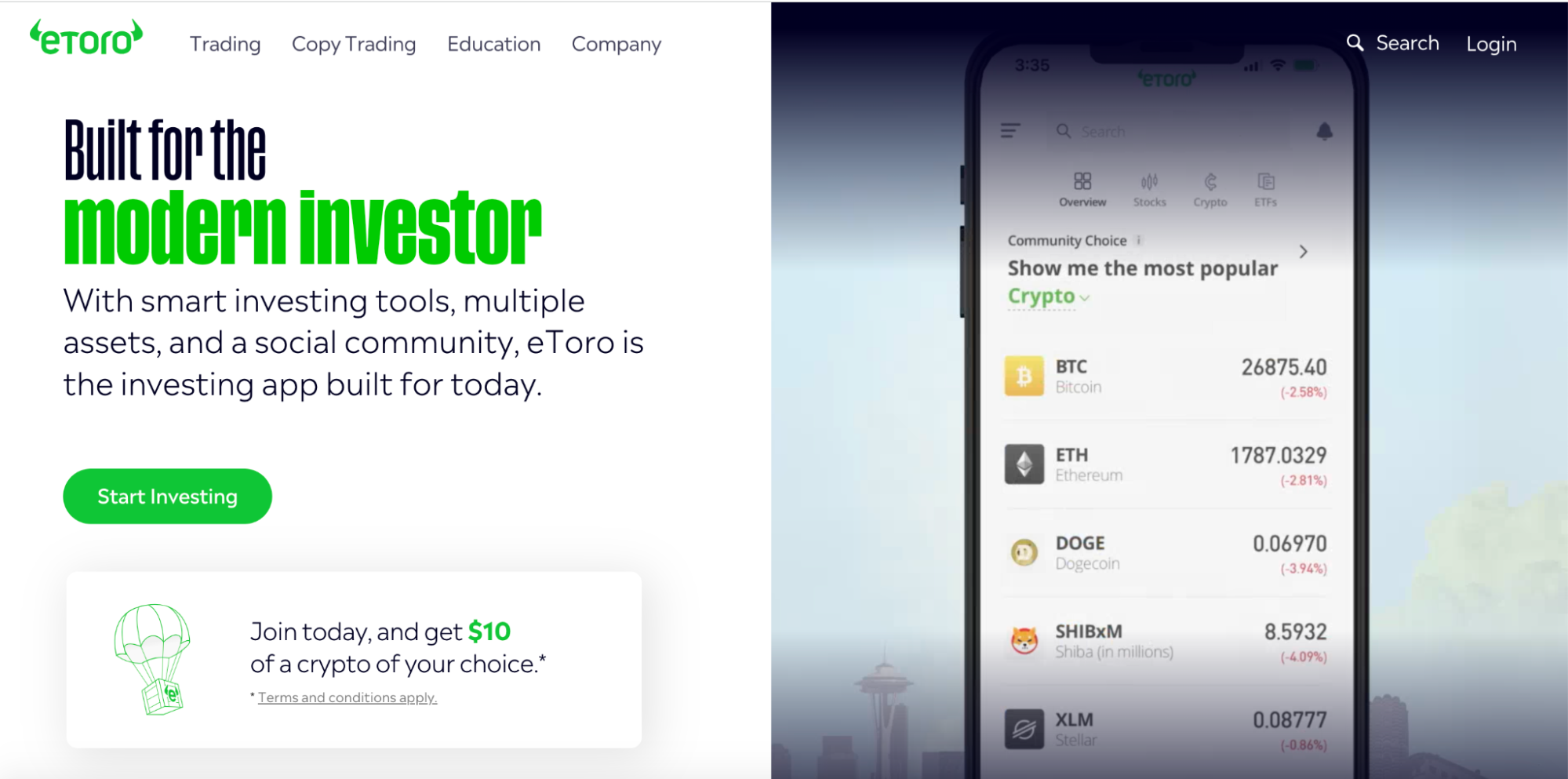
On the eToro homescreen, click the “Start Investing” icon. You will then be directed to the following Sign in screen.
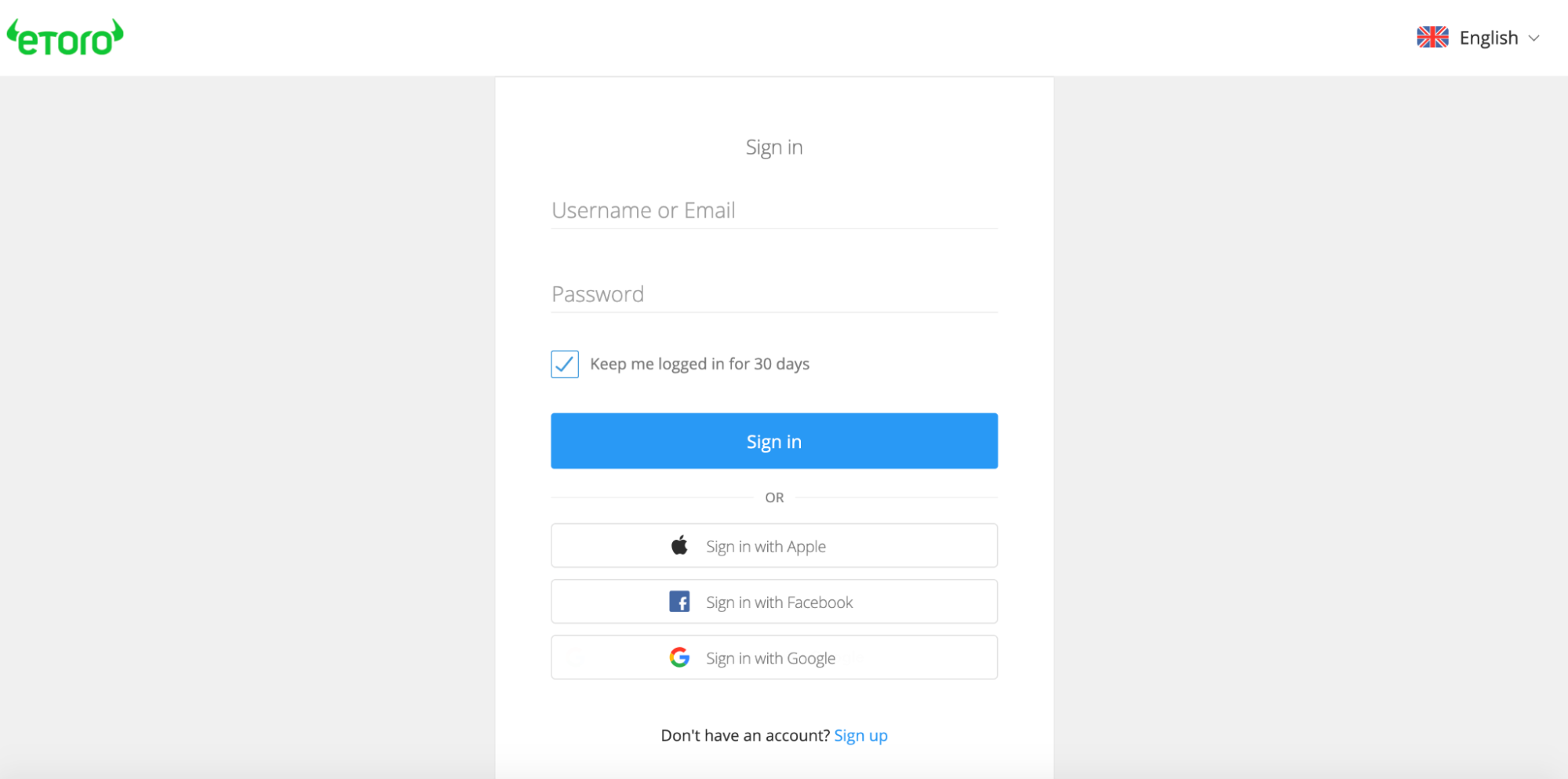
Go ahead and sign-in with your Username or Email and Password.
Don’t have an account? No worries. Go ahead and Sign up and enter the necessary information.
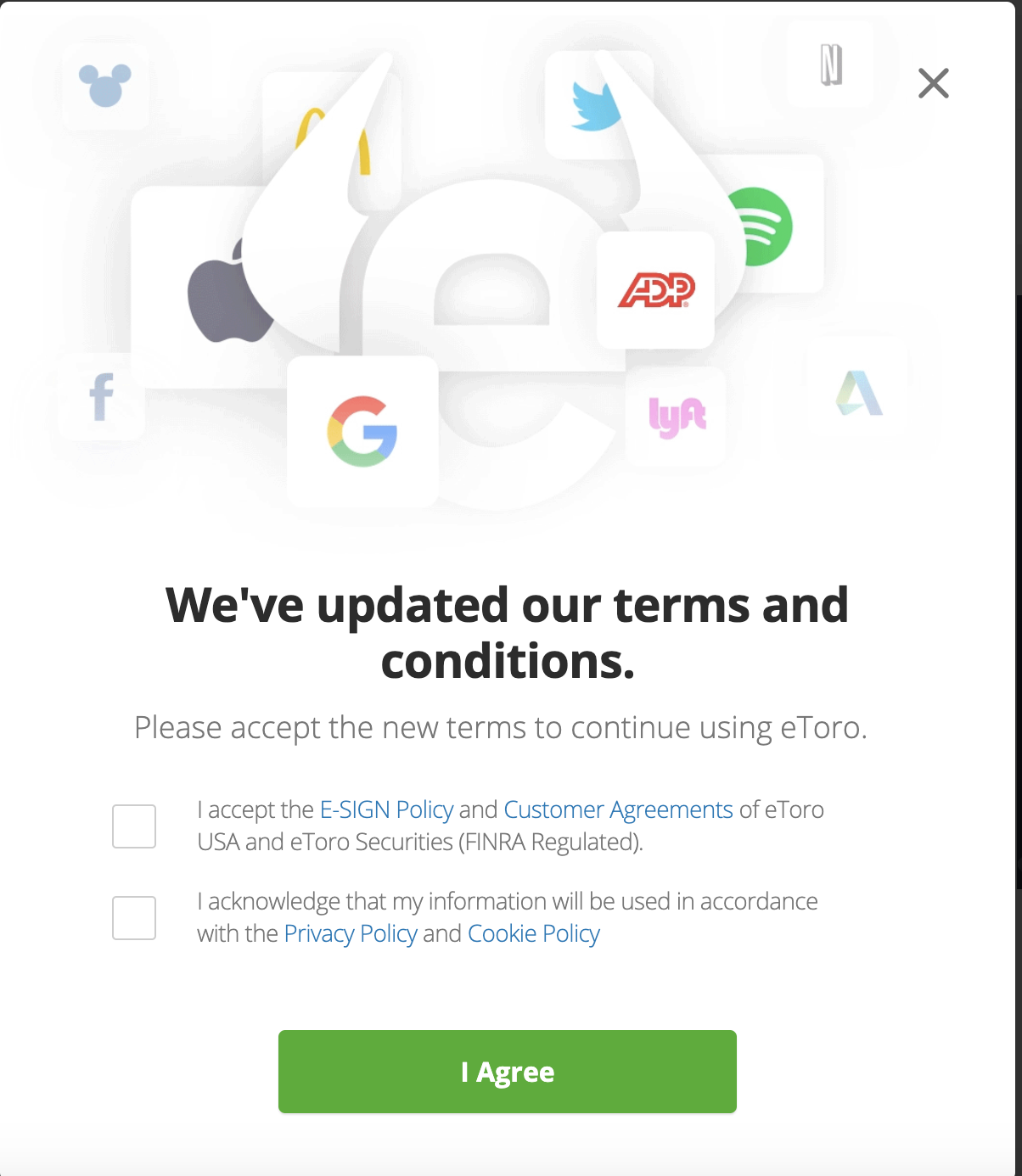
Once you are signed in, you may be provided with an e-Toro statement that they have updated certain terms and conditions of use. Go ahead and read the information provided by the E-SIGN Policy, the Customer Agreements, Privacy Policy and Cookie Policy. Then, check each box and click the “I Agree” icon.
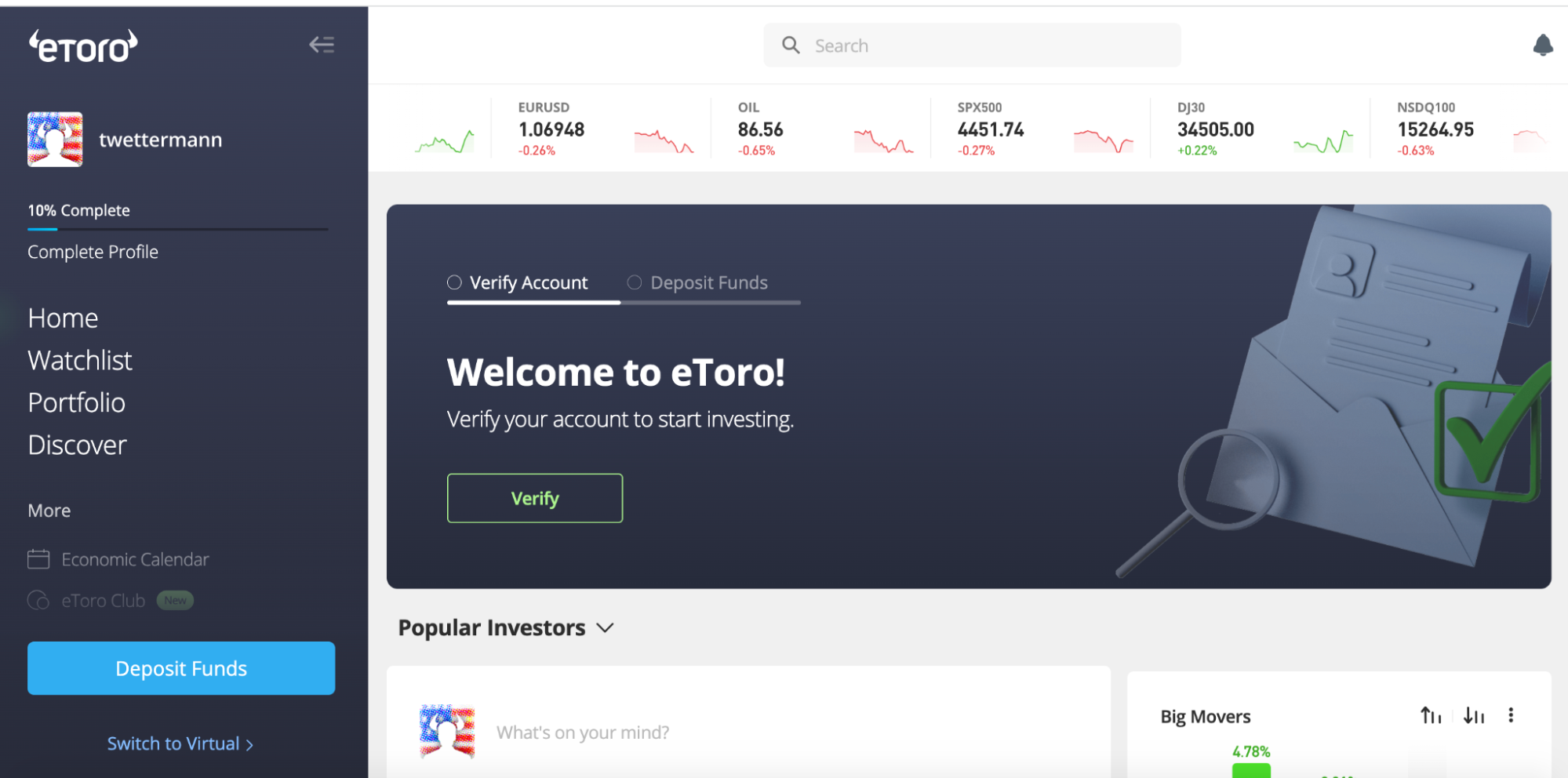
You will then be redirected to the eToro trading platform and you are now ready to trade. If you want to use the Virtual Portfolio or simulator features of e-Toro, click the “Switch to Virtual” link in the bottom left hand portion of the screen.
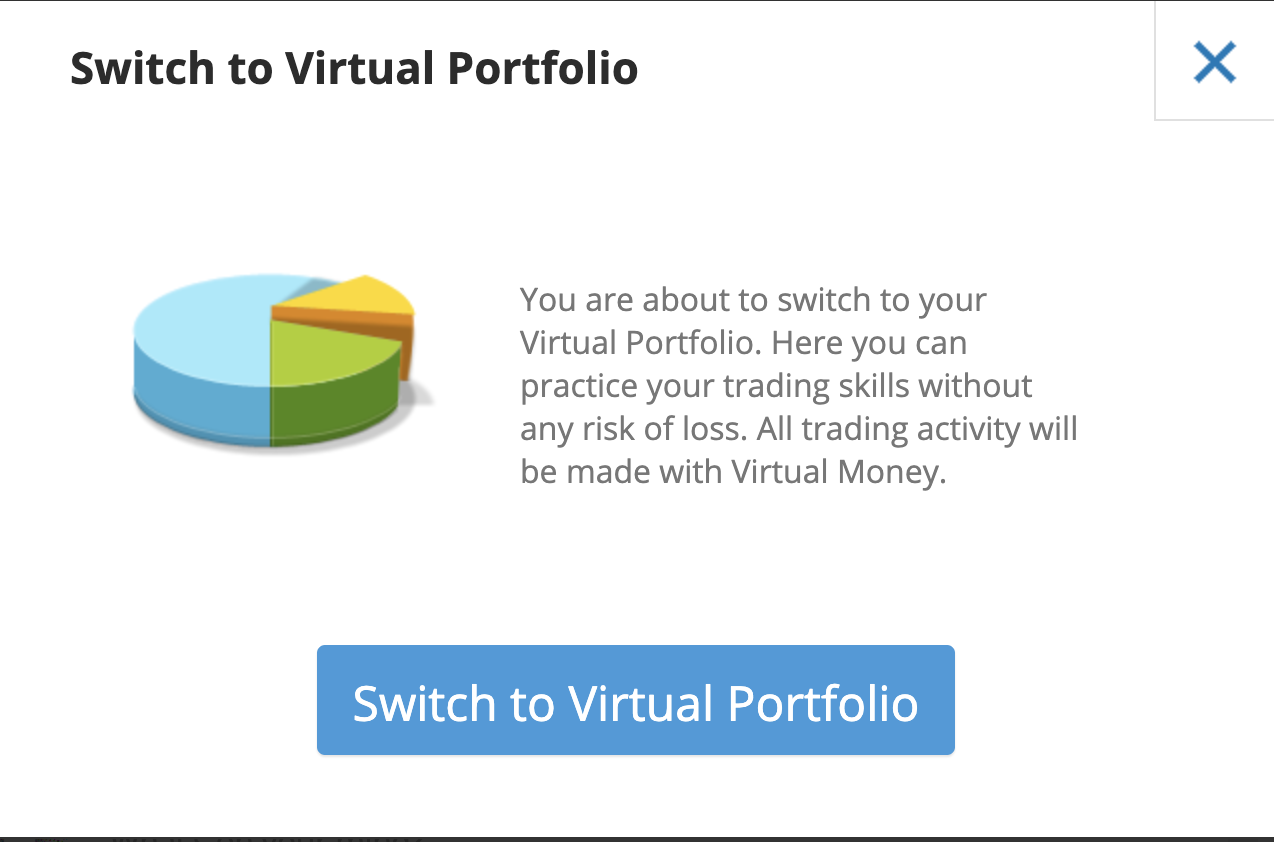
e-Toro will then ask you to confirm that you are about to switch to your Virtual Portfolio. To confirm, click the “Switch to Virtual Portfolio” icon.
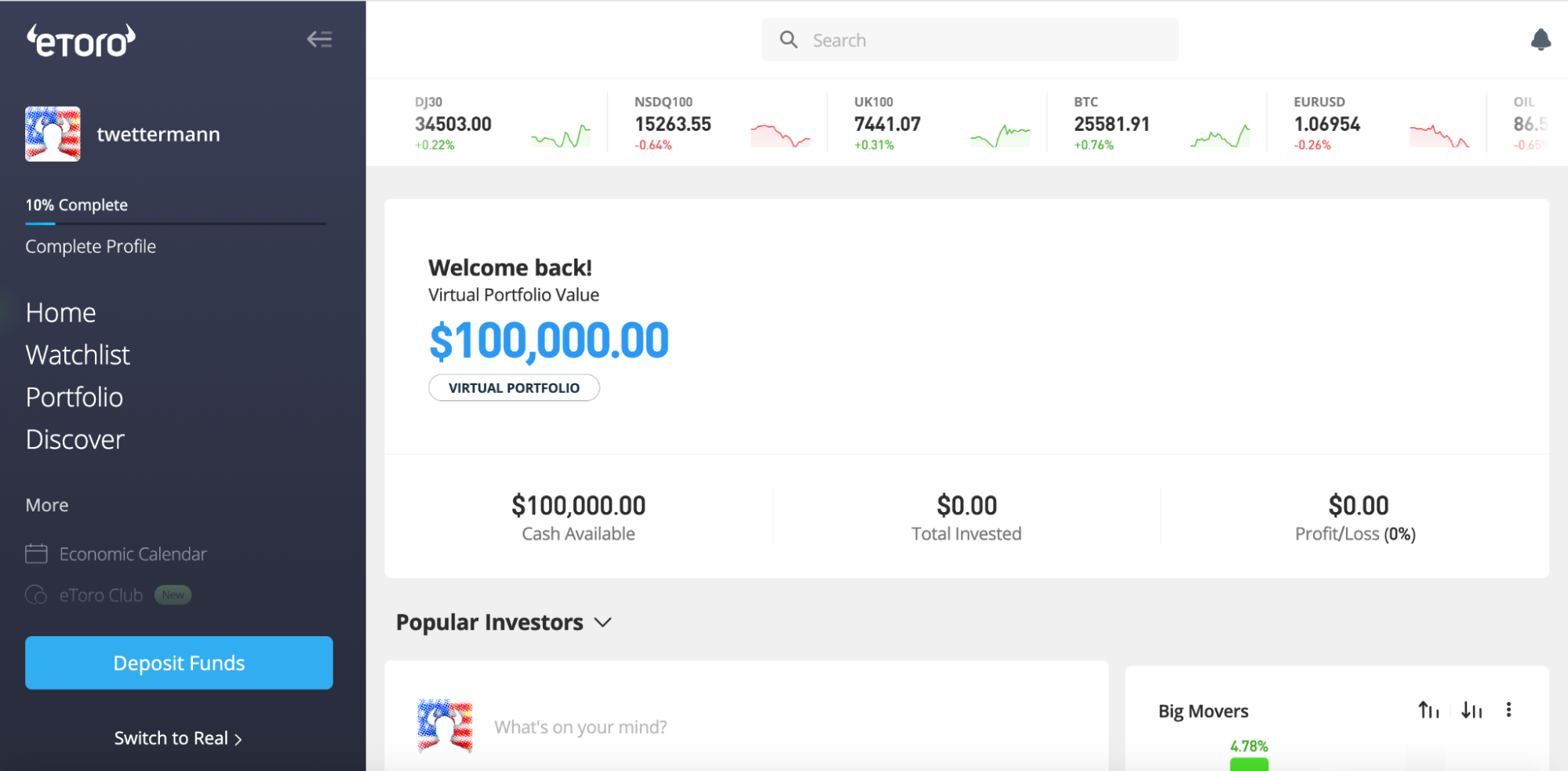
You will now have access to e-Toro’s main portfolio dashboard where you can select your watch list, identify a newsfeed, choose your target markets, and much more.
Simulators build skills, but discipline determines results

A day trading simulator is one of the most effective tools for developing practical trading skills without financial risk. It allows traders to test strategies, understand market behavior, and build confidence before entering live markets. However, the main drawback is the absence of emotional pressure, which plays a critical role in real trading.
In practice, simulators should be used as a structured training tool rather than a performance benchmark. The goal is to develop consistency, risk management habits, and decision-making discipline, which can later be applied under real market conditions.
Conclusion
Free day trading simulators are essential tools for anyone looking to develop practical trading skills without risking real capital. By providing a realistic trading environment and access to virtual funds, platforms like eToro allow users to test strategies, hone decision-making, and understand market behavior before venturing into live trading. While simulators can never fully replicate the emotional pressure of real-money trading, they are invaluable for building consistency and sound risk management habits. Ultimately, the most significant advantage of a simulator is its role as a safe training ground—a place where discipline is forged and mistakes become lessons, not losses.
FAQs
What types of assets can be traded using the best free day trading simulators in 2026?
How realistic are market conditions in free day trading simulators?
Do free day trading simulators offer educational resources for beginners?
Are there time limits on how long you can use a free day trading simulator demo account?
Editors' Top Picks and Insights

Global fintech in 2026: Three trends that matter

From Jesus Christ to aliens: Polymarket's most absurd prediction markets

Hunting crypto owners: Why criminals have gone offline

BitMEX is shutting down: Why Trump could not save the exchange

Do governments need crypto workers?

Brent nears $100: Why oil prices are rising
Related Articles
Team that worked on the article
Thomas Wettermann is an experienced writer and a contributor to the Traders Union website. Over the last 30 years, he has written posts, articles, tutorials, and publications on several different high tech, health, and financial technologies, including FinTech, Forex trading, cryptocurrencies, metaverses, blockchain, NFTs and more.
Dr. BJ Johnson is a PhD in English Language and an editor with over 15 years of experience. He earned his degree in English Language in the U.S and the UK.
Mirjan Hipolito is a journalist and news editor at Traders Union. She is an expert crypto writer with five years of experience in the financial markets.
Index in trading is the measure of the performance of a group of stocks, which can include the assets and securities in it.
Paper trading, also known as virtual trading or simulated trading, is a practice where individuals or traders simulate real-life trading scenarios without using real money. Instead of placing actual trades with real capital, participants use a simulated trading platform or keep track of their trades on paper or electronically to record their buying and selling decisions.
Forex leverage is a tool enabling traders to control larger positions with a relatively small amount of capital, amplifying potential profits and losses based on the chosen leverage ratio.
Risk management in Forex involves strategies and techniques used by traders to minimize potential losses while trading currencies, such as setting stop-loss orders and position sizing, to protect their capital from adverse market movements.
Cryptocurrency is a type of digital or virtual currency that relies on cryptography for security. Unlike traditional currencies issued by governments (fiat currencies), cryptocurrencies operate on decentralized networks, typically based on blockchain technology.

-
 Afghanistan
-
 Albania
-
 Algeria
-
 Angola
-
 Argentina
-
 Armenia
-
 Australia
-
 Austria
-
 Azerbaijan
-
 Bahamas
-
 Bahrain
-
 Bangladesh
-
 Belarus
-
 Belgium
-
 Bolivia
-
 Botswana
-
 Brazil
-
 Brunei
-
 Bulgaria
-
 Cambodia
-
 Cameroon
-
 Canada
-
 Chile
Chile
-
 China
China
-
 Colombia
-
 Congo
Congo
-
 Costa Rica
-
 Cote d'Ivoire
-
 Croatia
-
 Cuba
Cuba
-
 Cyprus
-
 Czechia
-
 DR Congo
-
 Denmark
-
 Dominican Republic
-
 Ecuador
-
 Egypt
Egypt
-
 El Salvador
-
 Estonia
-
 Eswatini
-
 Ethiopia
-
 Finland
-
 France
-
 Georgia
-
 Germany
-
 Ghana
Ghana
-
 Greece
-
 Haiti
Haiti
-
 Hong Kong
-
 Hungary
-
 India
India
-
 Indonesia
-
 Iran, Islamic republic
-
 Iraq
Iraq
-
 Ireland
-
 Israel
-
 Italy
Italy
-
 Jamaica
-
 Japan
Japan
-
 Jordan
-
 Kazakhstan
-
 Kenya
Kenya
-
 Korea
Korea
-
 Kuwait
-
 Kyrgyzstan
-
 Laos
Laos
-
 Latvia
-
 Lebanon
-
 Lesotho
-
 Libya
Libya
-
 Lithuania
-
 Luxembourg
-
 Madagascar
-
 Malaysia
-
 Malta
Malta
-
 Mauritius
-
 Mexico
-
 Moldova
-
 Mongolia
-
 Montenegro
-
 Morocco
-
 Mozambique
-
 Myanmar
-
 Namibia
-
 Nepal
Nepal
-
 Netherlands
-
 New Zealand
-
 Nigeria
-
 North Macedonia
-
 Norway
-
 Oman
Oman
-
 Pakistan
-
 Palestine
-
 Panama
-
 Papua New Guinea
-
 Paraguay
-
 Peru
Peru
-
 Philippines
-
 Poland
-
 Portugal
-
 Puerto Rico
-
 Qatar
Qatar
-
 Reunion
-
 Romania
-
 Rwanda
-
 Saudi Arabia
-
 Serbia
-
 Singapore
-
 Slovakia
-
 Slovenia
-
 Somalia
-
 South Africa
-
 Spain
Spain
-
 Sri Lanka
-
 Sweden
-
 Switzerland
-
 Syria
Syria
-
 Taiwan
-
 Tajikistan
-
 Tanzania
-
 Thailand
-
 Trinidad and Tobago
-
 Tunisia
-
 Turkey
-
 UAE
UAE
-
 Uganda
-
 Ukraine
-
 United Kingdom
-
United States
-
 Uruguay
-
 Uzbekistan
-
 Venezuela
-
 Vietnam
-
 Yemen
Yemen
-
 Zambia
-
 Zimbabwe
- Forex
- Crypto







