
Best Forex Traders In Algeria


Editorial Note: While we adhere to strict Editorial Integrity, this post may contain references to products from our partners. Here's an explanation for How We Make Money. None of the data and information on this webpage constitutes investment advice according to our Disclaimer.
Best traders in Algeria:
Mostafa Belkhayate – award-winning Moroccan-Algerian trader and creator of the Belkhayate Timing indicator, known across francophone trading circles.
Malek Bentchikou – Forex and stock market analyst recognized for mentoring aspiring Algerian traders through educational content.
Zakaria Benlahcene – prop Forex trader with verified performances at The Trading Pit, known for transparent reporting and consistent strategy.
Oussama Boukhalfa – active figure in Algeria’s trading and crypto scene, with a strong focus on price action and technical analysis.
Fayçal Lalioui – Forex trader and financial advisor operating at the intersection of trading, business consulting, and capital exposure.
Algeria rarely surfaces in global lists of elite Forex traders - but that doesn’t mean the talent isn’t there. Beneath the radar of international spotlights lies a shadowed but thriving ecosystem of high-performing individuals, navigating complex financial landscapes through prop firms, informal broker networks, and anonymous social media channels. While the market remains fragmented and regulation-limited, a handful of names and profiles emerge through verifiable records: funded account programs, cross-border transfers, and traceable trading results. This analysis uncovers the most productive players in Algeria’s Forex scene - offering a rare, data-backed look at who’s really winning in this opaque and fast-moving market.
Who are the richest Forex traders in Algeria?
Among the successful Forex traders in Algeria, several individuals stand out based on verified profiles in English-language trading sources. Their activities span prop trading platforms, commodity markets, investment operations, and fintech solutions in cross-border finance. Their track records reflect the growing presence of top Forex traders in a country with an emerging financial ecosystem.
Mostafa Belkhayate

Mostafa Belkhayate developed the Belkhayate Timing method for macro-level entry forecasting. Though Moroccan by origin, his analytical system is widely used in Algerian trading circles, especially within local mentorship programs. The methodology adapts to over-the-counter currency markets by detecting cyclical pricing in commodity-linked currency pairs. He has received international awards, including the World Online Trading Champion (1999) and a gold trophy in technical analysis (2009). Belkhayate is frequently referenced in Forex trading success stories from North Africa and remains influential among top Forex traders in the region.
Malek Bentchikou

Malek Bentchikou is an Algerian trader who began his trading career in February 2018 at the age of 23. Within two years, he reportedly reached a net worth approaching $1 million, primarily through success in the Forex markets. His early trading was grounded in deep fundamental analysis, focusing on macroeconomic trends, central bank policy, and global financial cycles. As his expertise grew, he shifted toward commodities trading, where he built a reputation for identifying high-probability setups while maintaining strict risk management.
Malek emphasizes long-term consistency over quick gains. His strategy is based on aligning trades with broader economic themes, such as interest rate differentials, inflation data, and monetary tightening or easing cycles. He avoids impulsive entries, instead favoring slow-building positions supported by multi-timeframe confirmations and strong fundamental narratives.
Beyond trading, he is active in the financial education space, publishing educational content on trading strategies and central banking. He has expressed a mission to help new traders navigate the complexities of global markets. According to interviews, his routine includes continuous reading on macroeconomics, and he views travel as part of his personal development and mental discipline.
Zakaria Benlahcene

Zakaria Benlahcene is an Algerian trader who became famous after passing the CFDs LITE Challenge from the prop firm The Trading Pit in 2023. He trades exclusively on technical signals, using a supply and demand model, indicators with values 7, 3, 5 and moving averages for 50, 100 and 200 periods. In his public trades (in particular, on Dow Jones on June 15, 2023), he demonstrates a precise, step-by-step logic of entry, exit and position management. He works strictly on one instrument, avoids emotional decisions after losses and always adheres to strict risk management. His approach is based on discipline: one trade per day, a fixed position size, refusal of a “winning back” strategy. In his own words, he completely ignores the fundamental news background - all analysis is based on pattern recognition and scenario development.
Oussama Boukhalfa

Oussama Boukhalfa is an Algerian trader who gained recognition after passing multiple evaluations with The Funded Trader (TFT). He began his trading journey during the COVID-19 pandemic, self-taught and without formal financial education. According to his interviews, he failed more than 50 prop firm challenges before securing his first funded payout. His approach is grounded in strict discipline and psychological control. He avoids impulsive trading, manages emotional reactions after losses, and prepares thoroughly before every position.
Oussama applies a top-down analysis framework and focuses on high risk-to-reward setups. He uses volume-based indicators, including a custom one referred to as the “Golden line.” His trading is structured, with an emphasis on risk management over frequency. After a $9,000 payout from TFT, he publicly shared his ambition to launch a proprietary trading firm in Algeria — a challenging plan due to the country's restrictive banking system and lack of crypto infrastructure. His methods and insights are featured in interviews with prop firm review platforms and through his personal YouTube channel.
Fayçal Lalioui
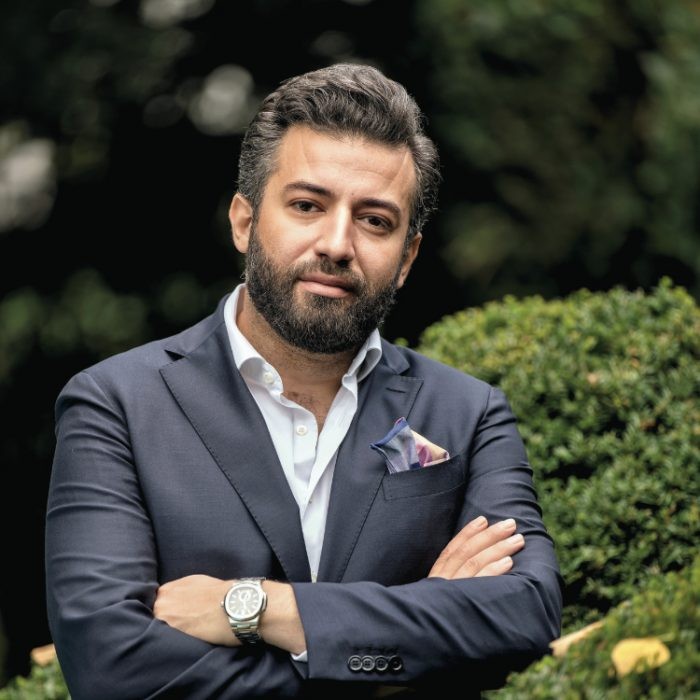
Fayçal Lalioui is an Algerian entrepreneur and institutional-grade commodity trader who operates at the intersection of private trading and global currency logistics. He is the founder of Capital Yatirim, a firm that facilitates international physical gold transfers through the G.I.F.T. Transfer platform. While not a speculative Forex trader in the traditional sense, Lalioui actively uses currency hedging mechanisms to protect against exchange rate volatility during cross-border arbitrage in gold logistics.
He does not engage in retail Forex trading (e.g., EUR/USD, GBP/JPY pairs) nor uses platforms like MetaTrader. Instead, his currency involvement is embedded within high-volume interbank transfers and derivative-based hedging tied to precious metal shipments. His operations span sovereign-backed refinery projects, including partnerships with the government of the Central African Republic.
Due to the sheer scale of his arbitrage activities and the critical role of multi-currency management in his business model, Lalioui is often listed among Algeria’s wealthiest individuals involved in currency infrastructure. His trading strategy revolves around low-exposure arbitrage, leveraging jurisdictional pricing inefficiencies in gold markets while mitigating risk through structured FX overlays.
Fayçal Lalioui stands not as a speculative trader but as an institutional currency-commodity operator, whose methods reflect a macro-financial approach focused on real-asset-backed transactions with embedded Forex logic.
| Trader | Strategy | Main Assets | Risk Management | Legal Exposure in Algeria |
|---|---|---|---|---|
| Mostafa Belkhayate | Belkhayate Timing, macro-level forecasting | Commodity-linked currencies | Cyclical entry detection, long-term holds | Medium – taught widely, but not regulated |
| Malek Bentchikou | Fundamental + macro themes, later commodities trading | Forex and Commodities | Strict risk discipline, macro-based entries | High – operates despite local restrictions |
| Zakaria Benlahcene | Supply/Demand, MAs (50,100,200), indicators (7,3,5) | Indices (e.g. Dow Jones) | 1 trade/day, no revenge trades, fixed sizing | High – trades via international prop firms |
| Oussama Boukhalfa | Top-down analysis, volume tools, “Golden line” | Forex and Crypto | Psychological control, R/R > 1:2, avoids overtrading | High – offshore usage + VPN required |
| Fayçal Lalioui | Institutional FX hedging in gold arbitrage | Gold, multi-currency flows | Low-exposure arbitrage, FX overlays on transactions | Very High – operates in unregulated global FX logistics |
How to become a successful trader in Algeria

Start with financial education and choose a trading style
Understand how Forex, commodities, indices, and crypto markets work. Follow verified Algerian traders such as Zakaria Benlahcene or Malek Bentchikou, who share tips and strategies on social media and Telegram. Selecting the right trading style is a personal decision that depends on your time, personality, and risk tolerance. If you prefer high-energy environments and quick results, day trading might be the right fit — it involves opening and closing positions within the same day, often capitalizing on short-term volatility.
For those who favor more time to analyze and act, swing trading offers a mid-term approach by identifying patterns and trends that unfold over several days or weeks. If you're technically savvy and can react in real time using low-latency tools, scalping — which consists of executing dozens of small trades for incremental gains — could be ideal.
Alternatively, if you are patient and focus on long-term macroeconomic fundamentals, position trading allows you to hold trades for weeks or months, aiming to profit from larger market movements. Start by demo trading to test your comfort level.
Pick the right platform
Due to restrictions, Algerian traders typically use international brokers that support global access and flexible deposit methods. When choosing a platform, prioritize those that offer low spreads, fast execution, and seamless withdrawals — including support for cryptocurrencies. Also, ensure the platform integrates with popular trading terminals and provides transparent conditions such as real-time pricing, no dealing desk interference, and clear fee structures. The right trading environment can significantly impact your strategy’s effectiveness and long-term success.
| IUX | RoboForex | Pepperstone | Exness | GTCFX | Valetax | |
|---|---|---|---|---|---|---|
|
TU overall score |
9.4 | 9.15 | 9.3 | 9.1 | 9.2 | 9.2 |
|
Min. deposit, $ |
50 | 10 | No | 10 | 30 | 1 |
|
Max. leverage |
1:3000 | 1:2000 | 1:500 | 1:2000 | 1:1000 | 1:2000 |
|
Max. Regulation |
Tier-1 | Tier-3 | Tier-1 | Tier-1 | Tier-3 | Tier-3 |
|
ECN Spread EUR/USD |
0.10 | 0.2 | 0.1 | 0.1 | 0.2 | 0.1 |
|
ECN Commission |
3.00 | 2 | 3 | 3 | 3.5 | 2.0 |
|
Currency pairs |
34 | 28 | 90 | 100 | 150 | 60 |
|
Open an account |
Go to broker Your capital is at risk. |
Go to broker Your capital is at risk. |
Go to broker Your capital is at risk.
|
Go to broker Your capital is at risk.
|
Go to broker Your capital is at risk. |
Go to broker Your capital is at risk.
|
Use tools & bots to scale faster
Manual trading alone can limit your growth, especially in fast-moving markets. Leveraging the right tools allows you to automate, analyze, and execute with greater precision — freeing up time and reducing emotional bias. Whether you're a beginner refining your edge or an advanced trader optimizing execution, these platforms can dramatically enhance your performance:
MetaTrader 4/5 – the gold standard for charting and execution.
TradingView – ideal for technical analysis and community ideas.
Crypto/Forex bots – platforms li ke CryptoHopper, Coinrule, or Myfxbook AutoTrade can help automate strategies (especially useful in scalping).
Build the right mindset
Successful trading isn’t just about strategies or indicators — it’s about how you think. The mental game often separates consistent traders from those who burn out. Before placing real capital at risk, develop habits that reinforce control, patience, and resilience. Here are the core principles to help shape a winning trading mindset:
Discipline > Emotion: follow your strategy, avoid revenge trading.
Risk management: use stop-losses and never risk more than 1–2% per trade.
Journaling: track trades using Excel or tools like Edgewonk to refine your edge.
Join the community
Telegram groups: many Algerian traders share signals, tips, and setups.
Facebook groups & Discord: join international communities to stay updated.
Follow regional influencers: traders like Oussama Boukhalfa provide bilingual content that bridges local and global knowledge.
Forex trading in Algeria: legal risks and taxation
Legal framework and regulatory constraints
While not explicitly banned, Forex trading is not officially recognized or protected under Algerian financial law. Traders engaging with offshore Forex platforms do so at their own risk, often in violation of currency control regulations.
Currency controls and trading restrictions:
Algerian residents are legally allowed to convert only up to 5,000 DZD per year (~$37) into foreign currency, and this must be done through authorized financial institutions.
Use of foreign currencies in domestic financial transactions is strictly prohibited.
Sending funds to international brokers or trading platforms via wire transfers or informal financial channels violates foreign exchange laws, exposing individuals to potential criminal charges, including heavy fines and prison sentences.
The Bank of Algeria, which enforces monetary policy and capital controls, does not regulate or authorize online Forex trading. This means that traders using international brokers have no legal protection under Algerian law.
Although most of the featured traders operate within a gray market, it's important to emphasize Algeria's strategic geographic position between Europe and Sub-Saharan Africa. This location makes it a natural hub for traders specializing in commodity-linked currencies — particularly CAD, AUD, and NOK — which are heavily influenced by energy markets.
According to the World Bank, oil and gas account for over 93% of Algeria’s total exports, making local trading behavior especially sensitive to fluctuations in global commodity prices.
Taxation of Forex trading profits
Algeria does not offer a clear tax category specifically for Forex trading. However, in the event of an audit or income declaration, trading profits may fall under one of the following categories:
Bénéfices Non Commerciaux (BNC) – non-commercial profits, typically applied to professional income that is irregular but recurring.
Bénéfices Industriels et Commerciaux (BIC) – industrial or commercial profits, if the trading is deemed frequent or systematic.
Depending on classification, traders may face personal income tax rates ranging from 19% to 26%, though enforcement remains rare due to the unofficial nature of most activity. Still, undeclared earnings may trigger retrospective audits or financial penalties under Algeria’s general income tax laws.
What to check in a broker before your first trade if you're trading from Algeria

For a trader based in Algeria, the primary objective is uninterrupted access to the account and funds. Before registering with a platform, it’s necessary to test both the verification and withdrawal procedures. Start with a minimal deposit and record the processing time — from submitting the request to receiving the funds. Confirm which document formats the system accepts, particularly for address and source-of-funds verification. Some platforms require dual identification, and not all Algerian-issued documents are automatically recognized. This can result in frozen access during compliance checks.
Platform functionality should be tested in a specific market scenario. To evaluate order execution, place a trade during a scheduled news release. This helps capture response time, any requotes, and the accuracy of execution relative to the requested price. Use the platform’s internal reporting tools to log average execution latency. This type of test gives a concrete view of how the system behaves during rapid price movement. Standard checks include testing market and limit orders, cancellation flow, and manual closure under live volatility.
Customer support performance needs a separate review. Submit queries in French or Arabic at different times of day, including weekends or off-hours. A team that responds within minutes and maintains context across follow-ups reduces operational exposure. If documents are rejected or a withdrawal is paused, the availability of a functioning support channel determines how quickly access is restored. Testing this in advance eliminates gaps that may disrupt control over the trading account and establishes a more stable operational base.
Conclusion
Algeria’s Forex trading landscape is driven by a new wave of disciplined and data-focused traders, like Malek Bentchikou and Zakaria Benlahcene, who have achieved international recognition despite operating in a challenging regulatory environment. The path to lasting success in Algeria requires not only mastering advanced strategies and risk management but also developing a resilient mindset to navigate legal gray zones and financial restrictions. By leveraging modern platforms and community support, traders are steadily building a reputation for professionalism within and beyond the region. Ultimately, the Algerian Forex scene proves that expertise and discipline can elevate individuals to global ranks, even when faced with significant barriers at home.
FAQs
What are common challenges faced by aspiring Forex traders in Algeria?
How do market conditions unique to Algeria influence trading strategies?
Which trading tools and platforms are preferred by successful Forex traders in Algeria?
What steps can Algerian traders take to improve their chances of long-term success?
Editors' Top Picks and Insights






Related Articles
Team that worked on the article
Maxim Nechiporenko has been a contributor to Traders Union since 2023. He started his professional career in the media in 2006.
Dan Blystone began his trading career in 1998 as an arbitrage clerk on the floor of the Chicago Mercantile Exchange (CME). He later traded bond and Eurex futures at proprietary firms such as Altea Trading, gaining valuable experience in high-frequency trading and risk management.
Chinmay Soni is a financial analyst with more than 5 years of experience in working with stocks, Forex, derivatives, and other assets. As a founder of a boutique research firm and an active researcher, he covers various industries and fields, providing insights backed by statistical data.

-
 Afghanistan
-
 Albania
-
 Algeria
-
 Angola
-
 Argentina
-
 Armenia
-
 Australia
-
 Austria
-
 Azerbaijan
-
 Bahamas
-
 Bahrain
-
 Bangladesh
-
 Belarus
-
 Belgium
-
 Bolivia
-
 Botswana
-
 Brazil
-
 Brunei
-
 Bulgaria
-
 Cambodia
-
 Cameroon
-
 Canada
-
 Chile
Chile
-
 China
China
-
 Colombia
-
 Congo
Congo
-
 Costa Rica
-
 Cote d'Ivoire
-
 Croatia
-
 Cuba
Cuba
-
 Cyprus
-
 Czechia
-
 DR Congo
-
 Denmark
-
 Dominican Republic
-
 Ecuador
-
 Egypt
Egypt
-
 El Salvador
-
 Estonia
-
 Eswatini
-
 Ethiopia
-
 Finland
-
 France
-
 Georgia
-
 Germany
-
 Ghana
Ghana
-
 Greece
-
 Haiti
Haiti
-
 Hong Kong
-
 Hungary
-
 India
India
-
 Indonesia
-
 Iran, Islamic republic
-
 Iraq
Iraq
-
 Ireland
-
 Israel
-
 Italy
Italy
-
 Jamaica
-
 Japan
Japan
-
 Jordan
-
 Kazakhstan
-
 Kenya
Kenya
-
 Korea
Korea
-
 Kuwait
-
 Kyrgyzstan
-
 Laos
Laos
-
 Latvia
-
 Lebanon
-
 Lesotho
-
 Libya
Libya
-
 Lithuania
-
 Luxembourg
-
 Madagascar
-
 Malaysia
-
 Malta
Malta
-
 Mauritius
-
 Mexico
-
 Moldova
-
 Mongolia
-
 Montenegro
-
 Morocco
-
 Mozambique
-
 Myanmar
-
 Namibia
-
 Nepal
Nepal
-
 Netherlands
-
 New Zealand
-
 Nigeria
-
 North Macedonia
-
 Norway
-
 Oman
Oman
-
 Pakistan
-
 Palestine
-
 Panama
-
 Papua New Guinea
-
 Paraguay
-
 Peru
Peru
-
 Philippines
-
 Poland
-
 Portugal
-
 Puerto Rico
-
 Qatar
Qatar
-
 Reunion
-
 Romania
-
 Rwanda
-
 Saudi Arabia
-
 Serbia
-
 Singapore
-
 Slovakia
-
 Slovenia
-
 Somalia
-
 South Africa
-
 Spain
Spain
-
 Sri Lanka
-
 Sweden
-
 Switzerland
-
 Syria
Syria
-
 Taiwan
-
 Tajikistan
-
 Tanzania
-
 Thailand
-
 Trinidad and Tobago
-
 Tunisia
-
 Turkey
-
 UAE
UAE
-
 Uganda
-
 Ukraine
-
 United Kingdom
-
United States
-
 Uruguay
-
 Uzbekistan
-
 Venezuela
-
 Vietnam
-
 Yemen
Yemen
-
 Zambia
-
 Zimbabwe
- Forex
- Crypto












