
Meme Stocks Explained. How Retail Investors Are Disrupting Wall Street


Editorial Note: While we adhere to strict Editorial Integrity, this post may contain references to products from our partners. Here's an explanation for How We Make Money. None of the data and information on this webpage constitutes investment advice according to our Disclaimer.
Meme stocks are shares that skyrocket in value due to online hype rather than business performance. Driven by retail investors on platforms like Reddit’s r/WallStreetBets, these stocks often experience short squeezes and gamma squeezes, forcing institutional investors to cover their losses. GameStop (GME) and AMC Entertainment (AMC) are prime examples, soaring when traders challenged hedge funds betting against them.
Meme stocks aren’t just a trend. They’re a wake-up call to Wall Street that small investors are here to play — and they’re playing by their own rules. These stocks don’t move based on earnings reports or financial forecasts. They move because thousands of people online decide they should. What started as a joke quickly turned into a fight between everyday traders and big hedge funds, proving that momentum and belief can be just as powerful as traditional investing strategies. If you thought the stock market was just about numbers, meme stocks show that it’s just as much about psychology and timing.
Risk warning: All investments carry risk, including potential capital loss. Economic fluctuations and market changes affect returns, and 40-50% of investors underperform benchmarks. Diversification helps but does not eliminate risks. Invest wisely and consult professional financial advisors.
Understanding meme stocks
Meme stocks are shares of companies that surge in price because of online buzz rather than solid business performance. These stocks take off when retail investors, often gathering on platforms like Reddit and Twitter, pile in and push prices up. Sometimes, this even forces big Wall Street players to rethink their bets against these companies.
Unlike well-established stocks, which rise and fall based on company profits and long-term growth, meme stocks are all about momentum and hype. Many come from struggling companies that people had written off — until the internet rallied behind them. Take GameStop (GME) and AMC Entertainment (AMC) in 2021. These stocks skyrocketed when everyday traders worked together to challenge hedge funds that had bet against them.
Meme stocks can deliver huge gains in a short time, but they can also crash just as fast. If you buy in at the wrong moment, you could be left with big losses. They’ve shown how much power individual investors now have, but they also remind us that investing in hype can be a wild ride.
Origination of meme stocks
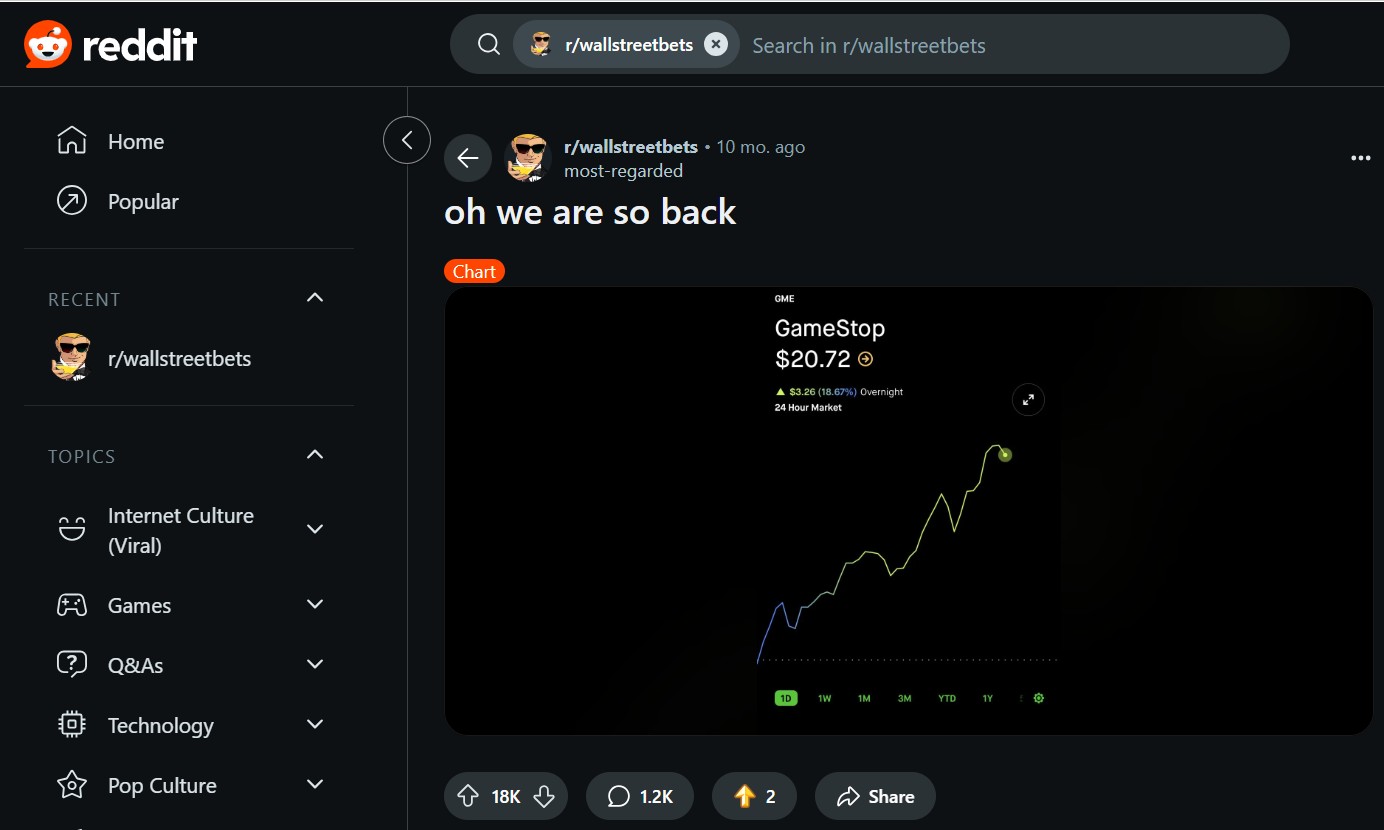
It all started in early 2021, when everyday traders, frustrated by Wall Street’s control over the market, decided to turn the tables. On Reddit’s r/WallStreetBets, users encouraged each other to buy stocks that hedge funds were betting against. This buying frenzy sent some stock prices soaring, proving that individual traders, when united, could shake up the market.
Role of social media platforms
Social media has been the driving force behind meme stocks. Platforms like Reddit, X, TikTok, and YouTube have become places where traders swap ideas, hype up stocks, and sometimes create wild market moves.
One of the biggest players in this space is Reddit’s r/WallStreetBets (WSB). This online forum is known for its bold, all-or-nothing investment strategies. When WSB members spot a stock they believe is undervalued or heavily shorted, they spread the word and encourage others to jump in. When enough people buy, the price skyrockets, sometimes forcing hedge funds to scramble and buy back shares at higher prices — driving it up even more.
Beyond Reddit, X (formerly Twitter) helps spread viral stock picks, and TikTok influencers break down trading strategies for young investors. This instant sharing of information makes the market more unpredictable than ever, with stock prices sometimes swinging wildly in just a few hours.

Notable examples of meme stocks
GameStop (GME). In January 2021, GameStop became the poster child of the meme stock movement. Hedge funds had placed huge bets against it, expecting the price to drop. But retail investors on Reddit saw an opportunity, buying shares in massive numbers. The stock price shot up from under $20 to over $400 in days, catching Wall Street completely off guard.

AMC Entertainment (AMC). AMC was another big winner in 2021. The movie theater chain was struggling, and hedge funds were betting it wouldn’t recover. But retail traders rallied behind AMC, driving its stock price up by more than 3,000%. Even AMC’s CEO joined in on the hype, engaging with retail investors and keeping the momentum going.

Bed Bath & Beyond (BBBY). Another struggling company that saw its stock price skyrocket thanks to meme stock hype. However, unlike GameStop and AMC, it didn’t hold up — after several ups and downs, the company eventually filed for bankruptcy.

Rise of retail investors
For a long time, stock trading was mostly dominated by big financial institutions like hedge funds and investment banks. Everyday investors — known as retail traders — had little influence over the market. But in recent years, that’s changed in a big way. Discover how retail and institutional investors differ in strategy, impact.
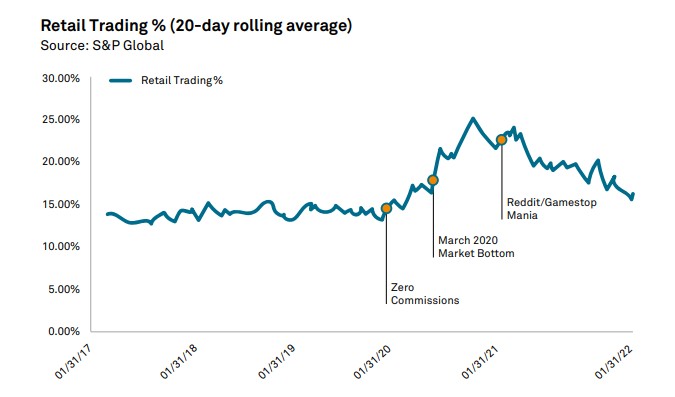
Retail traders now make up a huge share of the market, sometimes responsible for 20-25% of daily stock trades. Their ability to move stocks, set trends, and challenge Wall Street’s control has made them a force that can’t be ignored.
Factors contributing to increased retail participation
The pandemic investing boom. When lockdowns hit, many people had extra savings and more time to learn about the stock market. This led to a flood of new retail investors.
Purpose-driven movement. Many retail traders invest not just for profit, but to push back against Wall Street’s dominance. The GameStop rally wasn’t just about making money — it was also about proving that small investors could outsmart big hedge funds.
Buying fractional shares. Many apps let people buy small portions of a stock instead of full shares. This means even high-priced companies like Tesla or Amazon are now within reach for regular investors.
Instant information and social trading. People no longer have to rely on financial news networks or investment firms to learn about the stock market. Social media and online forums provide real-time updates, letting traders make quick decisions.
More people are learning about investing. Websites like YouTube and TikTok are full of easy-to-understand finance content. Unlike past generations, today’s traders can quickly learn the basics of investing without needing expensive courses or financial advisors.
Free stock trading apps. Many platforms have removed the barrier of high trading fees and made stock investing simple and accessible.
| Demo | Account min. | Interest rate | Basic stock/ETF fee | Min. stock/ETF fee | Android | iOS | TU overall score | Open an account | |
|---|---|---|---|---|---|---|---|---|---|
| Yes | 50 | 3,75 | No | No | Yes | Yes | 9.3 | Go to broker Your capital is at risk. |
|
| Yes | 2,500 | No | $0.0025/$0,0009 | $0 | Yes | Yes | 9.2 | Go to broker |
|
| Yes | 500 | No | $0.006 | Not specified | Yes | Yes | 7.7 | Go to broker 81% of retail CFD accounts lose money. |
|
| Yes | 500 | 9% | $0,005 | $0.99 | Yes | Yes | 7.51 | Go to broker Your capital is at risk. |
|
| Yes | No | 8.95% | $0 | $0 | Yes | Yes | 7.5 | Study review |
Why trust us
15+ years of independent market analysis
140+ evaluation criteria, reviewed by 50+ experts
Data-driven reviews of 200+ platforms, updated regularly
20+ industry awards & a wide network of global media partners
Learn more about our methodology and editorial policies.


Influence of the COVID-19 pandemic
The COVID-19 pandemic changed the way people think about money, and it led to a wave of new investors. Several things contributed to this trend.
Extra savings from lockdowns. With restaurants, travel, and entertainment shut down, many people had more money than usual. Some of it went straight into the stock market.
Stimulus checks. Government relief payments gave people extra cash, and some used it to try out stock trading for the first time.
More free time to learn and trade. Working from home meant more flexibility. Instead of commuting, some people spend their mornings reading about stocks and trading during the day.
Stock trading as entertainment. With sports events canceled and casinos closed, some people saw the stock market as a fun alternative. Online communities like r/WallStreetBets turned trading into something exciting, filled with memes and viral moments.
Case study of “r/WallStreetBets”

One of the most well-known online trading communities is Reddit’s r/WallStreetBets (WSB). This forum became famous for its bold, high-risk investing style and its role in the GameStop (GME) short squeeze of 2021.
How WSB changed trading. Unlike traditional investors who focus on company earnings and long-term growth, WSB traders go for risky, fast-moving stocks. They use humor, memes, and collective action to drive up stock prices in ways Wall Street never expected.
GameStop and AMC movements. The WSB group noticed that hedge funds were betting against struggling companies like GameStop and AMC. By working together, they bought up shares and drove up prices, forcing big investors to take massive losses. This was one of the most dramatic stock market events in recent history.
The cultural impact. WSB didn’t just change trading — it created a new online culture. Terms like “diamond hands” (refusing to sell a stock despite volatility) and “tendies” (profits) became part of everyday conversations about investing. This movement also sparked debates about fairness in the stock market and whether ordinary investors could take on Wall Street.
r/WallStreetBets proved that online communities have the power to shake up the stock market. What started as a small Reddit forum grew into a movement that challenged big financial institutions and changed the way people think about investing.
How meme stocks work
Meme stocks don’t behave like normal investments. Instead of going up because a company is doing well, they rise because of internet hype and massive buying from retail traders. Their wild price swings often happen due to short squeezes, gamma squeezes, and investor psychology.
Short selling and short squeezes
Some investors bet against certain stocks, expecting them to lose value. This is called short selling. Here’s how it works.
A trader borrows shares and sells them, hoping the price will drop.
If the price falls, they buy back the shares at a lower price and return them, keeping the difference as profit.
If the price rises instead, they must buy back shares at a higher price, taking a loss.
Meme stocks often become short squeeze targets because they are from companies that seem to be struggling. But if a stock that was expected to fall suddenly jumps, short sellers are forced to buy shares to cut their losses. This extra buying pushes the price even higher, leading to massive gains.

The biggest example is GameStop (GME) in 2021. Hedge funds had placed huge bets against the stock, assuming it would drop. But retail traders on r/WallStreetBets noticed this and bought up shares. This caused a short squeeze that sent GameStop’s price from under $20 to over $400 in a matter of weeks.
Gamma squeezes
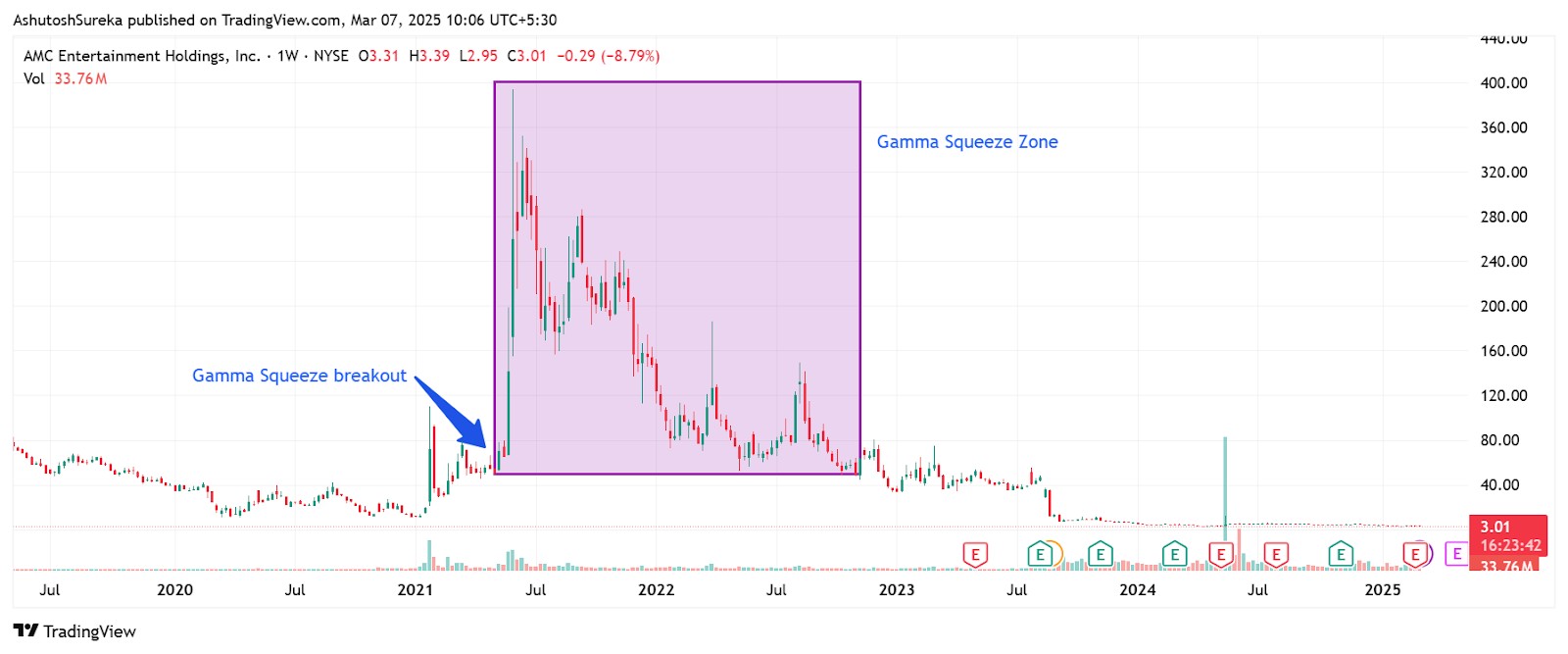
Another reason meme stocks can spike is a gamma squeeze, which happens when investors buy large amounts of options contracts instead of regular shares.
Traders buy call options, which let them buy a stock at a set price in the future.
The firms that sell these options buy shares of the stock to protect themselves in case the price goes up.
As the stock rises, they must keep buying more shares, creating even more upward momentum.
Both short squeezes and gamma squeezes played a role in GameStop’s massive price surge, forcing hedge funds and trading firms to scramble for shares.
The psychology behind meme stocks
Meme stocks don’t just move because of numbers. They also rise and fall based on emotions, trends, and social behavior.
Herd mentality. When people see a stock skyrocketing, they don’t want to miss out. If everyone else is buying, they feel like they should too, which pushes prices up even more.
FOMO (Fear of Missing Out). Many traders buy at the peak, afraid they’ll miss their chance. But this can backfire when the stock crashes and panic selling begins.

The “David vs. Goliath” mentality. Many retail traders see meme stocks as a way to fight back against hedge funds and big Wall Street firms. This emotional connection leads some investors to hold onto stocks longer than usual, even when prices are extremely volatile.
The true skill is selling at the right time

Most beginners assume that making money in meme stocks is all about jumping in early and hoping for the best. That’s a mistake. The key isn’t just buying — it’s recognizing when the hype is fading. These stocks tend to follow a cycle. First, excitement builds, and traders rush in. Prices shoot up fast. But then, momentum slows, and the early investors cash out, sending the stock crashing.
If you don’t want to be the one left holding a falling stock, pay attention to the warning signs. Are fewer people talking about it online? Are influencers moving on to something else? Are options trades slowing down? These are clues that the excitement is wearing off.
Another common mistake is only looking at the stock price and ignoring what’s happening behind the scenes. Some of the biggest price spikes don’t come from people just buying shares. They come from market mechanics, like forced buying from big institutions that sold options to retail traders. If you learn how to track option activity and institutional moves, you’ll have a much better sense of when a stock might explode — or when it’s running out of fuel.
Methodology for compiling our ratings of stock brokers
Traders Union applies a rigorous methodology to evaluate brokers using over 100 quantitative and qualitative criteria. Multiple parameters are given individual scores that feed into an overall rating.
Key aspects of the assessment include:
-
Regulation and safety. Brokers are evaluated based on the level/reputation of licenses and regulations they operate under.
-
User reviews. Client reviews and feedback are analyzed to determine customer satisfaction levels. Reviews are fact-checked and verified.
-
Trading instruments. Brokers are evaluated on the range of assets offered, as well as the breadth and depth of available markets.
-
Fees and commissions. All trading fees and commissions are analyzed comprehensively to determine overall costs for clients.
-
Trading platforms. Brokers are assessed based on the variety, quality, and features of platforms offered to clients.
-
Other factors like brand popularity, client support, and educational resources are also evaluated.
Conclusion
The phenomenon of meme stocks such as GameStop and AMC has irrevocably demonstrated the collective strength wielded by retail investors when galvanized through social media. This movement highlights how online communities can challenge traditional market narratives and disrupt the strategies of institutional investors, as seen during the unprecedented short squeezes. Ultimately, the power of coordinated retail action should not be underestimated, as it has the potential to reshape the financial landscape. Meme stocks have proven that the democratization of information and investing can tip the scales, reminding Wall Street that in the age of connectivity, the crowd has its own formidable voice.
FAQs
What risks should investors consider before buying meme stocks?
How do social media trends influence the valuation of meme stocks?
In what ways do meme stocks differ from traditional investments?
Can collective retail investor actions impact institutional strategies in the stock market?
Editors' Top Picks and Insights




Related Articles
Team that worked on the article
Rinat Gismatullin is an entrepreneur and a business expert with 9 years of experience in trading. He focuses on long-term investing, but also uses intraday trading.
Dan Blystone began his trading career in 1998 as an arbitrage clerk on the floor of the Chicago Mercantile Exchange (CME). He later traded bond and Eurex futures at proprietary firms such as Altea Trading, gaining valuable experience in high-frequency trading and risk management.
Chinmay Soni is a financial analyst with more than 5 years of experience in working with stocks, Forex, derivatives, and other assets. As a founder of a boutique research firm and an active researcher, he covers various industries and fields, providing insights backed by statistical data.
Index in trading is the measure of the performance of a group of stocks, which can include the assets and securities in it.
Risk management is a risk management model that involves controlling potential losses while maximizing profits. The main risk management tools are stop loss, take profit, calculation of position volume taking into account leverage and pip value.
Cryptocurrency is a type of digital or virtual currency that relies on cryptography for security. Unlike traditional currencies issued by governments (fiat currencies), cryptocurrencies operate on decentralized networks, typically based on blockchain technology.
Day trading involves buying and selling financial assets within the same trading day, with the goal of profiting from short-term price fluctuations, and positions are typically not held overnight.
FOMO in trading refers to the fear that traders or investors experience when they worry about missing out on a potentially profitable trading opportunity in the financial markets.

-
 Afghanistan
-
 Albania
-
 Algeria
-
 Angola
-
 Argentina
-
 Armenia
-
 Australia
-
 Austria
-
 Azerbaijan
-
 Bahamas
-
 Bahrain
-
 Bangladesh
-
 Belarus
-
 Belgium
-
 Bolivia
-
 Botswana
-
 Brazil
-
 Brunei
-
 Bulgaria
-
 Cambodia
-
 Cameroon
-
 Canada
-
 Chile
Chile
-
 China
China
-
 Colombia
-
 Congo
Congo
-
 Costa Rica
-
 Cote d'Ivoire
-
 Croatia
-
 Cuba
Cuba
-
 Cyprus
-
 Czechia
-
 DR Congo
-
 Denmark
-
 Dominican Republic
-
 Ecuador
-
 Egypt
Egypt
-
 El Salvador
-
 Estonia
-
 Eswatini
-
 Ethiopia
-
 Finland
-
 France
-
 Georgia
-
 Germany
-
 Ghana
Ghana
-
 Greece
-
 Haiti
Haiti
-
 Hong Kong
-
 Hungary
-
 India
India
-
 Indonesia
-
 Iran, Islamic republic
-
 Iraq
Iraq
-
 Ireland
-
 Israel
-
 Italy
Italy
-
 Jamaica
-
 Japan
Japan
-
 Jordan
-
 Kazakhstan
-
 Kenya
Kenya
-
 Korea
Korea
-
 Kuwait
-
 Kyrgyzstan
-
 Laos
Laos
-
 Latvia
-
 Lebanon
-
 Lesotho
-
 Libya
Libya
-
 Lithuania
-
 Luxembourg
-
 Madagascar
-
 Malaysia
-
 Malta
Malta
-
 Mauritius
-
 Mexico
-
 Moldova
-
 Mongolia
-
 Montenegro
-
 Morocco
-
 Mozambique
-
 Myanmar
-
 Namibia
-
 Nepal
Nepal
-
 Netherlands
-
 New Zealand
-
 Nigeria
-
 North Macedonia
-
 Norway
-
 Oman
Oman
-
 Pakistan
-
 Palestine
-
 Panama
-
 Papua New Guinea
-
 Paraguay
-
 Peru
Peru
-
 Philippines
-
 Poland
-
 Portugal
-
 Puerto Rico
-
 Qatar
Qatar
-
 Reunion
-
 Romania
-
 Rwanda
-
 Saudi Arabia
-
 Serbia
-
 Singapore
-
 Slovakia
-
 Slovenia
-
 Somalia
-
 South Africa
-
 Spain
Spain
-
 Sri Lanka
-
 Sweden
-
 Switzerland
-
 Syria
Syria
-
 Taiwan
-
 Tajikistan
-
 Tanzania
-
 Thailand
-
 Trinidad and Tobago
-
 Tunisia
-
 Turkey
-
 UAE
UAE
-
 Uganda
-
 Ukraine
-
 United Kingdom
-
United States
-
 Uruguay
-
 Uzbekistan
-
 Venezuela
-
 Vietnam
-
 Yemen
Yemen
-
 Zambia
-
 Zimbabwe
- Forex
- Crypto












