
Halal Investment In The UAE: 2026 Complete Guide for Traders

Editorial Note: While we adhere to strict Editorial Integrity, this post may contain references to products from our partners. Here's an explanation for How We Make Money. None of the data and information on this webpage constitutes investment advice according to our Disclaimer.
Best halal investment opportunities in the UAE:
Islamic Index Funds & ETFs - low-cost, Shariah-screened equity exposure across global and UAE markets (e.g., Chimera S&P UAE Shariah ETF, Wahed HLAL).
Sukuk (Islamic Bonds) - asset-backed certificates offering fixed returns from real economic activities, not interest (e.g., DIB Sukuk, FAB Sukuk).
Shariah-Compliant Stocks - equities screened for debt, cash, and income thresholds, aligned with S&P UAE Shariah Index and MSCI UAE Islamic.
Real Estate & REITs - asset-backed investments with rental income focus, popular via listed Islamic REITs like Emirates REIT.
Gold & Commodities - permissible only with full ownership and immediate delivery; includes compliant ETFs and salam-structured contracts.
With strong infrastructure and consistent regulatory support, the United Arab Emirates is cementing its role as a global leader in ethical finance. The country continues to attract Muslim investors through a variety of halal investment options in the UAE, each designed to balance profitability with compliance. From fintech-driven innovations to traditional asset classes, the UAE offers one of the most dynamic environments for halal investing today.
Risk warning: All investments carry risk, including potential capital loss. Economic fluctuations and market changes affect returns, and 40-50% of investors underperform benchmarks. Diversification helps but does not eliminate risks. Invest wisely and consult professional financial advisors.
What is halal investing?
Halal investing, at its core, means aligning one’s portfolio with Islamic ethical standards. But for serious investors exploring Islamic investment in the UAE, it goes beyond avoiding prohibited sectors. One must understand how Shariah compliance affects portfolio construction, the way financial instruments are structured, and how Islamic funds behave differently from conventional ones in various market conditions.
How it alters trader strategy
No short-selling. Traders cannot sell borrowed assets, as it goes against Islamic finance ethics. Instead, alternatives such as Salam contracts or hedging with asset-backed tools are used to manage risk while staying Shariah-compliant.
No margin trading. Since earning or paying interest is prohibited, margin accounts are not allowed. This naturally limits leverage and introduces a conservative approach, one that's commonly seen in Islamic investment in the UAE markets.
Lower volatility exposure. Shariah portfolios typically exclude stocks from sectors like conventional banking, insurance, gambling, or arms manufacturing. This results in reduced beta values and more stable returns over longer timeframes.
Structure of shariah audits and screens
Regular reviews by Shariah boards. Islamic scholars oversee fund structures, issuing fatwas to determine whether new instruments, like crypto ETFs or tech stocks, are permissible. These reviews ensure ongoing alignment with faith-based guidelines.
Purification of earnings. Investors are expected to purify any portion of their income derived from non-compliant activities. Even if incidental or below 5%, such earnings are donated to charity annually.
For those seeking ethical exposure across growing markets, Islamic investment opportunities in the UAE offer well-regulated, Shariah-screened vehicles that balance financial growth with religious integrity.
Market dynamics in 2026
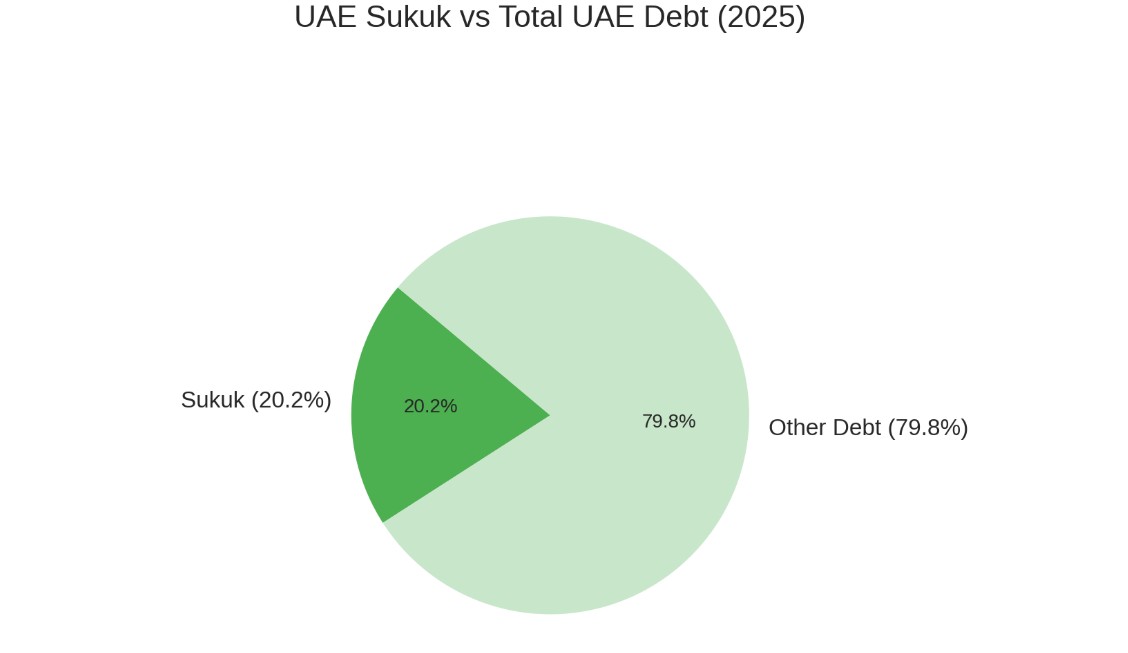
Sukuk market in the GCC expanded by 17% in Q1 2025, with over USD 240 billion in active issuances.
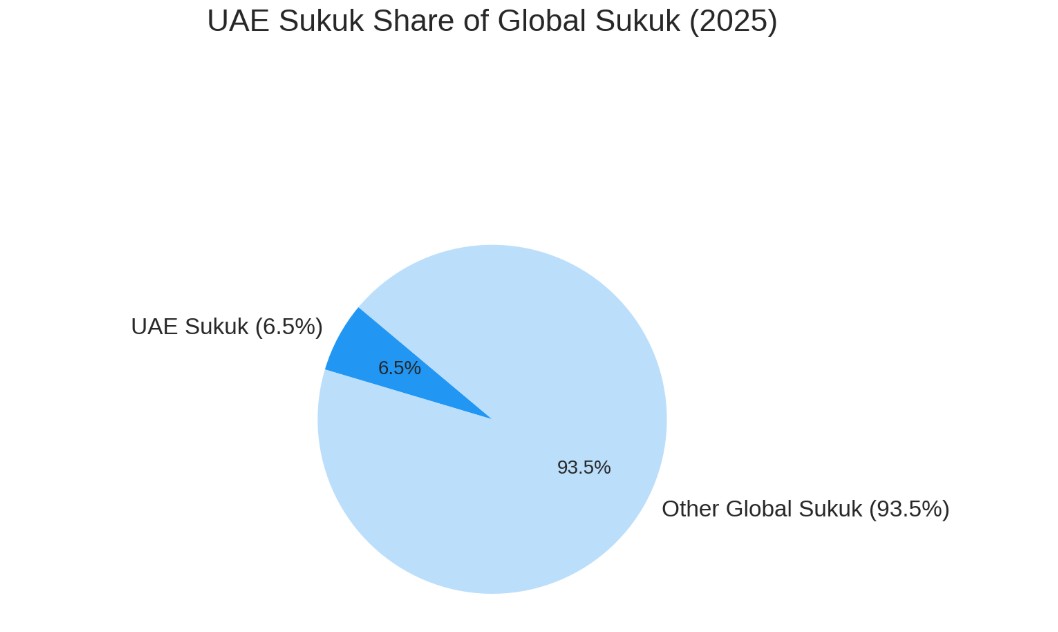
UAE accounts for about 32% of primary sukuk listings. Green sukuk also grew strongly compared to the previous year, although exact figures vary depending on the dataset used.
Quant insight for traders
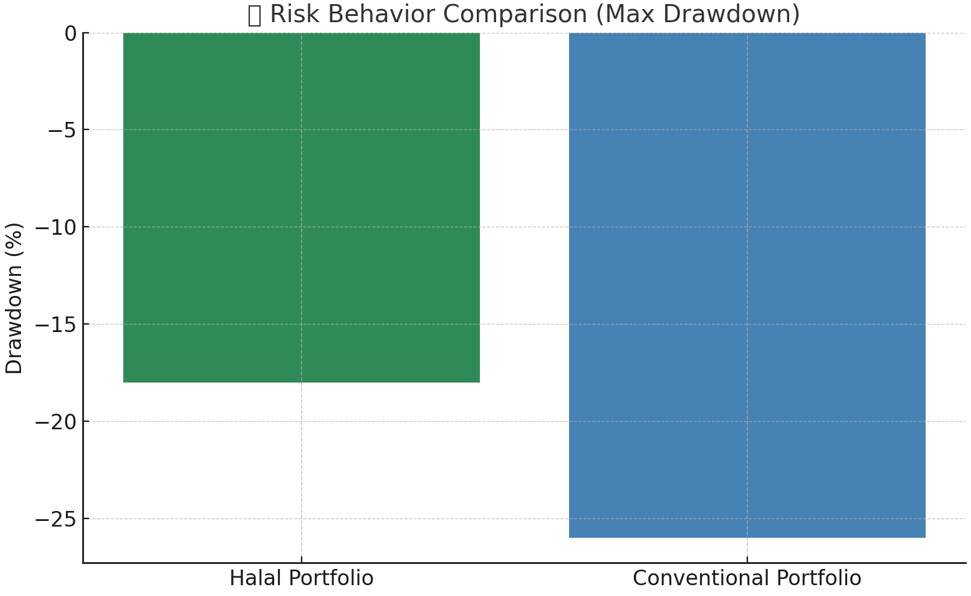
A backtest of Shariah-compliant equity indices (e.g., MSCI Islamic UAE) over 10 years showed lower drawdowns (avg. −18%) vs conventional (avg. −26%) during bear cycles.
ESG‑halal equities outperformed energy and defense-heavy indexes in 2023–2025 post-COVID realignment.
Why the UAE is ideal for halal investors
The United Arab Emirates is not only home to one of the most dynamic Islamic finance ecosystems, but also actively positions itself as the global halal economy hub, merging tradition with technology, regulation with innovation.
Institutional strength and scale
The UAE Central Bank regulates both Islamic windows and standalone Islamic banks, ensuring strict alignment with AAOIFI and IFSB standards.
As of Q2 2025, Islamic banks in the UAE manage AED 595 billion in deposits, showing a 16.9% year-on-year rise, surpassing conventional banks in retail banking growth.
Sukuk listings on Nasdaq Dubai hit USD 98 billion in total value, with a notable 40% increase in ESG-linked sukuk since 2023.
Free zones and international bridges
Shariah-compliant licensing frameworks offered in DIFC, ADGM, and RAK ICC have helped Islamic fintechs and asset managers thrive.
Strategic partnerships with authorities such as Malaysia’s SC, Bahrain’s CBB, and the Saudi CMA support dual-compliant cross-border investments. This has expanded opportunities for anyone seeking a Shariah compliant investment in the UAE with international exposure.
Dedicated financial instruments
A wide range of halal investment tools are available, including the ADIB Sukuk Fund, the Emirates Islamic Global Balanced Fund, and Shariah-compliant iREITs linked to real estate.
New-generation Islamic robo-advisors, some backed by the Emirates Development Bank, use AI to automatically build ethically screened portfolios for retail investors.
Halal + ESG convergence
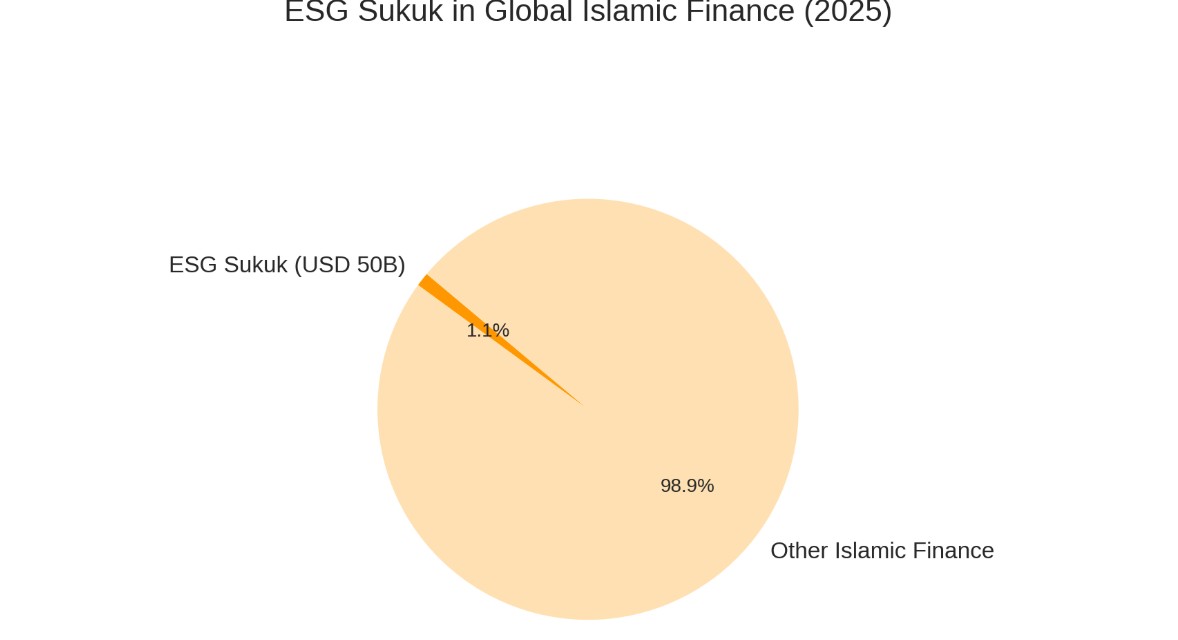
With the January 2025 update to the UAE’s Green Finance Framework, investors now have access to ESG-screened sukuk and ethical infrastructure projects.
Abu Dhabi’s Masdar Green Sukuk Program, targeting AED 5 billion, allows investors who follow Islamic principles to fund clean energy initiatives.
Skilled workforce and shariah governance
More than 180 certified Shariah finance scholars and auditors are employed across UAE-based financial institutions.
Local universities continue to launch specialized Islamic finance programs, helping shape future portfolio managers, researchers, and compliance professionals focused on ethical finance.
Halal economy integration
Islamic investing in the UAE doesn’t stop at banking and capital markets. The halal economy extends into real-world sectors:
Halal food exports reached AED 22 billion in 2025.
Halal tourism contributed AED 8.7 billion, with major hospitality projects financed through Sukuk.
Certified halal pharmaceutical and cosmetics companies are gaining traction with ethical investors.
| Category | 2025 Value | Trend |
|---|---|---|
| Islamic Banking Assets | AED 595 billion | +16.9% YoY growth |
| Sukuk Issuance (Nasdaq Dubai) | USD 98 billion | New record high |
| Halal Food Exports | AED 22 billion | Stable growth |
| Halal Tourism Revenue | AED 8.7 billion | +12.4% YoY growth |
| Green Sukuk Growth | +40% since 2023 | Accelerated issuance |
| Islamic Fintech Adoption | Multiple licensed platforms | Expanding rapidly |
This expanding halal ecosystem also opens doors for entrepreneurship. Many residents and investors are now combining capital allocation with business Ideas for ladies in Dubai, especially in sectors like halal cosmetics, food, and online services.
Core Islamic investment instruments
Islamic index funds & ETFs
For UAE-based investors aiming to diversify in line with Islamic principles, halal ETFs and index funds provide a low-cost way to access Shariah-screened equities across domestic and international markets. These funds strictly adhere to Islamic guidelines — avoiding industries like alcohol, gambling, and interest-based finance — while emphasizing ethical practices and financial cleanliness. The table below highlights some of the leading Shariah-compliant options available to both retail and institutional investors in the region. Also you can check our dedicated article on halal mutual funds in UAE.
| ETF Name | Expense Ratio (%) | TER (%) | 5‑Year CAGR (%) | Region |
|---|---|---|---|---|
| Chimera S&P UAE Shariah ETF (UAEA) | 1 | 1 | ~21.06 | UAE |
| Wahed FTSE USA Shariah ETF (HLAL) | 0.5 | 0.5 | ~13.36 | USA |
| SP Funds S&P 500 Shariah ETF (SPUS) | 0.45–0.49 | 0.49 | 15.85–16.17 | USA |
| iShares MSCI World Islamic ETF (ISWD) | 0.3 | 0.3 | 10.15 | Global |
| Invesco DJ Islamic Global DM ETF (IGDA) | 0.4 | 0.4 | ~4.06 | Global |
Sukuk (Islamic Bonds)
Sukuk are asset-backed certificates that share profits from underlying assets instead of paying interest, complying with Shariah principles.
UAE sukuk issuance in early 2025. AED 1.1 billion in June and May auctions, YTMs of 3.83–4.06%.
2025 total sukuk issuance: Approximately USD 6.5 billion across multiple auctions, growing ~28% YoY.
Green sukuk. Tabreed issued USD 700 m in green sukuk in March 2025 with a profit rate of 5.279%.
Yield ranges for 2025 UAE sukuk. 3.25%–5.75% annually, varying by tenor and structure. (Market data)
These sukuk offer stable income and are suitable for conservative halal investors interested in the sukuk market in the UAE.
| Issuer/Program | Instrument Type | Yield to Maturity (%) | Maturity Date | Ratings (S&P/Moody’s/Fitch) |
|---|---|---|---|---|
| UAE Sukuk Programme Ltd (AED tranche) | Sukuk Al-Wakalah | 3.7 | 11‑May‑2026 | – / – / – |
| FAB Sukuk Company Ltd | Sukuk Al-Murabaha | 3.44 | 14‑Jan‑2026 | – / Aa3 / AA‑ |
| DIB Sukuk Ltd | Sukuk Al-Wakalah | 3.65 | 16‑Jan‑2026 | – / A3 / A |
| Sharjah Sukuk Program | Govt Sukuk Al-Ijarah | 3.91 | 3‑Apr‑2026 | BBB‑ / Ba1 / – |
| EI Sukuk Co Ltd | Sukuk Al-Murabaha | 3.51 | 15‑Feb‑2026 | – / – / A+ |
| Alpha Star Holding VII | Sukuk Al-Murabaha | 5.1 | 27‑Apr‑2026 | – / – / – |
Shariah-compliant stocks
Shariah screening for equities in the UAE includes:
Compliant universe. Over 112 stocks on DFM and ADX.
Criteria. Debt/asset ratio < 33%, non-halal income < 5%, limited cash holdings.
Key Islamic indices. S&P UAE Shariah Index, MSCI UAE Islamic Index.
Halal stocks in the UAE provide equity exposure while minimizing ethical risk, helping investors build focused halal portfolios.
| Company | Ticker | Sector | Shariah Compliance | Recent Development |
|---|---|---|---|---|
| ADIB | ADX: ADIB | Islamic Banking | Strong financials, Shariah oversight | +59% YoY stock growth from digital & lending expansion |
| SIB | ADX: SIB | Islamic Banking | Full compliance since 2004 | Launched new digital banking platforms |
| Borouge Plc | ADX: BOROUGE | Petrochemicals | Clean debt, ESG-aligned | Signed 15-year ADNOC logistics deal |
| Americana Restaurants | ADX: AMR | Consumer Services | Halal-certified operations | Expanded into Uzbekistan; delivery growth |
| Salik Company PJSC | DFM: SALIK | Transport Infrastructure | Asset-backed, stable income | 3 new toll gates planned in 2025 |
| ADNOC Gas | ADX: ADNOCGAS | Natural Gas | Low-debt, asset-based contracts | $15B investment plan, dividend growth |
| ADNOC Drilling | ADX: ADNOCDRILL | Energy (Drilling) | Avoids speculation, compliant financing | +24% Q1 profit, $1.15B rig contract |
Real Estate & REITs
Real estate aligns naturally with Shariah due to its asset-backed nature and absence of speculative complexity. Investors favor direct property, rental income strategies, and Islamic REITs.
Popular Islamic REITs: Emirates REIT, BHM Capital REIT (launched 2024).
REIT AUMs in the UAE exceed AED 6.2 billion, growing 11.4% YoY.
Yield averages: 6–8% net rental return.
These instruments are attractive for capital preservation and long-term income, aligning with faith-based investing philosophies.
| Product | Structure | AUM/Yield |
|---|---|---|
| Emirates REIT | Listed REIT | AED 6.2 bn AUM, ~6–8% net rental yield |
| BHM Capital REIT | Private REIT | n/a, launched 2024 |
| ADIB European Logistics Fund I | Unlisted fund | Logistic assets in Europe |
Gold & commodities
In Islamic finance, physical gold is permissible only when there is immediate ownership and delivery. No deferred contracts or speculation is allowed.
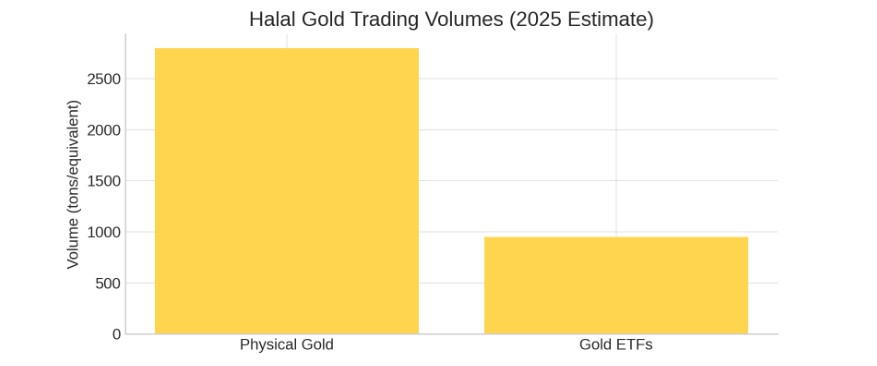
Dubai’s DMCC Gold Exchange facilitates compliant gold trading, with 2025 volume topping 2,800 tons.
Popular halal instruments: physical bullion, gold-backed ETFs with 100% asset-backing (e.g., XAU-Gold Emirates ETF).
Halal commodities also include agriculture and energy futures structured via salam or murabaha contracts.
Among all halal commodities, gold remains a trusted store of value and a pillar of many best Islamic investment strategies, especially in inflationary environments.
Halal trading platforms
Online platforms offering Islamic (swap-free) accounts have become a key enabler for ethical trading and investing not only in the UAE, but also for global halal investing instruments.
| Swap Free | ETFs | Stocks | Indices | Min. deposit, $ | Regulation | TU overall score | Open an account | |
|---|---|---|---|---|---|---|---|---|
| Yes | No | Yes | No | 10 | No | 7.95 | Go to broker Your capital is at risk.
|
|
| Yes | Yes | Yes | Yes | 100 | CIMA, FCA, FSA (Japan), NFA, IIROC, ASIC, CFTC | 6.87 | Study review | |
| Yes | No | Yes | Yes | 5 | CySEC, FSC (Belize), DFSA, FSCA, FSA (Seychelles), FSC (Mauritius), SCA (United Arab Emirates), CMA (Kenya) | 9.3 | Go to broker Your capital is at risk. |
|
| Yes | No | Yes | Yes | No | FSC (BVI), ASIC, IIROC, FCA, CFTC, NFA | 6.89 | Go to broker Your capital is at risk. |
|
| Yes | Yes | Yes | Yes | 100 | CySEC, FCA, ASIC, FMA, FSCA, FSA Seychelles, EFSA, MAS, DFSA, SCB | 7.57 | Go to broker 80% of retail CFD accounts lose money. |
New and emerging sectors for 2026
In 2026, the Islamic finance sector in the UAE has expanded far beyond traditional sukuk and equity funds. With the country’s strong focus on digital innovation, sustainability, and integrating the halal economy into national growth strategies, a new wave of Shariah-compliant opportunities is now available. Investors exploring halal investment in the UAE can now access a broader range of sectors that are aligned not only with religious principles but also with global standards in ESG, technology, and infrastructure development.
The table below outlines key areas that are seeing rapid activity and long-term promise within the broader space of halal investment options in the UAE. It includes the latest figures from 2026, showcasing sector valuations, growth momentum, and standout projects, giving both seasoned investors and newcomers a clear view of where the Shariah-compliant market is heading.
| Sector | 2025 Key Figures | Growth Trend | Notable Projects/Entities |
|---|---|---|---|
| Islamic Fintech & Platforms | 34 licensed firms; HLAL AUM +27% | +42% YoY | Botim-Quantix, Wahed, Zoya |
| Green/ESG Sukuk | USD 4.6B issued; +25–30% growth projected | Accelerating | Masdar Green Sukuk, ADQ Clean Bonds |
| Halal Agriculture | AED 3.1B invested; 19% contract growth | Stable, scalable | Emirates AgriBank, Halal Expo Investments |
| Blockchain Halal Assets | USD 420M market cap; 2 tokenized sukuk pilots | Early-stage, expanding | ADGM Sandbox, FatwaChain Labs |
| Takaful & ESG Insurance | AED 15.6B premiums; ESG takaful +18.3% | Moderate, consistent | Salama, Noor, Dar Al Takaful |
| Infrastructure Sukuk | USD 3.9B in issuance; 12 active projects | Strategic, long-term | e-Murabaha DIFC, Dubai Smart Corridor |
Competitive landscape & supporting data
Islamicly’s Behavioral Analytics Surge
In 2025, Islamicly integrated AI-powered investor sentiment tools, tracking behavior across 500,000+ global users. For UAE-specific equities, the most tracked sectors were:
Fitch's new sukuk risk model
In February 2025, Fitch Ratings rolled out a Sukuk-Solvency Scoring Tool (SSST) that now ranks UAE sukuk issuers based on exposure to ESG risk, cross-border payment delays, and Shariah advisory board turnover.
Top-rated UAE issuers. Dubai Islamic Bank, Aldar Properties, Masdar Green Sukuk SPV.
Average coupon range for A-rated UAE sukuk. 3.5%–5.1%.
Red flag triggers in 2025. sukuk with over 15% ESG exposure not backed by third-party audits.
Government investment portfolios in halal tech
The UAE’s Sovereign Investment Corporation allocated AED 9.2 billion in 2025 to halal-focused sectors:
Fintech sandbox acceleration. AED 2.3 billion.
Blockchain halal tracing. AED 1.8 billion.
Green sukuk reserves. AED 3.1 billion.
Takaful digitization and AI claims processing. AED 1.1 billion.
These allocations mark the first time sovereign-backed halal tech received more funding than real estate-linked Islamic instruments.
Musaffa Academy’s institutional access dashboard
In late 2024 and now in full swing in 2025, Musaffa launched a subscription-based dashboard for fund managers, providing:
Real-time alerts on compliance drifts for over 240 UAE-listed stocks.
Predictive dividend screening tied to Shariah thresholds.
ESG-overlay customization for halal fund allocations.
Early adopters include Noor Capital, Wahed Private Wealth, and ADCB Islamic Portfolio Desk.
Common mistakes & case studies
Even with a mature Islamic finance ecosystem in the UAE, many traders and investors unknowingly make critical errors that affect compliance and returns. This section highlights frequent pitfalls, like misinterpreting platform certifications or neglecting zakat calculations, and illustrates them through real-world case studies. By learning from these scenarios, you can safeguard your halal portfolio while optimizing both ethical and financial outcomes.
| Mistake | Explanation | Remedy |
|---|---|---|
| Assuming all UAE investments are Shariah-compliant | Labeled “Islamic” doesn’t guarantee certification | Verify fatwa or board approvals |
| Overlooking purification & zakat | Even Shariah funds may have non-compliant income | Purify regularly or reinvest in charity |
| Ignoring fintech & green trends | Missed opportunity in growing sectors | Explore tokenized sukuk, green bonds, robo-advice |
Real cases: Practical applications in halal investment
Wahed’s HLAL ETF: Consistent Shariah-compliant returns
Performance. HLAL ETF delivered a +8.2% year-on-year return in 2024–2025, outperforming the S&P Global BMI Islamic Index by 1.1%.
Composition. The fund tracks the FTSE USA Shariah Index and excludes financials, tobacco, gambling, and interest-based income firms.
AUM. Surpassed USD 230 million in 2025, reflecting rising demand from both U.S. and GCC retail investors.
Relevance for UAE traders. Available via international brokers in the UAE, HLAL is favored for portfolio diversification with U.S. equities — aligned to Shariah and ESG mandates.
Astra Tech Botim–Quantix: Citi-backed Islamic fintech breakthrough
Funding. In 2025, Astra Tech secured USD 500 million in Series C funding led by Citi Ventures to expand its Shariah-compliant fintech arm.
Innovation. Integrates voice-based robo-advisory, halal stock screeners, and digital zakat calculators within the Botim super-app, reaching over 11 million users in MENA.
Compliance. Developed in partnership with certified Shariah scholars and reviewed under AAOIFI fintech principles.
Strategic impact. This is the first regional voice-integrated Islamic investment tool, offering AI-assisted ethical finance for non-expert users in Arabic, Urdu, and English.
Mawarid Finance: Advancing Islamic infrastructure financing
Instruments. Deploys e-Murabaha and Wakala contracts for large-scale construction sukuk, enabling Shariah-compliant capital raising.
Projects. Financed AED 1.1 billion in residential and logistics infrastructure in Dubai South and Sharjah Industrial Zone in 2025.
Partnerships. Collaborated with DFM and UAE Ministry of Economy to launch digital sukuk products for small-scale infrastructure investors.
Innovative edge. Introduced a blockchain-based settlement layer, reducing contract finalization time by 40% vs legacy sukuk platforms.
Boost halal investment returns in the UAE by timing sukuk entries and using underused screening filters

If you're just starting with halal investing in the UAE, don't settle for broad Islamic funds. Go deeper by tracking entry points for sukuk in secondary markets. Most investors only buy new sukuk issues, but real value often lies in sukuk being quietly traded at a discount after issuance, especially from corporates needing liquidity. These bonds are still fully Shariah-compliant, but because they’re off the radar, you can lock in better yields without violating principles.
Another overlooked tactic is using filtering beyond just the Shariah screen. Most platforms stop at excluding haram industries, but the savvy investor filters further, based on cash-to-debt ratios, consistency of zakat purification, and even ESG scores aligned with Islamic ethics. These deeper layers help you avoid greenwashed or borderline-compliant companies. The result? A cleaner, more resilient portfolio that doesn’t just look halal on paper but performs with integrity in practice.
Conclusion
A robust halal investment in the UAE landscape awaits traders ready to explore both traditional and novel, ethical asset classes, from ETFs and green sukuk to agro-commodities and blockchain tokens. Strengthened by detailed frameworks, fintech, and ESG-tailored sukuk, this 2026 guide empowers both beginners and seasoned traders to build a fully aligned, well-diversified portfolio.
FAQs
What’s the minimum capital needed to start halal investing in the UAE?
Most Islamic platforms allow starting with as little as AED 500, especially in robo-advised halal portfolios and ETFs like HLAL.
Can expats in the UAE access Shariah-compliant investment funds?
Yes, major Islamic banks and platforms offer Shariah-compliant products accessible to residents, citizens, and expats alike.
Are halal trading platforms regulated in the UAE?
Yes, platforms like eToro or AvaTrade offering Islamic accounts are licensed by DFSA or ADGM, ensuring legal compliance.
How often should halal portfolios be purified?
Portfolio purification is typically done quarterly or annually, depending on the fund’s policy and the amount of mixed income.
Editors' Top Picks and Insights

Three trends that could reshape the crypto market over the next decade

Trump financial disclosure: How the president's crypto income became a U.S. ethics issue

Code red: What's behind Bitcoin’s sharp selloff?

MiCA is live: How EU new rules are changing crypto market

Bitcoin price prediction based on MVRV: Indicator points to BTC undervaluation

Amazon flooded with AI books: Crisis of trust in literature market
Related Articles
Team that worked on the article
Alamin Morshed is a contributor at Traders Union. He specializes in writing articles for businesses that want to improve their Google search rankings to compete with their competition.
One of the most widely respected and quoted currency experts, Marc Chandler has been analyzing and advising on the global capital markets for more than 30 years. Throughout his career on Wall Street, Chandler has advised private businesses, hedge funds and asset managers on navigating the foreign exchange market.
Chinmay Soni is a financial analyst with more than 5 years of experience in working with stocks, Forex, derivatives, and other assets. As a founder of a boutique research firm and an active researcher, he covers various industries and fields, providing insights backed by statistical data.

-
 Afghanistan
-
 Albania
-
 Algeria
-
 Angola
-
 Argentina
-
 Armenia
-
 Australia
-
 Austria
-
 Azerbaijan
-
 Bahamas
-
 Bahrain
-
 Bangladesh
-
 Belarus
-
 Belgium
-
 Bolivia
-
 Botswana
-
 Brazil
-
 Brunei
-
 Bulgaria
-
 Cambodia
-
 Cameroon
-
 Canada
-
 Chile
Chile
-
 China
China
-
 Colombia
-
 Congo
Congo
-
 Costa Rica
-
 Cote d'Ivoire
-
 Croatia
-
 Cuba
Cuba
-
 Cyprus
-
 Czechia
-
 DR Congo
-
 Denmark
-
 Dominican Republic
-
 Ecuador
-
 Egypt
Egypt
-
 El Salvador
-
 Estonia
-
 Eswatini
-
 Ethiopia
-
 Finland
-
 France
-
 Georgia
-
 Germany
-
 Ghana
Ghana
-
 Greece
-
 Haiti
Haiti
-
 Hong Kong
-
 Hungary
-
 India
India
-
 Indonesia
-
 Iran, Islamic republic
-
 Iraq
Iraq
-
 Ireland
-
 Israel
-
 Italy
Italy
-
 Jamaica
-
 Japan
Japan
-
 Jordan
-
 Kazakhstan
-
 Kenya
Kenya
-
 Korea
Korea
-
 Kuwait
-
 Kyrgyzstan
-
 Laos
Laos
-
 Latvia
-
 Lebanon
-
 Lesotho
-
 Libya
Libya
-
 Lithuania
-
 Luxembourg
-
 Madagascar
-
 Malaysia
-
 Malta
Malta
-
 Mauritius
-
 Mexico
-
 Moldova
-
 Mongolia
-
 Montenegro
-
 Morocco
-
 Mozambique
-
 Myanmar
-
 Namibia
-
 Nepal
Nepal
-
 Netherlands
-
 New Zealand
-
 Nigeria
-
 North Macedonia
-
 Norway
-
 Oman
Oman
-
 Pakistan
-
 Palestine
-
 Panama
-
 Papua New Guinea
-
 Paraguay
-
 Peru
Peru
-
 Philippines
-
 Poland
-
 Portugal
-
 Puerto Rico
-
 Qatar
Qatar
-
 Reunion
-
 Romania
-
 Rwanda
-
 Saudi Arabia
-
 Serbia
-
 Singapore
-
 Slovakia
-
 Slovenia
-
 Somalia
-
 South Africa
-
 Spain
Spain
-
 Sri Lanka
-
 Sweden
-
 Switzerland
-
 Syria
Syria
-
 Taiwan
-
 Tajikistan
-
 Tanzania
-
 Thailand
-
 Trinidad and Tobago
-
 Tunisia
-
 Turkey
-
 UAE
UAE
-
 Uganda
-
 Ukraine
-
 United Kingdom
-
United States
-
 Uruguay
-
 Uzbekistan
-
 Venezuela
-
 Vietnam
-
 Yemen
Yemen
-
 Zambia
-
 Zimbabwe
- Forex
- Crypto











