
How Algorithmic Trading Triggers Flash Crashes In Modern Markets


Editorial Note: While we adhere to strict Editorial Integrity, this post may contain references to products from our partners. Here's an explanation for How We Make Money. None of the data and information on this webpage constitutes investment advice according to our Disclaimer.
Flash crashes are sudden, sharp market drops followed by quick recoveries — often triggered by algorithmic trading systems. These crashes aren’t random; they stem from liquidity gaps, automated feedback loops, and high-frequency trading reacting to each other in milliseconds. While stock prices may rebound fast, the real risk is systemic: misfiring code, disappearing liquidity, and markets that move too quickly for humans to respond. Understanding these mechanics is crucial for anyone navigating modern, algorithm-driven markets.
Algorithmic trading is no longer just a tool — it’s the backbone of modern markets. In an environment where milliseconds determine winners and losers, what seems like random price flickers often masks calculated strategies executed by trading bots. Flash crashes — those sharp, sudden price drops that bounce back almost instantly — aren’t system errors. They’re signals.
Signals that reveal how mismatched timing, thin liquidity, and fragmented trading venues collide under stress. This piece goes beyond the surface, unpacking the hidden structural flaws that rarely get attention — until they break the market.
Understanding algorithmic trading
Algorithmic trading is one of the biggest shifts in how markets operate. Instead of humans making every trade by hand, computers now handle a huge share of the action — based on code, rules, and real-time data. What started as a behind-the-scenes tool for big institutions has now become a core part of the market.

Definition and evolution
At its core, algorithmic trading means using automated instructions to place trades. You set the rules — like when to buy or sell — and a computer does the rest, often faster than any human could.
In the early 2000s, big firms used algos to split large trades into smaller chunks to avoid price swings.
As tech advanced, hedge funds and other firms started building more complex strategies that could spot opportunities and react automatically.
Eventually, this led to high-frequency trading, where speed matters more than anything and trades happen in fractions of a second.
Today, even retail traders have access to some forms of algorithmic tools, and the use of automation has completely changed how markets operate.
Role in modern financial markets
Algorithms are now responsible for much of the trading activity on global markets. They’re faster, more accurate, and able to manage thousands of trades at once.
Speed. Algorithms can spot a price change and respond in milliseconds — long before a human would notice.
Scale. Algorithms operate across multiple markets and time zones, simultaneously managing positions in equities, futures, currencies, and more.
Efficiency. By removing emotion and guessing, algos can cut down on errors and save money on each trade.
They’ve made markets more efficient overall, but they’ve also added new risks — like the possibility of sudden crashes caused by automated decisions. Still, in today’s markets, algos aren’t just an option — they’re the norm.
Understanding flash crashes
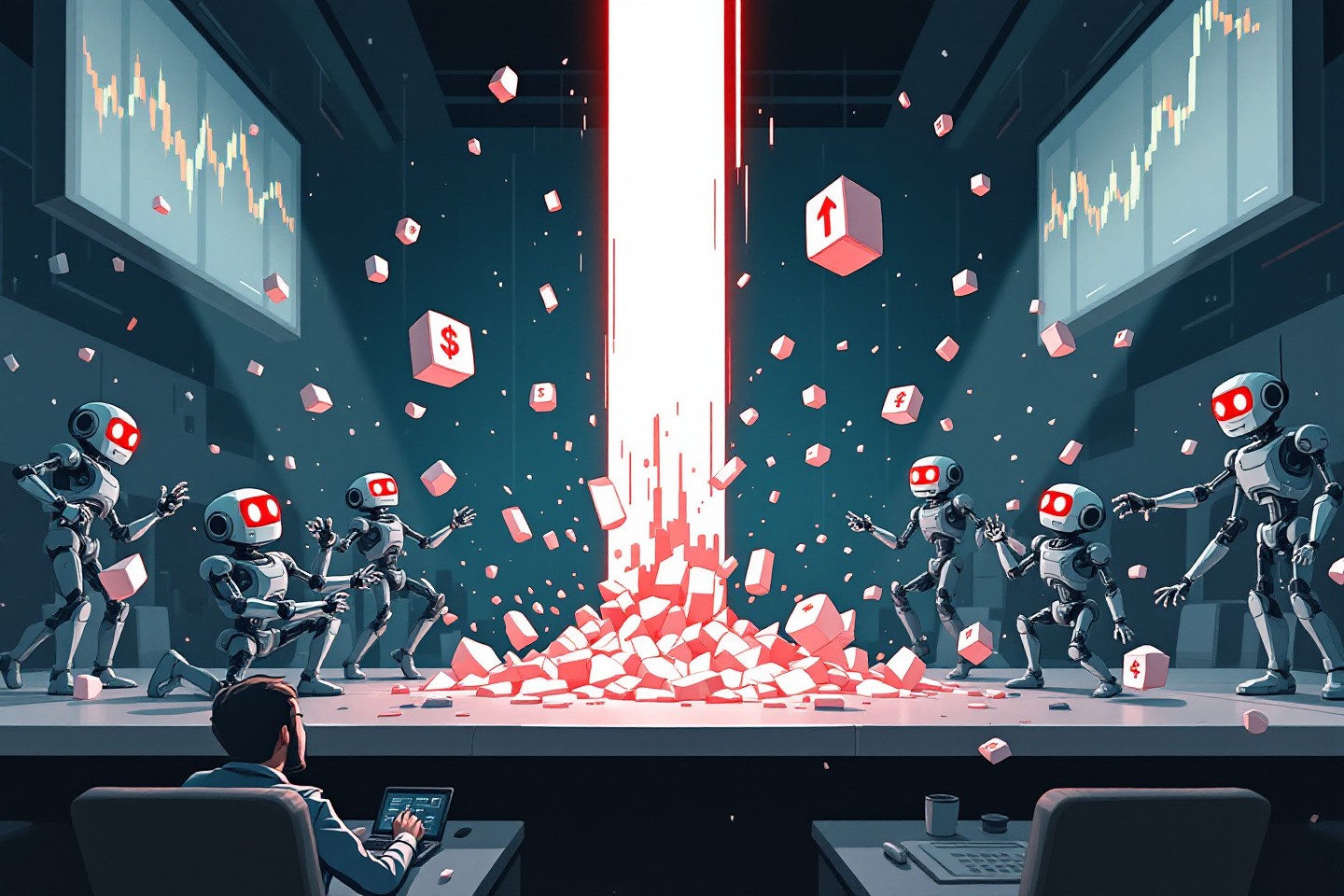
A flash crash isn’t just a dramatic dip — it’s a structural failure unfolding in real time. Prices collapse within seconds or minutes, often without any clear trigger, only to rebound just as quickly. These aren’t gradual corrections or panic-driven selloffs. They’re moments where the entire market loses its footing — and then snaps back before anyone can fully react.
Definition and characteristics
Flash crashes are marked by three key ingredients: speed, depth, and confusion.
Sudden and sharp price drops. The market can plunge several percent in a matter of seconds, wiping out liquidity across the board.
No obvious catalyst. Unlike typical downturns triggered by news or data, flash crashes often strike without warning, leaving traders scrambling for explanations.
Liquidity vacuum. Buyers vanish. Market makers widen spreads or pull orders entirely. Sellers hit empty books and drive prices into freefall.
Algorithmic reactions. Trading bots are designed to respond to risk. In a flash crash, many switch to defensive modes — canceling orders, reducing position sizes, or accelerating sales — adding fuel to the fire.
Historical occurrences
2010 Flash Crash
On May 6, 2010, the Dow plunged nearly 1,000 points in under 10 minutes — the fastest drop in U.S. market history at the time.
A large automated sell order overwhelmed the system.
High-frequency traders backed away, draining liquidity.
Prices rebounded just as fast, but the damage was done.
The event led to new circuit breakers and safeguards that aim to slow things down during extreme moves.

2015 ETF crash
In August 2015, worries about China sparked a global selloff — but things got weird fast.
Big-name ETFs started trading way below their actual value.
Thin liquidity and automated trading led to wild price swings.
The event showed that even “safe” investments like ETFs aren’t immune to flash-style volatility.
Other moments
A sudden selloff in gold in 2013 sent prices tumbling $30 in seconds.
In 2019, the Japanese yen surged overnight — not due to news, but to low liquidity and automatic trades.
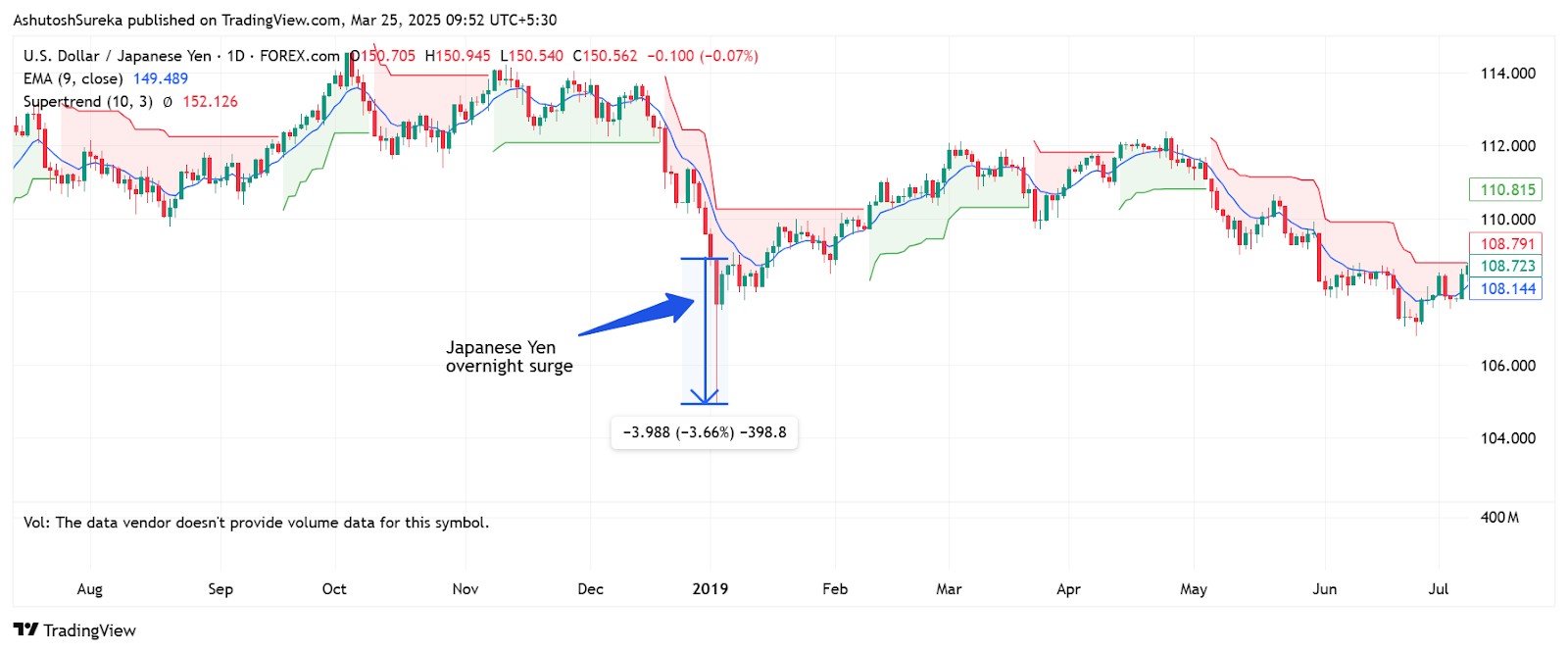
These moments remind investors that markets can still behave unpredictably, even in the age of regulation and technology.
The connection between algorithmic trading and flash crashes
Algorithmic trading has streamlined financial markets by enabling split-second decision-making and rapid order execution. However, the same efficiency that brings down trading costs and tightens spreads can become a liability when volatility spikes. Flash crashes — those sudden, deep price drops that rebound just as quickly — are often fueled by the very systems designed to bring stability.
High-frequency trading (HFT) and market volatility
High-frequency trading is built on speed. It thrives on tiny price differences, placing thousands of trades in milliseconds. But in fragile market conditions, this speed can create instability. When prices start to drop, liquidity from HFT firms can vanish. These firms, usually seen as market makers, often pull their orders to avoid risk — leaving a vacuum where liquidity once was.
In many cases, algorithms not only respond to price movement — they respond to each other. A sell order from one bot may trigger reactions in several others. What starts as a small dip quickly snowballs into a cascade of sell orders, driven not by fundamentals but by machine logic. This domino effect can lead to sharp, short-lived crashes that confuse both retail and institutional traders alike.
Feedback loops and sudden reversals
Flash crashes are not simply a product of bad news or sudden panic. They're often the result of feedback loops where algorithms reinforce each other's decisions. For example, a large sell order might be interpreted as a bearish signal, prompting other systems to do the same — accelerating the decline.
What’s more, once certain price thresholds are hit, algorithms designed to buy on dips might step in, causing a rapid reversal. This leads to the signature “V” shape of flash crashes — plunges that reverse almost as quickly as they began, often leaving little time for human traders to react.
Built-in safety nets
To prevent uncontrolled spirals, exchanges have introduced circuit breakers and order throttling mechanisms. These halt or slow trading temporarily when certain thresholds are breached, giving markets time to reset. While useful, these measures don’t eliminate the root issue — algorithms feeding off each other in unpredictable ways.
Understanding how algorithmic systems interact during stress events is key to preventing future flash crashes. It's not about blaming the technology — but about anticipating its behavior under pressure.
Case studies of algorithm-induced flash crashes
Knight Capital (2012)
A glitch in Knight’s system led to hundreds of faulty trades in dozens of stocks. Within 45 minutes, the firm lost nearly half a billion dollars. It didn’t take a market crash to cause the damage — just one misfiring algorithm.
Treasury Flash Rally (2014)
Even the bond market isn’t safe. In October 2014, Treasury yields plunged for no clear reason and then reversed. It was later linked to algorithms overreacting to small changes in market data, amplifying moves that should’ve been minor.
These events all had one thing in common: technology behaving in ways humans didn’t expect. When markets move too fast for people to step in, even a small issue can lead to big swings.
Mechanisms leading to flash crashes
Flash crashes don’t come out of nowhere — they usually happen when the market’s safety net disappears or machines start reacting faster than people can catch up. Two of the biggest culprits are liquidity vacuums and feedback loops, which turn small problems into full-blown selloffs in seconds.
Liquidity vacuums
Imagine trying to sell something, but suddenly no one wants to buy — not even at a lower price. That’s what happens in a liquidity vacuum.
Normally, there are enough buyers and sellers to keep things moving smoothly.
But in a panic or unusual situation, traders — especially the fast, automated ones — pull out to avoid risk.
With no one on the other side of the trade, even a small order can cause a big price drop.
The lower the price falls, the more others pull back, and the vacuum gets worse.
It’s like the market holding its breath — and in that pause, prices can fall off a cliff.
Feedback loops
Algorithms don’t trade emotionally, but they do react quickly to certain signals. And if they’re all watching the same thing, one move can spark a domino effect.
One trading bot sees a price dip and sells.
Another notices that drop and also sells.
A third sees the increased volume and joins in.
And just like that, a wave of automatic selling builds with no human pushing the buttons.
In these moments, the machines aren’t wrong — they’re just responding to what they’re programmed to do. The problem is, when everyone’s using similar rules, it creates a loop where the reaction becomes the cause of the next move.
Impact on investors and markets
Flash crashes don’t just mess with stock prices — they mess with people’s nerves. For everyday investors and even some pros, watching the market plunge in real time can be jarring. The effects aren’t just about money lost or gained — they’re about what it does to confidence and trust in the system.
Short-term effects
When the market drops suddenly, most retail investors don’t stand a chance at reacting in time.
A stock that’s $100 one second might be $80 the next. Before you can hit the sell button, it’s too late.
Stop-loss orders can get triggered way below your target, locking in bigger losses than planned.
Apps and platforms often freeze or lag during these moments, adding to the chaos.
Even if the price bounces back minutes later, the damage is done, especially for those trading on emotion or margin.
It’s a tough reminder that speed and calm matter in volatile markets — and most retail traders are outmatched when things get wild.
Long-term implications
After a flash crash, the charts may recover — but the trust doesn’t always bounce back so easily.
Some investors pull out, worried they’re trading in a market they don’t fully understand or trust.
Others start to question whether algorithms and automation are helping — or hurting — stability.
Regulators often get involved, introducing new rules and safety nets to prevent the same thing from happening again.
Over time, too many flash crashes can push people toward less risky assets — or away from the market altogether.
When people feel like the game is rigged or the market is too fast to follow, they hesitate to play at all.
Regulatory responses and preventive measures
After every flash crash, regulators face the same question: how do we make sure this doesn’t happen again? While markets can't be made crash-proof, steps have been taken to slow things down when they move too fast — and keep automated trading from spiraling out of control. The two biggest defenses are circuit breakers and tighter oversight of trading algorithms.
Circuit breakers and trade halts
When markets plunge too quickly, circuit breakers kick in to pause trading and give everyone a moment to breathe.
In the U.S., if the S&P 500 falls by 7%, trading stops for 15 minutes — that’s a Level 1 circuit breaker.
If losses continue to 13% or 20%, deeper halts are triggered.
For individual stocks, trade halts are triggered when a price moves too far too fast, based on percentage bands.
These pauses don’t prevent a bad day, but they keep panic from spiraling by allowing time for prices to stabilize and buyers to step back in.
Oversight of algorithmic systems
With so many trades happening through algorithms, regulators have had to make sure those systems are built responsibly and monitored closely.
Here’s what firms are now required to do:
Put in limits that stop trades from going haywire, like caps on order size or price range.
Test algorithms before using them, simulating real market scenarios to see how they’ll behave.
Watch the systems in real time, and have a way to shut them down immediately if something goes wrong.
Keep detailed logs that explain what the algorithm does, how it was updated, and who’s responsible for it.
The goal isn’t to stop algorithms — but to make sure they don’t go rogue and take the market with them.
Mastering order flow and system resilience is key to surviving volatile markets

If you’re just stepping into algo trading, put the chart obsession aside and dig into how trades actually flow. Learn how exchanges prioritize orders, especially during fast markets. It’s not enough to set a limit order — you need to understand how being milliseconds early can completely change how your trades play out. Most people miss this. Queue positioning isn’t sexy, but it’s where a lot of quiet wins happen.
Also, don’t wait until a flash crash to find out your bot can’t handle stress. From the start, think about how your system will hold up when things get ugly. Your code should be able to spot when the market goes sideways — watching for sudden changes in spread, depth, and cancellation patterns — and know how to adjust. And don’t keep all your trades parked in one place. Spread them out, give them different behaviors. Crashes hit hard, but the traders who build in a little flexibility tend to walk away in better shape.
Conclusion
Flash crashes push your setup to the edge. If your whole strategy is built for best-case scenarios, it won’t take much to knock it over. The smart play is preparing for things to fall apart — not just reacting fast, but knowing when sitting it out is the smarter move. Use circuit breakers, soft stops, throttle systems — whatever keeps your bot from spiraling when the market does. These crashes aren’t rare freak-outs. They’re reminders that the market can go off-script. If your system can bend without snapping, you’ve already won half the battle.
FAQs
What causes the flash crash?
A flash crash is usually triggered by a sudden imbalance in trading activity, often caused by high-frequency algorithms reacting to market signals. It leads to rapid price drops within minutes or seconds.
Why does algo trading fail?
Algorithmic trading can fail due to coding errors, poor data inputs, or unexpected market conditions. It may also misfire when many systems respond similarly, causing sharp price swings.
Who is a flash crash trader?
A flash crash trader is someone who executes rapid, automated trades that may unintentionally or deliberately disrupt markets. In some cases, individuals have manipulated prices using spoofing or layering tactics.
What is the problem with algorithmic trading?
The main issues include lack of transparency, sudden volatility, and the risk of technical glitches. Algorithmic trading can amplify market moves and reduce human control over fast-changing events.
Editors' Top Picks and Insights






Related Articles
Team that worked on the article
Rinat Gismatullin is an entrepreneur and a business expert with 9 years of experience in trading. He focuses on long-term investing, but also uses intraday trading.
Chinmay Soni is a financial analyst with more than 5 years of experience in working with stocks, Forex, derivatives, and other assets. As a founder of a boutique research firm and an active researcher, he covers various industries and fields, providing insights backed by statistical data.
Mirjan Hipolito is a journalist and news editor at Traders Union. She is an expert crypto writer with five years of experience in the financial markets.
An investor is an individual, who invests money in an asset with the expectation that its value would appreciate in the future. The asset can be anything, including a bond, debenture, mutual fund, equity, gold, silver, exchange-traded funds (ETFs), and real-estate property.
A trading system is a set of rules and algorithms that a trader uses to make trading decisions. It can be based on fundamental analysis, technical analysis, or a combination of both.
Day trading involves buying and selling financial assets within the same trading day, with the goal of profiting from short-term price fluctuations, and positions are typically not held overnight.
Index in trading is the measure of the performance of a group of stocks, which can include the assets and securities in it.
Bitcoin is a decentralized digital cryptocurrency that was created in 2009 by an anonymous individual or group using the pseudonym Satoshi Nakamoto. It operates on a technology called blockchain, which is a distributed ledger that records all transactions across a network of computers.

-
 Afghanistan
-
 Albania
-
 Algeria
-
 Angola
-
 Argentina
-
 Armenia
-
 Australia
-
 Austria
-
 Azerbaijan
-
 Bahamas
-
 Bahrain
-
 Bangladesh
-
 Belarus
-
 Belgium
-
 Bolivia
-
 Botswana
-
 Brazil
-
 Brunei
-
 Bulgaria
-
 Cambodia
-
 Cameroon
-
 Canada
-
 Chile
Chile
-
 China
China
-
 Colombia
-
 Congo
Congo
-
 Costa Rica
-
 Cote d'Ivoire
-
 Croatia
-
 Cuba
Cuba
-
 Cyprus
-
 Czechia
-
 DR Congo
-
 Denmark
-
 Dominican Republic
-
 Ecuador
-
 Egypt
Egypt
-
 El Salvador
-
 Estonia
-
 Eswatini
-
 Ethiopia
-
 Finland
-
 France
-
 Georgia
-
 Germany
-
 Ghana
Ghana
-
 Greece
-
 Haiti
Haiti
-
 Hong Kong
-
 Hungary
-
 India
India
-
 Indonesia
-
 Iran, Islamic republic
-
 Iraq
Iraq
-
 Ireland
-
 Israel
-
 Italy
Italy
-
 Jamaica
-
 Japan
Japan
-
 Jordan
-
 Kazakhstan
-
 Kenya
Kenya
-
 Korea
Korea
-
 Kuwait
-
 Kyrgyzstan
-
 Laos
Laos
-
 Latvia
-
 Lebanon
-
 Lesotho
-
 Libya
Libya
-
 Lithuania
-
 Luxembourg
-
 Madagascar
-
 Malaysia
-
 Malta
Malta
-
 Mauritius
-
 Mexico
-
 Moldova
-
 Mongolia
-
 Montenegro
-
 Morocco
-
 Mozambique
-
 Myanmar
-
 Namibia
-
 Nepal
Nepal
-
 Netherlands
-
 New Zealand
-
 Nigeria
-
 North Macedonia
-
 Norway
-
 Oman
Oman
-
 Pakistan
-
 Palestine
-
 Panama
-
 Papua New Guinea
-
 Paraguay
-
 Peru
Peru
-
 Philippines
-
 Poland
-
 Portugal
-
 Puerto Rico
-
 Qatar
Qatar
-
 Reunion
-
 Romania
-
 Rwanda
-
 Saudi Arabia
-
 Serbia
-
 Singapore
-
 Slovakia
-
 Slovenia
-
 Somalia
-
 South Africa
-
 Spain
Spain
-
 Sri Lanka
-
 Sweden
-
 Switzerland
-
 Syria
Syria
-
 Taiwan
-
 Tajikistan
-
 Tanzania
-
 Thailand
-
 Trinidad and Tobago
-
 Tunisia
-
 Turkey
-
 UAE
UAE
-
 Uganda
-
 Ukraine
-
 United Kingdom
-
United States
-
 Uruguay
-
 Uzbekistan
-
 Venezuela
-
 Vietnam
-
 Yemen
Yemen
-
 Zambia
-
 Zimbabwe
- Forex
- Crypto












