Best Ethereum Faucets In 2026


Editorial Note: While we adhere to strict Editorial Integrity, this post may contain references to products from our partners. Here's an explanation for How We Make Money. None of the data and information on this webpage constitutes investment advice according to our Disclaimer.
The best Ethereum faucets in 2026 for earning free ETH:
FireFaucet. Supports auto-claim and multi-crypto earning including ETH.
Faucet Crypto. Allows frequent manual claims with low withdrawal minimums.
DutchyCorp. Offers automated ETH faucet claiming with loyalty bonuses.
CoinPayU. Combines paid-to-click ads with ETH faucet rewards.
FaucetPay. A micro-wallet hub connecting users to dozens of ETH faucet sites.
Ethereum remains the largest smart contract platform in crypto. Its ecosystem spans DeFi, NFTs, and a growing network of Layer 2 solutions. As more users explore the network, many look for small amounts of ETH to pay for gas, test wallets, or try out DeFi without buying it outright. An Ethereum faucet is one way to do that. These platforms give out tiny amounts of ETH in exchange for simple tasks like solving captchas or watching ads. They are not income sources but they are useful entry points into the network. This guide covers the best Ethereum faucets available in 2026, how they work, what to look for, and what to avoid.
Risk warning: Cryptocurrency markets are highly volatile, with sharp price swings and regulatory uncertainties. Research indicates that 75-90% of traders face losses. Only invest discretionary funds and consult an experienced financial advisor.
Best Ethereum faucets in 2026
The platforms below are among the most recognized Ethereum faucets available in 2026. Each has been reviewed based on payout reliability, ETH support, withdrawal process, and user feedback.
FireFaucet
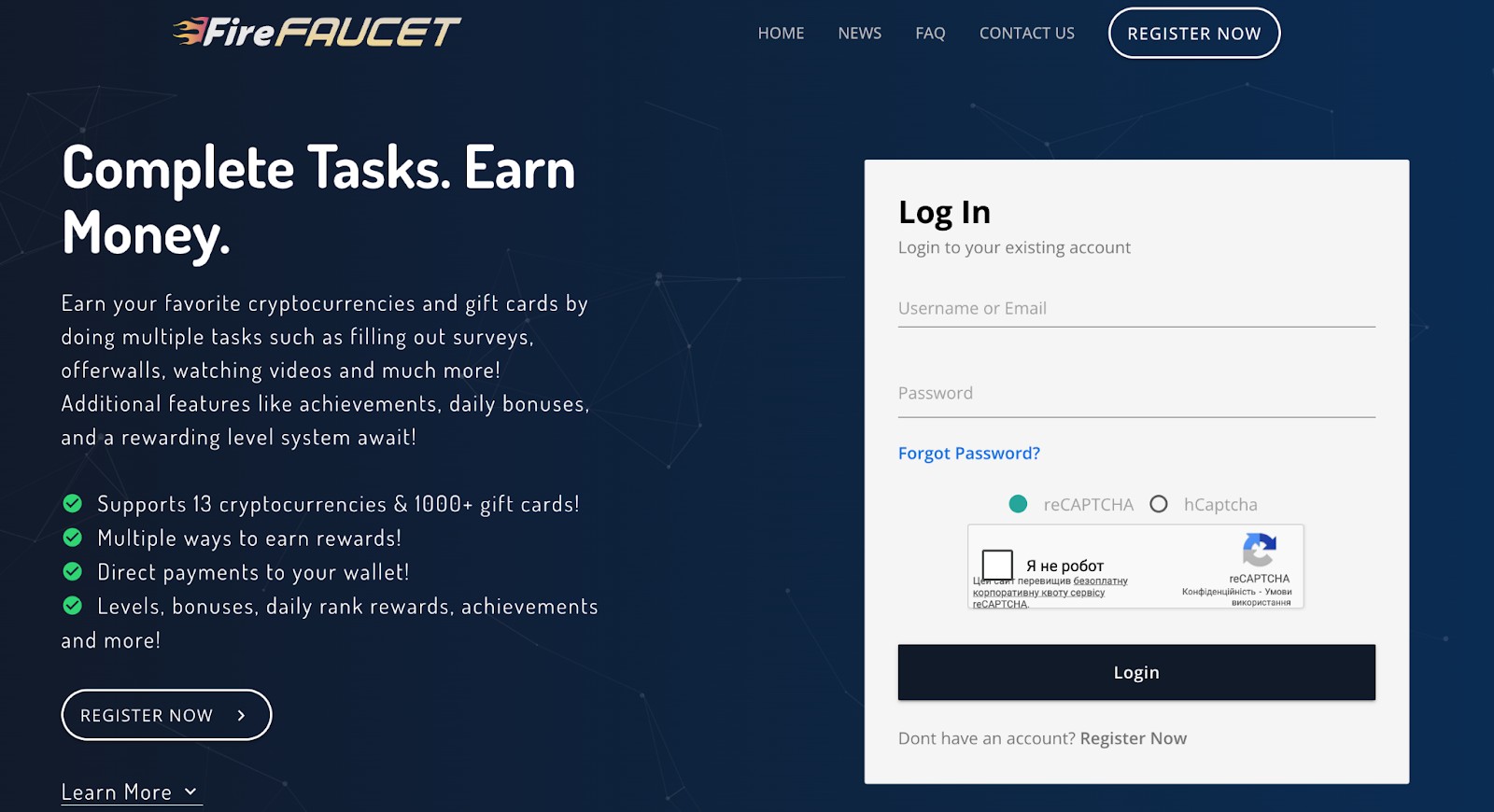
FireFaucet is a multi-crypto auto-claim platform running since 2018. Users earn Auto Claim Points through tasks like shortlinks, surveys, PTC ads, and offerwalls. Those points are converted into ETH and paid out automatically or through FaucetPay, with a minimum withdrawal of 0.003 ETH.
Key features include:
auto-claim mode that removes the need for constant manual interaction;
multi-crypto support including ETH, Bitcoin, Litecoin, and Dogecoin;
level and loyalty bonuses that increase earnings over time;
ad-heavy interface that can affect usability;
some 2026 user reports of withdrawal delays near payout thresholds.
FaucetCrypto
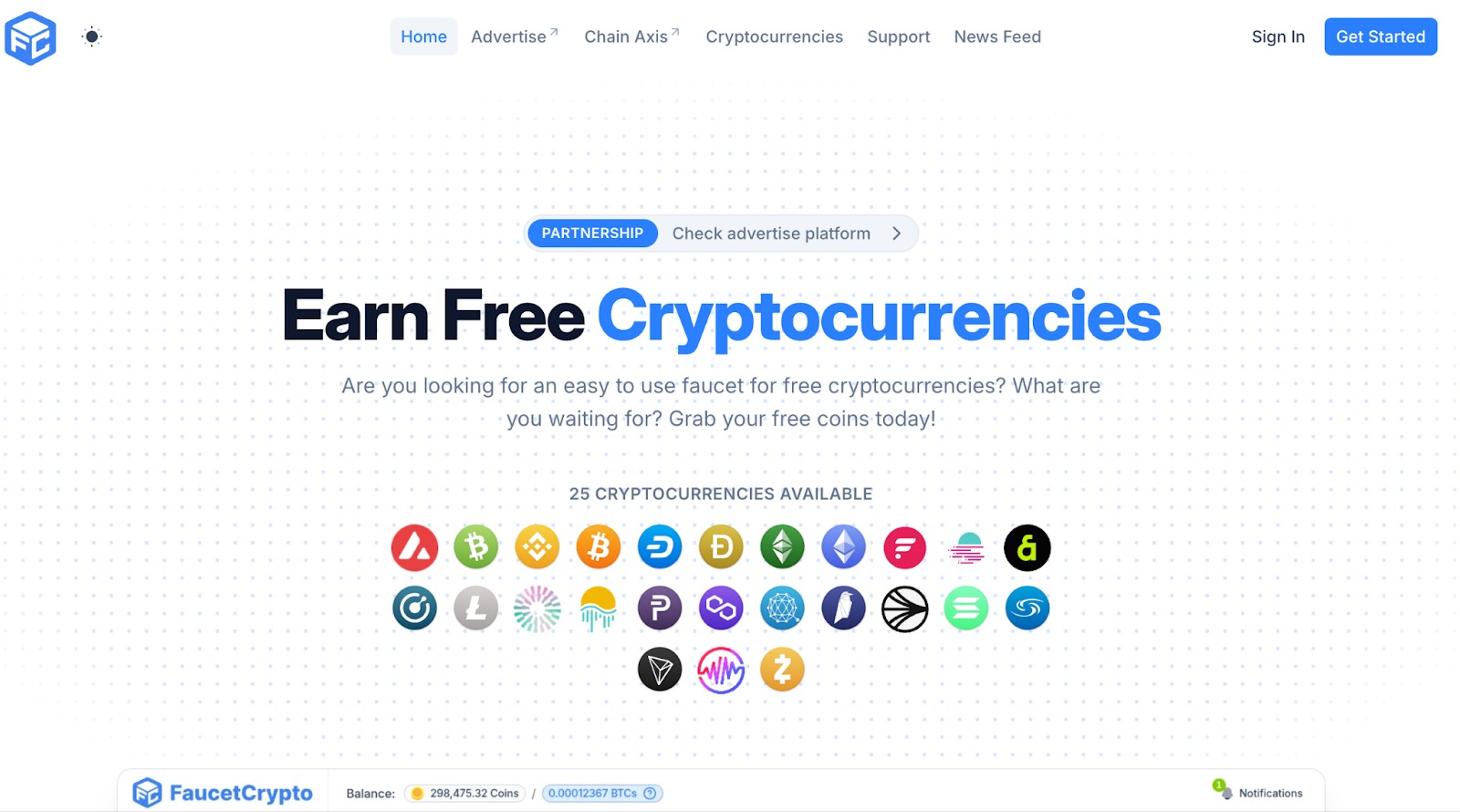
FaucetCrypto has operated since 2017 and is one of the most consistently reviewed free Ethereum faucet platforms. Users claim coins every 20 to 40 minutes depending on level and can also earn through shortlinks, surveys, and offerwalls.
Key features include:
low withdrawal thresholds with fast processing;
support for ETH and over 20 other cryptocurrencies;
transparent payout history and an active user community;
survey and offerwall availability that depends on the user's region;
periodic coin stock shortages that can delay some withdrawals.
DutchyCorp
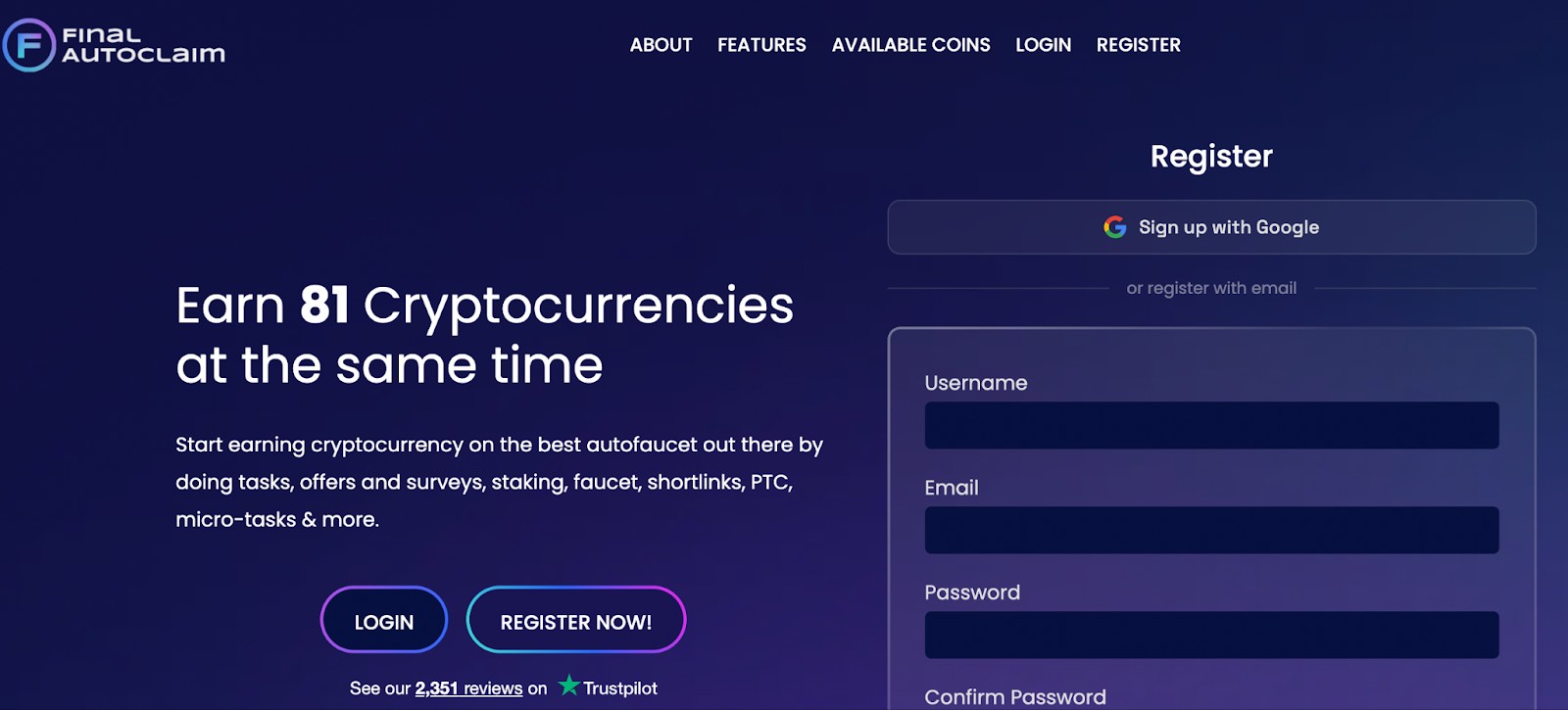
DutchyCorp was founded in 2019 and supports auto-claiming across more than 30 cryptocurrencies including ETH. Users earn a platform token called Dutchy through tasks, rolls, and shortlinks which fuels the auto-claim engine.
Key features include:
auto-claim engine that runs continuously once funded with Dutchy tokens;
zero withdrawal fees on ETH and other supported coins;
support for more than 30 cryptocurrencies including ETH;
auto-claim dependency on maintaining a Dutchy token balance;
modest hourly earnings even with the auto-claim running.
CoinPayU
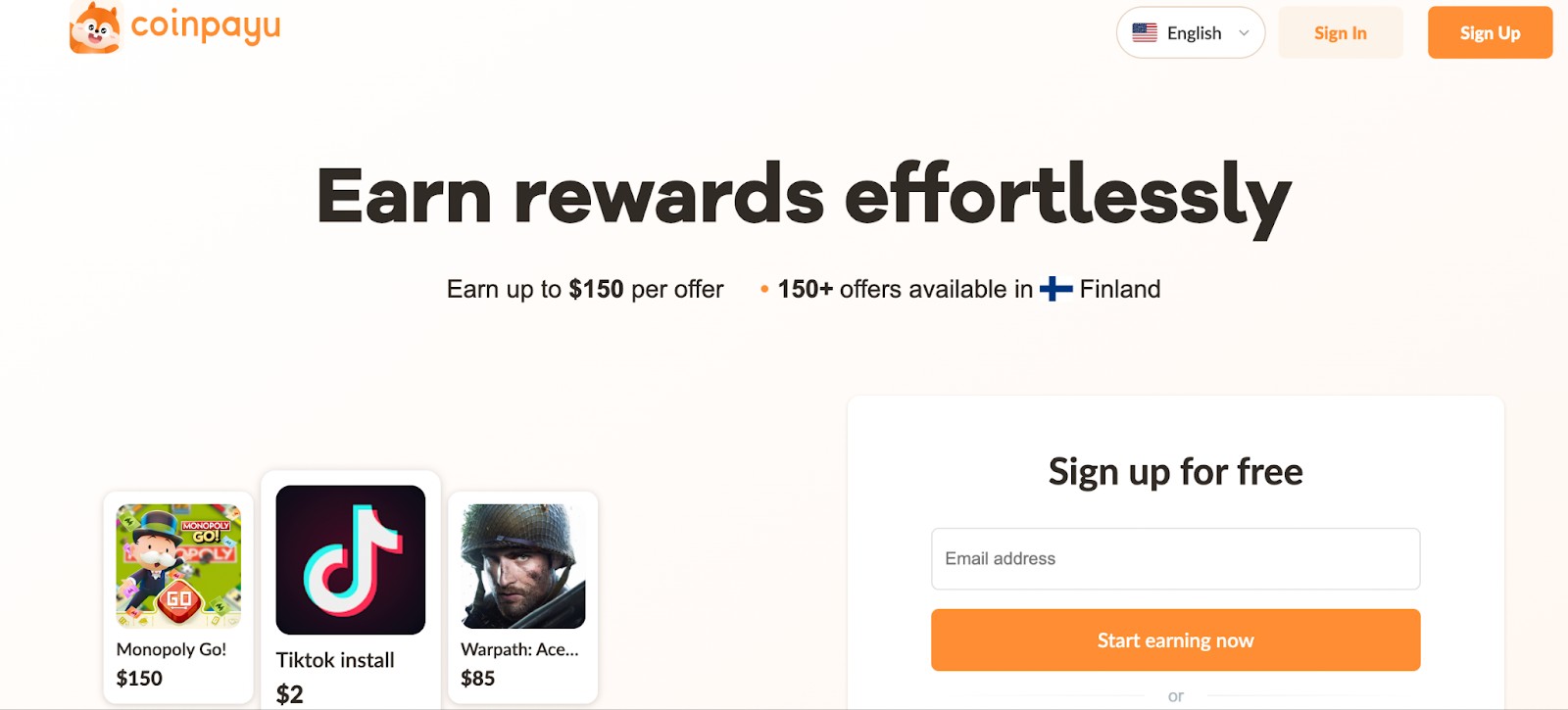
CoinPayU is a paid-to-click platform with an integrated ETH faucet. Users earn by viewing ads and can also claim from the faucet at regular intervals. It maintains a stable reputation among users looking for a combined earning approach.
Key features include:
combined PTC and faucet earning in one platform;
confirmed ETH payouts to external wallets;
long operational history with consistent user feedback;
regular manual engagement required to maximize earnings;
some ads restricted by region.
FaucetPay
FaucetPay is not a faucet itself but a micro-wallet and payment processor that connects users to hundreds of ETH faucet sites. Many platforms on this list use FaucetPay as their withdrawal layer.
Key features include:
aggregates hundreds of faucet sites that support ETH and other coins;
instant micro-payments from connected faucets into the FaucetPay wallet;
low thresholds for withdrawing accumulated ETH to an external wallet;
does not distribute ETH directly as a standalone faucet;
small fee applies when transferring from FaucetPay to an external crypto wallet.
| Platform | Claim type | ETH support | Withdrawal method | Withdrawal fees | Beginner friendly |
|---|---|---|---|---|---|
| FireFaucet | Auto and manual | Yes | Direct or FaucetPay | Low | Yes |
| FaucetCrypto | Manual (every 20 to 40 min) | Yes | Direct or FaucetPay | Low | Yes |
| DutchyCorp | Auto-claim | Yes | Direct or FaucetPay | None | Moderate |
| CoinPayU | Manual (PTC and faucet) | Yes | Direct | Low | Yes |
| FaucetPay | Aggregator | Yes | Direct wallet | Small fee | Yes |
What is an Ethereum faucet?
An Ethereum faucet is a website or app that gives out small amounts of ETH in exchange for completing simple tasks. These tasks typically include solving captchas, watching ads, playing simple games, or filling out surveys. Platforms fund these rewards through advertising revenue and share a small portion with users.
The idea started as a way to help people learn how wallets and blockchain transactions work without spending money. That purpose still holds today. A free Ethereum faucet is best understood as an educational tool. Rewards are extremely small, often fractions of a cent per claim, and should never be treated as an income source.
Most Ethereum faucets work through a micro-wallet system. Users accumulate rewards on the platform until they hit a minimum withdrawal threshold, then transfer earnings to their own wallet.
Mainnet vs testnet: What is the difference?
Before using any Ethereum faucet, it is important to understand this distinction. Not all faucets give out real ETH. An ETH mainnet faucet distributes real Ethereum with actual monetary value. Rewards are small but can be transferred, held, or used to pay gas fees on the live network. These are the platforms covered in this article.
A testnet faucet distributes tokens that have no real value. They exist purely for developers to test smart contracts and applications before going live. The two active Ethereum testnets as of 2026 are Sepolia, used for application and smart contract testing, and Hoodi, used for validator and staking testing. The older Goerli and Holesky testnets have both been deprecated.
Keep in mind: anyone trying to sell you testnet ETH is running a scam. Testnet tokens cannot be used on mainnet and are worth nothing.
When users search for terms like ‘ETH faucet on mainnet’, they are specifically looking for platforms that pay out real ETH, not test tokens. Make sure the platform you choose clearly states it operates on mainnet.
How Ethereum faucet platforms work
Most Ethereum faucets follow the same basic process. Here is how a typical Ethereum faucet claim works from start to finish:
create an Ethereum-compatible wallet such as MetaMask or Trust Wallet;
register on your chosen ETH faucet platform using an email address;
complete tasks like captchas, ads, or surveys to earn micro-rewards;
accumulate rewards in the platform's internal wallet until the minimum threshold is met;
withdraw your ETH directly to your wallet or through FaucetPay.
One important thing to check before signing up is whether the faucet supports payouts direct to ETH wallet or requires an intermediary like FaucetPay. Both options are legitimate but direct withdrawals usually have higher minimum thresholds.
How to choose the right ETH faucet
Not every Ethereum faucet is worth your time. Here is what to look for when evaluating any platform from an Ethereum faucet list:
Withdrawal reliability. Check whether the platform has a verified payout history and active user reviews confirming successful withdrawals.
Minimum threshold. Lower minimums mean you reach your first withdrawal faster, which is important for beginners testing a new platform.
Claim frequency. Shorter intervals between claims allow more earning opportunities without requiring long sessions.
ETH support confirmation. Verify that the platform explicitly supports ETH withdrawals and not just Bitcoin or other coins.
Automation options. Platforms with auto-claim functionality like FireFaucet and DutchyCorp save time compared to fully manual platforms.
Any platform promising unusually high paying Ethereum faucet returns should be treated with caution. Realistic daily earnings across all platforms on this list range from a few cents to under a dollar for most users.
ETH gas fees and why faucets still matter in 2026
This context matters for anyone using an ETH faucet for gas fees. Here is what it means in practice:
on Ethereum mainnet, even at $0.34 per transaction, faucet rewards alone are unlikely to cover regular gas costs;
on Layer 2 networks like Arbitrum, Optimism, and Base, transaction fees regularly fall below $0.01, making small faucet payouts genuinely useful;
users who want to explore DeFi or test wallets on Layer 2 can realistically fund early activity using free Ethereum faucet rewards;
gas fee spikes still occur on mainnet during periods of high demand such as major token launches or NFT drops, so timing matters.
For most beginners, the practical use of an Ethereum faucet in 2026 is to get just enough ETH to cover a first transaction, bridge to a Layer 2, or explore a wallet without buying crypto first. That is a realistic and useful goal.
Red flags and risks to avoid
Not every platform claiming to be a free Ethereum faucet is legitimate. The space has a significant number of scam sites, and new users are the most common targets. Here is what to watch out for:
any platform asking for an upfront deposit before you can withdraw is a scam, as real Ethereum faucets never charge you to access your earnings;
sites promising unusually high paying Ethereum faucet returns, such as 0.1 ETH per day, are not credible and should be avoided;
platforms that ask for your private key or seed phrase under any circumstances are attempting to steal your wallet;
some fake sites distribute malware disguised as browser extensions or verification tools, so never download anything from a faucet site;
accounts suspended just before a withdrawal threshold is reached is a known pattern on dishonest platforms, check user reviews on Reddit and forums before committing time to any site;
sites with no clear ownership information, no terms of service, or no verifiable payout history are high risk.
A useful safety habit is to use a separate wallet dedicated only to Ethereum activity. This keeps your main funds isolated even if a platform turns out to be untrustworthy. Always verify any Ethereum faucet through community feedback before using it.
Tips for beginners
If you are new to Ethereum faucets, starting with the right habits will save you time and protect you from common mistakes. Keep the following in mind:
start with well-reviewed platforms like FaucetCrypto or FireFaucet that have long track records and active user communities;
set up a dedicated wallet for faucet activity and never use your main wallet that holds significant funds;
use a separate email address when registering on any free ETH faucet platform to protect your primary inbox;
choose platforms with low minimum withdrawal thresholds so you can verify that payouts actually work before investing more time;
do not chase high paying Ethereum faucet claims, realistic earnings are a few cents per day and any platform promising more is likely dishonest;
treat Ethereum faucets as a learning tool rather than an income strategy, the real value is in understanding how wallets, gas fees, and transactions work;
avoid any platform that promotes Ethereum faucet mining or Ethereum faucet bot usage as these either violate platform terms or are outright scams;
consider setting up a FaucetPay account early as it connects you to a wide network of ETH faucet sites and simplifies the withdrawal process.
The best outcomes from using an auto claim Ethereum faucet or any manual platform come from consistency and realistic expectations, not from chasing maximum payouts.
If you are planning to move beyond faucets and actually use your ETH for trading or investing, choosing the right exchange becomes the next step. The platform you pick will influence fees, supported coins, and overall ease of use. Here is a quick comparison of some of the best crypto exchanges available in your region to help you get started.
| OKX | Coinbase | Crypto.com | Cryptohopper | BTCC | |
|---|---|---|---|---|---|
|
Crypto |
Yes | Yes | Yes | Yes | Yes |
|
Min. Deposit, $ |
10 | 10 | 1 | No | 10 |
|
Coins Supported |
600+ | 400+ | 400+ | 1000 | 399 |
|
Spot Taker fee, % |
0.1 | 0.5 | 0.5 | 0 | 0.3 |
|
Spot Maker Fee, % |
0.08 | 0.5 | 0.25 | 0 | 0.2 |
|
Demo account |
Yes | No | No | No | Yes |
|
TU overall score |
8.48 | 7.84 | 7.8 | 7.76 | 7.6 |
|
Open an account |
Go to broker Your capital is at risk. |
Go to broker Your capital is at risk. |
Go to broker Your capital is at risk. |
Go to broker Your capital is at risk. |
Go to broker Your capital is at risk.
|
Reliability beats reward rate every time

I have used Ethereum faucets at different points, mostly when setting up a new wallet or testing a Layer 2 bridge for the first time. My approach has always been to use faucet rewards instead of sending purchased ETH to a fresh address. It gives me a clean way to check that the wallet is working, confirm the network is correct, and see how gas costs behave under real conditions without putting anything meaningful at risk. On Arbitrum or Base, even a few cents worth of ETH from a free Ethereum faucet is enough to run several transactions comfortably.
What I have learned over time is that the reliability of withdrawals matters far more than the reward rate. Platforms that stay consistent, keep their rules clear, and process payouts without drama are worth more than any site promising unusually high returns. If a platform has been running for three or more years and still has an active user community, that is a stronger signal than any number on a payout table. Treat Ethereum faucets as a way to learn the network, not earn from it, and they will serve you well.
Conclusion
Ethereum faucets remain a valuable educational tool for newcomers seeking hands-on experience with real ETH on the mainnet or Layer 2 networks. Platforms like FireFaucet and FaucetCrypto offer reliable micro-rewards that help users test wallets, cover initial gas fees, or explore DeFi without upfront investment. The true power of these faucets lies not in the small earnings but in building confidence and understanding of Ethereum's ecosystem. Above all, choosing reliable, well-reviewed platforms prioritizes your security and learning, making the journey into crypto both safe and rewarding.
FAQs
How do minimum withdrawal thresholds impact the user experience on Ethereum faucets?
Can Ethereum faucet rewards be used to pay for gas fees on Layer 2 networks?
What are the typical tasks required to earn rewards on Ethereum faucet sites?
Why is it recommended to use a dedicated wallet when claiming from Ethereum faucets?
Editors' Top Picks and Insights






Related Articles
Team that worked on the article
Dan Blystone began his trading career in 1998 as an arbitrage clerk on the floor of the Chicago Mercantile Exchange (CME). He later traded bond and Eurex futures at proprietary firms such as Altea Trading, gaining valuable experience in high-frequency trading and risk management.
Chinmay Soni is a financial analyst with more than 5 years of experience in working with stocks, Forex, derivatives, and other assets. As a founder of a boutique research firm and an active researcher, he covers various industries and fields, providing insights backed by statistical data.
Index in trading is the measure of the performance of a group of stocks, which can include the assets and securities in it.
Risk management is a risk management model that involves controlling potential losses while maximizing profits. The main risk management tools are stop loss, take profit, calculation of position volume taking into account leverage and pip value.
CFD is a contract between an investor/trader and seller that demonstrates that the trader will need to pay the price difference between the current value of the asset and its value at the time of contract to the seller.
Bitcoin is a decentralized digital cryptocurrency that was created in 2009 by an anonymous individual or group using the pseudonym Satoshi Nakamoto. It operates on a technology called blockchain, which is a distributed ledger that records all transactions across a network of computers.
Cryptocurrency is a type of digital or virtual currency that relies on cryptography for security. Unlike traditional currencies issued by governments (fiat currencies), cryptocurrencies operate on decentralized networks, typically based on blockchain technology.

-
 Afghanistan
-
 Albania
-
 Algeria
-
 Angola
-
 Argentina
-
 Armenia
-
 Australia
-
 Austria
-
 Azerbaijan
-
 Bahamas
-
 Bahrain
-
 Bangladesh
-
 Belarus
-
 Belgium
-
 Bolivia
-
 Botswana
-
 Brazil
-
 Brunei
-
 Bulgaria
-
 Cambodia
-
 Cameroon
-
 Canada
-
 Chile
Chile
-
 China
China
-
 Colombia
-
 Congo
Congo
-
 Costa Rica
-
 Cote d'Ivoire
-
 Croatia
-
 Cuba
Cuba
-
 Cyprus
-
 Czechia
-
 DR Congo
-
 Denmark
-
 Dominican Republic
-
 Ecuador
-
 Egypt
Egypt
-
 El Salvador
-
 Estonia
-
 Eswatini
-
 Ethiopia
-
 Finland
-
 France
-
 Georgia
-
 Germany
-
 Ghana
Ghana
-
 Greece
-
 Haiti
Haiti
-
 Hong Kong
-
 Hungary
-
 India
India
-
 Indonesia
-
 Iran, Islamic republic
-
 Iraq
Iraq
-
 Ireland
-
 Israel
-
 Italy
Italy
-
 Jamaica
-
 Japan
Japan
-
 Jordan
-
 Kazakhstan
-
 Kenya
Kenya
-
 Korea
Korea
-
 Kuwait
-
 Kyrgyzstan
-
 Laos
Laos
-
 Latvia
-
 Lebanon
-
 Lesotho
-
 Libya
Libya
-
 Lithuania
-
 Luxembourg
-
 Madagascar
-
 Malaysia
-
 Malta
Malta
-
 Mauritius
-
 Mexico
-
 Moldova
-
 Mongolia
-
 Montenegro
-
 Morocco
-
 Mozambique
-
 Myanmar
-
 Namibia
-
 Nepal
Nepal
-
 Netherlands
-
 New Zealand
-
 Nigeria
-
 North Macedonia
-
 Norway
-
 Oman
Oman
-
 Pakistan
-
 Palestine
-
 Panama
-
 Papua New Guinea
-
 Paraguay
-
 Peru
Peru
-
 Philippines
-
 Poland
-
 Portugal
-
 Puerto Rico
-
 Qatar
Qatar
-
 Reunion
-
 Romania
-
 Rwanda
-
 Saudi Arabia
-
 Serbia
-
 Singapore
-
 Slovakia
-
 Slovenia
-
 Somalia
-
 South Africa
-
 Spain
Spain
-
 Sri Lanka
-
 Sweden
-
 Switzerland
-
 Syria
Syria
-
 Taiwan
-
 Tajikistan
-
 Tanzania
-
 Thailand
-
 Trinidad and Tobago
-
 Tunisia
-
 Turkey
-
 UAE
UAE
-
 Uganda
-
 Ukraine
-
 United Kingdom
-
United States
-
 Uruguay
-
 Uzbekistan
-
 Venezuela
-
 Vietnam
-
 Yemen
Yemen
-
 Zambia
-
 Zimbabwe
- Forex
- Crypto