
Seedify Launchpad: How It Works And How To Join


Editorial Note: While we adhere to strict Editorial Integrity, this post may contain references to products from our partners. Here's an explanation for How We Make Money. None of the data and information on this webpage constitutes investment advice according to our Disclaimer.
Seedify launchpad is a platform that gives users early access to Web3, gaming, NFT, and metaverse projects through IGOs. To join, users connect a wallet, complete KYC, and stake SFUND to enter a Seedify Tier, which determines allocation size. Once the setup is complete, users can register for upcoming IGOs and invest in early stage tokens.
Seedify launchpad is a Web3 incubator and funding platform that supports early blockchain gaming, NFT, and metaverse projects. Users can join IGOs by staking SFUND and entering a Seedify fund Tier, while startups receive guidance, community support, and access to investors. More details are available on the Seedify launchpad’s official site, where users can review current programs and opportunities.
Risk warning: Cryptocurrency markets are highly volatile, with sharp price swings and regulatory uncertainties. Research indicates that 75-90% of traders face losses. Only invest discretionary funds and consult an experienced financial advisor.
How Seedify launchpad works
Seedify launchpad is a decentralized platform that helps early Web3 projects raise funds and grow. It focuses on gaming, AI, NFTs, and metaverse developments. New projects can raise capital through IGOs, INOs, and IMOs, while users gain early access to tokens by staking SFUND. This structure shows how the Seedify launchpad supports emerging blockchain ideas.
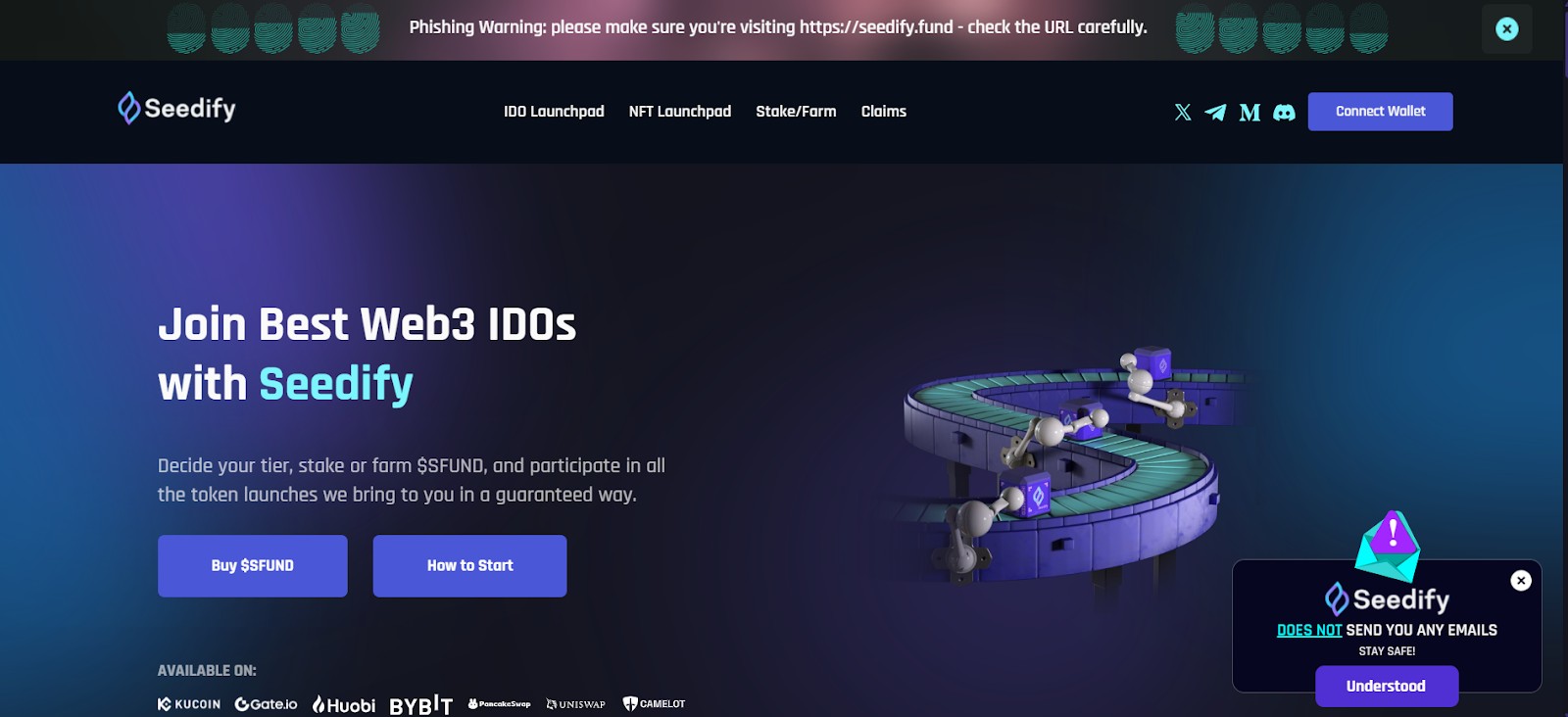
To join IGOs, users must buy SFUND and stake it. Staking assigns them to a Seedify Tier, which sets their allocation size. Lower tiers use a lottery for spots, while higher tiers receive guaranteed allocations. This Tier model is a core part of how Seedify tiers distribute access fairly.
Users must complete KYC before investing, which is one of the main Seedify launchpad requirements. After verification, they can register for IGOs, join token sales, and claim tokens based on each project’s vesting schedule.
Seedify also runs an incubation program, providing funding, strategic guidance, and marketing support to emerging blockchain projects. Additionally, its NFT and metaverse launchpad allows users to invest in exclusive digital assets tied to gaming and virtual environments. As detailed in many Seedify reviews, this dual focus on startups and digital asset investment appeals to a wide user base.
By combining staking, structured allocations, and incubation support, Seedify creates an ecosystem where both investors and blockchain startups can benefit from early-stage opportunities in the Web3 space. This integration of services is central to understanding what Seedify is and how it empowers the future of decentralized innovation.
Rules and conditions for using Seedify Launchpad
Users need SFUND tokens to join activities on the Seedify launchpad. Holding and staking more SFUND places users in higher Seedify tiers, which unlock better access to IGO projects. Token ownership and staking are the core requirements of the Seedify fund ecosystem.
Seedify Tier system and token allocation
Seedify has implemented a 9-tier system to ensure fair distribution of opportunities among participants:
Tier-1: 250 SFUND — pool weight 1.2.
Tier-2: 1,000 SFUND — pool weight 2.
Tier-3: 2,500 SFUND — pool weight 5.5.
Tier-4: 5,000 SFUND — pool weight 12.
Tier-5: 7,500 SFUND — pool weight 19.
Tier-6: 10,000 SFUND — pool weight 26.
Tier-7: 25,000 SFUND — pool weight 70.
Tier-8: 50,000 SFUND — pool weight 150.
Tier-9: 100,000 SFUND — pool weight 325.
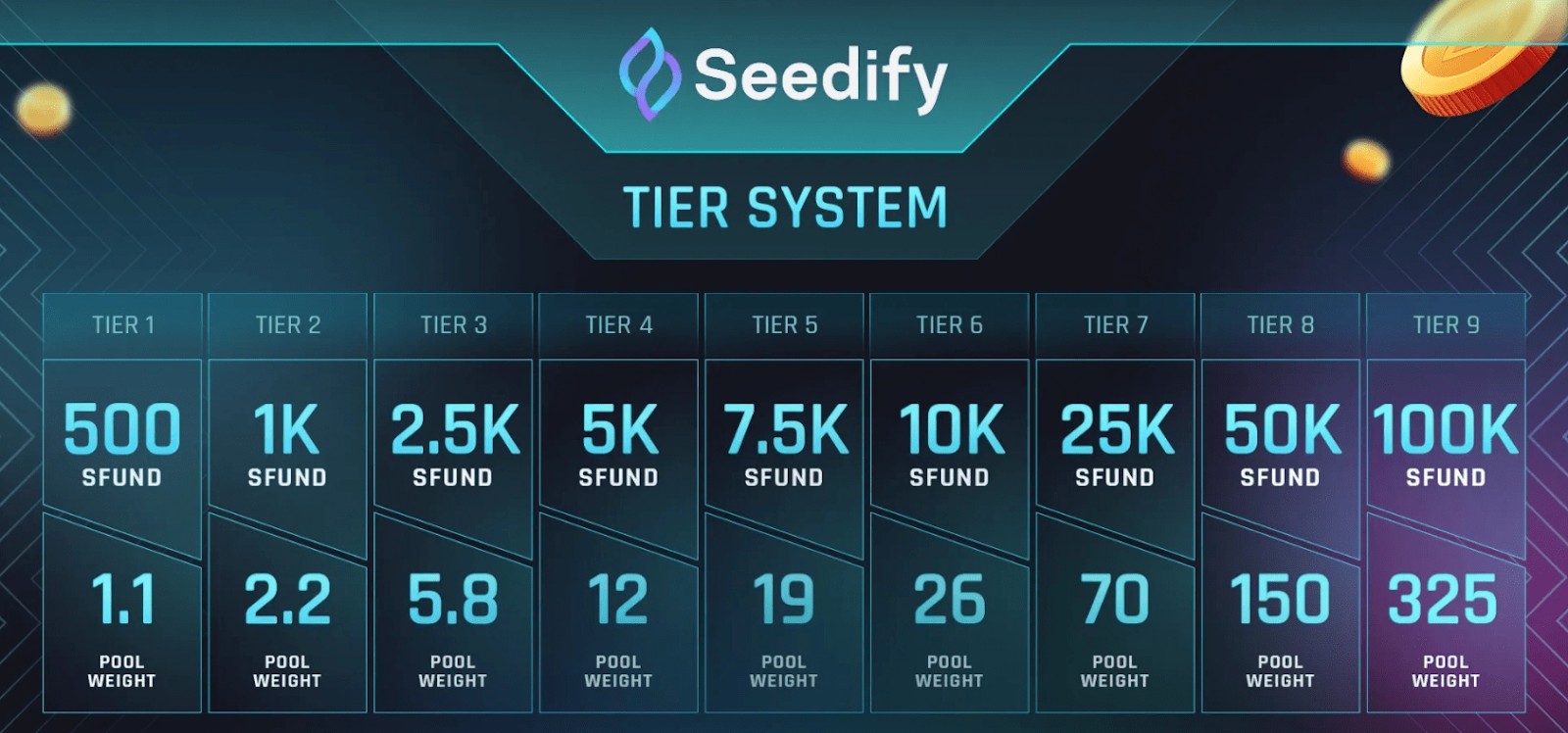
Pool weight determines the share of tokens a user receives in an IGO. Higher tiers offer better access, which is a key part of the Seedify fund’s crypto allocation model.
Tier-1 is lottery based, giving smaller holders a chance to join. From Tier-2 onward, allocations are guaranteed, and higher tiers secure larger token amounts.
Participation process
To join an IGO on Seedify launchpad, users start by connecting a BSC compatible wallet such as MetaMask or Trust Wallet. They must then complete KYC by submitting proof of identity and residence. These steps are required for all users entering the Seedify fund ecosystem.
After verification, users buy and stake SFUND. Staking assigns them to a Seedify tier, which controls their allocation size. Once staking is complete, users can register for upcoming IGOs and invest in selected projects within the Seedify fund.
This tier-based system ensures transparent and fair allocation distribution, encouraging active participation and support for innovative blockchain projects. The higher a participant’s Tier, the greater their investment opportunities in high-potential projects. The higher a participant’s Tier, the greater their investment opportunities in high-potential projects, which is a defining advantage often highlighted in Seedify reviews.
Projects on Seedify launchpad
Seedify launchpad has established itself as a leading platform for incubating and launching blockchain gaming, NFT, and metaverse projects. Since its inception, Seedify has supported over 60 projects, many of which have achieved significant success and impacted the industry.
Overview of successful projects
SIDUS HEROES. Delivered an ATH ROI of 109x (NF) and became a well known success within the Seedify fund’s crypto portfolio.
Bloktopia. A metaverse project that achieved an ATH ROI of 698x (NF). It is one of the strongest IGOs released under Seedify.
ChainGPT. A project combining AI and blockchain that produced strong ATH results (NF). Its performance highlights the quality checks within the Seedify tiers system.
How to join Seedify Launchpad
Seedify launchpad allows users to join early stage blockchain projects through IGOs. To start, investors must connect a wallet, complete verification, and stake SFUND. These steps follow the onboarding flow shown on Seedify launchpad’s official site.
Connect a crypto wallet
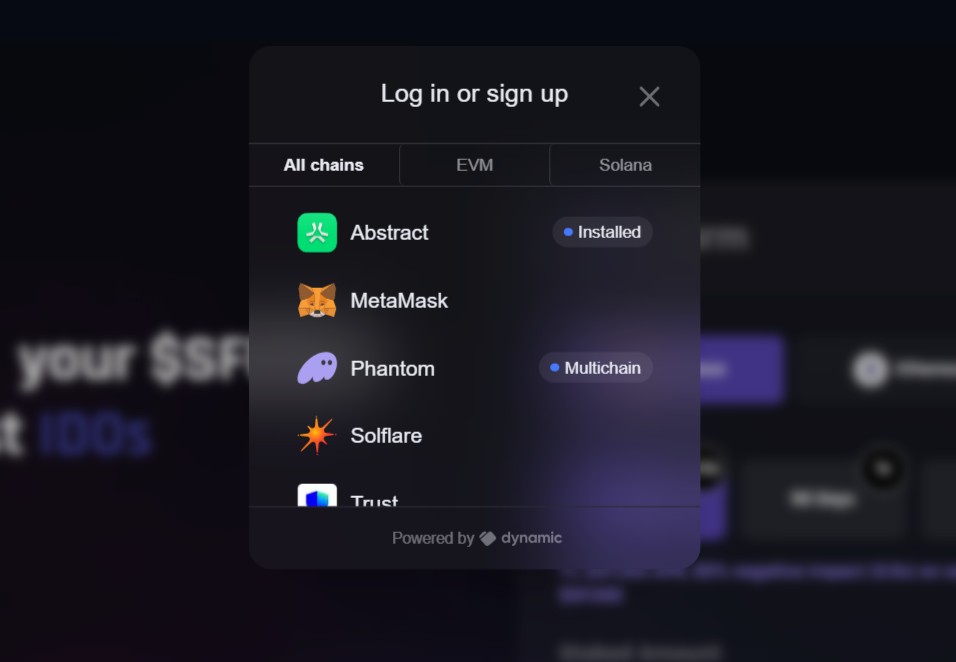
Set up a BSC compatible wallet such as MetaMask or Trust Wallet. Use the “Connect Wallet” button to link it to the platform and access the Seedify fund ecosystem.
Complete KYC verification
Users must submit a government ID, proof of residence, a selfie, and their wallet address. Once approved, their profile switches to “Registered” and they can join IGOs on the Seedify fund launchpad.
Acquire and stake SFUND tokens
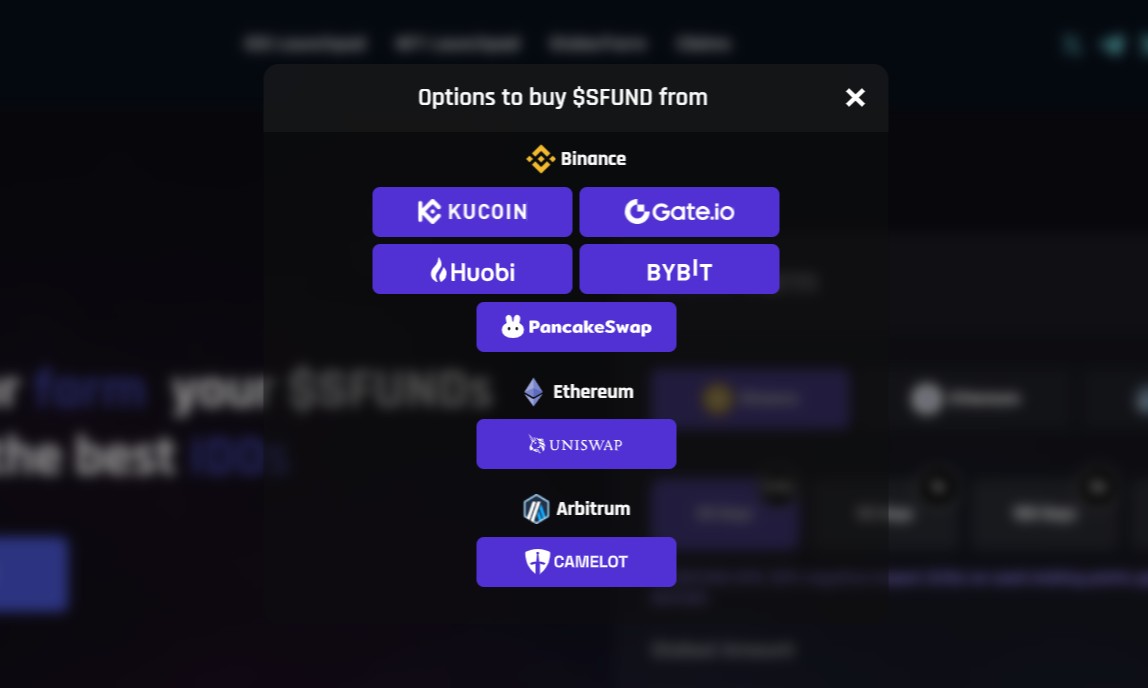
Buy SFUND on supported exchanges such as KuCoin, Gate.io, or PancakeSwap. Transfer the tokens to your connected wallet and stake them on the platform. Staking determines your Seedify tiers level and IGO access.
Choose a lock period
Available options include 30 days (1% APY), 90 days (3% APY), 180 days (7% APY), and 270 days (11% APY). Staking must be completed at least 24 hours before an IGO due to balance snapshots.
How tiers affect IGO participation
Seedify uses a structured 9-tier model to decide how much allocation each user receives in IGOs. Higher tiers offer larger allocations because they have higher pool weights.
Tier-1 uses a lottery. Users with 250 SFUND enter a random draw for allocation. This gives smaller holders a chance to participate.
Tier-2 and above receive guaranteed allocations. From 1,000 SFUND onward, users get fixed allocation access in every supported IGO.
Higher tiers receive more tokens. Allocation increases with each Tier because pool weight grows. This structure is central to how Seedify tiers control access in the Seedify fund ecosystem.
Allocation fairness is preset. Pool share follows fixed rules and does not change during an IGO, which supports a transparent distribution model for early investors.
How to launch a crypto project on Seedify launchpad
Seedify launchpad helps developers raise funds, grow communities, and prepare for IGOs. The Seedify fund’s launchpad model supports early teams with strategy, marketing, and investor access.
Application process for developers
Submit the project form. Teams must provide details about the concept, team, token model, and technical structure. This starts the review process.
Complete the initial review. Seedify checks the project’s vision, utility, and readiness. Teams often have an interview to discuss goals and development plans.
Pass the final audit. Approved projects undergo a deeper evaluation to confirm viability before entering the Seedify fund crypto incubation program.
Selection and incubation process
Receive strategic support. Seedify helps refine gameplay ideas, tokenomics, and IGO structure.
Build investor connections. Teams gain access to Seedify’s network of investors and strategic partners.
Run marketing and PR campaigns. Seedify supports campaigns to grow community visibility before the launch.
Get technical and advisory guidance. Developers receive support on product design, platform integration, and launch planning.
Launch the project. After incubation, the project goes live on the Seedify Launchpad, giving developers exposure to active investors.
After joining an IGO on Seedify and receiving your tokens, the next practical step is deciding where to hold or trade them once they become liquid. This is where reviewing the best crypto exchanges in your region fits naturally into the process, as it helps you understand which platforms support those tokens and offer smooth access after the launch without changing your overall investment approach.
| Coinbase | OKX | BTCC | Cryptohopper | Crypto.com | |
|---|---|---|---|---|---|
|
Min. Deposit, $ |
10 | 10 | 10 | No | 1 |
|
Coins Supported |
400+ | 600+ | 399 | 1000 | 400+ |
|
Spot Taker fee, % |
0.5 | 0.1 | 0.3 | 0 | 0.5 |
|
Spot Maker Fee, % |
0.5 | 0.08 | 0.2 | 0 | 0.25 |
|
Alerts |
Yes | Yes | No | Yes | Yes |
|
Copy trading |
No | Yes | Yes | Yes | No |
|
TU overall score |
8.5 | 8.46 | 8.08 | 7.8 | 7.76 |
|
Open an account |
Go to broker Your capital is at risk. |
Go to broker Your capital is at risk. |
Go to broker Your capital is at risk.
|
Go to broker Your capital is at risk. |
Go to broker Your capital is at risk. |
Be early, verify vesting, and focus on long term value

When I join an IGO on the Seedify launchpad, I focus on two things:timing and token structure. Even with the right Seedify Tier, allocation can disappear fast, so I make sure my wallet is funded and ready before the sale opens. A quick test run on a previous IGO helps me avoid delays and mistakes. I also study each project’s vesting schedule closely. Some releases look strong at first, but small TGE unlocks and long cliffs can limit early gains. When the details are unclear, I wait until the team provides transparent information.
As a developer, I have seen many projects lose momentum after launch because they rely too heavily on early hype. What works better is building rewards around real user actions instead of offering generic staking incentives. I also look for ways to reach audiences outside crypto, such as gaming communities and content creators. This broader approach supports long term growth on the Seedify fund launchpad and keeps interest steady after the IGO.
Conclusion
Seedify Launchpad offers a structured and transparent gateway for early access to high-potential Web3, gaming, and NFT projects through its innovative tier-based IGO system. By staking SFUND tokens and completing KYC, users can unlock allocation opportunities that scale with their commitment, as seen with successful launches like SIDUS HEROES and Bloktopia. This platform not only benefits investors but also provides crucial incubation, funding, and marketing support to promising blockchain startups. Ultimately, Seedify stands out as a catalyst for decentralized innovation, empowering both project teams and investors to participate meaningfully at the forefront of crypto development.
FAQs
What criteria must a blockchain project meet to be considered for launch on Seedify?
How are allocation shares determined for each tier in Seedify’s IGO participation?
What roles do staking periods and APY play in the Seedify ecosystem?
Which types of projects are typically featured on the Seedify Launchpad?
Editors' Top Picks and Insights





Related Articles
Team that worked on the article
Aleksandra Chaikina has been a contributor to Traders Union since 2021. With over 15 years of experience in copywriting and more than 5 years focused on financial content, she specializes in producing detailed guides, analytics, and comparative reviews across various sectors, including cryptocurrencies, Forex, investment strategies, and financial technologies.
Dan Blystone began his trading career in 1998 as an arbitrage clerk on the floor of the Chicago Mercantile Exchange (CME). He later traded bond and Eurex futures at proprietary firms such as Altea Trading, gaining valuable experience in high-frequency trading and risk management.
Chinmay Soni is a financial analyst with more than 5 years of experience in working with stocks, Forex, derivatives, and other assets. As a founder of a boutique research firm and an active researcher, he covers various industries and fields, providing insights backed by statistical data.
Ethereum is a decentralized blockchain platform and cryptocurrency that was proposed by Vitalik Buterin in late 2013 and development began in early 2014. It was designed as a versatile platform for creating decentralized applications (DApps) and smart contracts.
Index in trading is the measure of the performance of a group of stocks, which can include the assets and securities in it.
An investor is an individual, who invests money in an asset with the expectation that its value would appreciate in the future. The asset can be anything, including a bond, debenture, mutual fund, equity, gold, silver, exchange-traded funds (ETFs), and real-estate property.
Cryptocurrency is a type of digital or virtual currency that relies on cryptography for security. Unlike traditional currencies issued by governments (fiat currencies), cryptocurrencies operate on decentralized networks, typically based on blockchain technology.
Crypto trading involves the buying and selling of cryptocurrencies, such as Bitcoin, Ethereum, or other digital assets, with the aim of making a profit from price fluctuations.

-
 Afghanistan
-
 Albania
-
 Algeria
-
 Angola
-
 Argentina
-
 Armenia
-
 Australia
-
 Austria
-
 Azerbaijan
-
 Bahamas
-
 Bahrain
-
 Bangladesh
-
 Belarus
-
 Belgium
-
 Bolivia
-
 Botswana
-
 Brazil
-
 Brunei
-
 Bulgaria
-
 Cambodia
-
 Cameroon
-
 Canada
-
 Chile
Chile
-
 China
China
-
 Colombia
-
 Congo
Congo
-
 Costa Rica
-
 Cote d'Ivoire
-
 Croatia
-
 Cuba
Cuba
-
 Cyprus
-
 Czechia
-
 DR Congo
-
 Denmark
-
 Dominican Republic
-
 Ecuador
-
 Egypt
Egypt
-
 El Salvador
-
 Estonia
-
 Eswatini
-
 Ethiopia
-
 Finland
-
 France
-
 Georgia
-
 Germany
-
 Ghana
Ghana
-
 Greece
-
 Haiti
Haiti
-
 Hong Kong
-
 Hungary
-
 India
India
-
 Indonesia
-
 Iran, Islamic republic
-
 Iraq
Iraq
-
 Ireland
-
 Israel
-
 Italy
Italy
-
 Jamaica
-
 Japan
Japan
-
 Jordan
-
 Kazakhstan
-
 Kenya
Kenya
-
 Korea
Korea
-
 Kuwait
-
 Kyrgyzstan
-
 Laos
Laos
-
 Latvia
-
 Lebanon
-
 Lesotho
-
 Libya
Libya
-
 Lithuania
-
 Luxembourg
-
 Madagascar
-
 Malaysia
-
 Malta
Malta
-
 Mauritius
-
 Mexico
-
 Moldova
-
 Mongolia
-
 Montenegro
-
 Morocco
-
 Mozambique
-
 Myanmar
-
 Namibia
-
 Nepal
Nepal
-
 Netherlands
-
 New Zealand
-
 Nigeria
-
 North Macedonia
-
 Norway
-
 Oman
Oman
-
 Pakistan
-
 Palestine
-
 Panama
-
 Papua New Guinea
-
 Paraguay
-
 Peru
Peru
-
 Philippines
-
 Poland
-
 Portugal
-
 Puerto Rico
-
 Qatar
Qatar
-
 Reunion
-
 Romania
-
 Rwanda
-
 Saudi Arabia
-
 Serbia
-
 Singapore
-
 Slovakia
-
 Slovenia
-
 Somalia
-
 South Africa
-
 Spain
Spain
-
 Sri Lanka
-
 Sweden
-
 Switzerland
-
 Syria
Syria
-
 Taiwan
-
 Tajikistan
-
 Tanzania
-
 Thailand
-
 Trinidad and Tobago
-
 Tunisia
-
 Turkey
-
 UAE
UAE
-
 Uganda
-
 Ukraine
-
 United Kingdom
-
United States
-
 Uruguay
-
 Uzbekistan
-
 Venezuela
-
 Vietnam
-
 Yemen
Yemen
-
 Zambia
-
 Zimbabwe
- Forex
- Crypto












