
Best Crypto Wallets for Everyday Use: Payments, Transfers, and Exchange


Editorial Note: While we adhere to strict Editorial Integrity, this post may contain references to products from our partners. Here's an explanation for How We Make Money. None of the data and information on this webpage constitutes investment advice according to our Disclaimer.
Best crypto wallets for everyday use:
Trustee Plus – best for everyday crypto spending with IBAN, SEPA, and Apple/Google Pay card support.
MetaMask – top self-custody wallet for DeFi, dApps, and on-chain payments via MetaMask Card.
Trust Wallet – beginner-friendly multi-chain wallet for swaps, NFTs, and mobile crypto management.
Base App / Coinbase Wallet – smooth self-custody onboarding with passkeys and native USDC support.
Crypto.com App – all-in-one crypto ecosystem with Visa card, trading, and earning features.
Zengo – seedless self-custody wallet using MPC technology and biometric recovery.
Revolut Crypto – convenient crypto access inside a familiar neobanking app environment.
Binance Wallet – strong ecosystem for instant gas-free transfers and Binance Pay transactions.
Crypto has moved past trading, holding, and DeFi experiments. For a growing share of users, it is no longer just an "asset for the future" but a working financial tool. You get paid by a client. You park part of your funds in stablecoins. You move money between countries, pay for a trip, a subscription, or dinner in another currency.
This shift is especially visible among freelancers, digital nomads, developers, marketers, and designers – people living between several countries. Bank transfers can be slow. Cards get blocked or limited. A single local currency rarely fits an international life. A crypto wallet stops being a token vault and starts behaving like a mobile account for daily operations.
For an everyday scenario, the number of supported memecoins isn't what matters. What matters is whether you can receive funds quickly, send them to another person, swap USD, and pay with your phone – without losing half an hour on a single transaction.
Below are eight apps that cover these tasks in different ways: payments, transfers, exchanges, stablecoins, cards, DeFi, and self-custody. The goal isn't to crown a winner – it's to make the trade-offs visible.
Risk warning: Cryptocurrency markets are highly volatile, with sharp price swings and regulatory uncertainties. Research indicates that 75-90% of traders face losses. Only invest discretionary funds and consult an experienced financial advisor.
1. Trustee Plus
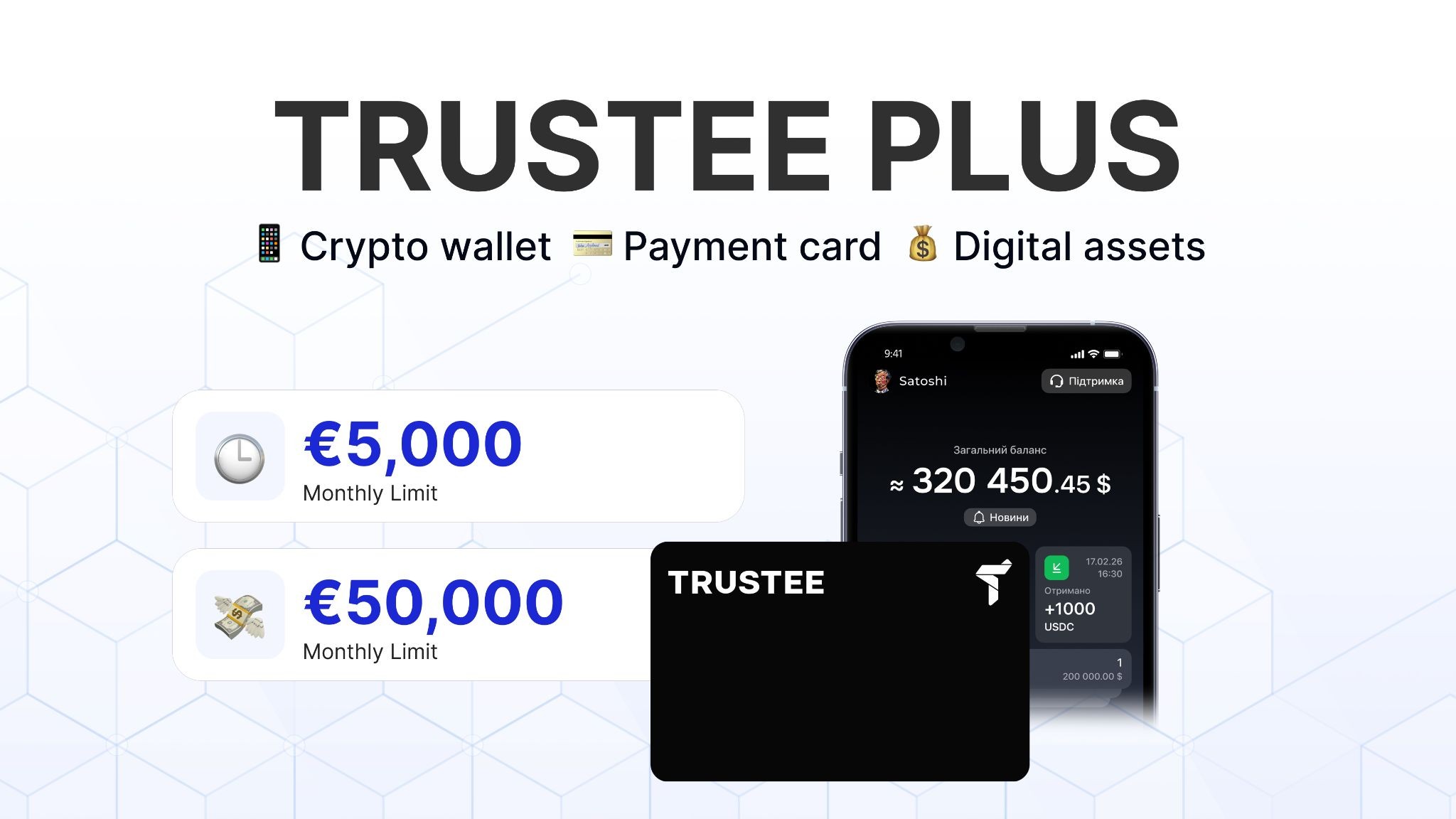
Trustee Plus is the strongest pick for everyday crypto use in Europe. It doesn’t try to replace MetaMask for DeFi; instead, it turns digital assets into a real-world payment tool.
The real standout is the built-in virtual crypto card, which fundamentally changes how you off-ramp. Instead of manually selling your cryptocurrencies on an exchange and waiting for a bank withdrawal, the card automates the entire loop. You simply link a specific crypto balance (like USDT or USDC) to the card and add it to Apple Pay or Google Pay. When you tap your phone at a terminal, Trustee Plus executes the crypto-to-fiat conversion in milliseconds. The merchant receives standard currency, while the exact equivalent is seamlessly deducted from your crypto balance. From the user's perspective, it feels exactly like paying with a regular bank card.
- Pros
- Cons
personal IBAN and SEPA access for European transfers;
debit card with Apple Pay and Google Pay integration;
automatic conversion from stablecoins to dollars at checkout;
phone-number transfers with 0% fees;
live human support and account recovery;
limit: Up to $5,000 balance and $30,000/mo. No daily limits.
custodial – funds technically sit with the operator;
not built for deep DeFi or NFT collecting;
a neobank-style fintech tool, not a Web3 wallet.
Validated by Incrypted's market analysis, Trustee Plus effortlessly ranks among the most trusted options when choosing a crypto wallet.
2. MetaMask
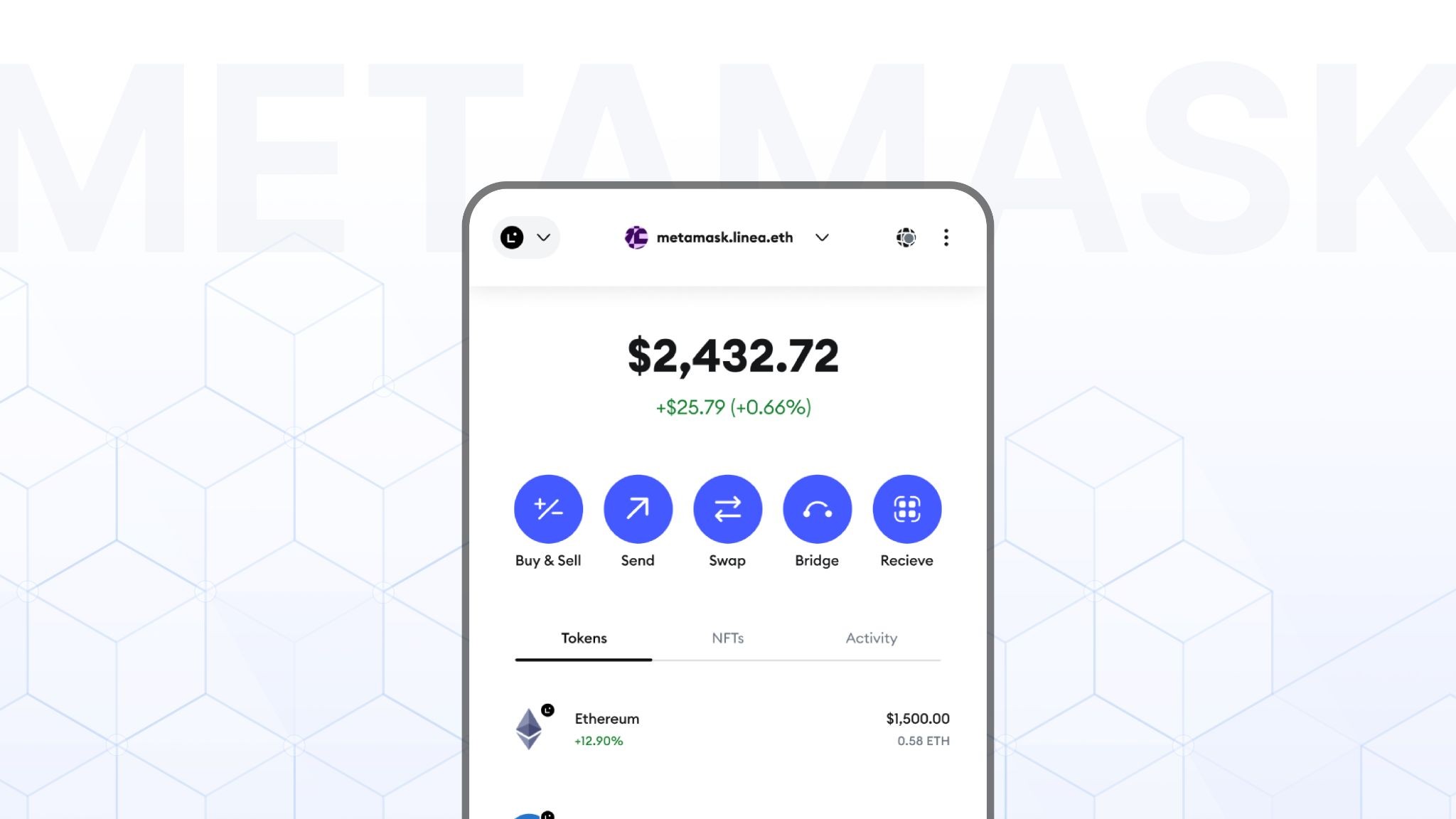
Traditionally a DeFi wallet, MetaMask has become highly relevant for daily spending thanks to the MetaMask Card (Mastercard). Live across the EEA, UK, and LATAM, it allows users to spend directly from their self-custody wallet.
For active on-chain users, it is a powerful combination of Web3 access and real-world spending. The cost, however, is cognitive overhead: the everyday flow remains gated by Web3 mechanics. You still manage gas, network selection, and phishing risks.
- Pros
- Cons
self-custody with full key control;
deep integration with DeFi, dApps, and L2s;
MetaMask Card is live across the EEA and UK.
everyday flow is complicated by gas, networks, and phishing checks;
a wrong-network transfer or malicious approval is fully on the user;
cashback is paid in mUSD, which may not appeal to everyone.
3. Trust Wallet
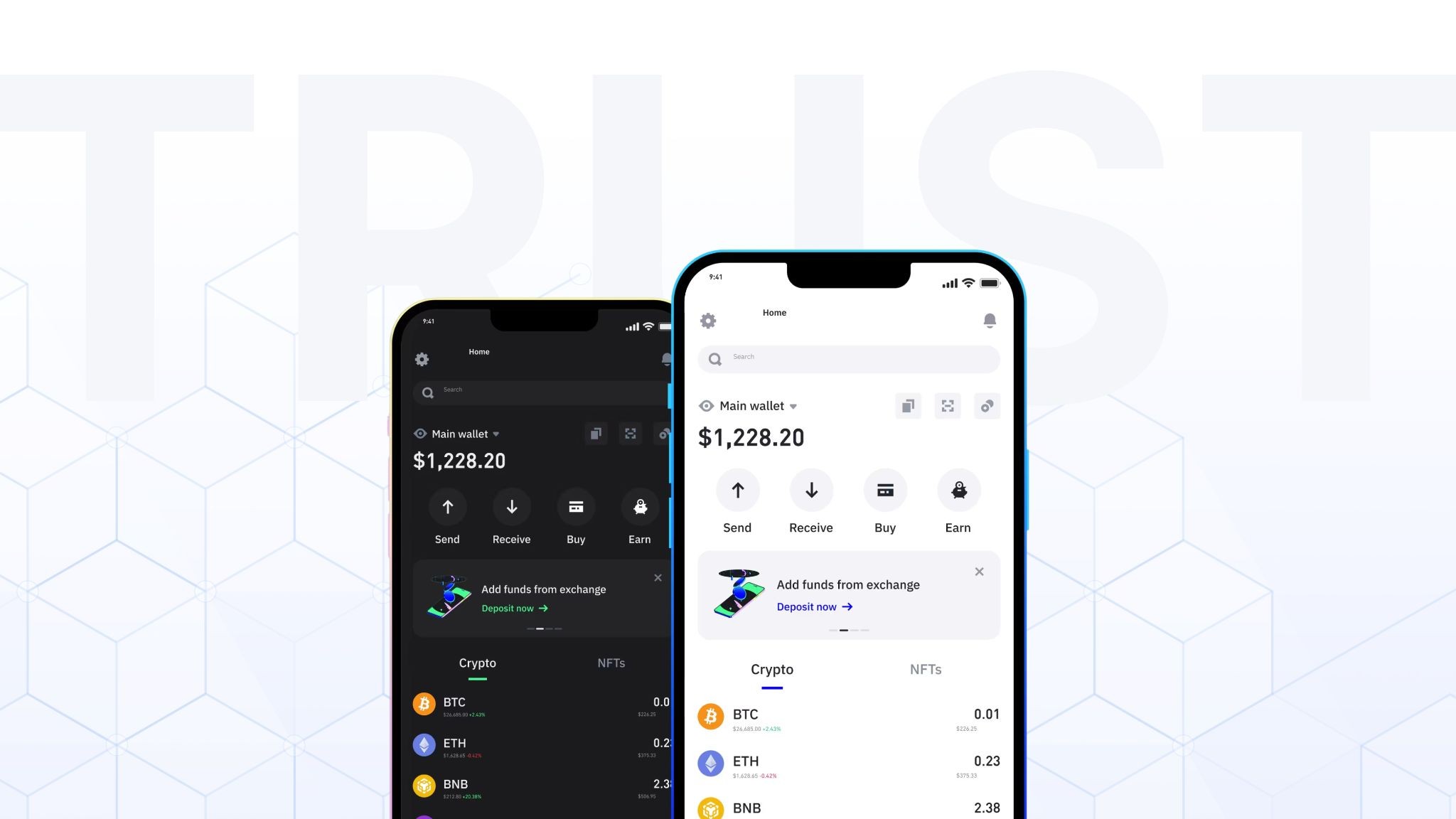
Trust Wallet excels at mobile transfers and cross-chain swaps. It offers massive breadth – networks, tokens, NFTs, and dApps – in a clean mobile format.
In everyday life, it’s best for holding diverse assets or doing quick swaps. However, it lacks native banking rails; its Apple Pay and Google Pay integrations act only as fiat on-ramps, not checkout solutions. Multi-chain breadth can also be a UX trap for beginners if they accidentally send stablecoins on the wrong network.
- Pros
- Cons
massive network and asset coverage;
intuitive mobile-first UI with in-app swaps;
self-custody for users who want full key control.
multi-chain complexity increases the risk of lost funds for beginners;
in-app swap quotes are convenient but rarely the cheapest;
no card or direct banking integrations.
4. Base App / Coinbase Wallet
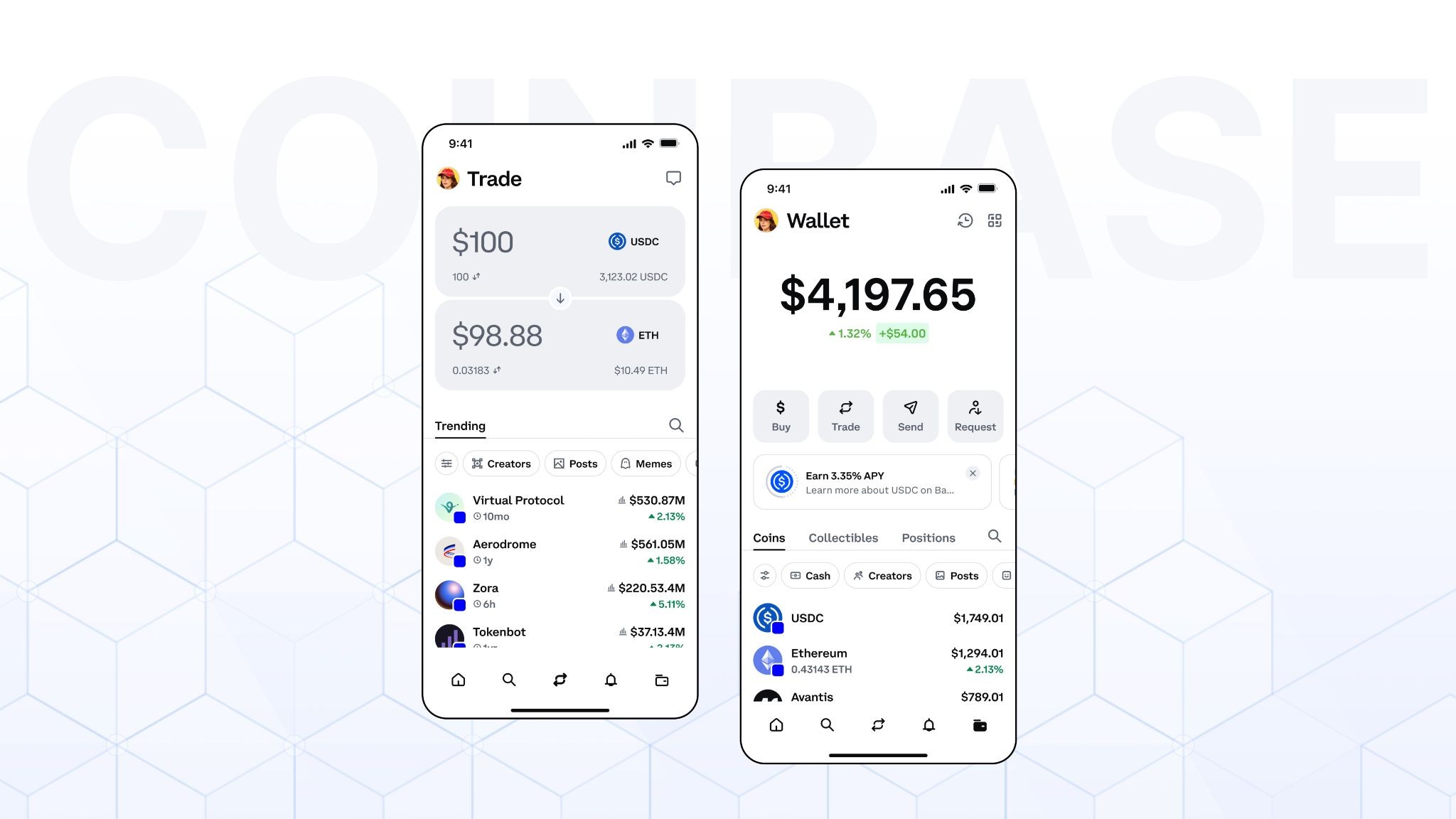
Now promoted as the Base App, this self-custody wallet shines with its Smart Wallet onboarding. Using passkeys and gas sponsorship, it removes seed phrases and network fees for new users, offering an incredibly smooth entry – especially for USDC.
The appeal is mostly on-chain (transfers, dApps, the Base ecosystem) rather than real-world spending, as many payment and reward features remain restricted in the EU.
- Pros
- Cons
incredibly smooth self-custody UX via passkeys;
native USDC integration through Coinbase/Circle;
mature mobile experience on iOS and Android.
USDC rewards and social/payment features are often unavailable in the EU;
the Coinbase brand attracts heavy impersonation scams;
drift toward a "super-app" adds unnecessary noise.
5. Crypto.com app
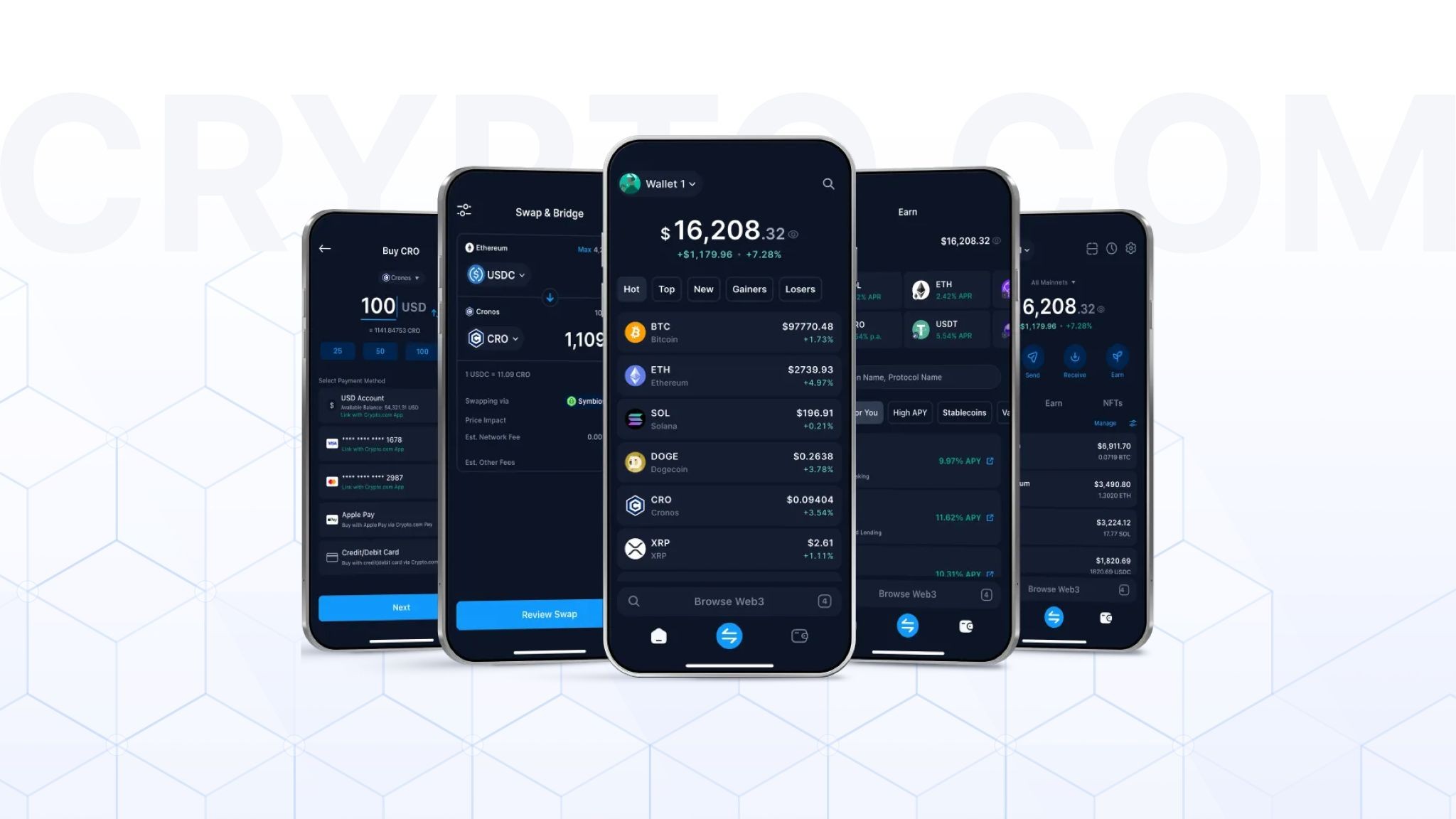
The Crypto.com App is a full crypto-financial ecosystem covering buying, earning, and the flagship Visa Card. It is an all-in-one app rather than a simple wallet.
While the card infrastructure is mature, the app can feel cluttered. Headline cashback tiers require CRO staking, and fee schedules or feature availability shift heavily by country, which adds friction for users who just want to spend stablecoins.
- Pros
- Cons
mature, globally recognized card infrastructure;
buying, selling, and swapping in one ecosystem;
a good fit for users who want everything under one roof.
the best cashback tiers require locking up CRO capital;
feature availability and fees differ noticeably by country;
the sheer number of internal products can be overwhelming.
6. Zengo
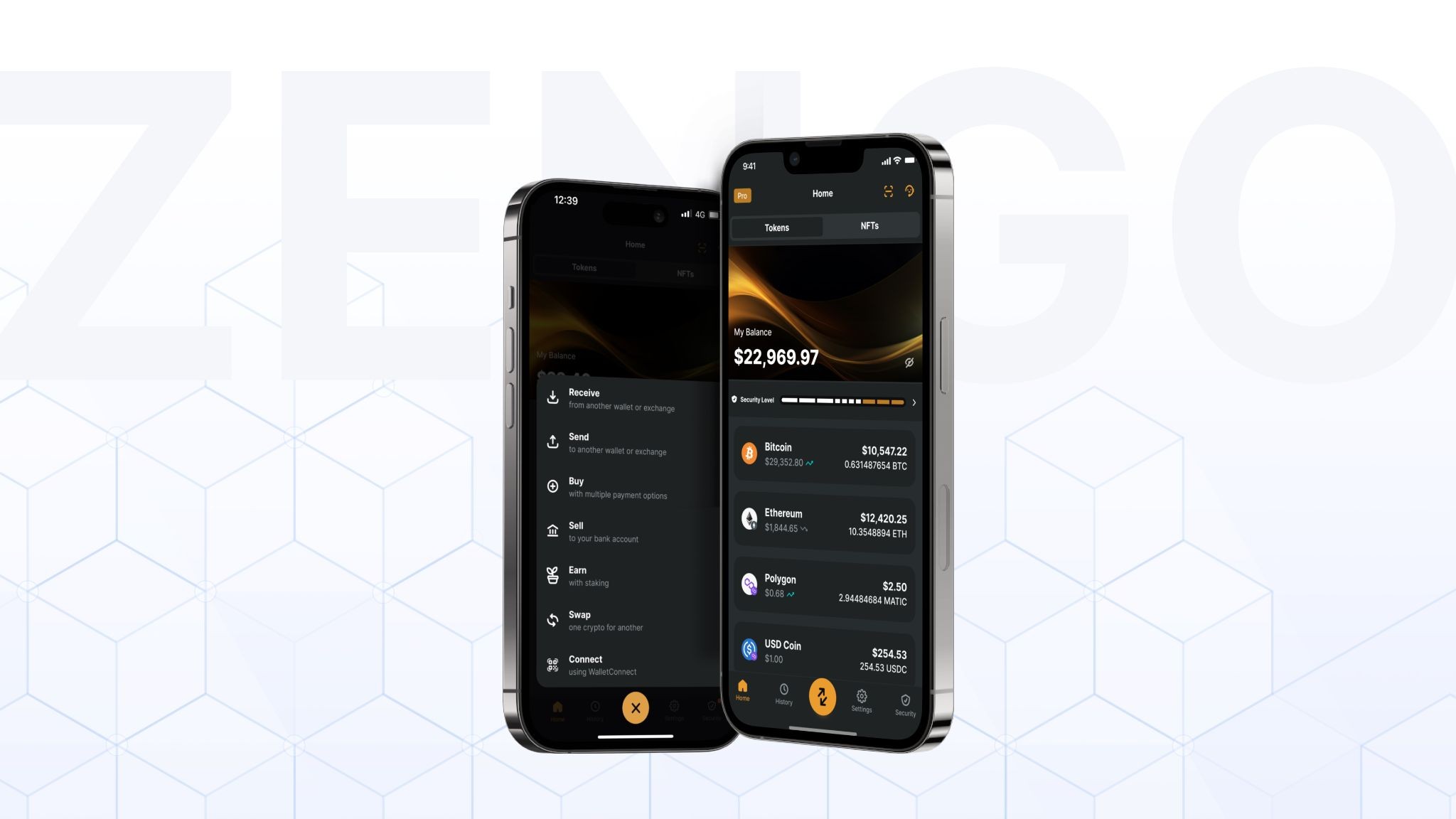
Zengo solves the classic self-custody problem: seed phrase vulnerability. Built on MPC (Multi-Party Computation), the signing key is split between the device and a remote server.
You get genuine self-custody and 3FA recovery (email, biometrics) without trusting a piece of paper with your savings. It is a strong middle ground for users terrified of losing keys, though advanced fintech features are gated behind a paid tier.
- Pros
- Cons
self-custody without a classic seed phrase;
mPC architecture with a documented, secure recovery flow;
built-in buying and swapping features.
you must trust Zengo's servers to keep their half of the key available;
the physical card and advanced features require a paid Pro tier;
limited DeFi depth compared to MetaMask.
7. Revolut Crypto
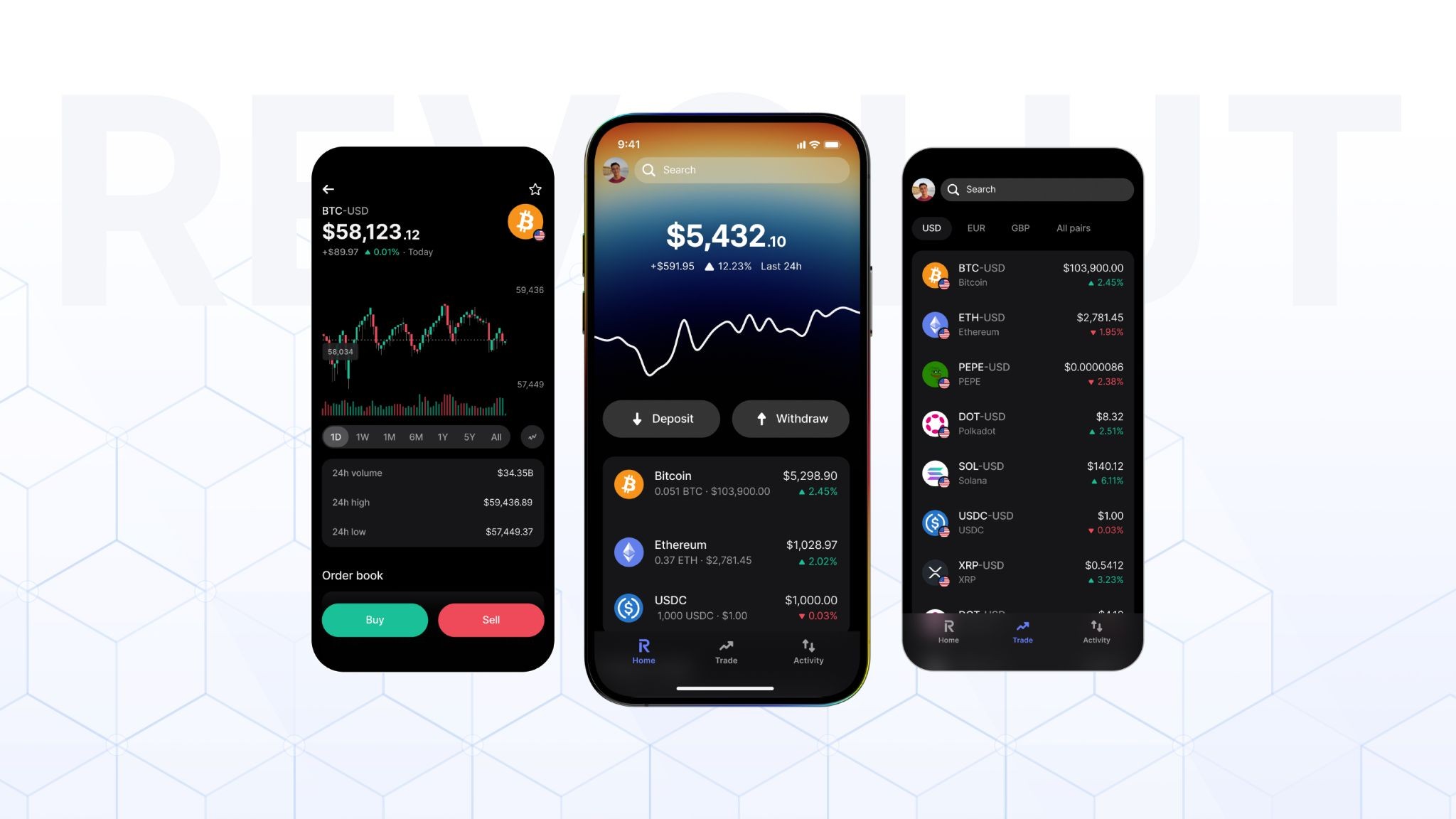
While not a classic Web3 wallet, Revolut handles everyday crypto for mainstream users. They can buy, sell, and hold 200+ digital assets directly inside their regular banking app.
The neobanking UX is flawless, but Revolut treats crypto purely as a brokerage feature. Assets are held custodially, and external withdrawals are often capped or restricted by automated risk scoring, limiting true on-chain mobility.
- Pros
- Cons
familiar, seamless neobanking UX;
200+ crypto assets available;
perfect for users who already use Revolut for daily fiat banking.
external crypto withdrawals face strict, sometimes unpredictable limits;
asset and network coverage for moving tokens externally is narrow;
operates more like a brokerage; assets sit on Revolut's books.
8. Binance Wallet
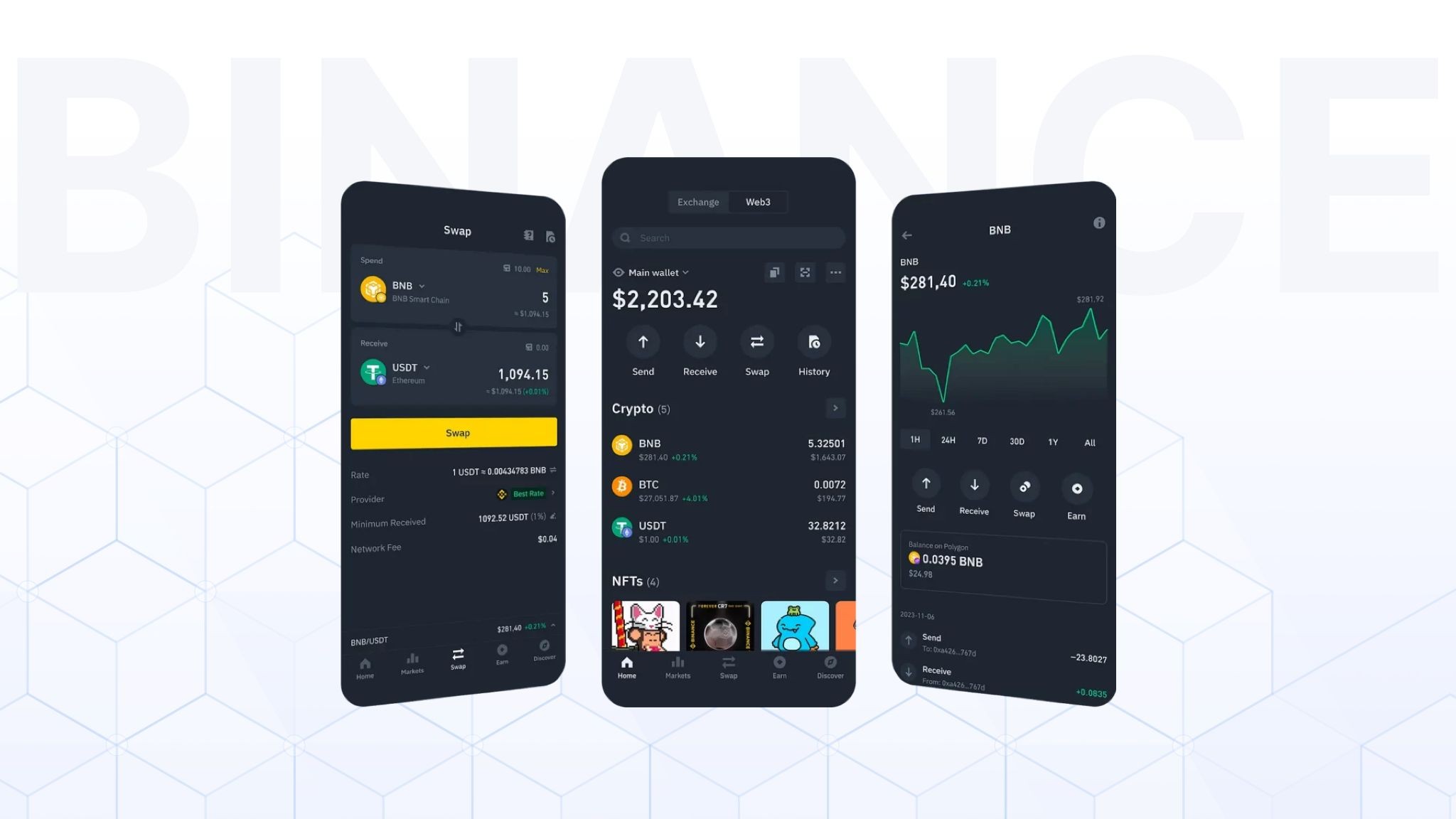
Binance excels through its internal ecosystem: Binance Pay, internal transfers, and the Web3 Wallet. Sending crypto via phone number or QR code with zero gas fees is a massive everyday advantage.
However, navigating the sprawling app is a learning curve. Furthermore, Binance Pay loses much of its edge if the recipient isn't also within the Binance ecosystem.
- Pros
- Cons
massive liquidity and an extensive asset list;
Binance Pay enables instant, gas-free P2P transfers;
contact-list sending lowers the chance of user error.
the app is heavily cluttered with diverse exchange products;
regional regulatory restrictions in Europe shift constantly;
P2P features work best only between Binance account holders.
Why an everyday wallet is more than "a wallet with a card"
An everyday crypto wallet has to survive not only the market but daily life. Transfers should feel ordinary. If sending $50 requires an explanation of addresses, networks, memos, and gas, that isn’t a mass-market UX – it’s an obstacle course. Phone-number, contact-list, and QR-based sending usually beat raw on-chain transfers because they remove a category of mistakes you can’t undo.
Swapping has to live inside the same flow. People don’t want to think like traders every time they need to spend USDT or rotate into dollars. Moving between stablecoins, crypto, and fiat should feel like checking a balance, not like running a manual trade.
Stablecoins matter more here than exotic tokens. For daily use, USDT and USDC do more work than the thousands of altcoins most wallets advertise. They’ve become the working layer for international payments, transfers, and parking value between banking systems.
And the last piece is access. When a wallet is used every day, the question "What happens if I lose my phone?" weighs as much as "Who controls the keys?". Different audiences answer differently – pure self-custody, MPC without a seed phrase, or a custodial product with support and recovery. None is universally right.
Best crypto exchanges for funding and using everyday wallets
Even the best everyday crypto wallet still depends on the infrastructure around it. Users need reliable ways to buy stablecoins, withdraw funds, move assets between networks, and convert crypto into fiat when necessary.
For many people, exchanges remain the main bridge between traditional banking and everyday crypto usage. Fast withdrawals, low transfer fees, broad stablecoin support, and seamless integration with payment systems can significantly improve the overall wallet experience.
Below is a comparison of the best crypto exchanges for funding, transferring, and managing assets used in everyday crypto wallets.
| Coinbase | OKX | BTCC | Cryptohopper | Crypto.com | |
|---|---|---|---|---|---|
|
Demo account |
No | Yes | Yes | No | No |
|
Min. Deposit, $ |
10 | 10 | 10 | No | 1 |
|
Coins Supported |
400+ | 600+ | 399 | 1000 | 400+ |
|
Spot Taker fee, % |
0.5 | 0.1 | 0.3 | 0 | 0.5 |
|
Spot Maker Fee, % |
0.5 | 0.08 | 0.2 | 0 | 0.25 |
|
Alerts |
Yes | Yes | No | Yes | Yes |
|
Copy trading |
No | Yes | Yes | Yes | No |
|
TU overall score |
8.5 | 8.46 | 8.08 | 7.8 | 7.76 |
|
Open an account |
Go to broker Your capital is at risk. |
Go to broker Your capital is at risk. |
Go to broker Your capital is at risk.
|
Go to broker Your capital is at risk. |
Go to broker Your capital is at risk. |
Separate wallets by purpose instead of searching for a single “perfect” solution

From my perspective, the biggest mistake users make when choosing a crypto wallet is treating every wallet as if it solves the same problem. In reality, daily crypto usage and long-term self-custody are two very different tasks. If you actively live between crypto and traditional finance – receiving payments, moving stablecoins, paying for subscriptions, or traveling – usability matters just as much as decentralization.
I’d recommend separating wallets by purpose instead of searching for a single “perfect” solution. For daily spending and transfers, convenience, recovery options, and payment integration usually matter more than deep DeFi functionality. For long-term storage, the priority shifts toward self-custody, offline security, and minimizing exposure to centralized risks.
I also think many users underestimate operational friction. A wallet may look powerful on paper, but if every transaction requires network checks, gas management, bridge confirmations, and constant phishing awareness, most people simply won’t use it comfortably every day. The best everyday wallet is often the one that removes cognitive load rather than adding more features.
Another important point is recovery. Losing access remains one of the biggest real-world crypto risks. Some users are comfortable managing seed phrases and hardware backups, while others are better served by MPC or hybrid recovery systems. Choosing the wrong security model for your own habits is often more dangerous than choosing the “wrong” wallet itself.
For most mainstream users, stablecoin support, fast transfers, and smooth fiat interaction are becoming more important than access to thousands of tokens. Crypto is gradually behaving less like a speculative environment and more like an alternative financial infrastructure – and wallets are evolving in the same direction.
Conclusion
An everyday wallet isn’t necessarily the most decentralized one. It’s the product you’ll actually open every day to receive, transfer, swap, pay, and recover access – without getting lost in network selectors.
MetaMask and Trust Wallet are strong for on-chain users. Base App fits the Coinbase ecosystem. Crypto.com and Revolut work as financial apps with a crypto module attached. Zengo solves the seed-phrase problem cleanly. Binance gives you liquidity, Binance Pay, and Web3 access.
For a European user who needs crypto not just on-chain but in real life, Trustee Plus tends to be the most practical pick.
FAQs
Can a crypto wallet fully replace a traditional bank account?
Not entirely, but for many users it already covers a large part of daily financial activity. Modern wallets allow people to receive payments, hold stablecoins, send international transfers, and pay for goods or subscriptions without relying on traditional banking infrastructure.
Which matters more for everyday use: self-custody or convenience?
That depends on the user’s priorities. Self-custody provides maximum control over assets, while custodial or hybrid wallets usually offer easier recovery, smoother payments, and less operational complexity for everyday spending.
Why do stablecoins dominate everyday crypto payments?
Stablecoins reduce volatility and make crypto practical for real-world transactions. Users can transfer value internationally, store funds between banking systems, and make payments without worrying about sharp price swings common in other cryptocurrencies.
Are mobile crypto wallets safe enough for everyday spending?
For moderate daily balances, mobile wallets are generally safe if users enable biometric protection, two-factor authentication, and backup recovery methods. However, larger long-term holdings are usually better stored in hardware or cold-storage solutions.
Editors' Top Picks and Insights






Related Articles
Team that worked on the article
Aleksandra Chaikina has been a contributor to Traders Union since 2021. With over 15 years of experience in copywriting and more than 5 years focused on financial content, she specializes in producing detailed guides, analytics, and comparative reviews across various sectors, including cryptocurrencies, Forex, investment strategies, and financial technologies.
Dan Blystone began his trading career in 1998 as an arbitrage clerk on the floor of the Chicago Mercantile Exchange (CME). He later traded bond and Eurex futures at proprietary firms such as Altea Trading, gaining valuable experience in high-frequency trading and risk management.
Chinmay Soni is a financial analyst with more than 5 years of experience in working with stocks, Forex, derivatives, and other assets. As a founder of a boutique research firm and an active researcher, he covers various industries and fields, providing insights backed by statistical data.
Volatility refers to the degree of variation or fluctuation in the price or value of a financial asset, such as stocks, bonds, or cryptocurrencies, over a period of time. Higher volatility indicates that an asset's price is experiencing more significant and rapid price swings, while lower volatility suggests relatively stable and gradual price movements.
Cryptocurrency is a type of digital or virtual currency that relies on cryptography for security. Unlike traditional currencies issued by governments (fiat currencies), cryptocurrencies operate on decentralized networks, typically based on blockchain technology.
CFD is a contract between an investor/trader and seller that demonstrates that the trader will need to pay the price difference between the current value of the asset and its value at the time of contract to the seller.
Index in trading is the measure of the performance of a group of stocks, which can include the assets and securities in it.
Risk management is a risk management model that involves controlling potential losses while maximizing profits. The main risk management tools are stop loss, take profit, calculation of position volume taking into account leverage and pip value.

-
 Afghanistan
-
 Albania
-
 Algeria
-
 Angola
-
 Argentina
-
 Armenia
-
 Australia
-
 Austria
-
 Azerbaijan
-
 Bahamas
-
 Bahrain
-
 Bangladesh
-
 Belarus
-
 Belgium
-
 Bolivia
-
 Botswana
-
 Brazil
-
 Brunei
-
 Bulgaria
-
 Cambodia
-
 Cameroon
-
 Canada
-
 Chile
Chile
-
 China
China
-
 Colombia
-
 Congo
Congo
-
 Costa Rica
-
 Cote d'Ivoire
-
 Croatia
-
 Cuba
Cuba
-
 Cyprus
-
 Czechia
-
 DR Congo
-
 Denmark
-
 Dominican Republic
-
 Ecuador
-
 Egypt
Egypt
-
 El Salvador
-
 Estonia
-
 Eswatini
-
 Ethiopia
-
 Finland
-
 France
-
 Georgia
-
 Germany
-
 Ghana
Ghana
-
 Greece
-
 Haiti
Haiti
-
 Hong Kong
-
 Hungary
-
 India
India
-
 Indonesia
-
 Iran, Islamic republic
-
 Iraq
Iraq
-
 Ireland
-
 Israel
-
 Italy
Italy
-
 Jamaica
-
 Japan
Japan
-
 Jordan
-
 Kazakhstan
-
 Kenya
Kenya
-
 Korea
Korea
-
 Kuwait
-
 Kyrgyzstan
-
 Laos
Laos
-
 Latvia
-
 Lebanon
-
 Lesotho
-
 Libya
Libya
-
 Lithuania
-
 Luxembourg
-
 Madagascar
-
 Malaysia
-
 Malta
Malta
-
 Mauritius
-
 Mexico
-
 Moldova
-
 Mongolia
-
 Montenegro
-
 Morocco
-
 Mozambique
-
 Myanmar
-
 Namibia
-
 Nepal
Nepal
-
 Netherlands
-
 New Zealand
-
 Nigeria
-
 North Macedonia
-
 Norway
-
 Oman
Oman
-
 Pakistan
-
 Palestine
-
 Panama
-
 Papua New Guinea
-
 Paraguay
-
 Peru
Peru
-
 Philippines
-
 Poland
-
 Portugal
-
 Puerto Rico
-
 Qatar
Qatar
-
 Reunion
-
 Romania
-
 Rwanda
-
 Saudi Arabia
-
 Serbia
-
 Singapore
-
 Slovakia
-
 Slovenia
-
 Somalia
-
 South Africa
-
 Spain
Spain
-
 Sri Lanka
-
 Sweden
-
 Switzerland
-
 Syria
Syria
-
 Taiwan
-
 Tajikistan
-
 Tanzania
-
 Thailand
-
 Trinidad and Tobago
-
 Tunisia
-
 Turkey
-
 UAE
UAE
-
 Uganda
-
 Ukraine
-
 United Kingdom
-
United States
-
 Uruguay
-
 Uzbekistan
-
 Venezuela
-
 Vietnam
-
 Yemen
Yemen
-
 Zambia
-
 Zimbabwe
- Forex
- Crypto












