
Zengo Wallet Review 2026


Editorial Note: While we adhere to strict Editorial Integrity, this post may contain references to products from our partners. Here's an explanation for How We Make Money. None of the data and information on this webpage constitutes investment advice according to our Disclaimer.
Zengo Wallet is a highly secure, non-custodial crypto wallet that uses keyless Multi-Party Computation (MPC) technology to protect user assets without relying on traditional seed phrases. As of 2026, the Zengo crypto wallet supports major coins like Bitcoin, Ethereum, USDT, and MATIC, offers in-app swaps, NFT viewing, staking, and features like biometric recovery and a Web3 firewall — making it ideal for both beginners and advanced users looking for a safer and easier way to manage digital assets.
In this Zengo Wallet review, we’ll break down its core features, including security, supported coins, pricing, and real-world usability. We’ll also compare it to other popular wallets like MetaMask, Trust Wallet, and ELLIPAL Titan to see how it stacks up in 2026.
What is Zengo wallet?

Zengo is a mobile crypto wallet designed to eliminate the hassle of private key management while offering top-tier security. It’s a non-custodial wallet that uses MPC (Multi-Party Computation) technology instead of traditional seed phrases, making it ideal for beginners and security-conscious users alike.
Developed by Israeli-based company KZen Networks, Zengo has become known for its seamless user experience and its focus on protecting funds with biometric authentication and 3FA (Three-Factor Authentication).
Zengo wallet security: Is it safe?
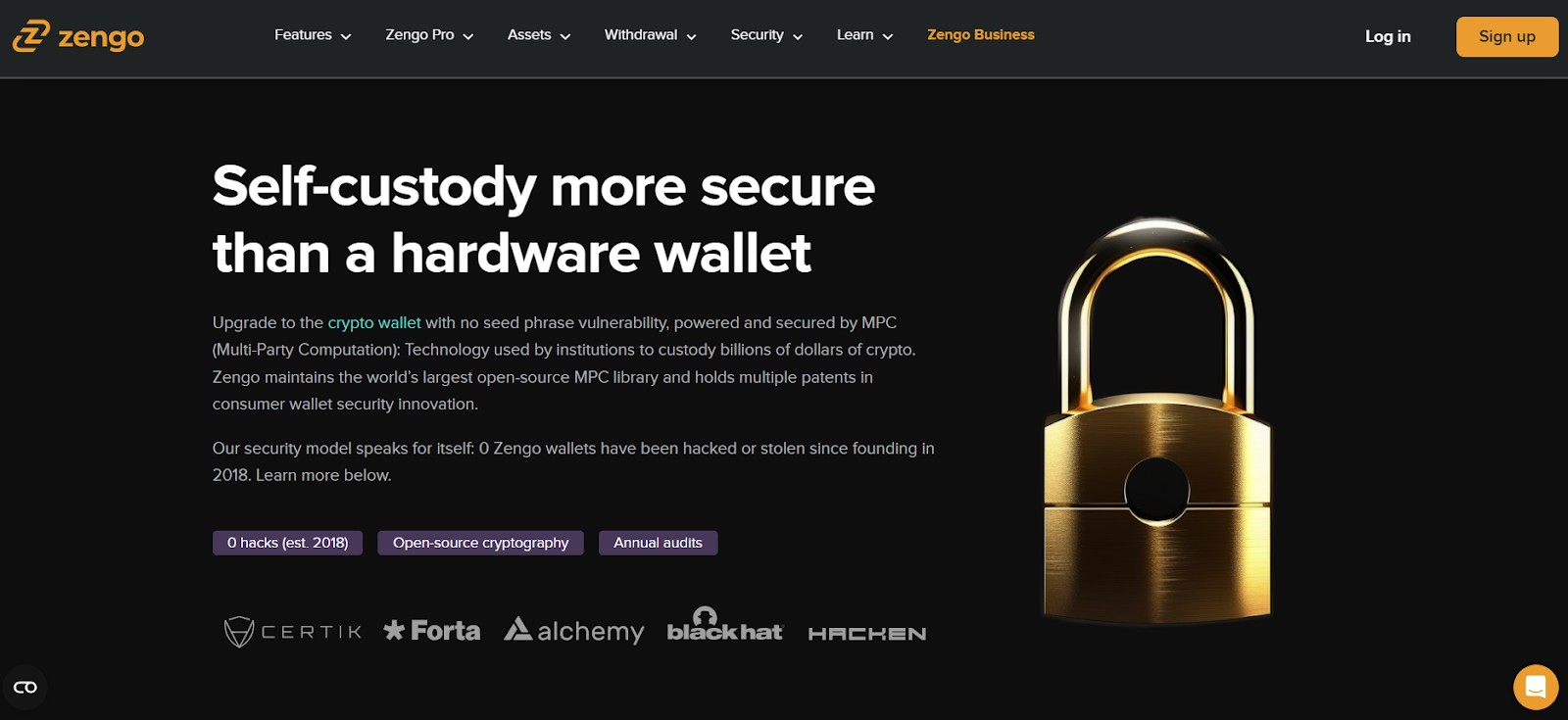
Zengo is a self-custodial cryptocurrency wallet that prioritizes user safety through advanced cryptographic design. It uses Multi-Party Computation (MPC), which replaces traditional seed phrases with two independent secret shares — one stored on your device and the other on Zengo's server. Both parts are required to approve any transaction, ensuring no single party has complete control over your wallet.
Key security features:
MPC-based self-custody. Zengo Wallet replaces traditional seed phrases with Multi-Party Computation (MPC), which splits the private key into two parts — one stored locally on your device and the other on Zengo’s server. This setup prevents any single point of failure.
No seed phrase vulnerability. There is no need to write down or manage a seed phrase, removing one of the most common risks of crypto wallet loss or theft.
Three-factor recovery system. Wallet recovery combines email access, a secure cloud backup, and biometric facial recognition — adding extra layers of protection without sacrificing usability.
Zengo Pro theft protection. Premium subscribers can enable additional transaction approval steps that block unauthorized transfers, even if the mobile device is compromised.
Web3 firewall protection. Zengo Wallet scans and alerts users about potentially harmful smart contracts before they connect with dApps — acting as a real-time firewall for Web3 activity.
No known security breaches. Since launching in 2018, Zengo has not reported any security incidents, reinforcing its reputation as one of the safest crypto wallets available.
Supported coins and tokens
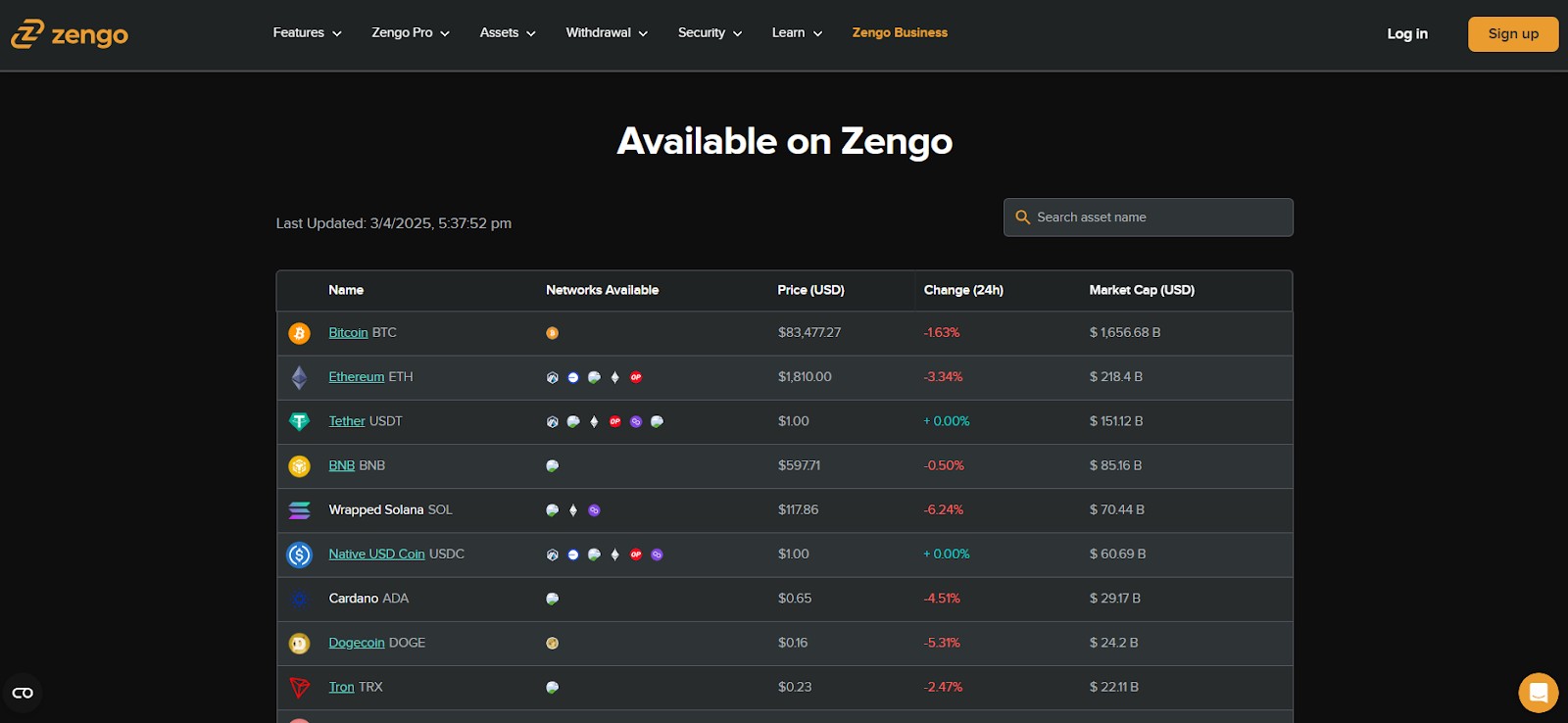
Zengo Wallet supports a broad selection of cryptocurrencies, allowing users to manage their digital assets securely in one place. As of 2026, the Zengo crypto wallet offers compatibility with a wide range of major coins and popular ERC-20 tokens, including:
Bitcoin (BTC). The original cryptocurrency known for its decentralized and secure network.
Ethereum (ETH). Widely used for decentralized applications and smart contracts.
Polygon (MATIC). A Layer 2 scaling solution designed to improve Ethereum’s performance.
Dogecoin (DOGE). A community-driven digital currency originally created as a meme.
Tezos (XTZ). A blockchain platform known for its on-chain governance and energy efficiency.
Binance Coin (BNB). The native token of the Binance ecosystem, used for trading and transaction fees.
Shiba Inu (SHIB). An Ethereum-based meme coin that gained popularity for its community and low-cost transactions.
USD Coin (USDC). A regulated stablecoin pegged to the US dollar, ideal for stable digital payments.
Tether (USDT). One of the most widely used stablecoins, designed to maintain price parity with the US dollar.
XRP. Designed for fast, low-cost cross-border payments within the Ripple network.
PayPal USD (PYUSD). A newer stablecoin introduced by PayPal to facilitate digital payments.
Zengo Wallet supported coins continue to grow as the platform expands its integration with new blockchain ecosystems. Users looking for a non-custodial wallet with diverse asset support will find Zengo Wallet a reliable and future-ready option.
Pricing and fees

Zengo Wallet offers two main tiers — Zengo Essentials and Zengo Pro — designed to cater to both casual users and serious crypto holders.
Zengo Essentials (Free)
This plan includes the core features of the Zengo crypto wallet. Users can securely store, send, and receive crypto assets while benefiting from cutting-edge security like MPC (Multi-Party Computation) and three-factor authentication. It includes access to features like in-app swaps, staking, and NFT storage at no cost.
Zengo Pro (~$16/month or $129/year)
This premium plan is designed for power users. It offers advanced features such as:
Legacy Transfer for inheritance planning.
Asset Theft Protection with facial biometric confirmation.
Enhanced Web3 Firewall that flags risky transactions.
Priority customer support for faster query resolution.
Transaction fees
Zengo crypto wallet charges no withdrawal fees. Users only pay the necessary blockchain network fees, such as Ethereum gas fees, depending on the transaction.
Swap fees range from 0.5% to 2% based on the third-party exchange providers Zengo integrates with. These are clearly displayed before the swap is confirmed, ensuring fee transparency.
Zengo Pro users also receive gas credits for selected Layer 2 transactions, making it cost-efficient for regular Ethereum-based transfers.
User interface & experience
Zengo Wallet stands out for its simplicity and seamless onboarding. It’s widely considered one of the most beginner-friendly wallets available for mobile users.
The design is clean, intuitive, and modern. Even first-time users can navigate with ease.
Account setup is quick and secure, using a face scan instead of a seed phrase.
Real-time portfolio tracking helps users stay updated on their holdings.
In-app swap features make converting one asset to another simple and fast.
NFT and token management is smooth and integrated, allowing users to handle collectibles and ERC-20 tokens in one place.
Zengo crypto wallet combines ease of use with high-grade security, making it a smart choice for both new and experienced investors looking for a secure, mobile-first crypto solution.
Specialized strategies for safer and smarter use of Zengo Wallet

Most people set up their Zengo wallet once and forget about it. But if your cloud backup breaks or facial recognition doesn't sync after a phone change, you're stuck when you really need access. A solid habit is to test your recovery flow every couple of months. Try restoring your wallet on a different device just to make sure everything works. It’s like running a fire drill. You hope you never need it, but when something goes wrong, you’ll be glad you practiced.
Also, don’t keep all your coins in the same Zengo wallet. Set up a second one just for messing around with Web3 apps. That way, if one of those dApps tries anything shady, your main crypto stash stays untouched. Zengo’s Web3 firewall is solid, but splitting your activity across wallets adds an extra layer of safety. Most folks keep everything in one place. This small shift keeps you a step ahead.
Conclusion
Zengo Wallet stands out in 2026 as one of the most secure and user-friendly mobile wallets in the crypto market. Its use of Multi-Party Computation (MPC) replaces traditional seed phrases, eliminating one of the biggest risks associated with digital asset storage. With strong support for major cryptocurrencies and stablecoins like Bitcoin, Ethereum, USDT, USDC, and emerging coins like TON, it’s built for both casual users and active DeFi participants.
The Zengo crypto wallet is ideal for those who want simple access to decentralized apps, staking, and NFT management — all without sacrificing security. Whether you’re just starting out or looking to upgrade from seed phrase-based wallets, Zengo offers a future-ready solution with unmatched recovery options, Web3 protection, and premium-level features on mobile. It’s not just another wallet — it’s a smarter way to manage digital assets securely and without friction.
FAQs
Can I stake cryptocurrencies using Zengo Wallet?
Yes, Zengo allows users to stake supported assets like Ethereum and Tezos directly through the app, offering passive earning opportunities for long-term holders.
How does Zengo’s Web3 firewall enhance security?
The Web3 firewall monitors dApp interactions and warns users about risky or suspicious transactions before they are approved, reducing the chances of wallet compromise.
Is it possible to recover my Zengo Wallet if I lose access to my email?
Yes, recovery is still possible as long as you have access to your recovery file and biometric face scan. However, it’s recommended to update your email in-app if it changes.
Does Zengo support the storage and management of NFTs?
Yes, Zengo supports Ethereum-based NFTs, allowing users to store, view, and manage digital collectibles within the wallet interface.
Editors' Top Picks and Insights




Related Articles
Team that worked on the article
Parshwa is a content expert and finance professional possessing deep knowledge of stock and options trading, technical and fundamental analysis, and equity research. As a Chartered Accountant Finalist, Parshwa also has expertise in Forex, crypto trading, and personal taxation.
Chinmay Soni is a financial analyst with more than 5 years of experience in working with stocks, Forex, derivatives, and other assets. As a founder of a boutique research firm and an active researcher, he covers various industries and fields, providing insights backed by statistical data.
Mirjan Hipolito is a journalist and news editor at Traders Union. She is an expert crypto writer with five years of experience in the financial markets.
Fundamental analysis is a method or tool that investors use that seeks to determine the intrinsic value of a security by examining economic and financial factors. It considers macroeconomic factors such as the state of the economy and industry conditions.
Bitcoin is a decentralized digital cryptocurrency that was created in 2009 by an anonymous individual or group using the pseudonym Satoshi Nakamoto. It operates on a technology called blockchain, which is a distributed ledger that records all transactions across a network of computers.
An investor is an individual, who invests money in an asset with the expectation that its value would appreciate in the future. The asset can be anything, including a bond, debenture, mutual fund, equity, gold, silver, exchange-traded funds (ETFs), and real-estate property.
CFD is a contract between an investor/trader and seller that demonstrates that the trader will need to pay the price difference between the current value of the asset and its value at the time of contract to the seller.
Index in trading is the measure of the performance of a group of stocks, which can include the assets and securities in it.

-
 Afghanistan
-
 Albania
-
 Algeria
-
 Angola
-
 Argentina
-
 Armenia
-
 Australia
-
 Austria
-
 Azerbaijan
-
 Bahamas
-
 Bahrain
-
 Bangladesh
-
 Belarus
-
 Belgium
-
 Bolivia
-
 Botswana
-
 Brazil
-
 Brunei
-
 Bulgaria
-
 Cambodia
-
 Cameroon
-
 Canada
-
 Chile
Chile
-
 China
China
-
 Colombia
-
 Congo
Congo
-
 Costa Rica
-
 Cote d'Ivoire
-
 Croatia
-
 Cuba
Cuba
-
 Cyprus
-
 Czechia
-
 DR Congo
-
 Denmark
-
 Dominican Republic
-
 Ecuador
-
 Egypt
Egypt
-
 El Salvador
-
 Estonia
-
 Eswatini
-
 Ethiopia
-
 Finland
-
 France
-
 Georgia
-
 Germany
-
 Ghana
Ghana
-
 Greece
-
 Haiti
Haiti
-
 Hong Kong
-
 Hungary
-
 India
India
-
 Indonesia
-
 Iran, Islamic republic
-
 Iraq
Iraq
-
 Ireland
-
 Israel
-
 Italy
Italy
-
 Jamaica
-
 Japan
Japan
-
 Jordan
-
 Kazakhstan
-
 Kenya
Kenya
-
 Korea
Korea
-
 Kuwait
-
 Kyrgyzstan
-
 Laos
Laos
-
 Latvia
-
 Lebanon
-
 Lesotho
-
 Libya
Libya
-
 Lithuania
-
 Luxembourg
-
 Madagascar
-
 Malaysia
-
 Malta
Malta
-
 Mauritius
-
 Mexico
-
 Moldova
-
 Mongolia
-
 Montenegro
-
 Morocco
-
 Mozambique
-
 Myanmar
-
 Namibia
-
 Nepal
Nepal
-
 Netherlands
-
 New Zealand
-
 Nigeria
-
 North Macedonia
-
 Norway
-
 Oman
Oman
-
 Pakistan
-
 Palestine
-
 Panama
-
 Papua New Guinea
-
 Paraguay
-
 Peru
Peru
-
 Philippines
-
 Poland
-
 Portugal
-
 Puerto Rico
-
 Qatar
Qatar
-
 Reunion
-
 Romania
-
 Rwanda
-
 Saudi Arabia
-
 Serbia
-
 Singapore
-
 Slovakia
-
 Slovenia
-
 Somalia
-
 South Africa
-
 Spain
Spain
-
 Sri Lanka
-
 Sweden
-
 Switzerland
-
 Syria
Syria
-
 Taiwan
-
 Tajikistan
-
 Tanzania
-
 Thailand
-
 Trinidad and Tobago
-
 Tunisia
-
 Turkey
-
 UAE
UAE
-
 Uganda
-
 Ukraine
-
 United Kingdom
-
United States
-
 Uruguay
-
 Uzbekistan
-
 Venezuela
-
 Vietnam
-
 Yemen
Yemen
-
 Zambia
-
 Zimbabwe
- Forex
- Crypto












