Is USDT Safe? A Comprehensive Guide For Beginners And Advanced Traders


Editorial Note: While we adhere to strict Editorial Integrity, this post may contain references to products from our partners. Here's an explanation for How We Make Money. None of the data and information on this webpage constitutes investment advice according to our Disclaimer.
USDT (Tether) is mostly safe for quick trades or transfers since it matches the US dollar. But some people worry about how transparent it is and how it might handle government rules. It’s widely used, but it’s smart to use it on trusted platforms and not hold it for too long.
USDT (Tether) was introduced in 2014 to solve one of the biggest problems in cryptocurrency — volatility. Unlike Bitcoin or Ethereum, USDT is designed to maintain a stable value by being pegged to the US dollar, making it a useful tool for Traders looking to park their assets during market downturns without converting them into fiat currency. Today, Tether’s market cap exceeds $83 billion, and it plays a significant role in liquidity on major exchanges.
It is one of the most widely used stablecoins, pegged 1:1 to the US dollar. But is USDT safe? This guide will break down the facts, risks, and key considerations for both beginners and advanced Traders.
Is USDT safe?
USDT's safety isn't just about looking at audits — it’s a lot more complicated now. In 2024, we’re seeing USDT used across multiple blockchain networks like Optimism and zkSync. This is great for flexibility but also opens the door to more risks, like liquidity getting stuck in one network or targeted hacks on smaller chains.
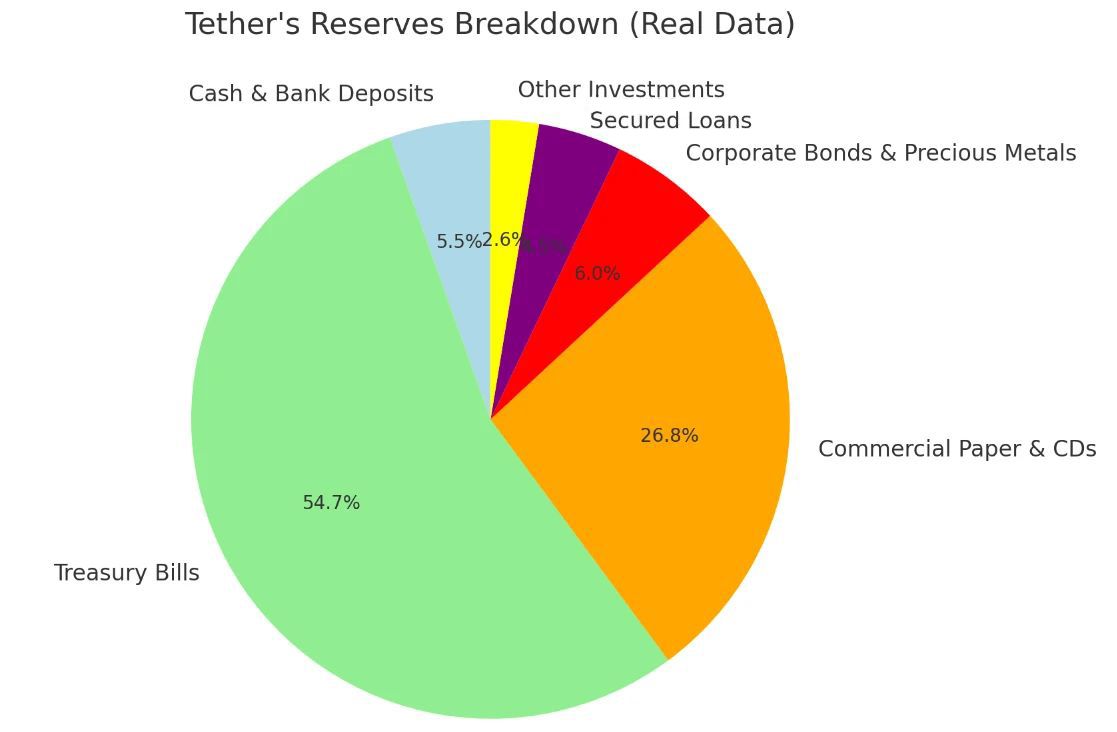
Another thing people often miss is how reliant USDT is on US Treasury bonds. Tether initially claimed that each USDT was fully backed by US dollars. However, reports emerged showing that only a small portion of its reserves were held in cash (approximately 3.9%), while the majority were backed by commercial paper, loans, and other assets. This revelation raised concerns about Tether’s ability to honor all redemptions if there were a massive sell-off. With interest rates bouncing around and the chance of a US debt crisis, there’s a real risk that USDT could lose its 1:1 dollar peg.
If you’re still holding USDT, you might want to look at other stablecoins or even decentralized options like DAI that aren’t tied to one reserve asset. You can also use multi-sig wallets that let you move your funds or cut your risk if things start getting dicey. Protocols like Nexus Mutual even offer insurance for extra protection if a smart contract goes bad.
And don't think you're safe just because regulations are improving in the US and Europe. Countries in Latin America and Africa are adopting crypto fast, which could strain USDT’s liquidity in ways we haven’t seen before.
Tether’s reserves and transparency
One of the central concerns surrounding USDT is the composition of its reserves. Initially marketed as fully backed by USD, subsequent reports revealed that only a fraction was in cash, with a large portion in less liquid assets like commercial paper. Tether has since reduced its reliance on commercial paper, but the exact composition of its reserves is still not fully transparent.
Legal and regulatory concerns
Tether’s legal troubles began in 2019 when it was revealed that $700 million of its reserves were used to cover losses at Bitfinex, its sister company. This led to a lawsuit by the New York Attorney General’s office, resulting in an $18.5 million fine and a ban on Tether operating in New York. Furthermore, there are ongoing regulatory concerns about stablecoins in general, and how stricter regulations might affect Tether's future operations.
How USDT affects the crypto market
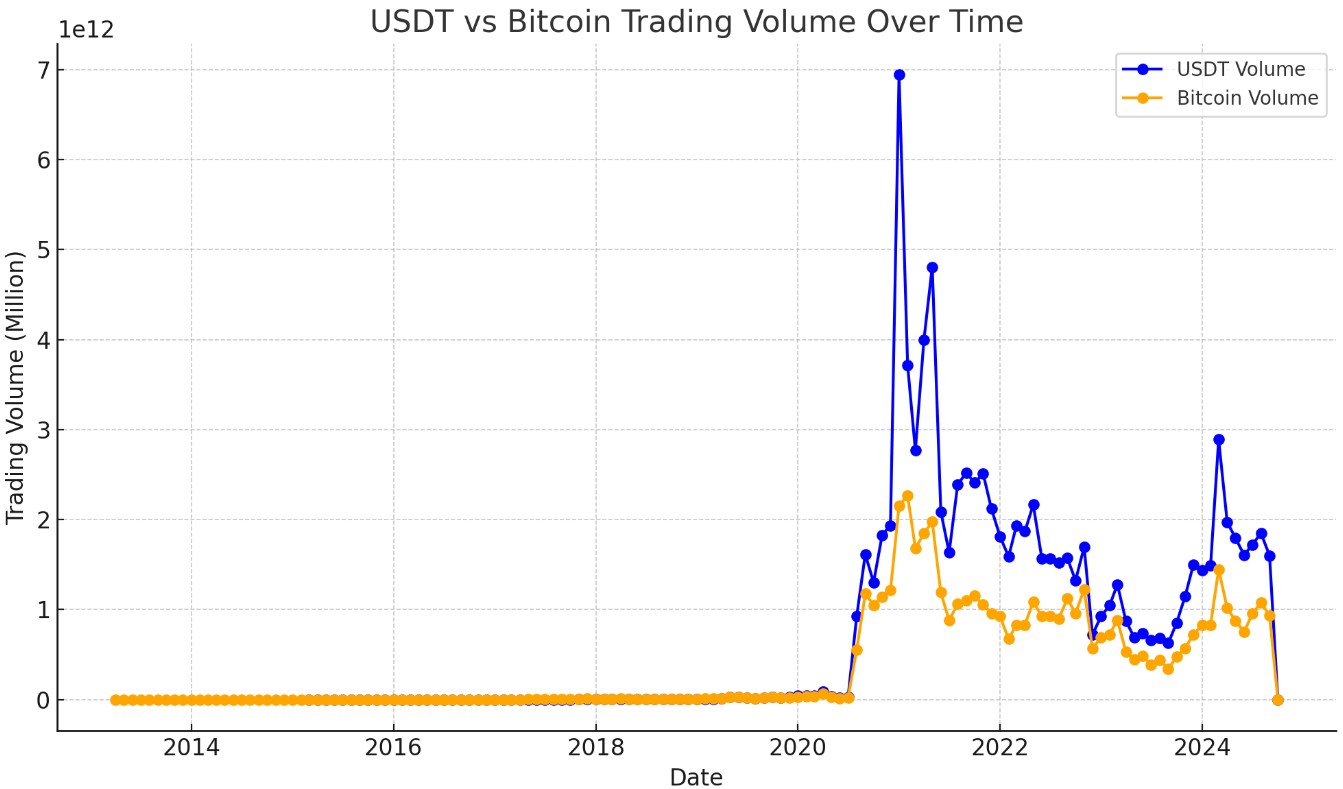
USDT plays a key role in the crypto market, particularly in Bitcoin trading, where it accounts for a significant portion of volume. If Tether were to fail, the impact would be catastrophic, not just for Bitcoin but for the entire crypto ecosystem. Many experts believe that a collapse of USDT would lead to massive liquidations and possibly trigger a wider market crash.
What should beginners consider when using USDT?
For beginners, safety should be the top priority when using USDT:
Choose user-friendly exchanges. Try to use platforms that are more beginner-friendly while offering strong security. We have researched and shortlisted the top options for you to compare in the table below:
| USDT supported | Min. Deposit, $ | P2P Taker Fee, % | P2P Maker Fee, % | Spot Maker Fee, % | Spot Taker fee, % | Staking | Yield farming | Open account | |
|---|---|---|---|---|---|---|---|---|---|
| Yes | 10 | 0 | 0 | 0.08 | 0.1 | Yes | Yes | Go to broker Your capital is at risk. |
|
| Yes | 10 | 0.05 - 0.60 | 0 - 0.40 | 0.5 | 0.5 | Yes | Yes | Go to broker Your capital is at risk. |
|
| Yes | 1 | 0,16 - 0,20 | 0,10 - 0,16 | 0.25 | 0.5 | Yes | Yes | Go to broker Your capital is at risk. |
|
| Yes | No | No | No | 0 | 0 | Yes | Yes | Go to broker Your capital is at risk. |
|
| Yes | 10 | Not supported | Not supported | 0.2 | 0.3 | Yes | No | Go to broker Your capital is at risk.
|
Limit exposure. Consider holding only a small portion of your assets in USDT until you're comfortable with its risks.
Understand wallet safety. Always use trusted wallets, and never share your private keys.
Step-by-step guide for secure use of USDT
To ensure a safer experience with USDT, follow these guidelines:
Use regulated exchanges. Stick to well-established exchanges that have strict security measures.
Enable Two-Factor Authentication (2FA). Add an extra layer of protection for your account through 2FA.
Store USDT in secure wallets. Trusted wallets like Trust Wallet and Metamask are excellent options, offering strong encryption and user control over private keys.
Risks and warnings
USDT, despite its popularity, comes with several risks:
Regulatory risk. New regulations on stablecoins could limit Tether’s operations or require stricter transparency.
Market collapse. If a significant number of holders tried to redeem USDT simultaneously, Tether may not have enough liquid assets to honor those redemptions.
Centralization. Tether is a centralized stablecoin, and the ability of the company to blacklist wallets means users are at the mercy of a centralized authority, defeating the entire purpose of cryptocurrencies.
Pros and cons of USDT
- Pros
- Cons
Stable value pegged to USD
Widely used across multiple exchanges
Essential for liquidity in crypto markets
Lack of full transparency regarding reserves
Ongoing legal and regulatory challenges
Centralization contradicts the decentralized ethos of crypto
Is USDT safe for long-term use?

As a trader who has been in the market for years, I’ve seen it all — the highs, the crashes, and the wild swings in between. My experience with USDT (Tether) has been complex. In the early days, I found USDT incredibly useful for managing volatility, especially during times when I didn’t want to liquidate into fiat but needed something stable to park my funds. It gave me flexibility without forcing me to exit the crypto ecosystem.
That said, USDT is not without its risks. Its lack of full transparency regarding reserves has always made me cautious. Over time, I diversified my holdings into other stablecoins like USDC, which I find more transparent. If you’re relying heavily on USDT, understand that while it serves a practical function in trading, you should never assume it’s 100% safe.
Conclusion
USDT is a vital tool for traders seeking stability in the volatile crypto market, offering the ability to park funds without converting to fiat. However, concerns around its reserve transparency and regulatory risks mean it should not be trusted as a flawless safe haven. For example, Tether’s reliance on assets beyond just US dollars and its past legal troubles underscore the need for caution. Ultimately, smart traders diversify and limit long-term exposure to USDT, remembering that true safety in crypto comes from vigilance and not blind trust.
FAQs
How do global regulatory changes impact the safety of USDT for traders?
Can using USDT across multiple blockchain networks introduce additional risks?
What alternatives to USDT are commonly considered by traders concerned about safety?
How might market downturns or US financial crises affect the stability of USDT?
Editors' Top Picks and Insights




Related Articles
Team that worked on the article
Parshwa is a content expert and finance professional possessing deep knowledge of stock and options trading, technical and fundamental analysis, and equity research. As a Chartered Accountant Finalist, Parshwa also has expertise in Forex, crypto trading, and personal taxation.
Chinmay Soni is a financial analyst with more than 5 years of experience in working with stocks, Forex, derivatives, and other assets. As a founder of a boutique research firm and an active researcher, he covers various industries and fields, providing insights backed by statistical data.
Mirjan Hipolito is a journalist and news editor at Traders Union. She is an expert crypto writer with five years of experience in the financial markets.
Yield refers to the earnings or income derived from an investment. It mirrors the returns generated by owning assets such as stocks, bonds, or other financial instruments.
Xetra is a German Stock Exchange trading system that the Frankfurt Stock Exchange operates. Deutsche Börse is the parent company of the Frankfurt Stock Exchange.
Options trading is a financial derivative strategy that involves the buying and selling of options contracts, which give traders the right (but not the obligation) to buy or sell an underlying asset at a specified price, known as the strike price, before or on a predetermined expiration date. There are two main types of options: call options, which allow the holder to buy the underlying asset, and put options, which allow the holder to sell the underlying asset.
Bitcoin is a decentralized digital cryptocurrency that was created in 2009 by an anonymous individual or group using the pseudonym Satoshi Nakamoto. It operates on a technology called blockchain, which is a distributed ledger that records all transactions across a network of computers.
Volatility refers to the degree of variation or fluctuation in the price or value of a financial asset, such as stocks, bonds, or cryptocurrencies, over a period of time. Higher volatility indicates that an asset's price is experiencing more significant and rapid price swings, while lower volatility suggests relatively stable and gradual price movements.

-
 Afghanistan
-
 Albania
-
 Algeria
-
 Angola
-
 Argentina
-
 Armenia
-
 Australia
-
 Austria
-
 Azerbaijan
-
 Bahamas
-
 Bahrain
-
 Bangladesh
-
 Belarus
-
 Belgium
-
 Bolivia
-
 Botswana
-
 Brazil
-
 Brunei
-
 Bulgaria
-
 Cambodia
-
 Cameroon
-
 Canada
-
 Chile
Chile
-
 China
China
-
 Colombia
-
 Congo
Congo
-
 Costa Rica
-
 Cote d'Ivoire
-
 Croatia
-
 Cuba
Cuba
-
 Cyprus
-
 Czechia
-
 DR Congo
-
 Denmark
-
 Dominican Republic
-
 Ecuador
-
 Egypt
Egypt
-
 El Salvador
-
 Estonia
-
 Eswatini
-
 Ethiopia
-
 Finland
-
 France
-
 Georgia
-
 Germany
-
 Ghana
Ghana
-
 Greece
-
 Haiti
Haiti
-
 Hong Kong
-
 Hungary
-
 India
India
-
 Indonesia
-
 Iran, Islamic republic
-
 Iraq
Iraq
-
 Ireland
-
 Israel
-
 Italy
Italy
-
 Jamaica
-
 Japan
Japan
-
 Jordan
-
 Kazakhstan
-
 Kenya
Kenya
-
 Korea
Korea
-
 Kuwait
-
 Kyrgyzstan
-
 Laos
Laos
-
 Latvia
-
 Lebanon
-
 Lesotho
-
 Libya
Libya
-
 Lithuania
-
 Luxembourg
-
 Madagascar
-
 Malaysia
-
 Malta
Malta
-
 Mauritius
-
 Mexico
-
 Moldova
-
 Mongolia
-
 Montenegro
-
 Morocco
-
 Mozambique
-
 Myanmar
-
 Namibia
-
 Nepal
Nepal
-
 Netherlands
-
 New Zealand
-
 Nigeria
-
 North Macedonia
-
 Norway
-
 Oman
Oman
-
 Pakistan
-
 Palestine
-
 Panama
-
 Papua New Guinea
-
 Paraguay
-
 Peru
Peru
-
 Philippines
-
 Poland
-
 Portugal
-
 Puerto Rico
-
 Qatar
Qatar
-
 Reunion
-
 Romania
-
 Rwanda
-
 Saudi Arabia
-
 Serbia
-
 Singapore
-
 Slovakia
-
 Slovenia
-
 Somalia
-
 South Africa
-
 Spain
Spain
-
 Sri Lanka
-
 Sweden
-
 Switzerland
-
 Syria
Syria
-
 Taiwan
-
 Tajikistan
-
 Tanzania
-
 Thailand
-
 Trinidad and Tobago
-
 Tunisia
-
 Turkey
-
 UAE
UAE
-
 Uganda
-
 Ukraine
-
 United Kingdom
-
United States
-
 Uruguay
-
 Uzbekistan
-
 Venezuela
-
 Vietnam
-
 Yemen
Yemen
-
 Zambia
-
 Zimbabwe
- Forex
- Crypto