
Best Stablecoins To Invest In (2026)


Editorial Note: While we adhere to strict Editorial Integrity, this post may contain references to products from our partners. Here's an explanation for How We Make Money. None of the data and information on this webpage constitutes investment advice according to our Disclaimer.
Top crypto stablecoins in 2026:
USDT (Tether). Largest stablecoin with a market cap exceeding $100 billion, offering high liquidity across multiple blockchains.
USDC (USD Coin). Backed by cash and short-term U.S. Treasury reserves with regular third-party attestations, making it one of the most transparent major stablecoins.
DAI. Backed by crypto assets and governed by a DAO, ensuring independence.
Stablecoins play a structural role in the crypto market by providing price stability within an otherwise volatile environment. In 2026, investors use them not only for trading, but also for savings, payments, and decentralized finance applications. As demand grows, many investors are asking which stablecoin is best, which is safest, and how to build a reliable list of stablecoins for different goals.
This article reviews the best stablecoins to invest in 2026 by comparing their backing models, transparency, adoption, and real-world use cases. It also explains the types of stablecoins, provides clear examples, and helps investors understand which stablecoin has the best reputation for different kinds of use cases.
Risk warning: Cryptocurrency markets are highly volatile, with sharp price swings and regulatory uncertainties. Research indicates that 75-90% of traders face losses. Only invest discretionary funds and consult an experienced financial advisor.
What are the best stablecoins to buy?
This section focuses on stablecoins that stand out in 2026 based on liquidity, adoption, transparency, and long-term reliability. Rather than ranking every available option, the analysis focuses on widely adopted stablecoins used across exchanges, wallets, and decentralized platforms.
The stablecoins selected below are among the most popular stablecoins in the market and represent different models, including centralized and decentralized approaches, giving investors flexibility depending on their risk tolerance and use case.
While no stablecoin is entirely risk-free, these projects are commonly included in a top stablecoins list due to their scale, track record, and integration across the crypto ecosystem. The sections that follow break down each option individually, helping investors decide which stablecoin is best for their specific needs in 2026.
USDT (Tether)
USDT is the largest stablecoin by market capitalization and remains the most widely used option for trading across the crypto market. Its high liquidity allows traders to enter and exit positions quickly, which is why USDT continues to dominate exchange volumes and remains a core settlement asset.

Tether is issued on multiple blockchains, including Ethereum and Tron, allowing users to choose networks based on speed and transaction costs. This flexibility has helped USDT maintain broad adoption across centralized exchanges, wallets, and decentralized applications.
However, despite its dominant position, USDT has faced ongoing scrutiny related to the transparency of its reserves. While these concerns have not significantly reduced usage, they remain an important consideration for investors comparing stability, liquidity, and issuer disclosure across different stablecoins.
USDC (USD Coin)
USDC is widely regarded as one of the most transparent stablecoins on the market. It is backed by reserves composed of cash and short-term U.S. government securities, structured to maintain a 1:1 redemption value. Regular third-party attestations have helped USDC earn a strong reputation, which is why it is often considered one of the safest stablecoins by users who value disclosure and regulatory alignment.
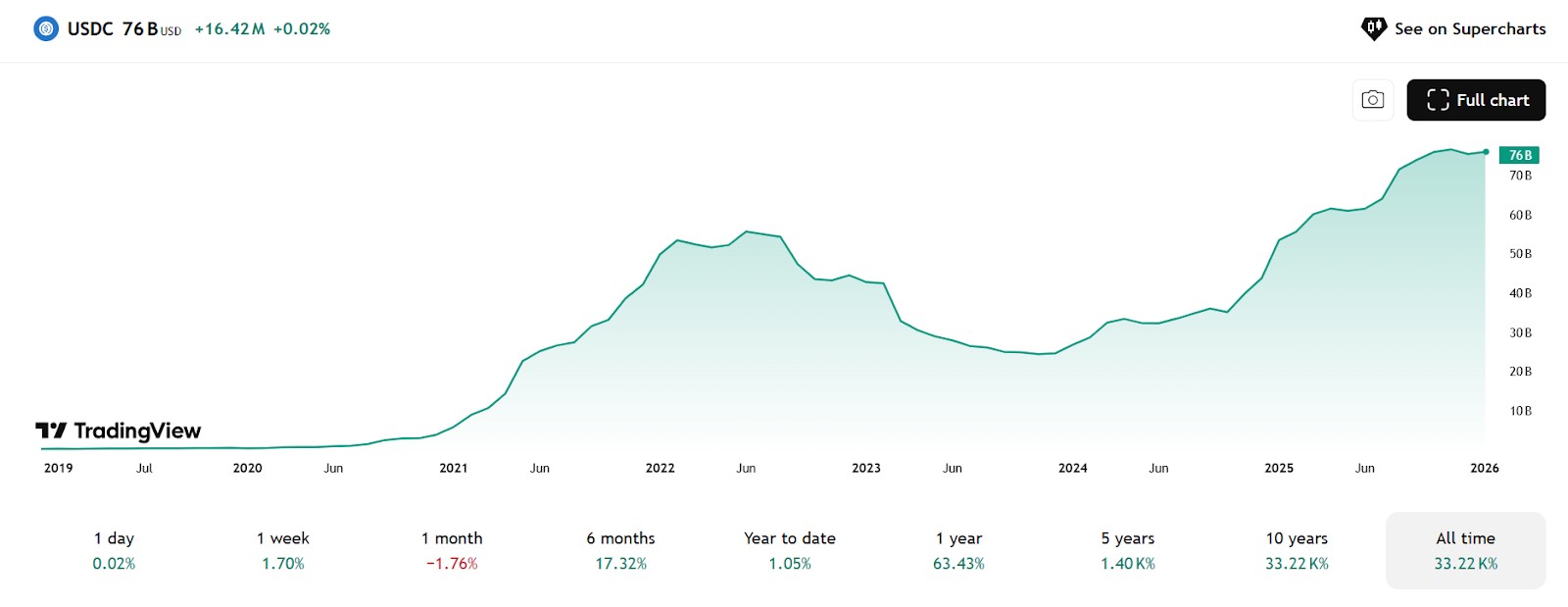
USDC is used extensively across centralized exchanges, decentralized finance platforms, and payment applications. It is available on multiple blockchains, including Ethereum, Solana, and Avalanche, allowing users to move funds efficiently across different ecosystems. This broad integration has made USDC one of the most popular stablecoins for payments, savings, and on-chain transactions.
While USDC does not match USDT in overall trading volume, it is frequently chosen by investors who prioritize reserve transparency over maximum liquidity. For long-term holders and risk-conscious users, USDC is often viewed as one of the best stablecoins to invest in when stability and regulatory clarity are key considerations.
DAI
DAI is a decentralized stablecoin issued through the MakerDAO protocol and governed by a decentralized autonomous organization. Unlike fiat-backed options, DAI does not rely on traditional banks or custodians, which makes it appealing to users who prefer on-chain governance and independence from centralized issuers.

DAI is backed by a mix of crypto assets locked in smart contracts, with collateral levels exceeding the value of tokens issued. This overcollateralization mechanism helps maintain price stability and is often cited when explaining different types of stablecoins and how decentralized models function in practice.
With a market capitalization in the billions, DAI is the largest decentralized stablecoin and is deeply integrated into decentralized finance applications. It is commonly included among popular stablecoins used for lending, borrowing, and liquidity provision, particularly by users seeking alternatives to centralized issuers.
While DAI offers greater decentralization, it is also exposed to volatility in the underlying crypto collateral. For this reason, it is often viewed as a complementary option rather than a replacement for fiat-backed stablecoins when investors compare which stablecoin is best for long-term holding versus DeFi use.
How we selected the best stablecoins for 2026
To identify the best stablecoins to invest in 2026, we focused on factors that matter most for long-term reliability rather than short-term trading trends. The goal was to create a practical list of stablecoins that reflects how these assets are actually used in today’s crypto market.

Our selection criteria included market capitalization, transparency of reserves, regulatory standing, and real-world adoption across exchanges and decentralized platforms. Stablecoins with consistent demand and broad integration were prioritized, as they are more likely to maintain their peg during periods of market stress. This approach helps address common questions, including which cryptocurrency is the most stable and which stablecoin is safest for preserving value.
We also considered different types of stablecoins, including fiat-backed and crypto-backed models, to reflect how investors use stablecoins for different purposes. Rather than ranking by popularity alone, this list balances safety, liquidity, and usability, resulting in a focused list of stablecoin options suitable for trading, savings, and on-chain applications.
What are stablecoins?
Stablecoins are cryptocurrencies designed to maintain a stable value, usually by being linked to assets such as fiat currencies or other forms of collateral. Unlike volatile assets such as Bitcoin or Ethereum, stablecoins are built to preserve purchasing power, making them easier to use for payments, savings, and transfers.

Because of this stability, stablecoins are widely used across crypto exchanges and decentralized finance platforms. They act as a bridge between traditional money and digital assets, which is why many investors view them as the most stable option in the broader crypto market. Understanding how stablecoins work is essential before comparing a list of stablecoins or deciding which stablecoin is best for long-term use.
Types of stablecoins
To better understand their differences, it helps to look at the main types of stablecoins and how each model maintains price stability.
Fiat-backed stablecoins
Fiat-backed stablecoins are the most widely used category and are often considered the most stable crypto option for everyday use. Their value is linked directly to traditional currencies, most commonly the U.S. dollar, which makes them easy to understand and widely accepted.
Examples of fiat-backed stablecoins: USDT (Tether) and USDC (USD Coin) are among the most popular stablecoins in this category and frequently appear at the top of any list of stablecoins.
Crypto-backed stablecoins
Crypto-backed stablecoins maintain price stability by using other cryptocurrencies as collateral rather than fiat reserves. This model relies on smart contracts and on-chain mechanisms instead of centralized issuers, which appeals to users who prefer decentralized systems.
Examples of crypto-backed stablecoins: DAI is the most widely used option in this category and is commonly referenced when explaining how crypto-backed stablecoins work in decentralized finance.
Algorithmic stablecoins
Algorithmic and hybrid stablecoins attempt to maintain price stability using automated supply mechanisms, sometimes combined with partial collateral backing. Rather than relying fully on fiat reserves, these models use smart contracts to expand or contract supply based on market conditions. This design makes them one of the most experimental types of stablecoins currently in use.
Examples of algorithmic stablecoins: FRAX and the former TerraUSD (UST) are commonly cited when discussing how algorithm-driven models work. These projects are often mentioned in educational overviews that compare different examples of stablecoins, particularly when highlighting innovation and risk.
Best places to buy and store stablecoins safely
Choosing a reliable platform is an important step before holding or using stablecoins. Security standards, regulatory oversight, supported assets, and withdrawal options can vary significantly between platforms, which directly affects how stablecoins are stored and accessed.
Most investors use centralized crypto exchanges to buy and store stablecoins because of their liquidity, ease of use, and integration with trading tools. These platforms typically support the most popular stablecoins, allow quick conversion between assets, and offer basic risk controls such as account protection and withdrawal limits.
| Coinbase | OKX | BTCC | Cryptohopper | Crypto.com | |
|---|---|---|---|---|---|
|
Min. Deposit, $ |
10 | 10 | 10 | No | 1 |
|
Coins Supported |
400+ | 600+ | 399 | 1000 | 400+ |
|
Spot Taker fee, % |
0.5 | 0.1 | 0.3 | 0 | 0.5 |
|
Spot Maker Fee, % |
0.5 | 0.08 | 0.2 | 0 | 0.25 |
|
Alerts |
Yes | Yes | No | Yes | Yes |
|
Copy trading |
No | Yes | Yes | Yes | No |
|
TU overall score |
8.5 | 8.46 | 8.08 | 7.8 | 7.76 |
|
Open an account |
Go to broker Your capital is at risk. |
Go to broker Your capital is at risk. |
Go to broker Your capital is at risk.
|
Go to broker Your capital is at risk. |
Go to broker Your capital is at risk. |
When comparing platforms, it is worth paying attention to custody practices, regulatory status, and whether stablecoins are held in segregated accounts. These factors are especially important for users looking to hold stablecoins long term and those evaluating which stablecoin has the best reputation when paired with a trusted exchange.
Risks and warnings
Although stablecoins are considered more stable than most cryptocurrencies, their use is not risk-free. Their value depends on infrastructure, issuers, and market conditions. Even when the price appears stable, operational limitations and disruptions can occur. Below are the key risks to consider when using stablecoins.
Main risks:
Issuer risk. For centralized stablecoins, stability depends directly on the companies issuing the tokens and managing the reserves.
Regulatory pressure. Changes in legislation may affect circulation, exchange listings, or access to stablecoin transactions.
Infrastructure limitations. Disruptions involving exchanges, blockchains, or payment services may temporarily restrict access to funds.
Depegging risk. During market stress, even major stablecoins can briefly deviate from their target price.
Asset freezes. Some issuers have the technical ability to freeze addresses or block transactions.
Note! Stablecoins function as risk management tools rather than risk-free instruments. Careful selection and diversification remain essential – even when working with the most established digital coins.
Reliability matters more than the peg

When investors talk about stablecoins, the focus often stays on the peg, but long-term reliability depends on much more than that. In my experience, the most dependable stablecoins are those with consistent liquidity, clear reserve practices, and widespread use across exchanges and on-chain applications.
For 2026, I would look beyond short-term yield and pay closer attention to how a stablecoin behaves during periods of market stress. Decentralized models can be useful, but they require active risk management and a solid understanding of how collateral works. Ultimately, stablecoins are tools, and choosing the right one depends on whether the priority is flexibility, income generation, or capital preservation.
Conclusion
Choosing the right stablecoin in 2026 requires looking beyond short-term price stability and focusing on long-term reliability, transparency, and broad usability. Standout examples like USDT and USDC demonstrate how strong liquidity and clear reserve practices set the standard for trust in the market. While decentralized options such as DAI offer independence, each approach suits different investor needs and risk tolerances. Ultimately, the most successful stablecoin choice is the one that consistently performs under pressure and aligns with the user's goals for security, utility, and capital preservation.
FAQs
What criteria are most important for building a reliable Best Stablecoins List For 2026?
How do different stablecoins integrate with decentralized finance (DeFi) platforms?
Can holding multiple stablecoins enhance diversification and risk management?
What are common use cases for stablecoins beyond trading and investment?
Editors' Top Picks and Insights






Related Articles
Team that worked on the article
Oleg Tkachenko is an economic analyst and risk manager having more than 14 years of experience in working with systemically important banks, investment companies, and analytical platforms. He has been a Traders Union analyst since 2018.
Dan Blystone began his trading career in 1998 as an arbitrage clerk on the floor of the Chicago Mercantile Exchange (CME). He later traded bond and Eurex futures at proprietary firms such as Altea Trading, gaining valuable experience in high-frequency trading and risk management.
Chinmay Soni is a financial analyst with more than 5 years of experience in working with stocks, Forex, derivatives, and other assets. As a founder of a boutique research firm and an active researcher, he covers various industries and fields, providing insights backed by statistical data.
Cryptocurrency is a type of digital or virtual currency that relies on cryptography for security. Unlike traditional currencies issued by governments (fiat currencies), cryptocurrencies operate on decentralized networks, typically based on blockchain technology.
Volatility refers to the degree of variation or fluctuation in the price or value of a financial asset, such as stocks, bonds, or cryptocurrencies, over a period of time. Higher volatility indicates that an asset's price is experiencing more significant and rapid price swings, while lower volatility suggests relatively stable and gradual price movements.
Ethereum is a decentralized blockchain platform and cryptocurrency that was proposed by Vitalik Buterin in late 2013 and development began in early 2014. It was designed as a versatile platform for creating decentralized applications (DApps) and smart contracts.
CFD is a contract between an investor/trader and seller that demonstrates that the trader will need to pay the price difference between the current value of the asset and its value at the time of contract to the seller.
Yield refers to the earnings or income derived from an investment. It mirrors the returns generated by owning assets such as stocks, bonds, or other financial instruments.

-
 Afghanistan
-
 Albania
-
 Algeria
-
 Angola
-
 Argentina
-
 Armenia
-
 Australia
-
 Austria
-
 Azerbaijan
-
 Bahamas
-
 Bahrain
-
 Bangladesh
-
 Belarus
-
 Belgium
-
 Bolivia
-
 Botswana
-
 Brazil
-
 Brunei
-
 Bulgaria
-
 Cambodia
-
 Cameroon
-
 Canada
-
 Chile
Chile
-
 China
China
-
 Colombia
-
 Congo
Congo
-
 Costa Rica
-
 Cote d'Ivoire
-
 Croatia
-
 Cuba
Cuba
-
 Cyprus
-
 Czechia
-
 DR Congo
-
 Denmark
-
 Dominican Republic
-
 Ecuador
-
 Egypt
Egypt
-
 El Salvador
-
 Estonia
-
 Eswatini
-
 Ethiopia
-
 Finland
-
 France
-
 Georgia
-
 Germany
-
 Ghana
Ghana
-
 Greece
-
 Haiti
Haiti
-
 Hong Kong
-
 Hungary
-
 India
India
-
 Indonesia
-
 Iran, Islamic republic
-
 Iraq
Iraq
-
 Ireland
-
 Israel
-
 Italy
Italy
-
 Jamaica
-
 Japan
Japan
-
 Jordan
-
 Kazakhstan
-
 Kenya
Kenya
-
 Korea
Korea
-
 Kuwait
-
 Kyrgyzstan
-
 Laos
Laos
-
 Latvia
-
 Lebanon
-
 Lesotho
-
 Libya
Libya
-
 Lithuania
-
 Luxembourg
-
 Madagascar
-
 Malaysia
-
 Malta
Malta
-
 Mauritius
-
 Mexico
-
 Moldova
-
 Mongolia
-
 Montenegro
-
 Morocco
-
 Mozambique
-
 Myanmar
-
 Namibia
-
 Nepal
Nepal
-
 Netherlands
-
 New Zealand
-
 Nigeria
-
 North Macedonia
-
 Norway
-
 Oman
Oman
-
 Pakistan
-
 Palestine
-
 Panama
-
 Papua New Guinea
-
 Paraguay
-
 Peru
Peru
-
 Philippines
-
 Poland
-
 Portugal
-
 Puerto Rico
-
 Qatar
Qatar
-
 Reunion
-
 Romania
-
 Rwanda
-
 Saudi Arabia
-
 Serbia
-
 Singapore
-
 Slovakia
-
 Slovenia
-
 Somalia
-
 South Africa
-
 Spain
Spain
-
 Sri Lanka
-
 Sweden
-
 Switzerland
-
 Syria
Syria
-
 Taiwan
-
 Tajikistan
-
 Tanzania
-
 Thailand
-
 Trinidad and Tobago
-
 Tunisia
-
 Turkey
-
 UAE
UAE
-
 Uganda
-
 Ukraine
-
 United Kingdom
-
United States
-
 Uruguay
-
 Uzbekistan
-
 Venezuela
-
 Vietnam
-
 Yemen
Yemen
-
 Zambia
-
 Zimbabwe
- Forex
- Crypto












