
Best RWA Tokenization Platforms In 2026


Editorial Note: While we adhere to strict Editorial Integrity, this post may contain references to products from our partners. Here's an explanation for How We Make Money. None of the data and information on this webpage constitutes investment advice according to our Disclaimer.
Best tokenization platforms for real-world assets (RWA):
Securitize: end-to-end RWA tokenization with built-in compliance; bridges traditional finance and DeFi.
Tokeny Solutions: scalable, globally compliant platform with customizable smart contracts for enterprises.
Antier Solutions: provides turnkey RWA tokenization and cross-chain platform development.
Polymath: specializes in security tokens and equity/fund tokenization with a compliance-first approach.
RealT: focused on real estate tokenization and fractional property investment access.
ConsenSys Codefi: Ethereum-native RWA tokenization platform built for enterprise-grade integrations.
Real-world asset tokenization platforms are emerging as one of the most transformative innovations. These RWA platforms allow physical assets such as real estate, commodities, bonds, or intellectual property to be represented as digital tokens on a blockchain. The result: enhanced liquidity, global access, fractional ownership, and new efficiencies.
In this article, we explore the leading RWA tokenization companies, the functions and architecture of real-world asset tokenization services, and how to choose or build the right RWA tokenization platform or engage a RWA tokenization development company.
Best real-world asset tokenization companies
Below is a list of notable real-world asset tokenization platforms 2026 and leading RWA tokenization companies:
| Name | Focus / Strengths | Key aspects |
|---|---|---|
| Securitize | End-to-end RWA tokenization services, compliance-focused, supports issuance, transfer agent, and trading. | A well-established real-world asset tokenization development company bridging TradFi & DeFi. |
| Tokeny Solutions | Scalable real-world asset tokenization platform with global compliance and customizable contracts. | Suitable for enterprises seeking a robust real-world asset tokenization service. |
| Antier Solutions | Offers RWA tokenization platform development and cross-chain tokenization. | Acts as a RWA tokenization development company with turnkey solutions. |
| Polymath | Focuses on security tokens and real-world asset tokenization platforms, especially equities and funds. | One of the earlier names in compliance-first tokenization. |
| RealT | Real estate tokenization platform, focusing on fractional property investments. | A well-known real-world asset tokenization company in real estate. |
| ConsenSys Codefi | Enterprise-grade real-world asset tokenization platform, integrated within the Ethereum ecosystem. | Good choice for Ethereum-aligned tokenization. |
These examples highlight how broad the landscape is: some operate as a full-service RWA tokenization company while others are more protocol or infrastructure providers.
Securitize
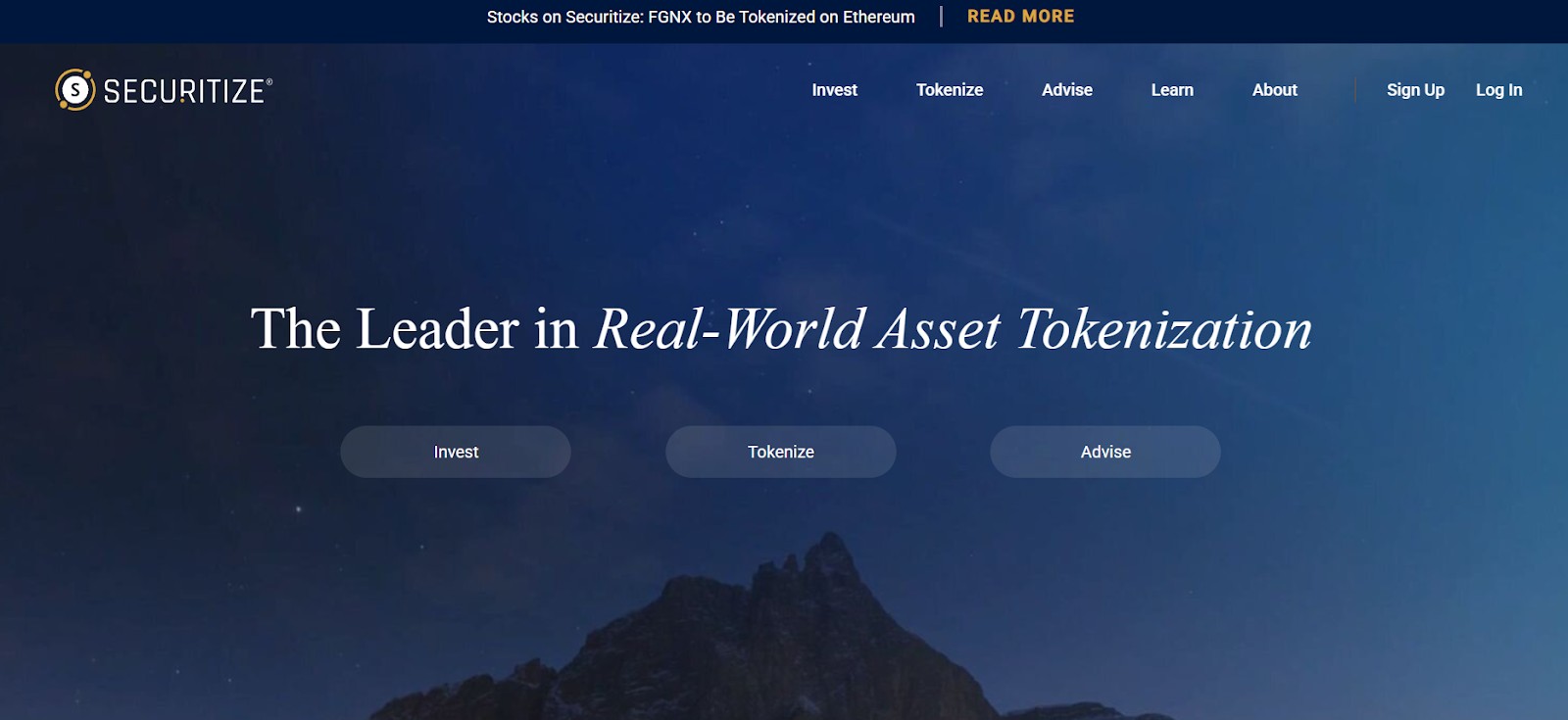
Securitize provides an end to end stack for issuing, administering, and trading compliant digital asset securities. The group includes Securitize LLC, an SEC registered transfer agent, and Securitize Markets which operates an alternative trading system for secondary liquidity. The platform is closely associated with headline tokenized funds such as BlackRock’s BUIDL and has been expanding chain coverage and settlement options during 2025.
Who is it for?
Institutional issuers of funds, private credit, and other regulated securities that need regulated transfer agency, lifecycle automation, and an ATS venue for compliant secondary activity.
- Pros
- Cons
full lifecycle stack that combines issuance, transfer agency, compliance, and secondary trading;
integration with blue chip funds such as BlackRock BUIDL and VanEck VBILL;
new settlement rails that let investors exit into RLUSD, improving capital efficiency;
multi chain posture with recent expansion to Sei for credit funds.
secondary liquidity still depends on issuer scale and investor demand even with an ATS available;
multi jurisdictional rollouts require careful structuring and local counsel;
not all group entities hold the same licenses, which matters for scoping engagements and statements of work.
Tokeny Solutions
Tokeny delivers an enterprise-grade tokenization operating system focused on compliance, identity management, and interoperability. Acquired by Apex Group in May 2025, Tokeny strengthened its institutional reach and expanded services for global fund administration. The company has tokenized more than $32 billion worth of assets and promotes its ERC-3643 standard, which enforces compliance rules directly at the token level.

Who is it for?
Financial institutions, fund administrators, and corporates seeking modular, API-first tokenization solutions that integrate seamlessly with existing compliance, custody, and fund systems across public and permissioned networks.
- Pros
- Cons
API-first design enables flexible issuance, distribution, and lifecycle management;
ONCHAINID provides identity-linked access control and automated KYC compliance;
ERC-3643 ensures real-time compliance checks directly on-chain;
strong institutional backing and integration through Apex Group for fund operations.
licensing and enterprise integration costs can be high for smaller issuers;
specialized or exotic asset types may require additional customization;
reliance on external custody and audit providers for end-to-end delivery.
Antier Solutions
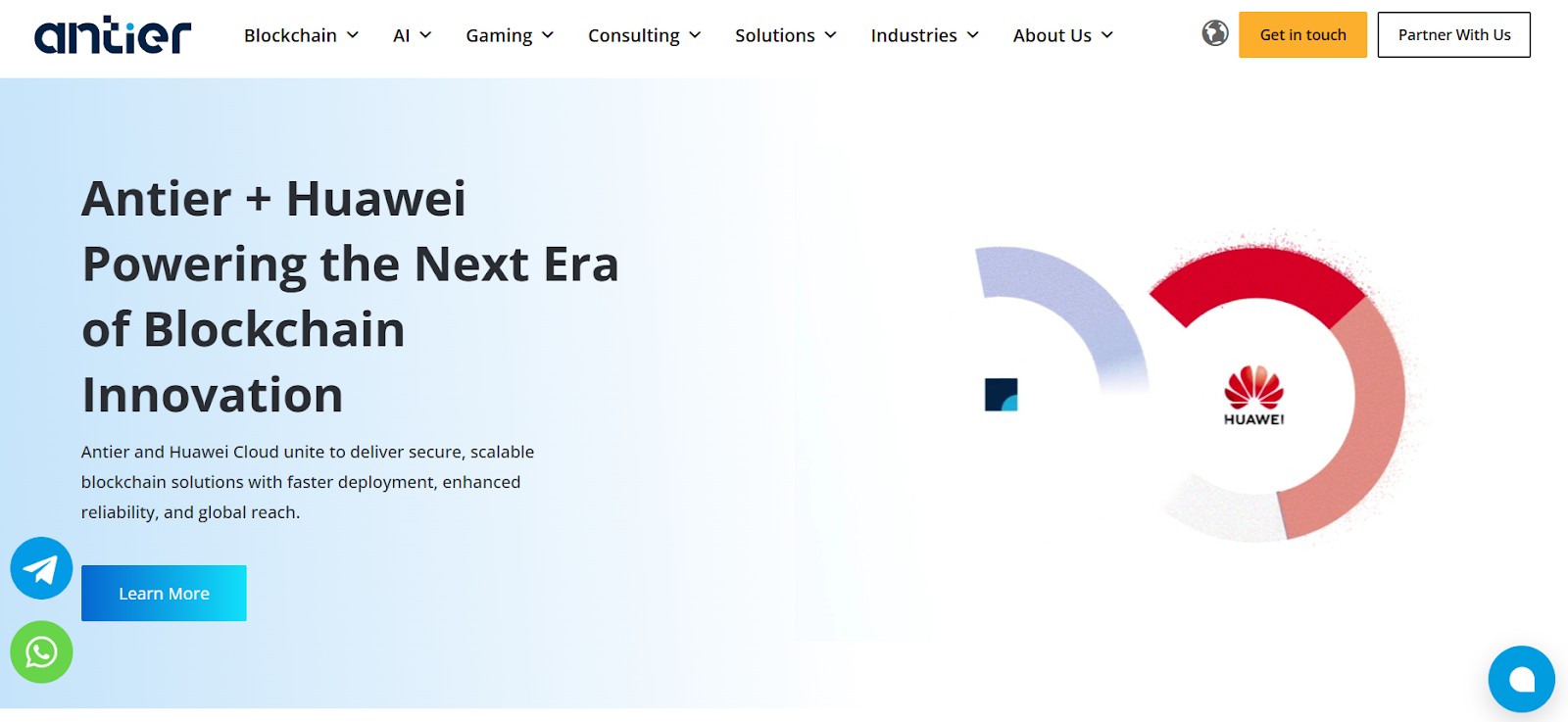
Antier Solutions is a blockchain development firm offering white-label tokenization platforms and turnkey RWA solutions. It focuses on rapid deployment, claiming go-live times as short as seven days, and integrates AI-driven valuation and compliance engines for faster setup. In 2025, Antier expanded its RWA suite to include real estate, commodities, and financial instruments, with clients across the U.S., Europe, and Asia.
Who is it for?
Project sponsors, fintech startups, and asset managers who want to quickly launch their own branded RWA tokenization platform without building from scratch.
- Pros
- Cons
white-label platforms can be deployed quickly with built-in compliance layers;
AI-assisted valuation, KYC, and rule-based monitoring improve efficiency;
covers diverse asset categories including real estate, commodities, and debt;
offers global legal and regulatory consulting as part of setup.
complex or novel asset structures often need significant customization;
compliance in multiple jurisdictions still requires independent validation;
liquidity and investor management remain the issuer’s responsibility.
Polymath
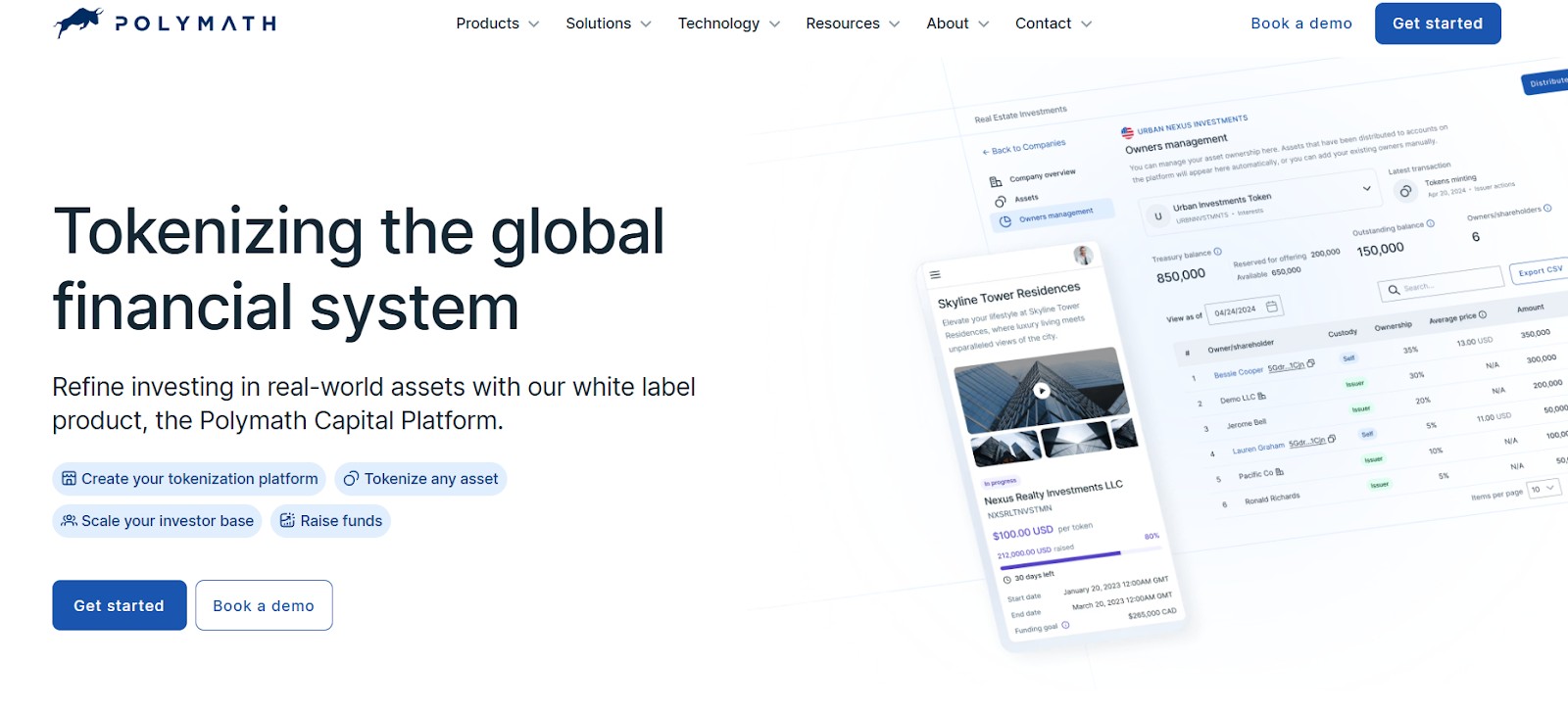
Polymath built the Polymesh blockchain, designed specifically for regulated financial assets. It incorporates identity verification, governance, and deterministic settlement into the network layer. Its ecosystem centers on compliant token issuance for securities and other regulated RWAs, providing tools for investor onboarding, compliance, and asset lifecycle control.
Who is it for?
Banks, brokers, and regulated institutions looking to issue digital securities with built-in KYC/AML compliance and permissioned infrastructure.
- Pros
- Cons
compliance and identity enforcement at the blockchain protocol level;
purpose-built chain with regulated participants and deterministic finality;
strong support for security tokens, funds, and structured financial instruments;
clear governance framework designed for institutional oversight.
limited applicability to physical or non-financial asset classes;
custom requirements or off-chain integrations may increase cost;
liquidity options depend on integration with approved market venues.
RealT
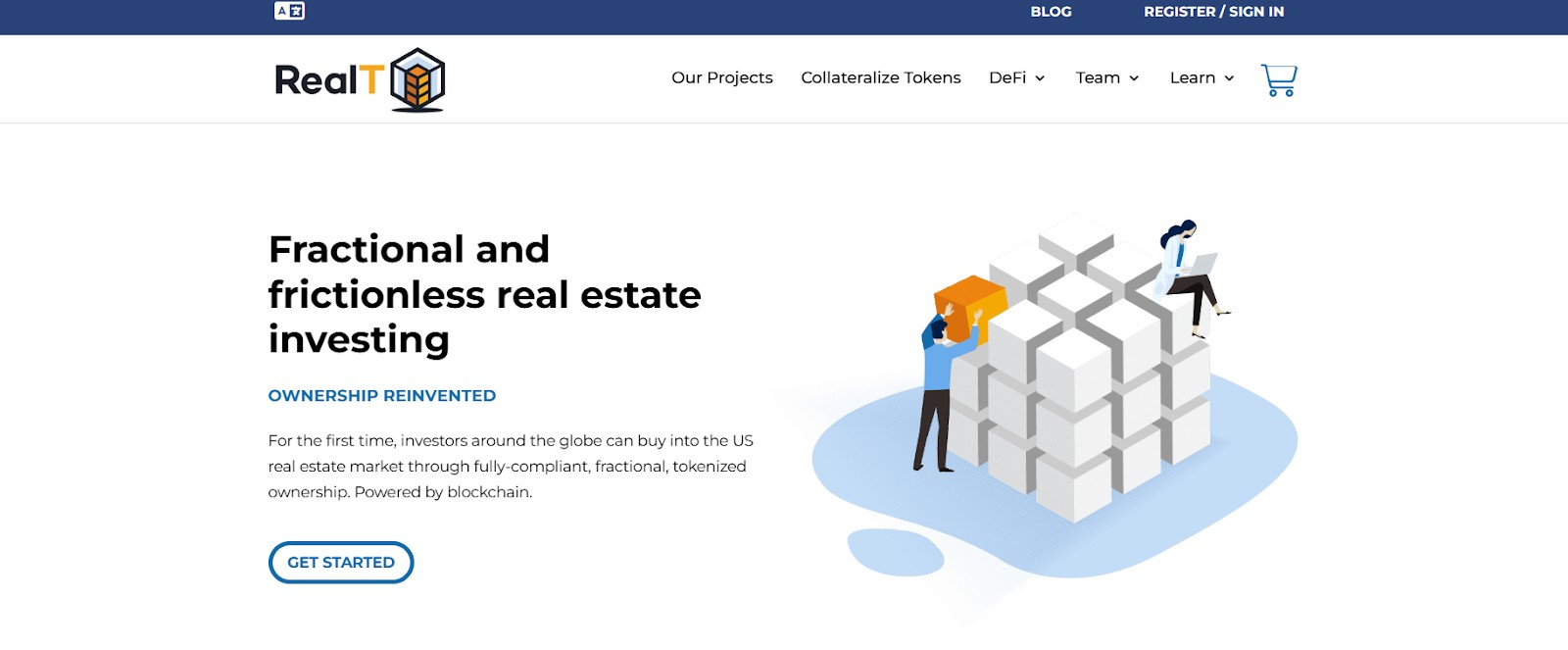
RealT specializes in tokenized real estate, offering fractional ownership in U.S. properties through RealTokens. Each token represents a share in an income-generating property, with rental income distributed weekly in stablecoins. The platform operates under U.S. regulations with KYC verification and manages all property operations directly.
Who is it for?
Retail and international investors seeking passive income exposure to U.S. real estate without large capital commitments or management responsibility.
- Pros
- Cons
low minimum investment at around $50 per token makes real estate accessible;
weekly rental distributions in stablecoins offer predictable income;
transparent property data and token structures visible on-chain;
RealT manages property upkeep, tenants, and compliance end-to-end.
limited to real estate assets only, not general RWAs;
secondary trading restricted to whitelisted marketplaces;
real estate regulations vary by state, creating operational risks;
property management and token legal frameworks are still evolving.
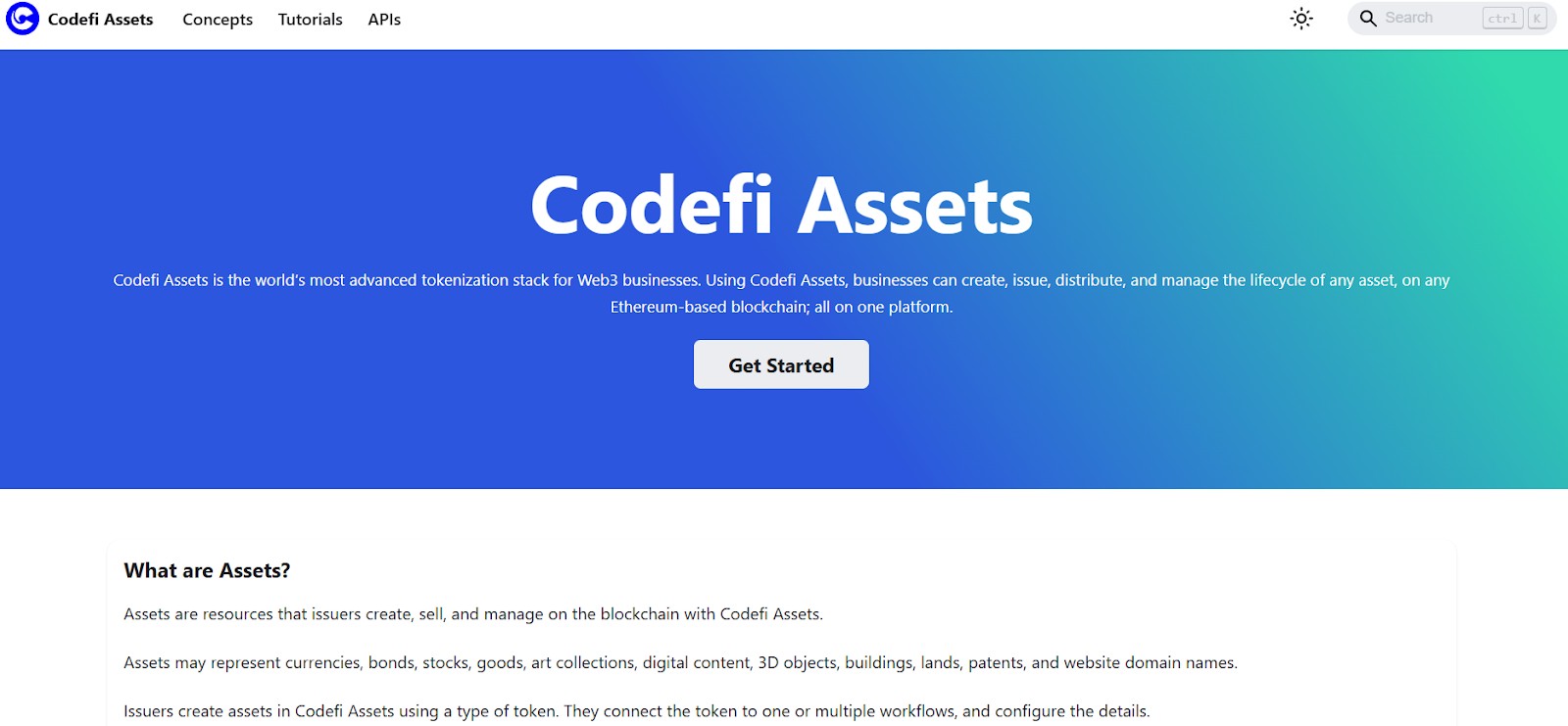
ConsenSys Codefi (Codefi Assets)
Codefi Assets is ConsenSys’ institutional platform for the tokenization of financial instruments such as funds, bonds, and structured products. Built on the Ethereum network, it offers APIs for issuance, transfer, distribution, and reporting. By 2025, Codefi Assets had expanded its toolkit with integrations across MetaMask Institutional, Infura, and Truffle for seamless blockchain development and deployment.
Who is it for?
Banks, asset managers, and fintechs that operate within Ethereum’s ecosystem and require proven, enterprise-grade tools to digitize and manage regulated financial assets.
- Pros
- Cons
deep integration within the ConsenSys stack and Ethereum ecosystem;
robust tools for automating issuance, cap table management, and investor reporting;
reliable enterprise infrastructure with strong developer and compliance support;
well-suited for tokenized funds, debt instruments, and capital markets use cases.
limited functionality for non-financial or physical assets;
regulatory setup may vary by region and needs local customization;
Ethereum mainnet costs and scalability constraints can affect efficiency.
Why real-world asset tokenization matters
Tokenizing real-world assets bridges conventional finance (TradFi) and decentralized finance (DeFi). Key benefits include:
Liquidity and tradability. Assets that were once illiquid can now be traded in fractional form.
Fractional ownership & accessibility. Investors can hold small shares rather than buying an entire asset.
Transparency & auditability. On-chain records and smart contracts provide clear audit trails.
Cost and time efficiency. Automation and disintermediation reduce friction and transaction costs.
24/7 global markets. Investors anywhere can participate without local intermediaries.
However, tokenization also raises challenges like regulatory compliance, valuation accuracy, custody, legal frameworks, and ensuring that tokens are truly backed by the underlying real-world assets.
How RWA tokenization platforms and services work
A typical real-world asset tokenization service process follows these core steps:
Asset selection and legal structuring
Choose the real-world asset and legally link it with tokens, defining rights, contracts, and title.
Due diligence & valuation
Conduct audits, appraisals, and verification to establish fair value and authenticity.
Smart contract design & token issuance
Develop smart contracts to enforce token rules (transferability, dividends, governance). Mint the tokens representing shares.
Oracles & data feeds
Use oracles to feed off-chain data (e.g. real asset metrics, prices) into on-chain systems to maintain synchronicity.
Investor onboarding & compliance
Perform KYC / AML, whitelist participants, and manage regulatory obligations.
Secondary market & liquidity
Enable trading on exchanges or peer-to-peer platforms, providing liquidity.
Ongoing governance, maintenance & audit
Monitor the underlying asset, distribute income (e.g. rent, yield), audit periodically, and update smart contracts if needed.
If you're seeking a partner to build such solutions, a RWA tokenization development company will typically offer end-to-end services: legal, smart contract, frontend & backend, regulatory compliance integration, and deployment.
Choosing or building the best RWA tokenization platform
When you’re choosing or building your own RWA tokenization platform, it’s important to look beyond just the technology. A strong platform must balance regulation, security, usability, and liquidity. The goal is not only to issue tokens but also to ensure they can operate smoothly, stay compliant, and attract real investors over time. Here are the key things to consider.
Regulation and compliance. Make sure the platform meets securities and investor protection laws in every region where tokens are offered.
Security and custody. Both the digital tokens and the underlying assets should be stored and managed securely.
Reliable data sources. Use trusted oracles and data feeds to keep on-chain information accurate and consistent with the real-world.
Fractional ownership design. Plan how assets will be divided into tokens and whether they will be fungible or unique.
Governance and payouts. Define how investors can vote, receive income, or take part in decisions related to the asset.
Cross-chain support. Ensure the system can work across multiple blockchains or integrate with xRWA frameworks for better flexibility.
Liquidity access. Consider how investors will buy, sell, or trade tokens through exchanges, peer-to-peer networks, or secondary markets.
Transparency and audits. Keep clear records of ownership, valuations, and transactions to build investor trust.
Finally, remember that while tokenization is growing fast, liquidity is still the hardest problem. Many RWA tokens face limited trading activity, complex regulations, and unclear pricing. A great platform must be built with these realities in mind.
If you plan to trade tokenized assets or cash out proceeds, using a reliable local on-ramp/off-ramp matters. Check out the best crypto exchanges in your region to find straightforward options for buying, selling, and moving funds with minimal friction.
| Crypto | Foundation year | Min. Deposit, $ | Coins Supported | Spot Taker fee, % | Spot Maker Fee, % | Alerts | Copy trading | Tier-1 regulation | TU overall score | Open an account | |
|---|---|---|---|---|---|---|---|---|---|---|---|
| Yes | 2012 | 10 | 400+ | 0.5 | 0.5 | Yes | No | Yes | 8.5 | Go to broker Your capital is at risk. |
|
| Yes | 2017 | 10 | 600+ | 0.1 | 0.08 | Yes | Yes | No | 8.46 | Go to broker Your capital is at risk. |
|
| Yes | 2011 | 10 | 399 | 0.3 | 0.2 | No | Yes | Yes | 8.08 | Go to broker Your capital is at risk.
|
|
| Yes | 2018 | No | 1000 | 0 | 0 | Yes | Yes | No | 7.8 | Go to broker Your capital is at risk. |
|
| Yes | 2016 | 1 | 400+ | 0.5 | 0.25 | Yes | No | Yes | 7.76 | Go to broker Your capital is at risk. |
Real value lies in bridging trust and technology

From my experience in blockchain consulting, the true challenge of RWA tokenization is not the code but the credibility. Any platform can issue tokens, but only those grounded in legal structure and verified ownership gain real trust from institutions. I’ve seen projects fail because they prioritized speed over governance or skipped due diligence to chase hype. Successful RWA tokenization solutions, on the other hand, work like bridges between two worlds: traditional finance that demands regulation, and DeFi that thrives on innovation. When those two meet in balance, tokenization stops being a buzzword and becomes infrastructure.
Conclusion
As RWA tokenization continues to gain momentum, the leading platforms discussed in this article illustrate how technological innovation is reshaping traditional asset markets. Companies like Ondo Finance and Tangible are pioneering approaches that make historically illiquid assets, such as real estate and Treasury bonds, accessible to wider audiences through digital tokens. Their robust compliance frameworks and user-friendly interfaces are setting new standards for security and transparency in the sector. Ultimately, the transformative power of RWA tokenization lies in its ability to democratize investment, signaling a future where global access and efficiency will define asset ownership.
FAQs
What types of assets can be tokenized on RWA tokenization platforms?
How does fractional ownership benefit investors in RWA tokenization?
What should be considered when evaluating the governance features of an RWA tokenization platform?
How do RWA tokenization platforms address interoperability across blockchain networks?
Editors' Top Picks and Insights




Related Articles
Team that worked on the article
Ciaran Ryan is a veteran financial journalist based in South Africa, where he covers cryptocurrency, mining, stock markets, and governance for Moneyweb. He also hosts the weekly Moneyweb Crypto Podcast.
Dan Blystone began his trading career in 1998 as an arbitrage clerk on the floor of the Chicago Mercantile Exchange (CME). He later traded bond and Eurex futures at proprietary firms such as Altea Trading, gaining valuable experience in high-frequency trading and risk management.
Chinmay Soni is a financial analyst with more than 5 years of experience in working with stocks, Forex, derivatives, and other assets. As a founder of a boutique research firm and an active researcher, he covers various industries and fields, providing insights backed by statistical data.
Yield refers to the earnings or income derived from an investment. It mirrors the returns generated by owning assets such as stocks, bonds, or other financial instruments.
Cryptocurrency is a type of digital or virtual currency that relies on cryptography for security. Unlike traditional currencies issued by governments (fiat currencies), cryptocurrencies operate on decentralized networks, typically based on blockchain technology.
Copy trading is an investing tactic where traders replicate the trading strategies of more experienced traders, automatically mirroring their trades in their own accounts to potentially achieve similar results.
Index in trading is the measure of the performance of a group of stocks, which can include the assets and securities in it.
A Security Token is one of the latest exchange instruments. It is a digital analog of physical securities (stocks, bonds), running on blockchain and representing a smart contract (as a non-fungible token).

-
 Afghanistan
-
 Albania
-
 Algeria
-
 Angola
-
 Argentina
-
 Armenia
-
 Australia
-
 Austria
-
 Azerbaijan
-
 Bahamas
-
 Bahrain
-
 Bangladesh
-
 Belarus
-
 Belgium
-
 Bolivia
-
 Botswana
-
 Brazil
-
 Brunei
-
 Bulgaria
-
 Cambodia
-
 Cameroon
-
 Canada
-
 Chile
Chile
-
 China
China
-
 Colombia
-
 Congo
Congo
-
 Costa Rica
-
 Cote d'Ivoire
-
 Croatia
-
 Cuba
Cuba
-
 Cyprus
-
 Czechia
-
 DR Congo
-
 Denmark
-
 Dominican Republic
-
 Ecuador
-
 Egypt
Egypt
-
 El Salvador
-
 Estonia
-
 Eswatini
-
 Ethiopia
-
 Finland
-
 France
-
 Georgia
-
 Germany
-
 Ghana
Ghana
-
 Greece
-
 Haiti
Haiti
-
 Hong Kong
-
 Hungary
-
 India
India
-
 Indonesia
-
 Iran, Islamic republic
-
 Iraq
Iraq
-
 Ireland
-
 Israel
-
 Italy
Italy
-
 Jamaica
-
 Japan
Japan
-
 Jordan
-
 Kazakhstan
-
 Kenya
Kenya
-
 Korea
Korea
-
 Kuwait
-
 Kyrgyzstan
-
 Laos
Laos
-
 Latvia
-
 Lebanon
-
 Lesotho
-
 Libya
Libya
-
 Lithuania
-
 Luxembourg
-
 Madagascar
-
 Malaysia
-
 Malta
Malta
-
 Mauritius
-
 Mexico
-
 Moldova
-
 Mongolia
-
 Montenegro
-
 Morocco
-
 Mozambique
-
 Myanmar
-
 Namibia
-
 Nepal
Nepal
-
 Netherlands
-
 New Zealand
-
 Nigeria
-
 North Macedonia
-
 Norway
-
 Oman
Oman
-
 Pakistan
-
 Palestine
-
 Panama
-
 Papua New Guinea
-
 Paraguay
-
 Peru
Peru
-
 Philippines
-
 Poland
-
 Portugal
-
 Puerto Rico
-
 Qatar
Qatar
-
 Reunion
-
 Romania
-
 Rwanda
-
 Saudi Arabia
-
 Serbia
-
 Singapore
-
 Slovakia
-
 Slovenia
-
 Somalia
-
 South Africa
-
 Spain
Spain
-
 Sri Lanka
-
 Sweden
-
 Switzerland
-
 Syria
Syria
-
 Taiwan
-
 Tajikistan
-
 Tanzania
-
 Thailand
-
 Trinidad and Tobago
-
 Tunisia
-
 Turkey
-
 UAE
UAE
-
 Uganda
-
 Ukraine
-
 United Kingdom
-
United States
-
 Uruguay
-
 Uzbekistan
-
 Venezuela
-
 Vietnam
-
 Yemen
Yemen
-
 Zambia
-
 Zimbabwe
- Forex
- Crypto












