
GAME AI Review – All You Need To Know


Editorial Note: While we adhere to strict Editorial Integrity, this post may contain references to products from our partners. Here's an explanation for How We Make Money. None of the data and information on this webpage constitutes investment advice according to our Disclaimer.
GAME AI is an advanced artificial intelligence platform designed to enhance gaming experiences by integrating AI-driven automation, real-time analytics, and adaptive NPC behavior. It supports both traditional and Web3 games, enabling procedural content generation and smart contract integration. The platform's native $VIRTUAL token powers transactions, staking, and governance, creating a decentralized gaming ecosystem where players and developers can engage with AI-enhanced features while earning rewards.
AI is shaping blockchain technology, expanding how people interact online. GAME AI is leading the way in AI-powered blockchain, building a system where AI works independently and making it useful in real-world applications.
In this article, we provide a breakdown of GAME AI features, how it works, and its connection to $VIRTUAL. If you’re into trading, investing, or AI, you’ll want to know what GAME AI brings to the table.
What is GAME AI?
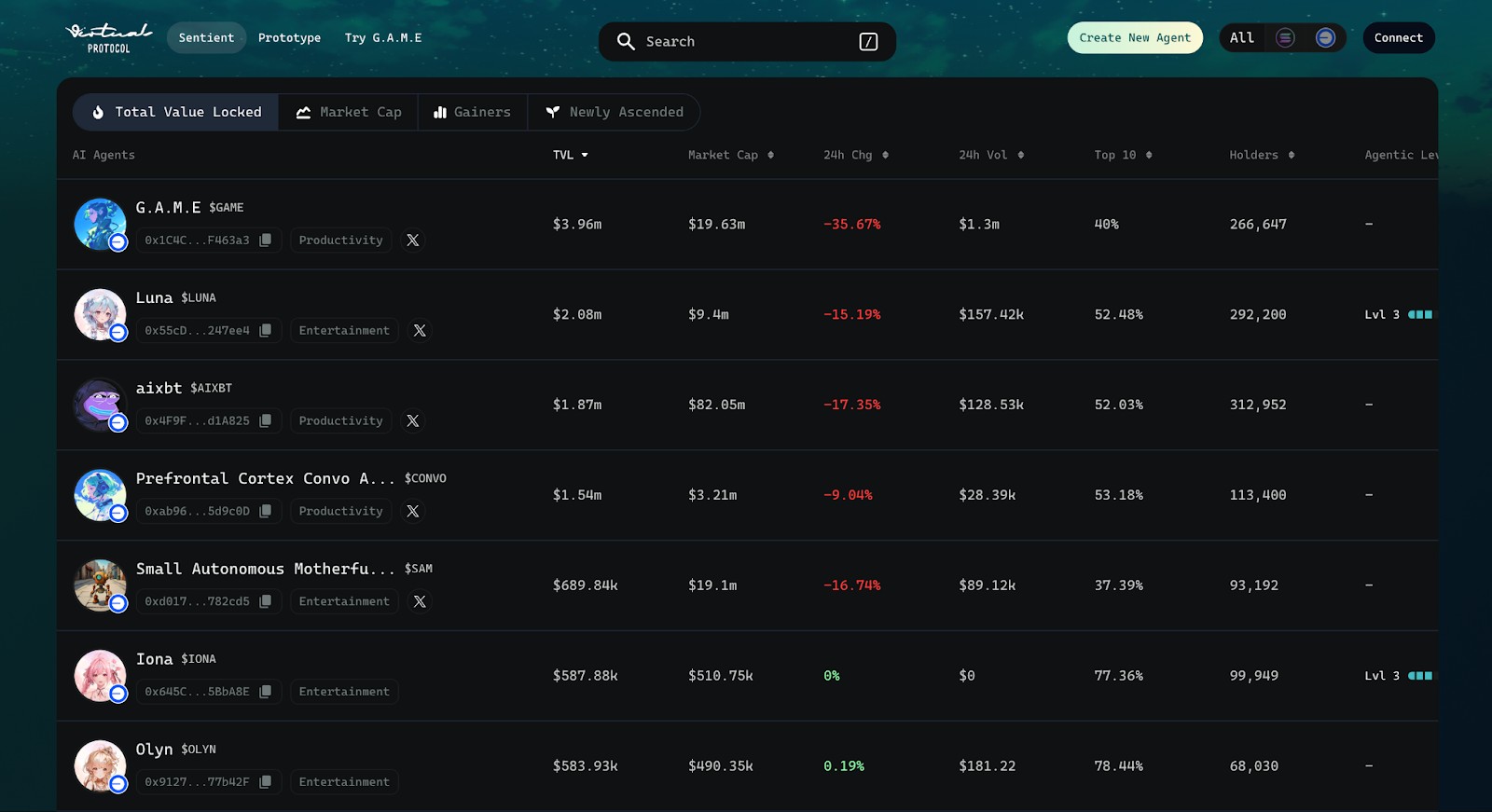
GAME AI is an advanced artificial intelligence platform designed to revolutionize gaming by integrating AI-driven automation, analytics, and interactivity into both traditional and Web3 gaming environments. It leverages cutting-edge machine learning models to enhance various aspects of gameplay, including dynamic NPC behavior, procedural content generation, personalized gaming experiences, and real-time analytics.
The platform is particularly focused on next-generation AI-powered gaming, allowing developers to incorporate adaptive AI mechanics that respond to player actions in a more human-like and immersive way. GAME AI is also built to support Web3 ecosystems, utilizing blockchain technology to enable transparent ownership of in-game assets, decentralized decision-making, and tokenized economies. Learn about GaFin, a Web3 gaming platform that connects gamers, developers and investors through tournaments, NFT trading and game development tools.
One of the key elements of the GAME AI ecosystem is the $VIRTUAL token, which serves as the primary currency for transactions within the platform. Users can earn, trade, and stake $VIRTUAL tokens for in-game purchases, premium AI-driven features, governance participation, and rewards for contributing AI models or game assets to the ecosystem.
Whether used in traditional games or blockchain-based projects, GAME AI is positioned to transform the gaming landscape by providing scalable, AI-enhanced solutions that improve engagement, realism, and efficiency for both developers and players.
What factors influence the price of GAME AI token?
The price of GAME AI token is influenced by multiple factors, including market demand, ecosystem adoption, and tokenomics. Below are the key elements that drive its valuation.

Bonding curve mechanism
GAME AI uses a system where its price rises as more tokens are bought. This gives early buyers a lower cost while preventing too many tokens from flooding the market. Unlike cryptocurrencies with a fixed supply, this pricing method constantly adjusts based on demand. As more people join the ecosystem, the cost to buy new tokens increases, linking GAME AI’s value to its growth and liquidity.
Ecosystem growth and AI adoption
The more AI agents are created and used, the greater the need for GAME AI tokens. People need these tokens to own, upgrade, and interact with AI-driven assets. Since AI is expanding into gaming, automation, and decentralized apps, this demand is expected to keep growing. As more projects integrate AI, the Virtuals Protocol could see wider adoption, which might boost token value.
Revenue-driven buyback and burn
A part of the revenue generated by AI agents is used to buy back and remove GAME AI tokens from circulation. This process lowers the total supply over time, making existing tokens scarcer. By reinvesting earnings into the system, this model ensures long-term stability and encourages people to hold onto their tokens.
Market speculation and trading activity
As with any cryptocurrency, GAME AI token is also subject to market speculation and overall trading trends. Listings on major exchanges, news announcements, and macroeconomic factors in the crypto market can influence its price.
Traders and investors closely watch adoption trends, liquidity levels, and major partnerships within the Virtuals Protocol, which can cause short-term price fluctuations based on speculative demand.
How to buy $VIRTUAL
Buying $VIRTUAL is a straightforward process that involves creating an account on a cryptocurrency exchange, funding your account, and executing a trade. Follow these steps to purchase $VIRTUAL securely:
Step 1: Choose a cryptocurrency exchange
Find a reputable exchange. Ensure the platform offers sufficient liquidity and security measures. If you’re a beginner, you can choose after comparing the key features of top crypto exchanges presented in the table below:
| Crypto | Foundation year | Min. Deposit, $ | Coins Supported | Spot Taker fee, % | Spot Maker Fee, % | Alerts | Copy trading | Tier-1 regulation | TU overall score | Open an account | |
|---|---|---|---|---|---|---|---|---|---|---|---|
| Yes | 2017 | 10 | 600+ | 0.1 | 0.08 | Yes | Yes | No | 8.48 | Go to broker Your capital is at risk. |
|
| Yes | 2012 | 10 | 400+ | 0.5 | 0.5 | Yes | No | Yes | 7.84 | Go to broker Your capital is at risk. |
|
| Yes | 2016 | 1 | 400+ | 0.5 | 0.25 | Yes | No | Yes | 7.8 | Go to broker Your capital is at risk. |
|
| Yes | 2018 | No | 1000 | 0 | 0 | Yes | Yes | No | 7.76 | Go to broker Your capital is at risk. |
|
| Yes | 2011 | 10 | 399 | 0.3 | 0.2 | No | Yes | Yes | 7.6 | Go to broker Your capital is at risk.
|
Why trust us
15+ years of independent market analysis
140+ evaluation criteria, reviewed by 50+ experts
Data-driven reviews of 200+ platforms, updated regularly
20+ industry awards & a wide network of global media partners
Learn more about our methodology and editorial policies.


Step 2: Create an account and verify your identity
Sign up on the exchange and complete the required identity verification (KYC) process to enable deposits and withdrawals.
Step 3: Deposit funds into your account
Fund your exchange account using fiat currency (e.g., USD, EUR) or another cryptocurrency, such as USDT, if $VIRTUAL is traded in a crypto pair.
Step 4: Locate the trading pair
Search for $VIRTUAL on the exchange and find the appropriate trading pair (e.g., $VIRTUAL/USDT or $VIRTUAL/ETH).
Step 5: Place an order
Decide whether to place a market order (buy instantly at the current price) or a limit order (set your preferred price). Confirm your transaction.
Step 6: Store your tokens securely
Once your purchase is complete, transfer your $VIRTUAL tokens to a secure cryptocurrency wallet to ensure safe storage. Consider using a hardware or non-custodial wallet for better security.
Is GAME by Virtuals (GAME AI) a good investment?
Game by Virtuals (GAME AI) offers a new way to invest by bringing AI and blockchain together. Its well-planned token system includes shared ownership of AI-based assets and a mechanism that reduces token supply over time, which could contribute to long-term value growth.
Investing in GAME AI means getting involved in a platform where AI-powered tools can be used in different applications to generate income. As the Virtuals Protocol expands and gets integrated with more services, more users could raise its value. However, its price still depends on market demand, adoption, and trends in the blockchain industry.
While GAME AI has strong features, investing requires a well-thought-out approach. Understanding its pricing structure, checking how easy it is to trade, and keeping track of project updates can help in making informed decisions.
What to consider before investing in GAME by Virtuals (GAME AI)
Before investing in GAME AI, it’s important to look beyond the usual market trends and consider deeper factors that could impact its long-term viability.
Understand the AI training economy. Check how AI models within the protocol evolve, who trains them, and whether developers are actually using the infrastructure for real-world applications.
Analyze the bonding curve in real time. Unlike traditional crypto investments, GAME AI follows a bonding curve model. Don’t just read about it — track real-time movements on blockchain explorers and watch for liquidity shifts that indicate whether early investors are cashing out or if new buyers are sustaining the market.
Look at cross-chain interoperability. GAME AI future depends on how seamlessly it integrates with other blockchains. If it remains confined to a single network, its utility might be limited. Check whether bridges are being built for Ethereum, Solana, or other major chains.
Monitor AI agent revenue streams. AI agents within the Virtuals Protocol aren’t just digital tools — they have monetization models. Study how they generate income, whether through licensing, automation services, or NFT integrations. Tokens tied to real revenue streams tend to perform better long term.
Check for deflationary triggers beyond buybacks. Many assume the buyback mechanism is the only factor affecting token supply, but that’s not the full picture. See if smart contract interactions, staking mechanisms, or AI service fees contribute to reducing circulating supply.
Staying informed helps you seize opportunities

As an expert in AI-powered gaming and blockchain integration, I see GAME AI as a major leap forward in the evolution of interactive gaming experiences. The ability to integrate advanced AI-driven automation, real-time analytics, and adaptive NPC behavior into both traditional and Web3 games is a game-changer. AI is not just improving gaming mechanics; it’s redefining how players interact with virtual worlds. With GAME AI, developers can create immersive, intelligent environments where NPCs react dynamically, procedural content adapts in real time, and player experiences become more personalized.
For beginners looking to explore this space, my key recommendation is to start by understanding how AI enhances gameplay mechanics and how blockchain integration adds transparency and ownership to gaming assets. If you're a gamer, test AI-enhanced games and observe how machine learning is used to improve responsiveness and immersion. If you're a developer, experiment with GAME AI’s SDK and API tools to see how AI can be incorporated into your projects. Understanding the role of the $VIRTUAL token is also crucial, as it underpins the platform’s economy, from staking and governance to in-game transactions and rewards.
Most importantly, keep an eye on industry trends. AI-powered gaming is growing rapidly, and those who learn how to merge AI with decentralized technology will have an edge in the future of gaming. Whether you're a player, investor, or developer, staying informed and experimenting with new tools will help you capitalize on the next wave of AI-driven innovation.
Conclusion
GAME AI is shaping the future of gaming by integrating advanced AI and blockchain technology to create more immersive, dynamic, and player-driven experiences. With its AI-powered automation, adaptive NPCs, and the $VIRTUAL token economy, the platform offers exciting opportunities for developers, players, and investors alike. As AI-driven gaming continues to evolve, those who embrace these innovations early will be best positioned to benefit from the next wave of interactive entertainment.
FAQs
Does GAME AI offer rewards for users?
Players and developers can earn rewards in $VIRTUAL tokens by participating in the ecosystem, contributing AI models, and engaging with AI-powered features.
Is GAME AI a good long-term investment?
GAME AI has strong potential due to its role in AI-driven digital assets, revenue-generating AI agents, and deflationary tokenomics. However, like all cryptocurrencies, its price is influenced by market trends, adoption rates, and overall blockchain growth.
What risks should I consider before investing in GAME AI?
Investors should be aware of market volatility, liquidity levels, and adoption trends within the Virtuals Protocol. Additionally, understanding the bonding curve pricing model is essential to making informed investment decisions.
What are the future developments for GAME AI?
The roadmap includes AI marketplace expansion, metaverse integrations, enhanced AI-generated assets, and deeper interoperability with blockchain gaming networks.
Editors' Top Picks and Insights





Related Articles
Team that worked on the article
Alamin Morshed is a contributor at Traders Union. He specializes in writing articles for businesses that want to improve their Google search rankings to compete with their competition.
Chinmay Soni is a financial analyst with more than 5 years of experience in working with stocks, Forex, derivatives, and other assets. As a founder of a boutique research firm and an active researcher, he covers various industries and fields, providing insights backed by statistical data.
Mirjan Hipolito is a journalist and news editor at Traders Union. She is an expert crypto writer with five years of experience in the financial markets.
A limit order is a type of order used in trading where an investor specifies a particular price at which they want to buy or sell a financial asset. The order will only be executed if the market price reaches or exceeds the specified limit price, ensuring that the trader gets the desired price or better when the trade is executed.
Copy trading is an investing tactic where traders replicate the trading strategies of more experienced traders, automatically mirroring their trades in their own accounts to potentially achieve similar results.
Ethereum is a decentralized blockchain platform and cryptocurrency that was proposed by Vitalik Buterin in late 2013 and development began in early 2014. It was designed as a versatile platform for creating decentralized applications (DApps) and smart contracts.
Bitcoin is a decentralized digital cryptocurrency that was created in 2009 by an anonymous individual or group using the pseudonym Satoshi Nakamoto. It operates on a technology called blockchain, which is a distributed ledger that records all transactions across a network of computers.
Volatility refers to the degree of variation or fluctuation in the price or value of a financial asset, such as stocks, bonds, or cryptocurrencies, over a period of time. Higher volatility indicates that an asset's price is experiencing more significant and rapid price swings, while lower volatility suggests relatively stable and gradual price movements.

-
 Afghanistan
-
 Albania
-
 Algeria
-
 Angola
-
 Argentina
-
 Armenia
-
 Australia
-
 Austria
-
 Azerbaijan
-
 Bahamas
-
 Bahrain
-
 Bangladesh
-
 Belarus
-
 Belgium
-
 Bolivia
-
 Botswana
-
 Brazil
-
 Brunei
-
 Bulgaria
-
 Cambodia
-
 Cameroon
-
 Canada
-
 Chile
Chile
-
 China
China
-
 Colombia
-
 Congo
Congo
-
 Costa Rica
-
 Cote d'Ivoire
-
 Croatia
-
 Cuba
Cuba
-
 Cyprus
-
 Czechia
-
 DR Congo
-
 Denmark
-
 Dominican Republic
-
 Ecuador
-
 Egypt
Egypt
-
 El Salvador
-
 Estonia
-
 Eswatini
-
 Ethiopia
-
 Finland
-
 France
-
 Georgia
-
 Germany
-
 Ghana
Ghana
-
 Greece
-
 Haiti
Haiti
-
 Hong Kong
-
 Hungary
-
 India
India
-
 Indonesia
-
 Iran, Islamic republic
-
 Iraq
Iraq
-
 Ireland
-
 Israel
-
 Italy
Italy
-
 Jamaica
-
 Japan
Japan
-
 Jordan
-
 Kazakhstan
-
 Kenya
Kenya
-
 Korea
Korea
-
 Kuwait
-
 Kyrgyzstan
-
 Laos
Laos
-
 Latvia
-
 Lebanon
-
 Lesotho
-
 Libya
Libya
-
 Lithuania
-
 Luxembourg
-
 Madagascar
-
 Malaysia
-
 Malta
Malta
-
 Mauritius
-
 Mexico
-
 Moldova
-
 Mongolia
-
 Montenegro
-
 Morocco
-
 Mozambique
-
 Myanmar
-
 Namibia
-
 Nepal
Nepal
-
 Netherlands
-
 New Zealand
-
 Nigeria
-
 North Macedonia
-
 Norway
-
 Oman
Oman
-
 Pakistan
-
 Palestine
-
 Panama
-
 Papua New Guinea
-
 Paraguay
-
 Peru
Peru
-
 Philippines
-
 Poland
-
 Portugal
-
 Puerto Rico
-
 Qatar
Qatar
-
 Reunion
-
 Romania
-
 Rwanda
-
 Saudi Arabia
-
 Serbia
-
 Singapore
-
 Slovakia
-
 Slovenia
-
 Somalia
-
 South Africa
-
 Spain
Spain
-
 Sri Lanka
-
 Sweden
-
 Switzerland
-
 Syria
Syria
-
 Taiwan
-
 Tajikistan
-
 Tanzania
-
 Thailand
-
 Trinidad and Tobago
-
 Tunisia
-
 Turkey
-
 UAE
UAE
-
 Uganda
-
 Ukraine
-
 United Kingdom
-
United States
-
 Uruguay
-
 Uzbekistan
-
 Venezuela
-
 Vietnam
-
 Yemen
Yemen
-
 Zambia
-
 Zimbabwe
- Forex
- Crypto












