
Brian Armstrong's Crypto Investments: An Overview


Editorial Note: While we adhere to strict Editorial Integrity, this post may contain references to products from our partners. Here's an explanation for How We Make Money. None of the data and information on this webpage constitutes investment advice according to our Disclaimer.
Brian Armstrong, the CEO of Coinbase, has an estimated net worth of around $11.1 billion. His cryptocurrency holdings include Ethereum (ETH), Polygon, USDC, and various decentralized finance (DeFi) tokens. Through Coinbase Ventures, Armstrong has invested in numerous blockchain startups, including Ampleforth and dYdX, with some reports estimating over 550 investments.
Brian Armstrong, who co-founded and runs Coinbase, has had a major impact on the cryptocurrency industry. His investments show his long-term commitment to blockchain and digital assets. Both personally and through Coinbase’s efforts, Armstrong has backed innovations that push crypto forward. His role in making digital currencies more accessible has drawn attention to his investment moves.
Breakdown of Brian Armstrong's cryptocurrency holdings
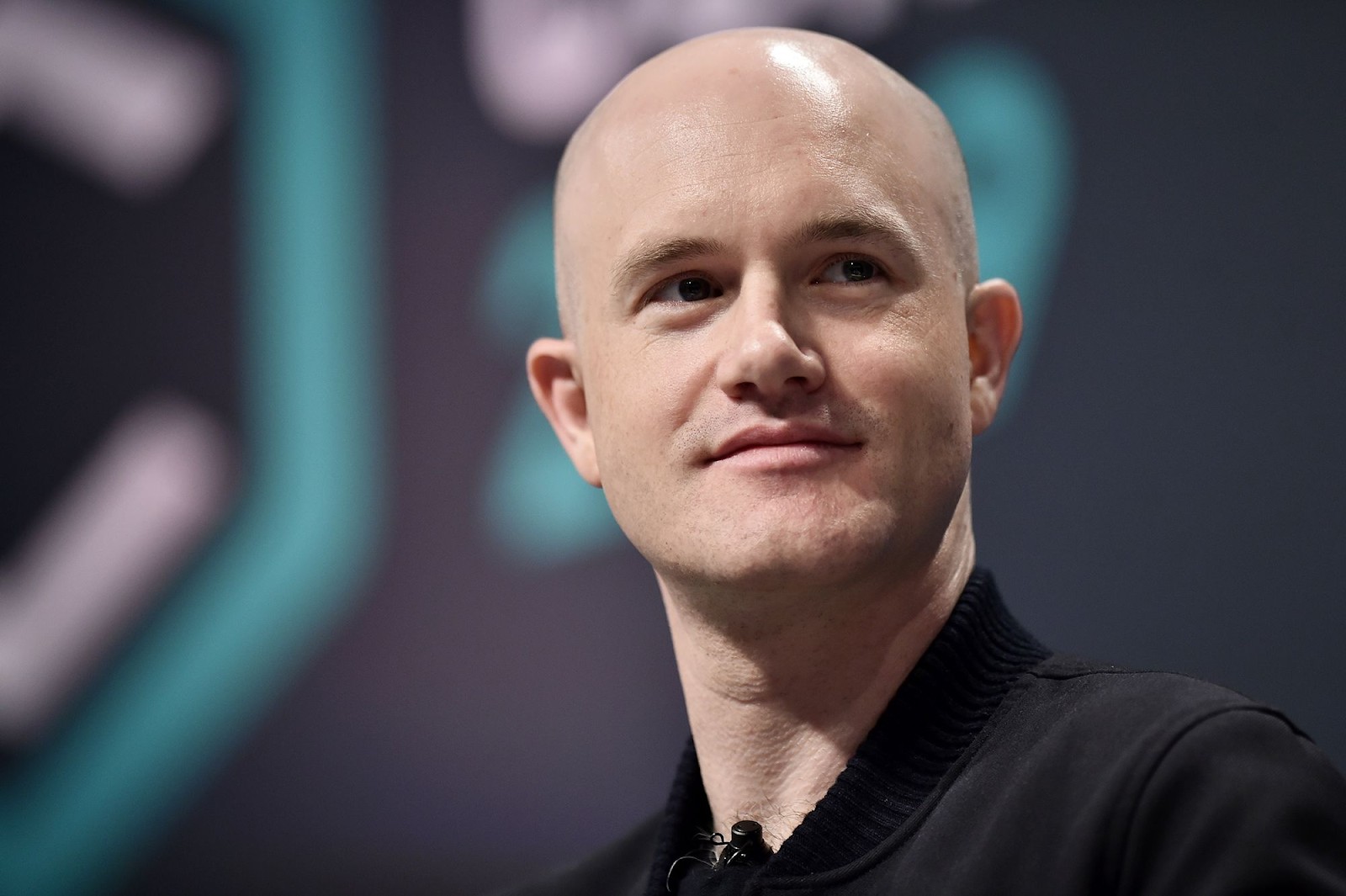
Brian Armstrong, the co-founder and CEO of Coinbase, maintains a diverse cryptocurrency portfolio that reflects his commitment to the evolving digital asset landscape. His investments include:

Ethereum (ETH). Understanding Ethereum's key role in enabling smart contracts and decentralized applications (dApps), Armstrong holds a significant position in ETH.
Coinbase (COIN) Shares & USDC.Armstrong holds a significant stake in Coinbase, the leading U.S. cryptocurrency exchange he co-founded. Additionally, his involvement with USD Coin (USDC), a stablecoin developed by Coinbase in partnership with Circle, highlights his focus on stable digital currencies.
Polygon (MATIC) i s a Layer 2 scaling solution designed to improve Ethereum’s scalability by enabling faster and cheaper transactions. By providing an efficient framework for developers to build dApps, Polygon enhances the usability of decentralized finance (DeFi), gaming, and NFT platforms.
Optimism (OP) is a n EthereumLayer 2 scaling network that leverages Optimistic Rollups to increase transaction speed and reduce fees. It plays a crucial role in enhancing Ethereum’s efficiency while maintaining decentralization and security. Armstrong's involvement with Optimism signals his belief in Layer 2 networks as a way to drive mass adoption of DeFi and dApps.
Arbitrum (ARB) is another Layer 2 scaling solution built to improve Ethereum’s transaction throughput while lowering costs. It is widely adopted in the DeFi space, with many top projects migrating to the network to leverage its efficiency. Armstrong’s exposure to Arbitrum underscores his strategic focus on Ethereum’s broader ecosystem and its ability to scale effectively.
BNB Chain (BNB) i s Binance’s blockchain network, designed to support smart contracts and decentralized applications (dApps). It offers high-speed, low-cost transactions and has grown into a major competitor to Ethereum in DeFi, gaming, and NFT markets. Armstrong’s interest in BNB Chain highlights his recognition of multi-chain ecosystems and the increasing role of alternative blockchain networks in expanding Web3 adoption.
NFT and Web3 Tokens. With Coinbase's expansion into the NFT marketplace, Armstrong has exposure to Web3 and NFT-related assets, showing his belief in the growing importance of digital ownership and decentralized web platforms.
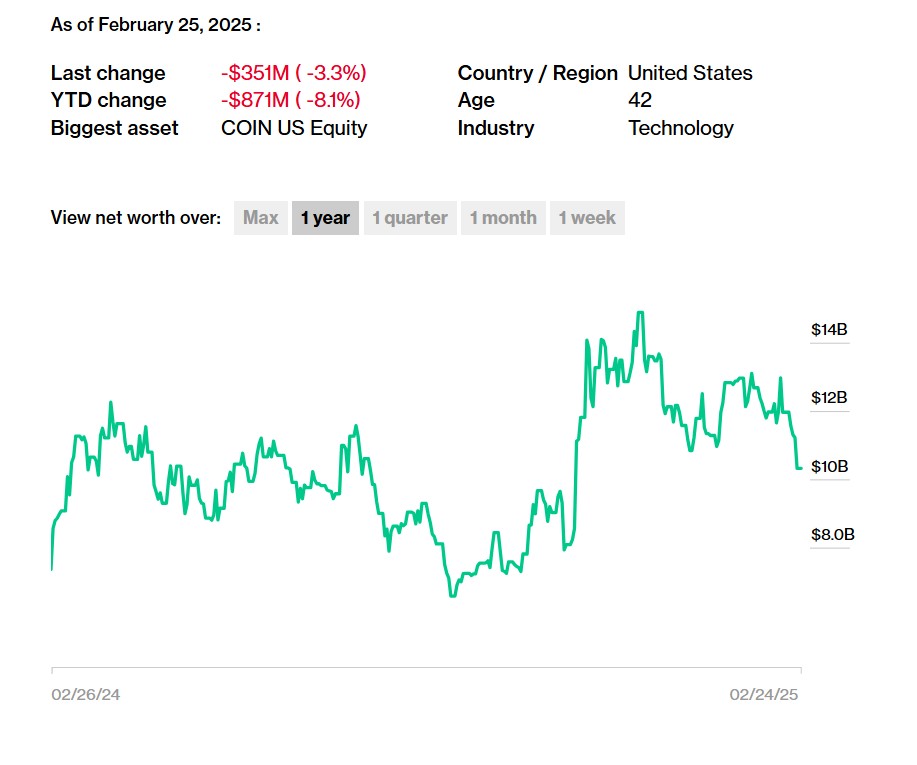
Coinbase’s role in Armstrong’s portfolio
Brian Armstrong, leading Coinbase, has seen his wealth grow alongside the company's achievements. Through Coinbase Ventures, he's been instrumental in supporting a variety of blockchain startups.
Coinbase Ventures had backed over 550 projects, recently investing in companies such as Legend and Trendies.
Notable investments include:
Layer 2 solutions like Optimism and Arbitrum.
Blockchain infrastructure initiatives aimed at boosting scalability and security.
Crypto-based financial services designed to encourage wider acceptance of digital assets.
These investments not only align with Coinbase's strategic goals but also mirror Armstrong's expansive vision for the future of blockchain technology.
Brian Armstrong’s influence extends beyond personal investments — through Coinbase, he has helped shape the infrastructure that millions of users rely on to access digital assets. For investors and traders looking to follow similar strategies or gain exposure to cryptocurrencies like Ethereum, stablecoins, and DeFi tokens, choosing a reliable crypto exchange is a critical step. The table below compares popular cryptocurrency exchanges used for trading and investing in digital assets.
| Coinbase | OKX | BTCC | Cryptohopper | Crypto.com | |
|---|---|---|---|---|---|
|
Demo account |
No | Yes | Yes | No | No |
|
Coins Supported |
400+ | 600+ | 399 | 1000 | 400+ |
|
Min. Deposit, $ |
10 | 10 | 10 | No | 1 |
|
Spot leverage |
1:3 | 1:10 | 1:1 | No | 1:3 |
|
Spot Maker Fee, % |
0.5 | 0.08 | 0.2 | 0 | 0.25 |
|
Spot Taker fee, % |
0.5 | 0.1 | 0.3 | 0 | 0.5 |
|
TU overall score |
8.5 | 8.46 | 8.08 | 7.8 | 7.76 |
|
Open an account |
Go to broker Your capital is at risk. |
Go to broker Your capital is at risk. |
Go to broker Your capital is at risk.
|
Go to broker Your capital is at risk. |
Go to broker Your capital is at risk. |
Financial impact and market reactions
Brian Armstrong's clear plan has had a notable impact on Coinbase's financial success, especially with the expansion of services for large-scale traders. In late 2024, Coinbase saw a significant profit boost, mainly due to attracting more high-volume traders. This highlights Armstrong's knack for drawing in big players, boosting the company's earnings.
Beyond trading, Armstrong is a strong supporter of the wider use of cryptocurrencies to promote financial freedom and innovation. He sees digital currencies becoming a key part of the global financial system, making it more accessible and efficient. This innovative mindset not only positions Coinbase as a leader in the crypto world but also shapes how markets and regulators view digital assets.
Brian Armstrong's cryptocurrency strategy

Brian Armstrong, leading Coinbase, offers some unconventional advice for newcomers to cryptocurrency.
Get involved with regulators. Armstrong stresses the need to engage directly with those crafting crypto regulations. By participating in these conversations, you can help create rules that support innovation while ensuring compliance.
Build trust through security. Establishing a reliable reputation is key. Armstrong has prioritized strong security measures and transparency at Coinbase, recognizing that user trust is essential for the growth of digital currencies.
Champion economic freedom. Armstrong sees cryptocurrencies as a tool to boost economic freedom globally. By backing decentralized financial systems, you can help break down barriers and empower people in areas where traditional banking is limited.
Focus on education. Teaching others about the pros and cons of cryptocurrencies is central to Armstrong's strategy. Making information easy to understand helps demystify digital assets, allowing more people to make informed choices and join the crypto world.
Partner for innovation. Working with other tech companies and financial institutions can lead to new crypto solutions. Armstrong has sought out partnerships that improve Coinbase's services, showing how collaboration can expand the crypto landscape.
Think long-term. Armstrong advises looking beyond short-term market swings and focusing on the future potential of cryptocurrencies. Keeping a long-term perspective can help you stay steady through the market's natural ups and downs.
Future outlook: What’s next for Armstrong in crypto?
Brian Armstrong is actively shaping the future of cryptocurrency. Here are some key insights into his approach:
Exploring new ways to represent assets.Armstrong believes that in the near future, we'll see things like art and real estate turned into digital tokens on the blockchain. This could make investing more accessible to everyone and change how we think about owning things.
Rethinking how new tokens are added. With about a million new tokens being created every week, Armstrong suggests it's time to change the old methods of reviewing each one. He thinks we should consider listing all tokens by default and only remove those that show problems, allowing innovation to flourish.
Integrating crypto into everyday finance.Armstrong predicts that by 2030, cryptocurrencies will become so common that half the world's population will use them. This points to a major move toward decentralized financial systems.
Collaborating with regulators worldwide.Armstrong stresses the need to work closely with global regulators to set clear rules, creating a space where crypto can grow within the existing financial frameworks.
Positioning Bitcoin as a global financial standard.Armstrong envisions Bitcoin becoming a primary reserve asset for governments, with its value potentially reaching multimillion-dollar levels as more entities adopt it.
Understanding how politics affect crypto.Armstrong points out that political events, like the current U.S. administration's support for crypto, can greatly impact regulations and attract more investments into the crypto world.
Risks and warnings
While Armstrong is a well-informed investor, his portfolio is not without risks:
Regulatory uncertainty could impact his holdings in Coinbase and DeFi projects.
Market volatility remains a significant challenge in the crypto space.
Technological risks associated with early-stage blockchain projects.
Brian Armstrong’s crypto investments in ampleforth and dydx reflect his vision for decentralized finance

Brian Armstrong, the CEO of Coinbase, has put his money into innovative crypto projects like Ampleforth (AMPL) and dYdX (DYDX). Ampleforth offers a digital currency that adjusts its supply based on demand, aiming to keep its purchasing power steady — a fresh take on tackling crypto volatility.
Meanwhile, dYdX provides a decentralized platform for advanced trading options, such as derivatives and margin trading, all without middlemen. Armstrong's backing of these initiatives shows his dedication to advancing decentralized finance (DeFi).
If you're new to crypto investing, looking at Armstrong's picks can be quite enlightening. He tends to support projects that bring new financial tools to the table and rethink traditional economic ideas, reflecting a visionary investment style.
By exploring these projects, you can learn how to spot opportunities that might not only yield profits but also drive the growth of the financial world. It's important to thoroughly research each project's basics, understand how they can be applied in real life, and see how they align with the ongoing move toward financial decentralization.
Conclusion
Brian Armstrong’s approach to managing his crypto portfolio reveals a deep commitment to both diversification and long-term growth within the digital asset space. By prioritizing leading cryptocurrencies such as Bitcoin and Ethereum, while also allocating stakes in promising altcoins, he demonstrates a balanced yet forward-thinking investment philosophy. Armstrong’s selective participation in emerging DeFi projects highlights his belief in the sector’s innovative potential. Ultimately, his thoughtfully curated portfolio serves as a blueprint for investors aiming to build resilience and seize opportunities in an ever-evolving crypto landscape.
FAQs
How does Brian Armstrong balance risk within his crypto portfolio?
What role do Layer 2 solutions play in Brian Armstrong’s investment choices?
How does Armstrong’s vision for tokenization influence his investment strategy?
Why is regulatory engagement important in Armstrong’s crypto approach?
Editors' Top Picks and Insights




Related Articles
Team that worked on the article
Mikhail Vnuchkov joined Traders Union as an author in 2020. He began his professional career as a journalist-observer at a small online financial publication, where he covered global economic events and discussed their impact on the segment of financial investment, including investor income.
Dan Blystone began his trading career in 1998 as an arbitrage clerk on the floor of the Chicago Mercantile Exchange (CME). He later traded bond and Eurex futures at proprietary firms such as Altea Trading, gaining valuable experience in high-frequency trading and risk management.
Chinmay Soni is a financial analyst with more than 5 years of experience in working with stocks, Forex, derivatives, and other assets. As a founder of a boutique research firm and an active researcher, he covers various industries and fields, providing insights backed by statistical data.
An investor is an individual, who invests money in an asset with the expectation that its value would appreciate in the future. The asset can be anything, including a bond, debenture, mutual fund, equity, gold, silver, exchange-traded funds (ETFs), and real-estate property.
Ethereum is a decentralized blockchain platform and cryptocurrency that was proposed by Vitalik Buterin in late 2013 and development began in early 2014. It was designed as a versatile platform for creating decentralized applications (DApps) and smart contracts.
Yield refers to the earnings or income derived from an investment. It mirrors the returns generated by owning assets such as stocks, bonds, or other financial instruments.
Bitcoin is a decentralized digital cryptocurrency that was created in 2009 by an anonymous individual or group using the pseudonym Satoshi Nakamoto. It operates on a technology called blockchain, which is a distributed ledger that records all transactions across a network of computers.
Crypto trading involves the buying and selling of cryptocurrencies, such as Bitcoin, Ethereum, or other digital assets, with the aim of making a profit from price fluctuations.

-
 Afghanistan
-
 Albania
-
 Algeria
-
 Angola
-
 Argentina
-
 Armenia
-
 Australia
-
 Austria
-
 Azerbaijan
-
 Bahamas
-
 Bahrain
-
 Bangladesh
-
 Belarus
-
 Belgium
-
 Bolivia
-
 Botswana
-
 Brazil
-
 Brunei
-
 Bulgaria
-
 Cambodia
-
 Cameroon
-
 Canada
-
 Chile
Chile
-
 China
China
-
 Colombia
-
 Congo
Congo
-
 Costa Rica
-
 Cote d'Ivoire
-
 Croatia
-
 Cuba
Cuba
-
 Cyprus
-
 Czechia
-
 DR Congo
-
 Denmark
-
 Dominican Republic
-
 Ecuador
-
 Egypt
Egypt
-
 El Salvador
-
 Estonia
-
 Eswatini
-
 Ethiopia
-
 Finland
-
 France
-
 Georgia
-
 Germany
-
 Ghana
Ghana
-
 Greece
-
 Haiti
Haiti
-
 Hong Kong
-
 Hungary
-
 India
India
-
 Indonesia
-
 Iran, Islamic republic
-
 Iraq
Iraq
-
 Ireland
-
 Israel
-
 Italy
Italy
-
 Jamaica
-
 Japan
Japan
-
 Jordan
-
 Kazakhstan
-
 Kenya
Kenya
-
 Korea
Korea
-
 Kuwait
-
 Kyrgyzstan
-
 Laos
Laos
-
 Latvia
-
 Lebanon
-
 Lesotho
-
 Libya
Libya
-
 Lithuania
-
 Luxembourg
-
 Madagascar
-
 Malaysia
-
 Malta
Malta
-
 Mauritius
-
 Mexico
-
 Moldova
-
 Mongolia
-
 Montenegro
-
 Morocco
-
 Mozambique
-
 Myanmar
-
 Namibia
-
 Nepal
Nepal
-
 Netherlands
-
 New Zealand
-
 Nigeria
-
 North Macedonia
-
 Norway
-
 Oman
Oman
-
 Pakistan
-
 Palestine
-
 Panama
-
 Papua New Guinea
-
 Paraguay
-
 Peru
Peru
-
 Philippines
-
 Poland
-
 Portugal
-
 Puerto Rico
-
 Qatar
Qatar
-
 Reunion
-
 Romania
-
 Rwanda
-
 Saudi Arabia
-
 Serbia
-
 Singapore
-
 Slovakia
-
 Slovenia
-
 Somalia
-
 South Africa
-
 Spain
Spain
-
 Sri Lanka
-
 Sweden
-
 Switzerland
-
 Syria
Syria
-
 Taiwan
-
 Tajikistan
-
 Tanzania
-
 Thailand
-
 Trinidad and Tobago
-
 Tunisia
-
 Turkey
-
 UAE
UAE
-
 Uganda
-
 Ukraine
-
 United Kingdom
-
United States
-
 Uruguay
-
 Uzbekistan
-
 Venezuela
-
 Vietnam
-
 Yemen
Yemen
-
 Zambia
-
 Zimbabwe
- Forex
- Crypto












