Lens Protocol Review: Redefining Decentralized Social Media


Editorial Note: While we adhere to strict Editorial Integrity, this post may contain references to products from our partners. Here's an explanation for How We Make Money. None of the data and information on this webpage constitutes investment advice according to our Disclaimer.
Lens Protocol is a decentralized social media platform built on blockchain, empowering users with full control over their content, data, and monetization, fostering a user-first Web3 experience.
Lens Protocol stands out as a groundbreaking platform designed to revolutionize the way we interact online. Built on the Lens Protocol blockchain, it helps users to own their digital identity, data, and social interactions. Whether you're curious about what Lens Protocol is, how to use it, or its potential for investment, this guide will take you through everything you need to know.
What is Lens Protocol?
Lens Protocol is a decentralized social graph that enables users to create, manage, and monetize their digital identity. Unlike traditional social media platforms, where centralized entities control data, Lens Protocol allows users to own their profiles, content, and connections as NFTs.
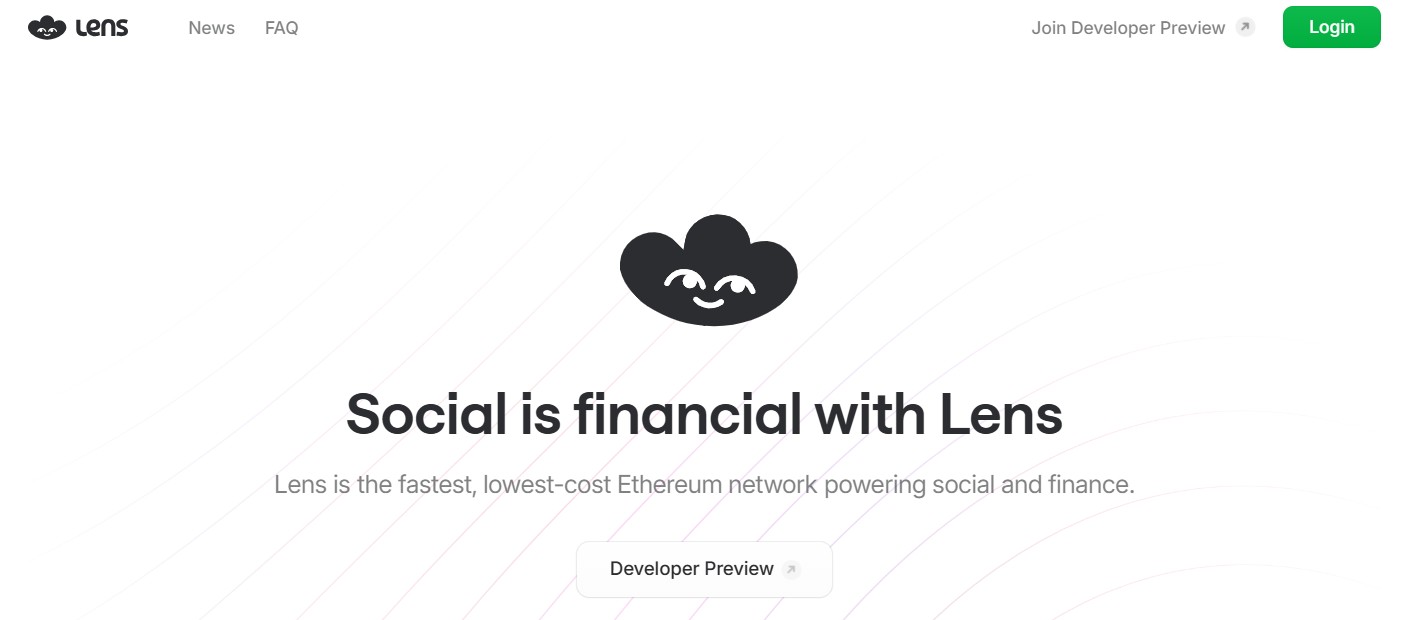
Lens Protocol powers a decentralized ecosystem where you:
Own your identity. Lens Protocol is built around giving you control over your own digital identity. Instead of your data being stored on centralized servers, you get to keep and manage everything — your content, followers, and interactions — all through the power of blockchain. This approach keeps your privacy intact, while still letting you connect and create within a decentralized network. It’s all about putting you in the driver’s seat.
Create and sell NFTs linked to your content. What sets Lens apart is how it ties NFTs to social media content. Whether it's a tweet, a video, or a post, you can turn it into an NFT and sell it directly to your audience. This opens up new possibilities for creators to monetize their work without needing third-party platforms. If you’re just starting out, think about how you could create exclusive content that your audience would love to own.
Move freely across decentralized apps. Another amazing feature of Lens Protocol is its ability to seamlessly connect with decentralized apps (dApps). This means that as your social presence grows, you’re not locked into just one platform. Your followers, content, and digital identity are portable across the decentralized web, giving you more freedom and flexibility as you navigate the space. This openness is a huge advantage for creators who want to build without limitations.
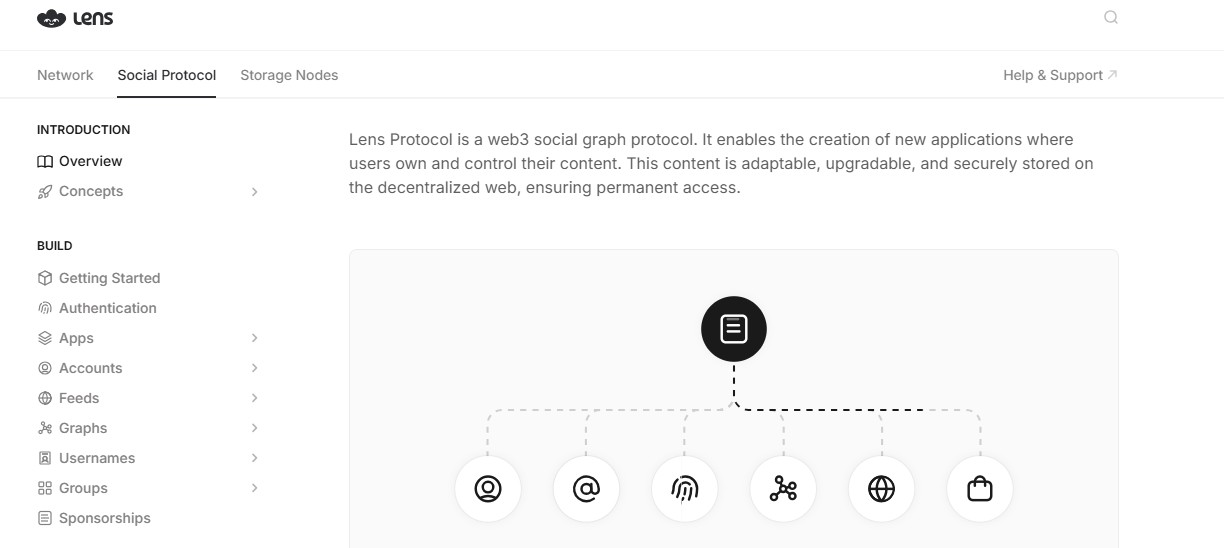
How to get a Lens Protocol profile
Getting a Lens Protocol profile is the first step to joining its ecosystem. Here’s how you can get a Lens Protocol profile and start your journey:
Connect to the Lens Protocol blockchain
Lens Protocol operates on Polygon, known for its low fees and fast transactions.
Use a supported crypto wallet such as a decentralized wallet or a wallet connection service.
Add the Polygon network to your wallet settings.
Apply for a handle
To get a Lens Protocol handle, you may need an invite, as profiles are often distributed during whitelisted periods.
Visit Lens Protocol’s official site or other supported apps.
If invites are available, mint your handle as an NFT.
Mint your profile NFT
Once approved, your handle will be minted as an NFT, representing your identity on Lens Protocol.
Confirm the minting process using your wallet.
Pay minimal gas fees using MATIC, Polygon’s native cryptocurrency.
How to use Lens Protocol
Once you’ve obtained a Lens Protocol profile, you can explore its ecosystem. Here’s a guide to help you make the most of it:
Start by owning your content. With Lens Protocol, you’re not just posting content, you’re actually owning it. Your posts are minted as NFTs, turning them into digital assets that you can monetize however you like. Take the time to understand how this works, especially how to create and manage these digital assets, and what it means to have control over your content. This is a whole new way to interact with social media — one where your content is valuable and can be transferred or sold.
Build and manage your own social graph.Lens Protocol goes beyond content creation by focusing on the relationships you build within the platform. Every follow, comment, and connection contributes to your decentralized social graph, which becomes an essential part of your identity. Start following people who share your interests, and engage with their content. Over time, this network will grow, and you’ll not only be creating content but also unlocking rewards for your growing social network.
Engage and earn with content curation.Lens Protocol flips the script on traditional social media by rewarding users for curating content. You’re not just scrolling through endless feeds; you’re part of a community that rewards engagement. By liking, sharing, or commenting on content, you can build your reputation and earn rewards in the process. The more you engage with relevant content, the more value you’ll create for yourself and the community, allowing you to tap into the network effect.
Lens Protocol blockchain and crypto integration
Lens Protocol is built on Polygon, a blockchain renowned for its scalability and low transaction costs. This integration ensures:
Seamless crypto payments. Lens Protocol supports cryptocurrency payments, enabling users to monetize their content.
Interoperability. Users can leverage Polygon’s secure ecosystem to integrate other dApps and tools.
Does Lens Protocol have a coin? While Lens Protocol itself doesn’t have a native token, it heavily relies on MATIC for transaction fees and ecosystem operations.
How to invest in Lens Protocol
Lens Protocol offers indirect investment opportunities, particularly for those interested in the Web3 and blockchain space. Here’s how you can invest in Lens Protocol:
Explore small, active communities. Don’t just focus on investing in Lens tokens; spend time getting to know the smaller groups where real activity happens. These communities often grow into the backbone of the protocol, adding long-term value.
Look for groups that aren’t well-known yet but show strong activity. These are often goldmines for discovering new creators or services before they catch on, giving you an edge as an early supporter.
Back creators whose work has the potential to go viral or gain a lot of followers. Lens Protocol allows creators to monetize directly. Invest in their NFT projects or collaborations early to ride the wave of their growth.
Find side projects growing alongside Lens Protocol. Many apps and tools being built around Lens can offer even better returns than just holding the token. Look for partnerships or integrations that complement Lens.
Watch how profiles tied to personal tokens gain popularity. Decentralized identities are becoming a trend. Support creators or services that offer unique profile NFTs or tokenized identities before this becomes mainstream.
Keep an eye on where developers are focusing their efforts. Look for new apps or features being developed for Lens by tracking their hackathons or updates. These often signal the next big thing within the ecosystem.
Spot great deals on digital collectibles made by creators who might blow up. Many creators mint NFTs as part of their social activity. Find the ones undervalued now but with potential to gain big attention later.
Take advantage of opportunities to connect investments across platforms. Since Lens interacts with ecosystems like Polygon, consider ways to amplify your returns by staking or farming on these related platforms.
How to withdraw from Lens Protocol
Withdrawing from Lens Protocol involves managing the assets you earn or own within the ecosystem, such as cryptocurrency or NFTs. While Lens itself doesn’t handle direct withdrawals, its integration with the Polygon blockchain makes transferring your assets simple. Here’s a step-by-step guide:
Access your wallet
To withdraw, start with the wallet you connected to Lens Protocol. Choose crypto exchanges that support Polygon-based transactions. Make sure you have access to the wallet's private keys or seed phrase.
Verify your assets
Log into your wallet and check for the assets you want to withdraw. These might include:
Poligon (MATIC) tokens. Used for transaction fees or earned through Lens Protocol-enabled activities.
NFTs. Such as your Lens Protocol profile or other items you’ve acquired within the ecosystem.
Transfer to an exchange
If you’re withdrawing cryptocurrency:
Send the Poligon (MATIC) or other tokens to a cryptocurrency exchange that supports Polygon. Some of the top exchanges that support Polygon include:
| Coinbase | OKX | BTCC | Cryptohopper | Crypto.com | |
|---|---|---|---|---|---|
|
Polygon |
Yes | Yes | Yes | Yes | Yes |
|
NFT |
Yes | Yes | Yes | Yes | Yes |
|
Min. Deposit, $ |
10 | 10 | 10 | No | 1 |
|
Coins Supported |
400+ | 600+ | 399 | 1000 | 400+ |
|
Spot Taker fee, % |
0.5 | 0.1 | 0.3 | 0 | 0.5 |
|
Spot Maker Fee, % |
0.5 | 0.08 | 0.2 | 0 | 0.25 |
|
Government-regulated |
Yes | Yes | Yes | No | Yes |
|
Foundation year |
2012 | 2017 | 2011 | 2018 | 2016 |
|
Open an account |
Go to broker Your capital is at risk. |
Go to broker Your capital is at risk. |
Go to broker Your capital is at risk.
|
Go to broker Your capital is at risk. |
Go to broker Your capital is at risk. |
Use the exchange’s deposit address for Polygon transactions, and double-check the address before sending.
For NFTs:
Transfer them to an NFT marketplace if you intend to sell or trade them.
Ensure the marketplace supports Polygon-based NFTs.
Convert to fiat (optional)
Once your cryptocurrency is on an exchange:
Trade the tokens for your preferred fiat currency (e.g., USD, EUR).
Withdraw the funds to your bank account or payment method linked to the exchange.
Monitor transaction fees
Keep an eye on gas fees during the process. While Polygon offers low fees, converting or withdrawing funds from exchanges might incur additional costs.
Secure your wallet
After completing the withdrawal, ensure your wallet remains secure. Regularly update passwords and enable two-factor authentication for added protection.
Pros and cons of Lens Protocol
- Pros
- Cons
Decentralized content ownership. Lens Protocol lets you truly own your social media content using NFTs, which means your posts, comments, and connections can’t be controlled or censored by centralized platforms. This ownership also allows you to monetize your content directly through royalties or marketplace sales — perfect for creators seeking complete control over their digital footprint.
Interoperable social graph. Instead of being locked into one platform, Lens allows your followers, content, and social graph to move seamlessly across decentralized applications. This creates a unique edge for building an audience that grows with you, even if you decide to shift platforms entirely. It's a powerful feature for creators tired of starting over when moving platforms.
Programmable social interactions. Lens enables developers to create customized social features such as exclusive memberships or algorithm-free feeds. For example, as a beginner, you could design your personal "like-to-earn" mechanism that rewards followers with crypto tokens. This programmability fosters new forms of engagement tailored to niche communities.
Steep learning curve. To use Lens, you need to understand wallets, smart contracts, and blockchain basics. For a beginner, the setup can be confusing and feel overwhelming, which might make it hard to get started.
Ecosystem in its infancy. The platform is still developing, so you might face challenges due to limited tools, unstable features, or smaller communities. Compared to big platforms like Instagram, Lens might feel like it’s missing some polish.
Costs of transactions. Although Lens runs on Polygon, which offers lower fees than Ethereum, interacting on the platform still requires gas fees. For beginners with a tight budget, these costs can pose a challenge to staying active on the platform.
Owning social graphs and creating digital economies with Lens Protocol

Lens Protocol isn’t just another blockchain-based application; it’s a fresh take on how we interact with social media, giving users full control over their online presence. One of its hidden but impactful features is the ability to own your social graph as an NFT. Imagine building a following once and being able to take that same audience across various decentralized platforms without starting over.
For creators, this means escaping reliance on algorithms that prioritize profits for centralized platforms. Instead, you can focus on monetizing your connections directly, experimenting with exclusive content, token-gated communities, or royalty-sharing models that let your audience grow alongside you.
Another benefit is how Lens Protocol encourages teamwork between developers and creators. For example, a creator could partner with a developer to design dApps or features that serve their community’s specific interests. A musician might create a platform that allows fans to stream music while earning tokens for each play.
These tokens could be exchanged for concert tickets or exclusive merchandise, all seamlessly handled through smart contracts on Polygon. By building on open-source tools, beginners can collaborate to create entirely new digital economies, changing how we think about audience engagement and creator-driven platforms.
Conclusion
Lens Protocol is redefining social media by putting users in full control of their digital identities, content, and connections through innovative blockchain technology. By allowing content and social graphs to be owned, monetized, and moved freely, creators and users gain new opportunities for direct rewards and platform independence. For example, musicians can reward fans with tokens for streaming or collaborate with developers to build custom dApps for their communities. The future of online interaction belongs to those who own their audience, and Lens Protocol provides the tools to shape that future on your own terms.
FAQs
How does Lens Protocol ensure data privacy and user control?
What role does Polygon play in the operation of Lens Protocol?
Can users move their Lens Protocol profiles and social graphs across different decentralized platforms?
What are the potential costs associated with using Lens Protocol?
Editors' Top Picks and Insights





Related Articles
Team that worked on the article
Mikhail Vnuchkov joined Traders Union as an author in 2020. He began his professional career as a journalist-observer at a small online financial publication, where he covered global economic events and discussed their impact on the segment of financial investment, including investor income.
Dan Blystone began his trading career in 1998 as an arbitrage clerk on the floor of the Chicago Mercantile Exchange (CME). He later traded bond and Eurex futures at proprietary firms such as Altea Trading, gaining valuable experience in high-frequency trading and risk management.
Chinmay Soni is a financial analyst with more than 5 years of experience in working with stocks, Forex, derivatives, and other assets. As a founder of a boutique research firm and an active researcher, he covers various industries and fields, providing insights backed by statistical data.
Bitcoin is a decentralized digital cryptocurrency that was created in 2009 by an anonymous individual or group using the pseudonym Satoshi Nakamoto. It operates on a technology called blockchain, which is a distributed ledger that records all transactions across a network of computers.
Forex leverage is a tool enabling traders to control larger positions with a relatively small amount of capital, amplifying potential profits and losses based on the chosen leverage ratio.
An investor is an individual, who invests money in an asset with the expectation that its value would appreciate in the future. The asset can be anything, including a bond, debenture, mutual fund, equity, gold, silver, exchange-traded funds (ETFs), and real-estate property.
CFD is a contract between an investor/trader and seller that demonstrates that the trader will need to pay the price difference between the current value of the asset and its value at the time of contract to the seller.
Cryptocurrency is a type of digital or virtual currency that relies on cryptography for security. Unlike traditional currencies issued by governments (fiat currencies), cryptocurrencies operate on decentralized networks, typically based on blockchain technology.

-
 Afghanistan
-
 Albania
-
 Algeria
-
 Angola
-
 Argentina
-
 Armenia
-
 Australia
-
 Austria
-
 Azerbaijan
-
 Bahamas
-
 Bahrain
-
 Bangladesh
-
 Belarus
-
 Belgium
-
 Bolivia
-
 Botswana
-
 Brazil
-
 Brunei
-
 Bulgaria
-
 Cambodia
-
 Cameroon
-
 Canada
-
 Chile
Chile
-
 China
China
-
 Colombia
-
 Congo
Congo
-
 Costa Rica
-
 Cote d'Ivoire
-
 Croatia
-
 Cuba
Cuba
-
 Cyprus
-
 Czechia
-
 DR Congo
-
 Denmark
-
 Dominican Republic
-
 Ecuador
-
 Egypt
Egypt
-
 El Salvador
-
 Estonia
-
 Eswatini
-
 Ethiopia
-
 Finland
-
 France
-
 Georgia
-
 Germany
-
 Ghana
Ghana
-
 Greece
-
 Haiti
Haiti
-
 Hong Kong
-
 Hungary
-
 India
India
-
 Indonesia
-
 Iran, Islamic republic
-
 Iraq
Iraq
-
 Ireland
-
 Israel
-
 Italy
Italy
-
 Jamaica
-
 Japan
Japan
-
 Jordan
-
 Kazakhstan
-
 Kenya
Kenya
-
 Korea
Korea
-
 Kuwait
-
 Kyrgyzstan
-
 Laos
Laos
-
 Latvia
-
 Lebanon
-
 Lesotho
-
 Libya
Libya
-
 Lithuania
-
 Luxembourg
-
 Madagascar
-
 Malaysia
-
 Malta
Malta
-
 Mauritius
-
 Mexico
-
 Moldova
-
 Mongolia
-
 Montenegro
-
 Morocco
-
 Mozambique
-
 Myanmar
-
 Namibia
-
 Nepal
Nepal
-
 Netherlands
-
 New Zealand
-
 Nigeria
-
 North Macedonia
-
 Norway
-
 Oman
Oman
-
 Pakistan
-
 Palestine
-
 Panama
-
 Papua New Guinea
-
 Paraguay
-
 Peru
Peru
-
 Philippines
-
 Poland
-
 Portugal
-
 Puerto Rico
-
 Qatar
Qatar
-
 Reunion
-
 Romania
-
 Rwanda
-
 Saudi Arabia
-
 Serbia
-
 Singapore
-
 Slovakia
-
 Slovenia
-
 Somalia
-
 South Africa
-
 Spain
Spain
-
 Sri Lanka
-
 Sweden
-
 Switzerland
-
 Syria
Syria
-
 Taiwan
-
 Tajikistan
-
 Tanzania
-
 Thailand
-
 Trinidad and Tobago
-
 Tunisia
-
 Turkey
-
 UAE
UAE
-
 Uganda
-
 Ukraine
-
 United Kingdom
-
United States
-
 Uruguay
-
 Uzbekistan
-
 Venezuela
-
 Vietnam
-
 Yemen
Yemen
-
 Zambia
-
 Zimbabwe
- Forex
- Crypto