
BitPay Review 2026: What Is BitPay And How Does It Work?


Editorial Note: While we adhere to strict Editorial Integrity, this post may contain references to products from our partners. Here's an explanation for How We Make Money. None of the data and information on this webpage constitutes investment advice according to our Disclaimer.
BitPay is one of the most established and trustworthy cryptocurrency payment processors in the world. Founded in 2011 by Tony Gallippi and Stephen Pair, and headquartered in Atlanta, USA, the company provides secure tools that allow businesses to accept, send, and manage crypto payments with confidence.
BitPay is a veteran in crypto payments. Founded in 2011 by Tony Gallippi and Stephen Pair in Atlanta, it gives merchants a way to accept Bitcoin and other major coins without changing how finance teams work. The pitch is simple. Let customers pay in crypto. Let the business settle in the currency it already books and reports in.
What is BitPay?
BitPay is a cryptocurrency payment gateway that enables both individuals and merchants to process Bitcoin, Ethereum, and other digital currencies easily and securely. Designed for smooth integration into e-commerce systems, mobile apps, and POS platforms, BitPay payment gateway solutions allow businesses to accept crypto from customers worldwide while minimizing operational costs and volatility risks.
| Region | Operational Status | Key Features |
|---|---|---|
| United States | Full functionality | Supports BitPay Card, ACH transfers, Bill Pay |
| European Union (EU) | Partial | Crypto payments and wallet available, no fiat payouts |
| United Kingdom | Partial | Enables crypto payments and storage, card not available |
| Canada | Full | Works with cards and bank accounts, supports local providers |
| Ukraine and CIS | Limited | Crypto transactions only; no fiat transfers or BitPay Card |
| Asia (Japan, Singapore, Hong Kong) | Partial | Crypto payments and exchanges available, no direct fiat withdrawals |
| Africa | Limited | Not available in all countries; VPN may be required in some regions |
| Middle East | Partial | Crypto payments supported; bank transfers restricted |
| Australia and New Zealand | Full | Wallet, payments, and card available via partner program |
How does BitPay work?
For users, it's important to understand how BitPay works. The company acts as a bridge between merchants and blockchain networks. When a customer pays in cryptocurrency, BitPay automatically converts the amount into fiat currency (such as USD or EUR) at the current exchange rate. This ensures instant settlement, transparent accounting, and protection from crypto price fluctuations.
BitPay offers one of the most complete crypto payment systems in the industry, combining merchant tools, wallet functions, and settlement options into one platform. It’s designed to make accepting, sending, and managing crypto as easy as using a regular payment processor. Below are its key features and benefits:
Payment gateway. BitPay’s payment system lets businesses accept Bitcoin, Ethereum, and several other cryptocurrencies online or in-store. When a customer pays in crypto, BitPay instantly converts it to fiat currency like USD or EUR at the market rate, protecting merchants from price volatility. This means the business always receives the exact amount owed, without worrying about crypto price swings.
E-commerce integrations. BitPay provides ready-made plugins for popular platforms such as Shopify, WooCommerce, Magento, and OpenCart. Merchants can enable crypto payments on their websites in just a few steps without advanced technical setup. Each transaction is tracked in a detailed merchant dashboard for clear accounting and tax records.
Invoices and payment links. BitPay allows businesses to send custom payment invoices or payment links directly to customers, making it easy to collect payments for services, subscriptions, or one-time purchases. The invoice automatically locks the crypto-to-fiat exchange rate for 15 minutes to prevent losses from price movement.
Mobile and POS support. The BitPay Checkout app enables retail stores and restaurants to accept crypto payments in person. The app can run on tablets or smartphones, displaying the amount due and generating a QR code for customers to scan. Once paid, the transaction is confirmed within seconds.
Bulk payouts. Companies can use BitPay’s Mass Payout tool to send crypto payments to multiple recipients at once, such as freelancers, employees, or affiliates. This is especially useful for global teams, as it avoids bank fees and long settlement times. Recipients can choose to receive funds in crypto or in fiat currency.
Wallet and prepaid card. BitPay also offers a non-custodial crypto wallet that supports Bitcoin, Ether, stablecoins, and other major assets. Users keep their private keys and can make payments directly through the wallet. The optional BitPay Card allows users to convert crypto into fiat instantly and spend it anywhere Visa is accepted, online or offline.
Security and compliance. The platform uses multi-signature protection, two-factor authentication, and encrypted key storage. For businesses, BitPay handles regulatory compliance, KYC (Know Your Customer), and anti-money-laundering (AML) requirements, helping ensure that payments meet financial standards in different jurisdictions.
Reporting and analytics. Merchants can access detailed transaction reports, export data for accounting, and track settlement timelines in real time. This transparency is one of the main reasons many long-time users consider BitPay a trustworthy payment processor.
Founders and legacy
The company’s founders, Tony Gallippi and Stephen Pair, played a key role in shaping the global crypto payments industry. Their vision was to make Bitcoin and other cryptocurrencies usable for real-world commerce, a goal now realized through BitPay’s trustworthy technology stack. With more than a decade of continuous innovation, BitPay remains a legit and reliable partner for businesses looking to embrace the future of digital finance.

Is BitPay safe?
Yes, BitPay is legit and is generally considered safe to use, especially for businesses and users who need a trusted way to handle crypto payments. Its BitPay Wallet is non-custodial, meaning users keep full control of their private keys. Security features like two-factor authentication (2FA) and multi-signature protection add extra safety layers. BitPay is also known for its regulatory compliance and transparent conversion process, automatically turning crypto payments into fiat currency to avoid volatility risks.
However, like any crypto service, it’s not completely risk-free. Once a crypto payment is made, it can’t be reversed, so users must double-check addresses before sending. Merchants relying on BitPay for settlements still depend on the company’s systems for fiat transfers, which carries some operational risk. Some users have also reported slow support for transaction issues.
To stay safe:
Always enable 2FA and use a strong password.
Never share your seed phrase or private keys with anyone.
If handling large amounts, use a hardware or multisig wallet.
Verify official communication channels to avoid phishing.
Overall, BitPay is one of the safer and more established crypto payment platforms, but users should still practice good wallet security and stay alert while transacting.
If you also trade or convert the crypto you receive through BitPay, using a reliable local exchange can make the process smoother. You can check our research-based list of the best crypto exchanges in your region to find trusted options for easy buying, selling, or cashing out.
| Crypto | Foundation year | Min. Deposit, $ | Coins Supported | Spot Taker fee, % | Spot Maker Fee, % | Alerts | Copy trading | Tier-1 regulation | TU overall score | Open an account | |
|---|---|---|---|---|---|---|---|---|---|---|---|
| Yes | 2012 | 10 | 400+ | 0.5 | 0.5 | Yes | No | Yes | 8.5 | Go to broker Your capital is at risk. |
|
| Yes | 2017 | 10 | 600+ | 0.1 | 0.08 | Yes | Yes | No | 8.46 | Go to broker Your capital is at risk. |
|
| Yes | 2011 | 10 | 399 | 0.3 | 0.2 | No | Yes | Yes | 8.08 | Go to broker Your capital is at risk.
|
|
| Yes | 2018 | No | 1000 | 0 | 0 | Yes | Yes | No | 7.8 | Go to broker Your capital is at risk. |
|
| Yes | 2016 | 1 | 400+ | 0.5 | 0.25 | Yes | No | Yes | 7.76 | Go to broker Your capital is at risk. |
BitPay: registration & verification on the official site
Before you can use BitPay’s core features – adding funds, converting, or withdrawing – you must create an account and complete identity verification.
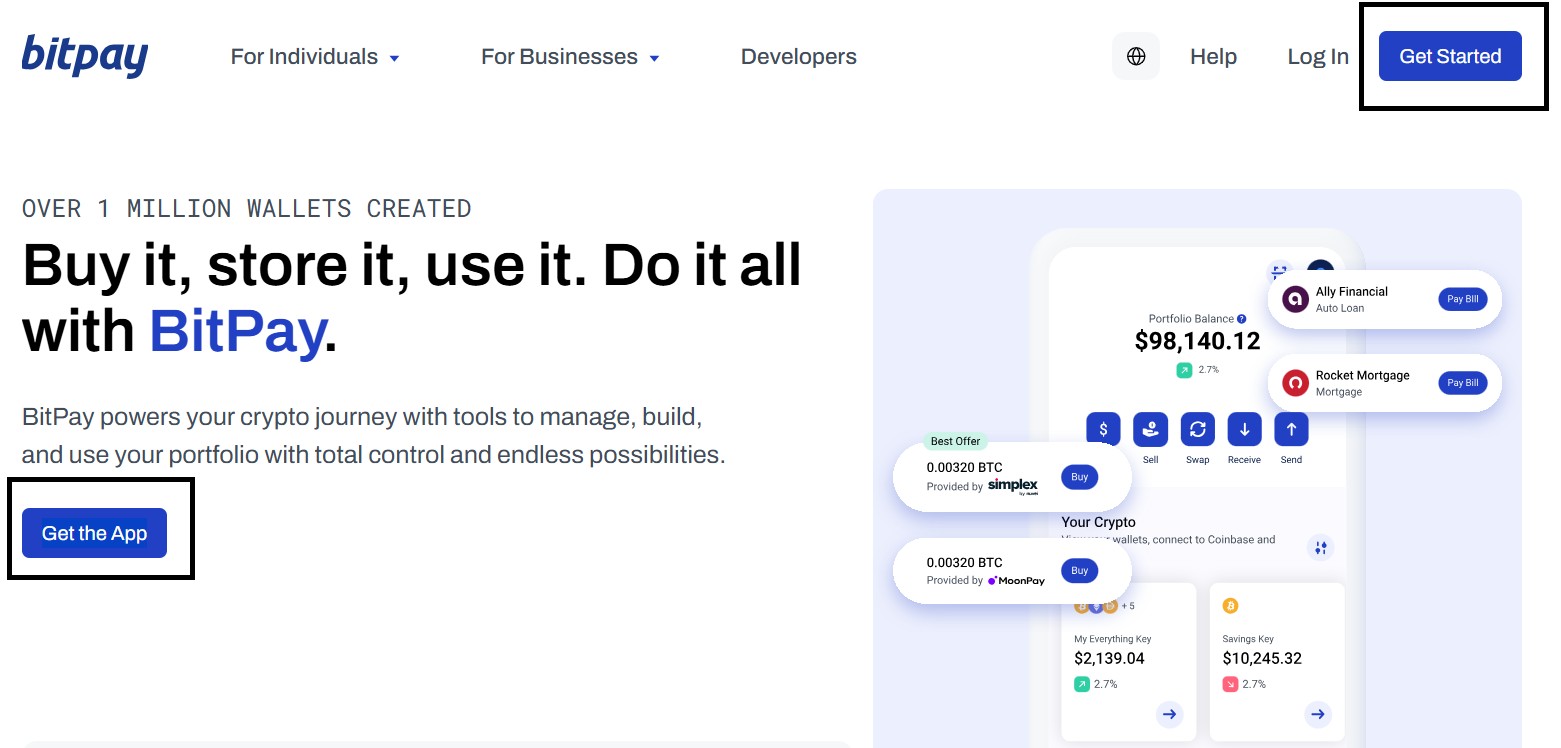
Step 1. Go to the official site
Visit bitpay.com. Click Get Started to sign up on the web, or Get the App to download the official app for Windows, macOS, Android, or iOS.
Step 2. Create your account
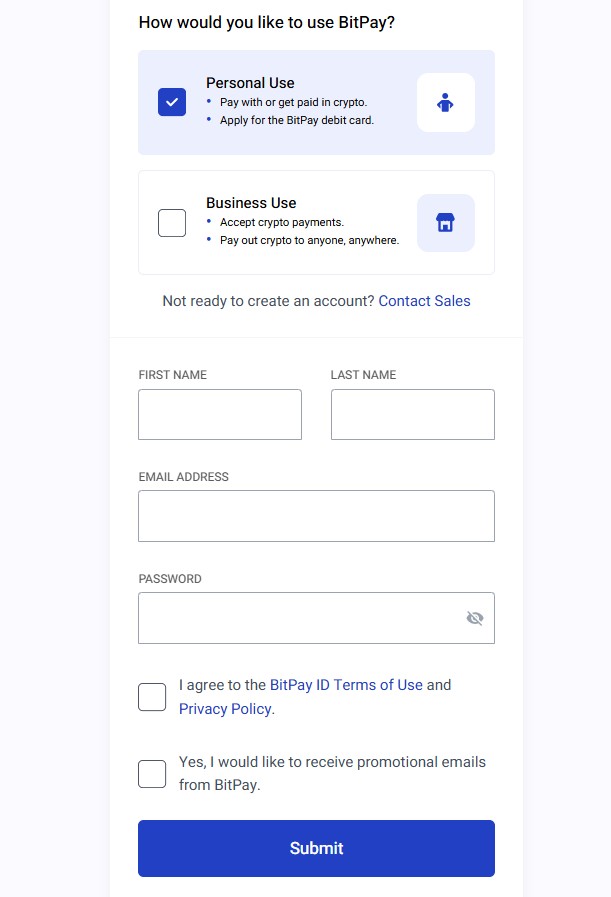
Choose Personal or Business, then enter your first/last name, email, and a strong password. Accept the terms and click Submit.
Step 3. Confirm your email
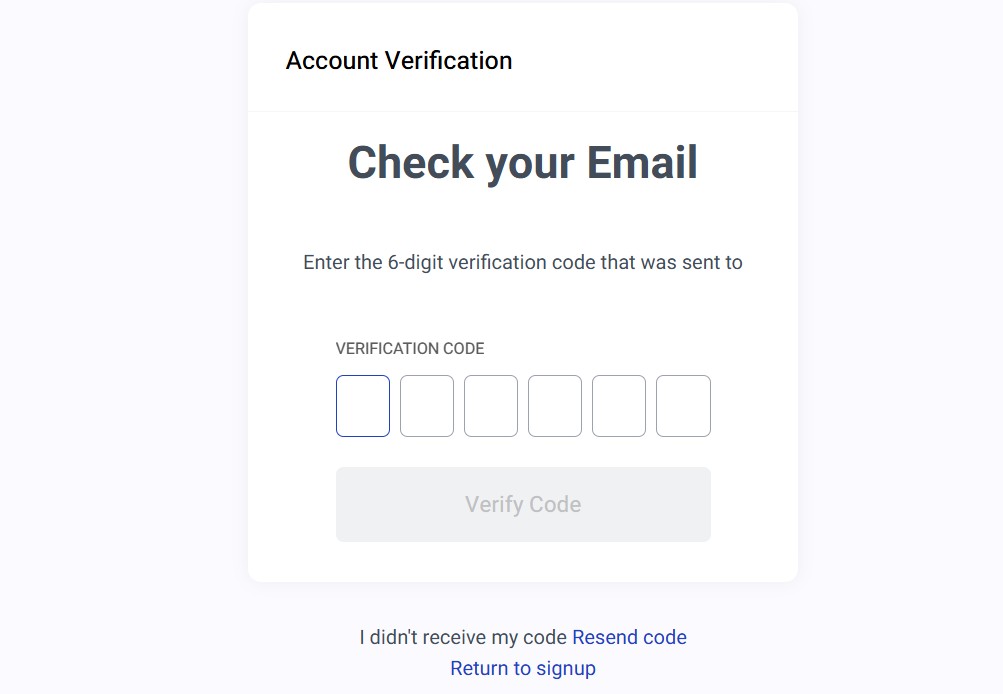
BitPay will send a 6-digit code to your email. Enter it to finish registration.
BitPay verification: what you’ll need
Verification (KYC) is required to unlock full functionality. It’s part of global AML/KYC standards that help prevent fraud and keep accounts secure.
Data & documents typically requested:
full name (Latin characters);
date of birth and country of residence;
photo of a valid passport or national ID;
selfie (sometimes required to match your ID);
proof of address (utility bill, bank statement, etc.).
BitPay uses encrypted transmission and vetted identity providers to process documents securely. Data is handled under strict compliance standards and isn’t shared with third parties unless required by law.
Review time: usually 10 minutes to 24 hours. Submissions with blurry images or mismatched details may be rejected.
It helps businesses simplify international payments and reach new markets

BitPay isn’t just about processing crypto, it helps businesses simplify international payments and reach new markets. In 2026, BitPay remains legit, safe, and trustworthy, offering reliable tools for global transactions. By using BitPay’s Automatic Settlement, companies can convert part of their crypto into stablecoins like USDC while keeping the rest in fiat such as USD or EUR. This strategy reduces volatility and improves flexibility, one of the reasons BitPay reviews highlight it as a leader in global commerce.
Another smart move is connecting the BitPay payment gateway through Shopify or Magento. This shows customers you’re forward-thinking and crypto-ready. By studying transaction data, businesses can see how BitPay works in real time, spot popular coins, and run targeted promotions. This simple tactic boosts loyalty and proves that BitPay is legit, safe, and built for modern digital payments.
Conclusion
BitPay stands out as a leading solution for businesses and individuals seeking efficient crypto payment processing. Its seamless wallet integration and robust support for Bitcoin and other major cryptocurrencies make transactions faster and more accessible. For example, merchants can swiftly accept crypto payments and convert them to fiat, while users enjoy a streamlined experience managing their digital assets. Ultimately, BitPay’s commitment to innovation positions it at the forefront of the evolving payment landscape, empowering users to harness the full potential of cryptocurrencies.
FAQs
What regions have full BitPay functionality and what limitations exist in other areas?
How does BitPay integrate with e-commerce platforms and point-of-sale systems?
What reporting and analytics features does BitPay offer for businesses?
What security measures does BitPay employ to protect user accounts and transactions?
Editors' Top Picks and Insights






Related Articles
Team that worked on the article
Viktoras Karapetjanc is a seasoned financial trader, market analyst, and content creator with over 20 years of expertise in Forex, cryptocurrency, and stock markets. As a contributor to the Traders Union website, he provides in-depth analysis, data-driven strategies, and educational content to empower traders of all levels.
Dan Blystone began his trading career in 1998 as an arbitrage clerk on the floor of the Chicago Mercantile Exchange (CME). He later traded bond and Eurex futures at proprietary firms such as Altea Trading, gaining valuable experience in high-frequency trading and risk management.
Chinmay Soni is a financial analyst with more than 5 years of experience in working with stocks, Forex, derivatives, and other assets. As a founder of a boutique research firm and an active researcher, he covers various industries and fields, providing insights backed by statistical data.
Xetra is a German Stock Exchange trading system that the Frankfurt Stock Exchange operates. Deutsche Börse is the parent company of the Frankfurt Stock Exchange.
Copy trading is an investing tactic where traders replicate the trading strategies of more experienced traders, automatically mirroring their trades in their own accounts to potentially achieve similar results.
Cryptocurrency is a type of digital or virtual currency that relies on cryptography for security. Unlike traditional currencies issued by governments (fiat currencies), cryptocurrencies operate on decentralized networks, typically based on blockchain technology.
Bitcoin is a decentralized digital cryptocurrency that was created in 2009 by an anonymous individual or group using the pseudonym Satoshi Nakamoto. It operates on a technology called blockchain, which is a distributed ledger that records all transactions across a network of computers.
Crypto trading involves the buying and selling of cryptocurrencies, such as Bitcoin, Ethereum, or other digital assets, with the aim of making a profit from price fluctuations.

-
 Afghanistan
-
 Albania
-
 Algeria
-
 Angola
-
 Argentina
-
 Armenia
-
 Australia
-
 Austria
-
 Azerbaijan
-
 Bahamas
-
 Bahrain
-
 Bangladesh
-
 Belarus
-
 Belgium
-
 Bolivia
-
 Botswana
-
 Brazil
-
 Brunei
-
 Bulgaria
-
 Cambodia
-
 Cameroon
-
 Canada
-
 Chile
Chile
-
 China
China
-
 Colombia
-
 Congo
Congo
-
 Costa Rica
-
 Cote d'Ivoire
-
 Croatia
-
 Cuba
Cuba
-
 Cyprus
-
 Czechia
-
 DR Congo
-
 Denmark
-
 Dominican Republic
-
 Ecuador
-
 Egypt
Egypt
-
 El Salvador
-
 Estonia
-
 Eswatini
-
 Ethiopia
-
 Finland
-
 France
-
 Georgia
-
 Germany
-
 Ghana
Ghana
-
 Greece
-
 Haiti
Haiti
-
 Hong Kong
-
 Hungary
-
 India
India
-
 Indonesia
-
 Iran, Islamic republic
-
 Iraq
Iraq
-
 Ireland
-
 Israel
-
 Italy
Italy
-
 Jamaica
-
 Japan
Japan
-
 Jordan
-
 Kazakhstan
-
 Kenya
Kenya
-
 Korea
Korea
-
 Kuwait
-
 Kyrgyzstan
-
 Laos
Laos
-
 Latvia
-
 Lebanon
-
 Lesotho
-
 Libya
Libya
-
 Lithuania
-
 Luxembourg
-
 Madagascar
-
 Malaysia
-
 Malta
Malta
-
 Mauritius
-
 Mexico
-
 Moldova
-
 Mongolia
-
 Montenegro
-
 Morocco
-
 Mozambique
-
 Myanmar
-
 Namibia
-
 Nepal
Nepal
-
 Netherlands
-
 New Zealand
-
 Nigeria
-
 North Macedonia
-
 Norway
-
 Oman
Oman
-
 Pakistan
-
 Palestine
-
 Panama
-
 Papua New Guinea
-
 Paraguay
-
 Peru
Peru
-
 Philippines
-
 Poland
-
 Portugal
-
 Puerto Rico
-
 Qatar
Qatar
-
 Reunion
-
 Romania
-
 Rwanda
-
 Saudi Arabia
-
 Serbia
-
 Singapore
-
 Slovakia
-
 Slovenia
-
 Somalia
-
 South Africa
-
 Spain
Spain
-
 Sri Lanka
-
 Sweden
-
 Switzerland
-
 Syria
Syria
-
 Taiwan
-
 Tajikistan
-
 Tanzania
-
 Thailand
-
 Trinidad and Tobago
-
 Tunisia
-
 Turkey
-
 UAE
UAE
-
 Uganda
-
 Ukraine
-
 United Kingdom
-
United States
-
 Uruguay
-
 Uzbekistan
-
 Venezuela
-
 Vietnam
-
 Yemen
Yemen
-
 Zambia
-
 Zimbabwe
- Forex
- Crypto












