
CleanSpark: A Comprehensive Review


Editorial Note: While we adhere to strict Editorial Integrity, this post may contain references to products from our partners. Here's an explanation for How We Make Money. None of the data and information on this webpage constitutes investment advice according to our Disclaimer.
CleanSpark is an innovative cryptocurrency mining company dedicated to sustainable and energy-efficient Bitcoin mining. Known for its forward-thinking approach, CleanSpark integrates renewable energy solutions and advanced technology to ensure efficient operations while minimizing environmental impact.
This article explores CleanSpark’s journey from energy tech to Bitcoin mining, highlighting its sustainability efforts, growth strategy, and market position. It also covers CleanSpark’s operations, financial milestones, expansion plans, and why it stands out in the crypto mining industry.
CleanSpark overview
CleanSpark Inc. is a publicly traded Bitcoin mining and energy technology company based in the United States. It focuses on sustainable and efficient Bitcoin mining by leveraging renewable energy sources and advanced infrastructure.

Type of activity
CleanSpark is primarily a cryptocurrency mining company with a focus on Bitcoin. In addition to mining, CleanSpark leverages its expertise in microgrid and energy solutions, which enhances its ability to operate cost-efficient and sustainable mining facilities.
Region of operation
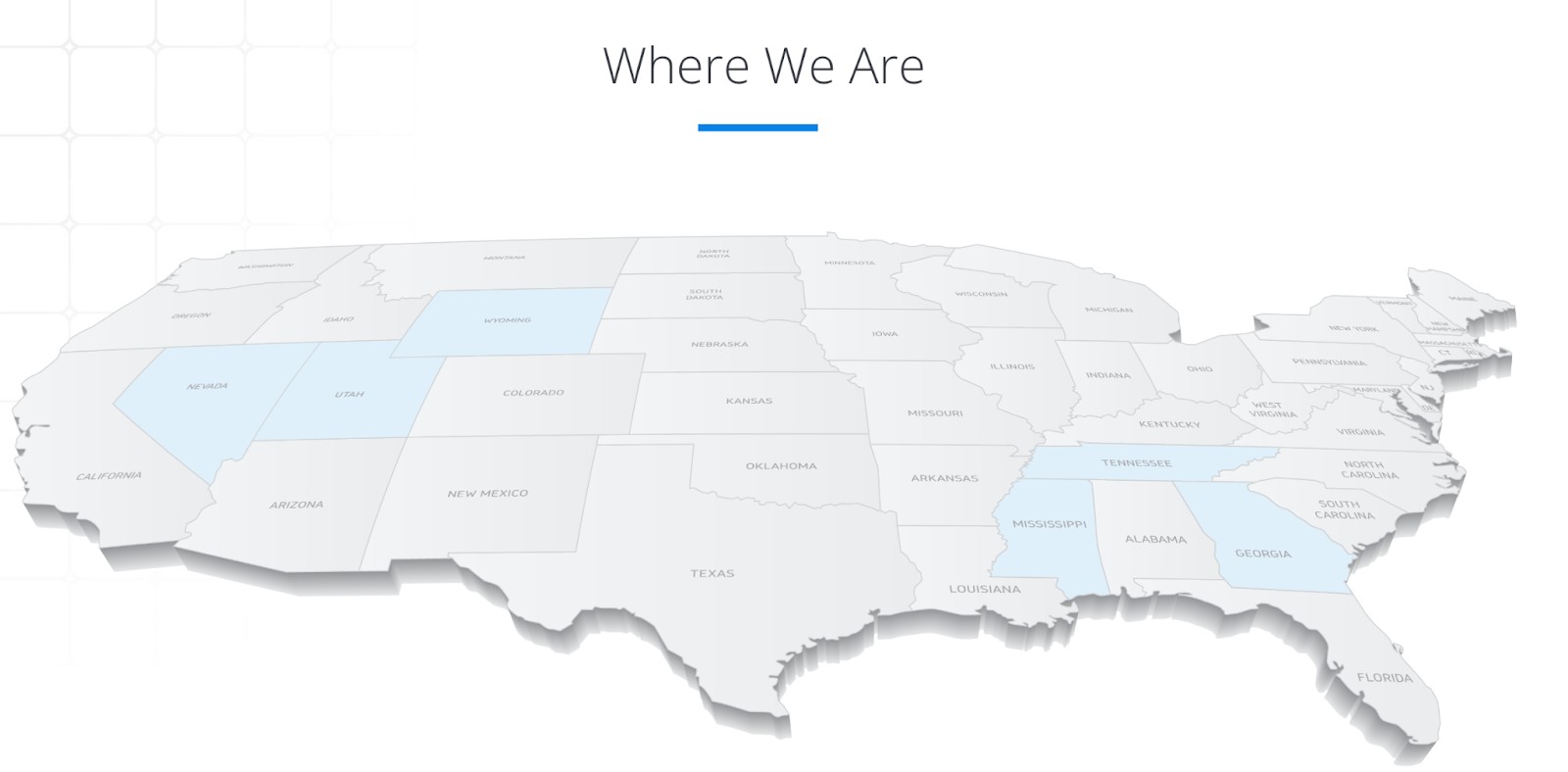
CleanSpark runs its mining facilities across the United States, with major sites located in Georgia, Mississippi, Tennessee, and Wyoming. These locations are strategically chosen to take advantage of low-cost, reliable energy supplies.
CleanSpark founder
CleanSpark was co-founded by S. Matthew Schultz and Bryan Huber on October 15, 1987. S. Matthew Schultz currently serves as the Executive Chairman of the company. Under his leadership, CleanSpark transitioned from its early focus on alternative energy solutions to becoming a prominent player in the Bitcoin mining sector.

CleanSpark history
CleanSpark’s roots go back to 1987 when it was initially formed as SmartData. The company originally focused on intellectual property development in the field of alternative fuels. After ceasing operations in the early 1990s, it resurfaced in 2014 as Stratean and later merged with CleanSpark and Specialized Energy Solutions in 2016. This marked the beginning of its current identity.
Main phases of development:
1987–1992: Early foundation
The company was initially established to explore alternative fuel technologies but halted operations in the early 1990s.2014–2016: Rebranding and restructuring
The business rebranded as Stratean in 2014 and merged with CleanSpark and Specialized Energy Solutions in 2016. This shift redirected its focus toward energy technology and microgrids.2016–2020: Microgrid focus
CleanSpark developed energy solutions including advanced microgrid systems. One of its key projects during this phase was at Camp Pendleton, where it deployed a hybrid energy system to demonstrate energy resilience and renewable power integration.2020–present: Shift to Bitcoin mining
In 2020, CleanSpark entered the Bitcoin mining industry with the acquisition of ATL Data Centers. From there, it rapidly expanded its mining capacity while sticking to low-carbon energy sources. By late 2024, the company had reached a hashrate capacity of 27.6 EH/s. It also reported a 120% increase in quarterly revenues, reaching $162.3 million in Q4 2024.
CleanSpark’s evolution from an energy research firm to a Bitcoin mining powerhouse reflects its ability to adapt and grow in emerging industries while staying aligned with energy-conscious goals.
Interesting facts about CleanSpark
1. Rapid expansion of mining operations
Hashrate growth. In December 2024, CleanSpark reported a 287.9% increase in its hashrate, reaching 39.1 exahashes per second (EH/s). The company also improved its fleet efficiency by 33.3% compared to the previous year.
Geographical reach. During 2024, CleanSpark expanded into three new states — Mississippi, Tennessee, and Wyoming — strengthening its nationwide presence.
2. Financial milestones
Revenue growth. CleanSpark generated $162.3 million in revenue during the fourth quarter of 2024, representing a 120% increase from the same period in 2023.
Bond offering. In December 2024, the company raised $650 million through a zero-coupon convertible bond. This funding is being used to fuel further growth and infrastructure development.
3. Strategic Bitcoin holdings
Long-term accumulation. As of the end of January 2025, CleanSpark held 10,556 Bitcoins in its treasury, highlighting its approach to building long-term reserves.
4. Community and environmental initiatives
Sustainable energy use. CleanSpark runs its mining operations primarily on low-carbon energy sources. This reflects its goal of combining profitability with environmental responsibility.
Local development. The company often sets up operations in underdeveloped areas to promote local economic activity and create new job opportunities.
5. Industry recognition
Index inclusion. On March 24, 2025, CleanSpark’s stock was added to the S&P SmallCap 600 Index, a recognition of its growing importance in the public markets.
Our strategy revolves around responsible Bitcoin mining and energy innovation. Sustainability isn’t just a choice—it’s our commitment.” – Zach Bradford, CEO.
Where you can buy shares/goods of the company
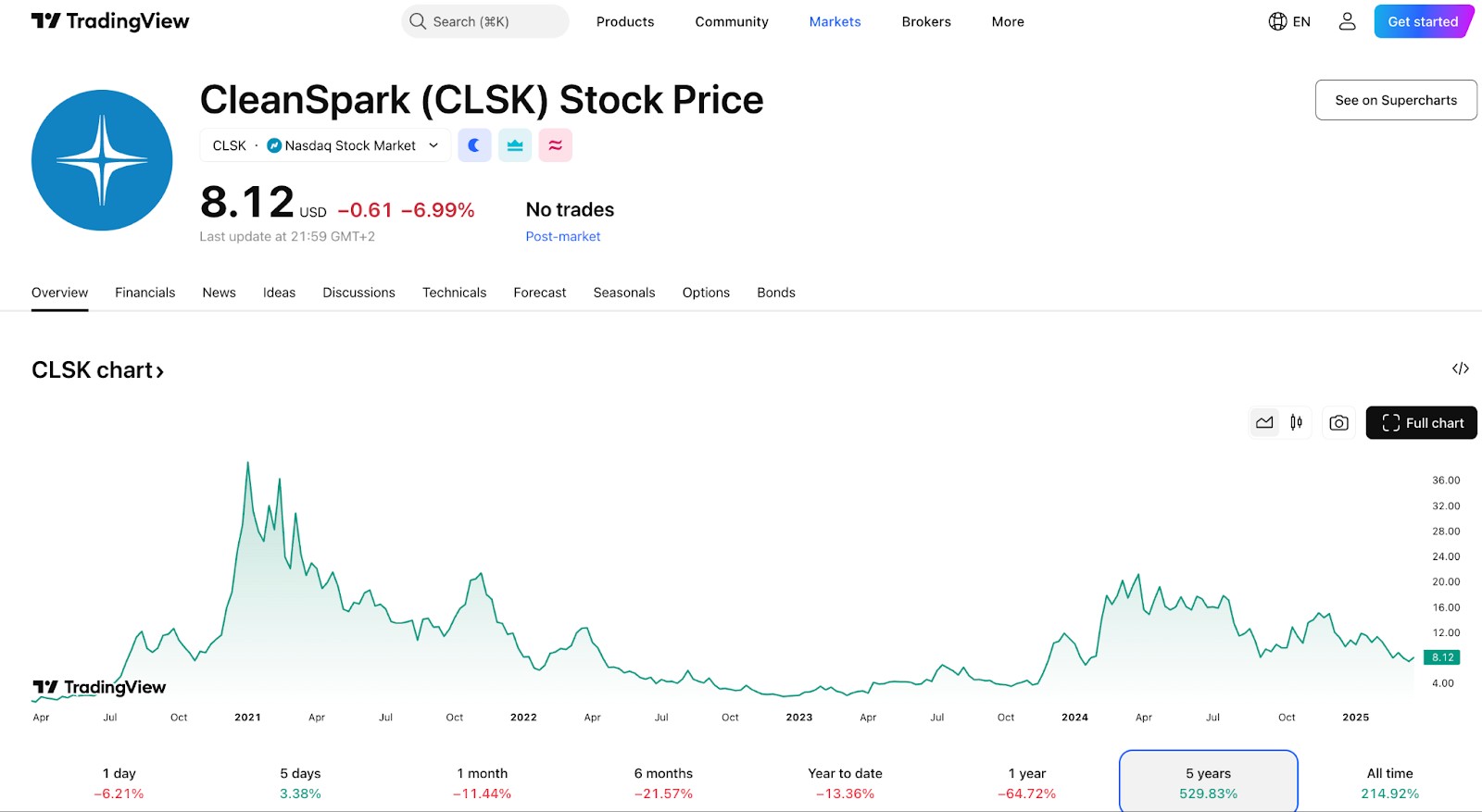
CleanSpark’s shares are publicly traded on the NASDAQ under the ticker symbol CLSK. Investors can purchase shares through many reliable platform.
Why CleanSpark’s energy game plan gives it an edge other miners can’t match

Most new investors looking into CleanSpark get fixated on numbers like hashrate, but the real magic is in how they manage their electricity. Unlike other miners who sign long contracts at fixed rates, CleanSpark takes advantage of short-term pricing in places like Georgia. When power gets expensive, they just shut down for a bit — and sometimes get paid for that. It’s like turning off your lights during a blackout and the utility sends you a thank-you check. This clever move isn’t just about saving money — it turns the whole “power cost” problem into a strategy.
Also, CleanSpark doesn’t just chase cheap electricity. They build their data centers in places where power is sitting unused, and the local grid wants someone — anyone — to show up and plug in. That means fewer rules to deal with, extra support from utilities, and sometimes even local tax breaks. While others are fighting for scraps in crowded energy markets, CleanSpark walks into towns where they’re treated like heroes for bringing demand. If you’re new, don’t just ask where the cheapest power is — ask who wants to sell it the most. That’s where CleanSpark usually shows up first.
Conclusion
CleanSpark is emerging as a dominant force in the Bitcoin mining space by blending high-performance crypto mining with sustainable energy solutions. With its deep focus on low-carbon power, advanced microgrid systems, and strategic expansion across the United States, CleanSpark is not just another miner — it’s an energy innovator.
As the company works toward reaching 50 EH/s in mining capacity by mid-2025 and continues building infrastructure for long-term scalability, it presents a compelling investment case for those interested in both Bitcoin and clean energy. In a market where energy costs and efficiency define success, CleanSpark stands out as a forward-looking, environmentally responsible leader in the crypto mining industry.
FAQs
What makes CleanSpark different from other Bitcoin mining companies?
CleanSpark stands out by combining cryptocurrency mining with microgrid energy solutions. This dual focus allows the company to reduce energy costs and operate more sustainably than its competitors.
Where are CleanSpark’s mining operations located?
CleanSpark’s mining facilities are located in the U.S., with major operations in Georgia and Texas, strategically chosen for their access to affordable, renewable energy sources.
Is CleanSpark environmentally friendly?
Absolutely. CleanSpark prioritizes sustainability by utilizing renewable energy sources and microgrid technologies to power its Bitcoin mining operations.
What is CleanSpark’s long-term goal?
As of March 2025, CleanSpark has updated its long-term objectives, aiming to achieve a mining capacity of 50 exahashes per second (EH/s) by June 30, 2025. The company is also investing in infrastructure to support future growth beyond 60 EH/s.
Editors' Top Picks and Insights





Related Articles
Team that worked on the article
Oleg Tkachenko is an economic analyst and risk manager having more than 14 years of experience in working with systemically important banks, investment companies, and analytical platforms. He has been a Traders Union analyst since 2018.
Chinmay Soni is a financial analyst with more than 5 years of experience in working with stocks, Forex, derivatives, and other assets. As a founder of a boutique research firm and an active researcher, he covers various industries and fields, providing insights backed by statistical data.
Mirjan Hipolito is a journalist and news editor at Traders Union. She is an expert crypto writer with five years of experience in the financial markets.
CFD is a contract between an investor/trader and seller that demonstrates that the trader will need to pay the price difference between the current value of the asset and its value at the time of contract to the seller.
An investor is an individual, who invests money in an asset with the expectation that its value would appreciate in the future. The asset can be anything, including a bond, debenture, mutual fund, equity, gold, silver, exchange-traded funds (ETFs), and real-estate property.
Cryptocurrency is a type of digital or virtual currency that relies on cryptography for security. Unlike traditional currencies issued by governments (fiat currencies), cryptocurrencies operate on decentralized networks, typically based on blockchain technology.
Index in trading is the measure of the performance of a group of stocks, which can include the assets and securities in it.
Bitcoin is a decentralized digital cryptocurrency that was created in 2009 by an anonymous individual or group using the pseudonym Satoshi Nakamoto. It operates on a technology called blockchain, which is a distributed ledger that records all transactions across a network of computers.

-
 Afghanistan
-
 Albania
-
 Algeria
-
 Angola
-
 Argentina
-
 Armenia
-
 Australia
-
 Austria
-
 Azerbaijan
-
 Bahamas
-
 Bahrain
-
 Bangladesh
-
 Belarus
-
 Belgium
-
 Bolivia
-
 Botswana
-
 Brazil
-
 Brunei
-
 Bulgaria
-
 Cambodia
-
 Cameroon
-
 Canada
-
 Chile
Chile
-
 China
China
-
 Colombia
-
 Congo
Congo
-
 Costa Rica
-
 Cote d'Ivoire
-
 Croatia
-
 Cuba
Cuba
-
 Cyprus
-
 Czechia
-
 DR Congo
-
 Denmark
-
 Dominican Republic
-
 Ecuador
-
 Egypt
Egypt
-
 El Salvador
-
 Estonia
-
 Eswatini
-
 Ethiopia
-
 Finland
-
 France
-
 Georgia
-
 Germany
-
 Ghana
Ghana
-
 Greece
-
 Haiti
Haiti
-
 Hong Kong
-
 Hungary
-
 India
India
-
 Indonesia
-
 Iran, Islamic republic
-
 Iraq
Iraq
-
 Ireland
-
 Israel
-
 Italy
Italy
-
 Jamaica
-
 Japan
Japan
-
 Jordan
-
 Kazakhstan
-
 Kenya
Kenya
-
 Korea
Korea
-
 Kuwait
-
 Kyrgyzstan
-
 Laos
Laos
-
 Latvia
-
 Lebanon
-
 Lesotho
-
 Libya
Libya
-
 Lithuania
-
 Luxembourg
-
 Madagascar
-
 Malaysia
-
 Malta
Malta
-
 Mauritius
-
 Mexico
-
 Moldova
-
 Mongolia
-
 Montenegro
-
 Morocco
-
 Mozambique
-
 Myanmar
-
 Namibia
-
 Nepal
Nepal
-
 Netherlands
-
 New Zealand
-
 Nigeria
-
 North Macedonia
-
 Norway
-
 Oman
Oman
-
 Pakistan
-
 Palestine
-
 Panama
-
 Papua New Guinea
-
 Paraguay
-
 Peru
Peru
-
 Philippines
-
 Poland
-
 Portugal
-
 Puerto Rico
-
 Qatar
Qatar
-
 Reunion
-
 Romania
-
 Rwanda
-
 Saudi Arabia
-
 Serbia
-
 Singapore
-
 Slovakia
-
 Slovenia
-
 Somalia
-
 South Africa
-
 Spain
Spain
-
 Sri Lanka
-
 Sweden
-
 Switzerland
-
 Syria
Syria
-
 Taiwan
-
 Tajikistan
-
 Tanzania
-
 Thailand
-
 Trinidad and Tobago
-
 Tunisia
-
 Turkey
-
 UAE
UAE
-
 Uganda
-
 Ukraine
-
 United Kingdom
-
United States
-
 Uruguay
-
 Uzbekistan
-
 Venezuela
-
 Vietnam
-
 Yemen
Yemen
-
 Zambia
-
 Zimbabwe
- Forex
- Crypto












