
Best Crypto Bounty Programs In 2026


Editorial Note: While we adhere to strict Editorial Integrity, this post may contain references to products from our partners. Here's an explanation for How We Make Money. None of the data and information on this webpage constitutes investment advice according to our Disclaimer.
Best crypto bounty programs:
HackenProof. Focus on smart contract flaws.
Immunefi. Target DeFi bugs for crypto payouts.
HackerOne. Great for blockchain and beyond.
Bugcrowd. Earn from both crypto and web.
Intigriti. Offers real-time and remote bounties.
As the crypto space grows, so do the opportunities for security researchers. Blockchain projects are increasingly relying on crypto bounties to help them detect vulnerabilities in their systems. These programs invite ethical hackers to examine code and infrastructure, offering rewards to those who report issues responsibly. This creates a collaborative ecosystem that benefits both developers and the broader cybersecurity community.
With the rapid expansion of the crypto industry, the focus on system security has become more critical than ever. Getting involved in crypto bug bounties not only provides the chance to earn financial rewards but also helps researchers build experience, credibility, and connections within the blockchain and cybersecurity world.
Risk warning: Cryptocurrency markets are highly volatile, with sharp price swings and regulatory uncertainties. Research indicates that 75-90% of traders face losses. Only invest discretionary funds and consult an experienced financial advisor.
Top crypto bug bounty platforms in 2026
Crypto bug bounty programs are organized initiatives where blockchain projects invite ethical hackers to find vulnerabilities in their systems. Unlike traditional tech bounties, these are often hosted on-chain or through DAOs (Decentralized Autonomous Organizations), and rewards can be distributed in tokens instead of fiat. These programs are critical for smart contracts and DeFi protocols, where a single exploit can lead to losses in the hundreds of millions. In some cases, bounty payouts have exceeded $10 million, like the 2022 bounty offered by Aurora for a critical vulnerability.
To help you get started, here’s our curated list of the Top crypto bug bounty platforms in 2026, featuring programs that pay in crypto and focus on blockchain-related vulnerabilities. These platforms not only provide lucrative payouts but also offer opportunities to work on cutting-edge Web3 security challenges.
HackenProof

HackenProof has built a strong reputation as one of the go-to crypto bounty sites, connecting blockchain companies with skilled ethical hackers. It runs both public and private programs that cover vulnerabilities in smart contracts, blockchain networks, and exchange systems. The platform comes with well-designed tools for submission handling, vulnerability tracking, and participant rewards. With consistent updates, transparent guidelines, and a trusted track record, HackenProof continues to rank among the best crypto bounty sites for hunters in 2026.
Immunefi
Immunefi is widely recognized for its focus on Web3 security and has become a favorite in the world of crypto bug bounties. By partnering with high-profile DeFi platforms like Chainlink and Synthetix, it has distributed millions in rewards. The platform emphasizes critical vulnerabilities that could lead to financial losses. Its well-structured system and beginner-friendly documentation make it appealing to both newcomers and experienced researchers looking to dive deeper into crypto bounty programs.
HackerOne

While HackerOne isn’t limited to crypto, it has steadily grown its blockchain presence by onboarding major Web3 clients. Known for its robust infrastructure, it supports everything from vulnerability disclosure to triage and payout processes. Its inclusive, community-driven model and rich analytical features provide a great experience for researchers. For those aiming to expand beyond just crypto bounties, HackerOne offers access to a diverse pool of security challenges across industries.
Bugcrowd

Bugcrowd remains a major player in the security research space and has become increasingly popular with blockchain firms. Many companies now use Bugcrowd to run ongoing crypto bounty programs, thanks to its streamlined triage system and responsive support team. What sets it apart is its dynamic vulnerability scoring and access to multiple types of bounty opportunities. For security professionals looking to explore both traditional tech and crypto bounties under one roof, Bugcrowd is a solid choice.
Intigriti

Intigriti is gaining traction, particularly among European blockchain startups, for its flexible approach to bounty management and strong emphasis on community. It provides valuable educational materials, clear project scopes, and quick payouts, creating a rewarding experience for participants. With its mix of live hacking sessions and remote program options, Intigriti is appealing to both beginners and experts in the crypto bounty space looking to collaborate closely with companies in real time.
| Platform | Focus | Max Payout | Payout Currency | Notable Clients |
|---|---|---|---|---|
| HackenProof | Smart contract audits, blockchain networks, exchange systems | $100,000+ | USDT, BTC, ETH | 1inch, Kuna, Gate.io |
| Immunefi | DeFi protocols, Web3 security, critical vulnerabilities | $10,000,000+ | USDT, USDC, ETH, project tokens | Chainlink, Synthetix, MakerDAO |
| HackerOne | Broad security scope incl. blockchain & Web3 | $100,000+ | USD, BTC (via partners) | Coinbase, Binance, Ripple |
| Bugcrowd | Multi-industry security, incl. blockchain & crypto exchanges | $500,000+ | USD, BTC, ETH | OKX, Bitfinex, Huobi |
| Intigriti | European blockchain startups, real-time bounties | €50,000+ | EUR, BTC, ETH | Arbitrum projects, DeFi startups |
Why participate in crypto bug bounties?

Crypto bug bounties are reward-based programs where blockchain companies pay hackers to find vulnerabilities in their code, smart contracts, or platforms. But this isn’t just about error fixing. The best crypto bounty programs work as decentralized audits, leveraging the global hacker community to simulate real-world attacks before bad actors strike. What most people don’t realize is that these bounties often uncover bugs traditional code audits miss because hackers approach problems creatively, not procedurally.
One powerful use case for participating in bug bounties is gaining insider-level exposure to protocol architecture. Unlike Web2 bounties, crypto bounty sites often give white-hats access to live smart contracts with real assets at risk. This means participants learn how money actually flows through decentralized finance (DeFi), how bridges and cross-chain systems are wired, and how oracle manipulation works in practice. These insights are almost impossible to get without working directly at a protocol, or hacking one.
There's also a financial angle most beginners overlook. Top-tier bounties pay tens of thousands of dollars for a single critical exploit. But beyond the prize pool, successful hunters often get hired by the very teams they’ve helped. Some platforms are known not just for rewards, but for turning top hackers into security advisors and full-time contributors. For those who stick with it, bug hunting in crypto isn’t just profitable, it’s a gateway into the core of Web3 infrastructure.
Essential skills and tools for bug bounty hunters
Bug bounty hunting is no longer just about spotting obvious flaws, it demands a mix of adversarial thinking, automation tools, and blockchain awareness, especially on crypto bounty sites. The most successful hunters understand protocol behavior as deeply as app logic. For instance, in DeFi ecosystems, the most valuable vulnerabilities are often in how smart contracts interact, not in the contracts themselves. Tools like Mythril and Slither go beyond scanning for bugs, they help you simulate edge-case attack paths that aren’t publicly documented.
Most beginners overlook the importance of recon automation. Elite bounty hunters build custom scripts to map a target’s entire web infrastructure and blockchain interaction surface before writing a single payload. Passive tools like Amass and Nuclei are often paired with fuzzing frameworks such as Wfuzz or Burp extensions to uncover unusual behaviors in dApps or APIs. On crypto bounty programs, this kind of pre-exploit intelligence can uncover blind spots in smart contract permission layers or oracle integrations that weren’t considered by the project team.
Another must-have skill is gas optimization awareness. Many blockchain vulnerabilities stem not from security holes but from exploitable inefficiencies. A hunter who can show that a specific function drains user funds due to redundant state updates can still earn a reward, even if it’s not a full exploit. This shifts bounty programs from being purely exploit-driven to performance-based. Knowing how Ethereum’s EVM, transaction lifecycle, and storage model work gives bug bounty hunters an edge that most traditional security professionals don’t have.
Best practices for maximizing earnings
Before you start earning, learn some of the best practices to maximise your profits.
Mastering scope reading is your edge
In the world of crypto bounty programs, most hunters scan for the highest rewards, but the real pros go deep into scope definitions. Every bounty platform has hidden nuances in how they frame eligibility, excluded contracts, or reward tiers. For instance, platforms like Immunefi or HackenProof often update scopes without broadcast, meaning early readers who regularly revisit listings have a serious advantage. One overlooked trick is cross-checking codebase changes on GitHub against the listed smart contracts. It can reveal exploitable areas that the project team hasn't even fully documented yet.
Private bounties are where big money hides
While public crypto bounty sites are saturated with surface-level testers, many high-paying bounties are invite-only or semi-private. These are often shared in vetted Discords, private Telegram groups, or after proving credibility through consistent high-quality writeups. Joining a public leaderboard is useful, but networking with project maintainers or earning trust on a few mid-tier programs gets you access to better deals. Some platforms even offer early previews of bounties to their top hackers, where you get first crack at bugs before they go public.
Automated tools won’t make you rich, hybrid skills will
A major trap is relying too heavily on scanning tools like MythX or Slither. These are great for quick audits, but they also generate false positives and miss deeper logic flaws that can result in real payouts. The best hunters mix scripting with creative manual testing, especially when targeting crypto bounties related to protocol logic or governance bugs. Learning to write your own fuzzing scripts or build testnets for specific attack simulations gives you a huge edge. It's not about flooding reports, but sending one well-documented, reproducible exploit that nails a core vulnerability.
How to earn crypto with bug bounties
Before diving into investments, it’s important to understand how you can earn crypto by participating in crypto bug bounties. These programs allow ethical hackers and security researchers to get rewarded for identifying vulnerabilities in blockchain-based systems.
Step 1: Choose a platform and register
Begin by registering on a trusted bounty platform. Reputable names in the space include Immunefi and HackenProof, which are known for hosting some of the best crypto bounty sites. Once you sign up, complete your profile with your skills, experience, and contact information.
Certain platforms may ask for ID verification or proof of prior work before giving access to private bounties. Start by browsing through open opportunities and reviewing their rules, reward systems, and scope of engagement.
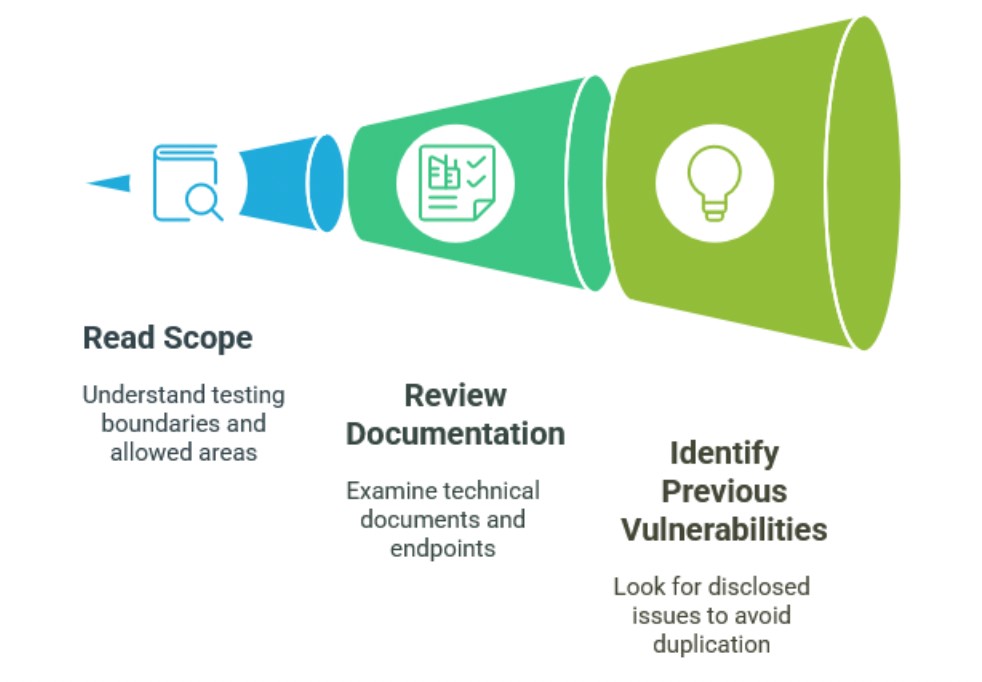
Step 2: Select a program and understand its scope
Find a bounty program that matches your technical strengths and interests. Whether you're into smart contracts, APIs, or web interfaces, choose a project where you can add real value.
Go through all available documentation, check endpoint details, and review any past disclosures. Knowing what has already been reported helps you avoid wasting time. Some crypto bounty programs even list known issues or previously rewarded reports for your reference.
Step 3: Hunt for vulnerabilities
With your environment set up, start testing the scope provided. This could mean auditing smart contract code, scanning for logic flaws, or testing for configuration errors.
Keep detailed records as you go, including screenshots, code snippets, and every step it takes to reproduce the bug. Thorough documentation helps reviewers validate your report faster.
Step 4: Submit a report
Write your findings in a structured and professional format. Clearly describe the issue, its impact, and how it can be reproduced. If you can, suggest a possible solution.
Stick closely to the platform’s submission standards, as unclear or incomplete reports often get overlooked. Many crypto bounty sites also provide templates to make this step easier.
Step 5: Wait for review and receive reward
After submission, the project’s internal team or bounty platform will triage your report. Based on severity and reproducibility, you’ll receive a payout, usually in cryptocurrency.
Some crypto bounties offer additional incentives like leaderboard ratings or public credit for major findings. Payment timelines vary, but impactful reports tend to receive quicker responses and higher rewards.

Once you’ve mastered how to write a high-quality bug bounty report, the next step is to decide where you want to receive your rewards. Many bug bounty programs pay directly in cryptocurrency, and the choice of exchange can affect how quickly and cost-effectively you can cash out or reinvest your earnings.
To help you compare options, here’s a table of popular cryptocurrency exchanges that support payouts from bug bounty programs, along with their key features such as supported coins, fees, and withdrawal methods.
| Coinbase | OKX | BTCC | Cryptohopper | Crypto.com | |
|---|---|---|---|---|---|
|
Min. Deposit, $ |
10 | 10 | 10 | No | 1 |
|
Coins Supported |
400+ | 600+ | 399 | 1000 | 400+ |
|
Spot Taker fee, % |
0.5 | 0.1 | 0.3 | 0 | 0.5 |
|
Spot Maker Fee, % |
0.5 | 0.08 | 0.2 | 0 | 0.25 |
|
Alerts |
Yes | Yes | No | Yes | Yes |
|
Copy trading |
No | Yes | Yes | Yes | No |
|
TU overall score |
8.5 | 8.46 | 8.08 | 7.8 | 7.76 |
|
Open an account |
Go to broker Your capital is at risk. |
Go to broker Your capital is at risk. |
Go to broker Your capital is at risk.
|
Go to broker Your capital is at risk. |
Go to broker Your capital is at risk. |
Finding hidden bounty gems through repo heatmaps and hacker whispers

Most beginners start by browsing public bug bounty platforms like Immunefi or HackenProof, but the real edge lies in quietly tracking “repo heatmaps”, essentially, the commit and issue activity of blockchain projects on GitHub. Projects that are rapidly adding smart contract code but have no formal bounty program often represent unclaimed high-risk territory. These repos are usually under-the-radar and missed by top hunters. Use tools like GitHub’s API or OctoParse to monitor sudden activity spikes or changes in contract logic. If you responsibly report a severe vulnerability before a public bounty even exists, some projects will grant you a discretionary reward or even offer a long-term collaboration.
Another overlooked move is to tap into "hacker whispers", private bug bounty Discords, Telegrams, and GitHub Discussions where seasoned hunters casually talk about known but unfixed vulnerabilities. Instead of trying to brute-force your way into a bounty program, follow these info trails to find high-probability targets. Often, a bug may already be semi-public in developer chatter but not officially reported or patched. By picking up the breadcrumbs, validating the issue independently, and delivering a well-written report with a working exploit, you position yourself as a serious contender, and possibly even a project insider.
Conclusion
Crypto bug bounty programs in 2026 present a lucrative and dynamic opportunity for both seasoned security professionals and newcomers looking to make their mark in Web3. As platforms like Immunefi and HackenProof continue to offer million-dollar rewards for critical vulnerabilities, skilled hunters not only profit but also become essential collaborators in safeguarding decentralized assets. The most successful participants set themselves apart by combining technical depth with creative analysis, often gaining insider access or even full-time roles with top blockchain projects. Ultimately, joining crypto bounty platforms is not just about earning rewards—it's about shaping the secure, innovative future of blockchain technology. Your expertise could be the key to protecting millions and elevating your career in the rapidly evolving crypto landscape.
FAQs
What types of vulnerabilities are most valuable in top crypto bounty sites?
How do private and invite-only crypto bounty programs differ from public ones?
What skills or tools set apart the most successful hunters on top crypto bounty sites in 2026?
How can participants find lesser-known or high-payout opportunities beyond the main crypto bounty listings?
Editors' Top Picks and Insights






Related Articles
Team that worked on the article
Alamin Morshed is a contributor at Traders Union. He specializes in writing articles for businesses that want to improve their Google search rankings to compete with their competition.
Andreas Kristo Saragih is a seasoned equity research analyst with over a decade of experience across both buy-side and sell-side roles, focused on the Indonesian capital market. He has extensive sector coverage, including banking, consumer goods, retail, real estate, healthcare, transportation, poultry, cement, pharmaceuticals, construction, and infrastructure.
Chinmay Soni is a financial analyst with more than 5 years of experience in working with stocks, Forex, derivatives, and other assets. As a founder of a boutique research firm and an active researcher, he covers various industries and fields, providing insights backed by statistical data.
Index in trading is the measure of the performance of a group of stocks, which can include the assets and securities in it.
CFD is a contract between an investor/trader and seller that demonstrates that the trader will need to pay the price difference between the current value of the asset and its value at the time of contract to the seller.
Copy trading is an investing tactic where traders replicate the trading strategies of more experienced traders, automatically mirroring their trades in their own accounts to potentially achieve similar results.
Crypto trading involves the buying and selling of cryptocurrencies, such as Bitcoin, Ethereum, or other digital assets, with the aim of making a profit from price fluctuations.
Cryptocurrency is a type of digital or virtual currency that relies on cryptography for security. Unlike traditional currencies issued by governments (fiat currencies), cryptocurrencies operate on decentralized networks, typically based on blockchain technology.

-
 Afghanistan
-
 Albania
-
 Algeria
-
 Angola
-
 Argentina
-
 Armenia
-
 Australia
-
 Austria
-
 Azerbaijan
-
 Bahamas
-
 Bahrain
-
 Bangladesh
-
 Belarus
-
 Belgium
-
 Bolivia
-
 Botswana
-
 Brazil
-
 Brunei
-
 Bulgaria
-
 Cambodia
-
 Cameroon
-
 Canada
-
 Chile
Chile
-
 China
China
-
 Colombia
-
 Congo
Congo
-
 Costa Rica
-
 Cote d'Ivoire
-
 Croatia
-
 Cuba
Cuba
-
 Cyprus
-
 Czechia
-
 DR Congo
-
 Denmark
-
 Dominican Republic
-
 Ecuador
-
 Egypt
Egypt
-
 El Salvador
-
 Estonia
-
 Eswatini
-
 Ethiopia
-
 Finland
-
 France
-
 Georgia
-
 Germany
-
 Ghana
Ghana
-
 Greece
-
 Haiti
Haiti
-
 Hong Kong
-
 Hungary
-
 India
India
-
 Indonesia
-
 Iran, Islamic republic
-
 Iraq
Iraq
-
 Ireland
-
 Israel
-
 Italy
Italy
-
 Jamaica
-
 Japan
Japan
-
 Jordan
-
 Kazakhstan
-
 Kenya
Kenya
-
 Korea
Korea
-
 Kuwait
-
 Kyrgyzstan
-
 Laos
Laos
-
 Latvia
-
 Lebanon
-
 Lesotho
-
 Libya
Libya
-
 Lithuania
-
 Luxembourg
-
 Madagascar
-
 Malaysia
-
 Malta
Malta
-
 Mauritius
-
 Mexico
-
 Moldova
-
 Mongolia
-
 Montenegro
-
 Morocco
-
 Mozambique
-
 Myanmar
-
 Namibia
-
 Nepal
Nepal
-
 Netherlands
-
 New Zealand
-
 Nigeria
-
 North Macedonia
-
 Norway
-
 Oman
Oman
-
 Pakistan
-
 Palestine
-
 Panama
-
 Papua New Guinea
-
 Paraguay
-
 Peru
Peru
-
 Philippines
-
 Poland
-
 Portugal
-
 Puerto Rico
-
 Qatar
Qatar
-
 Reunion
-
 Romania
-
 Rwanda
-
 Saudi Arabia
-
 Serbia
-
 Singapore
-
 Slovakia
-
 Slovenia
-
 Somalia
-
 South Africa
-
 Spain
Spain
-
 Sri Lanka
-
 Sweden
-
 Switzerland
-
 Syria
Syria
-
 Taiwan
-
 Tajikistan
-
 Tanzania
-
 Thailand
-
 Trinidad and Tobago
-
 Tunisia
-
 Turkey
-
 UAE
UAE
-
 Uganda
-
 Ukraine
-
 United Kingdom
-
United States
-
 Uruguay
-
 Uzbekistan
-
 Venezuela
-
 Vietnam
-
 Yemen
Yemen
-
 Zambia
-
 Zimbabwe
- Forex
- Crypto












