
How Do Crypto Investors Protect Themselves From Scams? | TU Research



Editorial Note: While we adhere to strict Editorial Integrity, this post may contain references to products from our partners. Here's an explanation for How We Make Money. None of the data and information on this webpage constitutes investment advice according to our Disclaimer.
TU proprietary research suggests that crypto investors are highly aware of fraud risks, yet many still fail to perform basic due diligence before investing. In a survey of 1,500 cryptocurrency investors, 58% reported encountering scam attempts, while only 23% consistently verify project teams, smart contract audits, and exchange security measures. The findings reveal a significant gap between scam awareness and actual protective behavior.
Cryptocurrency markets have created unprecedented opportunities for retail investors. However, they have also become a fertile environment for fraud, phishing campaigns, rug pulls, fake token launches, impersonation attacks, and AI-generated scams.
As crypto adoption expands, scammers continue to develop increasingly sophisticated methods of exploiting investor behavior. Deepfake videos, fake exchange websites, fraudulent airdrops, and social media impersonation schemes have become common features of the digital asset ecosystem.
This study focuses on five key questions:
Findings
Based on TU research, several important patterns emerge regarding crypto scam awareness:
Scam exposure is widespread. 58% of crypto investors report encountering at least one scam attempt during the past 12 months.
Phishing remains the most common threat. 46% of respondents encountered phishing emails, fake websites, or wallet-draining links.
Verification practices remain inconsistent. Only 23% always verify project teams, audits, and tokenomics before investing.
Experience improves fraud detection. Investors with more than five years of experience are twice as likely to perform due diligence compared with beginners.
A perception gap exists. Although 74% believe they can identify scams, 37% of them admitted losing money to fraudulent projects or platforms.
AI-generated scams are emerging rapidly. Deepfake videos and impersonation campaigns are increasingly difficult for investors to identify.

Risk warning: Cryptocurrency markets are highly volatile, with sharp price swings and regulatory uncertainties. Research indicates that 75-90% of traders face losses. Only invest discretionary funds and consult an experienced financial advisor.
Institutional validation
Cryptocurrency fraud has become one of the most closely monitored risks in digital asset markets. Regulators, blockchain analytics firms, law enforcement agencies, and financial institutions have all reported a sharp increase in scam activity as crypto adoption expands globally.
Chainalysis research highlights that cryptocurrency-related fraud remains one of the largest categories of illicit crypto activity. According to the company's Crypto Scam Revenue report, crypto fraud generated an estimated $12.4 billion in illicit revenue during 2024, while so-called "pig butchering" scams grew by nearly 40% year-over-year. Chainalysis also notes that scammers are increasingly leveraging artificial intelligence, deepfakes, impersonation tactics, and large-scale social engineering campaigns to improve conversion rates and target retail investors more effectively.
The FBI's Internet Crime Complaint Center (IC3) consistently identifies cryptocurrency investment fraud as one of the fastest-growing categories of financial crime. According to the FBI Internet Crime Report, internet crime losses reached a record $16.6 billion in 2024, with cryptocurrency investment scams accounting for a substantial share of reported financial damage. The agency regularly warns investors about fake trading platforms, phishing campaigns, social media impersonation, and fraudulent investment schemes.
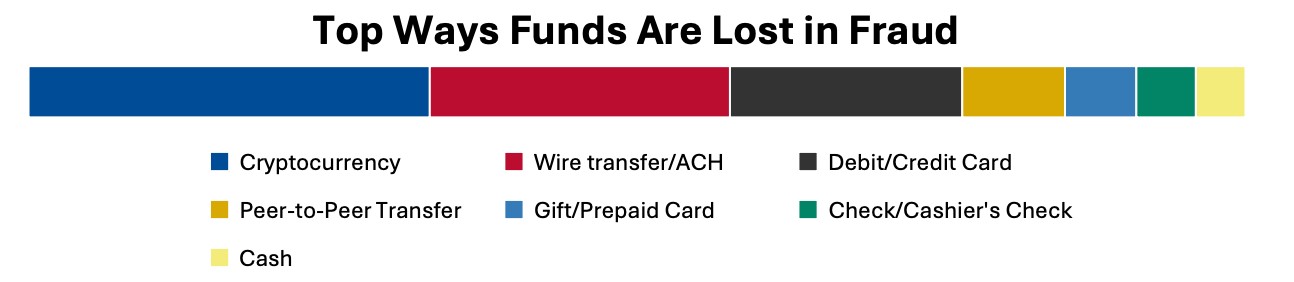
Europol research suggests that artificial intelligence is significantly increasing the sophistication of financial fraud. The agency's Internet Organised Crime Threat Assessment (IOCTA) warns that AI-generated content, deepfake videos, synthetic identities, and automated social engineering techniques are making fraud schemes increasingly difficult for retail investors to identify. Europol considers AI-enhanced fraud one of the most important emerging threats in digital finance.
The CFA Institute emphasizes the importance of due diligence, information verification, and behavioral discipline when evaluating investment opportunities. In its research publication Behavioral Finance: The Second Generation, the CFA Institute highlights that investors are frequently influenced by cognitive biases such as overconfidence, confirmation bias, social influence, and narrative-driven decision-making. According to the study, these behavioral tendencies can weaken risk assessment and increase vulnerability to misleading information, particularly during periods of strong market optimism and speculative enthusiasm. The research suggests that independent verification, structured decision-making processes, and disciplined risk management are essential safeguards against costly investment mistakes.
OECD research suggests that financial literacy alone does not fully protect investors from fraud. OECD/INFE studies show that many individuals understand basic financial concepts but often struggle to apply risk assessment and verification practices consistently when faced with urgency, persuasive marketing, or promises of unusually high returns. This gap between knowledge and behavior becomes especially visible in rapidly evolving asset classes such as cryptocurrencies.
FINRA Investor Education Foundation research similarly finds that investor confidence often exceeds actual financial capability. Studies conducted by the Foundation show that individuals who believe they are highly knowledgeable about investing or confident in their ability to detect fraud are not necessarily less likely to become victims of financial scams. According to FINRA research, fraud victims frequently display high levels of self-confidence and optimism, while behavioral factors such as overconfidence, trust in persuasive narratives, and susceptibility to social influence can increase vulnerability to fraudulent investment schemes.
Together, these findings suggest that cryptocurrency fraud is driven not only by technological vulnerabilities but also by behavioral factors. Understanding how investors verify projects, evaluate exchanges, and respond to persuasive narratives has therefore become an increasingly important area of research.
Investors seeking independent analysis of cryptocurrency projects can follow research and market insights from TU experts:
Anton Kharitonov – cryptocurrency market analysis;
Viktoras Karapetjanc – technical and macroeconomic research.
Theoretical research
From a behavioral finance perspective, cryptocurrency scams succeed primarily by exploiting human psychology rather than technical vulnerabilities. Academic research and investor behavior studies consistently show that fraudulent schemes are most effective when they trigger emotional decision-making and bypass rational risk assessment.
Several well-documented cognitive biases increase investor vulnerability:
FOMO (fear of missing out), which encourages investors to act quickly to avoid perceived missed opportunities;
authority bias, where individuals place excessive trust in perceived experts, influencers, celebrities, or public figures;
social proof, which leads people to follow the actions of others, particularly during periods of strong market enthusiasm;
urgency pressure, which reduces the likelihood of independent verification by creating artificial time constraints;
overconfidence, causing investors to overestimate their ability to identify risks and detect fraudulent behavior.
Fraudsters deliberately design scams around these psychological triggers. Common tactics include:
celebrity endorsements and influencer marketing;
fabricated partnerships with well-known companies;
fake audit reports and security certifications;
manipulated social media engagement metrics;
fabricated user testimonials and success stories;
AI-generated videos, voice recordings, and deepfake impersonations;
false scarcity claims and limited-time investment opportunities.
Behavioral finance research suggests that investors often believe they are less vulnerable to fraud than other market participants. Studies from the CFA Institute, OECD/INFE, and FINRA Investor Education Foundation indicate that confidence in one's ability to identify scams frequently exceeds actual fraud-detection capability. As a result, many investors continue to rely on intuition, social validation, or perceived expertise rather than conducting independent due diligence.
This gap between perceived and actual risk assessment becomes particularly pronounced in rapidly evolving markets such as cryptocurrencies, where information asymmetry, technical complexity, and strong speculative narratives can make fraudulent projects appear legitimate. Consequently, effective scam prevention depends not only on financial knowledge but also on disciplined verification processes, critical thinking, and awareness of behavioral biases that influence investment decisions.
Survey data
To evaluate how investors approach crypto security and scam prevention, TU conducted a proprietary quantitative study focused on fraud awareness, verification behavior, and investor experience.
Methodology
The research was based on a structured online survey conducted using the CAWI (Computer-Assisted Web Interviewing) methodology.
Sample composition: 1,500 crypto investors.
Coverage: North America, Europe, Asia, Latin America, and emerging markets.
Age: 18–65 years old.
Participation criteria: respondents who purchased cryptocurrency during the previous 24 months.
Statistical confidence: 95%.
Estimated sampling deviation: ±2.5%.
Research team
The study was conducted by the analytical team at Traders Union:
Anastasiia Chabaniuk (Author, TU Research) – research design and interpretation.
Chinmay Soni (Fact-checker) – data validation and statistical verification.
Dan Blystone (Editor-in-Chief) – editorial and methodological supervision.
TU Research Team (Andrey Mastykin, Oleg Tkachenko) – data collection and analysis.
Scam exposure
Respondents were asked whether they had encountered any crypto scam attempt during the previous 12 months.
Encountered scam attempts:
Yes – 58%.
No – 42%.

Insight: Scam exposure has become a normal part of crypto investing.
Most common scam types
Scam exposure among crypto investors remains widespread, but not all threats occur with the same frequency. Traditional fraud techniques continue to dominate the landscape, while newer AI-driven scams are emerging rapidly but remain less common. The survey results show that phishing attacks, fake token launches, and rug pulls are still the most frequently encountered forms of cryptocurrency fraud, highlighting that many investors remain vulnerable to both technical deception and social engineering tactics.
| Scam type | Share |
|---|---|
| Phishing websites | 46% |
| Fake token launches | 33% |
| Rug pulls | 29% |
| Social media impersonation | 27% |
| Fake airdrops | 24% |
| Deepfake promotions | 18% |
Insight: Traditional phishing remains more common than advanced AI scams.
Verification behavior
Respondents were asked what checks they perform before investing.
Investor verification practices:
Team identity – 31%.
Smart contract audits – 28%.
Exchange reputation – 42%.
Tokenomics – 26%.
All of the above – 23%.

Insight: Comprehensive due diligence remains relatively uncommon.
Scam losses by experience
Experience appears to be one of the strongest factors influencing fraud resilience. Investors who have spent more time in the cryptocurrency market tend to develop stronger due diligence habits, better risk awareness, and greater skepticism toward unusually attractive investment opportunities. Survey results reveal a clear relationship between experience and scam losses, with newer investors reporting significantly higher victimization rates than long-term market participants.
| Experience | Lost money |
|---|---|
| Under 2 years | 41% |
| 2–5 years | 26% |
| 5+ years | 17% |
Insight: Experience significantly reduces vulnerability.
Self-assessed fraud detection ability
Respondents were asked whether they believe they can reliably identify crypto scams.
Self-assessed fraud detection ability:
Yes – 74%.
No – 26%.

However, among those answering "yes", 37% reported losing money to a scam at least once.
Insight: Confidence often exceeds actual protection.
PDF version of the TU research
Download the full PDF version of the TU research to access additional analysis, detailed survey data, and extended findings from our analytical team. The report includes complete methodology, charts, and behavioral insights referenced throughout the study.
Practical implications for investors
The research suggests that awareness alone is not enough to protect investors from fraud.
Key practical takeaways include:
Always verify project teams and official communication channels.
Treat urgency and guaranteed-return promises as warning signs.
Confirm smart contract audits through independent sources.
Avoid connecting wallets to unknown applications.
Verify exchange licenses, security history, and proof-of-reserves reports.
Be cautious of celebrity endorsements and AI-generated content.
Use hardware wallets for long-term storage.
Follow a structured due diligence process before every investment.
Below is a comparison of leading crypto exchanges commonly used by investors and crypto market participants:
| Kraken | OKX | BTCC | Coinbase | Nebeus | |
|---|---|---|---|---|---|
|
Demo account |
No | Yes | Yes | No | No |
|
Min. Deposit, $ |
10 | 10 | 10 | 10 | 5 |
|
Coins Supported |
278 | 329 | 399 | 249 | 30 |
|
Spot Taker fee, % |
0.4 | 0.1 | 0.3 | 0.5 | Not available |
|
Spot Maker Fee, % |
0.25 | 0.08 | 0.2 | 0.5 | Not available |
|
Alerts |
Yes | Yes | No | Yes | No |
|
Copy trading |
Yes | Yes | Yes | No | No |
|
TU overall score |
9.2 | 8.9 | 7.84 | 7.68 | 7.6 |
|
Open an account |
Go to broker Your capital is at risk. |
Go to broker Your capital is at risk. |
Go to broker Your capital is at risk.
|
Go to broker Your capital is at risk. |
Go to broker Your capital is at risk.
|
Data sources and methodology references
Europol research. EU Serious and Organised Crime Threat Assessment (EU-SOCTA).
CFA Institute. Behavioral Finance: The Second Generation.
OECD research. OECD/INFE 2023 International Survey of Adult Financial Literacy.
According to FINRA research. The National Financial Capability Study.
FBI. Internet Crime Report.
Chainalysis. Crypto Scam Revenue 2024.
World Economic Forum. Global Risks Report 2025.
Traders Union. Cryptocurrency Scams List 2026.
Traders Union. How To Spot Crypto Scams And Protect Your Investments.
IdSurvey. CAWI Methodology Overview.
Previous volumes in this series
Conclusion
The research makes clear that while most crypto investors are aware of the pervasive threat of scams, a critical gap remains between knowledge and action—only about one in four consistently practice thorough due diligence, despite over half encountering scam attempts. This disconnect puts even confident and experienced investors at risk, as demonstrated by the 37% who lost funds despite believing they could spot fraud. The rapidly evolving tactics—such as deepfake videos and AI-generated impersonations—highlight the urgent need for structured, disciplined verification processes, not just surface-level awareness. Ultimately, real protection requires investors to treat every project or exchange with skepticism, verifying all details independently and resisting psychological triggers like urgency or 'guaranteed returns.' In the dynamic crypto landscape, genuine security comes not from confidence, but from consistent, critical vigilance.
FAQs
What psychological tactics do crypto scammers commonly use to trick investors?
How does investor experience influence susceptibility to crypto scams?
Why is due diligence often overlooked by crypto investors despite high scam awareness?
What role is artificial intelligence playing in the evolution of crypto scams?
Editors' Top Picks and Insights
Aiming for leadership: Payment giants prepare a new stablecoin
Proof of Reserves: the new standard for cryptocurrency exchanges

Three trends that could reshape the crypto market over the next decade

Trump financial disclosure: How the president's crypto income became a U.S. ethics issue
Code red: What's behind Bitcoin’s sharp selloff?

MiCA is live: How EU new rules are changing crypto market
Related Articles
Team that worked on the article
Anastasiia has 17 years of experience in finance and content marketing. She believes that the support of information and expert opinion is very important for the success of investors and new traders.
Dan Blystone began his trading career in 1998 as an arbitrage clerk on the floor of the Chicago Mercantile Exchange (CME). He later traded bond and Eurex futures at proprietary firms such as Altea Trading, gaining valuable experience in high-frequency trading and risk management.
Chinmay Soni is a financial analyst with more than 5 years of experience in working with stocks, Forex, derivatives, and other assets. As a founder of a boutique research firm and an active researcher, he covers various industries and fields, providing insights backed by statistical data.

-
 Afghanistan
-
 Albania
-
 Algeria
-
 Angola
-
 Argentina
-
 Armenia
-
 Australia
-
 Austria
-
 Azerbaijan
-
 Bahamas
-
 Bahrain
-
 Bangladesh
-
 Belarus
-
 Belgium
-
 Bolivia
-
 Botswana
-
 Brazil
-
 Brunei
-
 Bulgaria
-
 Cambodia
-
 Cameroon
-
 Canada
-
 Chile
Chile
-
 China
China
-
 Colombia
-
 Congo
Congo
-
 Costa Rica
-
 Cote d'Ivoire
-
 Croatia
-
 Cuba
Cuba
-
 Cyprus
-
 Czechia
-
 DR Congo
-
 Denmark
-
 Dominican Republic
-
 Ecuador
-
 Egypt
Egypt
-
 El Salvador
-
 Estonia
-
 Eswatini
-
 Ethiopia
-
 Finland
-
 France
-
 Georgia
-
 Germany
-
 Ghana
Ghana
-
 Greece
-
 Haiti
Haiti
-
 Hong Kong
-
 Hungary
-
 India
India
-
 Indonesia
-
 Iran, Islamic republic
-
 Iraq
Iraq
-
 Ireland
-
 Israel
-
 Italy
Italy
-
 Jamaica
-
 Japan
Japan
-
 Jordan
-
 Kazakhstan
-
 Kenya
Kenya
-
 Korea
Korea
-
 Kuwait
-
 Kyrgyzstan
-
 Laos
Laos
-
 Latvia
-
 Lebanon
-
 Lesotho
-
 Libya
Libya
-
 Lithuania
-
 Luxembourg
-
 Madagascar
-
 Malaysia
-
 Malta
Malta
-
 Mauritius
-
 Mexico
-
 Moldova
-
 Mongolia
-
 Montenegro
-
 Morocco
-
 Mozambique
-
 Myanmar
-
 Namibia
-
 Nepal
Nepal
-
 Netherlands
-
 New Zealand
-
 Nigeria
-
 North Macedonia
-
 Norway
-
 Oman
Oman
-
 Pakistan
-
 Palestine
-
 Panama
-
 Papua New Guinea
-
 Paraguay
-
 Peru
Peru
-
 Philippines
-
 Poland
-
 Portugal
-
 Puerto Rico
-
 Qatar
Qatar
-
 Reunion
-
 Romania
-
 Rwanda
-
 Saudi Arabia
-
 Serbia
-
 Singapore
-
 Slovakia
-
 Slovenia
-
 Somalia
-
 South Africa
-
 Spain
Spain
-
 Sri Lanka
-
 Sweden
-
 Switzerland
-
 Syria
Syria
-
 Taiwan
-
 Tajikistan
-
 Tanzania
-
 Thailand
-
 Trinidad and Tobago
-
 Tunisia
-
 Turkey
-
 UAE
UAE
-
 Uganda
-
 Ukraine
-
 United Kingdom
-
United States
-
 Uruguay
-
 Uzbekistan
-
 Venezuela
-
 Vietnam
-
 Yemen
Yemen
-
 Zambia
-
 Zimbabwe
- Forex
- Crypto











