
How to Cash Out Crypto & Bitcoin in 2026


Editorial Note: While we adhere to strict Editorial Integrity, this post may contain references to products from our partners. Here's an explanation for How We Make Money. None of the data and information on this webpage constitutes investment advice according to our Disclaimer.
Best ways to cash out crypto and bitcoin:
Cryptocurrency exchange — sell bitcoin for fiat and withdraw funds directly to your bank account through regulated crypto exchanges.
P2P services — sell crypto directly to other users using flexible payment methods and peer-to-peer platforms.
Instant exchange services — quickly convert bitcoin into cash or other currencies through simplified exchange platforms.
PayPal — sell bitcoin inside PayPal and transfer the proceeds to your PayPal balance or linked bank account.
Bitcoin ATMs — exchange bitcoin for cash through specialized ATMs that support crypto withdrawals.
Crypto wallets — use wallet-integrated partners like Coinify to sell bitcoin and receive fiat to your bank account.
Bitcoin is fascinating, but it can also be confusing and even scary. The fluctuations alone are enough to scare some, but what happens when you want to cash out your bitcoin? Fortunately, there are several options.
In this article, we're going to cover the most viable options you have when it comes to cashing out your bitcoin.
Risk warning: Cryptocurrency markets are highly volatile, with sharp price swings and regulatory uncertainties. Research indicates that 75-90% of traders face losses. Only invest discretionary funds and consult an experienced financial advisor.
Cryptocurrency exchange
Our first option for cashing out bitcoin is through a cryptocurrency exchange. What is a cryptocurrency exchange? Cryptocurrency exchanges are a popular way to cash out bitcoin.
Numerous exchanges offer this service, giving you the option to trade your cryptocurrency for another digital currency or even for fiat currency (U.S. Dollars).
The process of withdrawing bitcoin to a bank account or transferring bitcoin to cash is nearly identical across exchanges. Let’s understand how to transfer bitcoin to a bank account using Binance in 2026.
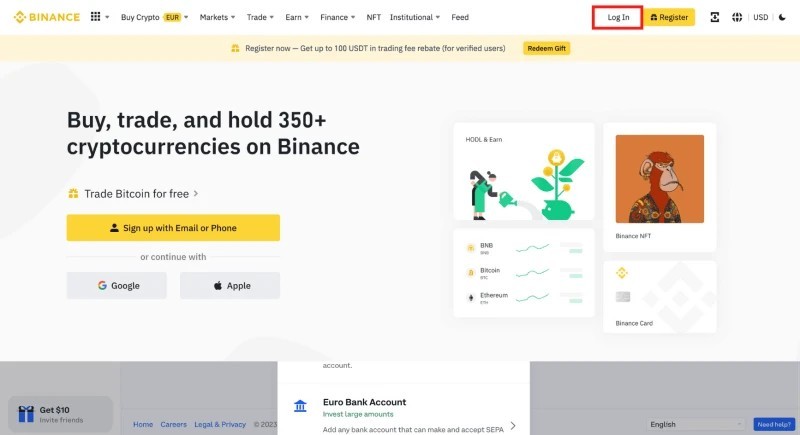
Step 1. Go to a crypto exchange
Log in to your crypto exchange account. This is the first step to cash out bitcoin or convert bitcoin to cash securely.
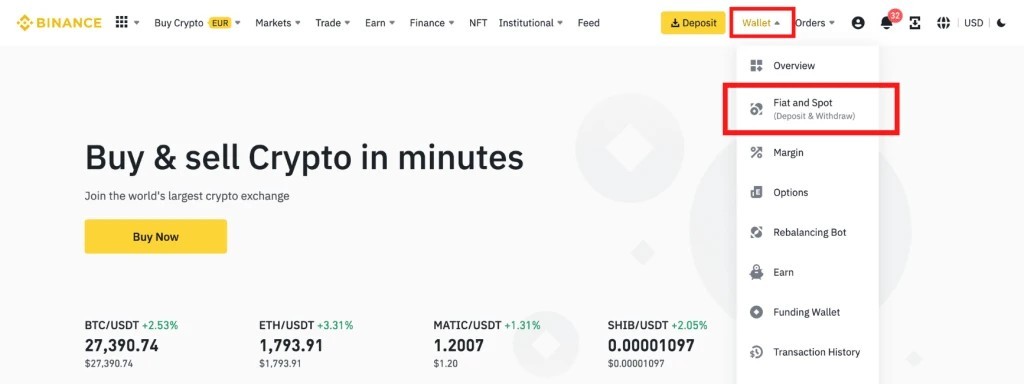
Step 2. Access wallet
Go to Wallet → Fiat & Spot to manage your balances. This is where you’ll start your crypto to bank account transfer.
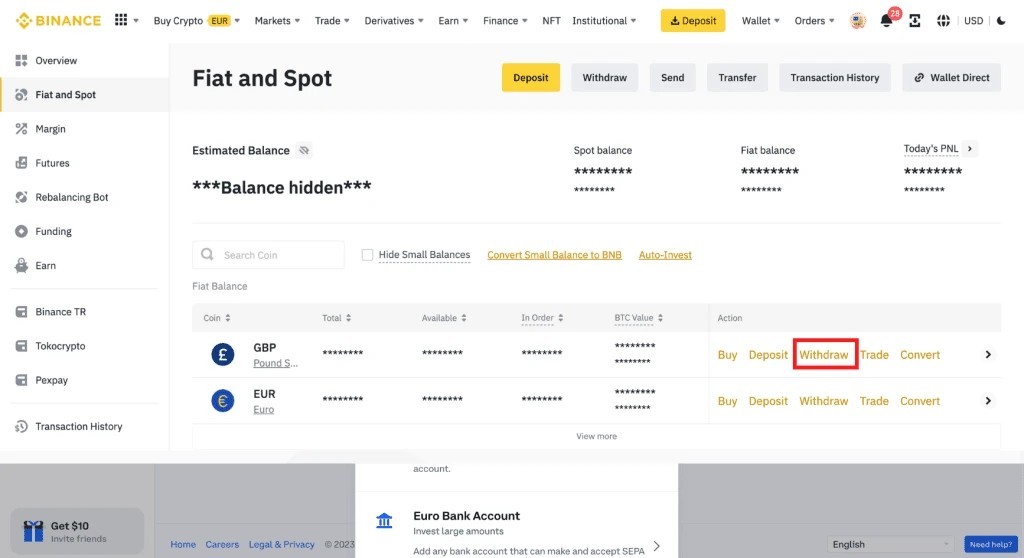
Step 3. Select your currency and withdrawal option
Pick your fiat currency (USD, EUR, etc.) and click Withdraw. Make sure your selected currency supports bank transfer so you can transfer bitcoin to a bank account directly.
Step 4. Enter the withdrawal address and network
Copy or scan your “Receive” address and choose the correct blockchain (BTC or Lightning). Using the wrong network may cause failed transactions when you withdraw bitcoin.
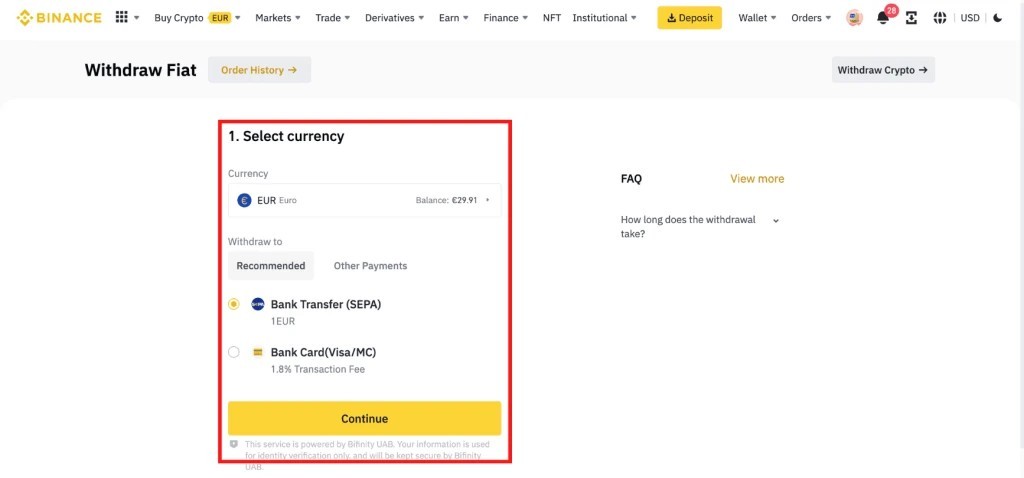
Step 5. Enter withdrawal details
Set the amount to withdraw from bitcoin, review the fee, and add your bank account or card details. This step allows you to transfer crypto to a bank account or get money off bitcoin instantly once approved.
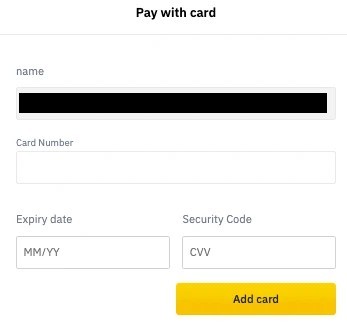
Step 6. Confirm security checks and complete
Click Continue and verify the transaction with 2FA or Google Authenticator. After confirmation, your BTC to bank transfer will complete in 1 to 3 business days. You can track it under Withdrawal History.
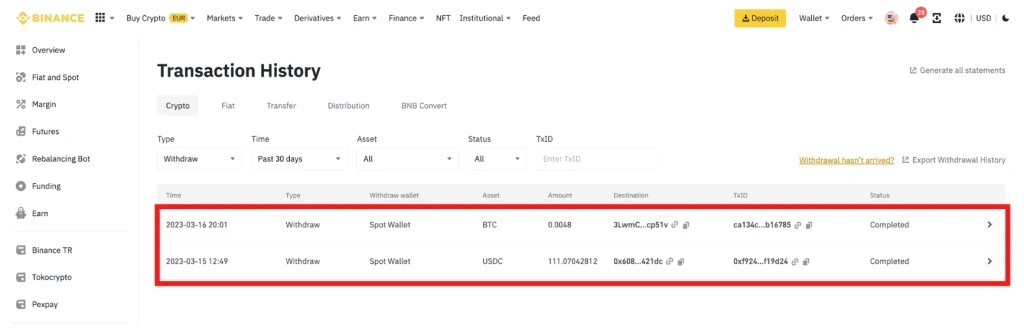
Today, popular exchanges support near-instant bitcoin-to-bank transfers through regulated fiat gateways. These services make it faster and safer to withdraw crypto to bank account or cash out bitcoin compared to traditional wire transfers, which may still take longer due to bank verification times.
| Crypto | Foundation year | Min. Deposit, $ | Coins Supported | Spot Taker fee, % | Spot Maker Fee, % | Alerts | Copy trading | Tier-1 regulation | TU overall score | Open an account | |
|---|---|---|---|---|---|---|---|---|---|---|---|
| Yes | 2017 | 10 | 600+ | 0.1 | 0.08 | Yes | Yes | No | 8.48 | Go to broker Your capital is at risk. |
|
| Yes | 2012 | 10 | 400+ | 0.5 | 0.5 | Yes | No | Yes | 7.84 | Go to broker Your capital is at risk. |
|
| Yes | 2016 | 1 | 400+ | 0.5 | 0.25 | Yes | No | Yes | 7.8 | Go to broker Your capital is at risk. |
|
| Yes | 2018 | No | 1000 | 0 | 0 | Yes | Yes | No | 7.76 | Go to broker Your capital is at risk. |
|
| Yes | 2011 | 10 | 399 | 0.3 | 0.2 | No | Yes | Yes | 7.6 | Go to broker Your capital is at risk.
|
- Pros
- Cons
- Cons
Regulated exchanges provide secure and transparent BTC withdrawals.
Funds can often arrive within 1–3 business days.
Easy conversion of bitcoin into local fiat currency.
Most major exchanges support direct crypto-to-bank transfers.
Suitable for large withdrawals compared to peer-to-peer methods.
Additional security through KYC and two-factor authentication.
Withdrawal and banking fees may reduce the final amount received.
Some banks still restrict or delay crypto-related transactions.
Verification procedures can slow down withdrawals for new users.
Transfers are usually unavailable on weekends and holidays.
Incorrect wallet or banking details may result in failed transactions.
Tax reporting obligations may apply after cashing out cryptocurrency.
P2P services
P2P or peer-to-peer exchanges are decentralized cryptocurrency exchanges (DEX) allowing users to carry out peer-to-peer transactions with no middlemen required. Some users prefer decentralized exchanges due to specific issues with centralized exchanges. Maybe, you also can be interested in information about types of cryptocurrency exchanges.
Verified buyers and sellers can trade cryptocurrencies hassle-free on peer-to-peer exchanges. Buyers and sellers find each other via sophisticated matching algorithms. As a buyer or seller, you may have additional features you expect from your counterpart.
By allowing market participants to transact directly without an intermediary to process transactions and retain funds, a P2P cryptocurrency exchange platform eliminates the need for order books and controls the platform's assets.
Users can trade a number of cryptocurrencies, including bitcoin, on the well-known cryptocurrency trading platform Bybit. Here's a detailed tutorial on using Bybit to pay out bitcoin:
Step 1: Log in to your Bybit account
Open the Bybit website or mobile app and sign in using your email, phone number, and password. Complete any required 2FA verification for secure access.
Step 2: Open the assets section
After logging in, navigate to the homepage and click the “Assets” button to access your wallets and account balances.

Step 3: Go to your spot wallet
Inside the Assets section, open your Spot Wallet and locate bitcoin (BTC). Click “Withdraw” next to BTC to begin the withdrawal process.
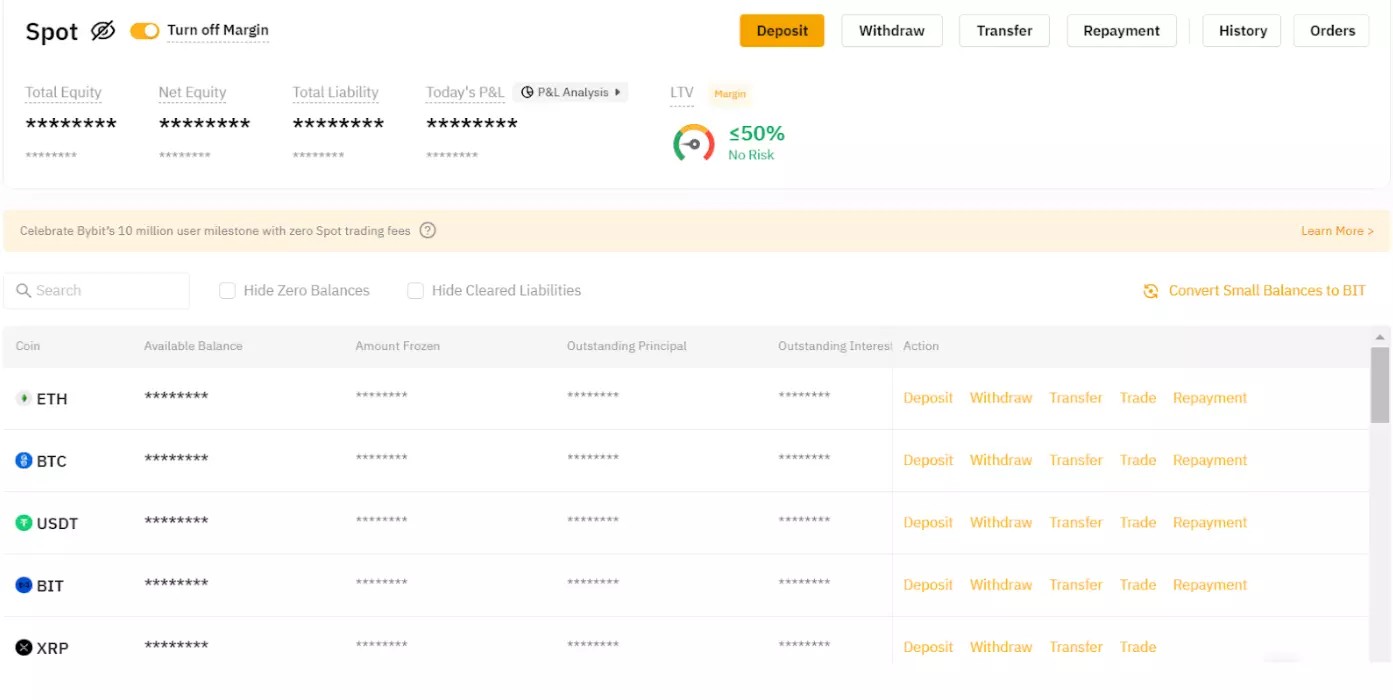
Step 4: Enter the withdrawal amount
Specify how much bitcoin you want to withdraw or use the “All” option to transfer your entire BTC balance.
Step 5: Select the blockchain network
Choose the correct blockchain network for the transaction, such as bitcoin (BTC). Double-check the network to avoid transfer errors or lost funds.
Step 6: Add the receiving wallet address
Click on “Wallet Address” and enter or select the destination wallet where your bitcoin will be sent. Carefully verify the address before continuing.
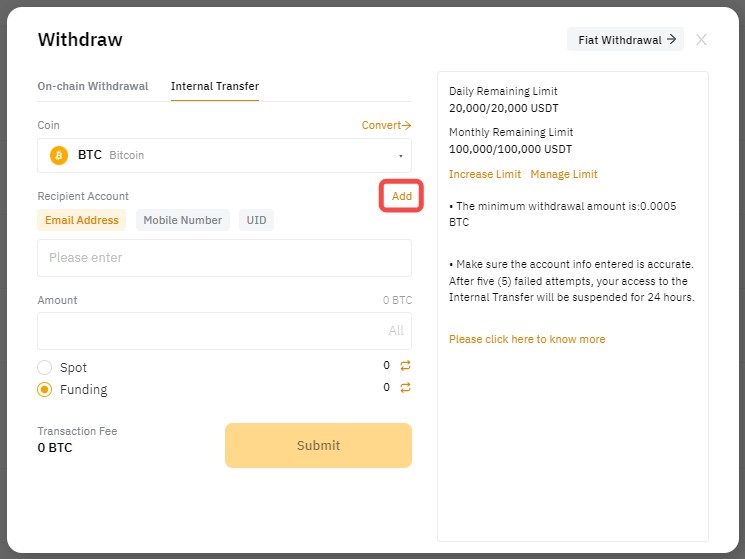
Step 7: Confirm and submit the withdrawal
Review all withdrawal details, enter the required verification code, and click “Submit” to complete the transaction request.
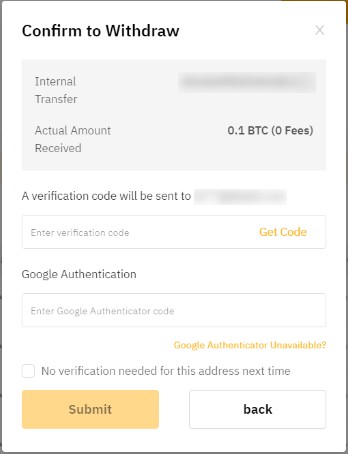
However, you should note that Bybit does not support direct withdrawals to a bank account. Therefore, you may need to transfer your funds to another exchange that supports fiat withdrawals.
- Pros
- Cons
Numerous payment choices. Conventional exchanges do not offer nearly as many payment options as P2P exchanges.
Security. Decentralized exchanges enhance security. Secondly, there are no third parties involved with decentralized exchanges. Users can control currency and other types of securities.
A global market. Among the benefits of P2P exchanges is that they give you access to a worldwide market of cryptocurrency buyers and sellers. In a matter of seconds, you can sell bitcoins to people around the world.
Slower trading speeds. Even though P2P transactions can occur almost immediately after both parties confirm them, one party can postpone them for various reasons.
Low liquidity. P2P exchanges are not popular among professional traders, who rely on fast transactions to execute big deals and prefer centralized exchanges.
Instant exchange services
An instant exchange service aggregates prices and liquidity from multiple custodial trading exchanges. It allows for easy registration and provides a simple exchange user interface.
This is unlike custodial exchanges like Binance, which safeguard your cryptocurrency. There are some limitations to the volume and price of trades on these exchanges, and their sign-up processes can be lengthy. They also present a more professional interface for trading.
Below, we will review the process of cashing out bitcoin using Changelly as an example.
Step 1: Open the Wallet section
Log in to your Changelly account and click the “Wallet” tab to access your cryptocurrency balances and withdrawal options.
Step 2: Check your account balance location
Before withdrawing, make sure your bitcoin is stored in your main account rather than your trading account. If necessary, transfer the funds internally and then click “Withdraw.”
Step 3: Enter the withdrawal amount
Specify the amount of bitcoin you want to withdraw. Make sure the number of decimal places does not exceed eight, otherwise the request may be rejected.
Step 4: Add the destination wallet address
Type or paste the receiving wallet address into the “Address” field. Carefully double-check the address to avoid sending funds to the wrong wallet.
Step 5: Review withdrawal details
Verify the amount, wallet address, and network information before confirming the transaction. Cryptocurrency withdrawals cannot usually be reversed once submitted.
Step 6: Complete security verification
Enter your authentication code if two-factor authentication (2FA) is enabled, then click “Withdraw.” Changelly will also send a confirmation email for additional security verification.
Step 7: Confirm the withdrawal by email
Open the “Withdrawal confirmation” email from Changelly PRO, review all transaction details again, and click the confirmation link to finalize the withdrawal request.
- Pros
- Cons
- Cons
Safety of funds. One of the significant differences between instant exchanges and traditional exchanges is how funds are managed. You retain custody of the assets you trade on instant exchanges because funds are received and deposited directly to your wallet vs. custodial services that hold them for you.
Easy registration and user-friendly interface. Many traditional exchanges require long sign-up processes that require identity verification and lengthy processing times.
Complicated for beginners. Joining an instant exchange is straightforward, but wallets require knowledge and experience.
Trading fees are high compared to their counterparts. It is imperative to consider trading fees. In contrast, many traditional platforms charge closer to 0.05–0.50%, whereas instant crypto exchanges charge closer to 0.25–0.50%.
PayPal
With PayPal's push into cryptocurrency last year, users in the United States can now purchase, trade, hold, and pay with cryptocurrencies, including bitcoin. PayPal's Venmo mobile wallet also lets customers buy and sell cryptocurrencies.
As little as $1 can be deposited into your current PayPal account to get started. However, you do not own the bitcoin you purchased.
PayPal manages the wallets, so you don't always control your bitcoins. Usually, when you buy bitcoin, you receive two things: A public key and a private key. Your public key is your wallet address, and your private key controls that wallet.
Your PayPal public address is accessible, but PayPal controls the private key.
For you to withdraw the value from your Cryptocurrency Hub, you must sell your Crypto Assets (in this case, bitcoin) and withdraw the cash proceeds from the sale, or use the cash proceeds to make purchases.
Step 1: Log in to your PayPal account
Open the PayPal website or mobile app and sign in securely using your account credentials.
Step 2: Open the cryptocurrency section
Navigate to the cryptocurrency tab and select bitcoin from the list of available digital assets.
Step 3: Choose the Sell option
Click “Sell” to begin converting your bitcoin into cash. PayPal may ask you to confirm tax-related information before continuing.
Step 4: Enter the sale amount
Specify how much bitcoin you want to sell and review the estimated cash amount you will receive after the transaction.
Step 5: Confirm the transaction
Click “Sell Now” to complete the conversion. The proceeds from the bitcoin sale will be transferred to your PayPal cash balance, which can then be withdrawn or used for purchases.
- Pros
- Cons
User-friendly interface. PayPal is a household name and popular digital platform. It also has an intuitive user interface, which means even beginners can use it.
Learn at your own pace. Stay current on crypto news and understand the basics right from the app.
Your crypto's protected. There's no digital key to lose, and they will replace your crypto if your account gets hacked.
Account limitations. Unlike other traditional cryptocurrency exchange platforms, PayPal can limit your account for the slightest reason, thereby restricting your access to the service. This can lead to several inconveniences.
Fees. PayPal has been known to charge substantial fees.
Bitcoin ATMs
At Bitcoin ATMs, customers can deposit cash that can be converted to bitcoins or convert bitcoins to money and then withdraw it. The Bitcoin ATM makes it possible and convenient for people to exchange their bitcoins for Cash.
The convenience of withdrawing funds from bitcoin wallets can be convenient at shopping malls, hotels, and other places where people may need cash.
In some ATM models, a paper wallet is printed with a Q.R. code scanned for bitcoin deposits. There is no need for a digital wallet! Depending on the ATM model, you may need a digital wallet on your phone to use it.
Step 1: Find a Bitcoin ATM
Use a Bitcoin ATM locator service or map application to find the nearest ATM that supports bitcoin cash withdrawals.
Step 2: Select bitcoin as the cryptocurrency
At the ATM screen, choose bitcoin from the list of supported cryptocurrencies you want to sell for cash.
Step 3: Accept the terms and conditions
Read and agree to the ATM provider’s terms of service before continuing with the transaction.
Step 4: Choose your cash withdrawal limit
Select the withdrawal category based on the amount you want to cash out, such as “up to $900” or “more than $900.”
Step 5: Verify your phone number
Enter your mobile number to receive a one-time verification code via SMS, which helps confirm your identity.
Step 6: Enter the amount of bitcoin to sell
Specify how much bitcoin you want to exchange for cash. The ATM will calculate the estimated fiat amount based on the current exchange rate.
Step 7: Scan the QR code and send bitcoin
The ATM will print a receipt with a QR code. Open your crypto wallet app and send the required amount of bitcoin to the displayed address.
Step 8: Wait for blockchain confirmation
After the bitcoin transaction is confirmed on the blockchain network, you will receive a text message notifying you that the cash withdrawal is ready.
Step 9: Withdraw your cash from the ATM
Scan the QR code from your receipt at the ATM, verify your identity again if required, and collect the cash dispensed by the machine.
- Pros
- Cons
Convenience. With Bitcoin ATMs, people can conveniently turn bitcoin into Cash. A bitcoin ATM allows people to walk up to the machine and scan their bitcoin address with a Q.R. code. You can deposit fiat money or convert bitcoin into fiat and withdraw it. The process is straightforward and convenient.
Ease of use. Many people believe that cryptocurrencies are too tricky to use. A Bitcoin ATM is a significant way for cryptocurrencies to become more accessible for people.
Speed. Bitcoin ATMs also speed up transactions dramatically. A Bitcoin ATM eliminates the need to transfer money from bitcoin wallets into bank accounts or vice versa. Transferring money via this method can take up to a day.
Unavailability. Even though Bitcoin ATMs are now available in over 60 countries, this does not imply that they can be found on every street corner in every city. Most people are likely unaware of where their nearest Bitcoin ATM is. Due to the difficulty of finding Bitcoin ATMs, people cannot rely on them being easy to locate everywhere, unlike fiat currency ATMs.
High fees. Bitcoin ATMs are frequently criticized for their high charges. Standard fiat currency ATMs do not charge fees for withdrawals or deposits made at the bank's ATMs. However, if the transaction is made on an ATM owned by another financial institution, the charges are often a few dollars.
Poor service reliability. Bitcoin ATMs are still having issues with service reliability since the infrastructure is still emerging. Bitcoin ATMs, for instance, are frequently reported as non-functional and depleted of cash.
Crypto wallets
A crypto wallet keeps your private keys - the passwords that allow you to access your cryptocurrencies - safe and accessible to send and receive cryptocurrencies like bitcoin. These wallets come in many sizes and shapes, from hardware wallets like Ledger to mobile apps like Coinbase Wallet. These wallets make cryptocurrency as easy as shopping online with a credit card.
We recommend Ledger as one of the most reliable crypto wallets for cashing out bitcoin. You can also sell your bitcoins through Ledger's partner Coinify. Your Ledger hardware wallet allows you to securely and conveniently manage your crypto assets. In addition, you can sell your bitcoins whenever you like through Ledger Live.
Here's how it works: you send Coinify your crypto securely through the Ledger sell, and then they send the promised amount of fiat money (U.S. dollars) to the bank account you specify.
First, you would select the amount you would like to trade, and Coinify would tell you how much you would receive in return. Your Ledger device will not be able to sell crypto without your permission.
- Pros
- Cons
Simple and easy to use live interface.
High-security standards.
Allows instant transactions across geographies.
Low transaction fees.
Bluetooth integration may be used as a vector for cyber-attacks.
May be challenging for beginners.
What is the best way to cash out bitcoin?
Essentially, it depends on what you are looking for in terms of your comfort and ease of use.
Beginners looking for an easy way to Cash out bitcoin may use a crypto exchange. A P2P service may be of interest to intermediate or advanced users since it eliminates any need for a middleman. A Bitcoin ATM is an excellent choice that offers convenience.
How to spend bitcoin directly?
You don't always need to cash out your bitcoin to spend it. There are alternative ways to spend your crypto.
Some of these ways include:
Paying with bitcoin anywhere that accepts it, including merchants such as Microsoft, Expedia, and Overstock.
Invest your bitcoin. You can use your bitcoin to buy stocks or funds. It is possible to do this on the platform where you have your bitcoin or use an investment service.
Donating to charities. Several organizations accept bitcoin donations. You can get involved in ICOs and other cryptocurrencies.
You can also use it to buy things online like video games and gift cards.
Offline, some restaurants and other merchants now accept bitcoin.
I also recommend avoiding emotional withdrawals

One mistake I often see among crypto users is treating the cash-out process as an afterthought. In reality, the safest moment to plan your withdrawal strategy is before you even buy cryptocurrency. Different platforms have different withdrawal limits, banking partners, verification rules, and regional restrictions, all of which can affect how quickly and efficiently you access your funds later.
I also recommend avoiding emotional withdrawals during periods of extreme market volatility. Large price swings often increase network congestion, spreads, and transaction fees. In many cases, users lose more money rushing to cash out than they would by waiting for calmer market conditions and using a properly planned withdrawal method.
Another practical habit is testing your withdrawal process with a small amount first. This helps verify wallet addresses, banking details, transfer speed, and platform reliability before moving larger sums. Even experienced crypto users make costly mistakes with incorrect networks or unsupported payment methods, and a simple test transaction can prevent unnecessary losses.
Finally, remember that convenience should never replace security. Whether you use exchanges, P2P platforms, wallets, or Bitcoin ATMs, always prioritize platforms with transparent regulations, strong authentication tools, and a proven reputation. Protecting access to your funds is just as important as generating profits in the crypto market.
Conclusion
Cashing out crypto, especially Bitcoin, has never been more accessible thanks to the variety of secure and user-friendly options available today. Whether you opt for the straightforward process of a regulated exchange, the flexibility of P2P services, or the convenience of Bitcoin ATMs, your needs can be matched to the best method for you. For instance, beginners may prefer the step-by-step guidance of exchanges like Binance, while more advanced users could leverage wallets with partner services like Coinify for greater control. Ultimately, the most important takeaway is to plan your withdrawal strategy in advance, as thoughtful preparation ensures both the safety and efficiency of turning your digital assets into usable cash.
FAQs
What factors should you consider when choosing a crypto cash-out method?
Can you cash out Bitcoin to cash without a bank account?
Are there security best practices to follow when cashing out Bitcoin or crypto?
How does market volatility affect the cash-out process for cryptocurrencies?
Editors' Top Picks and Insights



Related Articles
Team that worked on the article
Aleksandra Chaikina has been a contributor to Traders Union since 2021. With over 15 years of experience in copywriting and more than 5 years focused on financial content, she specializes in producing detailed guides, analytics, and comparative reviews across various sectors, including cryptocurrencies, Forex, investment strategies, and financial technologies.
Dan Blystone began his trading career in 1998 as an arbitrage clerk on the floor of the Chicago Mercantile Exchange (CME). He later traded bond and Eurex futures at proprietary firms such as Altea Trading, gaining valuable experience in high-frequency trading and risk management.
Chinmay Soni is a financial analyst with more than 5 years of experience in working with stocks, Forex, derivatives, and other assets. As a founder of a boutique research firm and an active researcher, he covers various industries and fields, providing insights backed by statistical data.
CFD is a contract between an investor/trader and seller that demonstrates that the trader will need to pay the price difference between the current value of the asset and its value at the time of contract to the seller.
A wire transfer is a method of electronic funds transfer in which money is sent from one bank or financial institution to another, typically across international or domestic boundaries. It involves the sender providing their bank with specific instructions, including the recipient's bank details and the amount to be transferred, and the funds are then electronically moved from the sender's account to the recipient's account.
Crypto trading involves the buying and selling of cryptocurrencies, such as Bitcoin, Ethereum, or other digital assets, with the aim of making a profit from price fluctuations.
Volatility refers to the degree of variation or fluctuation in the price or value of a financial asset, such as stocks, bonds, or cryptocurrencies, over a period of time. Higher volatility indicates that an asset's price is experiencing more significant and rapid price swings, while lower volatility suggests relatively stable and gradual price movements.
Index in trading is the measure of the performance of a group of stocks, which can include the assets and securities in it.

-
 Afghanistan
-
 Albania
-
 Algeria
-
 Angola
-
 Argentina
-
 Armenia
-
 Australia
-
 Austria
-
 Azerbaijan
-
 Bahamas
-
 Bahrain
-
 Bangladesh
-
 Belarus
-
 Belgium
-
 Bolivia
-
 Botswana
-
 Brazil
-
 Brunei
-
 Bulgaria
-
 Cambodia
-
 Cameroon
-
 Canada
-
 Chile
Chile
-
 China
China
-
 Colombia
-
 Congo
Congo
-
 Costa Rica
-
 Cote d'Ivoire
-
 Croatia
-
 Cuba
Cuba
-
 Cyprus
-
 Czechia
-
 DR Congo
-
 Denmark
-
 Dominican Republic
-
 Ecuador
-
 Egypt
Egypt
-
 El Salvador
-
 Estonia
-
 Eswatini
-
 Ethiopia
-
 Finland
-
 France
-
 Georgia
-
 Germany
-
 Ghana
Ghana
-
 Greece
-
 Haiti
Haiti
-
 Hong Kong
-
 Hungary
-
 India
India
-
 Indonesia
-
 Iran, Islamic republic
-
 Iraq
Iraq
-
 Ireland
-
 Israel
-
 Italy
Italy
-
 Jamaica
-
 Japan
Japan
-
 Jordan
-
 Kazakhstan
-
 Kenya
Kenya
-
 Korea
Korea
-
 Kuwait
-
 Kyrgyzstan
-
 Laos
Laos
-
 Latvia
-
 Lebanon
-
 Lesotho
-
 Libya
Libya
-
 Lithuania
-
 Luxembourg
-
 Madagascar
-
 Malaysia
-
 Malta
Malta
-
 Mauritius
-
 Mexico
-
 Moldova
-
 Mongolia
-
 Montenegro
-
 Morocco
-
 Mozambique
-
 Myanmar
-
 Namibia
-
 Nepal
Nepal
-
 Netherlands
-
 New Zealand
-
 Nigeria
-
 North Macedonia
-
 Norway
-
 Oman
Oman
-
 Pakistan
-
 Palestine
-
 Panama
-
 Papua New Guinea
-
 Paraguay
-
 Peru
Peru
-
 Philippines
-
 Poland
-
 Portugal
-
 Puerto Rico
-
 Qatar
Qatar
-
 Reunion
-
 Romania
-
 Rwanda
-
 Saudi Arabia
-
 Serbia
-
 Singapore
-
 Slovakia
-
 Slovenia
-
 Somalia
-
 South Africa
-
 Spain
Spain
-
 Sri Lanka
-
 Sweden
-
 Switzerland
-
 Syria
Syria
-
 Taiwan
-
 Tajikistan
-
 Tanzania
-
 Thailand
-
 Trinidad and Tobago
-
 Tunisia
-
 Turkey
-
 UAE
UAE
-
 Uganda
-
 Ukraine
-
 United Kingdom
-
United States
-
 Uruguay
-
 Uzbekistan
-
 Venezuela
-
 Vietnam
-
 Yemen
Yemen
-
 Zambia
-
 Zimbabwe
- Forex
- Crypto












