
The Difference Between Representative Money And Fiat Money



Editorial Note: While we adhere to strict Editorial Integrity, this post may contain references to products from our partners. Here's an explanation for How We Make Money. None of the data and information on this webpage constitutes investment advice according to our Disclaimer.
Representative money vs fiat:
Representative money – backed by assets (e.g., gold), convertible, more stable.
Fiat money – backed by government trust, not convertible, used worldwide today.
Representative money and fiat money have played distinct roles in shaping the history of global trade, banking, and financial systems. For today’s traders, the contrast between the two isn’t just academic. It offers practical insight into how currencies behave under various monetary policies, inflation trends, and geopolitical shifts.
In simple terms, the difference between representative money and fiat money is that the former is backed by a physical asset like gold or silver, while the latter has value solely because a government declares it legal tender. This distinction matters when analyzing how economic systems respond to uncertainty, especially in Forex markets where perceptions of value influence every trade.
Rather than just listing definitions, this article takes a closer look at the roots, mechanisms, and real-world impacts of these two forms of money, offering traders a clearer understanding of how monetary systems evolve and why it affects their strategies.
Historical perspective in currency systems
Money functions as a medium of exchange, store of value, and unit of account. But the way it holds value has changed significantly over time. From early bartering to the rise of digital assets, each form of money reflects broader shifts in economics, technology, and public trust. For a long period, currencies were tied to physical assets, a concept known as commodity-backed money, which offered a sense of stability. Today’s fiat systems, however, rely on legal authority and collective confidence. Understanding this evolution is essential for anyone navigating modern markets or trading environments. This historical shift sets the foundation for the modern debate of commodity money vs fiat money, helping traders understand why different monetary models respond uniquely to inflation, policy changes, and market stress.
From barter to paper notes
Barter was the foundation of early economies, where people traded goods directly, grains, livestock, tools, based on need. The first metal coins emerged in Lydia around 600 BC, and by the 7th century, China had introduced paper money. In colonial America, early paper notes, often backed by gold or silver, paved the way for asset-linked currency. These developments eventually led to the widespread use of representative money, which aimed to keep currencies anchored to real-world value.
The era of asset-linked currency
Representative money worked because it was backed by something tangible, typically gold or silver. In the U.S., this approach was formalized by the Gold Standard Act of 1900, which tied the dollar to a specific quantity of gold. Later, the Gold Reserve Act of 1934 consolidated gold holdings under the Treasury, and by 1944, the Bretton Woods system connected global currencies to the U.S. dollar, which remained convertible to gold. However, this structure came under strain during economic crises. Over time, inflexible asset-pegged systems like these made it difficult for governments to respond quickly. One major turning point was the gold standard collapse, which revealed the limitations of strictly backed money during periods of global financial stress.
The rise of modern currency
Fiat money has no physical backing, it gains value through government declaration and public trust. The shift became permanent when the U.S. ended gold convertibility in 1971 under Nixon’s administration. That event marked the full transition to a fiat system. The Federal Reserve monetary policy today uses tools like interest rate changes and quantitative easing to manage economic cycles and respond to downturns. While these tools offer short-term flexibility, they also carry long-term risks, particularly inflation, if money supply growth moves faster than actual productivity.
Original research insights and comparative analysis
Hybrid features in modern systems
Studies published on Academia.edu note that modern currencies often blend fiat and representative characteristics. Even in a fiat regime, certain reserve policies mimic asset-backed constraints.
Game-theoretic competition between currency types
An MDPI paper models competition between representative and fiat currencies, finding that while fiat can dominate due to flexibility, excessive issuance reduces overall user welfare.
Price stability under fiat
The St. Louis Fed concludes that disciplined fiat regimes with credible inflation targets can achieve equal or better price stability compared to gold-backed systems, a key insight for traders evaluating central bank credibility.
| Feature | Fiat Currency | Cryptocurrency (e.g., Bitcoin) |
|---|---|---|
| Value stability | Generally stable; subject to inflation control via monetary policy flexibility | Highly volatile; value driven by supply-demand and sentiment |
| Inflation control | Managed through central bank tools like interest rates and open-market operations | Fixed or algorithmic supply limits; no active inflation control |
| Global acceptance | Universally accepted within issuing jurisdiction; trusted by legal systems | Not widely accepted; growing adoption but variable trust levels |
| Monetary policy flexibility | Dynamic: central banks can adapt policy to economic needs | Non-existent, protocol rules are fixed and transparent globally |
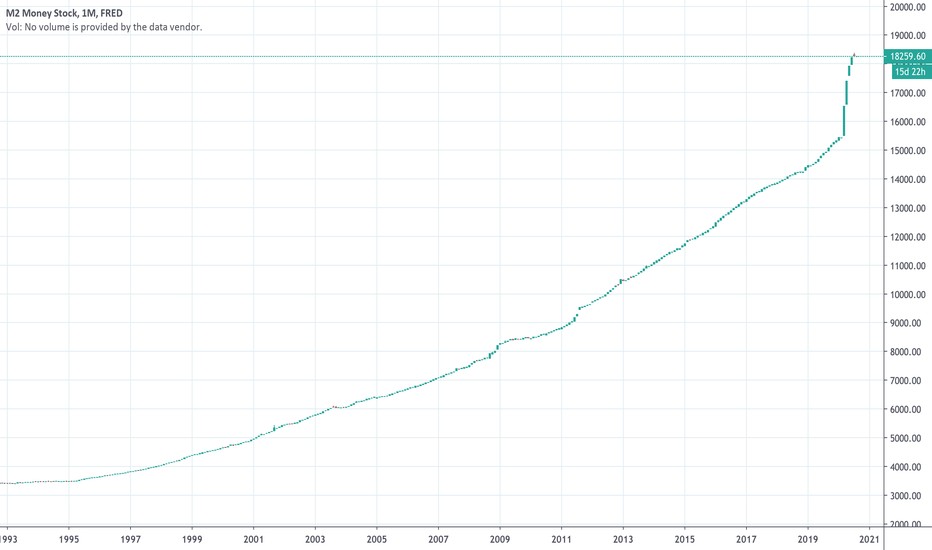
Here’s a chart illustrating the U.S. M2 money supply over time, drawn from Federal Reserve Economic Data (FRED). It shows a steady climb in M2, with a sharp acceleration in recent years, a clear reflection of policy-driven liquidity growth.
Implications for traders and investors
When you look at money systems side by side, the details reveal how traders can build smarter strategies instead of just following the crowd.
Intrinsic value of money
Commodity-backed systems, like gold, carried weight because their worth was tied to something real. In contrast, fiat money is built on trust and policy. Knowing the intrinsic value of money helps traders gauge why assets like Bitcoin often get compared to gold; they are both seen as anchors when trust in central banks is shaky.
Monetary sovereignty
Nations with control over their own currency can adjust supply to stabilize their economies, a power not available in systems tied to physical assets. This monetary sovereignty allowed the U.S. to expand liquidity post-2008, avoiding collapse. For traders, understanding sovereignty explains why currencies react differently to crises and why crypto, with no central controller, challenges that model.
Inflation hedge strategies
Ray Dalio notes that money printing dilutes purchasing power over time. Traders who understand inflation hedge strategies look beyond just holding gold. They diversify into real estate, commodities, and increasingly crypto, which some see as digital hard money. Recognizing this shift lets investors ride long-term trends instead of reacting to short-term panic.
The role of central banks in currency stability
Central banks are not just referees of money supply, they are architects of trust in modern economies. By controlling interest rates, guiding inflation, and setting policies, they decide how strong or fragile your currency feels in daily life. Their influence extends from your grocery bill to the way global investors treat a nation’s money.
Interest rates and value control
When inflation rises, central banks raise rates to protect purchasing power. Low rates, on the other hand, stimulate borrowing and growth. The balancing act keeps economies from spiraling under fiat inflation risk, where paper money loses value faster than wages can catch up.
The role of legal frameworks
Currencies hold their legitimacy because of legal tender laws. This means debts and obligations must be accepted in the national currency, anchoring trust in central banks’ authority. Without this enforcement, stability would rely solely on market confidence, which can shift quickly in crises.
Learning from history
Examining historical currency values shows how empires collapsed when money supply was mismanaged. From Rome’s debasement of silver coins to 20th-century hyperinflation in Germany, the lesson is clear: central banks must act as guardians of credibility or risk eroding faith in money altogether.
Current inflation & rate trends
Headline CPI recently hit 2.7%, with core CPI at 3.1%, slightly above forecasts.
Despite elevated inflation, the Fed held rates steady at 4.25 to 4.5% in recent meetings.
Market expectations suggest a potential 25 basis point rate cut in September, though the Fed has emphasized data dependency in its messaging, especially given geopolitical uncertainties and tariff effects that continue to impact price levels.
Central banks like the Federal Reserve play a critical role in maintaining currency stability by managing inflation and economic growth. They do this by adjusting interest rates, implementing quantitative easing (QE) or tightening (QT), and anchoring inflation expectations through inflation targeting frameworks, typically around 2%. When inflation rises, central banks raise rates to cool spending; when economies slow, they cut rates or purchase assets to inject liquidity. Their credibility and policy decisions directly influence investor confidence and the strength of a nation's currency in global markets.
Global case studies: currency systems in action
Currencies behave differently depending on how nations manage trust, supply, and policy. Looking at Venezuela, Switzerland, and the Eurozone gives sharp lessons for anyone learning how money truly works.
Venezuela and hyperinflation
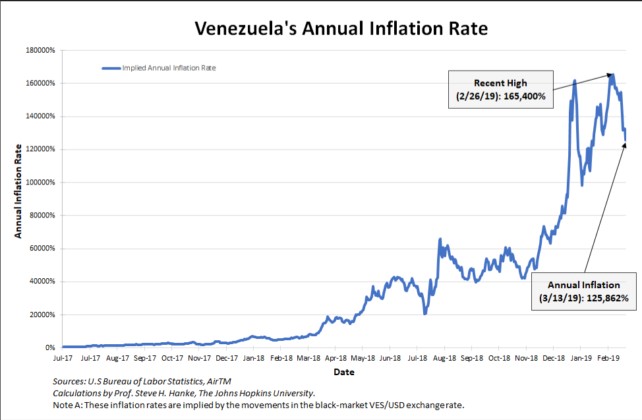
Purchasing power erosion. Venezuela shows how printing excess money without backing leads to extreme purchasing power erosion, where daily wages can barely buy basic food.
Quantitative easing impact. Unlike advanced economies that use QE with controls, in Venezuela the uncontrolled supply destroyed savings and broke trust in currency.
Switzerland’s conservative policy
Stability through restraint. Switzerland avoided the mistakes of over-expansion by limiting money supply and carefully managing reserves.
Safe haven status. Investors see the Swiss franc as protection against global uncertainty because quantitative easing impact here is minimal compared to other nations.
The Eurozone and monetary union
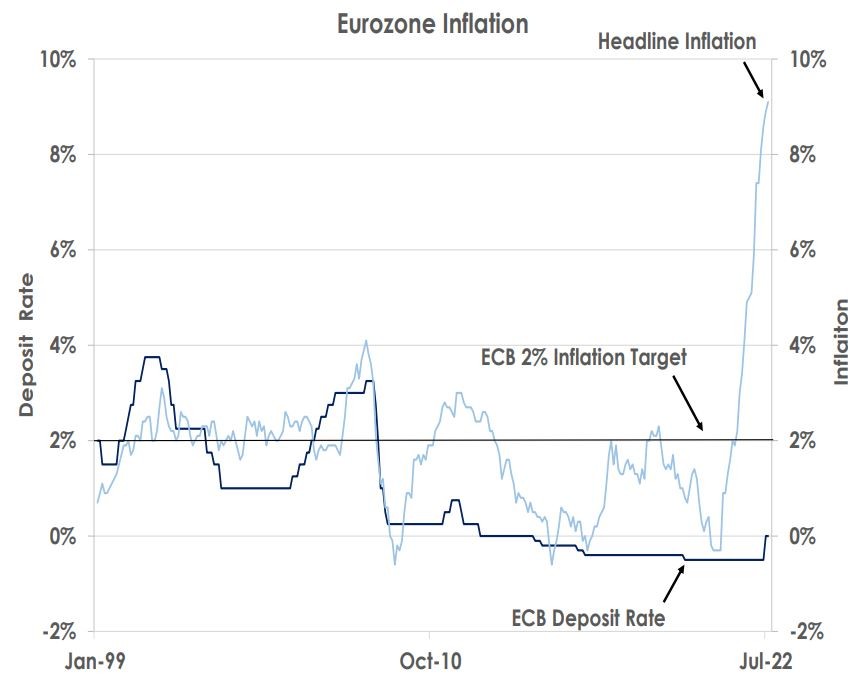
Shared control. The European Central Bank balances multiple economies, making decisions that can benefit one region while straining another.
Central bank digital currency. The ECB is actively exploring a central bank digital currency, which could tighten oversight and strengthen cross-border payments, but it also raises privacy debates.
Crypto and digital alternatives: A new era or just hype?
Bitcoin has surged as a decentralized and speculative asset, attracting users frustrated with fiat but often criticized for extreme volatility, limited scalability, and speculative-led instability. Meanwhile, Central Bank Digital Currencies (CBDCs) offer a stronger proposition: when built on tokenized platforms that integrate central bank reserves, commercial bank money, and government bonds, they could underpin a more efficient, programmable monetary system.
However, the BIS warns that stablecoins, popular crypto-backed tokens, fail crucial criteria like singleness (uniform value), elasticity (supply flexibility), and integrity (reliability), disqualifying them from becoming foundational money.
Decoupling value from gold changed everything for global finance

The big difference between representative and fiat money isn’t just about gold. It’s about who holds the power. With representative money, value had to be backed by something real, like gold. So, governments had limits. They couldn’t just print more unless they had enough in reserves. That kept the money supply honest. But when we moved to fiat money, central banks got much more control. Now they can tweak the economy by adjusting how much money flows through it. Inflation, in this case, isn’t just a bad guy. It’s sometimes used on purpose to push people to spend and keep the economy moving. So if you're starting to learn about money, look at inflation not just as a risk but as a signal of what the government wants you to do.
There’s another side to this: fiat money runs on trust. Not just in the system, but in the story behind it. When people stop believing that the money will hold value, things can fall apart fast, like in Venezuela or during the 2008 crash. That’s why central banks are always talking, explaining, even tweeting. They’re shaping the mood. If you’re a beginner, don’t just ask what backs a currency. Ask who’s managing the story behind it. Watch how people feel, not just the numbers. That will help you understand where things are headed.
Conclusion
Representative money and fiat money differ not only in what backs them but also in how they respond to economic change. Representative systems anchor value through physical assets, limiting inflation but reducing policy agility. Fiat systems depend on trust and sound governance, trading inherent stability for the ability to adapt quickly. For traders, understanding both models is less about choosing one over the other and more about reading the policy signals and macroeconomic conditions that shape their movement.
FAQs
What is the primary advantage of representative money?
Its value is linked to a tangible asset, which can protect purchasing power over the long term and limit excessive money creation.
Why do most countries use fiat money today?
Fiat money gives governments and central banks greater flexibility to manage economic cycles, control interest rates, and respond quickly to crises.
Can a fiat currency be as stable as representative money?
Yes, if the issuing authority maintains disciplined monetary policy, credible inflation targets, and strong institutional trust.
How do traders adjust strategies for fiat vs representative systems?
With representative money, traders often monitor commodity market movements, while with fiat systems they focus on central bank policy, macroeconomic data, and market sentiment.
Editors' Top Picks and Insights

AI without limits: How dangerous are neural networks?

Worldcoin on Wall Street: From iris scans to ETF

Mark Cuban's wealth philosophy: Why stocks matter more than salary or crypto

Dangerous but indispensable: Why the crypto market needs bridges

Markus Levin: DePIN could power the AI agent economy

Pokémon cards for $2,500: How collectibles became a new form of gambling
Related Articles
Team that worked on the article
Viktoras Karapetjanc is a seasoned financial trader, market analyst, and content creator with over 20 years of expertise in Forex, cryptocurrency, and stock markets. As a contributor to the Traders Union website, he provides in-depth analysis, data-driven strategies, and educational content to empower traders of all levels.
Andreas Kristo Saragih is a seasoned equity research analyst with over a decade of experience across both buy-side and sell-side roles, focused on the Indonesian capital market. He has extensive sector coverage, including banking, consumer goods, retail, real estate, healthcare, transportation, poultry, cement, pharmaceuticals, construction, and infrastructure.
Chinmay Soni is a financial analyst with more than 5 years of experience in working with stocks, Forex, derivatives, and other assets. As a founder of a boutique research firm and an active researcher, he covers various industries and fields, providing insights backed by statistical data.
Ethereum is a decentralized blockchain platform and cryptocurrency that was proposed by Vitalik Buterin in late 2013 and development began in early 2014. It was designed as a versatile platform for creating decentralized applications (DApps) and smart contracts.
Cryptocurrency is a type of digital or virtual currency that relies on cryptography for security. Unlike traditional currencies issued by governments (fiat currencies), cryptocurrencies operate on decentralized networks, typically based on blockchain technology.
CFD is a contract between an investor/trader and seller that demonstrates that the trader will need to pay the price difference between the current value of the asset and its value at the time of contract to the seller.
Index in trading is the measure of the performance of a group of stocks, which can include the assets and securities in it.
An investor is an individual, who invests money in an asset with the expectation that its value would appreciate in the future. The asset can be anything, including a bond, debenture, mutual fund, equity, gold, silver, exchange-traded funds (ETFs), and real-estate property.

-
 Afghanistan
-
 Albania
-
 Algeria
-
 Angola
-
 Argentina
-
 Armenia
-
 Australia
-
 Austria
-
 Azerbaijan
-
 Bahamas
-
 Bahrain
-
 Bangladesh
-
 Belarus
-
 Belgium
-
 Bolivia
-
 Botswana
-
 Brazil
-
 Brunei
-
 Bulgaria
-
 Cambodia
-
 Cameroon
-
 Canada
-
 Chile
Chile
-
 China
China
-
 Colombia
-
 Congo
Congo
-
 Costa Rica
-
 Cote d'Ivoire
-
 Croatia
-
 Cuba
Cuba
-
 Cyprus
-
 Czechia
-
 DR Congo
-
 Denmark
-
 Dominican Republic
-
 Ecuador
-
 Egypt
Egypt
-
 El Salvador
-
 Estonia
-
 Eswatini
-
 Ethiopia
-
 Finland
-
 France
-
 Georgia
-
 Germany
-
 Ghana
Ghana
-
 Greece
-
 Haiti
Haiti
-
 Hong Kong
-
 Hungary
-
 India
India
-
 Indonesia
-
 Iran, Islamic republic
-
 Iraq
Iraq
-
 Ireland
-
 Israel
-
 Italy
Italy
-
 Jamaica
-
 Japan
Japan
-
 Jordan
-
 Kazakhstan
-
 Kenya
Kenya
-
 Korea
Korea
-
 Kuwait
-
 Kyrgyzstan
-
 Laos
Laos
-
 Latvia
-
 Lebanon
-
 Lesotho
-
 Libya
Libya
-
 Lithuania
-
 Luxembourg
-
 Madagascar
-
 Malaysia
-
 Malta
Malta
-
 Mauritius
-
 Mexico
-
 Moldova
-
 Mongolia
-
 Montenegro
-
 Morocco
-
 Mozambique
-
 Myanmar
-
 Namibia
-
 Nepal
Nepal
-
 Netherlands
-
 New Zealand
-
 Nigeria
-
 North Macedonia
-
 Norway
-
 Oman
Oman
-
 Pakistan
-
 Palestine
-
 Panama
-
 Papua New Guinea
-
 Paraguay
-
 Peru
Peru
-
 Philippines
-
 Poland
-
 Portugal
-
 Puerto Rico
-
 Qatar
Qatar
-
 Reunion
-
 Romania
-
 Rwanda
-
 Saudi Arabia
-
 Serbia
-
 Singapore
-
 Slovakia
-
 Slovenia
-
 Somalia
-
 South Africa
-
 Spain
Spain
-
 Sri Lanka
-
 Sweden
-
 Switzerland
-
 Syria
Syria
-
 Taiwan
-
 Tajikistan
-
 Tanzania
-
 Thailand
-
 Trinidad and Tobago
-
 Tunisia
-
 Turkey
-
 UAE
UAE
-
 Uganda
-
 Ukraine
-
 United Kingdom
-
United States
-
 Uruguay
-
 Uzbekistan
-
 Venezuela
-
 Vietnam
-
 Yemen
Yemen
-
 Zambia
-
 Zimbabwe
- Forex
- Crypto












