
Top Forex Traders In Saudi Arabia: Verified Net Worths And Sector Insights (2026)

Editorial Note: While we adhere to strict Editorial Integrity, this post may contain references to products from our partners. Here's an explanation for How We Make Money. None of the data and information on this webpage constitutes investment advice according to our Disclaimer.
Richest Forex traders in Saudi Arabia:
Fahad Al-Saud – net worth: $15 million. Founder of a Riyadh-based trading academy; over 50,000 students trained; owns real estate worth $2M.
Aisha Al-Fahad – net worth: $12 million. Advocate for female traders; manages real estate portfolio of $1.5M+; led 25+ educational events.
Omar Al-Hassan – net worth: $9 million. Specializes in algorithmic systems; owns a fintech startup; 30,000+ social followers.
Layla Al-Mutairi – net worth: $7 million. Focuses on swing trading; 20,000+ seminar participants; active in youth financial literacy.
Richest Forex traders in Saudi Arabia continue to shape the investment landscape, not only through personal wealth but via public education and financial inclusion efforts.
Profiles of Saudi Arabia’s richest Forex traders
Fahad Al-Saud
One of the best traders in Saudi Arabia, Al-Saud made his mark by focusing on high-frequency day trading strategies. His Riyadh-based academy has trained over 50,000 students since 2019. He has diversified into residential property and launched a platform offering technical analysis tools tailored to GCC traders. His verified real estate assets are valued at over $2 million as of Q1 2025.
Estimated net worth: $15 million
Trading focus: day trading with emphasis on technical analysis and market sentiment.
Education impact: founded a trading academy in Riyadh, training over 50,000 students.
Business ventures: investments in real estate and financial education platforms.
Aisha Al-Fahad
Aisha leads gender inclusion in the Saudi trading scene. Her long-term macro trading approach focuses on sustainable gains, often driven by geopolitical and oil-related news cycles. Aisha has hosted 25+ events focused on women in trading and has amassed over 90,000 followers across Instagram and Telegram. She is recognized among the richest traders in Saudi Arabia due to her combined portfolio of trading income and property in Jeddah and Riyadh.
Estimated net worth: $12 million
Trading style: long-term trend trading, integrating macroeconomic indicators.
Advocacy: leads initiatives to empower women in trading, hosting workshops and seminars.
Real estate: owns properties valued over $1.5 million.
Recognition: featured in financial magazines and recipient of the Women in Finance Award.
Omar Al-Hassan
Omar’s contribution lies in technology. Through his fintech startup, he develops algorithmic tools and smart trading bots used by institutional clients. He’s conducted 40+ webinars in the past two years and is featured regularly in Saudi finance panels. He is considered one of the best Forex traders in Saudi Arabia due to his results-driven approach and public engagement.
Estimated net worth: $9 million
Trading strategy: algorithmic trading with proprietary systems.
Entrepreneurship: founded a fintech startup focusing on trading technologies.
Education: conducts webinars and online courses for aspiring traders.
Social reach: 150,000+ followers on social media platforms.
Layla Al-Mutairi
Layla specializes in Fibonacci-based swing trading strategies. Her weekly market reviews and in-person bootcamps have reached over 20,000 participants since 2022. She contributes monthly columns to regional finance publications and frequently speaks at university-led financial literacy events. Layla’s practical approach and consistent results make her a key voice in Forex trading success stories from the GCC.
Estimated net worth: $7 million
Trading method: swing trading with a focus on technical patterns.
Educational efforts: hosts seminars across Saudi Arabia, educating over 20,000 traders.
Community engagement: active in promoting financial literacy among youth.
Media presence: regular contributor to financial news outlets.
Sector analysis: Contributions beyond trading
Financial education
Forex trading in Saudi Arabia has matured significantly due to structured educational outreach by leading traders. Between 2021 and 2025, top figures like Fahad Al-Saud and Aisha Al-Fahad have facilitated the education of over 108,000 individuals, using a hybrid model of in-person seminars, online academies, and social mentorship groups.
These programs span beginner to advanced topics, including:
Technical and fundamental analysis.
Risk control frameworks for Islamic accounts.
Live market walkthroughs during global economic events.
New initiatives in 2024 included the launch of three bilingual platforms (Arabic-English) aimed at students in Riyadh, Jeddah, and Medina, providing broader access to financial literacy in remote areas.
Social media & Influence
Collectively, the top four Saudi traders maintain a cross-platform audience of 523,000+ followers. Their content formats include daily live trades, macroeconomic breakdowns, and discipline coaching.
Breakdown by platform (as of Q2 2025):
Instagram: 290,000+ (Aisha and Layla dominate with visual trading recaps and live Q&As).
Telegram: 150,000+ subscribers in active mentorship groups.
YouTube: 83,000+ subscribers across five trading channels.
This consistent digital presence has helped de-stigmatize Forex trading, presenting it as a strategic and legitimate career option – especially among university-aged Saudis and early-career professionals.
Real estate & Secondary ventures
These traders emphasize wealth sustainability by diversifying beyond trading. Verified secondary ventures include:
$5.6 million collectively invested in real estate across Riyadh, Dammam, and Khobar (primarily in high-yield residential zones).
Equity holdings in three fintech startups offering analytics dashboards and AI-driven trading tools.
Co-ownership of two e-learning platforms, one of which partnered with a local university in 2024 for elective trading courses.
Such diversification indicates a shift from volatile, high-frequency gains to long-term asset stability and sectoral reinvestment.
Gender inclusion
Female participation in the Saudi financial markets remains a strategic priority. Aisha Al-Fahad and Layla Al-Mutairi have directly impacted this effort by:
Hosting 28 exclusive women-only trading events since 2022.
Creating an online community of over 8,000 women traders focused on safe market entry and financial independence.
Partnering with two national women’s business foundations to integrate Forex into broader entrepreneurship training programs.
Their efforts align with Vision 2030 goals and reflect an inclusive future for capital markets in Saudi Arabia.
Challenges faced by Forex traders in Saudi Arabia

Regulatory environment
Forex trading in Saudi Arabia is legally permitted and overseen by the Capital Market Authority (CMA), which enforces standards on financial transparency, investor protection, and broker conduct. However, several challenges remain:
Limited local brokerage options: as of 2026, there are fewer than five CMA-regulated brokers offering fully localized services, pushing many traders to rely on offshore firms regulated in the UK, Australia, or Cyprus.
No unified arbitration mechanism for cross-border disputes. If a trader has issues with an offshore broker, legal recourse is often limited.
Compliance complexity: many retail traders struggle to understand CMA’s nuanced licensing rules, especially when dealing with derivatives and swap-free (Islamic) accounts.
As a result, even though regulation exists, practical navigation remains a barrier, especially for beginners unfamiliar with financial law.
Market volatility
The Saudi trading community faces significant exposure to global currency fluctuations, especially given the country’s economic linkage to oil exports and U.S. dollar movements. Key volatility risks in 2024–2025 include:
Increased USD/SAR instability during oil price shocks or Federal Reserve policy changes.
Geopolitical tensions in the Gulf, which trigger short-term market reactions.
Interest rate cycles, which complicate mid-term trading strategies.
Traders who lack disciplined risk frameworks – such as stop-loss rules, fixed position sizing, and hedging mechanisms – face heightened capital erosion in such conditions.
Access to quality education
While elite traders like Fahad Al-Saud and Layla Al-Mutairi have trained tens of thousands, structured trading education remains unevenly distributed:
Urban bias: 80%+ of formal courses are located in Riyadh or Jeddah, limiting access for traders in Al-Ahsa, Abha, or Tabuk.
Language gaps: most technical content and market tools are still in English, creating challenges for monolingual Arabic speakers.
High mentorship fees: premium courses range from SAR 3,000–8,000, placing them out of reach for many middle-income learners.
Unregulated “signal providers” and fake mentors on platforms like Telegram continue to erode trust in the educational ecosystem.
To address this, several traders have begun advocating for state-sponsored financial literacy initiatives that blend regulated brokers with CMA-backed education modules.
Opportunities for new traders
Demo accounts
Most globally recognized brokers operating in Saudi Arabia – such as FP Markets, Pepperstone, and Axi – offer unlimited demo accounts with virtual capital ranging from $10,000 to $100,000. These accounts simulate live trading environments, allowing users to:
test strategies in real-time;
understand platform navigation;
develop trading discipline without risking real capital.
For many Saudis, particularly younger traders aged 18–25, demo accounts have become a primary on-ramp to practical Forex education, bridging the gap between theory and execution.
Community support
Saudi traders now benefit from a rapidly expanding digital ecosystem. Platforms like Telegram, Discord, and X host dozens of active Arabic-language trading groups, many of which are moderated by experienced mentors. These communities offer:
daily signals and trade recaps;
peer reviews and trading journals;
open discussions about broker conditions, regulations, and risk practices.
Moreover, two local forums – ForexArabia.net and TadawulFX – have seen membership double since 2022, now serving over 45,000 users combined. This collaborative culture supports entry-level traders in navigating tools, strategy selection, and emotional management.
For traders in Saudi Arabia, this decision affects regulation, execution speed, swap-free (Islamic) account availability, and long-term capital protection. Since local brokerage options remain limited, many traders rely on internationally regulated firms that offer Arabic-language support, competitive spreads, and Sharia-compliant trading conditions.
Below is a comparison of globally recognized brokers frequently used by Saudi traders, based on regulation, trading conditions, and overall reliability.
| IUX | XM | Pepperstone | Fusion Markets | RoboForex | |
|---|---|---|---|---|---|
|
Min. deposit, $ |
50 | 5 | No | 1 | 10 |
|
Tradable assets |
152 | 1400 | 1200 | 250 | 12000 |
|
Standard EUR/USD spread |
0.7 | 1.0 | 0.6 | 0.3 | 1.0 |
|
Max. leverage |
1:3000 | 1:1000 | 1:500 | 1:500 | 1:2000 |
|
Swap Free |
No | Yes | Yes | Yes | No |
|
TU overall score |
9.4 | 9.3 | 9.25 | 9.2 | 9.15 |
|
Open an account |
Go to broker Your capital is at risk. |
Go to broker Your capital is at risk. |
Go to broker Your capital is at risk.
|
Go to broker Your capital is at risk. |
Go to broker Your capital is at risk. |
Don't trade headlines. Trade structure
While Saudi Arabia’s Forex market is expanding quickly, new and experienced traders alike must balance ambition with discipline. Yes, stories of self-made traders reaching seven-figure portfolios inspire, but much of that success is built on risk control and data-driven setups – not hype or copy-paste signals. The truth is: the vast majority of traders who fail in this market do so because they chase volatility without a structured plan.
For those eyeing high-impact pairs like USD/SAR or oil-linked crosses, short-term moves can be lucrative – but only with tight stop-losses and clear take-profit zones. These instruments often spike during OPEC meetings or Fed announcements. So, treat them as tactical trades, not long-term holds. Make your money, then step aside.
If you're thinking long term, focus on macro-aligned positions. For example, traders who followed interest rate trends in 2024 saw sustained gains in USD/JPY and EUR/USD with simple breakout confirmation strategies. Pair this with swing setups on daily charts and you reduce noise while increasing your probability of success.
For portfolio diversification, look beyond just Forex. Saudi traders are increasingly allocating portions of their capital into commodities, ETFs, and DeFi projects with Sharia-compliant features, especially as more brokers now integrate multi-asset platforms with Islamic account options.
Bottom line? Don't trade headlines. Trade structure. The traders making consistent gains in Saudi Arabia aren't reacting – they're preparing. Whether you're scalping GBP/USD or planning a position on gold, success comes from clarity, not chaos. Stick to one system, size your trades wisely, and respect the volatility – it doesn’t forgive overconfidence.
Conclusion
In 2026, Saudi Arabia’s leading Forex traders have not just accumulated immense wealth but have also significantly influenced the nation’s financial landscape. Their innovative strategies and commitment to continuous learning have set new benchmarks in the industry, as seen with trailblazers like Faisal Al-Mutairi and Nada Al-Shammari. These individuals are not only redefining trading success but are also investing strategically in education and real estate, uplifting the broader community. The clear takeaway is that sustainable success in Forex goes far beyond individual profit—it’s about empowerment, knowledge sharing, and long-term vision. Ultimately, the new era of Saudi traders demonstrates that true leadership is measured by the positive ripple effects on both markets and society.
FAQs
How do Saudi Forex traders diversify their wealth beyond currency trading?
What initiatives are helping to close the financial literacy gap in less urbanized regions of Saudi Arabia?
Which factors contribute most to market volatility for Forex traders in Saudi Arabia?
How is gender inclusion being promoted in the Saudi Forex trading sector?
Editors' Top Picks and Insights

Bitcoin mining is getting greener, but the debate isn't over

Asia's largest IPO: How CXMT became China's most valuable company

Global fintech in 2026: Three trends that matter

From Jesus Christ to aliens: Polymarket's most absurd prediction markets

Hunting crypto owners: Why criminals have gone offline

BitMEX is shutting down: Why Trump could not save the exchange
Related Articles
Team that worked on the article
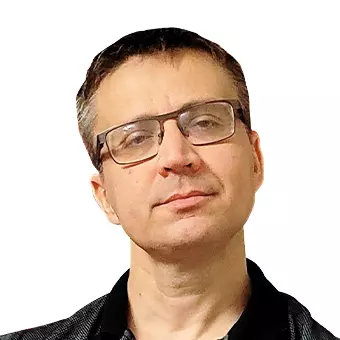
Rinat Gismatullin is an entrepreneur and a business expert with 9 years of experience in trading. He focuses on long-term investing, but also uses intraday trading.
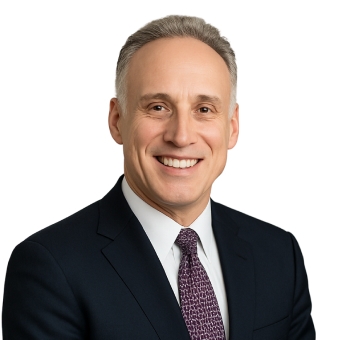
One of the most widely respected and quoted currency experts, Marc Chandler has been analyzing and advising on the global capital markets for more than 30 years. Throughout his career on Wall Street, Chandler has advised private businesses, hedge funds and asset managers on navigating the foreign exchange market.
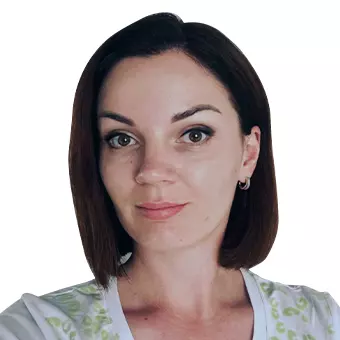
Chinmay Soni is a financial analyst with more than 5 years of experience in working with stocks, Forex, derivatives, and other assets. As a founder of a boutique research firm and an active researcher, he covers various industries and fields, providing insights backed by statistical data.

-
 Afghanistan
-
 Albania
-
 Algeria
-
 Angola
-
 Argentina
-
 Armenia
-
 Australia
-
 Austria
-
 Azerbaijan
-
 Bahamas
-
 Bahrain
-
 Bangladesh
-
 Belarus
-
 Belgium
-
 Bolivia
-
 Botswana
-
 Brazil
-
 Brunei
-
 Bulgaria
-
 Cambodia
-
 Cameroon
-
 Canada
-
 Chile
Chile
-
 China
China
-
 Colombia
-
 Congo
Congo
-
 Costa Rica
-
 Cote d'Ivoire
-
 Croatia
-
 Cuba
Cuba
-
 Cyprus
-
 Czechia
-
 DR Congo
-
 Denmark
-
 Dominican Republic
-
 Ecuador
-
 Egypt
Egypt
-
 El Salvador
-
 Estonia
-
 Eswatini
-
 Ethiopia
-
 Finland
-
 France
-
 Georgia
-
 Germany
-
 Ghana
Ghana
-
 Greece
-
 Haiti
Haiti
-
 Hong Kong
-
 Hungary
-
 India
India
-
 Indonesia
-
 Iran, Islamic republic
-
 Iraq
Iraq
-
 Ireland
-
 Israel
-
 Italy
Italy
-
 Jamaica
-
 Japan
Japan
-
 Jordan
-
 Kazakhstan
-
 Kenya
Kenya
-
 Korea
Korea
-
 Kuwait
-
 Kyrgyzstan
-
 Laos
Laos
-
 Latvia
-
 Lebanon
-
 Lesotho
-
 Libya
Libya
-
 Lithuania
-
 Luxembourg
-
 Madagascar
-
 Malaysia
-
 Malta
Malta
-
 Mauritius
-
 Mexico
-
 Moldova
-
 Mongolia
-
 Montenegro
-
 Morocco
-
 Mozambique
-
 Myanmar
-
 Namibia
-
 Nepal
Nepal
-
 Netherlands
-
 New Zealand
-
 Nigeria
-
 North Macedonia
-
 Norway
-
 Oman
Oman
-
 Pakistan
-
 Palestine
-
 Panama
-
 Papua New Guinea
-
 Paraguay
-
 Peru
Peru
-
 Philippines
-
 Poland
-
 Portugal
-
 Puerto Rico
-
 Qatar
Qatar
-
 Reunion
-
 Romania
-
 Rwanda
-
 Saudi Arabia
-
 Serbia
-
 Singapore
-
 Slovakia
-
 Slovenia
-
 Somalia
-
 South Africa
-
 Spain
Spain
-
 Sri Lanka
-
 Sweden
-
 Switzerland
-
 Syria
Syria
-
 Taiwan
-
 Tajikistan
-
 Tanzania
-
 Thailand
-
 Trinidad and Tobago
-
 Tunisia
-
 Turkey
-
 UAE
UAE
-
 Uganda
-
 Ukraine
-
 United Kingdom
-
United States
-
 Uruguay
-
 Uzbekistan
-
 Venezuela
-
 Vietnam
-
 Yemen
Yemen
-
 Zambia
-
 Zimbabwe
- Forex
- Crypto












