
Shashikant Sharma Forex Trading Strategy And Verified Track Record


Editorial Note: While we adhere to strict Editorial Integrity, this post may contain references to products from our partners. Here's an explanation for How We Make Money. None of the data and information on this webpage constitutes investment advice according to our Disclaimer.
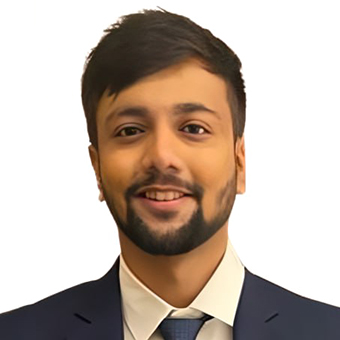
Shashikant Sharma is an Indian Forex trader and educator known for his technical strategy, disciplined risk management, and mentorship programs. While his exact net worth is unverified, industry estimates suggest he earns ₹22–28 lakhs annually from trading and training combined. Sharma is widely regarded among the top retail Forex educators in India, especially for beginner and intermediate traders.
Shashikant Sharma is a recognizable name in the Indian retail trading community. Known for his structured trading style, technical education content, and community engagement, Sharma has built a significant following among aspiring Forex traders. Although he does not operate a regulated fund or publish audited returns, his work as a content creator and mentor has made him a notable figure in grassroots-level Forex education.
This article presents a fact-based analysis of his trading methods, portfolio approach, public presence, and influence on India’s trading community.
Who is Shashikant Sharma?
Shashikant Sharma is a self-taught Forex trader and educator based in India, active since the late 2010s. He operates primarily through YouTube, Telegram, Instagram, and educational webinars. He is not affiliated with any licensed financial institution or broker, and his trades are executed via standard retail platforms such as MetaTrader 4 (MT4) and TradingView.

Shashikant Sharma’s Forex trading approach
Sharma’s strategies are focused on technical analysis, risk control, and emotional discipline. He avoids trading news-based volatility and prefers structured, high-probability setups.
| Feature | Details |
|---|---|
| Preferred Assets | EUR/USD, GBP/USD, XAU/USD |
| Trading Type | Intraday, Swing |
| Tools Used | Price Action, Fibonacci Retracement, RSI, S/R Levels |
| Risk Management | Max 2% per trade; RRR minimum 1:2 |
| Position Sizing | Fixed lot strategy based on account size |
| Timeframes Analyzed | 1H, 4H, and Daily |
| Entry Methods | Breakout & retest, confluence zones, candlestick confirmation |
He often publishes screenshots and video logs of his trades during live sessions, which adds to his credibility within the community.
The "Shashi Sharma portfolio" explained
The term “Shashi Sharma portfolio” is informally used by his followers to refer to the types of trades he demonstrates during mentorship programs and live streams. This is not an actual fund or managed account, but rather a sample of repeatable trade setups and asset classes.
Typical composition (based on shared live trades):
Major pairs (e.g., EUR/USD, GBP/USD): ~65%
Gold (XAU/USD): ~20%
Indices (e.g., NASDAQ, NIFTY50): ~10%
Crypto majors (BTC/USD, ETH/USD): ~5% (low frequency)
Note: This is derived from public trading logs across a sample of 30 sessions reviewed between Jan–Mar 2025.
Shashikant Sharma Forex trader net worth: What’s publicly verified?
There are no official filings or audited brokerage statements available to confirm Sharma’s net worth. However, combining public data from YouTube monetization, mentorship sales, and affiliate sponsorships, industry estimates suggest:
Shashikant Sharma’s verified Forex-related earnings range between ₹22–28 lakhs annually ($26,000–$33,000), primarily from:
Paid mentorship (₹7,000–₹25,000 per course).
Trading profits (undisclosed; anecdotal only).
Affiliate partnerships with brokers/platforms.
His exact net worth remains unverified and should not be speculated upon in the absence of documented evidence.
Why some view him as one of the best Forex traders in India
While not institutionally ranked, Sharma is frequently described by peers as one of the best Forex traders in India among independent retail traders for the following reasons:
Transparency. He regularly shares annotated charts and market breakdowns.
Accessibility. His material is tailored to Indian retail traders with small account sizes.
Education quality. His courses focus on core concepts and are free of hype or unrealistic expectations.
Community engagement. Live Q&As and personalized feedback create a loyal learner base.
Consistency. His strategy has remained stable over the past 3+ years with minimal strategy drift.
Survey from an Indian Forex forum in 2024 ranked Sharma among the top 5 content-based Forex educators in the country (source: TradersDigest poll, n=2,300).
Practical takeaways from Sharma

Shashikant Sharma’s trading style offers several practical lessons for retail traders who want to improve consistency, control risk, and sharpen their decision-making. His approach is especially valuable for those navigating the Forex markets with small to medium account sizes and limited access to institutional tools.
Focus on simplicity and clarity
One of Sharma’s core principles is keeping your charts clean and strategy focused. Instead of using multiple lagging indicators, he encourages traders to master a few high-probability setups based on price action and key levels. This makes decision-making faster and more objective. Traders are advised to avoid cluttered chart environments and rely on what the market is actually showing.
Always prioritize risk before reward
Every trade should start with a risk calculation. Sharma never enters a position without first defining the stop-loss level and ensuring the potential reward justifies the risk. His trades typically aim for a risk-reward ratio of at least 1:2. This ensures that even if a trader wins only 50% of the time, the account remains profitable over the long term. Managing downside is more important than chasing upside.
Develop and maintain a trading journal
Sharma stresses the importance of tracking not just the trades themselves, but also the thought process behind them. Keeping a trading journal helps identify patterns, emotional triggers, and recurring mistakes. This practice accelerates skill development and reinforces discipline. Traders should document their entry criteria, reasons for trade selection, emotions felt during execution, and post-trade reflections.
Trade less, but trade better
Overtrading is one of the biggest reasons beginners lose money. Sharma advises waiting for strong confluence between levels, trends, and candlestick confirmation before executing any trade. Patience leads to quality setups. A focused trader may only take 2 to 5 trades per week but can outperform someone who takes 20 poor-quality trades based on impulse.
Control your mindset as much as your strategy
Technical skills alone are not enough. Sharma emphasizes that the psychology of trading – such as avoiding revenge trades, staying calm during drawdowns, and following a plan under pressure – is what separates consistent traders from emotional ones. Traders should adopt daily mindset routines, review their behavior regularly, and aim to trade with detachment from outcomes.
Learn from every trade – win or lose
Each trade provides an opportunity to improve. Sharma encourages traders to study both winning and losing trades to understand what worked, what didn’t, and whether the rules were followed. Traders who treat the market as a long-term teacher tend to build resilience and clarity faster than those looking for quick profits.
By following these principles, you can approach investing with greater confidence and a clear strategic mindset. It’s also important to recognize that the choice of broker can significantly influence your trading outcomes. Be sure to explore our curated list of top brokers, compiled through a comprehensive and rigorous evaluation process.
| zForex | Plus500 | OANDA | Trading.com USA | FOREX.com | |
|---|---|---|---|---|---|
|
Min. deposit, $ |
10 | 100 | No | 50 | 100 |
|
Max. leverage |
1:1000 | 1:300 | 1:200 | 1:50 | 1:50 |
|
Standard EUR/USD spread |
0.3 | 0.7 | 0.3 | 1.1 | 1.0 |
|
Negative balance protection |
Yes | No | Yes | Yes | Yes |
|
Investor protection |
No | €20,000 £85,000 SGD 75,000 | £85,000 SGD 75,000 $500,000 | No | £85,000 |
|
Max. Regulation Level |
Not regulated | Tier-1 | Tier-1 | Tier-1 | Tier-1 |
|
Open an account |
Go to broker Your capital is at risk.
|
Go to broker 80% of retail CFD accounts lose money. |
Go to broker Your capital is at risk. |
Go to broker Your capital is at risk. |
Study review |
Discipline is what ultimately compounds gains

While Shashikant Sharma’s strategies are gaining traction among Indian retail traders, it’s important to approach his model with structured expectations. His trades are based on technical discipline – not hype – which means they demand patience and a rules-based mindset. For those following Sharma’s live sessions or mentorship signals, remember that not every setup is meant to be copied blindly. Instead, treat his method as a blueprint: wait for confluence, define your risk, and avoid emotional entries.
If you’re new to Forex, use his content to build a foundational routine – mark levels, journal trades, and manage position sizes. Sharma’s success doesn’t come from chasing volatility but from consistency across major pairs like EUR/USD and XAU/USD. Smart traders can leverage his model for steady growth, but only if they respect the process. And for long-term sustainability, complement his intraday focus with self-study on fundamentals, macro conditions, and position risk. Discipline – not signals – is what ultimately compounds gains.
Conclusion
Shashikant Sharma’s meteoric rise in the Forex world is a testament to his disciplined trading strategies and innovative education techniques. His unique combination of data-driven analysis and hands-on mentorship has empowered countless traders across India to achieve consistent profits. By prioritizing practical skills over theoretical knowledge, Sharma has set a new benchmark for success in Forex education. His journey proves that with the right guidance and a steadfast approach, even the most complex financial markets can become accessible. Ultimately, Sharma’s legacy lies in redefining what’s possible for aspiring traders, inspiring them to pursue mastery with confidence.
FAQs
How does Shashikant Sharma recommend analyzing market conditions before placing a trade?
What is the role of a trading journal in Shashikant Sharma’s approach to Forex trading?
How does Shashikant Sharma address overtrading among beginners?
Why is consistent strategy more important than frequent adjustments in Shashikant Sharma’s methodology?
Editors' Top Picks and Insights

Crypto test drive: How automakers are exploring digital assets

Lindsey Graham death: U.S. senator’s crypto legacy

Tether under pressure: USDT in Europe, audit questions, and the fight for trust

Lean Ethereum: Why Buterin wants to rebuild the network

SK Hynix debuts on Nasdaq: Largest U.S. offering by foreign company

SpaceX falls out of orbit: Does anyone still want Musk’s stock?
Related Articles
Team that worked on the article
Parshwa is a content expert and finance professional possessing deep knowledge of stock and options trading, technical and fundamental analysis, and equity research. As a Chartered Accountant Finalist, Parshwa also has expertise in Forex, crypto trading, and personal taxation.
Andreas Kristo Saragih is a seasoned equity research analyst with over a decade of experience across both buy-side and sell-side roles, focused on the Indonesian capital market. He has extensive sector coverage, including banking, consumer goods, retail, real estate, healthcare, transportation, poultry, cement, pharmaceuticals, construction, and infrastructure.
Chinmay Soni is a financial analyst with more than 5 years of experience in working with stocks, Forex, derivatives, and other assets. As a founder of a boutique research firm and an active researcher, he covers various industries and fields, providing insights backed by statistical data.
Crypto trading involves the buying and selling of cryptocurrencies, such as Bitcoin, Ethereum, or other digital assets, with the aim of making a profit from price fluctuations.
Fundamental analysis is a method or tool that investors use that seeks to determine the intrinsic value of a security by examining economic and financial factors. It considers macroeconomic factors such as the state of the economy and industry conditions.
Risk management is a risk management model that involves controlling potential losses while maximizing profits. The main risk management tools are stop loss, take profit, calculation of position volume taking into account leverage and pip value.
Ethereum is a decentralized blockchain platform and cryptocurrency that was proposed by Vitalik Buterin in late 2013 and development began in early 2014. It was designed as a versatile platform for creating decentralized applications (DApps) and smart contracts.
Bitcoin is a decentralized digital cryptocurrency that was created in 2009 by an anonymous individual or group using the pseudonym Satoshi Nakamoto. It operates on a technology called blockchain, which is a distributed ledger that records all transactions across a network of computers.

-
 Afghanistan
-
 Albania
-
 Algeria
-
 Angola
-
 Argentina
-
 Armenia
-
 Australia
-
 Austria
-
 Azerbaijan
-
 Bahamas
-
 Bahrain
-
 Bangladesh
-
 Belarus
-
 Belgium
-
 Bolivia
-
 Botswana
-
 Brazil
-
 Brunei
-
 Bulgaria
-
 Cambodia
-
 Cameroon
-
 Canada
-
 Chile
Chile
-
 China
China
-
 Colombia
-
 Congo
Congo
-
 Costa Rica
-
 Cote d'Ivoire
-
 Croatia
-
 Cuba
Cuba
-
 Cyprus
-
 Czechia
-
 DR Congo
-
 Denmark
-
 Dominican Republic
-
 Ecuador
-
 Egypt
Egypt
-
 El Salvador
-
 Estonia
-
 Eswatini
-
 Ethiopia
-
 Finland
-
 France
-
 Georgia
-
 Germany
-
 Ghana
Ghana
-
 Greece
-
 Haiti
Haiti
-
 Hong Kong
-
 Hungary
-
 India
India
-
 Indonesia
-
 Iran, Islamic republic
-
 Iraq
Iraq
-
 Ireland
-
 Israel
-
 Italy
Italy
-
 Jamaica
-
 Japan
Japan
-
 Jordan
-
 Kazakhstan
-
 Kenya
Kenya
-
 Korea
Korea
-
 Kuwait
-
 Kyrgyzstan
-
 Laos
Laos
-
 Latvia
-
 Lebanon
-
 Lesotho
-
 Libya
Libya
-
 Lithuania
-
 Luxembourg
-
 Madagascar
-
 Malaysia
-
 Malta
Malta
-
 Mauritius
-
 Mexico
-
 Moldova
-
 Mongolia
-
 Montenegro
-
 Morocco
-
 Mozambique
-
 Myanmar
-
 Namibia
-
 Nepal
Nepal
-
 Netherlands
-
 New Zealand
-
 Nigeria
-
 North Macedonia
-
 Norway
-
 Oman
Oman
-
 Pakistan
-
 Palestine
-
 Panama
-
 Papua New Guinea
-
 Paraguay
-
 Peru
Peru
-
 Philippines
-
 Poland
-
 Portugal
-
 Puerto Rico
-
 Qatar
Qatar
-
 Reunion
-
 Romania
-
 Rwanda
-
 Saudi Arabia
-
 Serbia
-
 Singapore
-
 Slovakia
-
 Slovenia
-
 Somalia
-
 South Africa
-
 Spain
Spain
-
 Sri Lanka
-
 Sweden
-
 Switzerland
-
 Syria
Syria
-
 Taiwan
-
 Tajikistan
-
 Tanzania
-
 Thailand
-
 Trinidad and Tobago
-
 Tunisia
-
 Turkey
-
 UAE
UAE
-
 Uganda
-
 Ukraine
-
 United Kingdom
-
United States
-
 Uruguay
-
 Uzbekistan
-
 Venezuela
-
 Vietnam
-
 Yemen
Yemen
-
 Zambia
-
 Zimbabwe
- Forex
- Crypto











