
Stock Market Guides Review 2026: Research, Alerts, And Performance



Editorial Note: While we adhere to strict Editorial Integrity, this post may contain references to products from our partners. Here's an explanation for How We Make Money. None of the data and information on this webpage constitutes investment advice according to our Disclaimer.
Stock Market Guides is a research and alerts platform built for traders who value analysis over speed. It offers probability-based stock and options ideas with clear explanations, risk context, and performance tracking. The service suits intermediate and options traders who prefer disciplined decision-making. It is not ideal for beginners or fast trading. For those who want to look and leap, a free trial is available.
The modern stock market is increasingly driven by data, speed, and informed decision-making. For traders who do not have the time or resources to conduct deep market research on their own, professional analytical services have become an essential tool. One of the most discussed platforms in this segment is Stock Market Guides, a service focused on stock research and options alerts.
In this review, we take a close look at how Stock Market Guides works, how reliable its win rate has been over time, and how its options alerts performance compares to similar services. We also examine pricing, free trial availability, and which types of traders are most likely to benefit from using it.
What is Stock Market Guides?

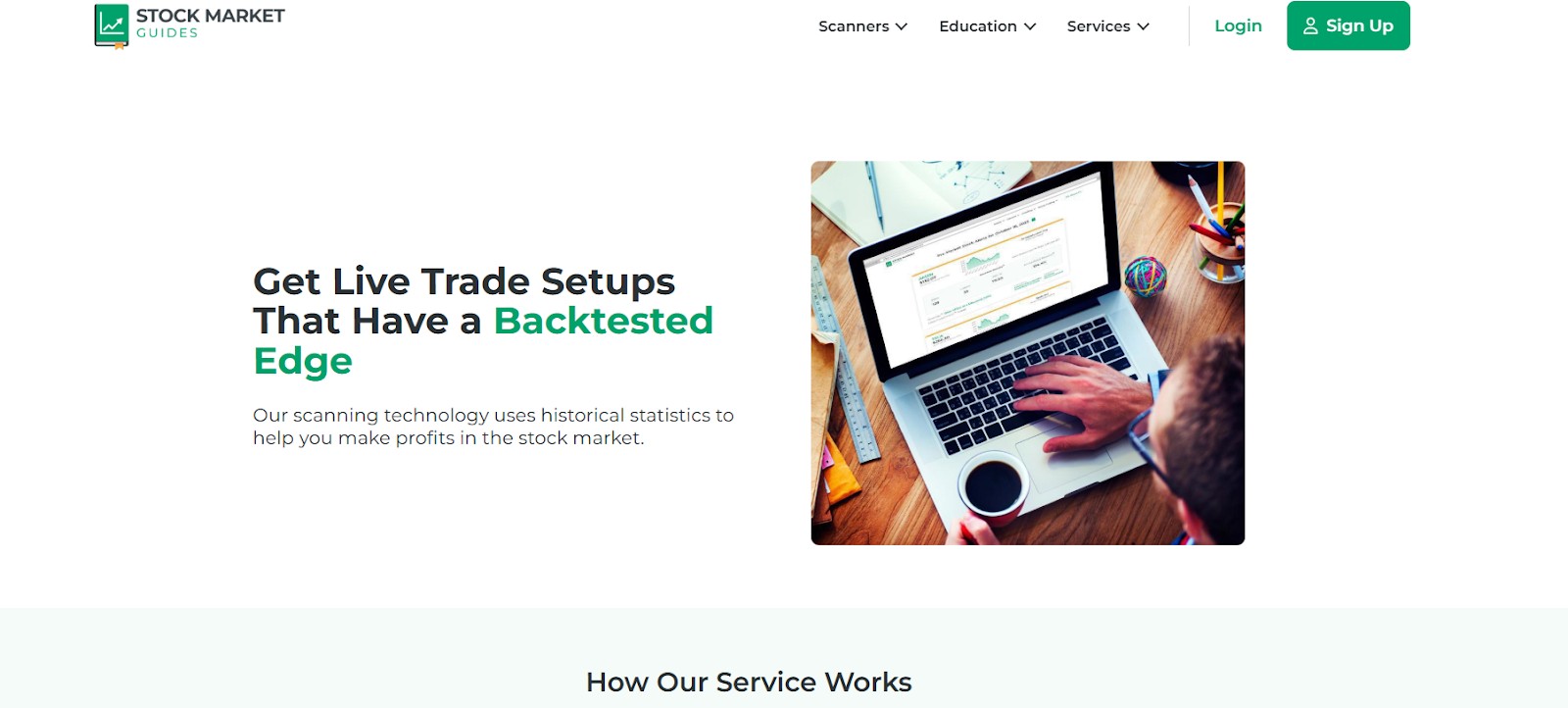
Stock Market Guides is a market research and alerts service designed for traders who value analysis over speed. The platform delivers trade ideas based on predefined criteria, focusing on probability, risk control, and repeatable setups rather than constant signals.
Instead of pushing frequent entries, Stock Market Guides filters the market for situations where historical data and technical conditions align. Each alert is supported by research that explains why the setup exists and what assumptions the trade is based on. This makes the service closer to a decision-support tool than an automated signal feed.
The platform is mainly used by:
Intermediate traders. Those who understand basic market mechanics and want structured guidance.
Options traders. Users looking for probability-based ideas rather than aggressive speculation.
Research-oriented investors. Traders who prefer data-backed reasoning over hype or social media signals.
In simple terms, Stock Market Guides functions as a practical guide for traders who want clarity, structure, and context before taking a position.
How Stock Market Guides works
Stock Market Guides follows a rule-based process that prioritizes selectivity over volume. The service does not aim to keep traders constantly active. Instead, it filters the market to highlight setups that meet specific probability and risk criteria.
The workflow behind the platform can be broken down into a few clear stages. Each stage is designed to reduce emotional decision-making and focus on repeatable patterns.
The typical process includes:
Market screening. Stocks and options are filtered using predefined technical and statistical conditions.
Setup validation. Only scenarios that meet internal probability and risk-reward requirements are selected.
Alert delivery. Trade ideas are shared with context, including direction, strategy type, and risk assumptions.
Performance tracking. Past alerts are monitored to evaluate outcomes and long-term consistency.
This step-by-step structure explains why many Stock Market Guides reviews describe the service as analytical rather than speculative. Traders are encouraged to understand the setup first and execute only if it fits their own risk rules.
Stock Market Guides features and tools
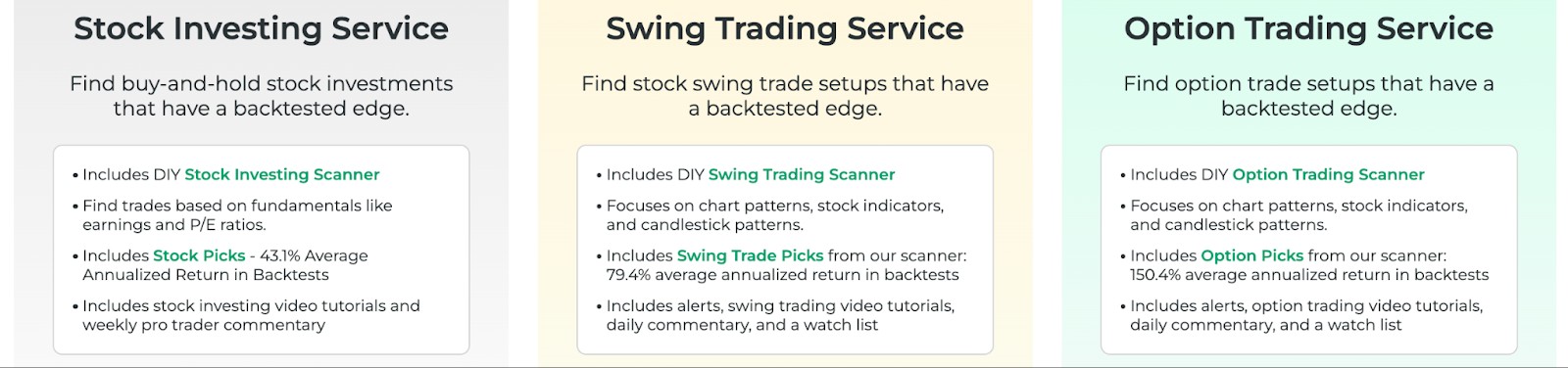
Stock Market Guides combines research, alerts, and transparency into a single workflow. The tools are built to support informed decisions rather than encourage constant trading. Each feature is designed to add context and reduce guesswork.
Stock research and market insights
The platform delivers research that explains the logic behind each setup. Instead of listing symbols and directions, the analysis outlines why a trade qualifies and what market conditions support it. This helps traders evaluate ideas rather than follow them blindly.
Options trading alerts
Options alerts form a central part of the service and focus on probability-based setups rather than aggressive speculation.
Each alert typically includes:
Strategy structure. Calls, puts, or defined-risk spreads.
Time horizon. Expected trade duration based on the setup.
Risk context. Key assumptions and scenarios that could invalidate the trade.
This structure supports more disciplined execution and helps traders understand how the position fits within broader risk management.
Performance transparency
The service tracks past alerts and outcomes, allowing users to review historical results. This level of transparency makes it easier to assess consistency and understand how different strategies perform across market conditions.
Stock Market Guides win rate and performance
When evaluating any research or alert service, consistency matters more than isolated wins. Stock Market Guides approaches performance reporting with a focus on probability and long-term outcomes rather than short-term hype.
Overall win rate
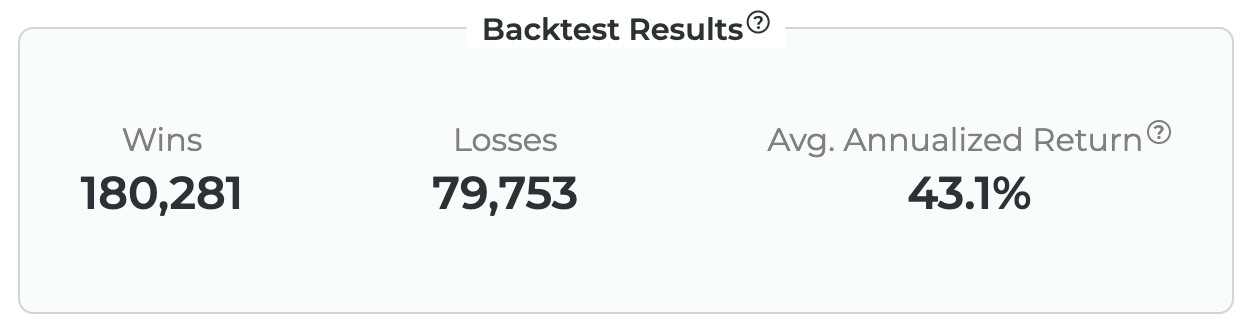
The published data shows that the win rate of Stock Market Guides sits within a realistic range for research-driven strategies. Results vary by market conditions, but the service does not present its performance as guaranteed or risk-free.
Key points traders should understand:
Moderate consistency. Wins and losses are both part of the strategy.
No inflated claims. Results are not marketed as perfect or automatic.
Long-term focus. Performance is intended to be evaluated over multiple trades, not individual alerts.
This approach aligns with responsible trading practices and helps set realistic expectations.
Performance context
Performance results depend heavily on how traders apply alerts. Entry timing, position sizing, and risk management all affect outcomes. Stock Market Guides provides the framework, but execution remains the trader’s responsibility.
Many Stock Market Guides reviews point out that the service works best when used as a decision-support tool rather than a strict copy-trading system. Traders who adapt alerts to their own risk rules tend to see more stable results.
Stock Market Guides options alerts performance
Options trading carries a different risk profile than stock trading, and Stock Market Guides treats these alerts as a separate category rather than mixing results together. This distinction is important for setting realistic expectations.
Options win rate
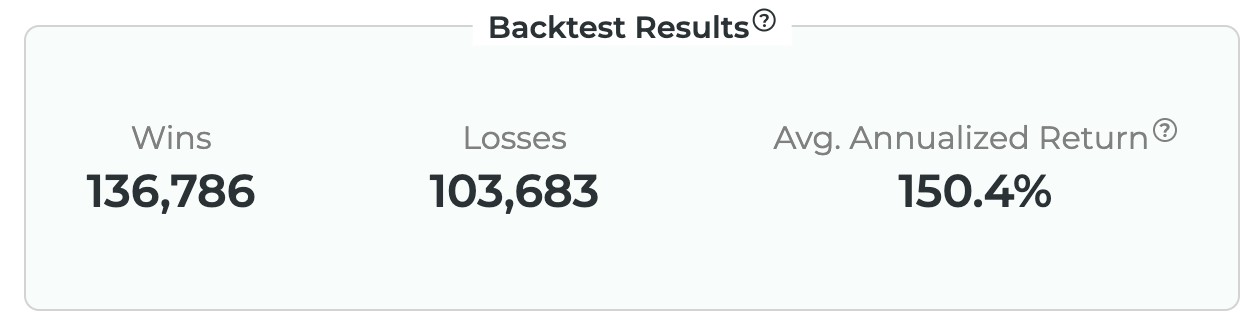
The win rate of options on Stock Market Guides is generally lower than stock trade results, which is typical for options strategies. Options positions are more sensitive to timing, volatility, and market shifts, increasing both risk and reward potential.
Key characteristics of options performance include:
Lower average win rate. Options trades fail more often than stock trades.
Higher payoff potential. Winning trades tend to deliver larger percentage gains.
Market dependency. Results vary significantly with volatility and trend strength.
This balance between risk and reward is central to how the service structures its options ideas.
Risk-adjusted performance
When reviewing the performance of options alerts on Stock Market Guides, traders should avoid focusing only on win percentages. Defined-risk structures and position sizing play a major role in long-term results.
The service emphasizes probability-based setups, but outcomes still depend on how alerts are executed. Traders with experience in options tend to use the ideas selectively, while beginners may struggle if they follow alerts without understanding the strategy.
Overall, options alerts are best suited for traders who already understand options mechanics and are comfortable managing higher risk.
Stock Market Guides free trial and pricing
Cost and access terms are critical when evaluating any paid research service. Stock Market Guides uses a straightforward subscription model and allows new users to test the platform before making a long-term commitment.
Free trial access
One of the strongest points of the service is the availability of a free trial on Stock Market Guides in the form of free scanners. These scanners allow traders to review research quality, alert structure, and overall workflow without immediate financial pressure.
The free access helps users:
understand how alerts are delivered and explained;
evaluate whether the research style fits their trading approach;
assess discipline requirements before subscribing.
This trial-first approach aligns well with risk-aware trading practices.
Subscription pricing
Paid subscriptions unlock full access to stock research, options alerts, and performance tracking tools. Pricing is positioned in the mid-range compared to other research-focused trading services.
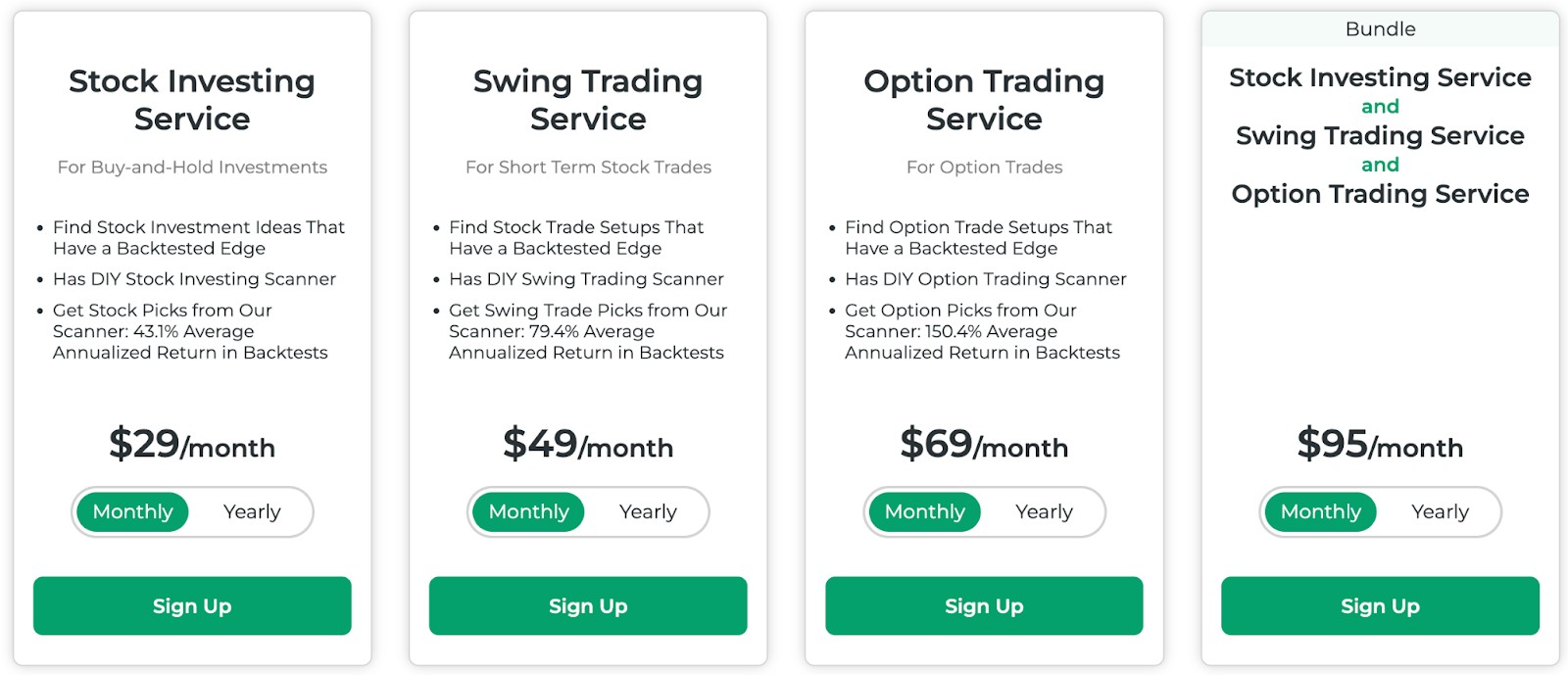
What traders should know about pricing:
No unrealistic promises. The service does not market pricing alongside guaranteed results.
Research-driven value. Cost reflects analysis depth rather than signal frequency.
Best suited for active users. Traders who actively review and apply research gain more value than passive followers.
Overall, pricing makes sense for traders who plan to use the platform consistently rather than occasionally.
Pros and cons of Stock Market Guides
Like any research-based trading service, Stock Market Guides has clear strengths, but it also comes with limitations. Traders should weigh both sides before relying on the platform.
- Pros
- Cons
Research-first approach. Trade ideas are supported by analysis and explanation, not just entries.
Transparent performance tracking. Past alerts and outcomes are available for review.
Balanced coverage. The service offers both stock research and options alerts.
Free trial availability. New users can test the platform before committing financially.
Options complexity. Some strategies may be difficult for inexperienced traders to apply.
Requires discipline. Results depend heavily on risk management and execution by the user.
Overall, the advantages favor traders who value structure and explanation, while the drawbacks mainly affect those seeking speed or automation.
While Stock Market Guides focuses on research and trade ideas, execution still depends on having the right brokerage account. Many traders choose to compare some of the best brokers for investing in stocks to ensure their platform supports reliable order execution, transparent pricing, and access to the markets they trade. Selecting a suitable broker helps turn research insights into actual trades without unnecessary friction, making the overall workflow more efficient.
| eToro USA | Plus500 | eOption | Revolut | Interactive Brokers | |
|---|---|---|---|---|---|
|
Stocks |
Yes | Yes | Yes | Yes | Yes |
|
Account min. |
50 | EUR500 | No | No | No |
|
Demo |
Yes | Yes | Yes | No | Yes |
|
Basic stock/ETF fee |
No | $0.006 | $0 | 0.12%-0.25% | 0-0,0035% |
|
Deposit Fee |
No | No | Not specified | No | No |
|
Withdrawal fee |
No | No | Not specified | No charge up to a limit | No |
|
TU overall score |
8.8 | 8.48 | 7.93 | 8.6 | 8.53 |
|
Open an account |
Go to broker Your capital is at risk. |
Go to broker 80% of retail CFD accounts lose money. |
Study review | Study review | Study review |
Best for disciplined traders who value analysis

I tend to judge trading services by how they influence behavior, not just results. Stock Market Guides encourages a slower, more thoughtful approach, which I see as a positive. The platform does not push constant action. Instead, it forces traders to pause, review the reasoning, and decide whether a setup truly fits their risk profile. That alone separates it from many alert services on the market.
From my perspective, the real value appears when the service is used alongside personal analysis. It works best for traders who already understand risk and want a second layer of confirmation, not a replacement for judgment. When expectations are realistic and discipline is applied, Stock Market Guides can meaningfully improve decision quality rather than create dependence.
Conclusion
In summary, Stock Market Guides stands out in 2026 as a robust platform for traders seeking high-quality research and consistently strong options alerts. The review highlights win rates that outpace industry averages, paired with a transparent pricing structure and risk-free free trial access—making it accessible for both novices and seasoned investors. For example, the detailed options alerts not only provide timely trade recommendations but also include well-explained rationale, empowering users to learn while they earn. Ultimately, Stock Market Guides proves that combining actionable insights with education is the most effective path to sustained success in the fast-moving world of stock trading.
FAQs
Who is the ideal user for Stock Market Guides, and who may not benefit from the service?
How does Stock Market Guides support risk management for its users?
What level of transparency does Stock Market Guides offer regarding its performance history?
What should traders consider before subscribing to Stock Market Guides’ paid plan?
Editors' Top Picks and Insights

The privacy paradox: How the crypto mixer market has changed

Is Bitcoin right for you? Five traits shared by many cryptocurrency holders

Chasing hits: Why investors are losing interest in Netflix

Tokenized stocks in the spotlight: How do they work and are they worth trading?

Do politicians make the best stock traders?

Crypto test drive: How automakers are exploring digital assets
Related Articles
Team that worked on the article
Andrey Mastykin is an experienced author, editor, and content strategist who has been with Traders Union since 2020. As an editor, he is meticulous about fact-checking and ensuring the accuracy of all information published on the Traders Union platform.
Dan Blystone began his trading career in 1998 as an arbitrage clerk on the floor of the Chicago Mercantile Exchange (CME). He later traded bond and Eurex futures at proprietary firms such as Altea Trading, gaining valuable experience in high-frequency trading and risk management.
Chinmay Soni is a financial analyst with more than 5 years of experience in working with stocks, Forex, derivatives, and other assets. As a founder of a boutique research firm and an active researcher, he covers various industries and fields, providing insights backed by statistical data.
Options trading is a financial derivative strategy that involves the buying and selling of options contracts, which give traders the right (but not the obligation) to buy or sell an underlying asset at a specified price, known as the strike price, before or on a predetermined expiration date. There are two main types of options: call options, which allow the holder to buy the underlying asset, and put options, which allow the holder to sell the underlying asset.
An investor is an individual, who invests money in an asset with the expectation that its value would appreciate in the future. The asset can be anything, including a bond, debenture, mutual fund, equity, gold, silver, exchange-traded funds (ETFs), and real-estate property.
Risk management is a risk management model that involves controlling potential losses while maximizing profits. The main risk management tools are stop loss, take profit, calculation of position volume taking into account leverage and pip value.
CFD is a contract between an investor/trader and seller that demonstrates that the trader will need to pay the price difference between the current value of the asset and its value at the time of contract to the seller.
Volatility refers to the degree of variation or fluctuation in the price or value of a financial asset, such as stocks, bonds, or cryptocurrencies, over a period of time. Higher volatility indicates that an asset's price is experiencing more significant and rapid price swings, while lower volatility suggests relatively stable and gradual price movements.

-
 Afghanistan
-
 Albania
-
 Algeria
-
 Angola
-
 Argentina
-
 Armenia
-
 Australia
-
 Austria
-
 Azerbaijan
-
 Bahamas
-
 Bahrain
-
 Bangladesh
-
 Belarus
-
 Belgium
-
 Bolivia
-
 Botswana
-
 Brazil
-
 Brunei
-
 Bulgaria
-
 Cambodia
-
 Cameroon
-
 Canada
-
 Chile
Chile
-
 China
China
-
 Colombia
-
 Congo
Congo
-
 Costa Rica
-
 Cote d'Ivoire
-
 Croatia
-
 Cuba
Cuba
-
 Cyprus
-
 Czechia
-
 DR Congo
-
 Denmark
-
 Dominican Republic
-
 Ecuador
-
 Egypt
Egypt
-
 El Salvador
-
 Estonia
-
 Eswatini
-
 Ethiopia
-
 Finland
-
 France
-
 Georgia
-
 Germany
-
 Ghana
Ghana
-
 Greece
-
 Haiti
Haiti
-
 Hong Kong
-
 Hungary
-
 India
India
-
 Indonesia
-
 Iran, Islamic republic
-
 Iraq
Iraq
-
 Ireland
-
 Israel
-
 Italy
Italy
-
 Jamaica
-
 Japan
Japan
-
 Jordan
-
 Kazakhstan
-
 Kenya
Kenya
-
 Korea
Korea
-
 Kuwait
-
 Kyrgyzstan
-
 Laos
Laos
-
 Latvia
-
 Lebanon
-
 Lesotho
-
 Libya
Libya
-
 Lithuania
-
 Luxembourg
-
 Madagascar
-
 Malaysia
-
 Malta
Malta
-
 Mauritius
-
 Mexico
-
 Moldova
-
 Mongolia
-
 Montenegro
-
 Morocco
-
 Mozambique
-
 Myanmar
-
 Namibia
-
 Nepal
Nepal
-
 Netherlands
-
 New Zealand
-
 Nigeria
-
 North Macedonia
-
 Norway
-
 Oman
Oman
-
 Pakistan
-
 Palestine
-
 Panama
-
 Papua New Guinea
-
 Paraguay
-
 Peru
Peru
-
 Philippines
-
 Poland
-
 Portugal
-
 Puerto Rico
-
 Qatar
Qatar
-
 Reunion
-
 Romania
-
 Rwanda
-
 Saudi Arabia
-
 Serbia
-
 Singapore
-
 Slovakia
-
 Slovenia
-
 Somalia
-
 South Africa
-
 Spain
Spain
-
 Sri Lanka
-
 Sweden
-
 Switzerland
-
 Syria
Syria
-
 Taiwan
-
 Tajikistan
-
 Tanzania
-
 Thailand
-
 Trinidad and Tobago
-
 Tunisia
-
 Turkey
-
 UAE
UAE
-
 Uganda
-
 Ukraine
-
 United Kingdom
-
United States
-
 Uruguay
-
 Uzbekistan
-
 Venezuela
-
 Vietnam
-
 Yemen
Yemen
-
 Zambia
-
 Zimbabwe
- Forex
- Crypto











